North Carolina Spring Turkey Harvest Numbers
After a spring turkey season, it's easy to get caught up in the stories from friends and family, the ones about tough hunting or banner days. But sometimes, those individual experiences leave us wondering: "Was it just me, or was the hunting really better/worse this year?" Understanding the bigger picture of North Carolina's spring turkey harvest numbers can help answer those questions, providing valuable insight into population health, hunting pressure, and what to expect in future seasons. This guide will walk you through how those numbers are collected, what they really mean, and how you can use that information to become a more informed and successful turkey hunter here in the Tar Heel State.
Understanding North Carolina's Spring Turkey Harvest Reporting
It's one thing to hear anecdotes around the campfire, but real, actionable data is what truly helps us understand the state of our wild turkey populations. North Carolina has a system in place to gather this crucial information, and as hunters, our participation is absolutely vital to its success.
The Importance of Accurate Data
Imagine trying to manage a business without knowing how many products you're selling or how much inventory you have. It would be chaos, right? Wildlife management isn't much different. For the North Carolina Wildlife Resources Commission (NCWRC) to make informed decisions about season lengths, bag limits, and habitat projects, they need reliable data on how many birds hunters are harvesting each year. These numbers, combined with things like "North Carolina Turkey Population Estimate" and "Poult-to-Hen Ratios and What They Mean," paint a comprehensive picture of the overall health and trends of the wild turkey population across the state. Without accurate reporting from every hunter, these insights become cloudy, making effective management much harder.
When we talk about accurate data, we're not just talking about total numbers. We're looking at things like the breakdown between gobblers and jakes, which counties are seeing higher harvests, and how those figures compare to previous years. This allows biologists to identify potential areas of concern or success, understand the impact of various environmental factors, and ensure that our hunting opportunities remain sustainable for generations to come. Your five minutes spent reporting a bird isn't just a formality; it's a contribution to the future of turkey hunting in North Carolina.
How Hunters Report Their Turkeys
North Carolina makes it pretty straightforward to report your harvested turkeys, which is a huge help in getting good data. Unlike some states where it might be optional or done on a paper card, here in North Carolina, it's mandatory. When you successfully tag a gobbler or a jake during the spring season, you've got to report it before midnight on the day of harvest. This can be done online through the NCWRC website, via their mobile app, or by calling a toll-free number. Most hunters find the app or online portal to be the easiest and quickest method.
You'll need your hunting license information, the date and county of harvest, and some details about the bird itself, like whether it was a gobbler or a jake. This prompt reporting ensures that the data is as fresh and accurate as possible, preventing misremembered details or lost tags that could skew the numbers. While it might feel like an extra step after an exciting hunt, remember that this system is designed to provide the foundation for sound wildlife management, directly impacting future opportunities like "North Carolina Spring Turkey Season Rules" and "North Carolina Turkey Daily Bag Limit". Some hunters use mapping apps like GoHunt to mark their exact harvest location, which helps them mentally track their success and also provides a precise reference point if needed for reporting.
Factors Influencing Reported Numbers (Beyond Just Population)
It's tempting to look at a dip in harvest numbers and immediately think the sky is falling and the turkey population has crashed. While population health is undeniably the biggest driver, it's not the only factor influencing the reported harvest totals. Several other elements can significantly sway these figures, sometimes making a healthy population look a little weaker or vice-versa.
For example, severe weather during the spring season can dramatically impact hunter effort and success. A week of heavy rain and high winds might keep many hunters out of the woods, resulting in fewer birds harvested, even if there are plenty of gobblers strutting around. Conversely, a stretch of mild, clear weather during the peak of the gobbling season could lead to higher success rates and thus higher reported harvests. Similarly, changes in hunting regulations, like a slight shift in the statewide opener or the "North Carolina Youth Turkey Weekend Rules", can affect how many hunters are in the woods at certain times, which in turn influences the total take. Economic factors, such as gas prices or the cost of new gear, can also subtly shift hunter participation year to year. Even the prevalence of diseases like Avian Pox can locally impact harvest rates if birds are less active or visible. It’s a complex puzzle, and understanding all these pieces is key to interpreting the numbers accurately.
Deciphering the Annual Harvest Trends
Looking at the raw harvest numbers for a single season is interesting, but the real insights come when we put those numbers into context, comparing them year after year and across different regions of the state. These trends can tell us a powerful story about our wild turkey populations.
Long-Term Trends: What the Numbers Tell Us
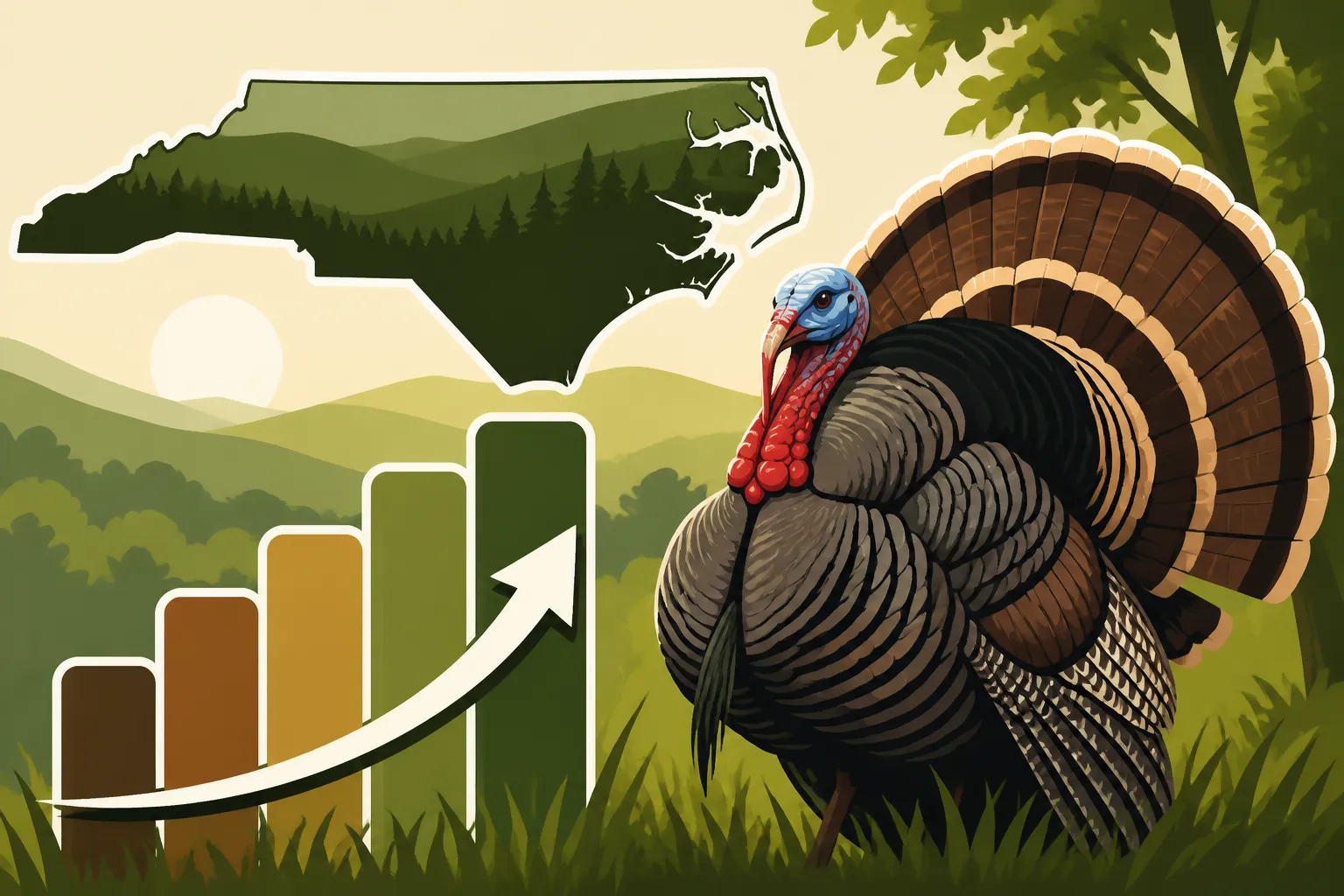
Over the past few decades, North Carolina has seen incredible success in its wild turkey restoration efforts. From a handful of remnant populations, turkeys have rebounded to inhabit all 100 counties. This success is directly reflected in the long-term harvest trends, which generally show a significant increase from the initial reintroductions through the early 2000s, often leveling off or showing slight fluctuations in more recent years. This leveling off isn't necessarily a bad thing; it often indicates that populations have reached their carrying capacity in much of the available habitat.
Biologists scrutinize these long-term trends carefully. A consistent decline, for instance, would trigger concerns about habitat loss, increased predation, or disease, prompting further investigation. Conversely, stable or slightly increasing numbers suggest that current management strategies are working and that the population is healthy and robust. When you look at the "North Carolina Turkey Population Estimate" alongside harvest data, you can see how closely they correlate, giving wildlife managers confidence in the data. These trends are critical for maintaining a vibrant wild turkey resource for hunters, ensuring that future generations can enjoy the thrill of calling in a gobbler during "Spring Turkey Hunting in North Carolina".
Year-to-Year Fluctuations and Their Causes
While long-term trends provide the big picture, year-to-year fluctuations are often what hunters feel most acutely in the field. One spring might feel like gobblers are everywhere, while the next feels eerily quiet. These short-term swings in harvest numbers are common and are usually influenced by a combination of biological and environmental factors.
A primary biological driver for year-to-year changes is reproductive success in previous years. If North Carolina had a particularly good "Nest Predation and North Carolina Turkey Hatches" season two springs prior, meaning many poults hatched and survived, those birds would be two-year-old gobblers in the current spring season, contributing significantly to the huntable population. Conversely, a poor hatch two years earlier can lead to fewer mature gobblers available. Weather also plays a massive role. A cold, wet spring can reduce nesting success, and a severe winter can impact overwinter survival of birds. Even the timing of the peak breeding activity can affect harvest. If the gobblers are "henned up" for an extended period due to an early warm spell, they might be less responsive to calls, leading to lower hunter success. These fluctuations are natural and part of the rhythm of wildlife, and savvy hunters learn to adapt their "Run-and-Gun Turkey Tactics on Public Land" or "Roost Hunting North Carolina Gobblers" based on their observations of these yearly shifts.
Regional Differences in Harvest Success
North Carolina is a diverse state, stretching from the high mountains to the coastal plains, and turkey populations and hunting conditions vary significantly across these regions. This natural diversity is clearly reflected in the harvest numbers, showing distinct patterns in the Mountains, Piedmont, and Coastal Plain zones.
- Mountain Zone: The western part of the state, with its vast national forests like Pisgah and Nantahala, offers expansive public land hunting. However, the terrain is rugged, and turkey densities can be lower in some areas compared to other regions. Harvest numbers here might be lower overall, but success often means finding those isolated pockets of birds that haven't seen much pressure. Hunters often find themselves working harder for their birds, perhaps calling them off steep slopes or out of deep hollows.
- Piedmont Zone: This central region, a mix of agricultural land, timber, and suburban sprawl, often boasts some of the highest turkey densities and, consequently, some of the highest harvest numbers. The varied habitat provides excellent food sources and cover, and while much of the land is private, areas like Uwharrie National Forest offer public opportunities. Birds here can be pressured, but consistent food sources often lead to strong local populations. Counties in the Piedmont are often cited among the "Best North Carolina Counties for Turkeys".
- Coastal Plain Zone: The eastern part of the state, characterized by flat terrain, pocosin swamps, and agricultural fields, also offers excellent turkey hunting. Harvest numbers can be very strong, particularly in areas with a good mix of timber and open ground. Birds in this region often behave differently than their mountain or piedmont cousins, sometimes being more visible in large fields but also more challenging to access in dense, swampy cover. Hunters using tools like GoHunt can zero in on these regional differences, looking at historical data to inform their scouting and planning.
North Carolina Spring Turkey Harvest by Region (Hypothetical Averages)
| Region | Average Annual Harvest (Gobblers) | Observed Trends | Key Influencing Factors |
|---|---|---|---|
| Mountains | 1,500 – 2,500 | Stable, with slight growth in accessible areas. | Rugged terrain, lower population density, weather, habitat fragmentation |
| Piedmont | 4,000 – 6,000 | Strong and generally stable, some localized pressure. | Mix of agriculture & timber, high population density, private land access |
| Coastal Plain | 3,000 – 5,000 | Stable to slightly increasing, driven by habitat and mild winters. | Agricultural lands, swamps/pocosins, disease prevalence |
| Statewide Total | ~8,500 – 13,500+ | Overall healthy and stable, with yearly fluctuations based on conditions. | Reproduction rates, hunter effort, weather patterns, habitat |
Note: These numbers are illustrative and designed to show comparative trends, not exact annual figures.
Interpreting Harvest Numbers for Your Own Hunting Strategy
So, you've seen the statewide numbers and understand the regional variations. But how does all this data translate into a more successful spring turkey season for you? It's about moving beyond just the raw count and diving deeper into what those figures really signify for a hunter on the ground.
Beyond the Raw Count: Poult-to-Hen Ratios and Nest Success
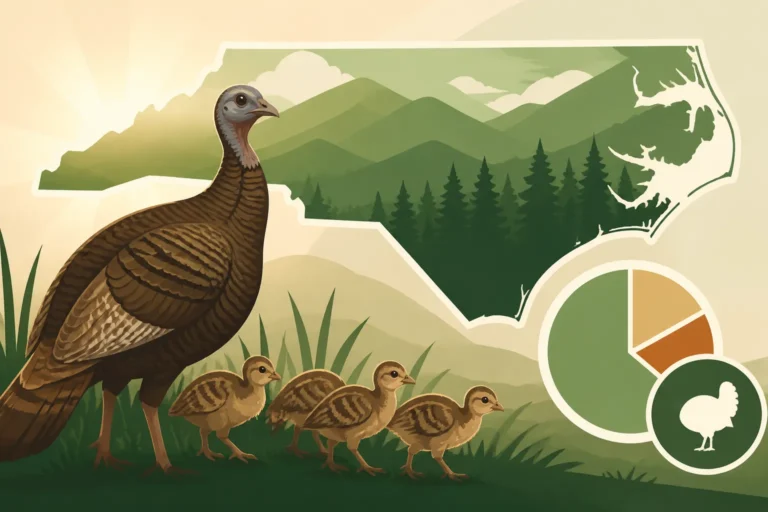
Harvest numbers, while important, are a lagging indicator. They tell you how many birds were available and harvested this year, largely due to reproductive success from two years ago. To get a better forward-looking idea of the health of the population and what next year's two-year-old gobblers might look like, wildlife managers rely heavily on "Poult-to-Hen Ratios and What They Mean". These surveys, typically conducted in late summer, count the number of poults (young turkeys) observed per hen. A high poult-to-hen ratio suggests a successful breeding season and good recruitment of young birds into the population, promising more gobblers in a couple of years. A low ratio, on the other hand, indicates a tough breeding season, perhaps due to "Nest Predation and North Carolina Turkey Hatches", cold wet weather, or other factors, which might translate to fewer available birds in the future.
For you, the hunter, keeping an eye on these ratios can help temper expectations or fuel optimism. If the reports from two years prior showed excellent poult survival, you might anticipate a stronger population of young, vocal gobblers. If the numbers were poor, you might focus on more scouting and harder hunting for those older, more elusive birds. Some experienced hunters use mapping tools like GoHunt to mark areas where they observe hens with poults during the summer, creating a mental map of potential future hotspots.
How Hunter Effort and Weather Impact Success
It's easy to blame a slow season entirely on "no birds," but sometimes, the perceived scarcity is more about conditions and hunter effort than actual population decline. Weather, as mentioned before, plays a huge role. A cold front rolling through during the peak of gobbling activity can shut birds down temporarily, making them less vocal and harder to locate. Likewise, a stretch of bluebird days can get birds fired up and responsive.
Hunter effort also varies. If the state sees a surge in license sales and more people hitting the woods, especially during the "North Carolina Statewide Turkey Opener", harvest numbers might go up simply because there are more boots on the ground, even if individual hunter success rates remain the same. Conversely, if fewer people hunt due to other commitments or poor forecasts, the harvest might drop. Think about it: if you're only able to hunt on weekends, and those weekends happen to coincide with torrential rain, your personal success will likely be lower, regardless of how many birds are in the county. Hunters who are dedicated, persistent, and adapt their "Calling a North Carolina Gobbler Off the Roost" or "Setting Up Against a Big Oak" based on daily conditions often find success even in "tough" years.
Leveraging Data for Better Season Planning
So, with all this data swirling around, how can you effectively use it to plan your next North Carolina spring turkey hunt? It's not about memorizing statistics, but about understanding the trends and applying general principles.
- Start with the Big Picture: Look at the long-term harvest trends for the regions you plan to hunt. Are they stable, increasing, or decreasing? This gives you a foundational understanding of population health in your area. You can often find this information compiled by the NCWRC.
- Consider Recent Reproductive Success: Check out the poult-to-hen ratios from two seasons ago. A strong showing often means more two-year-old gobblers this spring, which tend to be more vocal and less wary. If those numbers were low, you might be hunting older, more experienced birds. This can influence whether you try more aggressive calling or a quieter, more patient approach.
- Factor in Regional Nuances: If you're heading to the mountains, expect to cover more ground and potentially deal with more challenging terrain. If you're in the Piedmont, you might encounter more pressured birds but potentially higher densities. For the Coastal Plain, be prepared for diverse habitats ranging from open fields to dense swamps. Knowing these differences can help you refine your "Turkey Tactics for Piedmont Field Edges" versus, say, hunting a river bottom in the East.
- Stay Flexible with Weather: Keep a close eye on the forecast for your hunting days. Adjust your plans if a cold front or heavy rain is expected. Sometimes, waiting for a break in the weather, or focusing on late morning hunts after a cold start, can significantly improve your odds.
- Utilize Scouting Tools: Modern tools, including features in platforms like GoHunt, can help you visualize public land boundaries, analyze topography, and even review historical harvest data for specific counties if available. This allows you to combine statewide trends with hyper-local details to pick your spots.
By taking a holistic view of North Carolina's spring turkey harvest numbers and combining them with your own scouting and field experience, you can move beyond simple luck and develop a more informed, adaptable, and ultimately more successful hunting strategy for gobblers in the Tar Heel State.
Disclaimer
This article is for general informational purposes only and does not constitute professional advice. Laws, prices and regulations vary by location and change over time. Consult a qualified professional for guidance on your specific situation.