Nest Predation and North Carolina Turkey Hatches
There's nothing quite like the sound of a spring gobbler, but for many hunters and wildlife enthusiasts across North Carolina, there's a growing concern about the future of our wild turkey populations. It's a real punch to the gut when you spend hours scouting only to find dwindling numbers, and often, a significant factor behind these struggles is nest predation, which can absolutely devastate turkey hatches year after year. This guide will delve into what nest predation is, who the primary culprits are, and what these challenges mean for the robust turkey hunting experiences we all cherish.
The Silent Threat: Understanding Nest Predation's Impact on Wild Turkeys
The world of a wild turkey hen, especially during nesting season, is one fraught with danger. From the moment she selects a nesting site to the day her poults hatch, she's under constant threat. It's a natural part of the ecosystem, of course, but when predation pressure becomes too intense, it can shift from a natural challenge to a significant limiting factor for turkey populations.
What is Nest Predation and Why Does it Matter So Much?
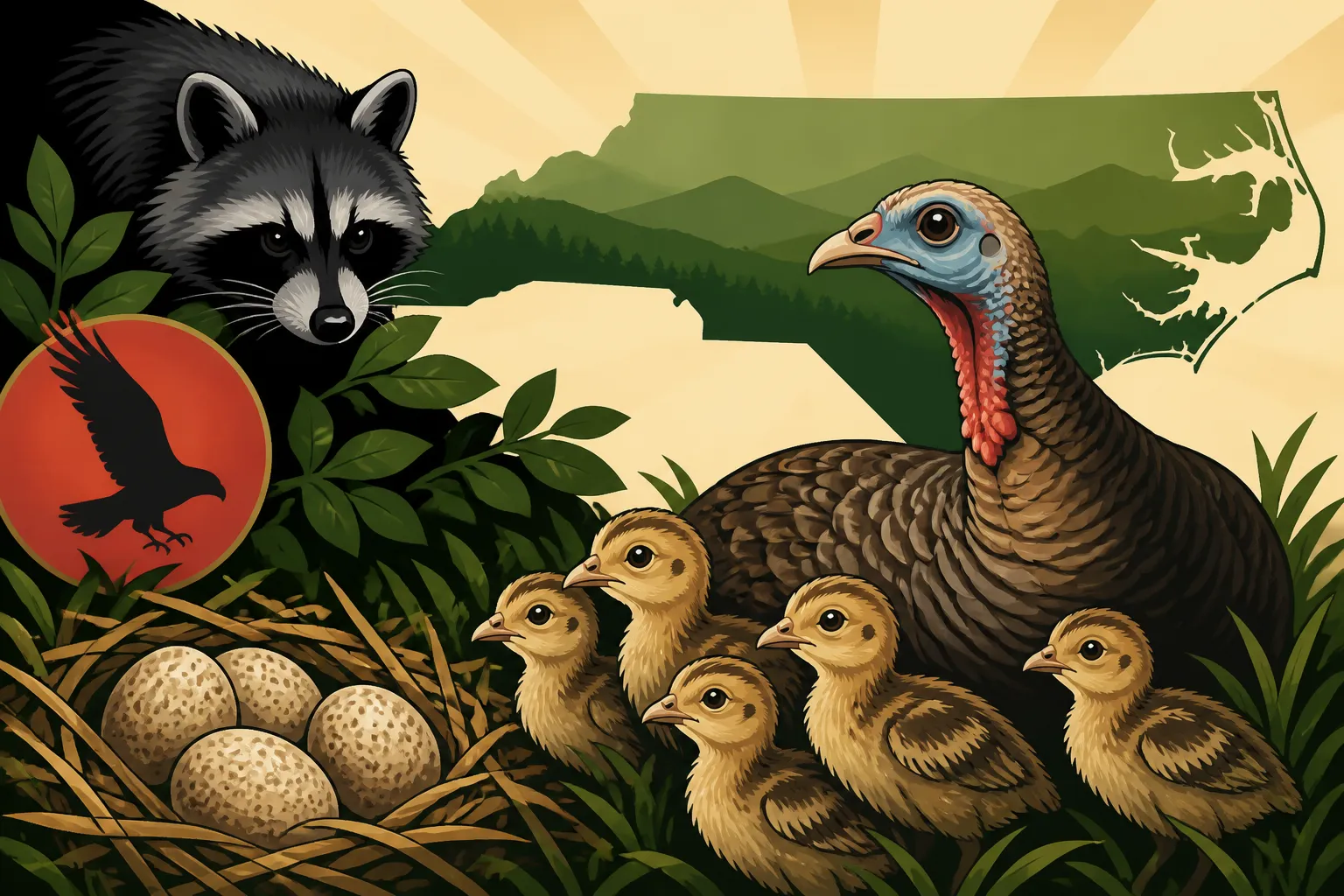
Simply put, nest predation is when predators find and consume turkey eggs or newly hatched poults right at the nest site. Unlike deer, which give birth to mobile fawns that can quickly hide, turkeys are ground-nesting birds. This means their nests, often little more than a scrape in the leaf litter, are inherently vulnerable. A hen will typically lay between 8 to 15 eggs, and she'll incubate them for around 28 days. That's nearly a month where she's relatively immobile, sitting on a clutch of eggs, trying to remain undetected by a host of hungry eyes and noses.
This vulnerability makes nest success a critical component of overall turkey population health. If a high percentage of nests are destroyed year after year, fewer poults make it to adulthood, directly impacting the number of gobblers and hens available for future breeding and, naturally, for hunting. It’s a snowball effect: fewer successful nests mean fewer juvenile birds, which in turn leads to fewer breeding adults in subsequent years.
The Delicate Balance of Reproduction
Wild turkeys are resilient, and hens will often attempt to re-nest if their first clutch is destroyed early in the season. This is a crucial adaptation that helps maintain populations even in the face of some predation. However, re-nesting takes a tremendous amount of energy from the hen. She has to find a new site, lay another clutch of eggs, and then endure another month of incubation. Each successive nesting attempt typically yields fewer eggs, and the poults that hatch later in the summer often face tougher survival odds due to less favorable weather and reduced insect availability.
Biologists often look at measures like Poult-to-Hen Ratios and What They Mean to gauge reproductive success. A healthy ratio indicates that enough poults are hatching and surviving to sustain or grow the population. When nest predation is high, these ratios plummet, signaling trouble ahead. It's a delicate balance; while nature expects some nests to fail, an imbalance can throw the entire turkey population into a downward spiral, impacting everything from local abundance to the state's overall North Carolina Turkey Population Estimate.
Identifying the Usual Suspects: Common Nest Predators in North Carolina
North Carolina's diverse landscapes, from the coastal plains to the mountains, host a wide array of wildlife, and unfortunately for nesting turkeys, many of these species view a turkey nest as a prime opportunity for an easy meal. Understanding who these predators are is the first step in understanding the challenge.
Mammalian Marauders
Mammals are arguably the most significant group of turkey nest predators. Their keen sense of smell, opportunistic nature, and often dense populations make them formidable foes for a camouflaged, stationary turkey nest.
- Raccoons, Opossums, and Skunks: These are the classic nest raiders. They're nocturnal, incredibly adaptable, and excellent at sniffing out hidden nests. A raccoon, with its dexterous paws, can easily uncover and consume every egg in a clutch, leaving behind telltale shell fragments. Opossums and skunks, while perhaps less agile, are equally effective at locating and destroying nests. Their widespread presence across all of North Carolina, from urban fringes to deep woods, means very few turkey nests are truly safe from their foraging activities.
- Coyotes and Foxes: Both red and gray foxes, and increasingly, coyotes, are highly efficient predators of both eggs and young poults. Coyotes, in particular, have expanded their range dramatically across the state, making Coyotes and Predators in North Carolina a growing concern for many game species, including turkeys. These canids often stumble upon nests while hunting other small prey, or they may actively seek out nests once they've learned the food source. Their presence can also stress nesting hens, potentially causing them to abandon nests prematurely. Hunters using scouting tools like GoHunt often report increased coyote sign in areas where turkey populations seem to be struggling, providing valuable ground-level intel on these predation hotspots.
- Feral Hogs: While perhaps less widespread than raccoons or coyotes, where feral hogs are present, they are devastating to turkey nests. These invasive omnivores will root up anything resembling a food source, and a turkey nest, with its protein-rich eggs, is an easy target. Their destructive rooting behavior can also disturb vast areas of habitat, further reducing suitable nesting cover. Efforts to manage North Carolina Feral Hog Regulations often have the beneficial side effect of reducing pressure on ground-nesting birds.
Avian and Reptilian Raiders
It's not just mammals that pose a threat; birds of prey and even reptiles can also contribute to nest failure.
- Crows and Jays: While typically taking fewer eggs than mammals, crows and jays are highly intelligent and opportunistic. They often spot nesting hens from above or locate nests while foraging. Once a nest is discovered, they can quickly consume eggs, especially if the hen is off the nest briefly. Their communal nature means that if one discovers a nest, others may soon follow.
- Snakes: North Carolina is home to various species of snakes, and some, like black rat snakes, are notorious for raiding bird nests. They can climb trees to reach arboreal nests, but they are equally adept at finding and consuming ground-nesting bird eggs. While they typically don't destroy the nest or harm the hen, a snake can devour an entire clutch of eggs, leaving little evidence behind besides a full belly.
- Raptors: While most raptors focus on live prey, some larger birds of prey might take an unattended poult or even occasionally an adult hen if the opportunity arises. However, their impact on egg predation is generally much less significant compared to mammals or even crows.
The Ripple Effect: How Poor Hatches Impact Our Hunting Seasons
When nest predation runs high and poult survival is low, the consequences reverberate throughout the turkey population and directly affect the quality and quantity of our spring hunting seasons. It’s a frustrating cycle for hunters who put in the effort, only to find fewer birds in the woods.
Dwindling Poult-to-Hen Ratios
One of the most immediate and telling signs of high nest predation and poor hatches is a low poult-to-hen ratio. This metric, gathered by wildlife agencies and often augmented by hunter observations, essentially tells us how many young birds are successfully being raised by each hen. Imagine tracking a particular flock on your hunting grounds or through a resource like GoHunt's data; if you consistently see hens without broods, or with only one or two poults trailing them, that's a red flag.
When these ratios dip below a certain threshold year after year, it means that the population isn't replacing itself adequately. We're not seeing enough new recruits to compensate for natural mortality among adult birds. This can lead to noticeably fewer birds overall, and crucially, fewer jakes and two-year-old gobblers in subsequent seasons – exactly the birds that make up a significant portion of the harvest. Hunters who closely follow North Carolina Turkey Brood Survey Results will recognize these trends and understand the implications for upcoming seasons.
Long-Term Population Decline
The cumulative effect of consistently poor hatches due to nest predation is a decline in the overall turkey population. While How Turkeys Were Restored to North Carolina is a conservation success story, these gains can be eroded by sustained reproductive struggles. When the number of turkeys reaching maturity shrinks, the breeding population itself becomes smaller, leading to a downward spiral unless intervention occurs.
This isn't just a hypothetical concern; it's a real issue that can translate into shorter seasons, reduced bag limits, and a general scarcity of birds in areas that once held thriving populations. Hunters might find themselves working harder for fewer opportunities, impacting their experience and the economic benefits derived from hunting. Resources like GoHunt can help hunters visualize these long-term trends, allowing them to track historical harvest data and understand why current North Carolina Spring Turkey Harvest Numbers might be lower than in previous decades. This perspective helps everyone understand the vital importance of healthy nesting success for the future of turkey hunting in our state, especially in areas Where North Carolina Turkeys Are Densest and hunting pressure is already high.
Strategies for Boosting Nest Success and Turkey Numbers
While nest predation is a natural phenomenon, when it becomes a primary limiting factor for turkey populations, there are proactive steps that can be taken. A multi-faceted approach involving habitat improvement and targeted predator management can make a real difference, helping to ensure healthy turkey populations for generations to come.
Habitat Management is Key
Creating and maintaining optimal nesting habitat is one of the most effective long-term strategies for mitigating nest predation. Turkeys prefer nesting in areas with dense, low-growing cover that offers concealment from aerial and ground predators.
- Early Successional Habitat: This type of habitat, characterized by young trees, shrubs, and tall grasses, provides excellent nesting and brood-rearing cover. Practices like prescribed burning, selective timber thinning, and bush hogging can create and maintain these crucial areas. These efforts disrupt the continuous canopy of mature forests, allowing sunlight to reach the forest floor and encourage the growth of diverse understory vegetation. Think about a field that's been left to grow wild for a few years, with briars and young pines taking over – that's prime nesting real estate.
- Dense Thickets and Edge Cover: Hens often choose nesting sites near dense thickets, fencerows, or field edges that offer quick escape routes and overhead concealment. Encouraging these features on your property or understanding their importance on public lands is vital. Forest management plans, often implemented on North Carolina Game Lands, will often include strategies for Habitat Work on North Carolina Game Lands to benefit a variety of species, including turkeys. Mapping tools, such as those offered by GoHunt, can be invaluable for identifying areas with dense cover and suitable terrain for creating or improving nesting habitat, helping hunters and land managers alike pinpoint the most effective spots.
Predator Control Efforts
While habitat management is a broad, long-term solution, targeted predator control can offer more immediate relief in specific areas experiencing intense predation pressure. This isn't about eradicating all predators, but rather about managing populations that have become disproportionately high and are having a measurable negative impact on turkey nests.
- Trapping and Hunting: Regulated trapping seasons for furbearers like raccoons, opossums, and foxes can help reduce their numbers. Similarly, year-round hunting for species like coyotes and Hunting North Carolina's Year-Round Feral Hogs on private lands can significantly reduce their presence. Landowners might explore specific depredation permits if predators are causing significant harm to game or livestock. It's a localized effort, often most effective when applied consistently over several years in conjunction with habitat improvements. For instance, a focused effort during the North Carolina Fox and Bobcat Trapping Season can help alleviate pressure before nesting season kicks into high gear.
- Buffer Zones: Sometimes, creating natural barriers or removing easily accessible dens for certain predators around known turkey nesting areas can make a difference. This might involve clearing dense invasive vegetation that provides prime habitat for nest predators, or even strategically placing exclusionary fencing in highly localized areas on private property to deter ground predators.
Understanding the Data and Hunter Involvement
The North Carolina Wildlife Resources Commission (NCWRC) relies on a combination of scientific surveys and citizen science to monitor turkey populations and understand factors like nest predation. Hunters play a crucial role in this process.
- Reporting Observations: When you're out scouting or hunting, pay attention to poult sightings. Reporting the number of poults seen with a hen, and the general condition of the habitat, contributes valuable data to the NCWRC's annual brood surveys. These observations help biologists identify trends and understand which areas might be struggling or thriving. Accurate data is the foundation of sound wildlife management, and your eyes in the field are invaluable.
- Utilizing Technology and Collaboration: Tools like GoHunt can be excellent for personal record-keeping of your observations. You can log sightings of hens and poults, note predator sign, and track habitat changes over time. Sharing this information, perhaps through hunter forums or directly with wildlife agencies if applicable, contributes to a collective understanding. This collaborative approach helps paint a more complete picture of what's happening on the ground, allowing for more informed management decisions to support healthy wild turkey populations across North Carolina.
| Predator Type | Common Examples | Primary Threat to Turkeys | Typical Impact on Nests |
|---|---|---|---|
| Mammalian | Raccoon, Opossum, Skunk | Eggs, Young Poults, Nest Disturbance | High (direct consumption, complete nest destruction) |
| Canid | Coyote, Fox | Eggs, Poults, Potential Hen Predation | High (opportunistic, can stress hens) |
| Suid | Feral Hog | Eggs, Poults, Habitat Destruction | Very High (devastating to nests, rooting) |
| Avian | Crow, Jay, Owl | Eggs, Young Poults | Moderate (opportunistic, less direct destruction than mammals) |
| Reptilian | Rat Snake, Black Snake | Eggs, Hatchlings | Moderate (consumes eggs, often leaves nest intact) |
Disclaimer
This article is for general informational purposes only and does not constitute professional advice. Laws, prices and regulations vary by location and change over time. Consult a qualified professional for guidance on your specific situation.