North Carolina’s Place on the Woodcock Flight
For many North Carolina bird hunters, the American Woodcock is a bit of an enigma. They're elusive, they seem to appear and disappear like ghosts, and trying to consistently find them can feel like chasing smoke in the wind. But trust me, understanding their migration patterns and preferred habitats in our state is the key to unlocking some truly unique and rewarding upland hunting experiences. This guide will walk you through everything you need to know about North Carolina's crucial role in the woodcock's journey, helping you pinpoint when and where to find these incredible timberdoodles.
Understanding the American Woodcock Migration
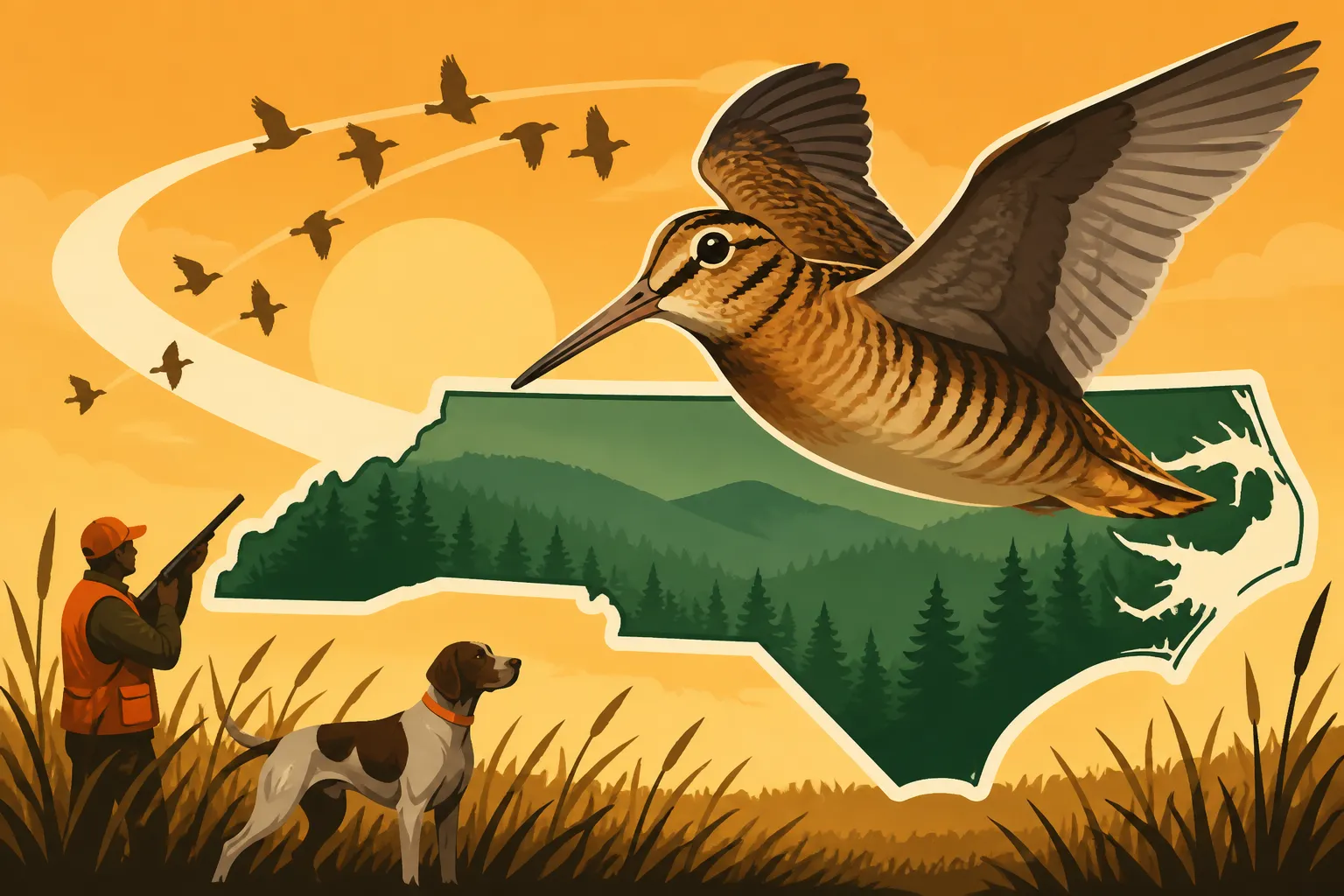
The American Woodcock, often affectionately called the "timberdoodle" or "bogsucker" by those who pursue them, is a fascinating migratory bird. Unlike many game birds that are residents or make shorter, localized movements, woodcock undertake significant migrations between their northern breeding grounds and southern wintering areas. North Carolina, with its diverse geography and mild winters, plays a surprisingly vital role in this annual journey, serving as both a stopover for birds moving further south and a wintering ground for many others.
The Atlantic Flyway Connection
Think of the Atlantic Flyway as a superhighway for migratory birds, stretching from eastern Canada down to the Gulf Coast and beyond. Woodcock are very much a part of this intricate system, navigating along the eastern seaboard. As the northern states begin to freeze and snow blankets their breeding grounds, these birds are driven southward by instinct and the need for accessible, unfrozen soil where they can probe for their primary food source: earthworms. North Carolina sits squarely in the middle of this flyway, making it a critical staging area and final destination for a significant portion of the woodcock population. We often see waves of birds moving through, especially after a strong cold front pushes down from the north, bringing fresh flights of woodcock into our state.
This migratory route isn't just a straight line; it's influenced by geographical features, weather patterns, and the availability of suitable habitat. For hunters, understanding that North Carolina is a significant stop means that woodcock aren't just passing through – many are staying awhile. This opens up opportunities from the mountains to the coast, as birds will drop into appropriate cover wherever they find it along their journey. It's a game of timing and knowing which cover to check, which is part of the fun and challenge.
Factors Influencing Woodcock Movement
Woodcock migration isn't a fixed calendar event; it's a dynamic process heavily influenced by several factors. The most significant drivers are weather and food availability. Early severe cold snaps up north, coupled with heavy snow, can push birds south much faster and earlier than usual. Conversely, a mild autumn might delay their arrival, leaving hunters wondering where the "flights" are.
Beyond temperature and snow cover, persistent rains can soften the ground, making it easier for woodcock to probe, and extending their stay in a particular area. A prolonged drought, on the other hand, can harden the soil, making feeding difficult and forcing them to move on quickly, even if temperatures are mild. This means being a successful woodcock hunter often requires paying close attention to weather forecasts, both locally and in states to our north. You're not just hunting birds; you're hunting conditions that bring the birds to you. Using mapping tools, like those found on GoHunt, to identify potential habitat along known migratory corridors can give you a real edge, allowing you to predict where birds might drop after a cold front.
Key Woodcock Habitat in North Carolina
Finding woodcock isn't about covering miles of ground; it's about knowing exactly what kind of cover they prefer. These aren't birds that hang out in wide-open fields or mature, park-like timber. They are creatures of specific, often dense, and damp environments. Understanding their habitat preferences in North Carolina is paramount, whether you're hunting the rolling Piedmont or the river bottoms of the Coastal Plain.
Wet Bottomlands and Young Forests
Woodcock are inextricably linked to specific types of habitat. Their ideal real estate is characterized by moist, fertile soils that harbor abundant earthworms, and dense, young woody cover that offers both concealment from predators and protection from the elements. In North Carolina, this often translates to several key areas:
- Alder and Willow Thickets: These are classic woodcock covers, especially found along creek bottoms, beaver ponds, and low-lying areas. The dense, interwoven branches provide excellent overhead cover, and the damp soil beneath is a worm haven.
- Young Mixed Pine and Hardwood Stands: Think about areas that were clear-cut 5-15 years ago and have regenerated into a thicket of young pines, sweet gums, maples, and other brushy growth. If these areas also have a decent understory and are adjacent to a water source or seep, they can be phenomenal. The tangled mass prevents easy access for larger predators while allowing woodcock to move somewhat freely underneath.
- Swamp Edges and Pocosin Transitions: In the eastern part of the state, the edges of cypress swamps, gum swamps, and pocosins where the dense, boggy vegetation transitions to slightly higher, brushier ground can hold birds. These areas often have perpetually moist soil.
The common thread is always moisture and dense cover. Woodcock prefer areas where the canopy is somewhat open, allowing sunlight to reach the forest floor and keep the soil moist, but where the understory is thick enough to hide a small, camouflaged bird. When you’re scouting, look for those transitions—where a mature stand gives way to younger growth, or where a slight depression holds more moisture than the surrounding area. These subtle changes can make all the difference.
Ideal Cover Characteristics
Beyond general location, there are specific characteristics that define truly prime woodcock cover. Learning to read these subtle signs can significantly increase your success rate.
- Soil Type and Moisture: Woodcock rely on soft, damp soil for probing. Hard, dry ground means no worms, no woodcock. Look for areas with dark, rich soil, often indicated by the presence of specific plant species like ferns, sedges, or mosses. You can even check the ground by pressing your heel into it—if it gives easily, it's promising.
- Dense Understory with Overhead Protection: The cover needs to be thick enough to offer security but not so impenetrable that a dog can't work it or a bird can't flush. Ideal cover often has a mix of saplings, briars, and low-growing shrubs. While they like dense growth, they also appreciate some open patches within that cover to stretch their wings and dust bathe.
- Presence of Woodcock Sign: The ultimate confirmation of good woodcock habitat is fresh sign.
- "Splats": These are their distinctive chalky-white droppings, often streaked with dark material. They're usually found in small clusters where birds have been feeding or roosting.
- Probe Holes: Look for pencil-sized holes in the soft earth, often in clusters. These are where woodcock have been probing for worms.
- Roosting Areas: On a clear, cold night, woodcock will often move to more open, slightly higher ground with scattered pines or sparse hardwoods to roost. These areas are harder to hunt but can offer clues to where they'll be in denser cover during the day.
When you're out scouting for Squirrel and Small Game Hunting in North Carolina, don't overlook areas that fit this woodcock description. You might be surprised to find some timberdoodles in what you thought was just squirrel woods. Pay particular attention to old logging roads or clear-cut edges that have grown up in saplings and briars, especially if they follow a creek bottom. These linear features can be woodcock magnets.
Timing Your North Carolina Woodcock Hunts
The migratory nature of woodcock means that timing is absolutely everything. Unlike resident game, you can't just hunt them all season long with consistent success. You're waiting for the "flights" to arrive and hoping they linger. Knowing when to be in the woods is just as important as knowing where.
Early Season Arrivals
North Carolina's woodcock season typically opens in November, but early season hunting can be a bit hit or miss, depending heavily on weather patterns further north. Generally, the first significant push of migratory birds doesn't arrive until late November or early December. These early arrivals are often a mixed bag: some local birds that have bred in the state, and the first waves of northern migrants pushed south by colder temperatures or freezing ground.
For early season success, focus on areas that are traditionally known to hold birds or places that have a consistent water source. If we've had a mild fall, birds might be slower to push through, and those that do arrive might spread out across suitable habitat rather than concentrating in large numbers. It’s during these times that scouting for fresh sign becomes crucial. Don't be discouraged if you're not finding them in droves; early season is often about picking up a bird or two, enjoying the dog work, and staying attuned to weather changes. A great tool like GoHunt can help you keep track of ideal weather patterns and even other hunters' reports (if available) to inform your early season efforts. Remember to check the North Carolina Small Game Season Rules to ensure you're hunting within legal dates and regulations.
Mid-Season Peaks and Departures
The sweet spot for North Carolina woodcock hunting usually falls between mid-December and mid-January. This is typically when the main migration pushes through, and many birds settle into their wintering grounds within the state. Consistent cold weather in states like Pennsylvania, New York, and the New England region often correlates with strong flights into North Carolina. You'll often notice a significant increase in woodcock numbers after a hard freeze or snowfall to our north.
During this peak period, birds are more likely to be concentrated in prime habitat, making them easier to find. However, this is also when hunting pressure might increase, particularly on public lands. By late January, some of these birds will begin to push further south into Georgia, Florida, and Louisiana if conditions are suitable, or if a prolonged cold snap hits North Carolina. The dynamic nature of these movements means that a patch of woods that was teeming with birds one week might be nearly empty the next. This is part of the allure and challenge of woodcock hunting – you're always trying to hit that migratory wave just right. We also have detailed information on When Woodcock Migrate Through North Carolina that can help you fine-tune your timing.
Late Season Opportunities
While the biggest numbers often occur mid-season, don't write off late January and early February. North Carolina's woodcock season often extends into February, and these late weeks can offer some surprisingly good hunting, especially for birds that have chosen North Carolina as their winter home. By this point, the remaining birds are usually settled, and while the total numbers might be lower, they can be found reliably in prime wintering cover.
Late season woodcock are often found in the densest, most sheltered cover, seeking warmth and protection from any lingering cold fronts. Think thick briar patches, evergreen thickets adjacent to water, and dense rhododendron or mountain laurel if you're hunting in the foothills. The key is to be persistent and explore those areas that offer maximum thermal protection. As February progresses, some woodcock may even begin their northward migration, often exhibiting less skittish behavior as they're driven by the urge to breed. This can provide some memorable encounters, especially with a good bird dog.
Hunting Strategies for North Carolina Woodcock
Hunting woodcock in North Carolina is a unique pursuit that combines aspects of traditional upland hunting with a bit of detective work. These small, camouflaged birds require specific tactics, and often the best hunts involve a good dog and a willingness to explore thick cover.
Dog Work and Cover Selection
A well-trained bird dog is an invaluable asset for woodcock hunting. Woodcock hold incredibly tight, often allowing a dog to point them at very close range. Without a dog, these birds are exceptionally difficult to flush, as their camouflage makes them almost invisible on the forest floor. Pointers, setters, and even versatile retrievers can be excellent woodcock dogs, as long as they are trained to work slowly and methodically in dense cover.
When selecting cover to hunt, focus on areas identified in the habitat section above. Work your dog into the wind, allowing them to scent the birds. Be patient; a good woodcock dog will often "foot scent" a bird for a considerable distance before locking up on a solid point. This means following your dog's subtle cues, observing their body language as they work scent.
Here’s a common scenario: you and your dog are working a thick alder bottom. The dog suddenly gets birdy, head low, tail twitching, working a faint scent. You know a woodcock is somewhere ahead. The dog locks up, solid as a statue, nose pointed into a tangle of briars. You move in cautiously, gun at the ready, carefully navigating the thicket. The bird explodes from the cover with a distinctive twittering flush, and you react, trying to get a shot off before it ducks behind the next screen of saplings. It’s fast, exhilarating, and often over in a second. This close-quarters action often demands a different approach than more open field hunting, and it’s why a good woodcock hunt is often considered one of the finest challenges in upland sport. For a look at how to handle different types of terrain, you might find tips in our guide on Hunting Coastal Plain Pocosin Swamps or even Hunting Uwharrie Piedmont Hollows, depending on where you are in the state.
Walk-Up and Still-Hunting Tactics
While a dog makes woodcock hunting infinitely more productive and enjoyable, it's not strictly necessary. You can still-hunt or walk-up woodcock, but it requires a different level of patience and observation. Without a dog, you'll need to move very slowly and deliberately through promising cover, stopping frequently to listen and look for movement. Woodcock will often flush silently if you're not right on top of them, and their flight path is usually short before they drop back into cover.
When walk-up hunting, pay extra attention to areas with good "splats" or probe holes, as these indicate recent activity. Walk in a zigzag pattern, pushing through the densest cover. The "stop and go" method can be effective: walk a few steps, then pause for 10-20 seconds. This often makes a woodcock, which has been holding tight, think it's been passed and decide to flush. It's a low-percentage game compared to hunting with a dog, but it can yield results for the dedicated hunter.
For those considering hunting woodcock with a firearm, understanding your tool is essential. Shotguns are the standard, and typically, open chokes are preferred for the close-range shots encountered in thick cover. You can learn more about specific firearm choices in Upland Guns for Mountain Grouse Cover or general recommendations in Shotguns for North Carolina Grouse and Dove, which often apply well to woodcock as well.
Shotgun and Choke Considerations
Given the close-quarters nature of woodcock hunting, your choice of shotgun and choke setup is important. Fast-handling, lightweight shotguns are ideal. A 20-gauge or even a 28-gauge is often favored for its lighter weight and quicker swing, though a 12-gauge is certainly effective. The most crucial factor, however, is the choke.
Woodcock flush close and fly relatively slowly, but they navigate dense cover, making snap shots the norm. Open chokes are almost universally recommended.
| Choke Constriction | Ideal Range | Pattern Density | Common Use |
|---|---|---|---|
| Cylinder | 0-20 yards | Very Open | Very dense cover, close flushes |
| Skeet | 10-25 yards | Open | Dense cover, quick shots |
| Improved Cylinder | 15-30 yards | Moderate Open | Versatile for many upland birds |
| Modified | 25-40 yards | Moderate | More open cover, longer shots |
For most North Carolina woodcock hunting scenarios, an Improved Cylinder or even a Skeet choke is perfect. These open patterns allow for a wider spread at close ranges, increasing your chances of connecting with a rapidly flushing bird before it disappears. Pair this with light target loads (7.5 or 8 shot) to achieve a dense pattern at close range without excessive recoil. This light shot is perfect for the small-bodied woodcock. You can get more specific guidance on Shot Size for Grouse and Woodcock and Choke Choice for Fast Flushes to fine-tune your setup. Remember, the goal isn't long-range killing power, but a quick, clean shot on a bird that might be only 10-15 yards away.
Conservation Efforts and Future of Woodcock in NC
While woodcock are still found across North Carolina during their migration and wintering periods, like many migratory birds, their populations face challenges. Understanding these challenges and the ongoing conservation efforts is crucial for hunters who want to see these unique birds continue to thrive. North Carolina plays a vital role not just in their journey, but also in their long-term survival through habitat management and hunter participation in data collection.
Habitat Management Programs
The biggest factor influencing woodcock populations is habitat loss and degradation. Their reliance on young, brushy, moist forest types means they are vulnerable to changes in land use, such as the maturation of forests or conversion of woodlands to development or agriculture. Fortunately, various organizations and government agencies are actively working to create and maintain suitable woodcock habitat in North Carolina.
- NC Wildlife Resources Commission (NCWRC): The NCWRC, often in partnership with private landowners and other conservation groups, implements habitat management practices on Game Lands and other public and private properties. This often involves timber harvest (e.g., clear-cutting small patches), prescribed burning, and managing riparian zones to create the mosaic of young, dense cover that woodcock thrive in. These efforts benefit not only woodcock but also other early successional species like rabbits, quail, and some deer. When you’re hunting North Carolina Game Lands, you’re often walking through areas that are actively managed, even if indirectly, for these types of birds.
- National Forests: Federal lands like the Uwharrie, Croatan, Pisgah, and Nantahala National Forests also undertake forest management activities that can create woodcock habitat. Again, these are often focused on overall forest health, but the creation of young, diverse stands benefits woodcock.
- Private Landowner Initiatives: Many private landowners are becoming more aware of the importance of early successional habitat. Programs and resources are available to help them manage their property in a way that benefits woodcock and other wildlife.
These proactive management efforts are absolutely critical. Without a concerted focus on creating and maintaining these specific, often temporary, habitats, woodcock numbers would likely decline. Hunter dollars from license sales and excise taxes on firearms and ammunition directly contribute to funding these vital programs.
Hunter's Role in Data Collection
As hunters, we play a unique and important role in the conservation of game species, including woodcock. Our direct interaction with these birds in the field provides valuable data that scientists and wildlife managers simply can't get any other way.
- Banding Studies: If you harvest a banded woodcock, reporting the band number is immensely helpful. These bands provide critical information on migration routes, longevity, and population dynamics.
- Wing Surveys: The US Fish and Wildlife Service, in cooperation with state agencies, conducts wing collection surveys. Hunters are asked to submit one wing from each woodcock they harvest. Examination of these wings allows biologists to determine age and sex ratios, providing insights into reproductive success and population health. Participating in these surveys is a simple yet powerful way to contribute to the science that guides woodcock management.
- Observational Data: Even without formal surveys, hunters’ observations of bird numbers, habitat conditions, and hunting success (or lack thereof) can provide useful anecdotal information. Sharing these observations with local wildlife biologists can help them understand regional trends.
One particularly important effort is the North Carolina Woodcock Singing Ground Surveys. These surveys, conducted by biologists and trained volunteers, count singing males during the spring breeding season to monitor population trends. While not directly a hunter's role during hunting season, the data from these surveys directly impacts management decisions. Remember, when you’re out there chasing woodcock, you're not just enjoying a day afield; you're an important part of a larger conservation picture. Always ensure you have your North Carolina Resident Hunting License Options or nonresident equivalent, as these funds directly support wildlife management.
Future Outlook for the Species
The future of American Woodcock in North Carolina, and across their range, is a complex one. While populations have seen declines in some areas over the long term, dedicated habitat management and monitoring efforts offer hope. The key will be continued commitment to creating and maintaining the young forest habitat that woodcock need.
As development continues and forests mature, the challenge will be to ensure that sufficient early successional habitat is created through active management. This requires not only public land initiatives but also educating and incentivizing private landowners to engage in practices like rotational timber harvest and prescribed burning. The shift in agricultural practices and forest management over the last several decades has certainly impacted these birds. However, with renewed interest in active forest management and a growing appreciation for species that rely on early successional habitats, there is a path forward.
For North Carolina hunters, the woodcock will likely remain an elusive, rewarding, and deeply cherished game bird. Their unique character and the dense cover they inhabit ensure that every successful flush and shot is hard-earned. By understanding their migratory patterns, identifying prime habitat, employing effective hunting strategies, and actively participating in conservation, we can help ensure that North Carolina continues to be a vital stop on the woodcock flight for generations to come. When you're using mapping tools or looking at potential new hunting spots, considering Reading Aerial Photos for Piedmont Deer can also help you identify areas of young forest or low-lying moist ground that might hold woodcock, even if you're primarily scouting for deer. The more knowledge we have, the better we can appreciate and protect all our game species.
Disclaimer
This article is for general informational purposes only and does not constitute professional advice. Laws, prices and regulations vary by location and change over time. Consult a qualified professional for guidance on your specific situation.