North Carolina Diamondback Rattlesnake Encounters Afield
Stepping into the vast and wild spaces of North Carolina, whether you're chasing deer, stalking turkeys, or just enjoying a hike, brings an incredible sense of freedom. But with that freedom comes the natural world, and sometimes that includes critters that demand our respect, like venomous snakes. The thought of encountering a rattlesnake, especially a hefty Eastern Diamondback, can certainly put a knot in your stomach for many hunters, conjuring up images of a sudden strike in dense cover. This guide is all about giving you the knowledge and confidence to understand these magnificent, yet potentially dangerous, reptiles, so you can minimize risk and know exactly what to do if an encounter occurs afield.
Understanding the Eastern Diamondback Rattlesnake in North Carolina
When you're out in the field, knowing what you're looking for, or more importantly, what to avoid, is crucial. The Eastern Diamondback rattlesnake (Crotalus adamanteus) is undeniably one of North Carolina's most impressive, and often misunderstood, native reptiles. They evoke a strong reaction from people, and for good reason – they are our largest venomous snake and possess a powerful bite. But understanding their habits, appearance, and preferred habitat can turn a moment of panic into one of cautious respect and avoidance.
Identifying the Eastern Diamondback: What to Look For
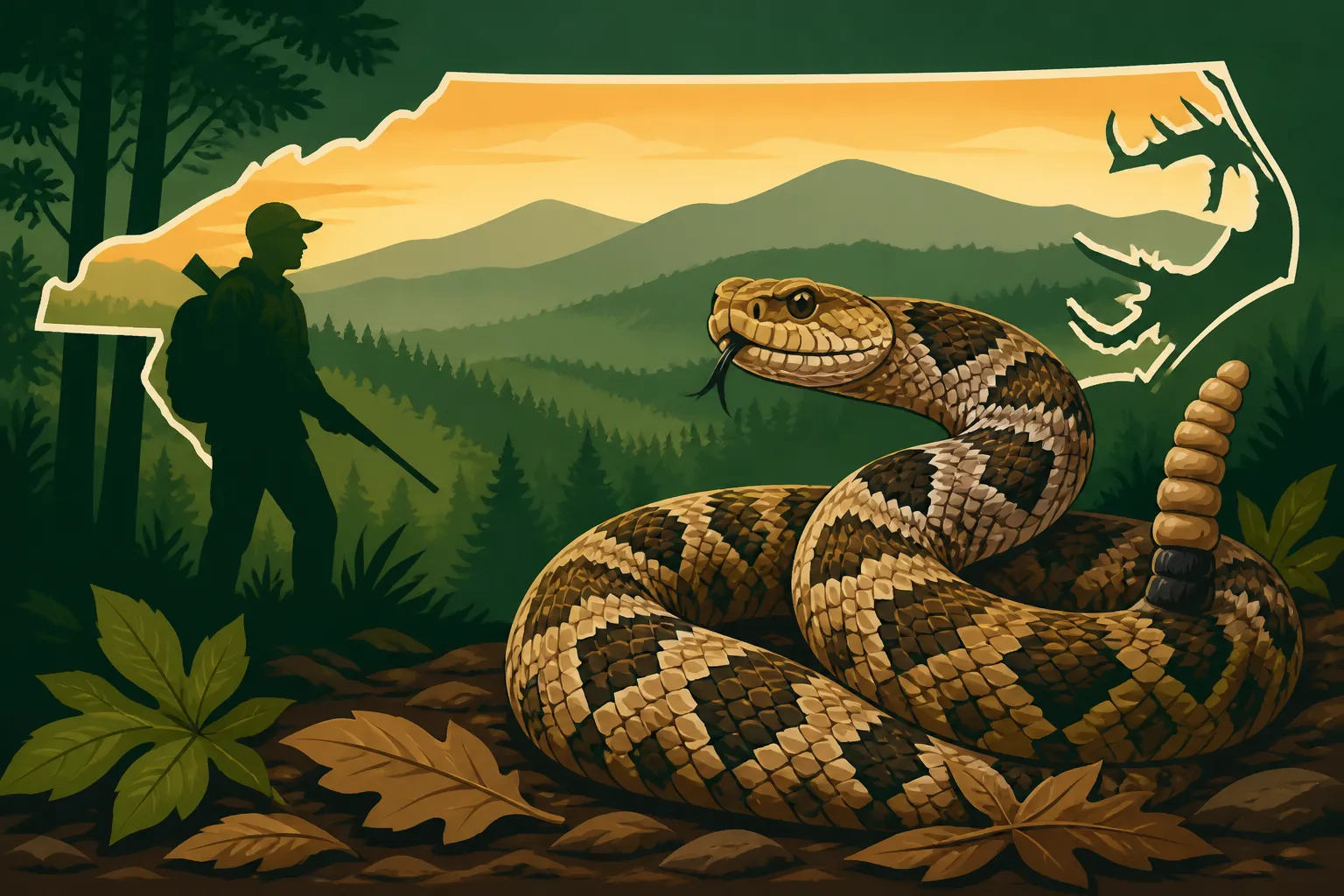
Let's talk about what makes an Eastern Diamondback stand out. First and foremost, their name gives a huge clue: diamonds. They have a distinct pattern of dark, diamond-shaped markings, often outlined in lighter scales, running down their back. These diamonds are usually dark brown to black against a background of olive, brown, or grayish-brown scales. It's a beautiful, intricate pattern that actually serves as incredible camouflage in their natural environment.
Beyond the pattern, their sheer size is often a dead giveaway. These are big, heavy-bodied snakes, easily reaching five or six feet in length, and sometimes even more. Their heads are broad and triangular, a classic characteristic of many venomous snakes, and they have prominent facial pits between their eyes and nostrils, which are heat-sensing organs. The tail ends in a prominent rattle, of course. This rattle is made of keratin segments that click together, producing that unmistakable warning sound. Sometimes they lose segments, or younger snakes might have only a few, so don't rely solely on the rattle's size. One crucial identifier is the dark diagonal line that runs from the eye to the corner of the jaw, often bordered by lighter scales. This "bandit mask" is a key feature.
Distinguishing from Other Rattlesnakes and Mimics
North Carolina is also home to the Timber Rattlesnake (Crotalus horridus), which is more widespread, particularly in the mountainous regions and some parts of the Piedmont, whereas the Eastern Diamondback is largely restricted to the Coastal Plain and Sandhills. The Timber Rattlesnake typically has a pattern of dark, V-shaped or chevron bands across a lighter background, not diamonds. Their tail is often uniformly black, giving them the nickname "canebrake rattler" in some areas. Their overall color can also be quite variable, from black to yellow to gray.
You also have non-venomous snakes that can sometimes be mistaken for rattlesnakes, especially when they're trying to act tough. Hognose snakes, for instance, are known for flattening their heads to look more triangular and hissing loudly. Rat snakes will often vibrate their tails in leaf litter to mimic a rattle. The key is to look for those specific diamond patterns, the broad head, and the actual rattle. If you're unsure, always give the snake a wide berth. When in doubt, assume it's venomous and keep your distance.
| Feature | Eastern Diamondback Rattlesnake | Timber Rattlesnake | Non-Venomous Mimic (e.g., Hognose, Rat Snake) |
|---|---|---|---|
| Primary Pattern | Dark, light-bordered diamonds on back | Dark V-shaped bands or chevrons on back | Variable (often blotches, stripes); no true rattle |
| Head Shape | Very broad, triangular, distinct neck | Broad, triangular, distinct neck | Can flatten head to appear triangular, but generally narrower |
| Tail End | Pronounced rattle, light-colored segments | Pronounced rattle, often uniformly black tail | Pointed tail (sometimes vibrated in leaves to mimic rattle) |
| Size (Adult) | Largest, often 5-7+ feet, very heavy-bodied | Large, often 3-5 feet, stout-bodied | Varies, generally smaller/slimmer, though some rat snakes are long |
| Heat Pits | Present (between eye and nostril) | Present (between eye and nostril) | Absent |
| Geographic Range | Primarily Coastal Plain & Sandhills | Widespread across mountains, Piedmont, some Coastal Plain | Widespread throughout NC |
| Key Facial Mark | Dark diagonal line from eye to jaw | No distinct facial stripe | No distinct facial stripe |
Where You're Most Likely to Encounter Them
Understanding the habitat preferences of the Eastern Diamondback rattlesnake is paramount for any hunter or outdoors enthusiast in North Carolina. Knowing where they like to hang out means you can be more vigilant in those specific areas. While they might turn up in unexpected places, there are definite hot spots where encounters are far more common.
Preferred Habitats: Sandy Soils and Pine Forests
The Eastern Diamondback rattlesnake in North Carolina is primarily a creature of the Coastal Plain and Sandhills regions. These areas are characterized by sandy, well-drained soils and extensive pine forests, particularly longleaf pine ecosystems. They absolutely thrive in habitats that feature:
- Longleaf Pine Savannas: These open, park-like forests with grassy understories are prime real estate for diamondbacks. The pine straw and grass provide excellent camouflage, and the open canopy allows sunlight to warm the ground, which snakes love.
- Dry Pine Ridges and Woodlands: Any area with dry, sandy soil and pine trees is a good bet. This could be on private timberland or large expanses of public game lands that have these characteristics.
- Palmetto Thickets and Dense Underbrush: While they prefer dryer areas, they'll often be found seeking shelter in dense palmetto thickets, yucca clumps, or other thick, shrubby vegetation, especially where it meets more open, sunny spots. This is where they can ambush prey and hide from predators.
- Gopher Tortoise Burrows: In states further south, gopher tortoise burrows are classic diamondback refuges. While gopher tortoises are not native to North Carolina, the diamondbacks will utilize similar subterranean burrows created by other animals, or even natural crevices, for shelter from extreme temperatures and as den sites.
So, if you're Hunting the Coastal Plain and Sandhills or exploring some of the larger North Carolina Game Lands in the eastern part of the state, your awareness should be heightened. Places like Holly Shelter Game Land or areas around the Croatan National Forest have prime diamondback habitat.
Seasonal Movement and Activity Patterns
Like most reptiles, Eastern Diamondbacks are ectothermic, meaning their body temperature is regulated by their external environment. This drives their activity patterns throughout the year:
- Spring and Fall: These are often peak activity times. As temperatures rise in spring, snakes emerge from dormancy (brumation) to bask, hunt, and eventually breed. In the fall, they are busy feeding to put on fat reserves for the winter and seeking den sites. During these seasons, you might find them basking on sunny roads, trails, or open patches of ground.
- Summer: During the scorching North Carolina summers, diamondbacks tend to be more nocturnal or crepuscular (active at dawn and dusk) to avoid the intense midday heat. They'll seek refuge in shaded areas, dense cover, or burrows during the hottest parts of the day. This is why you need to be especially careful if you're out Scouting North Carolina Public Land Before Season during the late summer, as they might be less visible but still present.
- Winter: When temperatures drop consistently, diamondbacks will seek out den sites, which could be underground burrows, rock crevices, or hollow logs, and enter a state of brumation. Encounters are rare during true winter cold snaps.
Always remember that these are general patterns. A warm winter day or a cool summer morning can shift their behavior. Awareness of the immediate weather conditions and typical behavior for the season is key. They often follow scent trails for food, so if you're Reading North Carolina Mud for Fresh Deer Movement, you might be tracking through an area a snake just crossed. Tools like GoHunt's mapping features can also help you identify habitat types (like pine forests or sandy ridges) before you even set foot on the ground, allowing you to plan your routes to minimize risk.
What to Do If You Encounter a Rattlesnake
Encountering a rattlesnake in the wild is one of those heart-stopping moments that can instantly change the mood of your hunt or hike. It’s natural to feel a jolt of adrenaline, but how you react in those crucial first seconds can make all the difference for your safety. Remember, these snakes are generally not looking for trouble; they simply want to be left alone.
Prevention and Situational Awareness
The best encounter is the one that never happens. Prevention starts long before you step into the woods.
- Footwear is Non-Negotiable: This is perhaps the most important piece of advice. Always wear sturdy, high-top boots, ideally made of leather or snake-resistant material, when in snake country. Even better, invest in snake gaiters or snake-proof boots that cover your shins. A good pair of Boots for North Carolina Swamps and Ridges isn't just for comfort; it's a critical safety layer.
- Watch Your Step and Hands: Look where you're walking, especially when stepping over logs, rocks, or through tall grass. Never step over an obstacle without first looking at the other side. If you're climbing or reaching into thick cover, use a stick to probe the area first. Never put your hands or feet where you can't see them.
- Listen: That distinctive rattle is a warning. If you hear it, freeze immediately and try to pinpoint the sound.
- Stick to Trails (When Possible): While hunters often go off-trail, being aware when you are doing so, especially in prime snake habitat like a Hunting Coastal Plain Pocosin Swamps, is key. If you are tracking a deer, be extra cautious.
- Educate Yourself: Know the habitats and behaviors of the snakes in the area you’re hunting. Using a scouting app like GoHunt to study terrain features can help you anticipate areas where snakes might be present. Knowledge is power.
What to Do During an Encounter
So, you've heard the rattle, or you've spotted one coiled up. Here’s the calm, rational approach:
- Freeze: Your first instinct might be to jump or run, but freezing allows you to assess the situation without startling the snake further. A sudden movement can trigger a defensive strike.
- Locate the Snake: Once you've stopped, try to find the snake's exact location. It might be camouflaged, so take a moment to scan the area carefully.
- Slowly Back Away: Once you've located it, maintain a safe distance – typically 6-10 feet or more. Slowly and carefully back away in the direction you came, creating space between you and the snake. Do not try to move closer for a better look or a photo.
- Do NOT Provoke: Never, ever try to handle, harass, or kill a snake. This is when most bites occur. Even a "dead" snake can deliver a reflex bite. Give it its space, and it will almost certainly choose to retreat rather than engage.
- Notify Others: If you're hunting with a group, calmly let them know about the snake's presence and location so they can avoid it. If you're on public land, consider marking its location on your GoHunt map for future reference or to help other users.
Emergency Protocol for a Rattlesnake Bite
Despite all precautions, accidents can happen. If you or someone in your hunting party is bitten by an Eastern Diamondback rattlesnake, immediate medical attention is critical. This is a medical emergency, and acting quickly and correctly can save a limb or even a life.
- Call 911 Immediately: This is the most important step. Get professional medical help en route as fast as possible. Provide your exact location. Remember, even in remote areas, First Aid Kits for Remote Mountain Ground can offer some immediate help, but specialized antivenom is the only definitive treatment.
- Stay Calm and Still: Panicking will increase your heart rate, which can spread the venom more quickly through your body. Try to remain as calm as possible. Keep the bitten limb below the level of the heart if possible, but prioritize keeping it still.
- Remove Constricting Items: Take off any rings, watches, bracelets, or tight clothing near the bite site. Swelling will occur rapidly, and these items can quickly become tourniquets, cutting off circulation.
- Clean the Wound (Gently): If you have clean water, gently wash the bite area with soap and water. Do not scrub or try to flush the wound aggressively. Cover it with a clean, dry dressing if available.
- Immobilize the Limb: Keep the bitten limb as still as possible. You can use a splint or sling if one is available and you know how to apply it without constricting.
- Note the Time: Keep track of the time the bite occurred, as this information will be crucial for medical personnel to gauge the progression of the venom.
What NOT to Do: This part is just as important as what to do. Misinformation about snakebites is rampant.
- Do NOT Apply a Tourniquet: This can cut off blood flow completely and lead to severe tissue damage or even amputation.
- Do NOT Cut the Wound: Incising the bite area does not help and can introduce infection.
- Do NOT Try to Suck Out the Venom: This is ineffective and can introduce bacteria into the wound.
- Do NOT Apply Ice or Heat: Neither helps, and ice can actually worsen tissue damage.
- Do NOT Drink Alcohol or Take Painkillers (Unless Directed by Medical Staff): These can complicate treatment.
- Do NOT Try to Catch or Kill the Snake: This wastes precious time and puts you at risk of another bite. Medical professionals do not need the snake for identification; symptoms are enough.
Your primary goal is to get to a hospital where antivenom can be administered. Hunters are often in remote areas, so having a reliable communication device and knowing your general location is key. Consider carrying a satellite messenger or knowing where you can find cell service, especially if you venture far off the beaten path on North Carolina Wildlife Cooperator Land Access or large game lands. Being prepared means not just bringing hunting gear, but also thinking about potential hazards and having a plan.
Disclaimer
This article is for general informational purposes only and does not constitute professional advice. Laws, prices and regulations vary by location and change over time. Consult a qualified professional for guidance on your specific situation.