Run-and-Gun Turkey Tactics on Public Land
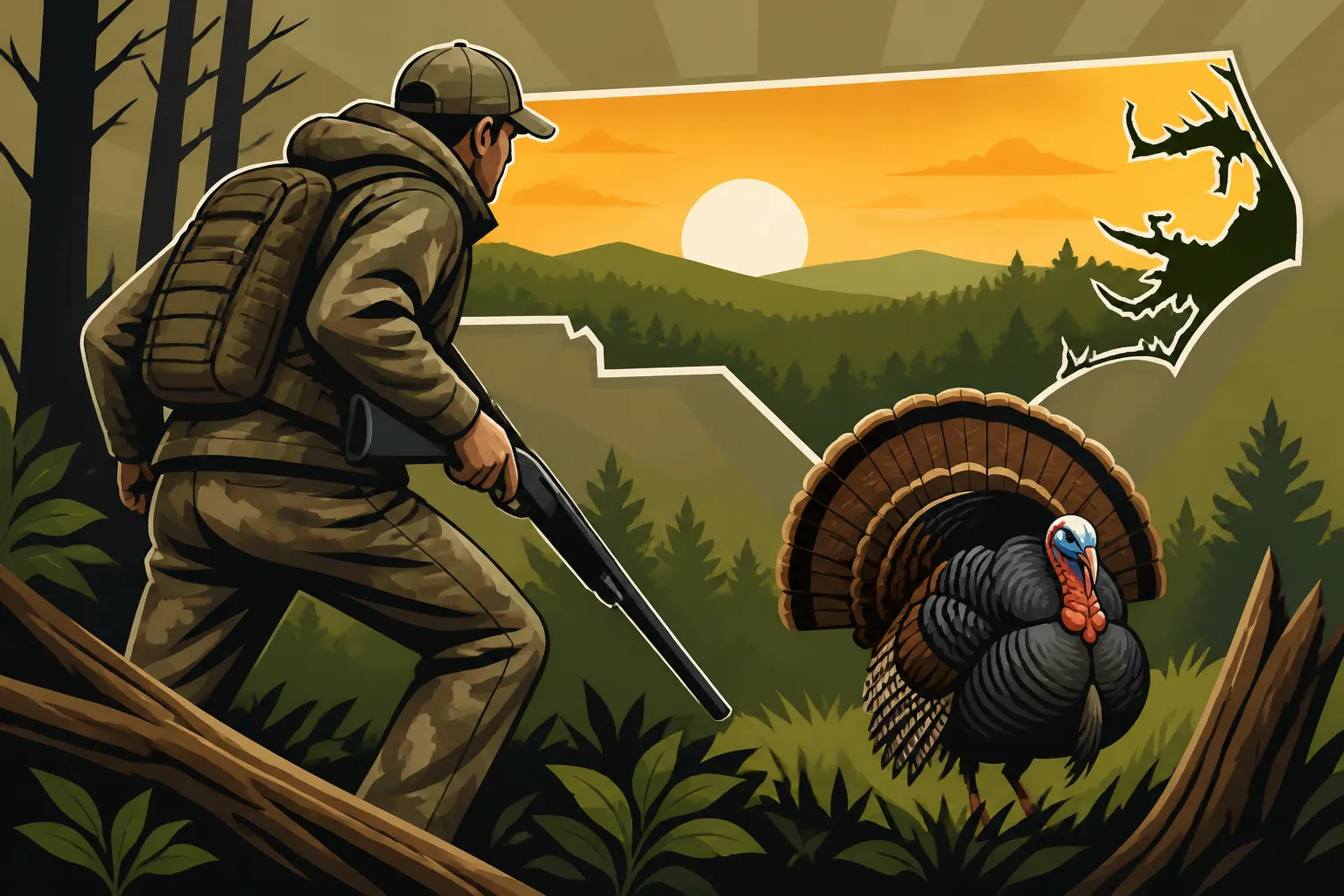
It's a familiar scenario for many North Carolina turkey hunters: you've hiked deep into a sprawling game land, found what looks like a perfect spot, and settled in, only to hear distant gobblers that just won't commit. This sedentary approach can be incredibly frustrating on public ground, where birds are often pressured and don't sit still. This guide is designed to empower you with dynamic run-and-gun tactics, helping you actively pursue and connect with those elusive longbeards across North Carolina's diverse public lands.
Understanding the Run-and-Gun Philosophy
Run-and-gun turkey hunting is an aggressive, proactive strategy that stands in stark contrast to the traditional sit-and-wait method. Instead of finding a spot and hoping a bird comes to you, you're constantly moving, covering ground, calling frequently, and actively locating gobblers. It's about bringing the hunt to the turkey, rather than waiting for the turkey to bring the hunt to you. This approach can be incredibly effective, especially when you're dealing with vast tracts of public land where birds are spread out and their patterns less predictable.
Why It Works for Public Land Turkeys
Public land turkeys in North Carolina are different animals than their private land counterparts. They often face more pressure, hear a wider variety of calls, and are generally warier. They don't always gobble as freely, and they might be more reluctant to cross open spaces or commit to a static setup. This is precisely where the run-and-gun method shines. By being mobile, you increase your chances of stumbling upon unpressured birds or catching a hot gobbler off guard. You can quickly adjust your position based on real-time intel – a distant gobble, fresh tracks, or even other hunters' movements. Instead of wasting hours in a dead zone, you can move efficiently, covering more ground and encountering more birds in a single morning. It's about maximizing your time and effort in an environment where every advantage counts. It's also a fantastic way to understand the flow and natural funnel points on various game lands, from the mountainous terrain of the Nantahala National Forest to the open pine forests of the Sandhills.
The Mindset of the Mobile Hunter
Embracing the run-and-gun approach requires a significant shift in mindset. You have to be comfortable with constant movement, making quick decisions, and sometimes even sacrificing a "perfect" setup for the sake of staying mobile and responsive. The mobile hunter is always scouting, even during the hunt. You're not just listening for gobblers; you're looking for fresh sign, deciphering terrain features, and anticipating where a bird might go next. This means carrying less gear, being physically prepared for miles of walking, and having the mental fortitude to keep pushing even when the woods seem silent. It's a high-energy, high-reward strategy that often favors persistence and adaptability over pure patience. You have to be willing to fail fast and move on, always believing that the next ridge or creek bottom might hold the gobbler you're looking for. This mental resilience is key, especially when tackling challenging public lands where success isn't guaranteed.
Essential Gear for the Agile Turkey Hunter
When you're constantly on the move, every ounce of gear matters. The goal isn't to bring everything but the kitchen sink; it's to bring exactly what you need, nothing more, nothing less. This means prioritizing lightweight, versatile items that serve multiple purposes and won't weigh you down as you navigate North Carolina's varied landscapes.
Lightweight Calling and Scouting Tools
For a run-and-gun hunter, your calls are your primary communication tools, and you need a versatile array that can produce a wide range of sounds without adding bulk. A good mouth call is indispensable – hands-free operation means you can keep your gun up and ready. Carry a few different cuts to vary your tones. Beyond that, a small slate call or a compact box call offers distinct sounds and can be quickly pulled out for a few quick yelps or cutts. For scouting and navigation, a reliable GPS or a hunting app on your phone, like those offered by GoHunt, is non-negotiable. It allows you to quickly mark gobbler locations, potential roost sites, and plan your next move with precision. Many hunters also carry a small pair of compact binoculars, perfect for quickly scanning distant ridges or fields without adding significant weight. Leave the heavy decoys and bulky blinds behind; the run-and-gun style is about being light and stealthy.
Clothing and Footwear for Constant Movement
Your clothing and footwear choices are critical for comfort and effectiveness when you're covering miles of ground. Think layers that can be shed or added as temperatures fluctuate during a spring morning. Moisture-wicking base layers are a must, preventing sweat from chilling you down. Outer layers should be durable, quiet, and camouflaged to break up your outline in the woods. Look for materials that resist snags from briars and offer some protection from dew and light rain.
When it comes to footwear, this is not the time for heavy, insulated boots unless you're specifically targeting late-season cold fronts in the mountains. Instead, opt for lightweight, waterproof hiking boots that offer good ankle support and traction on uneven terrain. A quality pair of rubber boots can be invaluable if you're Hunting Coastal Plain Pocosin Swamps or dealing with muddy creek bottoms in the Piedmont. The key is comfort for long distances and protection from the elements, ensuring your focus stays on the hunt, not on your aching feet. Don't forget a comfortable, lightweight turkey vest that distributes weight evenly and provides easy access to your calls and ammunition; a vest with a kickstand seat can be a real luxury when you need to set up quickly.
| Item Type | Run-and-Gun Essential | Traditional Setup (Comparison) | Why It's Preferred for Mobile Hunting |
|---|---|---|---|
| Calls | 2-3 Mouth Calls, Small Slate Call | Box Call, Pot Call, Locator Call | Lightweight, hands-free, versatile sounds for quick responses. |
| Footwear | Lightweight Waterproof Hikers | Heavy Insulated Rubber Boots | Agility, comfort for long distances, reduced fatigue. |
| Optics | Compact 8x Binoculars | Full-size 10x or Rangefinding Binos | Quick scans, minimal weight penalty. |
| Decoys | None or Single Fan Decoy | Full Strutter/Hen Decoy Set | Reduces bulk, encourages less cautious approach from birds. |
| Seating | Turkey Vest with Kickstand Seat | Portable Stool or Blind Chair | Integrated into vest, instant setup, no extra carry. |
| Navigation | Smartphone App (GoHunt) & GPS | Dedicated GPS Unit Only | Integrated maps, property lines, efficient route planning. |
Strategic Scouting and Pre-Hunt Preparation
Success in run-and-gun turkey hunting, particularly on North Carolina's public lands, doesn't just happen. It's built on a foundation of thorough scouting and meticulous pre-hunt preparation. You need to know the ground intimately, even before your boots hit the dirt on opening morning.
Year-Round E-Scouting with Modern Tools
Before you even think about stepping foot in the woods, the best run-and-gun hunters are already on their computers and phones, pouring over maps. Modern e-scouting tools, including apps like those from GoHunt, are revolutionary. They allow you to study topography, identify potential roosting areas along creek bottoms or on high ridges, locate old logging roads for easy travel, and pinpoint natural funnels or pinch points where turkeys might move. Look for varying timber types, clear-cuts, and open areas that might serve as strut zones or feeding locations. Pay attention to water sources and south-facing slopes that might warm up quickly on cool mornings. You can mark potential listening points, escape routes, and even plan hypothetical ambush spots. This year-round digital reconnaissance allows you to enter the spring season with a solid understanding of several potential areas, saving valuable time and energy during the actual hunt. For larger areas like Pisgah National Forest, understanding how to Read a Ridge for Mountain Zone Deer can also translate to finding prime turkey habitat.
On-the-Ground Reconnaissance
As crucial as e-scouting is, nothing replaces getting boots on the ground. Several weeks before the season, or even earlier, head out to your chosen public land tracts. This isn't a hunting trip; it's a dedicated scouting mission. Walk the logging roads, hike the ridges, and explore the creek bottoms you identified during e-scouting. Look for physical turkey sign: tracks, droppings, feather piles, and dusting bowls. Listen for gobblers on the roost at dawn and dusk. Pay attention to the types of food sources available, like mast crops or insect-rich fields. Understanding the terrain firsthand will confirm or challenge your e-scouting assumptions and reveal subtle features that maps can't. It's also an excellent time to get a feel for potential Hunting Pressure on North Carolina Public Land by observing vehicle traffic or existing boot prints. If you're Scouting North Carolina Public Land Before Season, focus on areas away from easy access points, as these often hold less pressured birds.
Executing the Call-and-Move Strategy
The heart of run-and-gun hunting lies in its dynamic execution. It's a constant dance between calling, listening, moving, and setting up, all designed to provoke a response and close the distance on a gobbler. This requires confidence in your calling, keen situational awareness, and the discipline to move when necessary.
Setting Up for the Quick Encounter
Unlike traditional static hunting where you might brush in a blind, the run-and-gun setup is all about speed and simplicity. Once you get a response from a gobbler, your next move is critical. You need to quickly assess the terrain between you and the bird, identify potential obstacles, and find a good, secure spot to set up. This often means finding a large tree that breaks up your outline from multiple angles, ideally one that offers some visibility in the direction you expect the bird to approach. Think about the sun's position – you want it at your back, not in the gobbler's eyes. Also, consider your exit strategy. If the bird comes in silently or hangs up, can you reposition without spooking it? Your setup might only be for a few minutes before you need to move again, so efficiency is key. Remember, North Carolina's Spring Turkey Hunting in North Carolina regulations allow the use of decoys, but for run-and-gun, a single fan or a small, lightweight hen decoy is often sufficient, or none at all.
Varying Your Calling Approach
Calling is your primary communication, but it's not about non-stop yelping. The run-and-gun approach often starts with aggressive locator calls – crow, owl, or even a sharp box call yelp – to shock a gobbler into responding. Once you get a response, switch to more realistic turkey vocalizations. Start with some soft hen yelps, clucks, and purrs. Listen intently to the gobbler's response. Is he moving closer? Is his gobble louder or softer? Does he sound excited or indifferent?
Vary your cadence and volume. Sometimes, a series of aggressive cutts will fire a bird up, while other times, soft, infrequent yelps are all it takes. Don't be afraid to go silent for a few minutes; sometimes, the absence of calling can pique a gobbler's curiosity and draw him in. The key is to react to the bird's mood. If he's hot and coming, light calling is usually best. If he's hanging up, try a different call or increase the intensity slightly to challenge him. Mastering the use of various Turkey Calls Worth Carrying in North Carolina will significantly increase your success.
The Art of the Strategic Relocation
If a gobbler hangs up, moves away, or goes silent, it's time to relocate. This is the "move" part of run-and-gun. Don't sit there for an hour hoping he'll change his mind. Pick a new, strategic spot—maybe 100-200 yards in the direction you heard him last, or along a contour line if you're in the mountains. Use terrain features, like logging roads or creek beds, to move stealthily. Once you're in a new position, call again. If you don't hear anything, don't be afraid to keep moving. The goal is to cover ground, listen for responses, and eliminate dead zones. If you're finding birds in the Piedmont, you might even consider specific Turkey Tactics for Piedmont Field Edges when you relocate. The quicker and quieter you can move, the more ground you can cover and the more opportunities you'll create. It's this willingness to relocate, even after a promising initial setup, that separates successful run-and-gunners from those who get frustrated by hung-up birds.
Adapting to North Carolina's Diverse Terrain
North Carolina is a state of incredible topographical diversity, from the rugged Appalachians to the flat, swampy Coastal Plain. Effective run-and-gun tactics demand an understanding of how turkeys utilize these different environments and how your strategy must adapt to each.
Mountain and Piedmont Challenges
Hunting turkeys in the North Carolina mountains, particularly areas within Pisgah and Nantahala National Forests, presents unique challenges and opportunities for the run-and-gun hunter. Gobblers often roost on high ridges or steep slopes, and their calls can travel for miles. However, the dense timber, deep coves, and drastic elevation changes can make closing the distance incredibly difficult. When hunting mountains, focus on ridge lines and saddles, as these act as natural travel corridors for turkeys. Use locator calls from high points to cover vast areas. If you get a response, try to get above the bird if possible, as turkeys often prefer to come downhill. Be prepared for strenuous hikes and steep climbs.
In the rolling hills and hardwood forests of the Piedmont, such as Uwharrie National Forest, turkeys might be found in diverse habitats, from mature timber to agricultural field edges. Here, run-and-gun might involve walking old logging roads, checking clear-cuts, and skirting field edges. Use the terrain to your advantage for stealthy approaches, and be mindful that birds can appear suddenly in thick cover. Understanding North Carolina's Gun Deer Season by Zone can also help you understand the general deer movement patterns, which often overlap with turkey activity.
Coastal Plain Considerations
The Coastal Plain offers a completely different hunting experience. Here, you'll encounter vast expanses of pine forests, thick pocosin swamps, and agricultural fields. Elevation changes are minimal, but dense vegetation can make visibility challenging. Turkeys on the Coastal Plain often travel in larger groups and can be found near agricultural fields or in the transition zones between timber types and swamps.
When run-and-gunning here, focus on identifying edges – the lines where pine plantations meet hardwoods, or where a swamp transitions to drier ground. Old logging roads and fire breaks become essential travel routes and listening points.Locator calls, especially crow calls, can be very effective in these flat, often dense environments. Be prepared for wet conditions, as the water table is often high. Patience is key, as turkeys might take their time responding or approaching through thick cover. Understanding Hunting Coastal Plain Pocosin Swamps can give you an edge in these areas.
Overcoming Public Land Pressure and Avoiding Mistakes
Public land hunting, while offering incredible opportunities, also comes with its own set of challenges, primarily increased hunter pressure. Navigating these crowds effectively and avoiding common mistakes are critical for run-and-gun success.
Dealing with Other Hunters
It's an unfortunate reality: on North Carolina's public lands, especially during popular seasons like the statewide opener, you're likely to encounter other hunters. The run-and-gun approach can help you mitigate this, but it also requires extra vigilance and courtesy. Always assume another hunter is in the woods with you. Wear blaze orange when walking (and remove it when setting up to call) and never stalk a call you didn't make. If you hear another hunter calling, give them a wide berth. Sometimes, the best strategy is to move to an entirely different section of the game land or to hike deeper than most other hunters are willing to go. Early mornings are often the most crowded, so consider a mid-morning start after the initial rush, as many hunters leave the woods around 9 or 10 AM. Using your GoHunt app or other mapping tools to identify remote access points or areas that require significant walking can help you find pockets of unpressured birds. The more you move, the more likely you are to find birds that haven't been called to relentlessly all morning.
Common Missteps and How to Correct Them
Even experienced run-and-gunners can make mistakes. One of the most common is moving too quickly or too loudly after getting a response. While speed is important, stealth is paramount. Rushing in can easily spook a gobbler. Instead, slow down, use terrain to hide your approach, and focus on quiet steps. Another mistake is calling too much or too little. Find the right balance – enough to keep the bird interested, but not so much that you over-call or give away your exact location.
Hanging up too long on a non-committal bird is another pitfall. If a gobbler is talking but not moving, or consistently hanging up out of range, resist the urge to sit there for an hour. Reposition, try a different approach, or move on to find a more responsive bird. Lastly, neglecting pre-season scouting is a huge mistake. Without a solid understanding of the terrain and where birds might be, your run-and-gun efforts will be largely inefficient. Addressing these issues will significantly improve your chances of success during Hunting the Rut in the Eastern Zones or any part of the season.
Disclaimer
Hunting carries inherent risks, including but not limited to injury or death. Always prioritize safety, follow all local, state, and federal regulations, and obtain proper licenses and permits before engaging in any hunting activities. The information provided in this guide is for informational purposes only and should not be considered a substitute for professional instruction or personal judgment. Be aware of your surroundings, identify your target and what is beyond it, and never consume alcohol or drugs before or during hunting.