North Carolina Ruffed Grouse Decline
It's heartbreaking to hear the drumming of a ruffed grouse less and less frequently in our beloved North Carolina mountains. For generations, that distinctive beat has been a sign of a healthy, vibrant forest, and its decline is a worry for every hunter and wildlife enthusiast. This guide dives deep into the complex factors contributing to the disappearing grouse populations and explores what's being done, and what more we can do, to help bring them back.
The Fading Drumbeat: Understanding North Carolina's Ruffed Grouse Decline
For those of us who cherish the crisp air and rugged beauty of Western North Carolina, the ruffed grouse is more than just a game bird; it's a symbol of the wild, untamed spirit of our ancient mountains. There's nothing quite like the adrenaline rush of a grouse bursting from a thicket, or the primal sound of a drumming cock grouse echoing through the timber on a cool fall morning. But lately, that drumbeat has grown fainter, and many of us are left wondering what's happening to these incredible birds. It's a real frustration for hunters who remember when grouse flushes were a more common occurrence, leaving us to wonder if those days are gone forever.
A Historical Perspective: Where Grouse Once Roamed
Go back a few decades, and the story of ruffed grouse in North Carolina was quite different. While never as abundant as in some northern states, our mountains provided excellent habitat, particularly in the vast expanses of the Pisgah and Nantahala National Forests. These birds thrived in a mosaic of mature timber and crucial early successional forests – those young, brushy areas that spring up after a logging operation, wildfire, or significant storm. Hunters would tramp through rhododendron thickets and mountain laurel hells, knowing that a flush was always a possibility. The grouse were truly a part of the rich tapestry of Ruffed Grouse in the North Carolina Mountains and beyond, extending their range across suitable high-elevation pockets.
These were the days when forestry practices, though perhaps not always intentionally designed for grouse, often created the diverse habitat they needed. Timber harvests, even if for commercial purposes, inadvertently provided the critical young growth that grouse rely on for food and escape cover. Old logging roads, once cleared, would grow back into dense thickets perfect for grouse broods. It wasn't a perfect system, but it maintained a landscape that, for a time, allowed grouse populations to remain stable enough to provide a cherished hunting opportunity.
The Silent Woods: Current Population Status and Hunter Frustrations
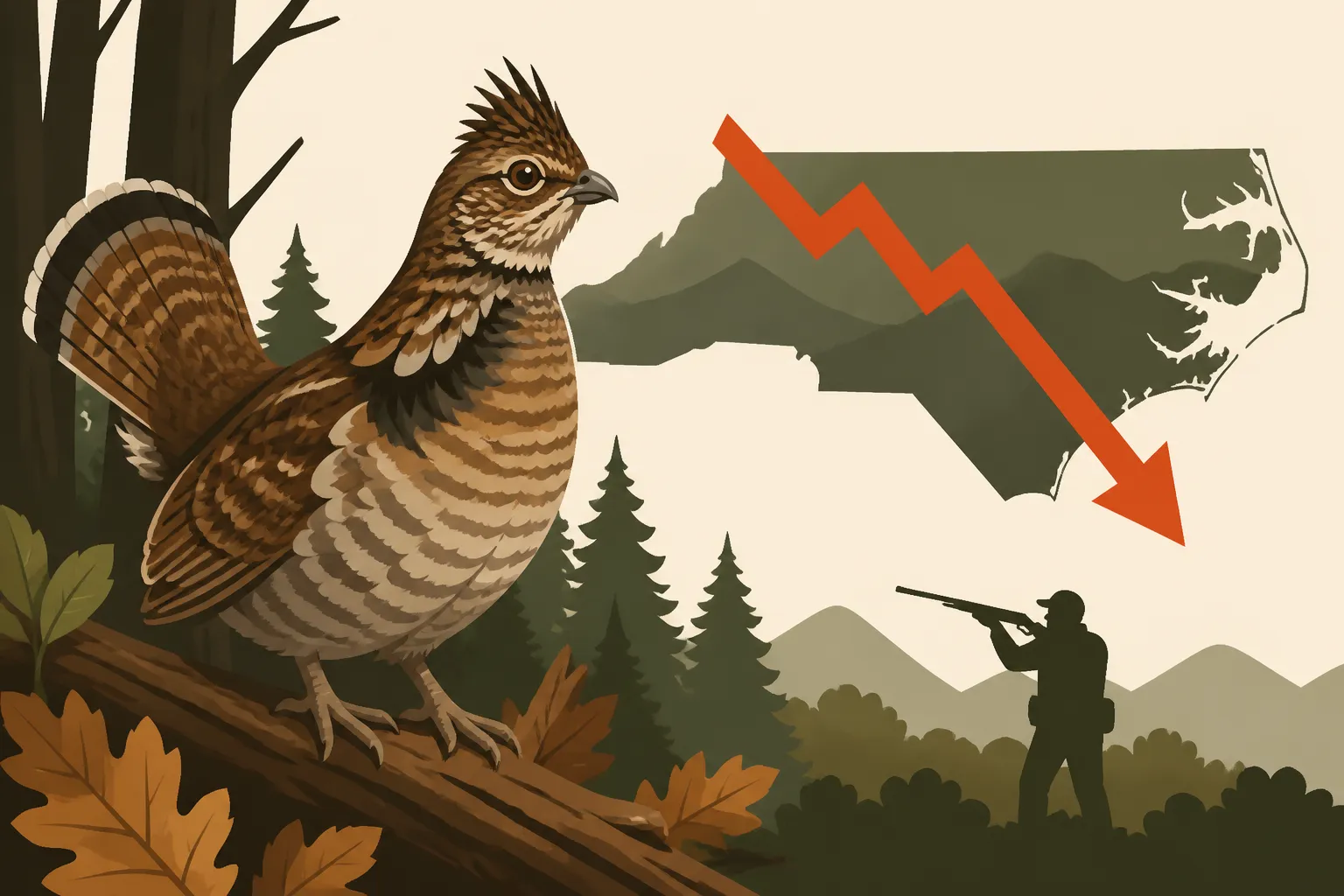
Today, the situation has shifted dramatically. If you've spent any time hunting the high country recently, you've likely noticed it – the silence. The absence of those explosive flushes, the lack of tracks in the snow, the feeling that you're walking through prime cover that just feels… empty. The reality is that North Carolina Ruffed Grouse Numbers Today are a significant concern. Scientific studies and anecdotal evidence from seasoned hunters both point to a clear decline across much of their traditional range. This isn't just a slight dip; in some areas, it feels like a dramatic disappearance.
For those of us who cherish Grouse Hunting the Blue Ridge Escarpment, this decline isn't just a biological statistic; it's a deeply felt loss. It impacts our hunting traditions, the joy of a challenging upland hunt, and the very health of the mountain ecosystem we love. It's frustrating to hike miles through rugged terrain, putting in the effort, only to come up empty-handed in cover that used to hold birds. Many hunters grapple with the question of whether to even target grouse anymore, feeling the weight of their dwindling numbers. GoHunt and other mapping tools can help identify promising looking cover, but even the best satellite imagery can't put birds where they no longer exist.
Habitat Loss and Fragmentation: The Primary Culprit
When we talk about why ruffed grouse are struggling, habitat almost always comes up as the number one reason. These aren't birds that can just adapt to any environment; they have very specific needs, and the availability of those needs has been steadily eroding over the past several decades. It's a slow, insidious change that often goes unnoticed until the birds themselves are gone.
The Vanishing Young Forest: Why It Matters to Grouse
The single most critical factor in the decline of ruffed grouse is the loss of young, regenerating forest, often referred to as early successional habitat. Grouse absolutely thrive in thick, brushy areas that are typically less than 15-20 years old. Think about it: dense saplings, brambles, and shrubs create an impenetrable fortress against aerial predators like hawks and owls, and ground predators like foxes and coyotes. This is where grouse broods can forage safely for insects and berries, and where adult birds can escape danger. This thick cover also provides crucial thermal protection during harsh mountain winters.
However, modern forestry practices and a lack of natural disturbance mean that much of our forest land, especially on public ground, has matured into older, more open timber. While beautiful, mature forests don't provide the dense, multi-layered cover that grouse need. There are fewer large-scale logging operations creating significant clear-cuts, and wildfire suppression has been incredibly effective, preventing the natural regeneration that fires used to stimulate. This creates a large, homogenous forest that, while aesthetically pleasing to some, is a biological desert for grouse. Without that dense understory, grouse simply can't survive and reproduce effectively.
Development and Changing Land Use: Shrinking Grouse Territory
Beyond the maturing of our forests, the relentless march of human development has also played a significant role in shrinking available grouse habitat. As more people seek to live in and around the mountains, small tracts of forest are cleared for homes, roads, and infrastructure. Even if a single development isn't massive, the cumulative effect of many small clearings and subdivisions fragments larger blocks of habitat. This fragmentation isolates grouse populations, making it harder for them to move between suitable areas, find mates, and maintain genetic diversity.
Imagine a large, healthy grouse population living in a vast, interconnected forest. Now, picture that forest being slowly carved up by roads, power lines, and housing developments. Each new intrusion acts like a barrier, breaking up the continuous cover. Grouse are not long-distance travelers, preferring to stay within a relatively small home range if their needs are met. When their habitat becomes a series of disconnected islands, it stresses populations and makes them far more vulnerable to local extinctions. This is particularly true in areas where public lands are bordered by increasing private land development, creating a patchwork of accessible and inaccessible areas for wildlife.
Predation and Competition: A Complex Ecosystem Challenge
While habitat loss is paramount, it's also true that changes in predator populations and competition from other species can exacerbate the struggles of a declining grouse population. Ecosystems are delicate balances, and when one factor shifts, others often follow suit, sometimes creating a challenging environment for sensitive species like the ruffed grouse.
Increasing Predator Pressures: A Natural Imbalance?
There's a strong argument to be made that increasing predator populations, particularly generalist predators, can put additional pressure on already struggling grouse numbers. As our forests have matured and become more open, grouse are more exposed. At the same time, species like North Carolina Coyote Range and Density have expanded dramatically across the state, even into prime mountain habitats. Coyotes are incredibly adaptable and efficient predators, and while grouse are only a small part of their diet, any additional mortality can be significant for a species already in decline.
Furthermore, populations of avian predators like Cooper's hawks and great horned owls, which readily prey on grouse, may also fluctuate. It's not that these predators are "bad"; they are a natural and vital part of the ecosystem. However, in an environment where grouse are already struggling with habitat and other stressors, an increase in predation pressure can hinder their ability to rebound. The impact of North Carolina's Recovering Bobcat Population can also play a role, as these effective hunters target small game. It's a complex interaction, where predators exploit vulnerabilities, and if grouse are already vulnerable due to a lack of escape cover, the impact of predation becomes much more pronounced.
Competing Species: The Struggle for Resources
While not as direct a factor as predation or habitat loss, competition with other species for resources can also play a subtle role. In some areas, an increasing population of other small game birds, though less common in mountain grouse habitats, could theoretically compete for food sources like berries, buds, and insects, especially during lean times. More commonly, other species like wild turkeys, which have seen a remarkable comeback in North Carolina, can share certain food resources.
Wild turkeys, while not direct competitors for grouse habitat in the same way, can feed on similar soft mast and insects. While their primary habitats often differ—turkeys preferring more open woods and field edges, and grouse needing denser cover—there's certainly overlap. The key here isn't necessarily direct conflict, but rather a nuanced interplay within the overall food web and resource availability. Every little bit of pressure can add up when a species is on the edge. Ensuring a healthy and diverse habitat is the best way to mitigate any potential competitive pressures among wildlife.
Climate Change and Disease: Emerging Threats to Upland Birds
Beyond the more obvious factors like habitat and predation, two less tangible, yet potentially very significant, threats are emerging on the landscape for ruffed grouse: changes in climate and the specter of disease. These are challenges that demand long-term attention and careful monitoring.
Shifting Climate Patterns: Impact on Grouse Breeding and Survival
North Carolina's climate is renowned for its variability, but recent trends suggest warmer winters and more unpredictable spring weather. For ruffed grouse, these shifts can be problematic. Grouse are fundamentally a cold-adapted species, and our mountain climate represents the southern edge of their range. Warmer winters might sound benign, but they can reduce the insulating snowpack that grouse often burrow into to escape extreme cold and predators. This "snow roosting" is a crucial survival strategy. Without it, energy expenditure increases, and vulnerability to predation rises.
More critically, unpredictable spring weather, including late frosts or heavy, cold rains during nesting and brood-rearing, can devastate chick survival. Young grouse are incredibly vulnerable to exposure. A cold, wet spring can lead to high mortality rates, directly impacting the number of birds that survive to adulthood. This directly affects the success of North Carolina's Twenty-Two Bear Management Zones, where the spring bear hunt occurs, and indirectly influences species like grouse who need favorable conditions to produce broods. The delicate balance of our seasons is vital, and even subtle shifts can have outsized impacts on sensitive species.
Disease Dynamics: Hidden Dangers in the Forest
While not as widely studied for ruffed grouse in North Carolina as for, say, deer and Chronic Wasting Disease, disease remains a potential silent killer. Upland birds can be susceptible to various pathogens and parasites, and a weakened population, already stressed by habitat loss or climate shifts, can be more vulnerable to outbreaks. Though there isn't widespread evidence of a specific grouse disease devastating numbers in our state, it's a factor that wildlife managers are always aware of, especially with increased animal populations and interactions.
One disease that has been a concern in other grouse ranges is West Nile Virus (WNV). While its specific impact on North Carolina's grouse is still being researched, WNV is known to affect grouse negatively in other parts of their range, often with fatal results. Given that North Carolina is home to the mosquito vectors that carry WNV, it remains a potential threat. Monitoring sick or deceased birds, and understanding the overall health of the population, is crucial for early detection and mitigation of any emerging disease issues that could impact North Carolina Small Game and Furbearers. It’s another layer of complexity that wildlife biologists face when trying to unravel the mystery of declining populations.
Conservation Efforts and Hope for the Future
Despite the challenges, there is hope, and dedicated individuals and organizations are working tirelessly to understand and reverse the ruffed grouse decline. Conservation is a long game, often requiring decades of sustained effort, but the commitment to these remarkable birds is strong. Hunters, especially, have a vested interest and play a critical role in supporting these efforts.
Active Habitat Management: Rebuilding Young Forest Patches
The most impactful conservation strategy for ruffed grouse revolves around aggressive, targeted habitat management focused on creating and maintaining early successional forests. This means actively disturbing the forest to create those dense, brushy areas that grouse need. This can involve timber harvesting on public and private lands, using methods like clear-cutting small patches, which are then allowed to regenerate naturally. These patches are then rotated, creating a mosaic of different age classes across the landscape.
Wildlife agencies and conservation groups, sometimes with federal funding and support, are working to implement these practices. For instance, sections of North Carolina Game Lands are being managed with grouse in mind, sometimes involving selective timber cuts or prescribed burns. It's a long-term commitment, but creating these habitat patches is the single best way to provide the food, cover, and nesting sites that grouse require to survive and reproduce. Tools like GoHunt can aid in identifying areas that have recently undergone such treatments, giving hunters and conservationists alike a clearer picture of potential habitat improvements.
Research and Monitoring: Understanding the Puzzle Pieces
You can't fix a problem until you truly understand it, and that's where ongoing research and monitoring come in. Wildlife biologists are continuously studying ruffed grouse populations in North Carolina to gather crucial data. This includes conducting drumming counts in the spring to estimate breeding populations, banding birds to track survival and movement, and analyzing habitat use to refine management strategies. These efforts help us understand the specific dynamics of our grouse populations, including North Carolina's Place on the Woodcock Flight, which often share similar habitat needs.
This research often involves collaboration between state agencies like the North Carolina Wildlife Resources Commission (NCWRC), universities, and non-profit organizations. It's about piecing together the complex puzzle of grouse ecology in our unique mountain environment. Understanding factors like brood survival rates, disease prevalence, and the effectiveness of different habitat management techniques is vital for making informed decisions. This scientific rigor is the backbone of any successful conservation program.
Hunter Involvement: A Critical Role in Revival
Hunters have always been at the forefront of conservation, and their role in the potential revival of North Carolina's ruffed grouse is more critical than ever. Beyond simply purchasing licenses and stamps, which directly fund wildlife management, hunters can actively participate in several ways. Advocating for habitat management policies, volunteering for habitat projects, and participating in citizen science initiatives (like reporting observations or collecting samples) all contribute to the cause.
Moreover, ethical hunting practices, including adhering to North Carolina Small Game Season Rules and being mindful of harvest numbers, are important. Many grouse hunters are already self-regulating, choosing to limit their harvest or even forgo hunting grouse in areas where populations are severely depressed. Supporting organizations like the Ruffed Grouse Society, which specifically funds research and habitat work, is another direct way to make a difference. The passion of the grouse hunting community is a powerful force for good, and leveraging that energy is essential for securing a future where the drumming of the ruffed grouse once again resonates throughout our cherished mountain woods. The gear used for Upland Guns for Mountain Grouse Cover and Shotguns for North Carolina Grouse and Dove can also be adapted for participation in clean-up efforts or scouting expeditions.
| Factor Contributing to Decline | Primary Impact on Grouse | Conservation Action | Hunter Involvement |
|---|---|---|---|
| Habitat Loss | Reduced cover, food, nesting sites; population isolation | Active timber harvest, prescribed burns, young forest creation | Advocate for policies, volunteer for projects, support land trusts |
| Forest Maturation | Less dense, protective cover for broods and adults | Rotational timber management to create diverse age classes | Educate others, identify potential habitat areas with tools like GoHunt |
| Predation Pressure | Increased mortality, especially in open habitat | Focus on dense escape cover to mitigate predation | Report observations of healthy populations and predator interactions |
| Climate Shifts | Vulnerable chicks, reduced snow roosting, energetic stress | Long-term ecological resilience building, adaptive management | Support climate science, habitat projects that buffer against extremes |
| Disease | Potential for localized or widespread mortality events | Monitoring, research, rapid response to outbreaks | Report sick/dead birds, follow biosecurity guidelines |
Disclaimer
This article is for general informational purposes only and does not constitute professional advice. Laws, prices and regulations vary by location and change over time. Consult a qualified professional for guidance on your specific situation.