Where North Carolina Sits in the Grouse Cycle
For many of us who cherish the tradition of chasing ruffed grouse in North Carolina, there's a constant, nagging question: "Where are the birds?" It often feels like a never-ending struggle, traversing miles of rugged mountain terrain only to hear a handful of flushes – if we're lucky. This guide will dive deep into the fascinating, yet often frustrating, world of ruffed grouse population cycles and explore where North Carolina's elusive birds likely stand within these natural fluctuations, giving you a clearer picture of what to expect and how to adapt your hunting approach.
Understanding the Elusive Ruffed Grouse Population Cycle
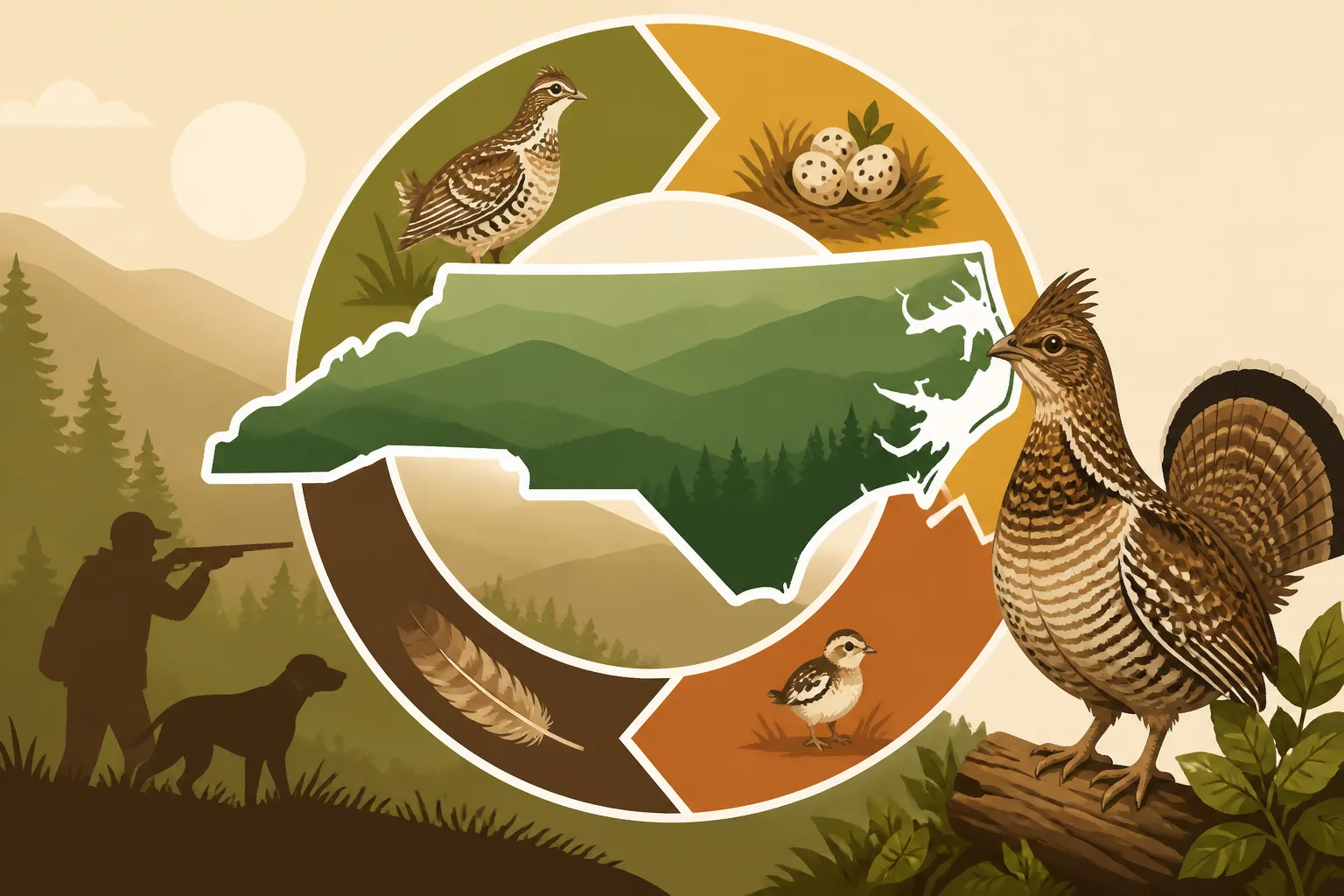
The concept of a "grouse cycle" has been a topic of much discussion among upland hunters and wildlife biologists for generations. Essentially, it refers to the natural, cyclical fluctuations in ruffed grouse populations, typically characterized by periods of abundance (a "boom") followed by periods of scarcity (a "bust"). These cycles aren't always perfectly timed or uniform across all regions, but they are a well-documented phenomenon that significantly impacts hunting success and wildlife management strategies.
Think of it like a natural rollercoaster for wildlife. For a few years, grouse numbers might steadily climb, reaching a peak where flushes are frequent, and you might encounter multiple coveys in a day. This is the "boom" phase, and it's what every grouse hunter dreams of. Then, inevitably, the numbers begin to decline, sometimes sharply, entering a "bust" period where birds become incredibly hard to find. This descent can last several years, making hunting feel like a monumental task, often leading to empty game vests and plenty of questions about where all the birds went.
Several complex factors contribute to these population swings. Predator-prey dynamics play a huge role; when grouse numbers are high, predators like coyotes, bobcats, and various raptors often experience their own population increases, eventually putting more pressure on the grouse. Habitat quality is another critical component, influencing food availability, nesting success, and cover from predators. Severe weather events, disease outbreaks, and even the availability of drumming logs can also influence these cycles. Understanding that these fluctuations are largely natural, even if frustrating, helps set realistic expectations for your hunts.
North Carolina's Unique Position in the Grouse World
North Carolina sits right at the southern edge of the ruffed grouse's traditional range in the eastern United States. This geographical reality is a critical piece of the puzzle when we talk about grouse cycles here. Unlike states further north, where grouse populations might be more robust and cycles more pronounced, our birds are often considered more vulnerable and susceptible to environmental pressures. Our generally milder winters, while pleasant for us, don't provide the same snow depths that can create insulating burrows for grouse in colder climates, making them potentially more exposed to winter predation and harsh weather.
Historically, ruffed grouse were more widespread in the mountain regions of North Carolina, but their range has significantly contracted over the decades. Today, you'll primarily find them in the higher elevations and rugged terrain of the Blue Ridge and Appalachian Mountains, particularly on public lands like Pisgah National Forest Hunting and Nantahala National Forest Hunting. They thrive in mixed hardwood and conifer forests with a mosaic of different age classes – areas with young, regenerating clear-cuts that provide dense cover, alongside more mature timber that offers drumming logs and food sources like berries and buds.
However, the reality is that good grouse habitat in North Carolina is often fragmented and in a state of continuous change. Forest management practices, land development, and even the natural succession of forests can diminish the specific conditions grouse need to thrive. When you couple these long-term habitat challenges with the natural ups and downs of a population cycle, it creates an even more precarious situation for our southern grouse. It means that even during a "peak" in the cycle, our peaks might not be as high as those in prime northern grouse country, and our "busts" can feel particularly severe. Using a mapping tool like GoHunt can really help you pinpoint those specific elevation bands and habitat types where grouse might still be holding on, allowing you to focus your scouting efforts.
Current State of the North Carolina Grouse Population
So, where exactly does North Carolina sit in the grouse cycle right now? Without the benefit of real-time, comprehensive scientific surveys, providing an exact, definitive answer is challenging. Ruffed grouse are notoriously reclusive, and counting them accurately across vast, rugged mountain terrain is no easy feat. However, by observing long-term trends, listening to the collective experience of seasoned hunters, and considering the general health of the grouse range, we can form a well-informed estimate.
Most indications suggest that North Carolina's ruffed grouse population has been on a downward trend for several years, likely placing us at or near a low point in their natural cycle, or perhaps even in a prolonged period of general decline. Hunters frequently report lower flush rates, fewer drumming birds heard in the spring, and scarce brood sightings in the summer. This isn't unique to North Carolina, as many states on the southern and western fringes of the grouse range have seen similar declines. The general consensus among those who dedicate their time to chasing these birds is that we are definitely not in a "boom" phase.
Several factors likely contribute to this perceived low point. As mentioned, the cyclical nature of grouse populations means that after a period of higher numbers, a downturn is expected. However, overlaid on this natural cycle is the persistent challenge of habitat degradation and fragmentation. Many of the young, dense forest stands that grouse depend on for cover and food are maturing, transitioning into older forest types that offer less suitable habitat. Additionally, predator populations, which also fluctuate, can put increased pressure on grouse during their low cycle, making recovery even slower. While our biologists don't necessarily conduct specific annual cycle counts, the anecdotal evidence from hunters walking the woods year after year paints a consistent picture. This makes it crucial to understand strategies for Ruffed Grouse in the North Carolina Mountains and how to adapt to lower densities.
Strategies for Hunting During a Low Cycle in North Carolina
Hunting ruffed grouse in North Carolina when the population is at a low point in its cycle can be incredibly frustrating. It demands more effort, more patience, and a sharper focus on finding the best available habitat. You're not just hunting birds; you're hunting prime habitat that might hold birds. This is where your scouting and woods knowledge become paramount.
First and foremost, you need to understand grouse habitat intimately. Forget about wide-open mature timber; you're looking for the thick stuff. Think regenerating clear-cuts that are 5-15 years old, dense stands of mountain laurel and rhododendron, old logging roads choked with multiflora rose or greenbrier, and creek bottoms with thick understory. These areas provide the overhead cover from raptors and the ground cover from mammalian predators that grouse need to feel secure. Tools like GoHunt can be exceptionally useful for analyzing satellite imagery and topographic maps to identify these specific habitat types and elevation bands before you even step foot in the woods. Pay close attention to north-facing slopes, which often hold moisture longer and can offer more consistent food sources.
Secondly, patience and persistence are your best friends. You're going to cover a lot of ground for fewer opportunities. Don't be discouraged by long stretches without flushes. Keep working through the thickest cover, moving slowly and deliberately. Many hunters find success by walking old logging roads or trails, then dipping into the dense cover that flanks them. When you do get a flush, be ready, because it might be your only chance for hours. For more on the specifics, check out our guide on Grouse Hunting Blue Ridge Cover.
Finally, hunting with a well-trained bird dog can dramatically increase your odds during a low cycle. A good flushing dog, or even better, a pointing dog that can hold a bird long enough for you to get into position, makes all the difference. Their noses can find birds that you would walk right past, allowing you to effectively cover more ground and pinpoint where the birds are holding up. Without a dog, you'll need to rely even more on your knowledge of likely escape routes and dense cover. Remember that Choke Choice for Fast Flushes and Best Shotgun Gauge for Mountain Grouse become even more critical when opportunities are few and far between.
| Aspect of Hunting | High Grouse Cycle (Hypothetical) | Low Grouse Cycle (North Carolina's Current State) |
|---|---|---|
| Flush Rate | Frequent, multiple birds per hour | Infrequent, maybe 1-2 birds in half a day or more |
| Bird Abundance | Seemingly everywhere | Extremely localized, sparse |
| Hunter Effort | Rewarding, steady action | Demanding, requires extreme persistence |
| Habitat Focus | Good habitat is productive | Only the best habitat might hold birds |
| Dog's Role | Helps find more birds, retrieve | Essential for finding any birds, crucial |
| Success Rate | Higher, more birds in the bag | Challenging, often a single bird is a triumph |
| Mental Game | Enjoyable, exciting | Tests patience, builds character |
This table illustrates the stark difference in what hunters can expect, emphasizing why adaptation is key when facing a low point in the cycle here in North Carolina. Don't forget to revisit guides on Scouting North Carolina Public Land Before Season to maximize your chances before you even hit the woods.
Disclaimer
This article is for general informational purposes only and does not constitute professional advice. Laws, prices and regulations vary by location and change over time. Consult a qualified professional for guidance on your specific situation.