Poult-to-Hen Ratios and What They Mean
It's incredibly frustrating when you've put in the time scouting, practiced your calls, and geared up for spring turkey season, only to find the woods feel… empty. One of the best ways to get a sneak peek into the health and future prospects of North Carolina's wild turkey population – and thus, your hunting success – is by understanding poult-to-hen ratios. This guide will demystify these crucial numbers and show you how to use them to your advantage.
Understanding Poult-to-Hen Ratios: The Basics
Hunting wild turkeys in North Carolina is a deeply rewarding experience, but it can also be a challenge. Year-to-year fluctuations in turkey numbers are a reality, and nothing impacts future populations more directly than successful reproduction. That's where poult-to-hen ratios come into play. They're not just dry statistics; they're a window into the vitality of the local flock and a key indicator for how good (or tough) hunting might be in the coming seasons.
What Exactly is a Poult-to-Hen Ratio?
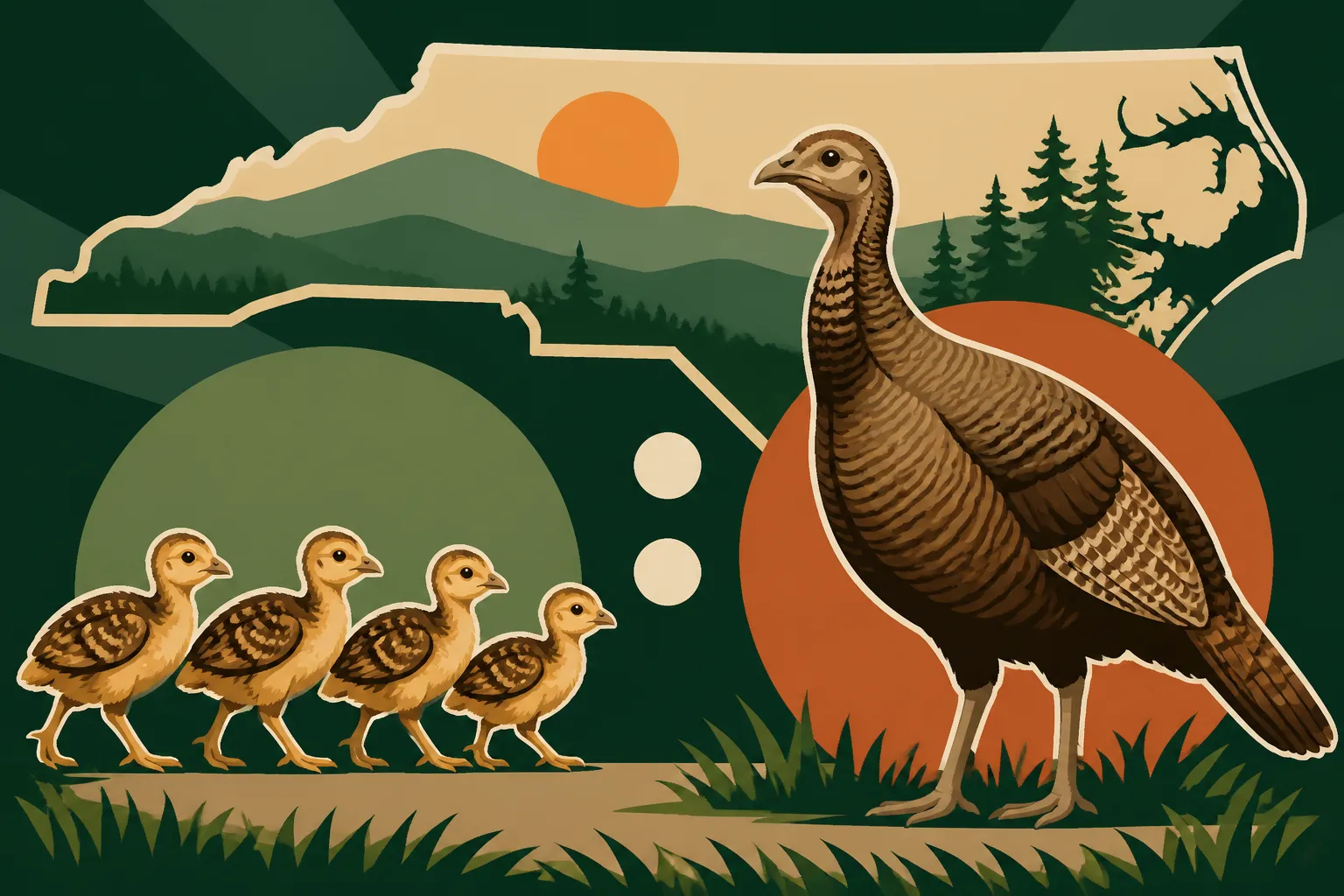
At its simplest, a poult-to-hen ratio is a measure of reproductive success for wild turkeys. It's essentially the average number of young turkeys, called poults, that survive long enough to be observed with an adult hen during the late summer months. Wildlife agencies and biologists conduct what are called "brood surveys" during June, July, and August to gather this data. They're looking for hens accompanied by poults and counting how many young birds are present. If you see a hen with six poults, that's a good sign! If you see many hens with no poults, or only one or two, that's usually a red flag. These observations are aggregated, giving us an average like "3.5 poults per hen." It tells us how many of the newly hatched turkeys made it through those vulnerable first weeks and months. This ratio is critical because it directly reflects the recruitment of new birds into the population, which ultimately replenishes the flock and ensures future hunting opportunities.
Why This Ratio Matters for North Carolina Hunters
For us hunters in North Carolina, these ratios are a crystal ball, albeit one that only looks a couple of years into the future. A high poult-to-hen ratio in a given year means that a strong cohort of young birds survived. Those poults, with a bit of luck, will become jakes (yearling gobblers) the following spring, and then mature gobblers in the seasons after that. Conversely, if the poult-to-hen ratio is low for several consecutive years, it suggests a decline in the turkey population is likely, leading to fewer jakes and mature gobblers down the road. This insight can help you set realistic expectations for your hunts and even guide your long-term planning. For instance, if you know a particular county had a fantastic hatch two years ago, you might anticipate a higher density of two-year-old gobblers there this season. Understanding this data can truly help in managing your expectations and focusing your scouting efforts, complementing your knowledge of North Carolina Turkey Population Estimate.
Environmental and Biological Influences on Ratios
The journey from egg to adult turkey is fraught with peril. There are so many variables that can derail a successful hatch and poult survival, and North Carolina's diverse geography, from the mountains to the coast, presents its own unique set of challenges. Understanding these influences helps us appreciate why poult-to-hen ratios can swing so dramatically from year to year and region to region.
Weather's Impact on Nesting and Poult Survival
Without a doubt, weather is one of the most dominant factors dictating how many poults survive each year. Wild turkey poults are incredibly delicate, especially in their first few weeks of life. They're highly susceptible to hypothermia. A cold, wet spring, with prolonged periods of rain and low temperatures during and immediately after the primary hatching period (typically late April through May in North Carolina), can be devastating. Poults can quickly succumb to exposure, and wet feathers make them vulnerable to chilling. Think about those North Carolina spring rains that just won't let up for days; for a newly hatched poult, that's an existential threat.
Droughts, while less directly fatal to poults, can also impact their survival by reducing the abundance of insects and green vegetation, which are critical food sources for young turkeys. Hens need good nutrition to lay healthy clutches and withstand the rigors of incubation, and dry conditions can stress them too. So, while we often pray for sunny, calm mornings for our spring hunts, a warm and relatively dry late spring and early summer are what the turkey population truly needs for a booming poult crop.
Predation and Habitat Quality's Role
Beyond the weather, two other significant forces shaping poult-to-hen ratios are predation and the overall quality of available habitat. North Carolina is home to a robust population of various predators, including coyotes, bobcats, raccoons, and opossums – all of whom have a taste for turkey eggs or young poults. An increase in predator populations, or a shift in their behavior, can lead to higher rates of Nest Predation and North Carolina Turkey Hatches, directly reducing the number of poults that ever make it out of the nest. It's a constant battle for survival in the wild.
Habitat quality plays an equally vital role. Hens need secure nesting cover to lay their eggs, typically dense undergrowth that offers concealment from predators. Once poults hatch, they require what biologists call "brood-rearing habitat" – areas with abundant insects (especially grasshoppers and spiders for protein) and thick, herbaceous cover that protects them from aerial predators like hawks and owls, while still allowing them to move easily. This often means open woodlands with a good understory, old fields, or young pine plantations with good ground cover. When prime habitat is scarce due to development, clear-cutting without proper regeneration, or lack of prescribed burning, poult survival can suffer. Land managers and conservation groups work hard to create and maintain this critical habitat, understanding its direct link to turkey reproduction. Tools like GoHunt can be invaluable here, allowing hunters to scout satellite imagery for potential brood-rearing cover and identify areas with good habitat characteristics long before the season begins. By studying aerial photos, you can pinpoint open woods adjacent to thickets or field edges that might offer both food and protection for young turkeys.
Disease and Other Factors
While less common than weather or predation, disease outbreaks can also contribute to lower poult-to-hen ratios, though they might be harder for the average hunter to detect. Turkeys can be susceptible to various diseases, and poults, with their undeveloped immune systems, are particularly vulnerable. A widespread outbreak could lead to increased poult mortality.
Other factors, like agricultural practices, can also have an impact. Intensive farming that eliminates hedgerows or creates vast monocultures can reduce available nesting and brood-rearing habitat. Pesticide use can reduce insect populations, a vital food source for growing poults. Even human disturbance, like too much recreational activity in prime turkey areas during nesting season, can inadvertently cause hens to abandon nests. These are all complex ecological interactions that influence the delicate balance of wild turkey reproduction in North Carolina.
Using Ratio Data to Sharpen Your Hunting Strategy
Okay, so we've talked about what poult-to-hen ratios are and what influences them. But how does this translate into actually helping you fill your tag during North Carolina's spring turkey season? This isn't just academic; it's practical information that, when combined with your own scouting and woodsmanship, can give you a real edge.
Predicting Future Gobbler Numbers
This is arguably the most powerful application of poult-to-hen ratio data. It allows you to look forward and anticipate the abundance of jakes and mature gobblers in the coming seasons. Remember, a poult hatched this spring won't be a huntable gobbler for at least a year (as a jake) and more likely two years (as a two-year-old gobbler). So, if North Carolina had a fantastic poult-to-hen ratio two springs ago, you can reasonably expect a healthier population of two-year-old gobblers this season. These younger, but fully mature, gobblers are often the most vocal and aggressive, making for exciting hunts.
Conversely, if there have been a couple of poor poult years back-to-back, you might temper your expectations. While there will always be some gobblers, the overall density and responsiveness might be lower. This insight allows you to manage your own expectations and potentially adjust your strategy. You might consider expanding your scouting efforts to find pockets of better numbers, or focus more intently on known Where North Carolina Gobblers Roost or areas with stable populations. This forward-looking approach helps you move beyond simply reacting to the current season's conditions.
Adjusting Current Season Expectations
While the current year's poult crop won't directly impact the number of adult gobblers you'll encounter this spring, the poult-to-hen ratios from the previous year, or even two years prior, absolutely will. If last year's ratio was robust, you might encounter more jakes – those eager, sometimes less wary, yearlings that can be a blast to hunt. If ratios have been consistently low, you might be facing a season with fewer overall birds, requiring more patience and a more strategic approach to calling. You might opt for softer, more subtle calls rather than aggressive ones, especially if the birds are pressured.
This data also helps gauge the overall health of the local population. Even if you're not directly hunting poults, a persistently low ratio could indicate underlying issues in the habitat or a high predator load, which might make hunting more challenging overall. You might spend more time trying to locate birds by listening for roost calls and less time on blind calling, really focusing on techniques like Calling a North Carolina Gobbler Off the Roost. For example, if you're looking at public lands, comparing ratio data from different Game Lands could influence where you decide to buy your permit and focus your initial scouting using a tool like GoHunt to analyze terrain and potential travel corridors where turkeys might be more concentrated due to better past hatches.
Localizing the Information
Here's the rub: statewide or even regional poult-to-hen ratios, while informative, don't always tell the whole story for your specific hunting grounds. North Carolina is a big state with diverse habitats, and local conditions can vary wildly. One county might have had a terrible hatch due to a localized flood, while an adjacent county experienced ideal weather. Therefore, it's crucial to try and localize this information as much as possible.
How do you do that? First, check if the North Carolina Wildlife Resources Commission (NCWRC) or local university extensions release county-specific or game land-specific data. This is gold. Second, and perhaps more importantly, do your own on-the-ground scouting. During the late summer and early fall, pay attention to how many hens you see with poults, and how many poults are in each brood. Keep a log of your observations. If you're running trail cameras, set them up in food plots or along field edges where hens and poults might frequent, and count what you see. Using a mapping application like GoHunt can be fantastic for this; you can drop pins and add notes to specific locations where you've observed hens with poults, building your own localized ratio data over time. This boots-on-the-ground intelligence, combined with official data, provides the most accurate picture for the areas you actually hunt. It helps you understand where you might expect to see a good number of birds for Turkey Tactics for Piedmont Field Edges or in the mountain coves.
| Poult-to-Hen Ratio (Example) | Implication for Next Season (Jakes) | Implication for Two Seasons Out (Mature Gobblers) | Hunting Strategy Adaptation |
|---|---|---|---|
| Below 2.0 | Potentially fewer jakes | Likely fewer mature gobblers | Focus on known strongholds; increase scouting; subtle calling. |
| 2.0 – 3.0 | Average number of jakes | Stable mature gobbler population | Standard tactics; scout for preferred areas; good chance of success. |
| Above 3.0 | Higher jake numbers likely | Abundant mature gobblers anticipated | Be aggressive with calling; explore new areas; expect more responses. |
Beyond the Numbers: Other Considerations for Turkey Hunting
While poult-to-hen ratios are incredibly valuable, they are just one piece of a much larger puzzle. Smart turkey hunters understand that success comes from integrating all available information, from broad population trends to the minute details of their chosen hunting spot. The more you know, the better prepared you'll be for whatever the North Carolina woods throw your way.
The Hunter's Role in Conservation
Understanding poult-to-hen ratios isn't just about predicting your success; it also ties into the broader picture of turkey conservation. When ratios are consistently low, it highlights a need for habitat improvements, predator management, or even changes in season structures or bag limits. Responsible hunters are often the first to notice these trends on the ground and are crucial advocates for sound wildlife management. By reporting your observations to wildlife agencies, participating in surveys, or contributing to conservation organizations, you play an active role in ensuring healthy turkey populations for future generations. It's about more than just your personal harvest; it's about the sustainability of the resource we all cherish in North Carolina.
Integrating Local Knowledge and Scouting
No matter what the regional poult-to-hen ratios tell you, there's no substitute for good old-fashioned scouting and local knowledge. This means getting out in the woods before the season, listening for Where North Carolina Gobblers Roost, looking for tracks, droppings, and strut marks. Pay attention to food sources, water availability, and natural travel corridors. Even in a year with a lower overall ratio, there might be a honey hole with excellent habitat that bucked the trend and holds a strong local population. This is where your personal observations, combined with data from tools like GoHunt that allow you to mark observations and analyze terrain features, become invaluable. It’s about building a comprehensive understanding of the specific turkeys you’re pursuing, not just relying on broad statistics. Knowing the local landscape intimately, from where the big oaks are for Setting Up Against a Big Oak to the subtle changes in terrain, will always be a cornerstone of successful turkey hunting.
Adapting to Annual Fluctuations
The biggest takeaway from understanding poult-to-hen ratios should be adaptability. Wild turkey populations are dynamic, and what worked last year might not work this year. A strong poult year might lead to more competition from other hunters chasing those jakes and two-year-olds, requiring you to employ different tactics, such as Decoy Placement for Pressured North Carolina Birds or venturing further afield on public lands. A poor poult year might mean you need to be more patient, persistent, and precise with your calling, knowing that gobblers are fewer and potentially warier. Don't get discouraged if the numbers aren't ideal; instead, use them as motivation to scout harder, refine your techniques, and enjoy the challenge that North Carolina's wild turkeys present.
Disclaimer
This article is for general informational purposes only and does not constitute professional advice. Laws, prices and regulations vary by location and change over time. Consult a qualified professional for guidance on your specific situation.