Turkey Tactics for Piedmont Field Edges
Trying to figure out how to consistently harvest a gobbler when he's hanging up just out of range on a Piedmont field edge can be incredibly frustrating. Those birds seem to have an uncanny ability to stay put right where you can't quite get to them, gobbling their heads off but never committing. This guide is all about diving deep into effective turkey tactics specifically for those tricky North Carolina Piedmont field edges, helping you understand their behavior and close the deal.
Understanding Piedmont Field Edge Dynamics
Field edges in North Carolina's Piedmont region are prime turkey habitat, but they come with their own set of challenges. Unlike the deep woods, these areas offer a mix of open visibility and crucial cover, making them both attractive to turkeys and a puzzle for hunters. Understanding why turkeys use these edges and how they navigate them is the first step to success.
Why Turkeys Favor Field Edges
Piedmont turkeys, whether you're hunting private farmland or the edges of game lands, are drawn to fields for a few key reasons. First and foremost, fields are food magnets. From waste grain in agricultural fields to insects and tender greens in pastures, these open areas offer a buffet. During the spring, gobblers will strut and display in fields because it gives them an unobstructed view to spot hens, and for hens, it's a safe place to feed and potentially nest. The edges themselves provide a critical transition zone. Turkeys can feed in the open, yet be only a few steps away from dense timber, brush, or creek bottoms that offer security from predators like coyotes. This blend of resources and safety makes field edges irresistible, but also means birds can quickly vanish into cover if they feel threatened.
Think about a typical spring morning: a gobbler will fly down from his roost in the woods, often landing just inside the field or at its immediate edge, ready to start his daily routine of strutting and calling for hens. Hens will also filter into the field to feed, and the gobbler will often work his way to them. This behavior makes field edges a hotbed of activity, but also puts the birds on high alert. Knowing that the birds feel secure having quick access to cover nearby is key to understanding why they might hang up just out of range.
Typical Turkey Behavior on Edges
When a gobbler steps into a field, he's often on a mission to be seen and heard. He wants to draw in hens, and that wide-open stage is perfect for his display. However, turkeys are inherently cautious creatures. They've learned that wide-open spaces, while great for strutting, also expose them to danger. This is why you'll often see a gobbler patrol an edge, rather than confidently stride to the center of a large field. They'll use the slight undulations in the terrain, the shadows cast by the treeline, or even a lone cedar tree in the field as cover. They're constantly scanning for both mates and threats.
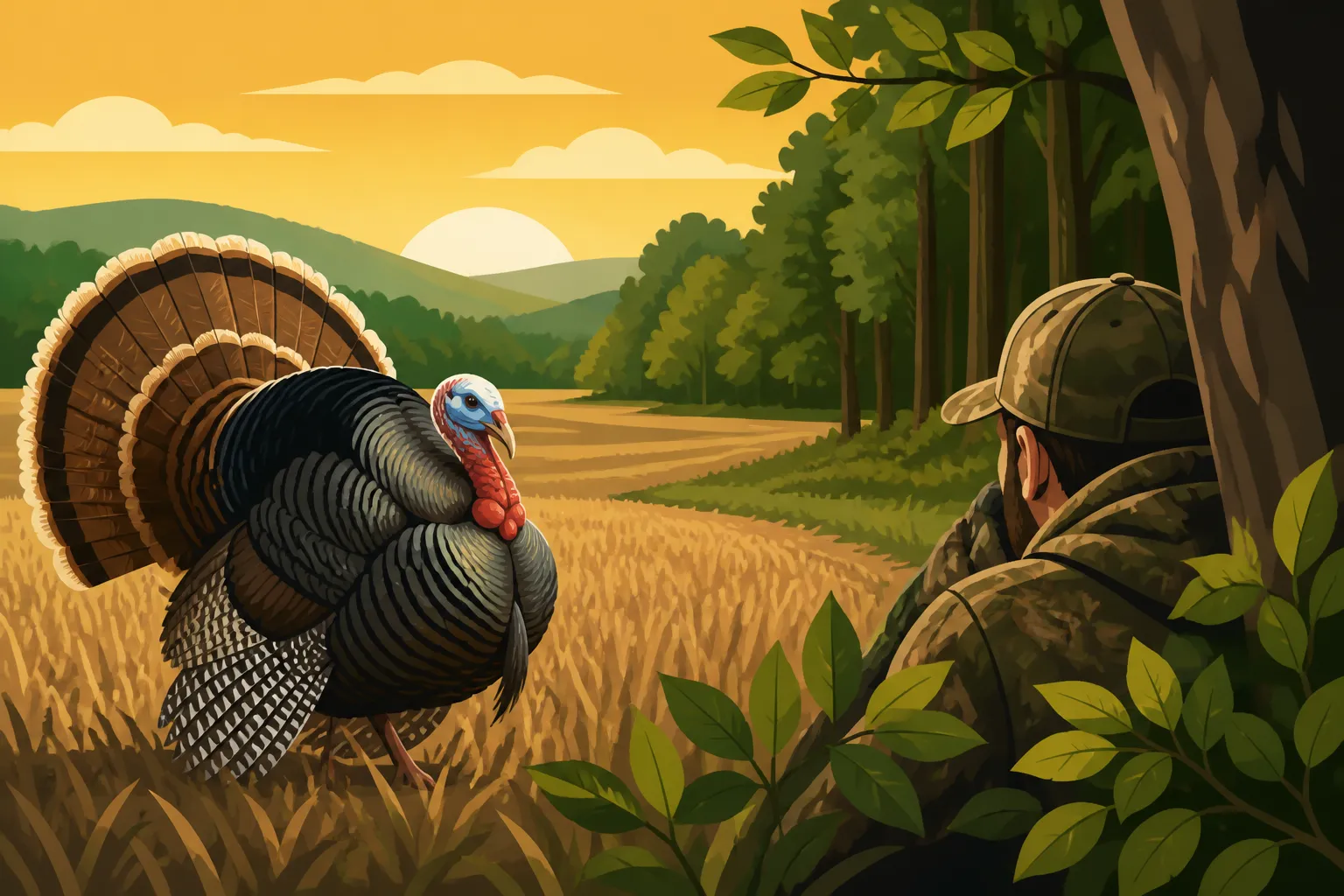
One common frustration is the "field edge hang-up." You've got a gobbler hammering, you've set up perfectly, and he appears at the edge, but instead of coming into range, he just struts parallel to the woods line, often 80-100 yards out. He's expecting the hen (you) to come to him, especially if he has real hens with him already, or if he's been pressured. Sometimes he's just too smart or too wary from past encounters. Understanding this tendency is vital for adjusting your tactics, whether it's setting up an extra 20 yards deeper into the field or placing your decoys strategically. Being able to read the subtle cues in their movements and reactions to your calls can make or break your hunt.
Strategic Scouting and Setting Your Stage
Success on Piedmont field edges doesn't happen by chance; it's the result of diligent scouting and meticulous setup. You need to know where the birds are, where they want to be, and how to position yourself to intercept them without being detected. This involves both pre-season legwork and in-the-moment decision-making.
Pre-Season and In-Season Scouting for Edges
Effective turkey hunting really starts long before opening day. Get out in the late winter and early spring, before the leaves fully pop, and hit those Piedmont farm country fields and game land edges. Look for tell-tale signs: tracks in the mud along field roads or creek crossings, droppings where birds have been loafing or feeding, and most importantly, strut marks. Strut marks – those tell-tale wingtip drags and tail fan imprints – are gold. They tell you exactly where a gobbler likes to display. You might find them in short grass inside the field, along a dirt access road, or in a bare spot right at the treeline. Using mapping applications, like those found on GoHunt, can help you mark these locations and analyze terrain features, potential roosting areas, and natural travel corridors that birds might use to enter and exit fields.
As the season approaches and even during the hunt, listen. Listen for birds gobbling on the roost at dawn, or for shock gobbles throughout the day. If you hear a bird consistently roosting near a particular field, that's your starting point. During the season, drive or walk around the edges of fields in the mid-morning, looking for birds. Sometimes you'll spot gobblers already strutting in the fields. Note which areas they prefer, how they enter and exit, and if they respond to calls from different directions. The more you know about their specific patterns, the better you can predict their movements and adjust your strategy. Remember, birds can shift locations, so consistent scouting right up to your hunt day is invaluable.
Optimal Setup Locations and Concealment
Once you've identified a hot field edge, your setup is paramount. Your goal is to be as close to where the turkey wants to be as possible, while remaining completely hidden. Often, the best spot isn't right on the edge looking out, but rather 10-20 yards back into the timber, offering a better ambush point and natural cover. Look for mature trees that are wide enough to break up your outline, or use natural brush piles. If you're on public land, this is where you can excel by Setting Up Against a Big Oak. If the field edge is dense with saplings or thick briars, you might even consider setting up a ground blind just inside the tree line. Ground blinds are excellent for concealment, especially on heavily pressured birds or when hunting with youth. If you're using a ground blind on North Carolina public land, make sure it's brushed in well so it doesn't stick out like a sore thumb.
Consider the sun's position. You want it at your back, not in the turkey's eyes. Also, factor in terrain. If there's a slight rise or dip in the field near the edge, a gobbler might use that as a natural barrier. You want to be on the side of that barrier where he's most likely to be in range when he clears it. Finally, think about your escape route. If a bird comes in from an unexpected direction, can you shift slightly or will you be pinned down? Having a mental plan for these contingencies can save a hunt.
| Setup Scenario | Decoy Placement | Calling Strategy | Ideal Range (yds) | Notes |
|---|---|---|---|---|
| Morning Fly Down | Single hen 15-20 yds out in field, facing woods | Soft tree yelps, clucks. Light fly-down cackle. | 20-30 | Mimic hen coming to feed. Be ready immediately after fly down. |
| Mid-Morning Strutter | Jake and breeding hen 30 yds out in field, facing you | Aggressive yelps, cuts. Gobble (sparingly). | 25-35 | Challenge the gobbler. Give him a reason to come in. |
| Wary, Hung-Up Bird | Single hen 40-50 yds out, facing bird. | Soft clucks, purrs. Minimal calling. | 30-40 | Appeal to his curiosity. Make him look for the "quiet hen." |
| Multiple Gobblers | Jake and 2 hens 25 yds out, hens spread | Mix of soft and medium yelps, clucks. | 20-30 | Create competition, make it look like a party he's missing. |
| Public Land Pressure | Single hen or none at all. | Very soft clucks, purrs, occasional faint yelp. | 20-25 | Less is more. Don't sound like every other hunter. |
Effective Calling Sequences and Decoy Spreads
Calling and decoys are the art and science of turkey hunting, especially on field edges. It's not just about making noise; it's about telling a story that makes that gobbler feel compelled to investigate. Getting your calls right and your decoys positioned for maximum impact can turn a frustrating hang-up into a successful shot.
Mastering Calls for Piedmont Turkeys
Piedmont gobblers have heard it all. From the opening weekend crowds to the last week of North Carolina Turkey Season Closing Date, they're exposed to a symphony of hunter-made turkey sounds. This means your calling needs to be realistic, varied, and, at times, subtle. Start with soft, convincing tree yelps and clucks before fly-down. You want to sound like a hen waking up, not a frantic, lovesick bird. Once birds are on the ground, listen to what real hens are doing. Sometimes they are quiet, only giving soft clucks and purrs as they feed. Other times, they can be quite vocal. Match their intensity. If you're struggling to get a response, try a "shock gobble" with an owl hoot or crow call to locate a bird, then switch back to subtle hen sounds once you know where he is. This is a common tactic when Calling a North Carolina Gobbler Off the Roost.
Don't be afraid to experiment with different calls: slate, box, diaphragm. Each has its own unique tone, and a gobbler might respond to one over another on a given day. Sometimes, a series of aggressive cutting and yelping can challenge a dominant gobbler into responding, but often, especially with wary birds, less is more. A soft purr or a subtle cluck can sometimes seal the deal when a barrage of yelps just sends them walking the other way. The goal is to pique their curiosity or tap into their instinct to breed, not to overwhelm them. Learning how and when to vary your calls is a critical skill honed over many seasons.
Decoy Selection and Placement for Field Edge Success
Decoys are your visual bait, and on field edges, they can be absolutely crucial. For Piedmont turkeys, realism matters. Gone are the days when a black blob on a stick was enough. Brands like Avian-X and Zink have led the charge in realistic, lightweight decoys that can truly fool a gobbler. For field edges, a breeding pair – a jake and a submissive hen – is often a killer combination. The jake represents a rival, a challenge that a dominant gobbler often can't resist. The submissive hen suggests a breeding opportunity that he's about to lose. Another effective setup is simply a single feeding or breeding hen, particularly if you're targeting a gobbler that's already got hens with him; he might come over to see what this new hen is up to.
Placement is everything when considering Decoy Placement for Pressured North Carolina Birds. If you're set up 20 yards back in the woods, place your decoys 20-30 yards out into the field, directly in front of you. This ensures that when the gobbler comes to challenge the jake or check out the hen, he'll be well within shotgun range. Position the decoys so they are facing your setup, or quartering slightly. This makes the gobbler approach them from the front or side, giving you a clear shot as he struts in. Always consider the line of sight from potential turkey approach routes. If a bird is likely to come from the left, make sure your decoys are visible and appealing from that direction. Also, think about sunlight. Place decoys so the sun enhances their realism, making them glow, not creating harsh shadows.
Dealing with Pressure and Adapting Tactics
North Carolina's turkey season sees a lot of hunters, especially on accessible public lands and popular private tracts. This pressure quickly teaches birds to be wary. Successfully hunting field edges, particularly later in the season or on high-pressure properties, means you need to be smart, adaptable, and willing to go against the grain.
Hunting Pressured Birds on Field Edges
Pressure changes everything. A gobbler that was strutting boldly in a field on opening weekend might be relegated to the thickest cover by the second week. When hunting pressured birds, forget about aggressive calling from a prominent setup. Those birds have heard it a hundred times. Instead, focus on subtlety and patience. Often, a soft cluck or purr every 15-20 minutes is more effective than a string of excited yelps. You're trying to sound like a lonesome, uninterested hen, making the gobbler think he's stumbled upon a genuine opportunity rather than another hunter. This is where When North Carolina Gobblers Go Quiet in May really becomes evident.
Decoy choice for pressured birds can also differ. Sometimes, no decoys are best. If birds are constantly seeing decoys in fields, they might associate them with danger. Or, a single, hyper-realistic feeding hen placed far out, just visible, might be enough to draw a curious gobbler without raising alarms. Another tactic is to set up deeper in the woods, 50-75 yards from the field edge, and try to pull a gobbler away from the field entirely, into your comfort zone. This works particularly well if you know birds are consistently hanging up on the edge. You're changing the game, making them come to you on your terms, not theirs. This adaptability is critical when facing Hunting Pressure on North Carolina Public Land.
Adapting to Mid-Day and Late-Season Conditions
Many hunters pack it in after the morning gobble-fest, but some of the best opportunities can arise mid-day, especially with field edge birds. As the morning wears on, real hens often leave gobblers to go lay eggs. This can leave a lonesome gobbler suddenly much more receptive to calling. Mid-day is also when gobblers might range further from their roosts, looking for receptive hens. This is a great time to implement a Run-and-Gun Turkey Tactics on Public Land approach, carefully slipping along field edges, stopping to call and listen, and covering ground until you strike a hot bird. If you've done your Scouting North Carolina Public Land Before Season, you'll know the best routes to take.
Late-season brings its own set of challenges. By late April and early May, gobblers have been called to, spooked, and educated. Hens are often bred and nesting, making gobblers even more desperate for companionship. This can mean they are more willing to break from traditional field edge behavior, but also more cautious. Focus on areas that see less pressure, often deeper in the timber near a field edge, or smaller, overlooked fields. Use softer calls, and be incredibly patient. If you know a gobbler is using a field, try an all-day sit. You might not hear much, but if you're in the right spot with perfect concealment, that lonely gobbler might just wander in looking for love when he least expects a hunter to be there. Remember the North Carolina Turkey Daily Bag Limit is two birds, and often by late season, hunters are really working for that second tag.
Disclaimer
Hunting involves inherent risks, including but not limited to those associated with firearms, archery equipment, and wildlife. Always prioritize safety, understand and follow all North Carolina hunting regulations, and consider taking a certified hunter education course. The information provided in this guide is for informational purposes only and does not replace professional instruction or local regulations.