Where Mountain Bears Range
Many hunters and nature enthusiasts in North Carolina are fascinated by our robust black bear population, yet understanding exactly where these intelligent creatures roam in the vast mountain terrain can feel like trying to find a needle in a haystack. This guide is dedicated to pulling back the curtain on the typical range and habits of North Carolina's mountain bears, offering insights for both hunters aiming to fill their tags and those simply curious about these magnificent animals.
Understanding North Carolina's Mountain Bear Habitat
The mountains of North Carolina aren't just pretty scenery; they're a complex, sprawling ecosystem that provides an ideal home for black bears. Unlike the coastal plain, with its thick pocosins and swamps, the western part of our state offers a different kind of wild, characterized by steep elevations, dense hardwood forests, and a smorgasbord of natural food sources. This unique environment shapes how mountain bears live, where they travel, and ultimately, where you might encounter them.
The Appalachian Mountain Chain Influence
Our mountains are part of the ancient Appalachian chain, and this geological history plays a huge role in bear distribution. From the Great Smoky Mountains National Park bordering Tennessee down through the Unakas, Blacks, Blue Ridge, and Nantahala ranges, you'll find elevation changes from a couple of thousand feet to over 6,000 feet. These elevation shifts create distinct microclimates and vegetation zones, which in turn dictate where bears find optimal foraging and denning sites. Think about it: a bear living on a high-elevation ridge in the Black Mountains might have a completely different seasonal food availability schedule than one residing in a lower, more sheltered valley in the Nantahalas. This dynamic landscape keeps bears on the move, following the ripeness of berries and mast crops.
When you're out there, whether you're scouting or actively hunting, paying attention to these elevation changes and the associated tree species can give you a real leg up. For instance, northern hardwoods and spruce-fir forests at higher elevations often provide different food sources and denning opportunities than the oak-hickory forests prevalent at mid-elevations. Understanding these subtle differences is key to deciphering bear movements. For a broader overview of opportunities, check out our guide on Hunting the North Carolina Mountains.
Key Forest Types and Bear Preferences
North Carolina's mountain region is dominated by national forests – Pisgah, Nantahala, and a small part of Cherokee National Forest. These vast tracts of public land, alongside various game lands and some private holdings, form the backbone of the mountain bear's range. Bears prefer areas with a mosaic of dense cover for bedding and security, interspersed with open areas or mature forests for foraging. Old-growth forests with large, hollow trees are prime denning locations, while younger clear-cuts or disturbed areas can offer abundant berry crops like blackberries and blueberries in the summer months.
The mature oak and hickory forests, especially those found in the lower and mid-elevations, are absolute magnets for bears in the fall. Acorns and hickory nuts are high-calorie goldmines, and bears will travel considerable distances to hit a good mast crop. Knowing how to Find Sign in Big Pisgah Timber and identify these crucial food sources is vital. Using tools like GoHunt can help you overlay public land boundaries with satellite imagery, allowing you to pinpoint potential mast-producing areas and dense cover from the comfort of your home before you even hit the woods.
Key Mountain Bear Strongholds and Concentrations
While bears roam throughout much of the western half of North Carolina, certain areas stand out as true strongholds where populations are consistently robust. These are the places where the habitat is just right, and human pressure, while present, hasn't overwhelmed the bears' ability to thrive. Knowing these concentrated areas can save you a lot of time and effort if you're looking to observe or hunt bears.
Pisgah National Forest and the Blue Ridge Parkway Corridor
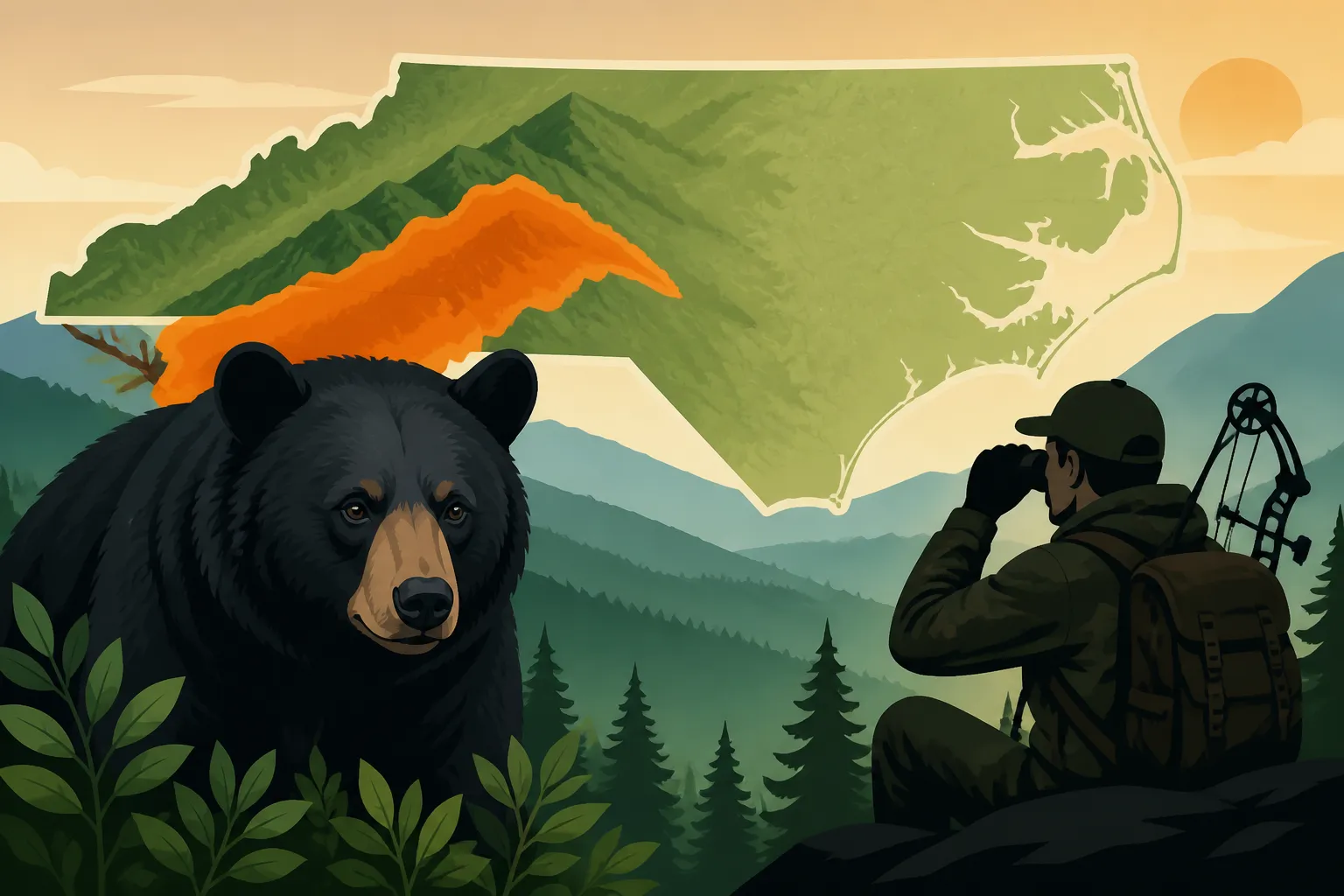
Pisgah National Forest, sprawling across nearly half a million acres, is arguably the crown jewel of mountain bear habitat. Its varied terrain, from steep, rugged peaks to lush river bottoms, provides everything a bear needs. The forest is contiguous with the Great Smoky Mountains National Park, allowing bears to move freely across vast, undisturbed landscapes. The areas immediately surrounding the Blue Ridge Parkway are particularly renowned, not just for scenic beauty but also for bear activity. Visitors often spot bears foraging along the parkway's edges, especially in spring and fall. These public lands offer significant opportunities for hunters, as outlined in our guide to Pisgah National Forest Hunting.
Within Pisgah, specific ranger districts like Pisgah, Appalachian, and Grandfather all hold strong bear populations. Hunters who understand the terrain and focus on areas with good mast production, thick rhododendron thickets for bedding, and consistent water sources tend to have the most success. It's a challenging hunt, requiring physical stamina and keen observation skills, but the rewards are truly magnificent. The sheer size of Pisgah means that even with hunting pressure, there are always pockets where bears can find sanctuary.
Nantahala National Forest and Southwestern Mountains
Further to the southwest lies Nantahala National Forest, another expansive public land offering exceptional bear habitat. Covering over 530,000 acres, Nantahala is equally rugged and diverse, characterized by deep river gorges, high peaks, and dense forests. Areas like the Cheoah District and the Tellico District are well-known for their healthy bear populations. The forest is less frequently visited in some of its more remote sections compared to parts of Pisgah, potentially offering a slightly less pressured experience for hunters. Our article on Hunting the Nantahala Ranger District for Deer also highlights the ruggedness of this area, which benefits bear populations immensely.
The southwestern mountains, including counties like Graham, Swain, Macon, and Cherokee, are consistently top producers for bear harvests. This region's lower human population density in many areas, combined with vast tracts of national forest and tribal lands (where hunting rules vary and often preclude public access for non-tribal members), creates large swaths of undisturbed habitat. Bears here benefit from a mix of hardwood forests, dense undergrowth, and plentiful water, allowing them to grow to impressive sizes, contributing to The Heaviest Black Bears Ever Recorded in North Carolina.
| National Forest / Area | Dominant Terrain | Key Bear Features | Hunting Season Notes |
|---|---|---|---|
| Pisgah National Forest | Rugged mountains, high peaks, hardwood forests, rhododendron thickets | Dense populations, excellent mast crops, connected to GSMNP | Designated bear zones, challenging terrain, high hunter effort |
| Nantahala National Forest | Deep gorges, high peaks, remote sections, mixed hardwoods | Healthy populations, less pressure in remote areas, good mast | Designated bear zones, physically demanding, strong harvest numbers |
| Cherokee National Forest (NC Portion) | Appalachian ridges, mature timber | Contiguous with NC forests, good transitional habitat | Specific NC rules apply within state lines, often less accessed |
| Great Smoky Mountains National Park | Wilderness, old-growth, high elevation | Sanctuary, source population for surrounding areas | No Hunting Allowed, observation only |
Seasonal Bear Movements and Food Sources in the Mountains
Black bears aren't static residents; they are constantly on the move, driven by the most fundamental need: food. Understanding their seasonal patterns and the specific foraging habits tied to the mountain environment is perhaps the single most important factor for anyone trying to find them. From the earliest spring greens to the late fall acorn drop, a bear's calendar revolves around its stomach.
Spring Foraging and Den Emergence
When the snow finally melts and the temperatures begin to climb in early spring, bears emerge from their dens, often a bit sluggish and looking for their first meals after a long winter's fast. In the North Carolina mountains, this usually means a shift to tender, new growth. They'll browse on grasses, sedges, and forbs that are among the first plants to sprout. You might find them in south-facing coves or along creek bottoms where the sun hits first, drawing out that fresh vegetation. They're also keen on finding winter-killed deer or other carrion, which provides a much-needed protein boost.
As spring progresses into late spring and early summer, they'll target succulent plants and early berry crops. Think wild strawberries and serviceberries. If you're out hiking or Scouting North Carolina Public Land Before Season, keep an eye on these lower elevation, sun-exposed areas. While spring bear hunting isn't permitted in North Carolina, understanding these movements helps paint a picture of their year-round habits and can inform scouting for the fall season. It's about recognizing the early stages of the food cycle that will later dictate fall patterns.
Summer Calorie Accumulation and Berry Season
Summer is all about putting on weight. This is when bears really hit the "all-you-can-eat" buffet of berries. Blueberries, blackberries, raspberries, huckleberries – you name it, bears will gorge on it. They'll often move to higher elevations as the season progresses, following the ripening fruit. A good berry crop can concentrate bears in certain areas, making them predictable for a short window. You'll find them in clear-cuts, along power lines, and even in open oak savannas where sunlight encourages berry growth.
During this time, their range might seem a bit more defined by these specific food sources. If there's a bumper crop of blueberries on a particular ridge, bears from miles around might converge there. This intense foraging is crucial for building up fat reserves necessary for the coming winter. When you're assessing potential hunting spots, remembering which areas produced strong berry crops in summer can sometimes point to where bears might have established travel routes or even denning preferences later in the year. Many hunters use mapping apps, like those available through GoHunt, to mark these summer food sources and compare them year to year, looking for patterns.
Fall Mast Crops and Pre-Denning Behavior
Fall is the most critical season for mountain bears, and for hunters. This is when the hard mast – acorns, hickory nuts, beechnuts, and chestnuts (where they still exist) – hits the forest floor. These high-calorie, high-fat foods are absolutely essential for bears to pack on enough weight to survive hibernation. Bears will abandon almost all other food sources to capitalize on a good mast crop. Their movements become highly concentrated around productive oak and hickory ridges, often traveling long distances to exploit a plentiful food source. This is why Hunting Bears Over Natural Mast in the Mountains is such a core strategy.
The success of the fall mast crop can dramatically influence bear distribution and hunting success. In years with poor mast, bears might expand their range, seek alternative food sources like agricultural crops on the fringes of mountain towns, or even forage more aggressively in residential areas, leading to more Bear Encounters Around Mountain Cabins. Conversely, a robust mast year can keep bears localized to specific drainages or ridges, making them more predictable. Understanding the annual mast cycle is paramount, and it requires pre-season scouting to identify which specific trees or stands are producing. This "reading the woods" before the season opens is a cornerstone of successful mountain bear hunting.
Challenges and Strategies for Hunting Mountain Bears
Hunting black bears in the rugged North Carolina mountains is an experience unlike any other. It demands physical fitness, mental toughness, and a deep understanding of the terrain and the animal. It's not a sit-and-wait game from a cozy box blind; it's often an active pursuit in some of the most challenging landscapes our state offers.
Navigating Steep Terrain and Dense Cover
The first thing any mountain bear hunter realizes is that gravity is not your friend. The terrain is relentlessly steep, full of rocky outcrops, slippery leaf litter, and dense rhododendron and mountain laurel thickets that can be almost impenetrable. This isn't just a physical challenge; it's a strategic one. Bears, being incredibly agile and powerful, use this terrain to their advantage, often bedding in the thickest, nastiest cover on steep slopes where they have a commanding view and can quickly slip away undetected.
Successful navigation requires proper gear, including sturdy boots with good ankle support, trekking poles, and a lightweight but capable pack for a Packs for a Pisgah Forest Day Hunt. More importantly, it requires smart route planning. Avoid straight lines up and down hills; instead, plan traverses that follow benches or contours. Use natural funnels like saddles, drainages, or breaks in thickets where bears are more likely to travel. Understanding Wind and Thermals on a Blue Ridge Slope is also critical, as air currents behave differently in mountainous terrain and can quickly give your position away.
Public Land Pressure and Finding Secluded Spots
North Carolina's national forests are vast, but they are also shared by many users, including other hunters, hikers, and recreationalists. While bear hunting attracts a dedicated crowd, finding a spot away from the crowds is still possible, though it requires effort. Most hunters stick close to accessible roads or well-worn trails. The bears know this too. To find those secluded spots where bears feel more comfortable, you often have to embrace the pain of walking further, climbing higher, or dropping into drainages that most people avoid. This is where truly understanding Hunting Pressure on North Carolina Public Land becomes invaluable.
One effective strategy is to use mapping software, like those offered by GoHunt, to identify remote areas far from vehicle access points. Look for natural barriers like deep creek crossings or incredibly steep bluffs that deter casual foot traffic. These out-of-the-way basins or distant ridges are often where you'll find less pressured bears and more natural behavior. Patience and persistence are key, and being willing to put in the hard miles is often the biggest differentiator between success and frustration. This dedication is often what leads to success when you're Hunting the Mountain Bear Zones.
Coexisting with North Carolina's Mountain Bears
As human populations grow and development encroaches further into traditional bear habitat, interactions between people and bears are becoming more common. For both hunters and non-hunters living, working, or recreating in the mountains, understanding how to coexist safely and responsibly with these powerful animals is paramount.
Understanding Bear Behavior and Avoiding Conflict
Black bears are generally shy and reclusive, but they are also intelligent and highly opportunistic when it comes to food. Most conflicts arise when bears associate humans with easy food sources. This could be anything from unsecured garbage cans and pet food left outside to bird feeders, grills, or even unpicked fruit trees. When a bear learns that a human residence provides a consistent food reward, it quickly loses its natural fear of people, leading to what wildlife biologists call "habituated" bears. These are the bears most likely to become a nuisance or, in rare cases, a danger.
To avoid conflict, the golden rule is: never feed a bear, intentionally or unintentionally. Secure all attractants, use bear-resistant garbage cans, and keep pet food indoors. If you encounter a bear, especially one that seems to tolerate your presence, make your presence known – clap, shout, wave your arms – to scare it away. This reinforces its natural fear of humans. If a bear approaches you, especially in a bold manner, stand your ground, make yourself look large, and do not run. Running can trigger a chase response. Knowing how to react calmly and decisively can prevent escalating situations and ensures everyone, including the bear, stays safe. The NC Wildlife Resources Commission has excellent resources on this topic for anyone experiencing Bear Encounters Around Mountain Cabins.
Responsible Hunting Practices and Bear Management
Hunting plays a crucial role in managing North Carolina's healthy black bear population. Regulated hunting seasons, like North Carolina Bear Season Dates in the Mountains, help to maintain bear numbers at sustainable levels, reducing conflicts with humans and ensuring the long-term health of the ecosystem. Hunters contribute significantly to conservation through license fees and by providing valuable data to wildlife agencies.
Responsible hunting practices are essential. This includes knowing and following all regulations, accurately identifying your target, and making ethical shot choices. After a successful harvest, proper field dressing and meat care are vital, especially in warm weather. Hunters must also adhere to North Carolina Bear Checking Requirements to provide important biological data such as weight, sex, and sometimes age, which helps biologists monitor the population. Bear management in North Carolina is a dynamic process, and hunters are active partners in ensuring these magnificent creatures continue to thrive in our mountains for generations to come.
Conservation and Management Efforts for Mountain Bears
North Carolina's black bear population has seen a remarkable recovery over the last few decades, thanks in large part to sound conservation strategies and proactive management by the North Carolina Wildlife Resources Commission (NCWRC). Understanding these efforts helps appreciate the bigger picture of why our mountain bears are thriving.
Monitoring Population Health and Trends
The NCWRC continuously monitors the health and size of North Carolina's black bear population. This isn't just about counting bears, which is notoriously difficult, but about tracking various indicators such as harvest data, reproductive rates, and habitat availability. They use a combination of techniques, including mandatory harvest reporting from hunters, bear trapping and tagging, DNA sampling from hair snares, and even citizen-science observations. This comprehensive approach allows biologists to assess population trends, estimate How Many Black Bears North Carolina Has, and make informed decisions about hunting regulations.
Regular scientific studies are also conducted to understand bear movements, diet, denning habits, and interactions with other wildlife. For instance, knowing how often sows are having cubs and how many survive to adulthood gives insight into the reproductive success of the population. This data is critical for setting appropriate harvest quotas and ensuring that hunting remains sustainable and does not negatively impact the long-term viability of the bear population. It's a testament to good wildlife management that we can discuss healthy, thriving bear populations in our state.
Habitat Protection and Connectivity
One of the most significant factors in the success of North Carolina's mountain bear population is the sheer amount of protected and contiguous habitat available. The vast national forests (Pisgah, Nantahala, Cherokee) and the Great Smoky Mountains National Park provide immense swaths of undisturbed land. Conservation efforts focus on protecting these large blocks of forest and, importantly, maintaining habitat connectivity between them. This connectivity allows bears to move freely, disperse, find new territories, and maintain genetic diversity within the population.
Challenges, however, remain. Urbanization and development on the fringes of mountain towns can fragment habitat, leading to increased human-bear conflicts. Conservation groups and state agencies work tirelessly to secure additional lands through acquisitions, easements, and partnerships with private landowners. These efforts ensure that vital corridors for wildlife movement are preserved, preventing bears from becoming isolated in smaller patches of habitat. This forward-thinking approach to land management is what ultimately underpins the robust future of North Carolina's Black Bear Population.
Disclaimer
Please remember that hunting regulations, seasons, and licensing requirements can change. Always consult the latest North Carolina Wildlife Resources Commission regulations before planning any hunting trip. This information is for educational and entertainment purposes only and should not be considered legal advice. Safety first, always!