Hunting Bears Over Natural Mast in the Mountains
Hunting black bears in North Carolina's mountains presents a unique challenge, often feeling like searching for a needle in a vast, rugged haystack. The sheer size of the national forests, combined with the bears' incredible ability to seemingly vanish, can leave even seasoned hunters scratching their heads. This guide aims to demystify one of the most effective strategies for mountain bear hunting: locating and capitalizing on natural mast crops, providing a detailed roadmap to finding success in the high country.
Understanding North Carolina's Mountain Bear Habitat and Diet
Successfully hunting bears in the mountains of North Carolina hinges on a deep understanding of their habitat and, critically, their diet. Bears are opportunistic omnivores, but in the fall, their focus shifts intensely to packing on calories for winter, making natural mast an irresistible draw.
Key Mast Species and Their Bearing Cycles
When we talk about "mast" in the North Carolina mountains, we're primarily referring to the nuts and fruits produced by hardwood trees, particularly oaks, hickories, and beech. These are the calorie bombs that bears crave and will travel significant distances to find.
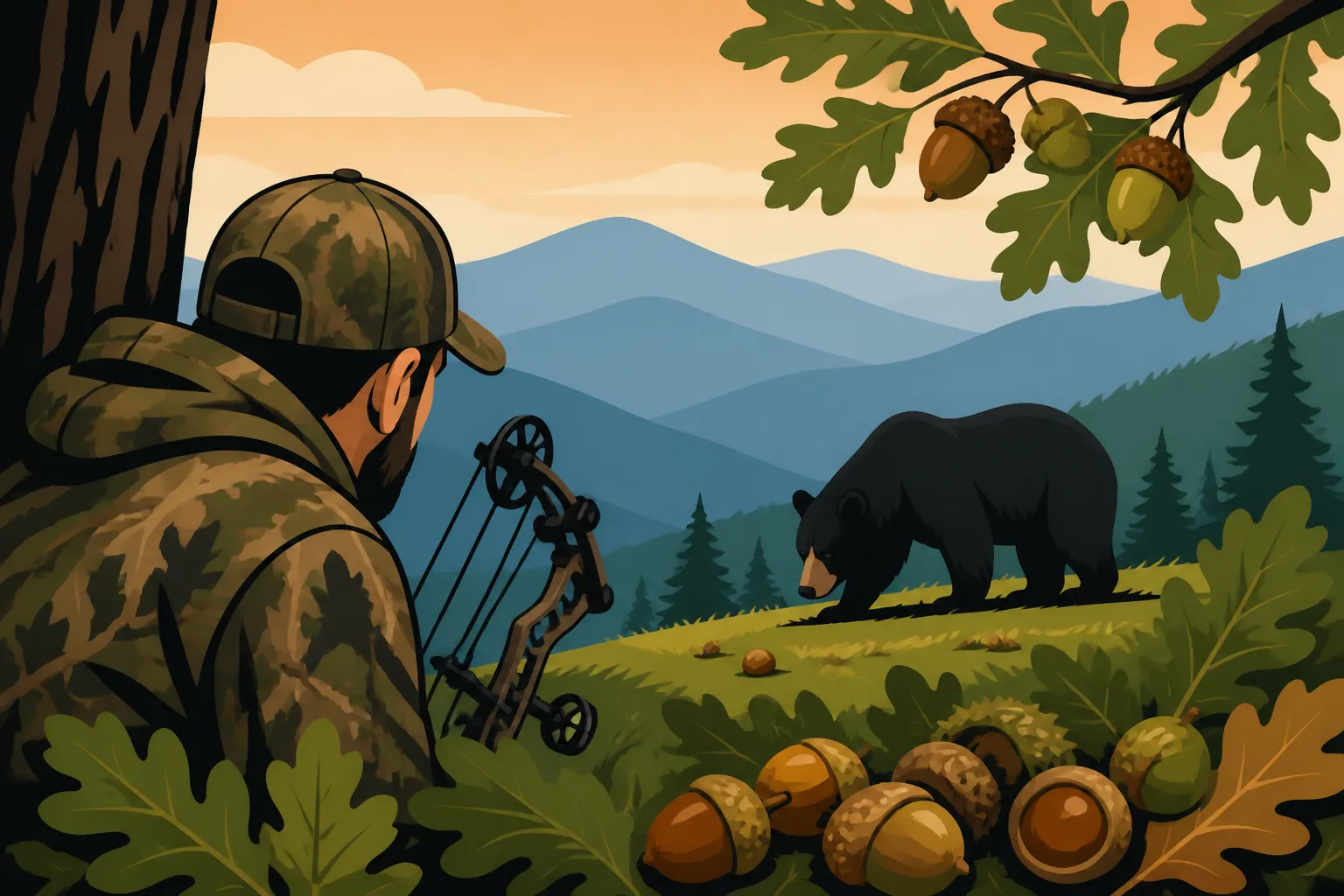
Oaks, especially white oaks and red oaks, are the undisputed kings of mast. White oaks, like chestnut oaks and white oaks, drop their acorns earlier in the fall, often from late August through September. These acorns are lower in tannin, making them sweeter and highly palatable to bears, deer, and other wildlife. When you find a good crop of white oak acorns, you can bet bears will be frequenting the area. Red oaks, on the other hand, drop their acorns later, typically from October into November, and sometimes even into early winter. Their acorns are higher in tannin, giving them a more bitter taste, but they are crucial for bears entering the later stages of their pre-denning gorging period. The timing difference is vital for hunters, as bears will shift their focus from early-dropping white oaks to later-dropping red oaks as the season progresses. A hunter who understands this progression can stay ahead of the bears' feeding patterns.
Hickories are another important mast source. While not as universally preferred as acorns, hickory nuts are incredibly energy-dense. Bears will spend considerable time cracking open hickory nuts, often leaving tell-tale signs of their presence. Beech trees, though less common in pure stands, produce small, triangular beechnuts that are another high-fat, high-calorie food source that bears will readily exploit. The availability of these mast crops varies wildly year to year, influenced by weather patterns during pollination and growing seasons. A banner year for acorns can spread bears out, making them harder to concentrate, while a poor mast year often forces them to seek alternative foods, which can, paradoxically, make them more predictable if you know where those alternatives are. This annual fluctuation is why scouting is so critical, year in and year out.
Identifying Prime Bear Country in the Mountains
Knowing which trees produce mast is one thing; finding where those trees grow in concentrations that attract bears is another. Mountain terrain creates specific microclimates and features that bears utilize.
Ridge lines and saddles are natural travel corridors for bears, connecting feeding areas with bedding cover. Mast-producing trees often grow on these features, making them double-whammies for bear activity. Coves, especially those with northern or eastern aspects, tend to retain moisture better and often host mature mast-producing hardwoods, providing consistent food sources even in drier years. Water sources, like creeks, springs, and seepages, are always important, not just for drinking but also because lush vegetation and specific mast species might thrive nearby. Bears will often bed in dense security cover, like rhododendron or mountain laurel slicks, which are particularly common in deep coves and along steep, rugged slopes. These thickets provide excellent escape cover and thermal regulation.
Elevation also plays a significant role. Bears might feed at lower elevations early in the season, then move higher as certain mast crops ripen or as hunting pressure pushes them into more remote areas. Similarly, during a warm fall, bears might stay at higher elevations longer. When you're looking at a map, whether it's a traditional paper topo or a digital one through a mapping tool like GoHunt, look for areas where these features converge. A north-facing cove, fed by a spring, bordered by a dense rhododendron thicket, and featuring a healthy stand of mature red oaks on a nearby ridge, is a textbook example of prime bear habitat in the Pisgah and Nantahala National Forests. Understanding these patterns is key to Hunting the Mountain Bear Zones effectively.
Scouting for Mast and Bear Sign
Scouting is paramount for bear hunting, especially when focusing on natural mast. You can't just show up on opening day and expect to find bears if you haven't put in the legwork. Bears are creatures of habit when it comes to food, but those habits shift with the seasons and the available resources.
Pre-Season Scouting Strategies for Mast Crops
Before the season even begins, you need to be out there assessing the mast situation. This usually starts in late summer to early fall when acorns and other nuts are beginning to mature.
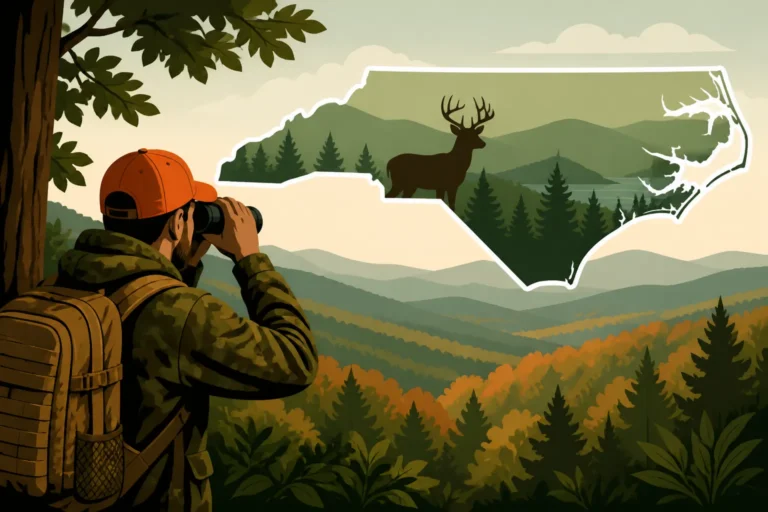
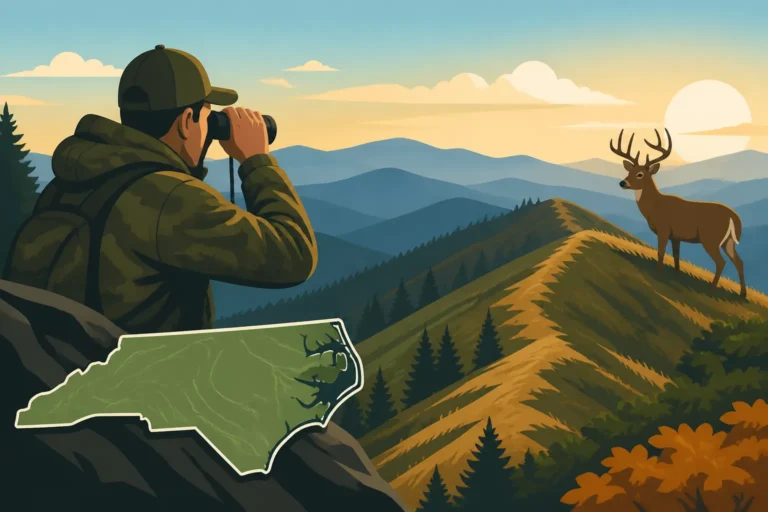
One effective strategy is to use binoculars from high vantage points, scanning tree canopies for signs of heavy acorn or nut production. Look for the tell-tale clusters of acorns or the denser foliage associated with a healthy crop. This aerial view can save you hours of walking in areas with sparse mast. Once you've identified promising areas, it's time to get on the ground. Walk through potential mast zones, looking for fallen acorns, hickory nuts, or beechnuts. Pay attention to how widespread the drop is – are you seeing just a few, or are the forest floor and trails littered with them? A good mast year will often result in a visible "rain" of nuts. You should also be looking at the overall health of the trees; stressed trees might not produce as well. The best time to do this is a few weeks before the season, giving you time to adjust your strategy based on what you find. Tools like GoHunt can be incredibly helpful here. You can overlay public land maps with topographic data, highlighting potential oak and hickory stands, and even marking specific trees or areas that look promising based on satellite imagery, allowing you to create a targeted scouting plan.
Interpreting Bear Sign Around Mast Sources
Once you've found a good mast crop, the next step is to confirm that bears are actually using it. Bears leave a plethora of signs, and learning to read them is like learning their secret language.
Scat is probably the most common and informative sign. Bear scat found in a mast-rich area will often be packed with acorn fragments, hickory nut shells, or other seeds. The freshness of the scat is crucial – look for moist, pliable scat versus dry, crumbled old droppings. Tracks are another obvious indicator. Look for large, five-toed paw prints, especially in soft soil near water sources or along game trails leading to and from mast zones. Pay attention to the direction of travel and the frequency of tracks. Claw marks on trees, particularly on the bark of mast-producing hardwoods, indicate a bear has been climbing to access nuts directly from the branches. Sometimes, you'll even find broken branches where a bear has climbed and fed. Overturned rocks, logs, and disturbed leaf litter are also strong indicators, as bears will root around for grubs, insects, and nuts that have burrowed into the ground. When evaluating these signs, try to discern a pattern. Are they feeding heavily in one specific patch of oaks, or are they spread out across a wider area? Are they moving through a saddle between two coves with mast? Understanding these nuances helps you predict their movements and pinpoint potential stand locations or still-hunting routes. For more detailed insights into what to look for, check out Scouting North Carolina Public Land Before Season.
Hunting Tactics Over Mountain Mast
Finding the mast and the sign is just the first part of the puzzle. The real challenge comes in executing a hunting strategy that puts you in front of a mountain bear. This requires patience, stealth, and a keen understanding of how bears move through the terrain.
Still-Hunting and Stand Placement
When hunting over natural mast in the mountains, two primary tactics stand out: still-hunting and stand placement. Often, a combination of both yields the best results.
Still-hunting involves moving incredibly slowly and deliberately through mast-rich areas, stopping frequently to glass and listen. Your pace should be almost imperceptibly slow – think steps every few minutes, not every few seconds. Use your binoculars constantly to pick apart dense cover and look for subtle movements. This tactic works best when you have a general idea of where bears are feeding but don't want to commit to a fixed stand. Focus on moving into the wind and using thermals to your advantage, keeping your scent from blowing ahead of you. Pay close attention to subtle changes in elevation that might hide a bear just out of sight.
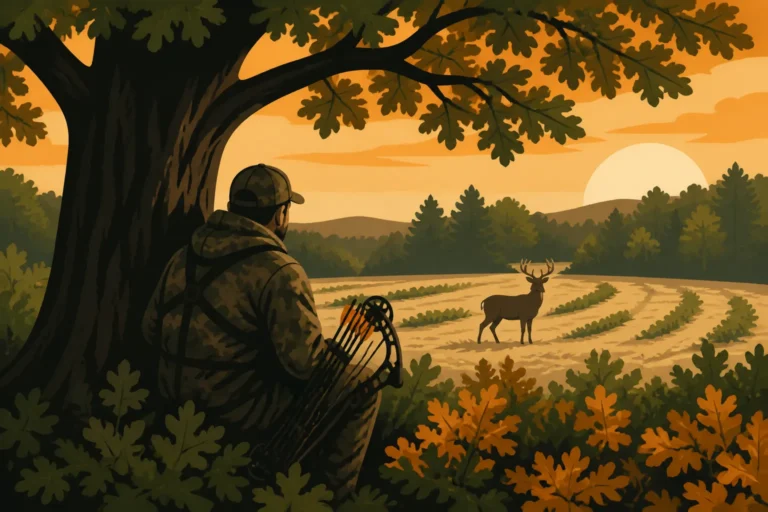
For stand placement, you need to identify key funnels, pinch points, or specific trees that are dropping heavily. A good stand site might be on a ridge overlooking a cove filled with mast trees, or in a saddle where several game trails converge. Consider setting up a treestand or a well-brushed-in ground blind that offers good visibility and a clear shooting lane. Think about the most likely approach routes for bears – often, they will use the path of least resistance. Position your stand downwind or crosswind of these approach routes and the feeding area. Remember that bears often feed most actively in the early morning and late afternoon, but they can be unpredictable. You might even consider hunting through the middle of the day if you've found a particularly hot feeding sign. For those longer sits, having a comfortable setup with enough gear in your pack is essential, especially when on a day hunt in a place like Pisgah.
Utilizing Wind and Thermals in Mountain Terrain
The wind and thermals are arguably your most critical allies and potential enemies in mountain hunting. Understanding their dynamics is absolutely non-negotiable for success when you're Hunting Bears Over Natural Mast in the Mountains.
In mountain terrain, wind is rarely consistent. Thermals are daily air currents driven by temperature changes. As the sun rises and warms the mountain slopes, air begins to rise, creating an updraft (thermals going up the mountain). As the sun sets and the air cools, the colder, denser air flows down the slopes (thermals going down the mountain). These thermals can override or blend with the prevailing wind, creating complex and unpredictable scent currents.
Your primary goal is always to keep your scent away from where you expect bears to be. In the morning, when thermals are rising, it's generally best to approach from below your chosen hunting spot and set up on a ridge or a bench that allows your scent to rise above the feeding areas. In the evening, as thermals fall, you'll want to approach from above and set up below the feeding zone, letting your scent fall away. Always be aware of crosswinds, as they can carry your scent horizontally across a slope. Using a wind checker continuously is crucial, as thermals can shift unexpectedly. Sometimes, a "thermal ditch" or a small depression can channel thermals, creating a predictable scent corridor. A mapping app like GoHunt can help visualize terrain features, allowing you to predict how wind and thermals will behave and plan your entry and exit routes accordingly. This detailed understanding of Wind and Thermals on a Blue Ridge Slope is a game-changer for any mountain hunter.
Here's a quick look at common mountain mast and bear signs:
| Mast Species | Primary Drop Period | Preferred Habitat | Bear Sign to Look For |
|---|---|---|---|
| White Oaks | Late Aug – Sept | Moist coves, mid-slopes, ridges | Acorn-filled scat, tracks, fresh acorn litter |
| Red Oaks | Oct – Nov | Dryer ridges, upper slopes | Darker, bitter acorn-filled scat, tracks, claw marks on trees |
| Hickory | Sept – Oct | Fertile slopes, stream bottoms | Cracked nut shells, scat, disturbed leaf litter |
| Beech | Sept – Oct | Cooler, higher elevation slopes | Tiny triangular nuts, scat, claw marks on trees |
| Wild Grape | Late Summer – Fall | Forest edges, disturbed areas | Purple-stained scat, browsed vines |
| Black Cherry | Summer – Early Fall | Varied, often disturbed sites | Seed-filled scat, fresh tracks |
Overcoming Challenges and Maximizing Success
Hunting bears over natural mast isn't always straightforward. Mother Nature rarely cooperates perfectly, and bears, being incredibly intelligent and adaptable, present their own set of challenges.
Adapting to Changing Mast Conditions
The biggest variable in mast hunting is, ironically, the mast itself. What happens when it's a poor mast year in the mountains? Bears don't disappear; they simply shift their focus.
In years with scarce mast crops, bears will broaden their diet considerably. This might mean moving to lower elevations to seek out soft mast like wild grapes, persimmons, or berries that might still be available. They'll also spend more time rooting for grubs, insects, and tubers, turning over rocks and logs more frequently. Another key shift is that bears might move towards agricultural areas on the fringes of public lands, seeking out corn, soybeans, or other crops. While many mountain areas are heavily forested, some private tracts adjacent to public lands might have these food sources. In such years, bears can become more concentrated around the few remaining reliable food sources, which, for a savvy hunter, can actually make them more predictable. The key is constant adaptation. If your pre-season scouting reveals a poor mast crop, you need to adjust your strategy from focusing solely on acorns to identifying these alternative food sources. This might involve looking for areas where berries are abundant, or even scouting for tracks along the edges of private land. Flexibility and continuous observation are your best tools for success in a lean mast year.
Handling Mountain Terrain and Bear Encounters
Mountain bear hunting is physically demanding. The rugged, steep terrain of North Carolina's western counties, particularly in areas like the Nantahala National Forest, means you'll be dealing with significant elevation changes, dense undergrowth, and often, long walks deep into remote areas.
Physical fitness is crucial. Be prepared for steep climbs and descents, and pack accordingly. A good pack designed for a day hunt that can also carry out meat, like those mentioned in Packs for a Pisgah Forest Day Hunt, is essential. Safety in bear country is also paramount. While black bear attacks are rare, it's wise to carry bear spray and know how to use it. Be aware of your surroundings, especially when still-hunting. If you do encounter a bear, make noise and identify yourself; typically, they will move on. After the shot, tracking a bear through dense rhododendron thickets or laurel slicks can be incredibly challenging. Mountain bears are tough, and they can cover ground quickly even when mortally wounded. Take your time, look for blood and broken branches, and be prepared for a long, arduous recovery, potentially over very difficult terrain. Having a partner, if possible, can be a huge asset in these situations, both for safety and for tracking. Remember that the North Carolina Bear Checking Requirements mandate that you report your harvest, so be sure you understand the regulations.
Disclaimer
Hunting is an inherently dangerous activity. This guide provides information for educational purposes only and is not a substitute for proper training, safety precautions, or adherence to all local, state, and federal hunting laws and regulations. Always prioritize safety, hunt ethically, and respect wildlife and the environment. Consult the North Carolina Wildlife Resources Commission for the most current rules and licensing requirements.