Where Coastal Pocosin Bears Range
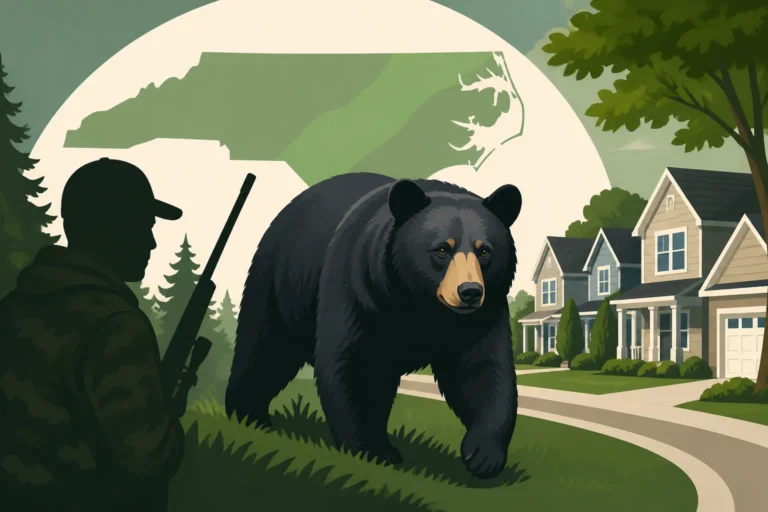
Navigating the dense, often impenetrable pocosins of North Carolina's coastal plain in search of black bears can feel like stepping into an entirely different world, far removed from the rolling hills or towering peaks many associate with bear country. It's a land defined by thick, tangled vegetation and standing water, a true wilderness that challenges even the most seasoned hunters. This guide is your deep dive into understanding the specific habitats and behaviors of these elusive giants, helping you pinpoint exactly where coastal pocosin bears range.
Understanding North Carolina's Coastal Plain Bear Habitat
The coastal plain of North Carolina is a truly unique landscape, characterized by vast expanses of low-lying, often waterlogged terrain. It’s here, amidst the bogs and thickets, that some of the state’s largest black bears thrive, making this region a bucket-list destination for many hunters. But understanding where they range first requires a grasp of this distinct environment.
The Unique Ecosystem of Pocosins
"Pocosin" is a Native American word meaning "swamp-on-a-hill," and it perfectly describes these elevated, peat-based wetlands that dot eastern North Carolina. Unlike typical swamps formed along rivers, pocosins develop on flat, poorly drained upland interstream divides. The soil, composed of thick layers of acidic peat, holds water like a sponge, creating an environment that ranges from merely damp to completely inundated, often with standing water for much of the year.
The vegetation is what truly sets pocosins apart. Imagine an almost impenetrable wall of dense, evergreen shrubs, tangled vines, and stunted trees like loblolly pine, pond pine, sweet bay, and titi. Canebrakes, switch cane, and various briars form an unforgiving understory that can quickly swallow a hunter whole. Movement is a slow, arduous process, often requiring hunters to push, crawl, and wade through thick vegetation and knee-deep water. This extreme density is precisely why bears love it here; it offers unparalleled security and refuge from human disturbance. For hunters, it's a test of endurance, navigation, and sheer will. When you step into a healthy pocosin, you immediately feel the oppression of the cover, the silence broken only by buzzing insects or the distant cry of a waterfowl, and the humbling realization that you are truly in the bear’s domain.
Geographical Extent of Coastal Bear Range
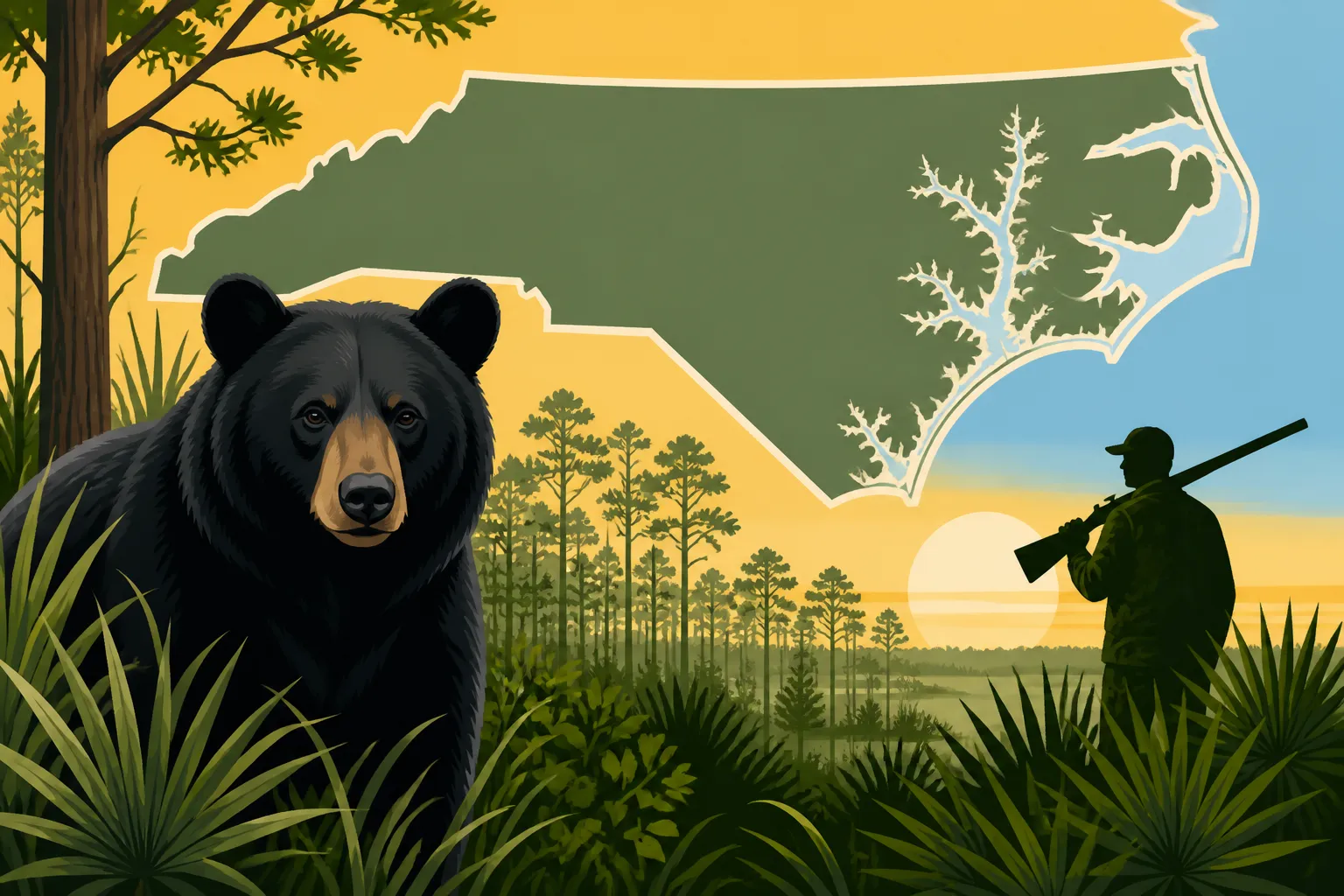
North Carolina's coastal bear population is robust and spread across a significant portion of the eastern region, generally east of I-95, stretching all the way to the Outer Banks. These areas, falling within the North Carolina Coastal Bear Zone Rules, provide ample habitat for these adaptable animals. While bears can be found in nearly every county east of the fall line, their highest densities and most consistent presence are concentrated in counties with vast tracts of contiguous pocosin, swamp, and timberland, often interspersed with agricultural fields.
Key counties where you'll find significant coastal bear activity include Dare, Hyde, Tyrrell, Washington, Beaufort, Pamlico, Craven, Jones, Onslow, Pender, Brunswick, Bladen, Columbus, Sampson, and parts of Gates, Perquimans, Chowan, Bertie, Martin, Pitt, Duplin, and Lenoir. These aren't just isolated pockets; these are truly vast, interconnected ecosystems. For instance, the sprawling pocosin systems in Dare, Hyde, and Tyrrell counties are home to some of the densest bear populations in the state, largely due to the sheer amount of undisturbed habitat in areas like the Alligator River and Pocosin Lakes National Wildlife Refuges. Farther south, areas like Holly Shelter Game Land in Pender and Onslow counties, and the Croatan National Forest in Craven, Jones, and Carteret counties, offer substantial bear range. Even counties that might seem more agricultural, like Sampson or Bladen, still hold significant bear populations in their numerous creek bottoms, river swamps, and isolated pocosin remnants. The sheer scale of this habitat is what allows North Carolina's Black Bear Population to thrive so remarkably.
Factors Influencing Coastal Bear Distribution
Understanding the geographical range is one thing, but knowing why bears choose certain spots within that range is crucial for successful hunting. Coastal plain bears are highly opportunistic and their movements are heavily dictated by resource availability and the need for security.
Food Sources and Seasonal Movements
Coastal North Carolina's environment provides a smorgasbord for black bears, though the menu changes drastically with the seasons. In spring and early summer, they gorge on lush green vegetation, new growth, and early berries like blueberries and blackberries found on pocosin edges and clear-cuts. As summer progresses, bears often move into agricultural fields, becoming nocturnal visitors to corn and soybean crops. A late-summer cornfield adjacent to a thick pocosin can be an absolute magnet for bears.
Come fall, the focus shifts to hard mast like acorns, if available, though these are less prevalent in pocosin swamps compared to the Piedmont or mountains. More importantly, bears will key in on other native mast crops such as blackgum, tupelo, and various soft mast species. Hunters should always be aware of the "feast or famine" cycles of natural food sources. A year with a poor mast crop might push bears further into agricultural areas or even closer to human habitation in search of calories. This constant search for sustenance directly influences their movements, often causing them to traverse open areas between the security of the pocosin and adjacent feeding grounds. Understanding these seasonal shifts in diet is paramount to predicting where bears will be.
Human Development and Bear Corridors
While pocosins offer incredible sanctuary, human development is an ever-present force in North Carolina's coastal plain. Highways, increasing residential areas, and expanding agriculture constantly fragment habitats. Bears, however, are remarkably resilient and adapt by utilizing corridors of natural cover to move between larger tracts of land. These corridors can be anything from narrow bands of timber along a creek, dense fencerows, or small, isolated swampy patches that connect bigger blocks of habitat.
Identifying these travel routes is key. A bear won't often cross a wide-open field in broad daylight unless pressured. Instead, they'll stick to the thickest cover available, using it as a highway. Roads, while sometimes barriers, can also act as linear features that bears travel parallel to, particularly at night. The expansion of agriculture, ironically, creates both conflict and opportunity. While fields replace some natural habitat, the crops themselves provide a rich food source, drawing bears out from the depths of the pocosin. The challenge for conservationists and hunters alike is to preserve and identify these crucial bear corridors to ensure genetic exchange and prevent isolation of bear populations, especially as development continues its relentless march.
Water Availability and Denning Sites
Given the wetland nature of pocosins, water might seem like a constant, but its ebb and flow significantly impact bear behavior. In prolonged dry spells, bears may concentrate around more permanent water sources or deeper sections of pocosins. Conversely, during periods of heavy rain, vast areas can become inundated, pushing bears to higher ground or forcing them to swim through flooded sections. Water levels also dictate access for hunters, as many areas become impassable when flooded.
Denning sites are another critical aspect of a bear's annual cycle. In the coastal plain, bears rarely dig traditional dens in the ground. Instead, they favor dense, impenetrable thickets within the pocosin. This can include large canebrakes, wind-thrown timber piles, or the hollow bases of ancient cypress or tupelo trees. The primary criteria for a den site are security and thermal insulation. A den deep within a pocosin offers both, protecting the sow and her cubs from predators and the elements. These sites are often found in the densest, most difficult-to-access parts of the habitat, underscoring the importance of these wild places for the bears' survival.
Key Pocosin Systems for Bear Activity
North Carolina is fortunate to have several massive public land areas that serve as critical strongholds for coastal black bears. These areas are not only important for the bears themselves but also offer incredible, albeit challenging, hunting opportunities for those willing to venture deep into the wilds.
Alligator River and Pocosin Lakes National Wildlife Refuges
These two National Wildlife Refuges, primarily located in Dare, Hyde, Tyrrell, and Washington counties, represent some of the most important and densely populated black bear habitats on the East Coast. Together, they encompass hundreds of thousands of acres of pristine pocosin, Atlantic white cedar swamps, and managed wetlands. The sheer scale and remoteness of these refuges provide unparalleled security for bears, allowing them to grow to impressive sizes.
Hunting on these refuges is highly regulated, often requiring special permits obtained through a lottery system, such as a Getting an Alligator River Refuge Deer Permit (though bear permits are separate and highly sought after). Despite the challenges of obtaining access, the rewards can be immense. Bears here are accustomed to living wild and are not often habituated to human presence, making for a truly authentic hunting experience. The refuges also actively manage habitat to benefit bears, including controlled burns and maintaining agricultural impoundments that provide crucial food sources. If you're serious about targeting a trophy coastal bear, these refuges are undoubtedly prime locations to investigate, but be prepared for intense competition and stringent rules.
Holly Shelter and Croatan National Forests
Moving south, the Holly Shelter Game Land in Pender and Onslow counties, and the Croatan National Forest in Craven, Jones, and Carteret counties, are two more behemoth tracts of public land that offer exceptional coastal bear hunting. Both are characterized by vast pocosins, cypress-gum swamps, and pine flatwoods, all contributing to rich bear habitat.
Holly Shelter, known for its extremely dense pocosin and swamp habitat, is notoriously difficult to navigate. As highlighted in Holly Shelter Bear Hunting Access, this area offers a true wilderness experience. Bears here are experts at disappearing into the thick cover, making still-hunting an exercise in patience and precision. Many hunters opt for dog-hunting on Holly Shelter, where it's permitted, to push bears out of the impenetrable thickets. Similarly, the Croatan National Forest, as discussed in Why Croatan Draws Coastal Bear Hunters, presents a mosaic of dense pocosin and upland pine, providing bears with both food and cover. The sheer size and diversity of habitat in Croatan support a healthy bear population, and while challenging, hunting these areas can be incredibly rewarding. Both locations require a North Carolina Game Lands permit in addition to your standard hunting license and big game privilege.
Smaller, Fragmented Pocosins and Private Land
While the large public land systems garner much of the attention, it's a mistake to overlook the countless smaller, often fragmented pocosin remnants found throughout the coastal plain. These can be isolated swampy patches, creek bottoms, or river drainages that might only be a few dozen or a few hundred acres in size, often surrounded by private agricultural land. Bears will readily utilize these smaller cover blocks as bedding areas and travel corridors, especially if they are adjacent to appealing food sources like corn, soybeans, or peanut fields.
Hunting these smaller parcels, particularly on private land, often presents different challenges and opportunities. On the one hand, these areas may receive less hunting pressure than the larger public lands. On the other, securing permission to hunt private land is paramount, and understanding Getting Private Land Permission in North Carolina is crucial. Bears moving between these smaller pocosin islands and agricultural fields often move during low light, providing prime opportunities for stand hunting along edges or travel routes. It's a game of pattern recognition and being in the right place at the right time. Don't underestimate the potential of these overlooked, often unglamorous, pockets of cover; they can hold big, smart bears.
Interpreting Bear Sign in Coastal Environments
Finding bears in the vast, dense pocosins is rarely a matter of stumbling upon them. It requires careful scouting and a deep understanding of how to interpret the subtle, and not-so-subtle, signs they leave behind. The coastal environment presents unique challenges for sign reading, but with practice, you can decipher the language of the forest.
Scat, Tracks, and Rubs
One of the most immediate signs of bear presence is their scat. What it looks like will tell you a lot about their diet. If they've been feasting on berries, it will be dark, full of seeds, and often purple-tinged. Corn-fed scat will be looser, yellow, and full of corn kernels. Knowing what bears are currently eating gives you a clue as to where they might be concentrating their feeding efforts. Look for scat along trails, logging roads, and especially on the edges of agricultural fields adjacent to cover.
Tracks, while more challenging to find in the soft, often muddy pocosin floor, are another excellent indicator. Bear tracks are distinctive, with five toes and prominent claw marks. An adult bear's front paw track can be 4-7 inches long, with the hind paw even larger, often resembling a human footprint. In areas of standing water or very soft mud, these tracks can be well-preserved. Pay attention to the size and freshness—larger, clearer tracks indicate a bigger, more recent visitor.
Bears also leave rubs on trees, posts, or even large stumps. These can be claw marks, bite marks, or areas where they've rubbed their fur, leaving hair behind. Bears rub to communicate, to mark territory, or simply to scratch an itch. Look for these signs on well-used trails or along the edges of bedding areas. A fresh rub, especially with hair, is a strong indicator of recent activity.
Feeding Sign and Travel Routes
Beyond scat and tracks, bears leave a trail of destruction in their wake as they feed. In a pocosin, this might mean overturned logs where they've dug for grubs, or stripped bark on certain trees. Along field edges, look for corn stalks that have been bent over or broken, with the ears chewed clean. Soybeans might be flattened in distinct pathways, leading from the field edge back into the cover. If you find a patch of wild berries, check for broken branches and berries on the ground, indicating a bear's visit.
Identifying consistent travel routes is paramount. Bears are creatures of habit and will often use the path of least resistance through dense cover. Look for "bear trails" – distinct paths worn through the undergrowth, often wider than deer trails, and sometimes with bent or broken branches at bear height. These trails frequently connect bedding areas deep within the pocosin to feeding areas on its periphery or to water sources. They often follow subtle rises in elevation, old logging roads, or the dry edges of swamps. An app like GoHunt, with its detailed satellite imagery, can be invaluable here. While ground visibility can be next to nothing, high-resolution aerial photos can reveal subtle changes in vegetation density, old clear-cuts, or meandering drainages that might indicate natural travel corridors, helping with your Scouting North Carolina Public Land Before Season.
Using Technology for Scouting
In the dense, difficult-to-penetrate pocosin environment, technology becomes an invaluable scouting tool. While nothing replaces boots on the ground, modern mapping applications and other gadgets can give you a significant advantage. Tools like onX Hunt, BaseMap, or the NC Wildlife App are fantastic resources. These apps, particularly GoHunt, allow you to overlay satellite imagery with public land boundaries, topo maps, and even private land ownership data. This lets you digitally scout from home, identifying potential access points, dense cover blocks, clear-cut edges, and old logging roads that might serve as bear travel corridors.
You can mark waypoints for potential stand locations, bedding areas, or historical feeding sites before you even step foot in the woods. Furthermore, these apps provide GPS capabilities that are critical for navigation in the featureless, often disorienting landscape of a pocosin. Losing your way in a vast swamp can quickly become a serious situation, so a reliable GPS or mapping app is not just a convenience, but a necessity. Trail cameras are also incredibly effective, especially when placed on established bear trails or along the edges of food sources. They can provide invaluable intelligence on bear numbers, size, and movement patterns, especially in areas too thick or remote for frequent human visits. The combination of pre-scouting with high-tech maps and remote monitoring with trail cameras can dramatically increase your chances of success.
Challenges and Rewards of Hunting Coastal Pocosin Bears
Hunting coastal pocosin bears is not for the faint of heart. It presents a unique set of challenges that can test the limits of your physical endurance, mental fortitude, and patience. However, the rewards for those who embrace the struggle are equally unique and deeply satisfying.
The Physical Demands of Pocosin Hunting
Let's be realistic: hunting in North Carolina's coastal pocosins is a brutal physical endeavor. It's not a gentle stroll through open woods. You'll be pushing through dense vegetation, often thick enough that you can't see more than 10-15 feet in front of you. You'll be slogging through water, sometimes knee-deep or more, over uneven ground that can hide stumps, roots, and unseen holes. The air is often thick with humidity, and during the early seasons, the heat can be oppressive. And then there are the insects – mosquitoes, ticks, and chiggers are constant companions, testing your resolve.
The sheer effort required to cover ground means that every step is a workout. Dragging a bear out of a remote pocosin is an epic undertaking, often requiring multiple people, specialized equipment, and many hours of back-breaking labor, as explored in discussions around Recovering a Deer From a Coastal Swamp (which applies just as much, if not more, to a bear). This isn't a hunt where you can just show up on opening day without prior preparation. It demands physical conditioning, mental toughness, and a genuine willingness to endure discomfort.
Navigating the Maze: Gear and Strategy
Given the challenging environment, having the right gear and a solid strategy is absolutely critical. First and foremost, invest in high-quality, waterproof boots designed for swamp conditions. As discussed in Boots for North Carolina Swamps and Ridges, rubber boots or waders are often a necessity to stay dry and comfortable. Durable, briar-proof clothing is also essential to protect against the endless thorns and sharp vegetation.
A reliable GPS unit or a fully charged smartphone with a mapping app is non-negotiable. It's incredibly easy to become disoriented in the featureless pocosin, where every thicket looks the same. A compass and map should also be carried as a backup. When it comes to hunting strategy, still-hunting through a pocosin requires immense patience and an understanding of bear movement. You'll be moving slowly, stopping frequently, and listening intently. Setting up ground blinds or treestands on pocosin edges, especially where they meet agricultural fields or known travel corridors, can be highly effective. If dog hunting is allowed and you choose that method, understanding the dynamics of a bear chase in such dense cover is key. You need a powerful firearm or bow for deep penetration, as shots can be close and quick, with little time for error.
The Unique Thrill of a Coastal Bear
Despite all the challenges, hunting a coastal pocosin bear offers a profound and unique sense of accomplishment. These bears are truly wild animals, living in some of the most remote and untamed parts of North Carolina. Their size is legendary; as we explore in Why Coastal Bears Grow So Heavy, the abundance of food, particularly agricultural crops, allows them to pack on incredible amounts of weight. Taking one of these giants, often pushing over 500 pounds, is a feat that few hunters experience.
The thrill isn't just in the size, though. It's in successfully navigating the labyrinthine environment, in outsmarting an animal that is perfectly adapted to its dense home, and in earning every single ounce of success through sheer grit and determination. There's a deep satisfaction in connecting with a truly wild landscape and its apex predator. For many, it's not just about the harvest; it's about the adventure, the challenge, and the unforgettable memories forged in the heart of North Carolina's "swamp-on-a-hill."
| Habitat Type | Primary Characteristics | Bear Use | Hunting Challenges |
|---|---|---|---|
| Large Pocosin Systems | Vast, dense, peat-based wetlands; low elevation, often wet | Primary bedding, security cover, seasonal food sources | Extremely thick cover, water, navigation, physical demands |
| Coastal River Swamps | Cypress-gum swamps along major rivers; flooded, muddy | Travel corridors, denning, abundant soft mast | Deep water, mud, insect pressure, difficult access |
| Pine Flatwoods | Drier pine stands, often adjacent to pocosins | Travel routes, some hard mast (pine cones), resting areas | Less cover than pocosins, but can hold bears |
| Agricultural Fields | Corn, soybeans, peanuts, wheat; private land | Primary food source, especially in late summer/fall | Nocturnal activity, limited cover, requires permission |
| Clear-Cuts/Regrowth | Recently timbered areas, dense young vegetation | Browse, early berries, thick cover for young bears | Very thick regrowth, limited visibility |
| Isolated Swamp Islands | Smaller, fragmented wetlands surrounded by dry land | Bedding, temporary refuge, travel between larger blocks | Can be pressured, requires diligent scouting |
Disclaimer
The information provided in this guide is for general informational purposes only. Hunting regulations, seasons, and licensing requirements can change frequently. Always consult the most current regulations published by the North Carolina Wildlife Resources Commission (NCWRC) before planning any hunting trip. Ensure you have all necessary licenses, permits, and adhere to all safety guidelines. Hunting is an inherently risky activity, and proper preparation, knowledge, and responsible practices are essential for a safe and successful experience.