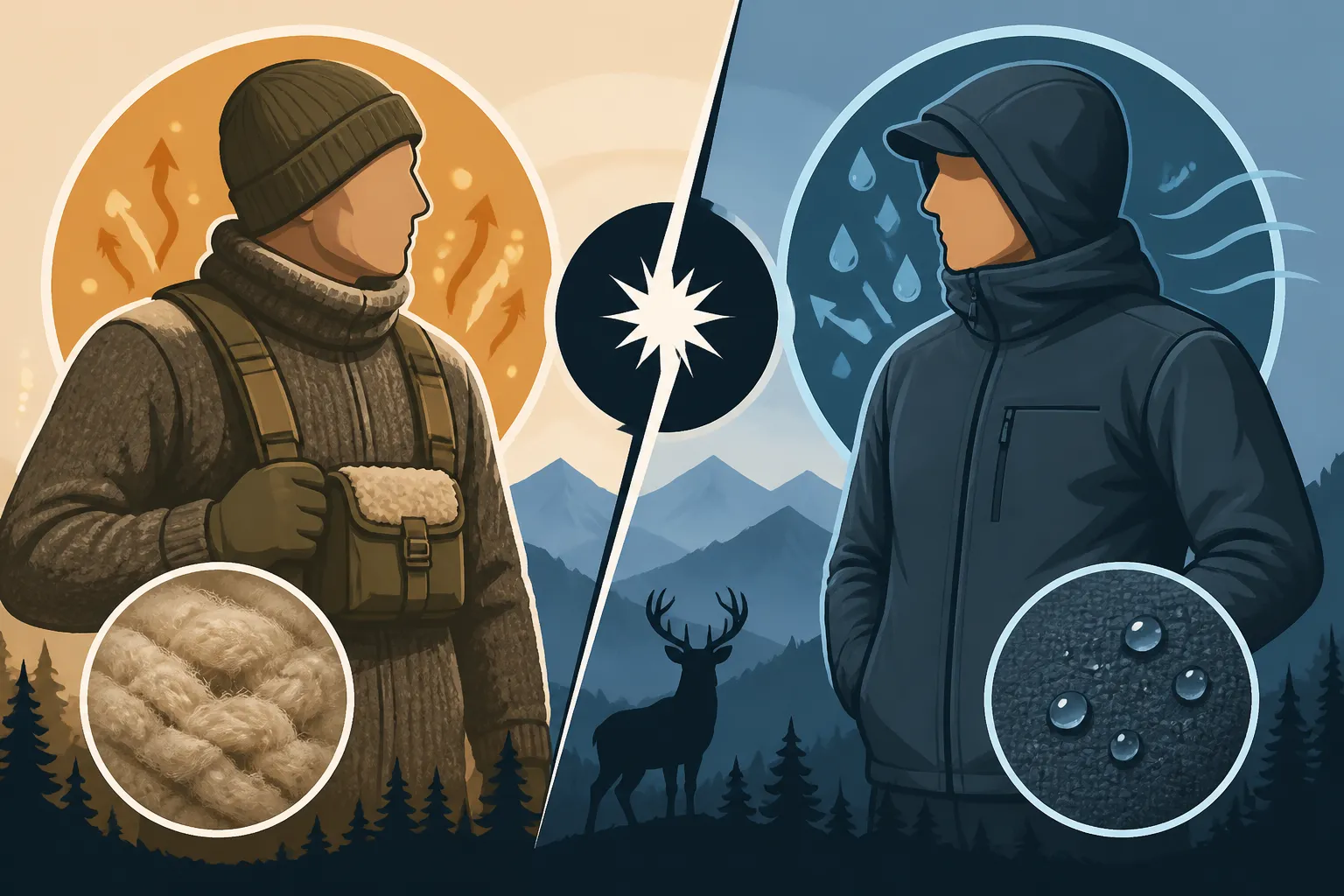
Wool Versus Synthetics in Mountain Cold
That first chill bite in the North Carolina mountains, especially come late fall or early winter, can be absolutely brutal if you're not dressed right. One minute you're hiking hard, sweating through your layers, and the next you're sitting perfectly still on a cold stand, feeling that sweat turn into an icy clamminess that leaches the warmth right out of you. This guide is all about navigating that tricky balance, diving deep into the age-old debate between wool and synthetic hunting apparel so you can stay warm, dry, and focused on the hunt, not the shivers.
Understanding North Carolina's Mountain Cold
Hunting in the Blue Ridge or Great Smoky Mountains is a different beast entirely compared to the mild temperatures of the coast or the relatively flat terrain of the Piedmont. Here, the weather can change in a heartbeat, and what starts as a crisp, clear morning can quickly turn into a windy, spitting rain or even a snow squall. Understanding these unique conditions is the first step to choosing the right gear.
The Variability of Mountain Weather
Anyone who's spent time chasing deer or bear in the North Carolina mountains knows how quickly the forecast can become irrelevant. You might wake up to frost-covered ground and a clear sky, only for clouds to roll in by mid-morning, bringing a cold drizzle by noon. This isn't just an inconvenience; it's a significant factor in your comfort and safety. That beautiful, calm morning can morph into a blustery, bone-chilling afternoon, and if your layers aren't up to the task, you'll be heading back to the truck early. Planning for the worst, even when hoping for the best, is absolutely crucial when you're several miles deep into the Pisgah National Forest.
Imagine being on a long, steep climb up a ridge in the Nantahala, your body working hard, generating heat. You shed a layer or two to avoid soaking in sweat. But then you crest the ridge, and a biting wind whips through, forcing you to hunker down. If the layers you just peeled off are now damp, putting them back on won't do much good. This constant flux demands versatility from your clothing system, allowing you to adapt without compromising your core temperature. It's not just about how cold it is; it's about how quickly that cold can feel colder when combined with moisture and wind.
The Role of Elevation and Wind Chill
The higher you climb in the North Carolina mountains, the more pronounced the effect of elevation and wind chill becomes. For every thousand feet of elevation gain, the temperature can drop several degrees, and that's before accounting for any wind. What feels like a tolerable 40 degrees Fahrenheit in the valley can easily be a miserable 25 degrees with a stiff breeze once you reach a ridgeline or a high-elevation bench where those big mountain bucks might be hiding. The wind isn't just cooling; it penetrates clothing layers, stripping away your body's insulating air pockets.
When you're perched on a rock outcrop overlooking a vast valley, trying to spot movement after a long climb, the wind becomes your enemy. It can force its way through even seemingly dense fabrics, making you shiver uncontrollably, which is hardly conducive to a steady aim. This is why paying attention to the wind forecast, beyond just temperature, is critical for mountain hunting. A calm day might allow for lighter layers, but any hint of a breeze means you need to prioritize wind-blocking outer shells, regardless of whether you're planning to be Still-Hunting Nantahala Forest Ridges or sitting stationary in a treestand high on a slope. The wind chill factor is a hidden assailant that many hunters underestimate until they're already freezing.
The Enduring Power of Wool for Hunters
Wool, in its various forms, has been keeping humans warm for millennia, and for good reason. Its natural properties make it an incredibly effective material for hunting apparel, especially when facing the unpredictable conditions of the North Carolina mountains. From its unique warmth-when-wet capability to its impressive odor resistance, wool offers distinct advantages that synthetics often struggle to match.
Merino Wool: Nature's Performance Fabric
When most hunters talk about wool these days, they're often referring to merino wool. Unlike the scratchy, heavy wool sweaters of old, merino is prized for its incredibly fine fibers, which make it soft against the skin, surprisingly lightweight, and incredibly comfortable. It's become the go-to choice for base layers because of its exceptional moisture-wicking properties. Merino wool fibers can absorb a significant amount of moisture vapor – far more than synthetics – before feeling wet to the touch. This means that even if you're sweating on a strenuous climb up a mountain slope, the merino actively moves that moisture away from your skin, helping you avoid that clammy, cold feeling when you stop moving.
Beyond moisture management, merino wool is a champion at temperature regulation. It helps keep you warm when it's cold by trapping air within its crimped fibers, creating an insulating barrier. Conversely, it can help cool you down when it's warm by releasing that trapped moisture. This dual-action makes it ideal for the variable temperatures often encountered when Reading a Ridge for Mountain Zone Deer. Another huge benefit for hunters is its natural odor resistance. Merino wool contains lanolin and has a complex fiber structure that naturally inhibits the growth of odor-causing bacteria, meaning you can wear it for days in the field without broadcasting your presence to every whitetail or bear within smelling distance, a critical factor when dealing with the keen noses of mountain game.
Traditional Wool: Durability and Classic Warmth
While merino has cornered the market on base and mid-layers, don't discount the power of traditional, coarser wool, often found in heavier sweaters, jackets, and outer shells. This isn't the kind of wool you'd want directly against your skin, but as an outer or heavy mid-layer, it's incredibly durable and provides exceptional warmth. Think of those classic wool coats or vests that old-timers swear by for their warmth and quietness in the woods. These garments are often made from sheep breeds that produce thicker, more robust fibers, designed to withstand abuse and provide serious insulation.
Traditional wool excels in rugged environments. It can brush off thorns, withstand snags from briars, and quietly slip through thick brush without making a sound that would alert game. For hunters who are constantly pushing through rhododendron thickets or laurel slicks when Hunting the Mountain Bear Zones, a durable wool outer layer can be a game-changer. While heavier and bulkier than modern synthetics, its density provides excellent wind resistance, and its natural insulating properties are top-notch. It might not be as quick-drying as some synthetics, but its ability to retain warmth even when damp is a significant advantage in the often-wet conditions of North Carolina's higher elevations.
Wool's Unique Wet-Weather Performance
One of wool's most celebrated attributes, and a key reason it remains a favorite among many experienced North Carolina mountain hunters, is its ability to insulate even when wet. Unlike cotton, which loses nearly all its insulating properties when soaked, or some synthetics that can struggle in saturation, wool fibers generate heat through a process called "heat of sorption" when they absorb moisture. This means that as wool pulls moisture vapor away from your skin, it actually creates a slight warming effect.
This characteristic is invaluable when you're caught in an unexpected rain shower, tramping through wet underbrush, or working up a sweat on a hike into your stand. Instead of feeling a chilling effect from damp clothing, wool continues to provide a degree of warmth, preventing hypothermia in truly cold, wet conditions. This isn't to say you want to get drenched in wool, but knowing that your base and mid-layers will still offer protection even when damp provides a significant peace of mind. For those damp, misty mornings typical of mountain hunting in November and December, wool's wet-weather performance can truly be a lifesaver, keeping you comfortable enough to focus on calling in that gobbler in the spring or waiting for that big buck to appear.
The Rise and Evolution of Synthetic Hunting Apparel
While wool boasts ancient roots, synthetic fabrics are the relative newcomers, continually evolving to offer impressive performance characteristics that often rival or even surpass natural fibers in specific situations. Born from technological innovation, these materials are engineered to be lightweight, quick-drying, and often quite affordable, making them a popular choice for many hunters traversing the varied landscapes of North Carolina.
Polyester and Fleece: Versatile Mid-Layers
Polyester, in its many forms, is the backbone of most synthetic hunting apparel. It's renowned for its strength, wrinkle resistance, and ability to hold dyes well, making it ideal for camouflage patterns. Where polyester truly shines, however, is in its moisture management and quick-drying capabilities. Unlike wool, polyester fibers are hydrophobic, meaning they don't absorb water. Instead, they wick moisture away from the skin through capillary action, pushing it to the surface of the fabric where it can evaporate more readily. This "push" effect makes polyester an excellent choice for base layers when high exertion is expected.
Fleece, essentially a brushed polyester, takes this a step further by creating a soft, lofty texture that traps air, providing excellent insulation for its weight. Fleece mid-layers are incredibly versatile, coming in various weights from thin microfleece to thick, heavy pile. They offer warmth without the bulk of traditional wool and dry significantly faster if they get wet. This combination of warmth, breathability, and rapid drying makes fleece a go-to for many hunters who need to manage their body temperature during active pursuits. Whether you're making your way through the pines for Squirrel Hunting a North Carolina Oak Ridge or performing a deer drive, a good fleece layer can be invaluable for staying comfortable.
Advanced Synthetic Insulations: PrimaLoft, Thinsulate, and Beyond
Beyond simple polyester and fleece, the world of synthetic insulation has advanced dramatically. Brands like PrimaLoft and Thinsulate are at the forefront, creating materials that mimic the loft and warmth of natural down, but with a critical advantage: they retain most of their insulating properties even when wet. This is a game-changer for hunting in the often-damp North Carolina climate, where a down jacket, while incredibly warm when dry, becomes a cold, heavy lump once saturated.
These advanced synthetic insulations are made from ultra-fine polyester fibers that are engineered to trap air efficiently, creating a high warmth-to-weight ratio. They are often found in puffy jackets and vests, offering incredible packability – you can compress a warm layer down to a surprisingly small size in your pack, ready to be deployed when you stop moving or the temperature drops. This is particularly beneficial for hunters who are Hunting the Shortened Youth Turkey Weekend and need to keep their young companions warm and comfortable, or for anyone venturing into the deep woods with a minimal pack. The ability of these materials to continue insulating even if a sudden downpour hits or you slip into a creek is a significant safety and comfort advantage over down or even some heavier wool options.
Quick-Drying and Packability Advantages
One of the most compelling arguments for synthetic hunting apparel, especially for active hunters, is its superior quick-drying capability. As mentioned, polyester fibers don't absorb water, so when a synthetic garment gets wet, the moisture mostly sits on the surface or between the fibers. This allows for much faster evaporation compared to wool, which absorbs water into its fibers. If you're caught in a sudden shower, or work up a serious sweat on a long hike, synthetics will dry out far quicker, helping you avoid prolonged exposure to damp clothing and the associated chill.
This rapid drying also ties into packability. Many synthetic items, particularly mid-layers and puffy insulation, are designed to be extremely compressible. They can be stuffed into a small corner of your backpack, taking up minimal space and adding minimal weight. This is a huge advantage for hunters covering extensive ground, like those Scouting North Carolina Public Land Before Season, or those backpacking into remote areas where every ounce and inch of space matters. You can carry multiple layers, adapting to changing conditions, without feeling weighed down. The ease of care – often just toss them in the wash and dry – is another practical benefit that appeals to many busy hunters.
Key Considerations for North Carolina Mountain Hunting
Choosing between wool and synthetics isn't a one-size-fits-all decision, especially when you factor in the specific challenges and nuances of hunting in North Carolina's diverse mountain terrain. Your activity level, the length of your trek, and the type of cover you'll be navigating all play a crucial role in determining which fabric will serve you best.
Activity Level and Perspiration Management
Your level of activity is perhaps the single most important factor in deciding your layering strategy and fabric choice. Are you a still-hunter, meticulously creeping through the woods, stopping frequently? Or are you an aggressive tracker, covering miles of rugged terrain in search of a wounded animal or a hot sign? Maybe you're a stand hunter, sitting motionless for hours in a Treestand Setups in Pisgah National Forest. Each scenario generates a different amount of body heat and, consequently, different levels of perspiration.
For high-exertion activities – think power hiking up steep mountain grades, retrieving a downed buck from a remote hollow, or actively Deer Drives With Three or Four Hunters – synthetics often excel in base layers. Their ability to rapidly wick moisture away from your skin and dry quickly helps prevent you from becoming saturated and then chilled when you slow down or stop. You want that moisture out. For less active hunts, like long sits in a stand during late season, merino wool base layers can be incredibly comfortable. Their ability to manage moisture vapor slowly and retain warmth even when damp is a huge benefit when you're generating less heat, but the cold is still pervasive. The key is to avoid that cold, clammy feeling that synthetics can sometimes create once you stop moving if they've become too saturated.
Weight and Bulk for Long Treks
When you're planning a multi-day hunt into the backcountry or even just a full-day excursion that requires a long walk in, every ounce and every inch of space in your pack counts. This is where the weight and bulk of your clothing layers become critical. Hauling a heavy pack up and down steep mountain trails can quickly drain your energy and make the hunt far less enjoyable.
Synthetics, particularly modern puffy jackets with advanced insulations, generally offer a superior warmth-to-weight ratio and greater compressibility compared to traditional wool, and often even lighter merino wool alternatives for the same warmth level. You can pack a surprisingly warm synthetic puffy jacket into a tiny stuff sack, ready to throw on when you reach your destination or stop for a break. This makes synthetics very appealing for hunters covering extensive ground, like those attempting Spot-and-Stalk Tactics for Mountain Bears or going deep into national forest lands. However, lighter merino base layers and mid-layers are still very competitive in terms of weight and bulk, especially given their performance benefits. The choice often comes down to balancing maximum warmth-to-weight with the specific wet-weather performance and durability you anticipate needing.
Durability Against Mountain Brush
North Carolina's mountain landscapes are often characterized by dense undergrowth, including rhododendron thickets, mountain laurel slicks, briar patches, and fallen timber. Navigating these environments puts your hunting clothing to the test. A torn jacket or ripped pants not only compromises your comfort and protection but can also ruin a hunt.
Traditional, heavier wool garments are often incredibly durable, shrugging off snags and thorns that would easily shred thinner synthetics. Their dense weave provides a robust barrier against abrasion. However, some lighter merino wool base layers can be more susceptible to snags, so it's important to consider the weave and fabric density. On the synthetic side, advancements in ripstop nylons and reinforced polyester fabrics have significantly improved durability. You'll find many outer shells and hunting pants made from tough synthetics designed to withstand abuse. When you're Hunting the Blue Ridge Escarpment Ridgelines or pushing through thick transition zones, you need clothing that can take a beating. Look for reinforced knees, elbows, and shoulders on both wool and synthetic options if you know you'll be crawling or busting brush regularly.
Mixing and Matching: The Hybrid Approach
The truth is, for most North Carolina mountain hunters, the debate isn't about choosing either wool or synthetics. The smartest approach is often a hybrid one, leveraging the strengths of both materials to create a versatile layering system that adapts to the dynamic conditions of the mountains. This strategy ensures you're warm when you need to be, cool when you're active, and protected from the elements.
The Power of Layering
A successful hunting clothing system, especially in the mountains, is built on layers. This isn't just about throwing on extra clothes; it's about strategic components that work together to manage your core temperature. You typically want three main layers:
- Base Layer (Next to Skin): This layer's primary job is to manage moisture. It wicks sweat away from your skin to keep you dry.
- Mid-Layer (Insulation): This layer provides warmth by trapping air. You can add or subtract these layers depending on the temperature and your activity level.
- Outer Layer (Shell): This layer protects you from external elements like wind, rain, or snow. It needs to be durable and ideally quiet.
The beauty of layering is its adaptability. As you hike uphill and start to warm up, you can shed a mid-layer to prevent overheating and sweating. When you reach your stand and the cold sets in, you can add that layer back, or even an additional heavy insulating piece, without having to change your entire outfit. This modular approach is essential for staying comfortable and safe throughout a long day of hunting in variable mountain weather. For navigating complex terrain, using resources like GoHunt's detailed topographic maps can help you anticipate elevation changes and plan your layering strategy accordingly.
Strategic Fabric Placement: Wool Where It Counts, Synthetics Where They Shine
The hybrid approach means understanding where each fabric type performs best in your layering system. Here's a common and effective strategy:
- Base Layers: This is often where merino wool shines. Its natural odor resistance, softness against the skin, and ability to keep you warm even when damp make it an excellent choice for a first layer. If you're going to be extremely active and sweat profusely, or if drying speed is your absolute top priority, a high-performance synthetic base layer (polyester) might be preferred. For many hunters, a lightweight merino base is the gold standard for its comfort and performance.
- Mid-Layers: This is a fantastic place for both fleece and lightweight merino or synthetic insulation. A merino quarter-zip might be perfect for moderate activity, offering breathable warmth. For colder sits, a heavier fleece jacket or a lightweight synthetic puffy jacket (like one with PrimaLoft) provides excellent insulation and can be easily removed or added. Having a mix here allows you to dial in your warmth precisely.
- Outer Layer: This is typically where synthetics, especially durable, waterproof, and windproof shells, often take the lead. Materials like Gore-Tex or similar proprietary membranes provide an impenetrable barrier against the elements while still allowing some breathability. For quieter movement, especially in drier conditions, a burly traditional wool jacket can be an excellent outer layer, known for its quietness and natural water resistance. However, for guaranteed wet-weather protection, a quality synthetic rain shell is usually unmatched. Knowing the difference can really pay off when Hunting the North Carolina Rut by Zone in November.
Consider this example: a hunter might wear a merino wool base layer for its warmth and odor resistance, a medium-weight fleece mid-layer for active hiking, and then throw a compressible synthetic puffy jacket over that when sitting on stand in the cold, topping it all off with a durable, quiet synthetic outer shell for wind and light rain protection. This blend utilizes the best attributes of both worlds.
Practical Tips for Layering in the Mountains
Even with the best wool and synthetic gear, a poorly executed layering strategy can leave you cold, wet, or overheating. Here are some practical tips to help you maximize the performance of your clothing system when hunting North Carolina's challenging mountain terrain.
Don't Overdress on the Walk In
This is perhaps the most common mistake new (and even some experienced) hunters make. It's easy to step out of a warm truck into the pre-dawn chill and bundle up immediately. However, even a moderate walk to your stand, especially if it involves any uphill climbing or navigating through dense forest, will quickly generate significant body heat. If you start your walk overdressed, you'll sweat profusely, soaking your base layers. Once you stop moving and the chill sets in, that trapped moisture will rapidly cool you down, leading to an uncomfortable and potentially dangerous situation.
The savvy mountain hunter always starts out a bit cool. Wear just enough to be comfortable for the activity of walking in, even if it feels a little chilly for the first 10-15 minutes. Carry your heavy insulating layers and outer shell in your pack. Once you reach your destination, then you can add those layers, trapping dry, warm air against your body. This active management of your body temperature is crucial for staying dry and warm over the long haul. Remember, it's far easier to put on a dry layer than to dry out a wet one when you're miles from camp. Many hunters use a tool like GoHunt to analyze their walk-in routes, identify elevation changes, and estimate the exertion, helping them plan their initial layers.
Always Pack an Emergency Layer
Regardless of the forecast, always have a dedicated emergency insulating layer packed in your hunting bag. This should be a lightweight, compressible puffy jacket, preferably synthetic (like PrimaLoft or similar), or a medium-to-heavy weight merino wool jacket. This layer isn't for your planned layering system; it's a "just in case" item. What if you take a fall and get soaked? What if you get turned around and have to spend an unplanned night out? What if an unexpected cold front blows through with high winds?
This emergency layer provides critical warmth that could prevent hypothermia in a dire situation. It should be kept in a waterproof stuff sack within your pack, ensuring it remains dry even if the rest of your gear gets wet. When you're hunting Blue Ridge Escarpment cover or negotiating slick stream crossings, accidents can happen. Having a reliable, dry source of warmth readily available is a simple but incredibly important safety measure that every North Carolina mountain hunter should adopt.
Pay Attention to Extremities
While focusing on your core is vital, don't neglect your hands, feet, and head. These extremities lose heat rapidly and, if not properly protected, can make your entire body feel cold, even if your torso is well-insulated.
- Head: A significant amount of body heat can escape through your head. A good wool or synthetic beanie, balaclava, or even a hooded mid-layer or outer shell is essential. On really cold, windy days, a windproof hat can make a huge difference.
- Hands: Dexterity is critical for hunting, but cold hands are useless. Carry multiple pairs of gloves or mittens. Thin liner gloves (merino or synthetic) are great for active periods or for shooting. Heavier, insulated, and waterproof gloves or mittens are vital for sitting still in extreme cold or wet conditions. Consider "mitten-style" gloves with a fold-back trigger finger for combining warmth with shooting capability.
- Feet: Cold, wet feet are a fast track to misery. Invest in high-quality wool or synthetic socks designed for hunting. Avoid cotton socks at all costs. Layer your socks if needed (a thin liner sock under a thicker wool sock), but ensure your boots aren't so tight that they cut off circulation. Waterproof, insulated boots are essential for mountain hunting, especially when dealing with stream crossings or damp ground. Whether you're Hunting Coastal Plain Pocosin Swamps or high mountain ridges, dry feet are a must.
By combining the natural advantages of wool with the technological prowess of synthetics, and by implementing a smart layering strategy, you can stay warm, dry, and comfortable, allowing you to fully enjoy your hunting experiences in North Carolina's stunning, yet challenging, mountain landscapes.
| Feature | Merino Wool | Traditional Wool | Synthetics (Polyester, Fleece, Insulation) |
|---|---|---|---|
| Warmth-to-Weight | Excellent (especially fine merino) | Good (can be bulky) | Excellent (especially modern insulations) |
| Wet Performance | Stays warm when damp, insulates effectively | Retains warmth well when damp | Dries very quickly, insulates well when wet |
| Drying Time | Moderate to Slow | Slow | Fast |
| Odor Resistance | Excellent (natural antibacterial properties) | Good (natural antibacterial properties) | Fair (often requires odor-control treatments) |
| Breathability | Excellent | Good | Good to Excellent (varies by weave) |
| Comfort (skin) | Excellent (soft, non-itchy) | Poor (can be coarse and itchy) | Good (soft, smooth) |
| Durability | Good (can pill or snag on fine weaves) | Excellent (rugged, abrasion-resistant) | Good (can be prone to snags on finer weaves) |
| Care | Requires delicate washing | Often requires hand washing/dry cleaning | Machine washable, easy care |
Disclaimer
This article is for general informational purposes only and does not constitute professional advice. Laws, prices and regulations vary by location and change over time. Consult a qualified professional for guidance on your specific situation.