Layering for a North Carolina Deer Stand
Oh, the age-old dilemma of dressing for a North Carolina deer stand! It's a struggle every hunter in our state knows all too well, whether you're shivering through a sudden cold snap in the mountains or sweating buckets in the coastal plain during what's supposed to be "late season." This guide is all about helping you master the art of layering so you can stay comfortable, quiet, and focused on the hunt, no matter what Mother Nature throws your way.
Understanding North Carolina's Unpredictable Weather
North Carolina isn't like some states where you can pretty much predict the weather will be cold and snowy from November through January. Here, we've got a wild, beautiful, and utterly unpredictable climate that spans from the balmy coast to the frigid mountain peaks. What works for a treestand in the Blue Ridge Mountains on a December morning will absolutely cook you alive in a pocosin swamp near the coast. Understanding these regional nuances is the first step to smart layering.
The Coastal Plain's Humidity and Mild Winters
Down East, especially closer to the Outer Banks or even around places like Jacksonville and Wilmington, you're dealing with a different beast entirely. The air often hangs heavy with humidity, even when the temperatures drop. This means that while it might not get Arctic cold, that dampness can cut right through you if you're not prepared. A typical January morning might start in the high 30s or low 40s, but with that persistent moisture in the air, it can feel a lot colder, especially if there's any breeze off the water. Then, by midday, it might climb into the 60s, turning your carefully chosen insulated layers into a sweat lodge. The key here is breathability and the ability to shed layers quickly without making a racket. Many hunters make the mistake of over-dressing for the mild morning and then being miserable by 10 AM, damp with sweat, which only makes them colder if the temperature drops again later.
Piedmont's Rollercoaster Temperatures
Ah, the Piedmont. If you're hunting around Raleigh, Greensboro, or Charlotte, you know this region is a master of meteorological deception. You can literally experience all four seasons in a single week, or sometimes even a single day. One morning might greet you with frost on the windshield, promising a crisp, cool hunt, only for the afternoon to bring unseasonable warmth that has you stripping down to your base layer. Rain can pop up without much warning, often a cold, drizzly affair in late fall, followed by a dry, blue-sky afternoon. This constant fluctuation means your layering system needs to be incredibly versatile. You can't just pick one "cold weather" outfit and stick with it; you need components that can be added or removed efficiently, allowing you to regulate your core temperature constantly throughout your sit. This adaptability is paramount, particularly if you're sitting for extended periods in a treestand exposed to shifting winds.
Mountain Zone's Crisp Air and Sudden Drops
Now, head west into the mountains – places like Asheville, Boone, or even further into the national forests like Pisgah and Nantahala – and you're in a whole different climate zone. Here, cold is real cold. Winter mornings can easily dip into the teens or single digits, and even if the sun eventually warms things up, those shaded coves and north-facing slopes stay bitter for hours. Wind can whip through the ridges, creating brutal wind chills that amplify the cold dramatically. And snow? Oh yes, it happens. A sunny morning can turn into a blustery, snowy afternoon in a heartbeat, trapping you in a freezing stand if you're not prepared. For mountain hunters, warmth is non-negotiable, but so is the ability to manage exertion. Hiking into a stand up a steep ridge, you'll work up a sweat even on the coldest day, so getting those heavy layers on after you've cooled down is crucial to avoid getting chilled by trapped moisture. Proper layering here means focusing on maximum insulation and protection from wind and wet weather.
The Foundational Layer: Base Layers for Comfort and Performance
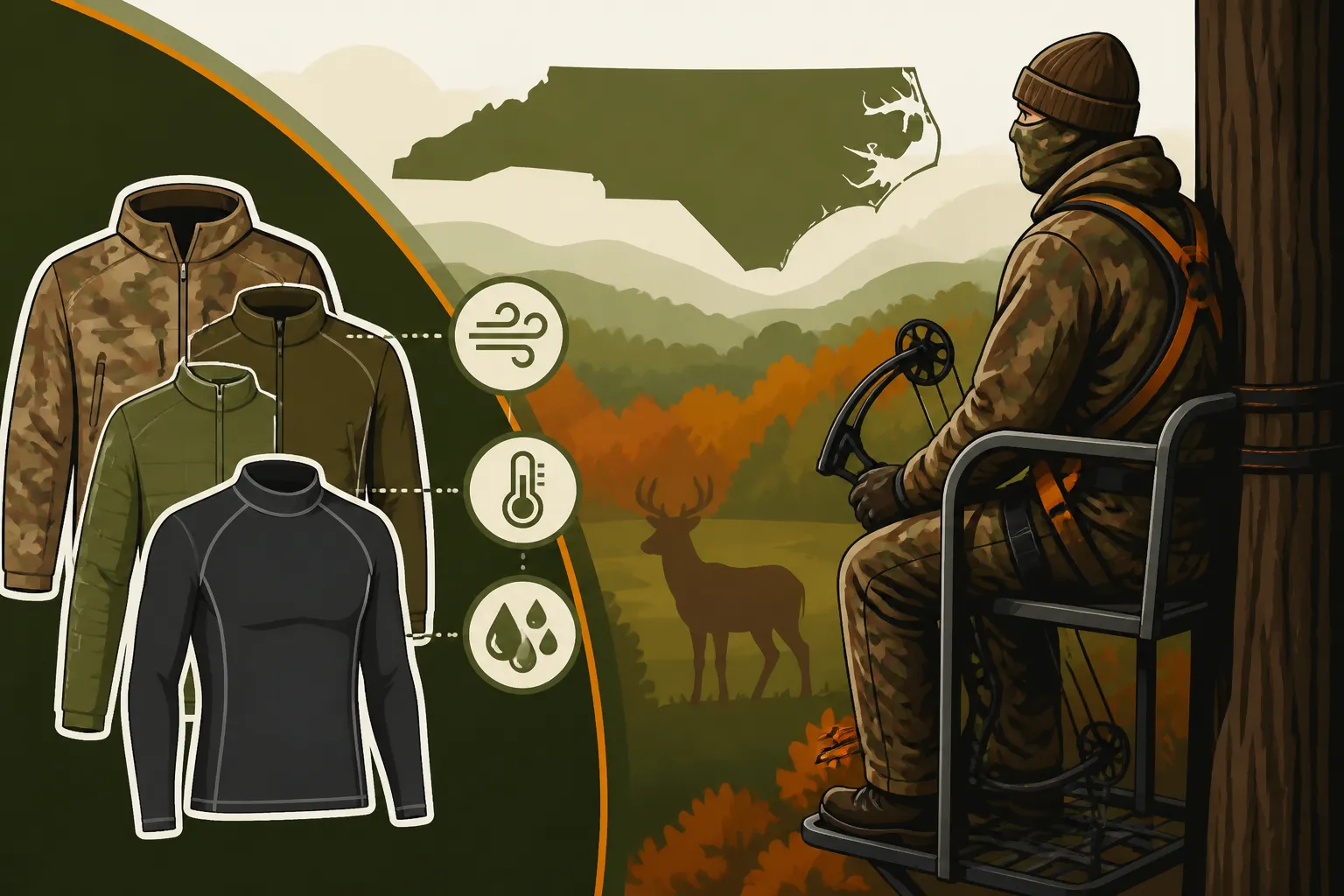
The base layer is, quite literally, the foundation of your entire hunting outfit. It's the layer that sits directly against your skin, and its primary job isn't necessarily to make you warm, but to manage moisture. Ignoring this crucial step is a common mistake that can lead to discomfort, a shortened hunt, and even danger in extreme cold. Think of it as your personal climate control system.
Wicking Away Moisture: Why It's Critical
Picture this: You've hiked a mile uphill to your stand, heart pounding, sweat trickling down your back, even on a chilly morning. You get settled, the adrenaline fades, and suddenly, that sweat turns cold against your skin. This is the exact scenario a good base layer prevents. Its job is to "wick" moisture (sweat) away from your skin and transfer it to the outer layers, where it can evaporate. When your skin stays dry, you stay warm. When it's damp, your body loses heat much, much faster through evaporation. This isn't just about comfort; it's about survival in truly cold conditions, as hypothermia is accelerated by wet clothing. Even in milder North Carolina weather, a damp base layer can make a 50-degree day feel like a 30-degree day once you stop moving.
Material Matters: Merino Wool vs. Synthetics
When it comes to base layer materials, you generally have two excellent choices: merino wool or synthetic fabrics. Each has its pros and cons, and your choice might depend on the specific conditions and your personal preferences.
Merino wool, harvested from merino sheep, is a natural wonder. It's incredibly soft, doesn't itch like traditional wool, and it excels at temperature regulation. It keeps you warm when it's cold and helps cool you down when it's warm. Perhaps its greatest superpower for hunters is its natural odor resistance; you can wear merino for days without it smelling like a locker room, which is a huge advantage for scent control. Even when damp, merino retains much of its insulating properties, a critical feature for hunters who might get caught in a drizzle or work up a sweat. However, merino can be more expensive and sometimes less durable than synthetics, particularly in areas prone to snags or heavy abrasion.
Synthetics, typically made from polyester or polypropylene, are engineered for performance. They are exceptional at wicking moisture, dry incredibly fast, and are often more durable and less expensive than merino. Many synthetic base layers are treated with antimicrobial finishes to help with odor control, though they generally won't match merino's natural ability in this department over multiple wears. For high-exertion activities where quick drying is paramount, synthetics often shine. They are also usually lighter and pack down smaller. The downside is that they can sometimes feel clammy if you sweat a lot, and without proper antimicrobial treatment, they can get stinky quickly. For hunters who prioritize durability and fast drying over natural odor control, synthetics are a fantastic option. You can often find great value in brands offering performance synthetics. When you're researching options for your North Carolina hunts, a quick search on a site like GoHunt can help you compare different brands and their material offerings, allowing you to read reviews from other hunters facing similar conditions.
Weight and Fit: Matching Your Activity Level
Base layers come in different weights: lightweight, midweight, and heavyweight. Your choice should directly correlate with the expected temperatures and your activity level.
- Lightweight base layers are perfect for early season archery in North Carolina, or for those unseasonably warm gun season days. They offer minimal insulation but maximize moisture wicking, crucial when temperatures might still hit the 60s or 70s. Think of them as a thin layer to keep you dry and comfortable without adding bulk.
- Midweight is your versatile workhorse. It offers a good balance of warmth and wicking, making it suitable for most cool to cold days in the Piedmont or Coastal Plain, and for active hunting in the mountains. This is often the go-to choice for the core of deer season.
- Heavyweight base layers are for serious cold, ideal for deep winter sits in the mountains, or brutally cold late-season days across the state. They prioritize warmth but still need to manage moisture effectively, especially if you have a strenuous walk to your stand.
Fit is also incredibly important. Your base layer should be snug against your skin, without being restrictive. This close contact is essential for the wicking action to work properly. If it's too loose, there will be air gaps, and the moisture won't be drawn away as efficiently. Too tight, and it can restrict movement and blood flow, which ironically can make you feel colder.
The Insulating Layer: Trapping Warmth When It Matters Most
Once you've got your base layer doing its job of keeping you dry, the next step is to add insulation. This is where you create a "dead air" space that your body warms up, trapping that heat close to you. This is where your core warmth truly begins.
Fleece, Down, and Primaloft: Choosing Your Mid-Layer
The mid-layer is all about insulation, and you have several excellent material choices, each with unique properties.
- Fleece (polyester fleece) is a popular choice for good reason. It's relatively inexpensive, durable, and provides excellent warmth-to-weight. It's also breathable, allowing some moisture vapor to escape, and it retains some insulating properties even when damp. Fleece jackets, vests, and pants are staples for many North Carolina hunters, offering a good balance of warmth and flexibility. They come in various weights, from microfleece for light insulation to heavy-duty fleece for colder days.
- Down (goose or duck feathers) is the gold standard for warmth-to-weight ratio. A good down puffy jacket or vest can provide incredible warmth while being incredibly lightweight and compressible, packing down to almost nothing in your pack. The downside is that down loses almost all its insulating power when it gets wet, which can be a real problem in North Carolina's often damp climate. It's best reserved for dry, cold conditions or used as a supplemental layer that you only put on once you're in the stand and know it won't get soaked.
- Primaloft and other synthetic insulations (like Thinsulate, Coreloft, etc.) are designed to mimic down's properties but with a crucial advantage: they retain most of their warmth even when wet. This makes them a more practical choice for many North Carolina hunting scenarios where rain, sleet, or heavy dew are always a possibility. They are generally heavier and less compressible than high-quality down for the same warmth, but their wet-weather performance often makes them preferable for all-around hunting. Many specialized hunting brands now offer fantastic synthetic insulated jackets and pants, often in quiet, camouflaged fabrics. For example, when comparing options on a hunting gear site, you'll see how GoHunt lists various brands offering both down and synthetic insulation, allowing you to weigh the pros and cons for your specific needs.
Strategic Placement: Core Warmth is Key
When you're thinking about insulation, always prioritize your core. Keeping your torso, vital organs, and major blood vessels warm is critical for maintaining overall body temperature. If your core gets cold, your body will restrict blood flow to your extremities (hands, feet, head) to protect your core, making your fingers and toes feel like ice blocks.
A good strategy is to use a vest as part of your mid-layer system. A vest provides excellent core warmth without adding bulk to your arms, which can restrict shooting movement or make it harder to draw a bow. On a milder day, a base layer and a vest might be all the insulation you need. On colder days, you can layer a midweight fleece jacket over your vest, or use a heavier insulated jacket. Remember, multiple thin layers are almost always better than one thick layer, as they create more trapped air pockets and allow for finer temperature adjustments.
The Art of the Packable Puffy
The "packable puffy" jacket (either down or synthetic) has become an absolute game-changer for deer hunters, especially those who walk long distances or hunt in variable conditions. The concept is simple: you hike into your stand wearing your base layer and perhaps a light fleece, preventing yourself from sweating excessively. Once you reach your stand, cool down, and settle in, you pull out your highly compressible puffy jacket or vest from your pack and put it on over your other layers.
This allows you to avoid getting chilled by sweat during your approach, then instantly add a significant amount of warmth once you're stationary. When the temperature rises later in the day, or if you decide to still-hunt or track a deer, you can simply take it off and stuff it back into your pack. This strategy, often employed by backcountry hunters, is perfectly suited for North Carolina's unpredictable weather and varied terrain. Whether you're hunting Still-Hunting Nantahala Forest Ridges or Hunting Piedmont Farmland Deer, this approach helps you manage your exertion and subsequent cooling without becoming a clammy, shivering mess.
The Protective Layer: Outerwear for All Conditions
The final, outermost layer of your system is your shell. This layer isn't primarily for warmth, though many insulated shells do provide some. Its main job is to protect you from the elements: wind, rain, and snow. Without a good protective layer, even the best base and insulating layers will fail.
The Crucial Role of Wind and Water Resistance
Imagine a brisk North Carolina morning, temperatures in the 30s, and a steady 15 mph wind. Without a windproof outer layer, that wind will cut right through your fleece and puffy jacket, stripping away the warm air you've worked so hard to trap. Wind chill can make a 30-degree day feel like a 15-degree day, turning what should be a comfortable sit into an exercise in misery. Your outer shell needs to block that wind.
Equally important is water resistance. North Carolina's weather can turn on a dime, and a sudden shower or persistent drizzle can soak through non-waterproof gear in no time. Once your insulation gets wet, it loses much of its ability to keep you warm, leading to rapid body heat loss. Look for outerwear that is truly waterproof and breathable, typically featuring membranes like Gore-Tex or similar proprietary technologies. These fabrics prevent water from coming in while allowing some moisture vapor (your sweat) to escape, preventing you from getting clammy inside your own rain gear. For hunters, this is critical, especially if you're venturing into Hunting Coastal Plain Pocosin Swamps where you might be dealing with damp conditions constantly.
Silence is Golden: Fabric Noise Considerations
For deer hunters, stealth is paramount. A loud outer shell can alert deer to your presence long before they see you, especially in the quiet stillness of a morning woods. Many waterproof and windproof fabrics, especially older designs, can be quite noisy – think crinkly or swishy sounds with every movement.
Modern hunting outerwear is designed with quietness in mind. Look for shells made from soft, brushed fabrics that are laminated with waterproof/windproof membranes. Fleece-faced shells, or those with quiet micro-suede finishes, are excellent choices. Test the fabric by moving your arms and legs to see how much noise it makes. Remember that cold temperatures can sometimes make fabrics stiffer and therefore louder, so consider that when trying on gear. This is particularly important when Rattling and Grunting in North Carolina or making small adjustments in your stand; you don't want your clothes giving you away.
Blaze Orange and Pink: Meeting Safety Requirements
Safety is always the top priority, and in North Carolina, that means wearing blaze orange or blaze pink during gun seasons. The specific requirements can vary, so always check the latest regulations, but generally, you'll need to wear an outer garment (hat, vest, jacket) that is visibly orange or pink from all sides.
Your outer shell is often the easiest place to incorporate this safety color. You can buy full blaze orange or pink jackets, or simply opt for a blaze orange vest worn over your camouflage outer shell. Many manufacturers offer reversible jackets with camo on one side and blaze orange on the other, providing versatility. Some hunters prefer a solid blaze orange or pink vest that can be thrown over any jacket, allowing them to use their favorite camo patterns underneath. Make sure whatever you choose meets the minimum square inch requirements specified by the NC Wildlife Resources Commission. For details on what exactly is required, check out posts like North Carolina Blaze Orange Requirements or Blaze Pink Options Under North Carolina Law.
Essential Accessories to Complete Your Layering System
While the main layers handle the bulk of your body's temperature regulation, neglecting your extremities and other small details can quickly lead to discomfort. These accessories are often the unsung heroes of a long, cold sit.
Head, Hands, and Feet: The Forgotten Extremities
You lose a significant amount of heat through your head, so a good warm hat is essential, even on moderately cold days. A beanie made of wool or fleece is versatile; you can pull it down over your ears for maximum warmth or push it up when you get a little warm. On truly bitter days, a balaclava or neck gaiter can provide crucial protection for your face and neck.
Hands are notoriously hard to keep warm while hunting. Gloves are a must, but they need to balance warmth with dexterity. Many hunters use a layering approach for their hands too: thin liner gloves for dexterity, covered by warmer, often mitt-style or flip-mitt gloves, which can be easily pulled off for shooting. Hand warmers tucked into gloves or pockets can provide a significant boost.
For your feet, wool socks are superior to cotton, as cotton loses all insulating properties when damp. Layering a thin liner sock under a thicker wool sock can also help manage moisture and prevent blisters. As for boots, choose insulated, waterproof boots that are rated for the temperatures you expect. Make sure they are a little roomy; tight boots restrict circulation and will make your feet colder. When you're considering Boots for North Carolina Swamps and Ridges, remember that waterproofness is key.
Keeping Gear Dry: Packs and Waterproofing
Even the best layering system won't do you much good if your spare clothes and essential gear get soaked before you even put them on. A waterproof or highly water-resistant hunting pack is an excellent investment. Look for packs with integrated rain covers or consider using dry bags inside your pack to compartmentalize and protect important items like spare gloves, extra layers, and your phone or GPS. A good hunting pack, designed to carry your gear quietly and comfortably, is crucial for those longer treks to your stand. You can research options that suit your needs, whether you're looking for a pack specifically for Packs for a Day on Public Land or something more robust for multi-day trips.
Beyond your pack, consider waterproofing sprays for your boots and outer layers, even if they're already "waterproof." Over time, the DWR (Durable Water Repellent) coating on fabrics can wear off, reducing their effectiveness. Reapplying a DWR treatment can significantly extend the life and performance of your gear, ensuring you stay dry and comfortable during an unexpected North Carolina downpour.
The Sit-Pad: A Small Item, Big Difference
This might seem like a minor detail, but a small, lightweight sit-pad can make a world of difference for comfort and warmth, especially if you're Using a Ground Blind on North Carolina Public Land or sitting in a traditional hang-on stand with a cold metal or plastic seat. When you sit directly on a cold surface (like a metal stand, a damp log, or frozen ground), heat is rapidly conducted away from your body. A simple foam or inflatable sit-pad provides an insulating barrier, preventing this heat loss. It keeps your backside warmer and can make those long hours on stand much more bearable. Plus, it adds a bit of cushioning, which is always welcome. Many hunting vests and packs now even come with integrated sit-pads, highlighting their recognized value among experienced hunters.
Adapting Your Layers: From Early Season to Late Season
North Carolina's hunting seasons stretch from early September archery right through to January's gun season close. Each phase presents its own unique challenges, and your layering system needs to evolve with the calendar and the weather patterns.
Early Archery Season: Managing Heat and Bugs
Early September archery season in North Carolina is often brutally hot, humid, and buggy. Temperatures can still easily reach the 80s or even low 90s, and the air is thick with moisture. Your focus here shifts dramatically from warmth to extreme moisture wicking and breathability.
You'll want lightweight, breathable base layers made of synthetic wicking materials. Forget heavy insulation; you might even opt for short sleeves under a very light long-sleeve shirt to protect from sun and bugs. Thin, uninsulated hunting pants are key. Scent control is also paramount in this heat, as sweat and odor multiply quickly. Consider scent-control technologies in your base layers and wash all your hunting clothes in scent-free detergent. Insect repellent is another critical accessory. You'll likely walk into your stand with minimal layers, carrying any light outer shell (for scent control or a sudden, rare cool front) in your pack. The goal is to stay as dry and cool as possible, which helps prevent over-sweating and radiating too much human odor.
Mid-Season Rut: Staying Agile and Warm
As October rolls into November, the rut begins to kick into gear across much of North Carolina, and with it comes a more classic "fall" weather pattern. This is often the most dynamic weather period, with beautiful crisp mornings giving way to pleasant afternoons, but also the risk of sudden cold fronts or rain.
For the rut, you need a versatile layering system that allows for both long, quiet sits and the possibility of active still-hunting if you spot a cruising buck. Midweight base layers are usually a good starting point. You'll want adaptable insulating layers, perhaps a midweight fleece jacket or a packable synthetic puffy, that you can put on or take off easily. Your outer shell should be quiet, windproof, and water-resistant. The ability to shed layers for a stalk or add them for a motionless sit is crucial. Remember to carry your Blaze Orange Jackets Versus Vests for gun season safety, as archery and gun seasons often overlap, and specific requirements might apply even to bowhunters during certain periods. This season demands gear that can handle anything from a chilly dawn to a warm midday.
Late Season Chill: Maxing Out Your Warmth
When December and January roll around, North Carolina can get genuinely cold, especially in the mountains and during prolonged cold snaps across the Piedmont and Coastal Plain. For these late-season hunts, maximum warmth and protection are your priority, particularly if you're enacting a Cold-Weather Sitting Strategy in the Mountains.
Heavyweight base layers are your friend now, providing a substantial amount of initial warmth. For insulation, you'll want to layer a heavy fleece jacket with a substantial synthetic puffy jacket (or a down puffy if you can guarantee dry conditions). Insulated bibs or pants are essential, as sitting on a cold stand can quickly steal heat from your legs and backside. Your outer shell needs to be highly windproof and waterproof, offering robust protection against freezing rain, sleet, or snow. Insulated boots, warm gloves, a thick hat, and a neck gaiter or balaclava are no longer optional—they are absolutely necessary. Hand warmers and a sit-pad become non-negotiable comfort items that allow you to stay on stand longer when the deer are moving in response to cold temperatures and dwindling food sources like those discussed in Late-Season Food Sources for North Carolina Whitetails. This is where your entire layering system, from your Base Layers for a North Carolina December to your Insulated Boots for All-Day Sits, must work together flawlessly to keep you warm and in the game.
Disclaimer
This article is for general informational purposes only and does not constitute professional advice. Laws, prices and regulations vary by location and change over time. Consult a qualified professional for guidance on your specific situation.