Deer Drives With Three or Four Hunters
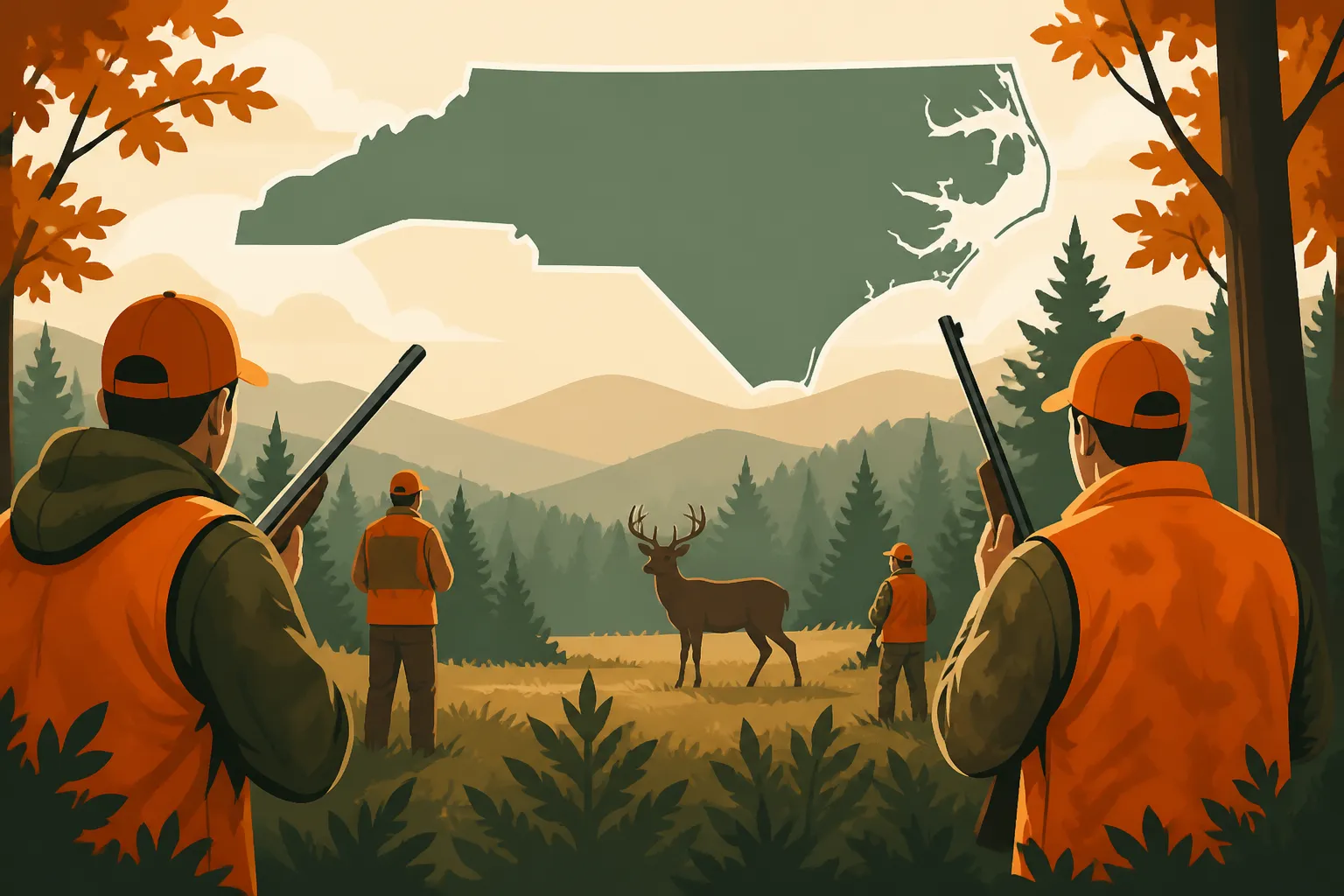
Hunting deer in North Carolina, especially on public land or smaller private tracts, can often feel like you're playing a high-stakes game of hide-and-seek with animals that know the landscape better than you ever will. When solo still-hunting or sitting in a stand just isn't cutting it, and you're struggling to move those wary whitetails, a well-planned, small-scale deer drive with just three or four hunters can be an incredibly effective way to put venison in the freezer. This guide will walk you through how to execute these drives successfully, focusing on strategy, terrain, and teamwork to push deer effectively and safely.
The Art of the Small Deer Drive
When you hear "deer drive," a lot of folks immediately picture a chaotic line of hunters yelling and stomping through the woods, pushing deer at breakneck speed. While that might work in some scenarios, it’s rarely the most effective or safest method, especially in North Carolina's varied terrain with a smaller crew. For three or four hunters, a deer drive transforms into something much more refined – a strategic "nudge" designed to coax deer out of their preferred bedding areas and past patiently waiting standers. It’s about understanding how deer move under slight pressure, not scaring them into a full-blown panic.
Understanding Deer Behavior Under Pressure
North Carolina deer, whether they're in the steep mountains, the rolling Piedmont, or the dense Coastal Plain swamps, are incredibly adept at evading hunters. They're masters of using topography, wind, and thick cover to their advantage. When faced with pressure, their first instinct often isn't to bolt wildly across an open field. Instead, they’ll frequently try to circle back around drivers, slip out the sides unnoticed, or hunker down in the thickest cover, hoping you walk right by. A successful small drive hinges on anticipating these subtle escape tactics. For instance, a big, old buck on a Pisgah National Forest ridge might try to slip down a steep creek drainage and circle back to where the drivers started, rather than running across an open bench. This behavior is key to why slower, more deliberate drives work better than sheer force.
Why Three or Four Hunters is the Sweet Spot
Many hunters shy away from drives, thinking they need a small army to be effective. But for many situations in North Carolina, especially on smaller parcels of public land or private woodlots, three or four hunters is actually the sweet spot. It's enough people to cover a decent-sized block of timber or thicket, but few enough that you can maintain control, communicate effectively, and keep the pressure subtle.
- Less Pressure, More Predictable Movement: A smaller group often creates just enough pressure to get deer moving without making them completely unglued. This means they're more likely to follow natural escape routes, like a well-worn trail or a narrow funnel, rather than simply busting through the thickest part of the woods in a random direction.
- Enhanced Safety: With fewer people, everyone's positions, shot lanes, and boundaries are much clearer. This drastically reduces the risk of someone mistakenly shooting toward a fellow hunter, which is always the paramount concern with any group hunt.
- Adaptability: A small team can adapt quickly to unexpected deer movements. If a deer tries to sneak out the side, a driver can adjust their line or a stander can subtly reposition if safe and communicated.
Strategic Planning for a Successful Small Drive
Just like any successful hunt, a deer drive, no matter how small, requires careful planning. You can’t just show up and start walking. You need a strategy that takes into account the terrain, wind, and deer behavior. This means thorough scouting, clear communication, and defined roles for everyone involved.
Scouting and Choosing Your Drive Area
This is arguably the most critical step. You're looking for areas that naturally funnel deer, have identifiable boundaries, and offer clear escape routes for deer that can be covered by your standers. Using mapping tools like GoHunt is invaluable here. You can identify property lines, topographic features like saddles and ridges, creek bottoms, and thick bedding cover.
- Look for Funnels and Cover: Think about natural pinch points: a narrow strip of woods between two fields, a creek bend that forces deer into a certain area, or a small island of thick cedars in a clear-cut. These are ideal places to set up a drive. Deer love to bed in thick cover, so target small blocks of dense pines, pocosin swamps, or briar thickets. When scouting, pay attention to trails leading in and out of these areas.
- Identify Escape Routes: Deer will almost always try to use the path of least resistance when pushed, or they'll try to circle back. Look for well-used trails exiting the thicket, crossings over creeks, or low spots in ridges. These are where your standers need to be positioned. For example, in the Coastal Plain, a small thicket surrounded by open timber might have a main trail leading to a larger, more secure pocosin swamp. That trail is your target.
- Consider Wind Direction: The wind is your friend, but it can also be your enemy. Drivers generally want the wind in their face, pushing their scent behind them and ahead of the deer. Standers should also try to be downwind of where they expect deer to come from. Always check the wind before setting up.
Designating Drivers and Standers
With three or four hunters, roles are clear: you’ll have one or two drivers and two or three standers.
- The Drivers (1-2 hunters): Their job isn't to run and make noise. It’s to move slowly and deliberately through the designated cover, keeping an eye out for deer trying to slip past them. They’re like a human fence, gently pushing deer forward. If there are two drivers, they should maintain a visible line, staying within shouting or radio distance, often 50-100 yards apart depending on visibility. They should walk into the wind, if possible, to keep their scent from alerting deer too soon.
- The Standers (2-3 hunters): These are the shooters. They need to be positioned along the predicted escape routes, often on the downwind side of the drive, where they can cover expected travel corridors. Standers should be in stands or utilizing natural cover like a downed log or a ground blind. The goal isn't necessarily to hide perfectly, but to break up their outline and remain motionless. Remember, deer might try to sneak, so standers need to be hyper-vigilant, looking for subtle movements, not just deer running full speed.
Let's imagine a scenario: You're hunting a small, rectangular block of hardwoods nestled between two agricultural fields in the Piedmont. You decide on a drive. Two hunters, John and Sarah, will be the drivers. They start at the narrow, upwind end of the woodlot. Mark and Emily are the standers. Mark is positioned near a creek crossing on the downwind side, a known deer travel corridor. Emily sets up further down the woodlot, covering a small funnel where a thick briar patch forces deer towards a fence line. Both Mark and Emily have a clear view of their designated shooting lanes and a safe backdrop.
Communication and Safety First
Safety is non-negotiable. Before anyone moves, establish clear boundaries for the drive. Everyone must know where other hunters are located and in which direction it is safe to shoot.
- Two-Way Radios: These are a game-changer for small drives. Drivers can update standers on deer movement, and standers can warn drivers if a deer tries to circle back. This also allows for crucial safety checks.
- Blaze Orange: In North Carolina, it's mandatory during gun seasons to wear blaze orange. This isn't just a suggestion; it's a lifesaver. Ensure everyone is highly visible to other hunters. For more on the specifics, check out the requirements for North Carolina's blaze orange and pink options.
- Clear Boundaries: Use natural features like roads, trails, creeks, or property lines as boundaries. Everyone needs to agree on these lines. No shooting outside the designated drive area or toward potential stander positions.
- No Shooting Back: Standers should never shoot back into the drive toward the direction the drivers are coming from. The only safe shot is forward, away from the drivers.
Executing the Drive for Optimal Results
Once your plan is set, it's time for execution. Remember, patience and discipline are key. This isn't a race; it's a careful chess match.
Slow and Steady Wins the Race for Drivers
The drivers' role is less about making noise and more about applying consistent, subtle pressure. Think of it like a very slow push.
- Pace Yourself: Drivers should walk at a snail's pace, pausing frequently, listening, and glassing ahead into thick cover. Many times, deer will try to sneak out ahead or circle back, and a driver who is rushing will miss them.
- Look for Sign: While moving, drivers should keep an eye out for fresh tracks, rubs, and scrapes. These can indicate recent deer activity and help confirm you're pushing through an active area.
- Stay in Line: If there are two drivers, maintaining a consistent line is crucial to prevent deer from slipping between them. Use landmarks to stay oriented.
- Use the Wind: As mentioned, drivers should ideally have the wind in their face. This means their scent is blowing ahead of them, towards the deer they're trying to move, rather than swirling back and alerting deer to their presence behind them.
Consider a hypothetical push through a dense block of planted pines. A driver might stop every 20-30 yards, listen for rustling leaves or snapping twigs, and peer into the shadows. They might spot a deer trying to sneak out or bedded just ahead. By moving slowly, they give the standers more time for deer to naturally filter past them. This methodical approach is far more effective than a rushed charge.
Patient Waiting and Reading the Landscape for Standers
The standers have the tough job of being absolutely still and observant, sometimes for extended periods.
- Choose Your Position Wisely: A good stander position offers clear shooting lanes, a safe backdrop, and allows you to watch the likely escape routes. Often, this means being in a treestand, which gives you an elevated view and helps contain your scent. However, utilizing a ground blind on North Carolina public land can also be very effective if brushed in well.
- Watch for Subtle Movements: Deer, especially older bucks, are incredibly stealthy. They won't always come crashing through the woods. Look for flicking ears, a patch of brown hair, or a subtle sway of brush. They might walk in slowly, pause, and then continue.
- Be Ready, But Don't Rush: Have your rifle or bow ready. When a deer appears, take your time to identify the animal and ensure a safe, ethical shot. Don't rush into a bad shot. If it's a legal deer and you have a clear shot, take it. If not, let it pass.
- Communicate: If a deer slips past you or attempts to circle, quietly communicate its direction to the other standers or drivers via radio if possible.
Post-Drive Strategy and Follow-Up
The drive isn't over when the drivers meet the standers.
- Review and Reload: Once the drive is complete and all hunters have safely regrouped, take a moment to discuss what happened. Did deer move as expected? Did anyone see anything they shouldn’t have shot at? This is vital for learning and improving future drives.
- Track Any Shot Deer: If a deer was shot, immediately begin blood trailing. For more guidance, see our article on Tracking a deer through North Carolina leaf litter. Sometimes, even a well-hit deer can travel a surprising distance, especially in North Carolina's dense cover or after a shot that isn't instantly fatal. If darkness approaches, mark the last blood and return with more help and better lights in the morning.
- Plan the Next Drive: Even if unsuccessful, a drive provides valuable information. You now know how deer reacted to pressure in that specific spot. You might identify new escape routes or realize a different approach is needed. Sometimes, you might need to combine small drives with other tactics like still-hunting Nantahala Forest ridges or rattling and grunting in North Carolina.
Adapting Your Drive to North Carolina's Diverse Terrain
North Carolina is a diverse state, offering everything from high mountain peaks to coastal swamps. Your small deer drive strategy will need to adapt to these unique landscapes.
Mountain Drives in Western North Carolina
In the mountains, deer drives need to account for dramatic elevation changes, steep hollows, and dense rhododendron thickets.
- Utilize Topography: Focus drives on benches, saddles, and ridge lines. Deer often travel these features, especially during the rut. A driver pushing a narrow bench along a steep mountainside can funnel deer into a saddle where standers are positioned. Consider the implications of wind and thermals on a Blue Ridge slope.
- Short, Targeted Pushes: Instead of trying to clear a whole mountain, focus on smaller, manageable sections of dense cover or likely bedding areas. Push a thick laurel patch on a high elevation mountain bench, for example.
- Steep Terrain Challenges: Drivers will move slowly due to the terrain. Standers need to be positioned where they have stable footing and clear shots, often on a slight downhill angle. Pay close attention to reading a ridge for mountain zone deer.
Piedmont Drives in Central North Carolina
The Piedmont offers a mix of hardwood forests, pine plantations, and agricultural fields. Small drives can be incredibly effective here, particularly on fragmented woodlots.
- Field Edges and Creek Bottoms: Deer often bed in small woodlots bordering crop fields. Drivers can push these blocks towards standers positioned along a field edge or a creek bottom that deer use as a travel corridor. Setting up on a Piedmont field edge is a classic tactic.
- Funnels Between Development: As development encroaches, deer often use narrow strips of timber or creek corridors as funnels between housing developments or roads. These are prime locations for small, quick drives.
- Consider Neighboring Properties: Be acutely aware of property lines and ensure your drive doesn't inadvertently push deer onto land where you don't have permission to retrieve them, or worse, onto land where you might have legal issues.
Coastal Plain Drives in Eastern North Carolina
The Coastal Plain is characterized by flat terrain, dense pocosin swamps, pine plantations, and agricultural fields. This unique environment demands specific tactics.
- Pocosin Islands and Thickets: Coastal Plain deer often bed in dense pocosin swamps or thick islands of cover surrounded by open pine timber or fields. Drivers can push these islands, forcing deer out along specific routes. Hunting coastal plain pocosin swamps is a challenging but rewarding endeavor.
- Water Obstacles: Rivers, creeks, and ditches are common. Standers can be positioned where deer are likely to cross water, or along edges where dense cover meets more open ground. Be prepared for recovering a deer from a coastal swamp.
- Wind and Humidity: While flat, wind direction is still critical, especially with the high humidity often found in the Coastal Plain. Scent hangs heavy.
Small Deer Drive Roles and Responsibilities
To ensure everyone is on the same page and the drive is both effective and safe, here’s a quick summary of roles for a three or four-person deer drive:
| Role | Number of Hunters | Primary Goal | Key Actions | Safety Considerations |
|---|---|---|---|---|
| Driver | 1-2 | Gently push deer out of cover towards standers. | Move slowly, deliberately, and quietly. Maintain a straight line if multiple drivers. Watch for sneaking deer. | Know stander positions; never shoot toward them. Wear blaze orange. |
| Stander | 2-3 | Cover escape routes and be ready to shoot deer that are pushed out. | Remain motionless and quiet. Identify safe shooting lanes. Be patient; watch for subtle movement. | Know driver positions; never shoot back into the drive. Clear backdrop. |
This clear division of labor, combined with good communication and careful scouting, will significantly increase your odds of success.
When you're out there, whether it's navigating the intricacies of North Carolina's gun zones split across the calendar or trying to time your hunt with the North Carolina rut by zone, these small, strategic drives offer a refreshing and often highly successful approach. They foster teamwork, build camaraderie, and can transform a slow day into an exciting one.
Disclaimer
Hunting is an inherently dangerous activity. Always prioritize safety, follow all North Carolina Wildlife Resources Commission regulations, and obtain appropriate licenses and permits. The information provided here is for educational purposes and should not replace professional guidance or personal experience. Always be aware of your surroundings, know your target, and identify what is beyond it.