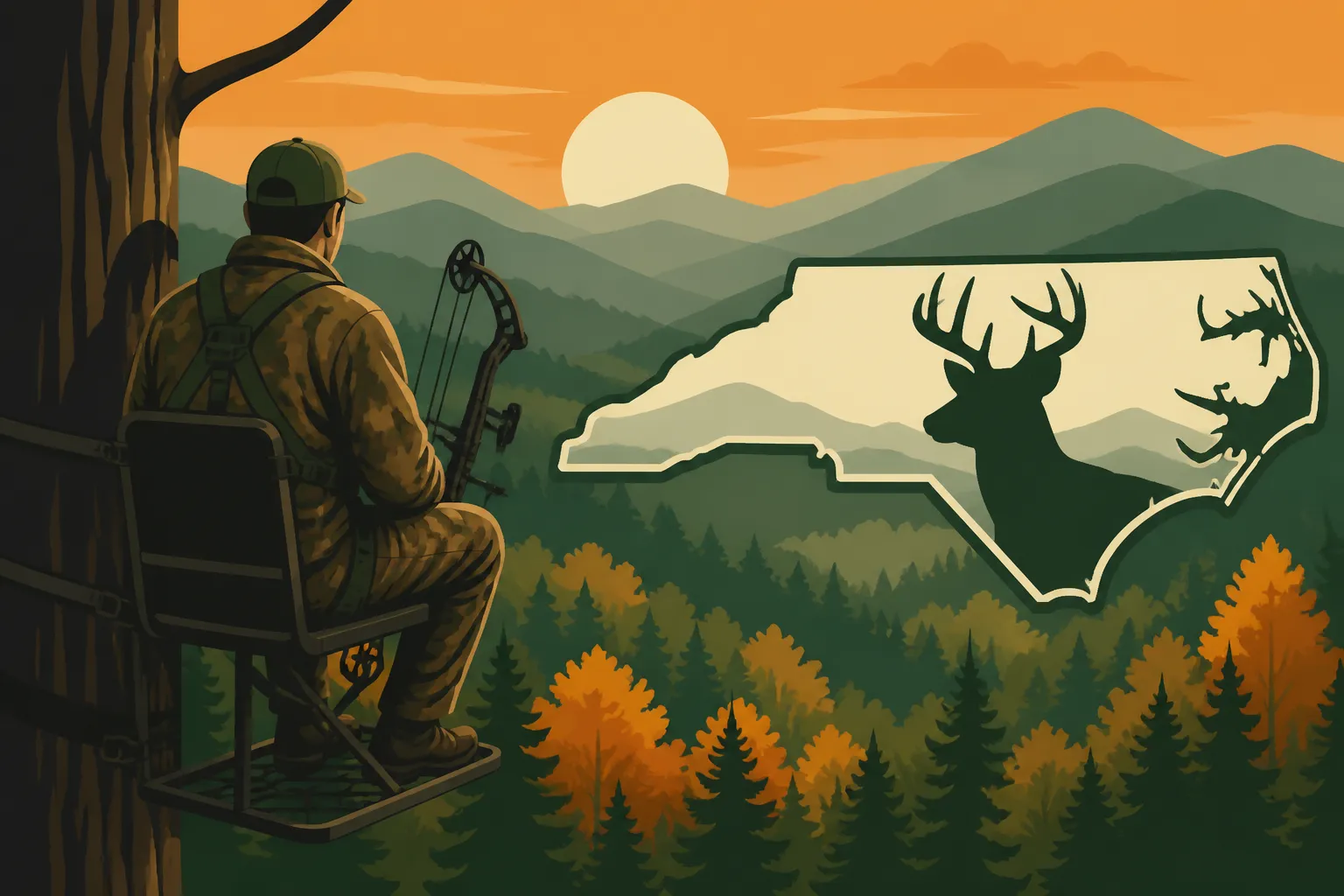
Treestand Setups in Pisgah National Forest
Hunting in the vast, rugged terrain of Pisgah National Forest presents some of the most exciting, yet daunting, challenges for deer hunters in North Carolina. Setting up an effective treestand here isn't like hanging one on a Piedmont field edge; the steep slopes, dense timber, and unpredictable thermals can make or break your hunt before you even climb in. This comprehensive guide will walk you through everything you need to know to master treestand setups in this incredible mountain environment, helping you find success where others might struggle.
Understanding Pisgah's Unique Terrain for Treestands
The Pisgah National Forest, a sprawling expanse of over 500,000 acres, isn't just "woods" – it's a dynamic, ancient landscape that demands a different approach than typical flatland hunting. Forget easy access roads or neatly arranged food plots; here, you're dealing with elevation changes that can make your legs burn, remote coves that hold mature bucks, and an ecosystem that’s constantly shifting. Understanding these nuances is the first step to choosing and placing your treestand effectively.
The Challenge of Mountain Slopes and Steep Terrain
If you've ever scouted or hunted in Pisgah, you know the struggle: you find some promising sign, only to realize it's on a near-vertical hillside that seems impossible to hunt comfortably or safely. The average slope in many parts of Pisgah is no joke, and this presents a unique set of problems for treestand hunters. Getting a stand level on a steep incline can be tricky, and even more so, finding a tree that offers both concealment and a safe climbing path. It's easy to get frustrated trying to make a hang-on stand work on a tree that's growing sideways out of a slope, or to feel exposed when every deer seems to be walking either directly above or below you, never on your level.
Beyond the physical challenge, steep terrain dictates deer movement. Deer often prefer to traverse contour lines rather than directly climb or descend, especially when feeding or moving casually. They'll also use natural benches and less steep "ramps" through the mountains. Your treestand needs to intercept these travel patterns, which means you need to think three-dimensionally about how deer use the landscape, not just two. A spot that looks great on a flat map might be entirely unhuntable due to elevation, or a perfect travel corridor might be missed because you're positioned too high or too low on a slope. It takes time on the ground to truly understand these subtle contours.
Identifying Key Habitat and Travel Corridors
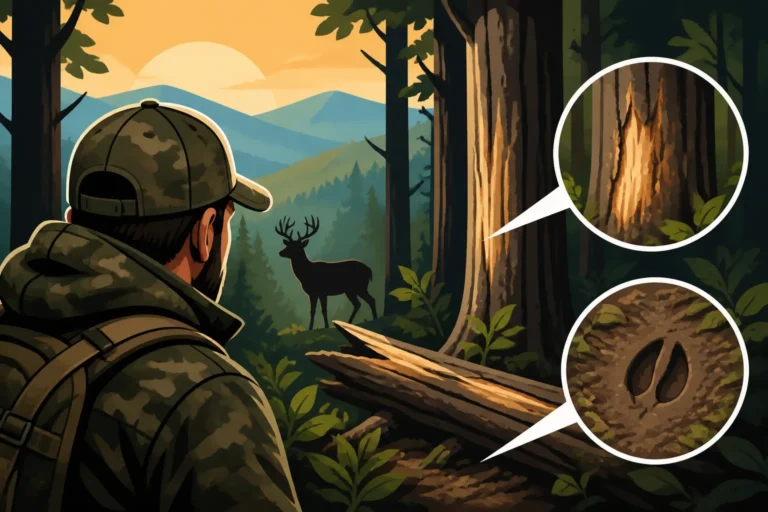
Deer in Pisgah don't just wander aimlessly; they move with purpose, driven by food, water, bedding cover, and rutting behavior. Your job is to identify these critical points and the pathways that connect them. In the mountains, "habitat" might look different than the agricultural fields of the Piedmont. Here, it could be a stand of mature oaks on a high bench dropping acorns, a dense thicket of rhododendron offering bedding, or a spring seeping out of a rock face. Learning to read the subtle clues of the forest floor, from fresh tracks to rubs and scrapes, is paramount. You'll often find deer movement concentrated along benches, old logging roads, and creek bottoms, which serve as natural highways through the rugged country.
One of the most valuable skills you can develop for hunting in the North Carolina mountains is the ability to read a ridge for mountain zone deer. This involves recognizing saddles, which are dips in a ridge line that deer frequently use to cross from one side to another, and funnels, where terrain features naturally constrict deer movement into a smaller area. These are prime locations for treestand setups because they capitalize on predictable deer behavior. Additionally, understanding how different timber types provide food or cover throughout the season – for example, hard mast sources in the early season versus browse in the late season – will help you pinpoint where deer will be spending their time. Using a mapping application like GoHunt can be incredibly helpful for identifying these terrain features and different habitat types before you even set foot in the woods, giving you a strong starting point for your scouting efforts.
Choosing the Right Treestand for Pisgah
The type of treestand you choose is as critical as where you place it, especially in the demanding environment of Pisgah National Forest. Each stand type has its own strengths and weaknesses, and matching the right tool to the specific terrain and your hunting style will significantly increase your comfort, safety, and chances of success.
Climbing Stands for Mobility and Versatility
Climbing stands are often a go-to for many public land hunters, and for good reason: their portability. In Pisgah, where you might be walking a mile or more into remote areas, a lighter climbing stand can be a huge asset. They allow for incredible versatility, letting you hunt different spots each day based on fresh sign or changing conditions. If you're willing to put in the legwork to scout new areas or pursue changing deer patterns, the ability to quickly set up and take down a climber is invaluable. This mobility is especially useful when you're targeting deer that are constantly on the move, or if you're trying to stay ahead of hunting pressure.
However, climbing stands have their limitations in Pisgah's diverse timber. They require a relatively straight, limbless tree trunk for safe operation. Finding such a tree on a steep, gnarled mountainside can be a significant challenge. Often, the perfect ambush spot will lack a "climber-friendly" tree, forcing you to compromise on your location or switch tactics. Furthermore, climbing stands can be noisier to set up than other options, which is a crucial consideration for early morning hunts when deer are often still active. When using a climbing stand, it's paramount to practice safe ascent and descent, always remaining tethered to the tree. Remember, safety always comes first, especially when you're deep in the wilderness.
Hang-On Stands for All-Season Access
For those specific, high-percentage spots where you know deer are consistently traveling or feeding, a hang-on stand coupled with climbing sticks is often the superior choice in Pisgah. Once hung, these stands offer a solid, stable platform that can be left in place for extended periods (if allowed by specific Game Land or National Forest regulations, always double-check the local rules on things like Treestand Rules on North Carolina Public Land). This means you can establish a stand in a tricky tree that a climber wouldn't work on, such as one with a slight lean or branches lower down, as long as you can get your sticks past the obstacles. They're excellent for setting up along specific travel corridors or overlooking natural funnels that might not have perfect climbing trees.
The initial setup of a hang-on stand can be more involved, requiring careful attention to ensure the stand is level and secure on uneven terrain. However, once it's up, you benefit from a quieter entry and exit to your stand site, as you're only climbing the sticks. This reduces disturbance, a major advantage when hunting pressured deer. Brands like Lone Wolf, Summit, and Muddy offer lightweight, sturdy hang-on stands and stick systems that are well-suited for the demanding pack-in and setup in Pisgah. Investing in quality climbing sticks for rough bark is a smart move, as the trees in Pisgah can be quite gnarly. The permanent nature of these setups allows you to maximize concealment, ensuring you're hidden effectively against the backdrop of the forest, and giving you an all-season access point to your best hunting spots.
Ground Blinds as a Stealthy Alternative
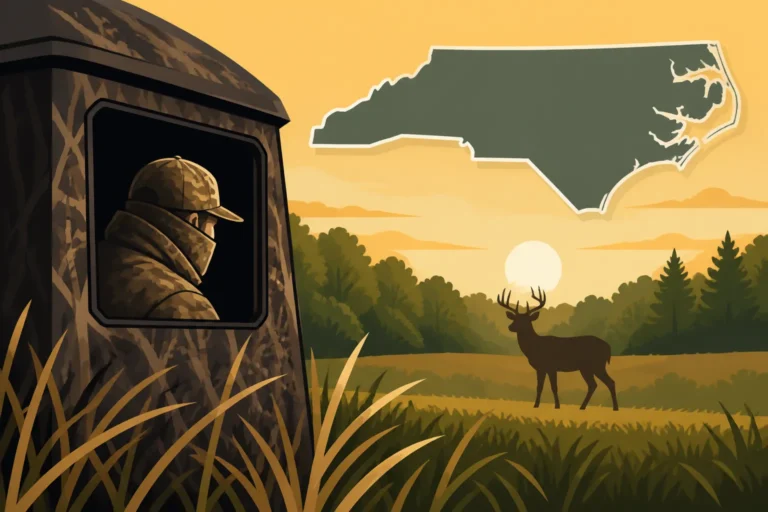
Sometimes, despite all your efforts, the terrain simply doesn't offer a suitable tree for a treestand, or the cover is so thick that a treestand would put you above the natural deer movement. This is where a ground blind can become your best friend in Pisgah. Whether it's a pop-up blind or simply using natural cover, hunting from the ground offers unique advantages, particularly in areas of extremely dense rhododendron thickets or laurel slicks, which deer often use for bedding or to travel through unobserved. A well-placed ground blind can offer excellent concealment and can be surprisingly effective in situations where a treestand would make you stick out like a sore thumb.
Setting up a ground blind requires careful attention to the surrounding cover to ensure you blend seamlessly into the environment. You'll want to brush in a blind on a field edge or natural opening if using a pop-up, or meticulously craft a natural blind using downed limbs, ferns, and brush. The key is to break up your outline and cast deep shadows. Ground blinds are particularly good for hunting benches or slight depressions where deer are moving along the contour, or for targeting specific game trails where overhanging branches prevent a higher setup. While they limit your field of view compared to a treestand, the ability to disappear into the undergrowth and move slightly within the blind without being detected can be a huge asset in close-quarters hunting common in Pisgah's deep woods.
Strategic Placement: Reading the Mountain for Deer Movement
Placing a treestand effectively in Pisgah is less about finding "a tree" and more about finding "the spot" – the exact point where deer movement is concentrated and predictable. This requires a deep understanding of deer behavior in mountainous terrain, coupled with extensive scouting and an ability to visualize how deer will use the land.
Hunting Ridge-Top Saddles and Funnels
Ridge-top saddles are arguably some of the most consistent and high-percentage locations for treestand setups in Pisgah. A saddle is essentially a low point, or dip, in a ridge line. Deer, being creatures of efficiency, will naturally seek out the path of least resistance when traversing from one side of a ridge to another. Instead of climbing over a higher peak, they'll drop into the saddle. These areas act as natural funnels, concentrating deer movement as they cross between drainages, bedding areas, and feeding grounds. You'll often find multiple game trails converging in a saddle, making it an ideal ambush point.
When hunting a ridge-top saddle for rutting bucks, consider setting up on the downwind side of the saddle, allowing your scent to be carried away from the most likely travel routes. Bucks especially will cruise these saddles during the rut, scent-checking for does. Look for sign like rubs and scrapes along the edges of the saddle, which indicate consistent use. Often, the best stand placement isn't directly in the saddle, but slightly off to one side, perhaps on a bench or a point overlooking the low spot, giving you a wider view and better shot angles as deer approach from either direction. Pay close attention to wind and thermals, as they can swirl unpredictably in these topographical features, making precise stand placement even more critical.
Exploiting Benches and Terraces
Mountain benches, often referred to as "shelves" or "terraces," are flat or gently sloped areas on an otherwise steep hillside. These subtle features are absolute magnets for deer in Pisgah. They provide easier travel routes along the contour of a mountain, allowing deer to move horizontally without constantly climbing or descending. Bucks, especially older ones, will often bed on these benches, using the elevation to their advantage for security, keeping an eye (and nose) on potential threats below, while having an escape route to the ridge top. During feeding times, deer will often browse or seek mast on these benches as well.
Locating these benches requires a keen eye and often a good topo map or mapping app like GoHunt, which shows contour lines in detail. Once on the ground, confirm the bench's use by looking for tracks, droppings, and browse lines. Your treestand should be set up to overlook a section of the bench where deer activity is concentrated, or at a point where the bench narrows or intersects with a game trail. Consider Hanging a Stand on a Pisgah Ridge to capitalize on these natural travel corridors. Position yourself to have shooting lanes along the bench, and always consider your entry and exit routes to avoid spooking deer that might already be on the bench below or above you. The key is to find benches that offer sufficient cover and are not too close to high-traffic human areas.
Setting Up Near Water Sources and Drainages
While Pisgah National Forest generally has abundant water, specific, reliable sources can become major draws for deer, especially during dry spells or in certain parts of the season. Creek bottoms, spring seeps, and even small puddles formed in rocks can funnel deer movement. Deer will often travel along drainages, using them as natural corridors through dense timber, or drop down to water at predictable times, particularly in the evening before heading to a feeding area or in the morning before bedding.
When scouting drainages, look for areas where multiple deer trails converge or cross the water. Steep-sided drainages can act as powerful funnels, forcing deer into narrower travel paths. However, be mindful of thermals in these low-lying areas. As the day warms, thermals rise, carrying your scent uphill; in the evening, they fall, carrying it downhill. Your treestand placement needs to account for these daily shifts. Setting up just off a creek bottom on a slight rise can often give you better wind advantage and a broader view. Pay attention to the surrounding cover; dense vegetation along a creek or spring provides security for deer, making it a more attractive travel route. This is where you might find a great spot for Still-Hunting Nantahala Forest Ridges if you choose to move, but for a stationary stand, a water source can be a high-percentage spot.
| Treestand Type | Pros | Cons | Ideal Pisgah Use |
|---|---|---|---|
| Climber | Highly portable, mobile | Requires straight, limbless trees; can be noisy to set up | Scouting new areas, quick setup, varying hunting spots |
| Hang-On | Versatile for varied trees, quiet access | More involved setup, heavier to pack in, less mobile | Established high-traffic areas, specific funnels |
| Ground Blind | Excellent concealment, adaptable to no-tree spots | Limited field of view, scent harder to manage | Dense thickets, creek bottoms, no suitable trees |
Safety First: Essential Practices for Pisgah Treestands
Hunting from a treestand inherently carries risks, and in the rugged, remote environment of Pisgah National Forest, those risks are amplified. A fall here isn't just a trip to the local ER; it could be a life-threatening emergency hours from help. Prioritizing safety isn't just about following rules; it's about making smart decisions that ensure you come home safely after every hunt.
Harness Use and Lifeline Systems
This cannot be stressed enough: Always wear a full-body harness when in a treestand, climbing into, or climbing out of a treestand. A fall from even a moderate height can result in serious injury or death. Modern full-body harnesses are comfortable, lightweight, and easy to use, leaving no excuse for not wearing one. But a harness is only half the equation; you also need a reliable attachment system to the tree. A properly installed safety rope or lifeline (like a "prusik knot" system) allows you to remain connected to the tree from the moment your feet leave the ground until they touch back down. This is critical because many falls occur while ascending or descending.
Before you ever leave the ground, make sure your harness is properly fitted and all straps are secure. When using a lifeline, ensure it's tight and the knot can slide freely but also cinch down securely in a fall. Practice using your harness and lifeline at ground level so it becomes second nature. In a remote area like Pisgah, where cell service can be spotty to non-existent, a fall can quickly turn disastrous. Always carry a sharp knife or a cutting tool on your person, accessible even if you're hanging in your harness, in case you need to cut yourself free from an entanglement or deploy a suspension relief strap to prevent suspension trauma. Your life literally depends on these simple, yet vital, safety precautions.
Equipment Checks and Tree Selection
Before each season, and ideally before each hunt, you need to thoroughly inspect all your treestand equipment. Check for frayed ropes, cracked plastic, bent metal, or any signs of wear and tear. Ratchet straps, chains, and cables should be free of rust or damage. If you leave a hang-on stand out for an extended period, remember that weather and critters can cause damage, so a pre-season stand check and adjustments are crucial. Never assume a stand that was safe last year is safe this year without a complete inspection.
Tree selection is just as important. For any treestand, choose a healthy, live tree that is strong enough to support your weight and the weight of your gear. Avoid dead, decaying, or leaning trees, as well as those with loose bark or excessive limbs that could interfere with your setup or compromise stability. In Pisgah, where trees can be old and weather-beaten, this is especially important. When Hanging a Stand on a Pisgah Ridge, look for sturdy oaks or poplars. Make sure there are no widow-makers (dead limbs) directly above your chosen tree that could fall on you. Also, consider the size of the tree – it needs to be appropriate for your stand's design, whether it's a climber, hang-on, or saddle system. A small sapling won't provide the necessary stability, and a massive oak might be too large for some stands.
Dealing with Changing Weather and Remote Locations
Pisgah National Forest weather can be notoriously unpredictable, especially during hunting season. A crisp morning can quickly turn into a cold, driving rain, or even an unexpected snowfall. This directly impacts your safety and comfort in a treestand. Always check the weather forecast before heading out, but be prepared for sudden changes. Carry appropriate rain gear, extra layers (like wool or synthetics for wet conditions), and a reliable heat source (like hand warmers or a small emergency blanket). Getting soaked and cold in a remote location can quickly lead to hypothermia, even in relatively mild temperatures.
The remoteness of many Pisgah hunting spots also means you're often hours from help. Cell phone service is unreliable, so don't count on it for emergencies. Always tell someone exactly where you're going and when you expect to return. Carry a whistle to signal for help, and a small, well-stocked first-aid kit that includes essentials for cuts, scrapes, and other common injuries. A GPS unit or a downloaded map on an app like GoHunt (that works offline) is invaluable for navigation, especially if you get disoriented in the vast timber. Remember, self-sufficiency is key when hunting far from civilization. A powerful headlamp for walking out after dark is also non-negotiable, as navigating steep, uneven terrain in the dark can be treacherous.
Optimizing Your Setup: Stealth, Scent, and Entry/Exit
Once you've chosen the right stand and found a safe tree in a promising location, the real work begins: optimizing your setup for stealth, managing your scent, and planning your entry and exit. These often-overlooked details are what separate a good treestand location from a great one in the hyper-pressured environment of public land hunting.
Concealment and Back Cover
Just because you're 20 feet up a tree doesn't mean you're invisible. Deer are masters of detection, and they'll spot any unnatural outline or movement. Effective concealment is paramount. When selecting your tree, look for one that has branches or other trees that can provide natural "back cover," breaking up your silhouette against the sky. A bare tree, even a tall one, will make you stand out. Ideally, your stand should be positioned where the tree itself, or surrounding foliage, helps you blend in. Consider the sun's angle throughout the day; you don't want to be silhouetted against a bright sunrise or sunset.
Beyond the tree itself, think about how you position your stand relative to the direction you expect deer to approach. Can you use a thick grouping of pines or a dense rhododendron patch to your advantage? Wear camouflage that matches the season and terrain, and avoid any shiny objects that could reflect sunlight. Minimizing movement is also a form of concealment; even the best camo won't hide a fidgeting hunter. Practice drawing your bow or shouldering your rifle quietly to ensure no parts of your gear clank or snag, which could give away your position. The more you blend into your surroundings, the closer you'll allow deer to approach, increasing your shot opportunities.
Managing Scent in Shifting Mountain Winds
Scent control in the mountains, especially in Pisgah, is an ongoing battle against unpredictable thermals and swirling winds. Unlike flat ground where a consistent wind direction might prevail, mountain winds can do strange things. As discussed when planning entry routes through standing soybeans, scent is a major concern. During the morning, as the sun rises and heats the earth, air begins to move uphill (rising thermals). In the evening, as the air cools, it moves downhill (falling thermals). These shifts can carry your scent in directions you didn't anticipate. On top of that, ridges and coves can create micro-eddies and swirling winds that defy logic.
Your best defense against detection by scent is a multi-pronged approach. First, play the wind as best you can for the predicted dominant thermal flow of your hunting window. Second, meticulously control your personal scent: wash hunting clothes in scent-free detergent, store them in airtight bags, and use scent-eliminating sprays. Avoid strong-smelling foods, colognes, or gasoline fumes before you hunt. Third, consider using an ozone generator in a cabinet or bag with your clothes, or even a small portable unit in your stand, although their effectiveness is often debated. Finally, and perhaps most importantly, choose stand locations that offer multiple wind options, or be prepared to move if the wind shifts unexpectedly. Using an app like GoHunt that provides wind direction overlays can help you predict these shifts, but always be aware of how wind and thermals on a Blue Ridge slope actually behave in real time.
Planning Quiet Entry and Exit Routes
Your hunt often begins long before you reach your treestand. A noisy entry or exit can alert every deer in the vicinity, ruining your chances before you even sit down. This is particularly true in Pisgah, where deer are often more accustomed to human activity and are quick to pick up on irregularities. Planning a quiet entry route means identifying paths that avoid bedding areas, heavy game trails, and dense, noisy undergrowth. Look for old logging roads, creek beds (if they're not too noisy with crunching leaves), or subtle ridges that allow for silent movement.
Consider the time of day and light conditions. An early morning walk-in requires extra caution and a reliable headlamp. Mark your path with reflective tacks (if allowed on public land) or use your GPS to ensure you can find your way in the dark. For your exit, try to avoid disturbing bedding areas, especially if you plan to hunt the same stand the next day. Sometimes, it's better to take a longer, quieter route out than to crash through a known deer sanctuary. Think about how deer will react to your presence. If you're busting deer on your walk-in or walk-out, they'll quickly learn to associate that area with danger, making future hunts more challenging. A silent approach and departure are crucial for minimizing pressure and maintaining the effectiveness of your chosen spot.
Year-Round Scouting and Stand Maintenance
Hunting in Pisgah National Forest is a year-round commitment, even if you only step foot in the woods with a weapon during the fall. Effective treestand hunting relies heavily on off-season work, from scouting new areas to ensuring your existing setups are ready for action. Neglecting this crucial preparation can lead to frustration and missed opportunities when the season finally arrives.
Off-Season Reconnaissance
The period after deer season closes and before spring green-up is arguably the most critical time for scouting, especially in a vast area like Pisgah. With no leaves on the trees, visibility is at its peak, allowing you to see terrain features, old rubs, scrapes, and faint game trails that are invisible during the dense summer months. You can cover a lot more ground and identify promising travel corridors, bedding areas, and food sources without disturbing actively hunted deer. This is the ideal time to map out potential stand locations, consider new areas for Hunting the North Carolina Mountains, and understand the bigger picture of deer movement.
Use this time to identify specific trees for future stand placement. Look for those "perfect" trees that offer good concealment, clear shooting lanes, and a safe ascent path. Pay attention to how deer use the terrain during the post-season—where do they winter, what are their late-season food sources, and where do they seem to be holding over? An app like GoHunt can layer property boundaries, topo maps, and aerial imagery, allowing you to find ground others walk past by identifying overlooked benches or subtle funnels from your couch before you ever hit the trail. This deep dive into off-season reconnaissance will give you a significant advantage once hunting season rolls around, saving valuable time and increasing your confidence in your chosen setups.
Pre-Season Stand Checks and Adjustments
Even if you meticulously hung your stand last season, you absolutely must conduct a thorough pre-season stand check. Pisgah's weather, from freezing winters to humid summers, can take a toll on equipment left in the woods. Critters might chew on straps, metal components can rust, and trees themselves can grow, potentially pinching cables or causing your stand to become unlevel. Before you ever think about climbing into a stand you've left up, give it a comprehensive inspection. Check all straps, bolts, cables, and platforms for wear, damage, or looseness. If anything looks compromised, replace it immediately.
Beyond safety, consider the habitat changes since last season. Did a storm knock down a key tree that provided cover? Has new growth emerged that now obstructs a shooting lane? Adjust your stand's height or angle if necessary, or trim small branches to clear lines of sight (always adhering to national forest regulations regarding cutting vegetation). Re-evaluate your entry and exit routes based on current conditions, such as recent timber cuts or changes in water levels in creek bottoms. This pre-season maintenance isn't just about safety; it's about ensuring your treestand is still optimally positioned for success, considering all the environmental shifts that occur over a year in the dynamic Pisgah National Forest. It's also a good time to ensure all your Packs for a Pisgah Forest Day Hunt are properly stocked and ready to go.
Disclaimer
Hunting is an inherently dangerous activity. The information provided in this guide is for informational purposes only and should not replace proper training, experience, and adherence to all local, state, and federal hunting laws and safety regulations. Always prioritize safety, wear appropriate protective gear, and ensure you are familiar with your equipment and the terrain. The author and publisher are not responsible for any accidents, injuries, or legal issues that may arise from the use of this information.