Hunting Blue Ridge Escarpment Ridgelines
Hunting the steep, rugged ridgelines of North Carolina's Blue Ridge Escarpment presents a unique set of challenges that can leave even seasoned hunters scratching their heads. The drastic elevation changes, dense thickets, and often unpredictable deer movements can feel like you're constantly fighting the terrain rather than truly hunting it. This comprehensive guide is here to unravel those complexities, providing you with actionable strategies and essential knowledge to navigate these formidable landscapes and find success in pursuit of mountain whitetails.
Understanding the Blue Ridge Escarpment Environment
The Blue Ridge Escarpment isn't just a pretty view; it's a dynamic hunting environment that demands respect and a specific approach. This transition zone where the mountains dramatically drop into the Foothills and Piedmont creates unique conditions for deer and hunters alike.
Topography and Vegetation Challenges
When you're out on the Escarpment, you're not dealing with gentle rolling hills. You're facing incredibly steep, often rocky slopes that can quickly wear you down. Imagine trying to navigate through dense stands of rhododendron and mountain laurel, often referred to as "rhodo hell" or "laurel slicks" by locals, which form impenetrable tangles that deer seem to glide through effortlessly while you struggle for every step. These thickets provide incredible cover for deer, making them incredibly hard to spot even at close range.
Beyond the thickets, you'll encounter diverse tree species. Ridge tops might feature older, more open hardwood stands of oak, hickory, and maple, especially where the soil is a bit deeper. These areas are crucial for mast crops like acorns, which draw deer, particularly in the early to mid-season. As you drop down the slopes or in wetter areas, you might find hemlocks and various pines, offering thermal cover and shelter during harsh weather. Understanding these vegetation patterns is key to predicting where deer will feed, bed, and travel. For instance, a south-facing slope with a good mix of mature oaks and a thick laurel understory below could be a prime bedding and feeding area, especially after a cold front.
Deer Behavior on the Ridgelines
Deer on the Blue Ridge Escarpment behave differently than their cousins in the Piedmont or Coastal Plain. They are masters of using the terrain to their advantage, often traveling along contours and benches that are less obvious to the human eye. Ridgelines themselves often serve as natural highways for deer moving between bedding areas on south-facing slopes and feeding grounds in adjacent coves or lower elevations. They'll also use these ridges as escape routes, vanishing over a crest or diving into a rhododendron thicket at the first sign of danger.
Human pressure plays a significant role in this behavior. The more hunters frequent a particular ridge, the more nocturnal or wary the deer become. They learn quickly to move under the cover of darkness or utilize the most impenetrable parts of the landscape during daylight hours. This is why knowing how to interpret subtle changes in their movement patterns throughout the season is crucial. Early season, they might be more predictable, hitting fresh mast crops. As the season progresses and pressure builds, they'll often revert to thicker, steeper sanctuaries, making it tough to even get eyes on them.
Scouting Strategies for Ridge Hunters
Success on the Escarpment starts long before you ever carry a weapon into the woods. Effective scouting is paramount, blending modern technology with good old-fashioned boots-on-the-ground effort.
Pre-Season Digital Reconnaissance
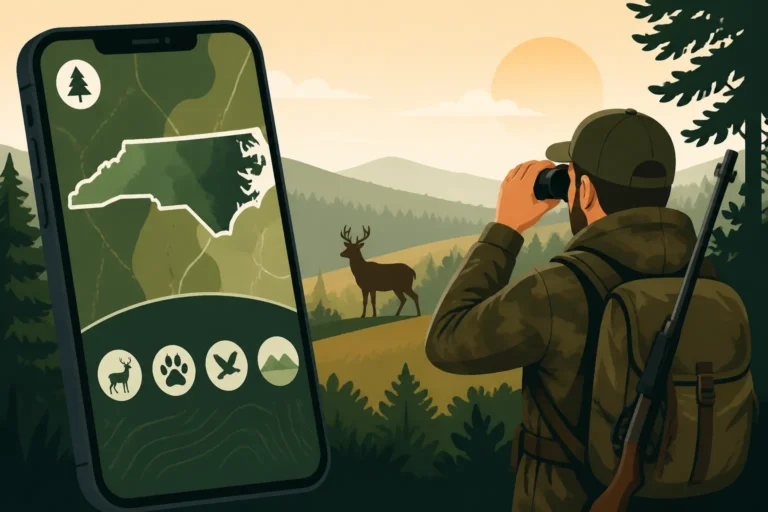
Before you ever set foot on a steep Blue Ridge slope, you can gain a massive advantage with digital scouting tools. Apps like GoHunt, onX Hunt, or the NC Wildlife App are invaluable for pinpointing potential hotspots. Start by poring over satellite imagery, looking for natural pinch points where a ridge narrows significantly, saddles where deer cross between drainages, or benches that offer relatively flat travel corridors along steep hillsides. These are prime locations for ambushing a traveling buck. Look for changes in forest cover – mature hardwoods mixed with thick clear-cuts or pine plantations can create excellent edge habitat that deer prefer. Areas with known mast producers, like oak flats, can be identified and targeted for early season hunts.
Consider how deer might use these features to move with the prevailing winds and thermals. Understanding how air currents typically move up and down slopes at different times of day is critical, and a good mapping app can help you visualize the terrain. For a deeper dive into preparing before the season kicks off, check out our guide on how to approach Scouting North Carolina Public Land Before Season. Even tips on Reading Aerial Photos for Piedmont Deer can translate effectively to understanding terrain features in the mountains.
Boots-on-the-Ground Scouting Techniques
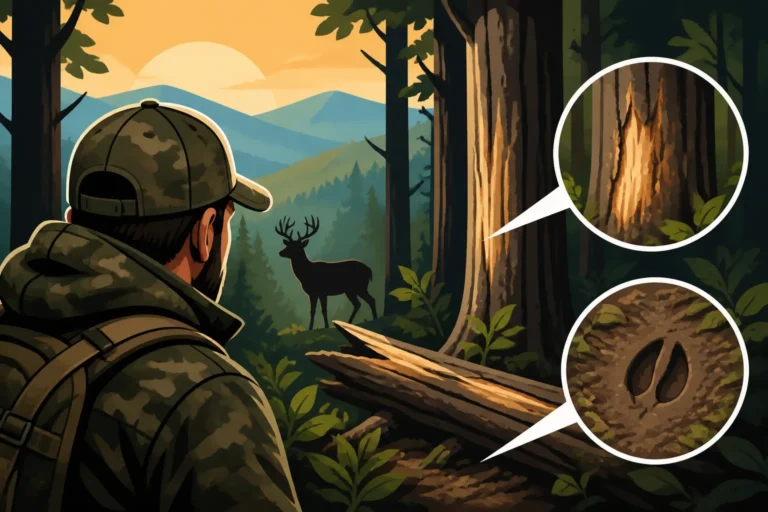
While digital scouting helps you identify high-probability areas, there's no substitute for getting your boots dirty. Once you have a few promising spots marked on your GoHunt app, it's time to hike in and confirm what you've seen digitally. Focus your attention on finding fresh deer sign: rubs on saplings, scrapes along logging roads or ridge edges, distinct tracks in soft dirt, and fresh droppings. These tell-tale signs confirm current deer activity and preferred travel routes.
When you're out there, try to walk the contour lines and ridge tops as a deer would. This helps you understand how they navigate the steep terrain and identify subtle trails that might not be visible from above. Pay close attention to bedding areas, which are often found on south-facing slopes that catch the sun, or in dense thickets that offer protection from the wind. These spots are usually close to food sources and escape routes. Finding definitive buck sign, like heavy rubs or large tracks, near these bedding areas indicates a mature deer is likely using the location. Learning to discern subtle clues on the forest floor is key; our article on Finding Sign in Big Pisgah Timber offers more excellent advice. You might even find consistent Scrape Lines Along a Logging Road that reveal regular buck movement patterns.
Effective Hunting Tactics for Blue Ridge Ridgelines
Once you've done your homework and understand the terrain and deer movement, it's time to deploy tactics that are specifically tailored to the Blue Ridge Escarpment.
Stand Placement and Still-Hunting Approaches
For successful stand hunting on the Escarpment, placement is everything. Don't just pick the tallest tree; choose a location that capitalizes on natural funnels, saddles, or benches where deer movement is concentrated. A saddle between two ridge points, for example, is a classic ambush spot as deer almost always cross at the lowest point. Similarly, a flat bench cutting across a steep hillside can be a major travel corridor. When considering your setup, always prioritize your wind direction and thermals. In the mountains, air often rises in the morning as the sun heats the slopes and falls in the evening as temperatures drop. You need to position yourself so your scent isn't being carried directly into where deer are likely to approach. Many successful hunters utilize saddle hunting setups for their mobility and stealth on steep ground; our guide on Treestand Setups in Pisgah National Forest offers general advice that applies here. For a deeper understanding of air currents, look into Wind and Thermals on a Blue Ridge Slope.
Alternatively, still-hunting can be incredibly effective in this type of terrain. This slow, deliberate method involves moving quietly, taking a few steps, and then pausing for several minutes to observe your surroundings. Use the terrain to your advantage: peek over ridge crests, scan down into coves, and move silently through the dense rhododendron. This technique requires immense patience and keen observation skills, but it allows you to cover more ground and react to changing situations. For a masterful take on this method, consider reading about Still-Hunting Nantahala Forest Ridges.
Calling and Decoy Considerations
Calling can be a powerful tool, especially during the rut, but it needs to be adapted for the thick, broken terrain of the Escarpment. Grunt calls, ranging from soft tending grunts to more aggressive challenge grunts, can draw in curious bucks. Given the dense cover, a softer call volume might be more appropriate to avoid alarming deer and encouraging them to investigate. You want them to think the sound is closer than it is. Rattling can also work, mimicking two bucks fighting, but again, consider the range and visibility. In areas with very dense cover, loud, aggressive rattling might be too much and could cause a buck to hang up out of sight. Our article on Grunt Calls in Mature North Carolina Timber provides excellent insights, and even Rattling Volume in Thick Pine Cover offers principles applicable to dense mountain habitat.
Decoy use on the Escarpment is generally more limited than in open fields. The steep, thick terrain makes carrying and setting up larger decoys impractical, and visibility is often too restricted for them to be effective. However, a lightweight, packable doe or fawn decoy might be useful in very specific, more open ridge saddles or small clearings, especially if combined with calling. Always scout the area thoroughly to ensure there's enough visibility for a decoy to be seen and for you to get a shot.
Essential Gear and Safety for Escarpment Hunting
Hunting the Blue Ridge Escarpment isn't like a leisurely stroll through flat woods. It demands specific gear and a heightened sense of safety to ensure a successful and, most importantly, safe trip.
Gear for Steep Terrain and Remote Conditions
Your gear choices can make or break your hunt in this challenging environment. Lightweight but durable gear is paramount. Your pack needs to be comfortable for long, strenuous hikes and capable of carrying all your essentials, plus potentially a deer quarter. Check out advice on Packs for a Pisgah Forest Day Hunt for guidance. Footwear is crucial: sturdy, waterproof boots with excellent ankle support and aggressive tread are non-negotiable for navigating steep, uneven, and often slippery terrain. You might find relevant insights in our discussion on Boots for North Carolina Swamps and Ridgelines. Layered clothing, ideally moisture-wicking synthetics or wool, is essential to adapt to the fluctuating temperatures that can occur rapidly with changes in elevation or weather.
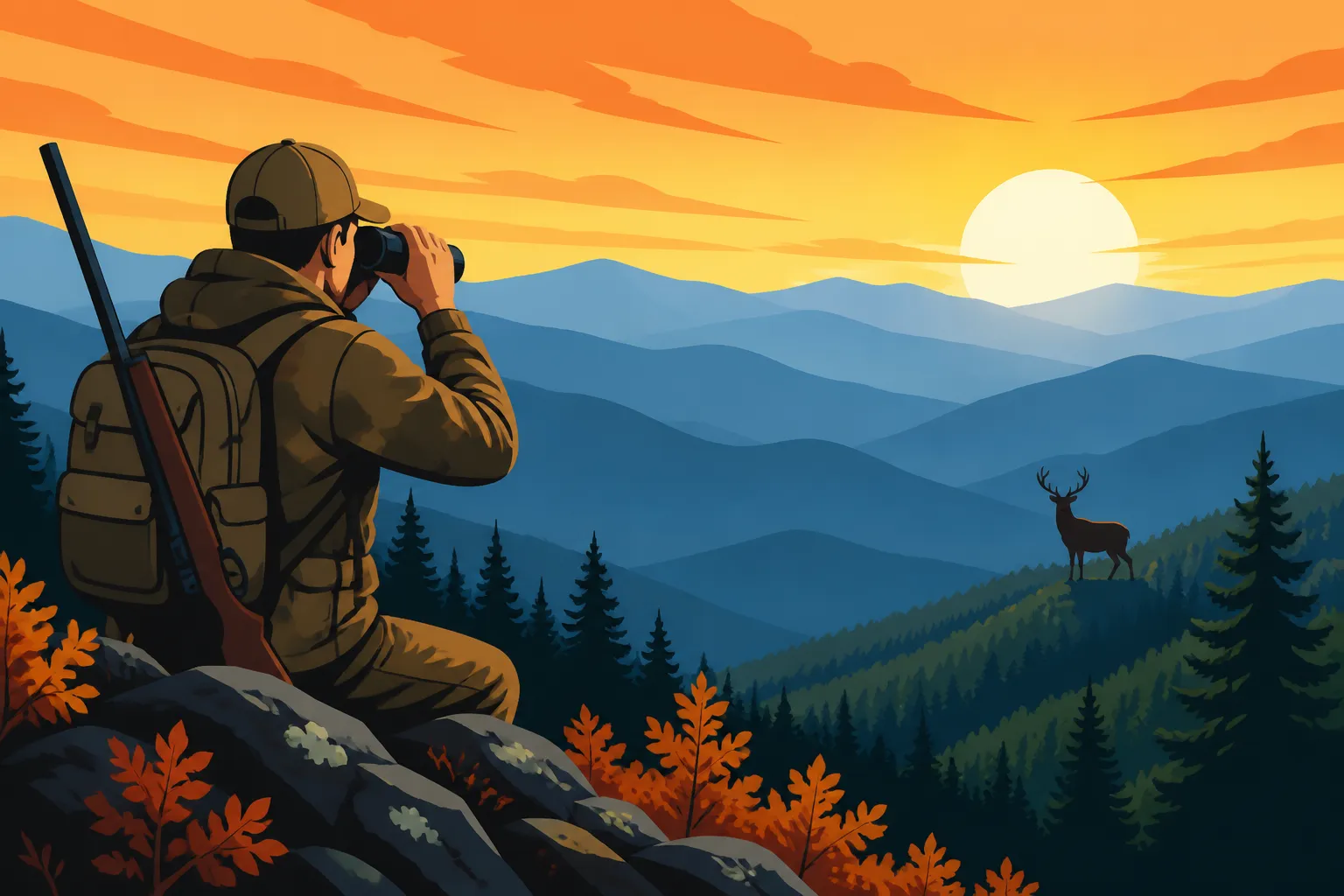
Good optics are also critical. While you might not be making super long-range shots, binoculars (8×42 or 10×42 are popular choices) are vital for picking apart dense cover to spot deer sign or deer themselves. A reliable rangefinder is also key for accurately judging distances in uneven terrain. Refer to our guides on Binocular Power for Mountain Hunting and Rifle Scopes for Low-Light Mountain Coves for specific recommendations. For navigation, don't rely solely on your phone. While apps like GoHunt are fantastic, always carry a backup: a physical map, compass, and a dedicated GPS unit. Cell service is notoriously spotty in these mountains. Our post on GPS Units Versus Phone Apps can help you decide, and don't forget the invaluable Scouting With the NC Wildlife App for regulatory information.
Safety Precautions and Emergency Preparedness
Safety on the Escarpment cannot be overstated. Before you head out, always tell someone your exact hunting plan, including your intended route, where you'll be parking, and when you expect to return. This simple step can be a lifesaver if you get lost or injured. Always carry a well-stocked first-aid kit, a whistle, fire-starting materials, a multi-tool, and plenty of water and high-energy snacks. Weather can change drastically and quickly in the mountains – a clear morning can turn into a foggy, rainy, or even snowy afternoon. Be prepared for sudden temperature drops and carry extra layers, including rain gear.
Harvesting an animal on steep, remote ground presents its own set of challenges. Getting a deer off a Blue Ridge ridge can be incredibly strenuous. Consider methods like quartering the animal for easier packing out, or using a deer sled or drag, though these are more effective on moderate slopes. Read up on Sleds and Drags for Mountain Country and essential advice on Field Dressing a Deer in Cold Weather to prepare for the inevitable. Remember, your safety is always the priority.
| Tactic | Best Use Case | Pros | Cons |
|---|---|---|---|
| Still-Hunting | Actively covering ground, high-pressure areas, scouting-while-hunting | Highly adaptable, covers more ground, good for thick cover | Requires immense patience, high physical demand, easy to spook deer if not careful |
| Stand Hunting | Known travel corridors, pinch points, saddles, benches | Can be less physically demanding (once set), allows for long observation periods | Limited to one location, setup can be noisy, thermals can be tricky |
| Calling | During the rut, curious deer, drawing deer into shooting lanes | Can bring deer to you, mimics natural interaction | Can spook wary deer if overused, limited range in thick cover |
Disclaimer
Please note: Hunting regulations and conditions can change. Always consult the latest North Carolina Wildlife Resources Commission regulations and local land management rules before heading afield. This guide is for informational purposes only and does not supersede official regulations.