Who Needs North Carolina Hunter Education
Stepping into the world of hunting in North Carolina can feel a bit like navigating a maze, especially when it comes to understanding all the regulations. One of the biggest questions new hunters, or even those returning to the sport, often grapple with is, "Who needs North Carolina Hunter Education?" It’s not always a straightforward answer, and getting it wrong can cost you a hunting opportunity or, worse, put you in a bind with wildlife enforcement. This guide is here to untangle those rules, clarify the requirements, and help you understand exactly where you stand, ensuring you’re ready to hit the woods legally and safely.
The Core Requirement for Aspiring Hunters
For most folks just getting started in the North Carolina hunting scene, hunter education isn't just a good idea—it's the law. The state is committed to ensuring that anyone wielding a firearm or bow in the field understands basic safety protocols, wildlife identification, and ethical hunting practices. This isn't about gatekeeping; it's about responsibility and preserving our hunting heritage for generations to come. Imagine the peace of mind knowing that every hunter you encounter has at least a foundational understanding of safe firearm handling.
Age Restrictions and Mandates
Let's get right down to the nitty-gritty: If you were born on or after July 1, 1991, you must successfully complete a North Carolina hunter education course before you can purchase a North Carolina hunting license. This is the cornerstone rule. It's a clear cut-off date that simplifies things for a lot of people. So, if you're in your early thirties or younger, consider this your green light to enroll in a course.
Think about a young hunter like Sarah from Wilkes County, who just turned 16 and wants to go deer hunting with her dad this fall. Sarah was born in 2008, so she clearly falls within this mandatory age group. Her dad knows they can't just head to the woods; she needs that hunter education card. It's a rite of passage, really, and ensures she learns everything from safe gun carrying positions to identifying legal game. Without that card, she won't be able to buy the required North Carolina Resident Hunting License Options or North Carolina Big Game Privilege Requirements for deer.
This mandate applies to all types of hunting, whether you're planning on Bowhunting North Carolina's Statewide Archery Season, chasing gobblers during Spring Turkey Hunting in North Carolina, or joining the crowd for North Carolina's Gun Deer Season by Zone. The goal is universal safety across all hunting disciplines. It’s a foundational requirement that helps prevent accidents and promotes responsible behavior, regardless of what species you’re pursuing or what weapon you’re using.
Specific License Types Requiring Certification
The hunter education requirement generally applies to anyone seeking to purchase a "hunting license" in North Carolina. This includes a vast array of license types, from the basic resident annual license to combination hunting and fishing licenses. Essentially, if your goal is to legally harvest game animals in North Carolina, and you meet the age criteria, you'll need that certification.
For example, if you're planning on hunting small game like squirrels and rabbits, you'll need the proper hunting license. If you're a newcomer to the sport, even if you’re just targeting Squirrel and Small Game Hunting in North Carolina, the hunter education course is your entry ticket. It’s not just for big game, which sometimes surprises people. They might think, "Oh, I'm just going after bunnies, I don't need all that," but the state's stance is clear: if you're hunting, you need to be educated.
The exception, of course, is if you fall into one of the exempted categories we'll discuss shortly, or if you're participating in the apprentice hunter program. Otherwise, whether you're picking up a basic statewide hunting license or a more specialized annual sportsman's license, the hunter education certification is a prerequisite for purchase if you were born after that key date. Even folks from out-of-state who plan to hunt here will need to show proof of hunter education if their birthdate falls after the cutoff.
Residency and Prior Experience
It doesn't matter if you've been shooting guns since you were five or if you grew up on a farm where hunting was a way of life. If you were born on or after July 1, 1991, and want to hunt in North Carolina, the hunter education requirement applies to you. Prior informal experience, no matter how extensive, doesn't negate the legal mandate. The state wants to ensure a standardized level of safety and ethical understanding.
Let's say a young man, let's call him David, just moved to North Carolina from Texas. David grew up hunting whitetails on his family ranch and considers himself an experienced hunter. He's 28 years old, so he was born after July 1, 1991. When David goes to buy his North Carolina Nonresident Hunting License Options online, he'll be prompted about his hunter education certification. Even though he’s hunted for years, if he doesn't have a valid hunter education certificate from any state, he won't be able to proceed with his license purchase. The system checks!
The good news is that North Carolina recognizes hunter education certifications from other states, provided they were issued by a state wildlife agency and meet the standards set by the International Hunter Education Association (IHEA-USA). So, if David took a hunter education course in Texas when he was younger, that certificate is perfectly valid here. He just needs to have proof of it when he applies for his license. This reciprocity is a huge convenience for hunters who move or travel.
Exemptions and Special Circumstances
While the mandate covers a broad range of hunters, there are specific situations where you might not need to take the North Carolina Hunter Education course. These exemptions are in place to accommodate individuals who either predate the requirement, have equivalent training, or are operating under supervised conditions. It’s important to understand these nuances so you don't unnecessarily take a course if you don’t need to, or, more importantly, mistakenly believe you're exempt when you're not.
Born Before July 1, 1991
This is the most straightforward exemption. If you were born before July 1, 1991, you are exempt from the hunter education requirement. Period. No course, no certificate needed to buy a license. This acknowledges that older generations often learned hunting skills through informal mentoring, apprenticeships, and traditions that predated formal hunter education mandates. It’s a common-sense cutoff.
Consider my friend, Jim, who's been Hunting North Carolina's Year-Round Feral Hogs since he was a teenager in the 1970s. Jim never took a hunter education course because it simply didn't exist in the same formalized way back then, and he certainly wasn't born after 1991. He can walk into a local tackle shop or hop online and purchase his hunting license without ever being asked for a hunter education certificate. He represents the generation that learned a lot of their skills directly in the field, often from seasoned mentors, long before hunter education became a standardized requirement.
This exemption is pretty clear, but it's worth noting that while you might be legally exempt, taking a refresher course or engaging in self-study on current regulations and best practices is never a bad idea. Laws change, technology advances, and staying sharp on safety principles is always a smart move. Even seasoned hunters can pick up new tips or reinforce good habits by reviewing educational materials periodically.
Out-of-State Certifications
As mentioned earlier, North Carolina has full reciprocity with other states and provinces whose hunter education programs are accredited by the IHEA-USA. This means if you completed an approved hunter education course in, say, Virginia, Georgia, or even Canada, that certificate is valid here in North Carolina. You don't need to retake the course. This makes it much easier for folks moving into the state or non-residents planning a hunting trip.
Let's imagine a group of buddies from Pennsylvania decide they want to come down and try Bear Hunting North Carolina's Coast and Mountains this fall. They're all in their late 20s, so they definitely fall under the hunter education requirement. However, since they all completed their hunter education courses in Pennsylvania years ago, they're good to go. They simply need to make sure they have their Pennsylvania hunter education card or a verifiable record of it when they purchase their North Carolina Nonresident Big Game Privilege Cost and other necessary licenses. The online system or a wildlife agent will typically allow you to enter your out-of-state certification number.
It's crucial, however, to ensure that the course you took was indeed a recognized hunter education program. Sometimes, people confuse basic gun safety courses or shooting range certifications with official hunter education. The key is that it needs to be an IHEA-USA recognized program, usually administered by a state wildlife agency. If you're unsure, it's always best to check with the North Carolina Hunter Education Requirements page on the NC Wildlife Resources Commission website or give them a call. Better to verify ahead of time than to run into issues when you're trying to buy your license right before opening day.
Military Service Exemptions
North Carolina also provides an exemption for active duty military personnel, veterans, and their dependents. Specifically, individuals who hold a valid military ID card or can provide proof of honorable discharge from the U.S. Armed Forces are exempt from the hunter education requirement. This recognizes the extensive training and discipline these individuals receive regarding firearm safety and responsible conduct.
For example, a young soldier, Private First Class Evans, stationed at Fort Bragg, is 22 years old and wants to try Dove Hunting North Carolina Opening Weekend with his buddies. Because he is active duty military, he is exempt from needing a separate hunter education course. His military service is considered sufficient proof of responsible firearm handling and general safety. He would just need to present his military ID when purchasing his license. This is a small but important way the state recognizes the service of its military members.
The same applies to veterans. A veteran, say from Fayetteville, who served honorably, even if they've been out of the service for years and were born after 1991, would still be exempt. They would need to provide proof of their honorable discharge, perhaps a DD-214 form, when required. This exemption ensures that those who have dedicated their lives to service are not burdened with an additional, redundant requirement when they want to enjoy the outdoors. These exemptions are well-defined in the North Carolina Military Hunting License Discounts guidelines provided by the NCWRC.
The Apprentice Hunter Program
What if you don't meet any of the exemptions and you haven't taken a hunter education course yet, but you really want to get out into the field now? North Carolina has a fantastic program for this exact situation: the Apprentice Hunter Program. It's designed to allow new or inexperienced hunters to gain practical, supervised experience in the field before committing to formal hunter education. This "try before you buy" approach to hunting is invaluable for many.
How the Apprentice License Works
The apprentice hunter license allows an individual to hunt game without first completing hunter education, but there's a critical catch: they must be accompanied by a licensed hunter who is at least 18 years old. This mentor must be within sight and hearing distance of the apprentice, providing direct supervision and guidance. It's like having a personal coach in the woods.
Imagine a newcomer to North Carolina, Maria, who just moved to Greensboro from a big city and is intrigued by hunting but has no experience. She's 35, so the born-after-1991 rule applies. Instead of immediately signing up for a hunter ed course, she opts for the apprentice license. She connects with a seasoned hunter, John, who agrees to mentor her. When they go out, say for a short squirrel hunt in a game land near her, John, as the mentor, is responsible for her safety and adherence to all regulations. He needs to be right there with her, guiding her through the process. This program is an excellent way to dip your toes in the water.
The apprentice license is valid for one year and can be renewed. This gives you plenty of time to experience different hunting scenarios, from Hunting Piedmont Farmland Deer to perhaps Squirrel Hunting North Carolina Bottomland Hardwoods, and decide if hunting is truly for you. It's also an excellent way to learn practical skills that classroom instruction might not fully cover, such as reading sign or understanding animal behavior.
Mentor Requirements and Responsibilities
The success and safety of the Apprentice Hunter Program hinge entirely on the mentor. The mentor isn't just a warm body; they are directly responsible for the apprentice's adherence to all hunting laws and safety practices. This means they must remain within "sight and normal voice communication" of the apprentice at all times while hunting.
Let's revisit Maria and John. If they are hunting deer, John needs to ensure Maria understands shot placement, identifies her target clearly, and follows all rules regarding bag limits and reporting. If Maria is carrying a firearm, John is ultimately responsible for ensuring that firearm is handled safely. This responsibility is a serious one, and it's why North Carolina Mentored Youth Hunting Rules emphasize the mentor's role so heavily. A mentor must be a fully licensed hunter themselves, showing they've already met all the state's requirements.
The role of a mentor goes beyond just safety. It's about passing on the ethics and traditions of hunting. A good mentor teaches about conservation, respect for wildlife, and leaving no trace. They instill a sense of stewardship that is vital for the future of hunting. Companies like GoHunt, through their content and community, often highlight the importance of mentorship in hunting, helping new hunters connect with experienced ones and encouraging responsible practices.
Transitioning to a Full License
Once an apprentice hunter has gained enough confidence and decided that hunting is something they want to pursue long-term, the next step is to complete the full hunter education course. The apprentice license is a temporary bridge, not a permanent solution for those born after the cutoff date. It's designed to give you a taste of the experience.
After a season or two of hunting with John, Maria feels much more comfortable and skilled. She’s seen first-hand what it’s like to be out in the field and is ready to commit. Now, she'll sign up for a formal hunter education course. This course will cover all the legal, ethical, and safety aspects in a structured environment, building upon the practical experience she gained with John. Upon successful completion, she'll receive her hunter education certificate, which she can then use to purchase any regular hunting license in North Carolina moving forward, even when she wants to go out on her own without a mentor.
This two-step process allows for flexible entry into hunting while still upholding North Carolina's commitment to safety and responsible hunting. It acknowledges that hands-on experience can be a powerful teacher, especially when coupled with formal instruction.
Here’s a quick summary table to help clarify who needs what:
| Category | Hunter Education Required? | Notes |
|---|---|---|
| Born AFTER July 1, 1991 | YES | Mandatory for all hunting licenses. |
| Born BEFORE July 1, 1991 | NO | Exempt from the requirement. |
| Apprentice Hunter License Holder | NO (for this license) | Must be accompanied by a licensed hunter 18+ and within sight/hearing. Temporary. |
| Out-of-State Certified Hunters | NO | Valid IHEA-USA certified course from another state/province is accepted. |
| Active Duty Military / Honorably Discharged Veteran | NO | Must show valid military ID or proof of honorable discharge. |
Taking North Carolina Hunter Education Online
In today's digital age, flexibility is key, and North Carolina understands that. While traditional in-person classroom courses are still available and highly beneficial, especially for hands-on experience, the state also offers approved online hunter education options. This is a massive convenience for busy individuals who might struggle to fit a multi-day in-person course into their schedule.
The Convenience of Online Courses
Online hunter education courses offer unparalleled flexibility. You can work through the material at your own pace, from the comfort of your home, and often on your own schedule. This is perfect for students, working professionals, or parents who have limited time for traditional classes. It removes geographical barriers, too; you don't have to drive miles to the nearest in-person class.
Think about a young professional living in downtown Raleigh. Their work schedule is hectic, and getting to a weekend class that runs for two full days is nearly impossible. With an approved online course, they can tackle modules in the evenings, during lunch breaks, or whenever they have a spare hour. This accessibility makes it much easier for new hunters to fulfill the requirement without disrupting their entire life. Many hunters find resources like GoHunt useful not only for finding hunting locations but also for staying informed about online education opportunities and resources.
The online format typically covers all the same essential material as the in-person course: firearm safety, archery safety, hunting ethics, wildlife identification, basic survival, first aid, and North Carolina hunting regulations. It's a comprehensive approach designed to equip you with the knowledge needed to be a safe and responsible hunter. Just be sure to choose a course approved by the NC Wildlife Resources Commission to ensure your certificate is valid.
Mandatory Field Day Requirements
While the bulk of the instruction can be completed online, North Carolina mandates a hands-on component: a field day. This isn't just an optional extra; it's a crucial part of the certification process for those taking the online course. The field day provides practical experience that simply can't be replicated on a computer screen.
Imagine finishing all your online modules. You’ve passed all the quizzes and feel pretty confident. But then comes the field day. This is where you actually get to handle inert firearms, practice safe carrying techniques, demonstrate your ability to identify targets and safe shooting zones, and possibly even participate in live-fire exercises on a shooting range. This practical application solidifies the theoretical knowledge you gained online. It’s where you truly prove you can apply the safety principles in a real-world, albeit controlled, setting.
These field days are typically offered at various locations across North Carolina throughout the year. You'll need to register for one after completing the online portion. It's a critical step that ensures you're not just book-smart but also capable in the field. This hybrid approach, combining online learning with practical application, is often considered the best of both worlds, providing flexibility without compromising on essential hands-on training. It ensures that everyone receiving certification has demonstrated competency in practical safety skills, which is a major part of Who Needs North Carolina Hunter Education.
What to Expect During the Course
Whether you choose an online or in-person format, the North Carolina Hunter Education course is designed to be thorough and informative. You'll learn about far more than just how to shoot. It's a deep dive into what it means to be a responsible hunter in our state.
Expect modules on firearm types, parts, and safe handling specific to rifles, shotguns, and handguns. You'll cover ammunition types and how to store them safely. For bowhunters, there will be sections on archery equipment, broadhead safety, and shot placement. A significant portion of the course focuses on hunting ethics—fair chase, respect for wildlife, and understanding public perception of hunting. You'll also learn about wildlife conservation, the role of hunters in funding it, and basic game identification.
For example, a section might detail how to correctly identify a legal deer from a doe, crucial for adhering to North Carolina Deer Bag Limit Rules and understanding the different antler regulations in certain areas. You’ll also learn about important topics like Blaze Orange Requirements and why they are so vital for hunter visibility and safety in the woods. The instructors, whether online or in person, are typically experienced hunters themselves, passionate about passing on their knowledge and ensuring the next generation is well-prepared.
Beyond the Basics: Why Hunter Education is Crucial
Even if you're technically exempt from the North Carolina Hunter Education requirement (perhaps you were born before 1991), there are compelling reasons why understanding the core principles taught in these courses remains critically important. Hunting is a privilege, not a right, and with that privilege comes a significant responsibility to ourselves, to others, and to the wildlife we pursue.
Safety First: Preventing Accidents
This is perhaps the most obvious, but also the most vital, aspect. Hunter education isn't just about passing a test; it's about instilling a culture of safety that prevents tragic accidents. Every year, there are reports of hunting incidents, many of which could have been avoided with proper training and adherence to safety rules. The core tenets of hunter education are designed to minimize these risks.
Consider the four primary rules of firearm safety: treat every firearm as if it's loaded, always point the muzzle in a safe direction, keep your finger off the trigger until ready to shoot, and be sure of your target and what's beyond it. These aren't just suggestions; they are commandments. A hunter education course drills these into you. For instance, in the thick woods of the Nantahala National Forest, where visibility can be limited, truly understanding "be sure of your target and what's beyond it" can literally save a life. It's not just about identifying a deer; it's about knowing where your bullet will go if it misses or passes through.
Beyond firearms, the course covers treestand safety, which is a leading cause of serious injury for hunters. Learning about safety harnesses, proper installation, and maintenance, as detailed in Treestand Setups in Pisgah National Forest, can prevent falls that can be debilitating or fatal. The knowledge gained in hunter education isn't theoretical; it's practical, life-saving information that every hunter, regardless of experience level, should refresh periodically.
Ethics, Conservation, and Wildlife Management
Hunter education delves deeply into the ethical responsibilities of hunters. This includes principles like fair chase, which dictates that hunters should not take unfair advantage of animals. It also covers the importance of respecting private property, gaining permission, and being a good ambassador for hunting. These ethical considerations are what elevate hunting beyond mere harvesting into a meaningful outdoor pursuit.
The course also teaches hunters about their crucial role in wildlife conservation. Many new hunters don't realize that license fees and excise taxes on hunting equipment directly fund wildlife management, research, and habitat restoration efforts through programs like the Pittman-Robertson Act. This financial contribution is immense and is the backbone of wildlife conservation in North Carolina, supporting initiatives for species like White-Tailed Deer Across North Carolina and Wild Turkeys in North Carolina. Learning about this fosters a sense of pride and ownership in the conservation movement.
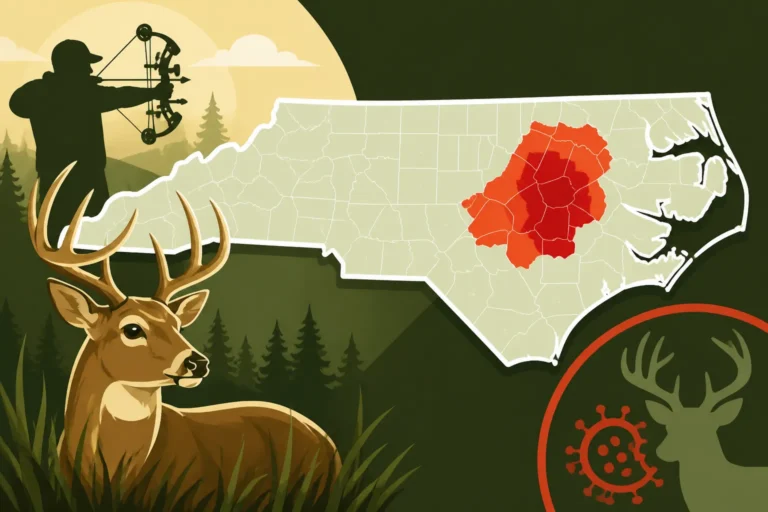
Understanding wildlife management principles, such as population dynamics, habitat needs, and disease monitoring (like North Carolina's Chronic Wasting Disease Areas), empowers hunters to make informed decisions and support sound wildlife policies. It's about knowing why seasons are set the way they are, why certain bag limits are in place, and how your individual actions contribute to the overall health of the ecosystem. It transforms a simple hunt into an act of responsible stewardship. Even when using an app like GoHunt to find hunting zones, understanding the conservation principles behind those zone designations is key.
Practical Skills for the Field
Finally, hunter education provides a foundation in practical skills that are invaluable in the field. This isn't just about shooting; it's about everything surrounding the hunt itself. From navigating with a compass or GPS to field dressing game and basic survival skills, the course touches on many aspects of being self-sufficient and safe in the wilderness.
Imagine you've successfully harvested a deer deep in the Croatan National Forest. What do you do next? The course covers responsible field dressing, ensuring the meat is properly cared for to prevent spoilage, especially during warmer early season hunts. It teaches you how to blood trail effectively, so you can recover your game quickly and humanely. This is particularly important when you're Tracking a Deer Through North Carolina Leaf Litter or navigating difficult terrain after a shot.
Beyond the immediate aftermath of a harvest, hunter education also covers essential outdoor skills like preparing for your trip, carrying a first-aid kit, and understanding basic survival techniques if you get lost or injured. These are skills that can be applied to any outdoor activity, not just hunting. They empower you to be more self-reliant and prepared for whatever challenges the North Carolina wilderness might throw your way. This holistic approach ensures that certified hunters are not just safe with their weapons but also capable and responsible in the natural environment.
Disclaimer
Please remember that hunting regulations can change. While this guide aims to provide accurate and up-to-date information, it is always your responsibility to consult the latest North Carolina Wildlife Resources Commission regulations and statutes before engaging in any hunting activities. This content is for informational purposes only and does not constitute legal advice.