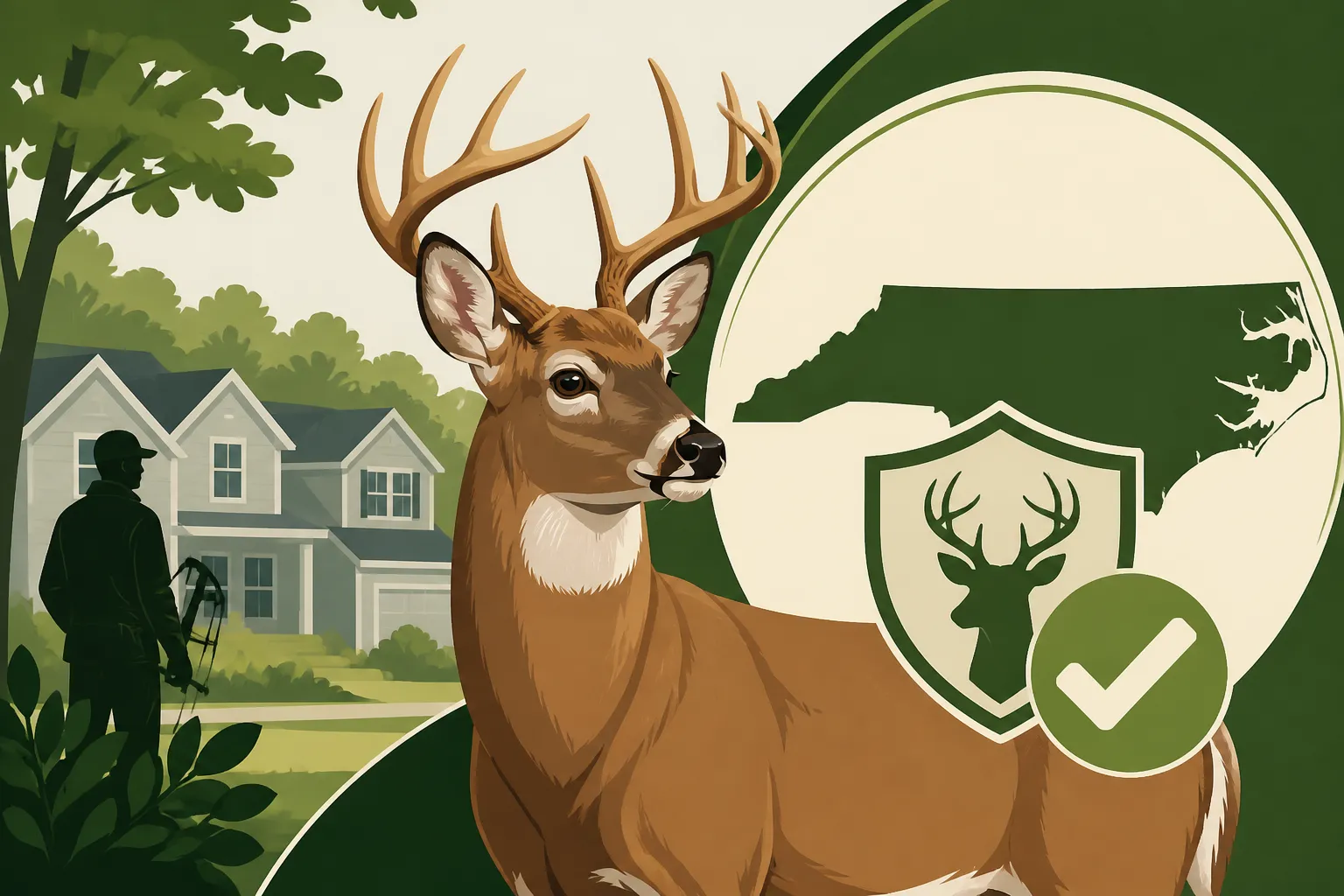
North Carolina Suburban Deer Management Permits
The beautiful wild places of North Carolina often bring deer right into our backyards, leading to significant challenges like damaged landscaping, vehicle collisions, and even concerns about disease. For communities grappling with these issues in developed areas where traditional hunting isn't feasible, North Carolina's Suburban Deer Management Permits offer a structured, regulated approach to safely and effectively manage deer populations. This guide will walk you through what these permits entail, how they work, and what it means for residents and communities.
The Growing Challenge of Suburban Deer
It's a familiar scene across the Tar Heel State: a picturesque suburban neighborhood, and there, grazing calmly on someone's prize-winning hydrangeas, is a small herd of white-tailed deer. While initially charming, this close proximity between deer and humans brings with it a host of problems that communities struggle to address.
Why Suburban Deer Populations Explode
Deer are incredibly adaptable creatures, and suburban environments, surprisingly, offer them an ideal habitat. One of the biggest reasons for booming populations in these areas is the drastic reduction, or even complete absence, of natural predators. In places like Wake County, near Raleigh, or even closer to Asheville, coyotes and bobcats might exist, but their impact on deer numbers in densely populated residential zones is minimal compared to wilder areas.
Beyond predator absence, suburban areas are a veritable buffet for deer. Homeowners spend countless hours cultivating lush lawns, gardens filled with tender plants, and ornamental shrubs – all delectable food sources for a hungry deer. Unlike natural forests where deer might have to browse widely for sustenance, a suburban street offers a concentrated, high-quality diet. This abundance of food, combined with minimal pressure from hunting, allows deer to reproduce successfully and thrive, leading to rapid population growth that quickly outpaces what the environment can naturally sustain.
The Problems Deer Cause in Developed Areas
The charming sight of deer quickly loses its appeal when you factor in the damage and risks they introduce. One of the most significant concerns is the dramatic increase in deer-vehicle collisions. On busy highways and even quiet neighborhood streets, deer suddenly darting into traffic can cause serious accidents, injuries, and fatalities for both the animals and human drivers. This is a constant worry for commuters and families, especially during dawn and dusk hours. For a deeper dive into this issue, you might want to read about North Carolina Deer Vehicle Collisions.
Beyond road hazards, the impact on property is often immediate and costly. Gardens that were once a source of pride become a free-for-all for deer, with prize roses, vegetables, and new saplings quickly disappearing overnight. Large shrubs are often browsed to the point of irreparable damage, and trees, especially young ones, can be girdled by bucks rubbing their antlers, effectively killing the tree. The financial burden of replacing destroyed landscaping year after year can be substantial for homeowners and HOAs alike.
Furthermore, deer are known carriers of ticks, which can transmit diseases like Lyme disease to humans. While deer themselves don't carry Lyme, they are a primary host for the blacklegged tick that does, increasing the risk of tick encounters for people and pets spending time outdoors. The constant presence of deer can also be a general nuisance, leaving droppings in yards and fields, and making residents feel uneasy about letting children or pets play freely, ultimately impacting the quality of life in these otherwise tranquil neighborhoods.
Understanding North Carolina's Suburban Deer Management Permits
When traditional hunting seasons and methods aren't suitable for managing overabundant deer populations in developed areas, the North Carolina Wildlife Resources Commission (NCWRC) offers a targeted solution: the Suburban Deer Management Permit (SDMP). This isn't your typical hunting license; it's a specific tool designed for a specific problem.
What is an SDMP and How Does it Work?
An SDMP is a special permit issued by the NCWRC that authorizes the controlled removal of deer in designated suburban or urban areas where conventional hunting methods are impractical, unsafe, or prohibited. Its primary goal isn't recreational hunting but rather to mitigate the adverse impacts of excessive deer populations on public safety, property, and natural resources. Think of it as a community-level intervention, carefully planned and executed.
These permits allow for the implementation of specific deer removal strategies within defined boundaries, often encompassing entire municipalities, large community developments, or institutional properties like university campuses. The program is designed to be highly flexible, allowing the NCWRC to work directly with applicants to tailor a management plan that best suits the unique characteristics of the area, including its population density, geography, and the severity of its deer-related problems. It's a testament to adaptive wildlife management, recognizing that a "one-size-fits-all" approach doesn't work for every situation in a diverse state like North Carolina.
Who Qualifies for an SDMP and the Application Process
Unlike individual hunting licenses, SDMPs are not issued to single homeowners. Instead, they are typically granted to governmental agencies (like municipal governments or county parks departments), large homeowner associations, or other entities that manage substantial tracts of land where deer populations are causing documented issues. The key here is a demonstrated need for control and the ability to implement a management plan safely and effectively. For example, a town might apply for an SDMP to address deer overpopulation in its public parks and greenways, especially in areas designated as North Carolina Suburban Archery-Only Zones.
The application process for an SDMP is thorough and involves several steps designed to ensure responsible wildlife management. First, the applicant typically contacts the NCWRC to discuss the situation and determine if an SDMP is the appropriate solution. This often leads to a site assessment by NCWRC wildlife biologists, who evaluate the extent of the deer problem, the habitat, and the feasibility of various management techniques. Following this assessment, the applicant must submit a detailed management plan, outlining the proposed methods of removal, the specific areas where activities will occur, safety protocols, and how the community will be informed. The NCWRC then reviews this plan, sometimes requiring adjustments, before deciding whether to issue the permit. This rigorous process underscores the serious nature of deer management in sensitive suburban settings.
Strategies and Best Practices for SDMP Holders
Once an SDMP is issued, the real work of managing the deer population begins. This involves employing specific, approved methods while maintaining the highest safety standards and meticulously adhering to reporting requirements. It's a delicate balance that requires careful planning and execution.
Approved Methods and Safety Considerations
The primary methods approved under an SDMP typically involve highly controlled and targeted archery operations, sometimes complemented by limited firearm use in very specific circumstances. For archery, this includes both traditional bows and crossbows. These methods are chosen because they offer precision, minimize noise, and reduce the risk of stray projectiles in densely populated areas. If you're involved in such an operation, understanding nuances like Fixed Versus Mechanical Broadheads can be critical for effectiveness and ethical harvesting. For those interested in the specifics, information on Bowhunting North Carolina's Statewide Archery Season and Crossbow Rules During North Carolina Archery Season offers a good baseline for general archery regulations, though SDMP operations often have additional, stricter guidelines.
Safety is the absolute paramount concern during any SDMP operation. This means identifying clear shooting lanes, ensuring adequate backstops, and often requiring elevated stand positions to direct any missed shots safely into the ground. Operations are frequently conducted during specific, low-activity times, like early mornings or late evenings, and are often restricted to areas well away from public view or access. Many communities opt to hire professional wildlife control operators or utilize highly trained volunteer hunters who have proven their proficiency and commitment to safety. These professionals are adept at working within the constraints of suburban environments, ensuring that all activities are conducted responsibly and with minimal disruption to residents. Furthermore, all operations must strictly adhere to North Carolina Posted Land Rules and ensure that any involved private land has the proper Do You Need Written Permission in North Carolina? documentation.
Reporting and Compliance Requirements
Holding an SDMP isn't a one-and-done deal; it comes with stringent reporting and compliance requirements designed to ensure accountability and track the effectiveness of the management program. Every deer removed under the permit must be meticulously documented, including its sex, approximate age, date of removal, location, and the method used. This detailed data collection is crucial for the NCWRC to monitor the program's impact and make informed decisions about future management strategies. These requirements are distinct from, but align with the general principles found in, North Carolina Deer Reporting Requirements for recreational hunters.
Beyond individual deer reporting, SDMP holders are often required to submit regular progress reports to the NCWRC, summarizing their efforts and the overall status of the deer population in their management area. Carcass disposal is another critical aspect, with specific guidelines in place to prevent the spread of disease, especially in or near North Carolina's Chronic Wasting Disease Areas like Surry County. This might involve designated disposal sites or rendering services. The permit duration is typically for a set period, after which the entity must apply for renewal, demonstrating continued need and compliance with all previous conditions. For those coordinating larger management efforts, especially across multiple properties, tools like GoHunt can be invaluable for mapping, planning, and tracking deer movement patterns, helping to make the removal process more efficient and data-driven. Adhering to the management plan and all NCWRC guidelines isn't just a recommendation; it's a legal obligation that ensures the program's integrity and effectiveness.
Benefits and Limitations of Suburban Deer Management
Implementing a Suburban Deer Management Permit program is a significant undertaking, but it offers tangible benefits to communities struggling with overabundant deer. However, it's also important to acknowledge the inherent challenges and limitations of such initiatives.
Community Impact and Ecological Balance
The most immediate and noticeable benefit of a successful SDMP program is the reduction in negative deer-human interactions. Fewer deer often translate to a significant decrease in deer-vehicle collisions, making roads safer for everyone. Homeowners and community associations see a direct improvement in property damage, as cherished gardens and valuable landscaping are no longer subjected to relentless browsing pressure. This not only saves money on repairs and replacements but also restores a sense of pride and enjoyment in outdoor spaces.
From an ecological perspective, managing deer populations can help restore balance to local ecosystems. Overbrowsing by deer can severely impact native plant communities, preventing regeneration and altering habitat structures, which in turn affects other wildlife species. By reducing deer numbers, an SDMP can allow native vegetation to recover, promoting biodiversity and healthier green spaces. Ultimately, these programs are about fostering a more harmonious coexistence between humans and wildlife in increasingly urbanized landscapes, ensuring both public safety and ecological well-being. This ongoing effort requires continuous monitoring, and tools like GoHunt, primarily known for individual hunting applications, can also assist SDMP coordinators in identifying suitable removal zones and monitoring habitat recovery by tracking deer observations over time.
Common Hurdles and Future Considerations
Despite the clear benefits, SDMP programs face several common hurdles. One of the biggest challenges is public perception. The concept of "culling" deer can be controversial, often leading to emotional debates and opposition from residents who view the animals as harmless or believe in non-lethal management methods. Educating the community about the true impacts of overpopulation and the humane, regulated nature of SDMP operations is crucial but often difficult.
Another significant limitation is the cost and logistics involved. For municipalities or homeowner associations, funding and organizing a professional deer removal program can be a substantial undertaking. This includes expenses for personnel, equipment, public outreach, and carcass disposal. Finding qualified professionals or dedicated volunteers with the necessary training and experience to conduct these operations safely and effectively can also be a challenge. Furthermore, these programs are rarely a one-time fix. Deer populations are resilient, and without ongoing management, numbers can rebound quickly. Therefore, a successful SDMP often requires a long-term commitment and continuous adaptation to changing conditions. This data, whether tracked manually or through digital platforms like GoHunt, is then submitted to the NCWRC to inform future decisions and demonstrate the ongoing need for management. The evolving landscape of North Carolina Suburban Deer Management Permits demands continuous learning and collaboration between wildlife agencies and local communities to find sustainable solutions for balancing human and deer interests.
Disclaimer
This guide is for informational purposes only and does not constitute legal advice. Hunting regulations and permit requirements in North Carolina can change. Always consult the most current regulations published by the North Carolina Wildlife Resources Commission (NCWRC) or other relevant authorities before engaging in any hunting or wildlife management activities.