Tracking a Deer Through North Carolina Leaf Litter
There are few moments in a hunter's life as gut-wrenching as making a shot on a deer and then watching it disappear into the North Carolina woods, leaving you with that sinking feeling of uncertainty. Whether it's the thick pine needles of the Sandhills, the dense hardwoods of the Piedmont, or the deep leaf litter of the mountains, tracking a wounded deer through our diverse terrain can be a monumental challenge. This guide is here to walk you through a methodical, empathetic approach to tracking a deer through North Carolina's often-challenging leaf litter, boosting your chances of a successful recovery and ensuring you honor the animal.
The Immediate Aftermath and Initial Observation
That adrenaline surge after the shot can be intense, but how you handle the immediate moments after impact often dictates the success of your recovery efforts. Rushing in too soon is one of the most common mistakes a hunter makes, and it can quickly turn a solvable tracking job into a lost cause.
Marking the Shot Location and Last Sight
The very first thing you need to do, before you even think about putting a boot on a trail, is to pinpoint exactly where the deer was standing when you shot it. This isn't just a general area; we're talking about finding that specific tree, rock, or clump of bushes that was directly in line with your shot. Use a piece of flagging tape, your hat, or even a brightly colored water bottle to mark this exact spot. Trust me, what looks obvious from your stand will become a needle in a haystack once you're on the ground.
Equally important is marking the last place you saw the deer disappear. Did it cut sharply left behind a thick holly bush? Did it crest a rise and vanish into a stand of pines? Note that last visual cue. Pay attention to the deer's body language as it ran off – a tucked tail often indicates a gut shot, while a wildly thrashing tail might suggest a muscle hit. A deer that humps up its back or runs with stiff legs is usually a good sign of a vital hit, but even then, they can cover ground. These initial observations are your first puzzle pieces.
Listening and Waiting – The Critical Pause
This is where patience becomes your greatest virtue, and also where the inner struggle begins. Every fiber of your being will scream to go look, to find it, to confirm your shot. Resist this urge. The single most crucial factor in recovering a deer, especially one that might not be mortally hit or is gut-shot, is giving it time. A deer that is wounded but not immediately incapacitated will often run a short distance, then bed down if it feels safe. If you push it, it will get up and run further, potentially leaving the area entirely.
The waiting period varies significantly depending on your perceived shot placement:
- Suspected Leg or Muscle Hit: If you're fairly certain it was a non-lethal muscle or leg hit, a shorter wait of 30-60 minutes might be acceptable, focusing on how well the deer was moving.
- Heart or Lung Shot (Good Hit): Even with a perfect heart or lung shot, waiting 30 minutes to an hour is still a good idea. This allows the animal to bleed out and succumb, preventing it from running further.
- Liver or Gut Shot (Bad Hit): This is the longest and most agonizing wait, but absolutely essential. A deer hit in the liver or guts needs at least 4-6 hours, and ideally 8-12 hours or even overnight if conditions allow. They will often bed down nearby and stiffen up. Pushing a gut-shot deer too early almost guarantees you'll jump it and never find it.
During this waiting period, listen intently. Did you hear a crash? A grunt? Heavy breathing? The sounds of other deer running away? Mark the direction of any sounds. Use this time to calm your nerves, replay the shot in your mind, and make a plan for your approach.
Deciphering the Trail – Blood, Tracks, and Broken Sign
Once the waiting period is over, it’s time to hit the ground. North Carolina's leaf litter presents its own set of challenges, from dry, crunchy leaves that obliterate tracks to wet, matted ones that hide blood. You'll need to develop an almost forensic eye for detail.
Interpreting Blood Sign
Blood is often the clearest indicator of a hit and can tell you a lot about where the deer was hit. But finding it in the leaf litter can be tricky.
- Color and Consistency:
- Bright Red, Frothy Blood with Bubbles: This is lung blood, typically indicating a lethal hit. It often means a shorter, easier trail.
- Dark Red, Thick Blood: Suggests a liver hit. This is lethal but takes longer.
- Bright Red, Non-Frothy Blood: Often muscle tissue. The deer might recover, or it could be a flesh wound.
- Dark Red Blood with Undigested Food or Green Matter: A gut shot, unfortunately. This requires the longest wait and the most careful tracking.
- Amount and Pattern: A heavy, consistent blood trail is a tracker's dream, but it's rarely that simple. Look for small drips on individual leaves, smears on the sides of trees or saplings, or sprays of blood that indicate a running animal. Sometimes, a deer might bleed internally for a distance before blood starts appearing externally. Pay attention to how often you find blood and how it's distributed. Is it on the top of leaves, suggesting a deer bleeding from above, or smeared on the ground, indicating a low wound?
- Finding Blood in Leaf Litter: Dry leaves can absorb blood, making it almost invisible. Wet leaves can make it run and dissipate. Use a methodical approach: get on your hands and knees, use a flashlight even in daylight to make blood "pop" (especially fresh blood), and meticulously examine every leaf, twig, and rock in the general direction of travel. Slowly advancing, marking each spot of blood you find, is key.
Footprints and Scrapes in the Leaves
While blood is paramount, tracks and disturbed ground are equally important, especially when blood is scarce. North Carolina's leaf litter can make clear tracks rare, but you're looking for disturbances as much as distinct prints.
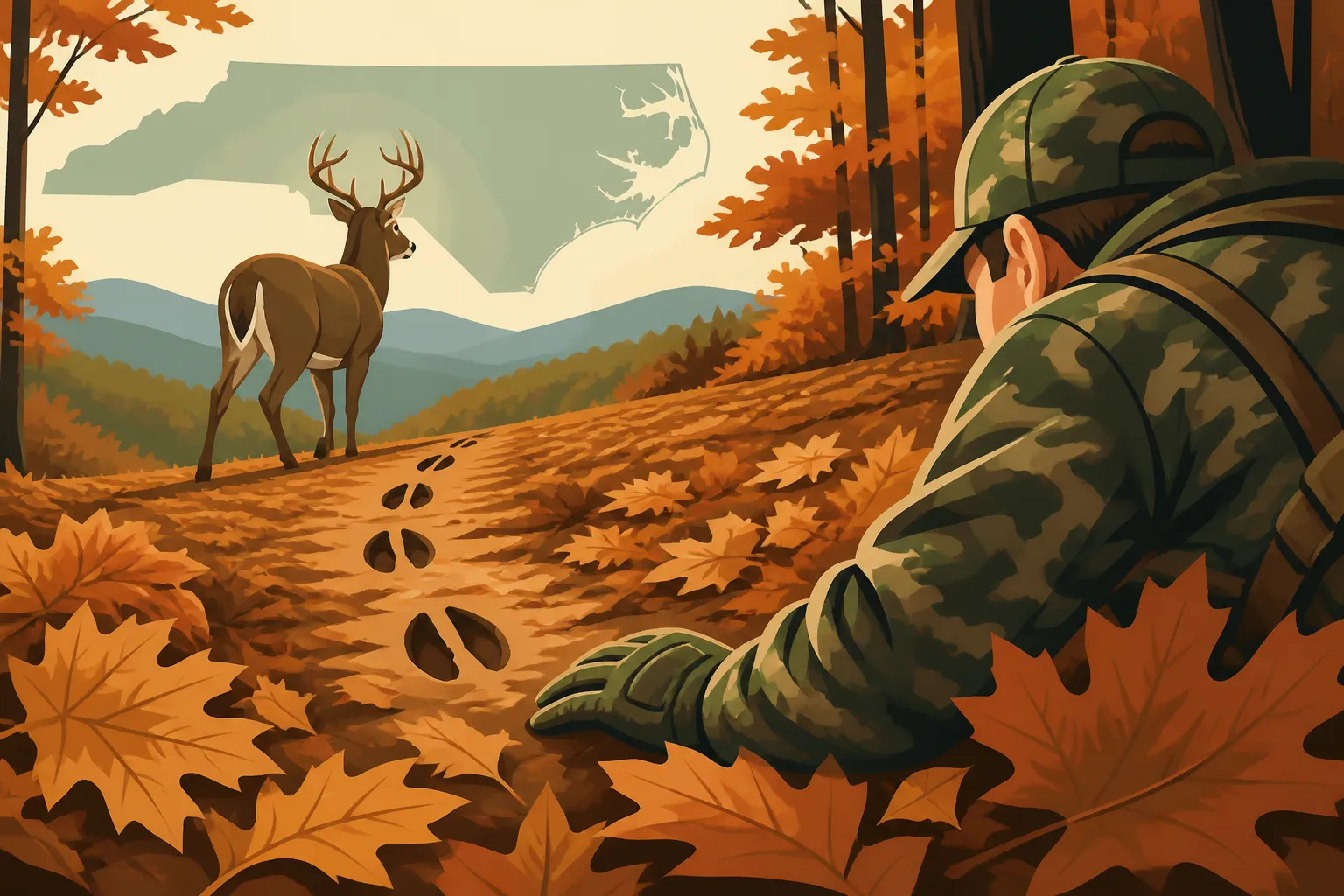
- Subtle Disturbances: Look for areas where leaves have been scuffed, pushed aside, or kicked up. A running deer will splay its hooves and dig in, churning the leaves more than a walking deer. You might see a deeper impression where a hoof broke through the leaf layer to the soft soil beneath. A deer will typically leave an impression, however faint, in soft ground. For a great resource on interpreting these subtle signs, check out our guide on Reading North Carolina Mud for Fresh Deer Movement.
- Track Patterns: If you can discern a track, note the direction of travel and the gait. Is it walking, trotting, or bounding? A bounding deer will often leave two sets of prints close together, then a gap.
- Scrapes and Rubs: While less direct than tracks, fresh scrapes and rubs might indicate a general area a buck frequents, but don't confuse these with signs of a wounded animal unless they are clearly tied to a blood trail or a fresh disturbance.
Broken Twigs, Hair, and Other Subtle Clues
Sometimes, the best clues aren't blood or tracks at all. Deer leave behind a myriad of other signs that, when pieced together, can form a clear picture of their path.
- Hair at the Impact Site: Go back to your shot location. Scour the ground for hair. The color and length of the hair can indicate where the deer was hit. Dark, coarse hair often comes from the back or neck. Fine, light-colored hair suggests the belly. Long, white hair indicates a hit low on the brisket or leg. If you find short, stiff hairs with a dark shaft and white tips, it's likely hide hair, confirming a hit.
- Broken Vegetation: Look for broken twigs at various heights, not just on the ground. A deer running through dense brush might snap branches at chest height. Scraped bark, disturbed moss on rocks, or bent-over saplings can all indicate a path.
- Scent: While not always reliable or detectable by humans, a wounded deer can give off a distinct musky odor, especially if gut-shot. Experienced trackers or trained dogs might pick up on this. If you encounter a strong, unpleasant smell, you might be very close to a gut-shot deer.
Systematic Grid Searching and Expansion
The trail often disappears. It's a frustrating reality for hunters, but it doesn't mean the deer is lost. This is when systematic searching becomes paramount. Don't just wander aimlessly.
Establishing a Grid Pattern
When the blood or track trail peters out, you need a plan. The most effective method is to use the "last blood" or "last sign" as your central point and work outwards.
- The Circle Search: From your last confirmed sign, establish a mental or physical circle around that spot, starting small (e.g., a 10-yard radius) and gradually expanding. Walk the perimeter, looking for any new sign. Then, crisscross through the circle.
- The Grid Search: If you have multiple people, a grid search is incredibly effective. Line up 5-10 yards apart, depending on cover density, and slowly walk in a predetermined direction, sweeping the area. Each person is responsible for their lane, meticulously examining the ground. When one person finds sign, everyone converges, confirms the direction, and then restarts the grid from that point. This systematic approach ensures no ground is left unchecked. Often, a fresh set of eyes can spot a clue you've missed.
- Anticipate Deer Behavior: Think like a deer. Where would it go if it were wounded? Deer often gravitate towards dense cover, thickets, water sources, or familiar bedding areas. If you're hunting in mountainous terrain, remember that a wounded deer often goes downhill. In the Piedmont, they might head for a creek bottom or a dense clear-cut. If you’re hunting in a prime buck area, they might head towards areas like those described in Where Nantahala Forest Bucks Bed.
Utilizing Technology and Tools
Modern technology can be an invaluable asset in tracking, helping you mark progress and stay oriented, especially in vast areas or diminishing light.
- GPS and Mapping Apps: A reliable GPS device or a smartphone app like GoHunt is essential. Use it to mark every single piece of blood or sign you find. This creates a virtual breadcrumb trail, allowing you to see your progress, where the trail might have veered, and where you've already searched. The ability to drop pins quickly and accurately can save hours of re-searching. The NC Wildlife App also offers useful maps for game lands, which can help you understand the terrain.
- Optics: Binoculars aren't just for spotting deer from a stand. They can be incredibly useful for scanning ahead, especially when the cover opens up slightly, to spot a downed deer or a splash of color from a distance.
- Lighting: A powerful headlamp or flashlight is non-negotiable, even if you start tracking in daylight. Daylight fades, and tracking can take hours. A bright beam can illuminate blood, making it stand out against leaf litter, and some hunters swear by specialized tracking lights or UV lights that are designed to make blood glow (though results can vary).
Overcoming Obstacles: Water, Thickets, and Dense Cover
North Carolina's landscape is diverse, and deer are masters at using terrain to their advantage, especially when wounded.
- Water Crossings: Deer often head for water to escape predators or hide their scent. If the trail leads to a creek, pond, or swamp, assume the deer crossed. Walk up and down both sides of the water for a hundred yards or more, looking for exit tracks, mud churned on the bank, or any sign the deer climbed out. In the coastal plain, this often means pushing through incredibly dense areas, similar to what you’d face when Hunting Coastal Plain Pocosin Swamps or trying to execute a Recovering a Deer From a Coastal Swamp.
- Thickets and Briar Patches: These are classic bedding areas for wounded deer. Don't shy away from them. These areas can be frustrating to navigate, but they are exactly where a deer might choose to hunker down. Approach them slowly and systematically, looking for a bedded animal or new blood sign within the dense vegetation. Remember to use a long stick or pole to push through safely.
- Dense Regenerating Timber: Fresh clear-cuts or pine plantations are brutal to walk through but offer perfect sanctuary for a wounded deer. They will often seek refuge in the thickest part. These areas demand the most patience and the most thorough grid searching. Also consider the topography; if you are Reading a Ridge for Mountain Zone Deer, you might anticipate a wounded animal moving along the contours or towards a deep drainage.
When to Call for Help and Preserve the Scene
Knowing your limits and when to call in reinforcements is a sign of a responsible hunter. It can significantly increase your chances of finding that deer.
Knowing When to Enlist Professional Trackers
Sometimes, despite your best efforts, the trail just goes cold. This is when outside help can be invaluable.
- Tracking Dogs: North Carolina allows the use of leashed tracking dogs for wounded big game. If you've lost the trail, search online for local tracking dog services. These dogs are specially trained to follow faint scent trails and can often pick up on a trail that a human would never find, especially after a long wait or in challenging conditions. They are often the difference between a lost deer and a recovered one.
- Experienced Hunters: Don't hesitate to call on experienced hunting buddies or mentors. Fresh eyes, especially those not clouded by the initial adrenaline and frustration, can often spot something you've completely missed. Two (or more) heads are always better than one on a tough track. For those difficult scenarios, especially when darkness falls, having extra help for a Blood Trailing After Dark in North Carolina situation is not just helpful, it's safer.
- North Carolina Wildlife Resources Commission (NCWRC): While not typically offering tracking services, the NCWRC is a valuable resource for regulations and advice. If you have questions about legalities or specific scenarios, they are the authority.
Preserving the Scene and Marking Your Progress
Throughout your tracking efforts, it's critical to avoid contaminating the trail and to document your progress.
- Avoid Over-Trafficking: Try to designate one or two primary trackers to follow the actual trail. Other members of your party should walk parallel, or wait for directions, to avoid trampling potential signs.
- Flagging Tape and Markers: Carry a roll of bright flagging tape, biodegradable toilet paper, or bright clothespins. Mark every single piece of blood, every disturbed patch of leaves, every definitive track you find. Place the markers on either side of the trail, pointing in the direction of travel. This allows you to easily see your progress, know where the last sign was if you lose it, and gives you a clear path to follow.
- Documentation: Take photos of distinctive blood patterns, tracks, or hair at the impact site. This can be helpful if you need to show someone else the situation or if you're trying to piece together a difficult trail later.
- Know When to Back Out: If daylight is fading, or heavy rain is setting in, sometimes the best decision is to back out, mark your last sign clearly, and return in the morning. This is especially true for gut-shot deer, as giving them more time overnight is almost always beneficial. You don't want to be caught deep in the woods in the dark, trying to recover a deer and risking getting lost or injuring yourself. Once you recover your deer, remember to follow North Carolina Deer Reporting Requirements. After you've successfully recovered your animal, you'll need to consider how to manage the meat, especially if it's during the colder months, by reviewing tips on Field Dressing a Deer in Cold Weather. Furthermore, if your hunt takes place within one of North Carolina's Chronic Wasting Disease Areas, understanding the specific guidelines for carcass handling and testing is crucial to help prevent the spread of this serious deer disease. It's all part of the responsible hunting ethic.
Best Practices for North Carolina Deer Tracking
To make your tracking efforts as effective as possible, here are some practical tips compiled into a quick reference table:
| Scenario / Clue | Best Practice | What it Indicates (Likely Shot) |
|---|---|---|
| Initial Shot | Mark exact shot location, last seen point, and direction of travel with flagging. | Vital first steps for any tracking. |
| Waiting Period | Heart/Lung: 30-60 min. Liver/Gut: 4-12+ hours (overnight preferred). Muscle/Leg: 30-60 min. Listen for sounds. | Prevents pushing the deer, allows animal to expire or bed down. |
| Blood – Frothy, Bright | Look meticulously on ground, leaves, bark, brush. Use a flashlight even during day. Mark each spot. | Lung shot (good sign, often shorter trail). |
| Blood – Dark, Thick | Slow, methodical search on hands and knees. Check underside of leaves, low brush. | Liver shot (lethal, but longer time to expire). |
| Blood – Green/Brown | Requires the longest wait. Mark initial sign and back out. Return much later with a fresh perspective. | Gut shot (lethal but requires significant time for the animal to expire and stiffen). |
| Scrapes/Disturbed Leaves | Look for overturned leaves, soil impressions, splayed tracks. Pay attention to direction of displaced material. | Indicates path of travel, especially when blood is scarce or absorbed by leaf litter. |
| Broken Twigs/Hair | Examine impact site carefully for hair. Scan brush along trail at different heights for broken branches. | Hair indicates hit location (e.g., white = low brisket, coarse = back). Broken twigs show path through dense cover. |
| Lost Trail | Go back to last confirmed sign. Establish a grid or circle search pattern. Expand slowly. Use GoHunt or GPS to mark progress. | Prevents aimless wandering and ensures thorough coverage. |
| Water Crossing | Assume deer crossed. Walk both banks (up and down 100+ yards) to find exit points. | Deer use water to escape or hide scent. |
| Thick Cover | Don't avoid dense thickets or clear-cuts. Approach slowly and meticulously, using optics to scan ahead. | Wounded deer often seek the densest cover to bed down. |
| Nightfall/Bad Weather | Mark the last sign clearly, back out, and return in the morning (especially for gut shots). Use a powerful headlamp if continuing. | Preserves the trail, allows more time for the deer to expire, ensures hunter safety. |
| Calling for Help | Contact professional tracking dog services (if trail is cold). Call experienced hunting partners for fresh eyes and systematic search. | Increases recovery chances significantly, especially for challenging tracks. |
| Post-Recovery | Remember to legally check your deer and comply with North Carolina's game laws. Handle venison properly, especially in warmer weather or if processing at home. | Ensures legal compliance and proper meat care. |
Whether you're Hunting Into the January First Close or dealing with the early season's warmer temperatures, these methods are crucial for a successful outcome. The challenge of a lost trail can be daunting, but with patience, systematic effort, and knowing when to ask for help, you can turn a frustrating situation into a rewarding recovery. It’s also important to consider how far the deer might have run if you're How Far to Walk From a Forest Road or other access points.
Disclaimer
The information provided in this guide is for general informational purposes only and does not constitute legal advice. Hunting regulations, licensing requirements, and specific rules regarding tracking methods (including the use of dogs) can change and vary by location. Always consult the most current regulations published by the North Carolina Wildlife Resources Commission (NCWRC) or other relevant authorities before engaging in any hunting activities. Adherence to all local, state, and federal laws is the sole responsibility of the hunter.