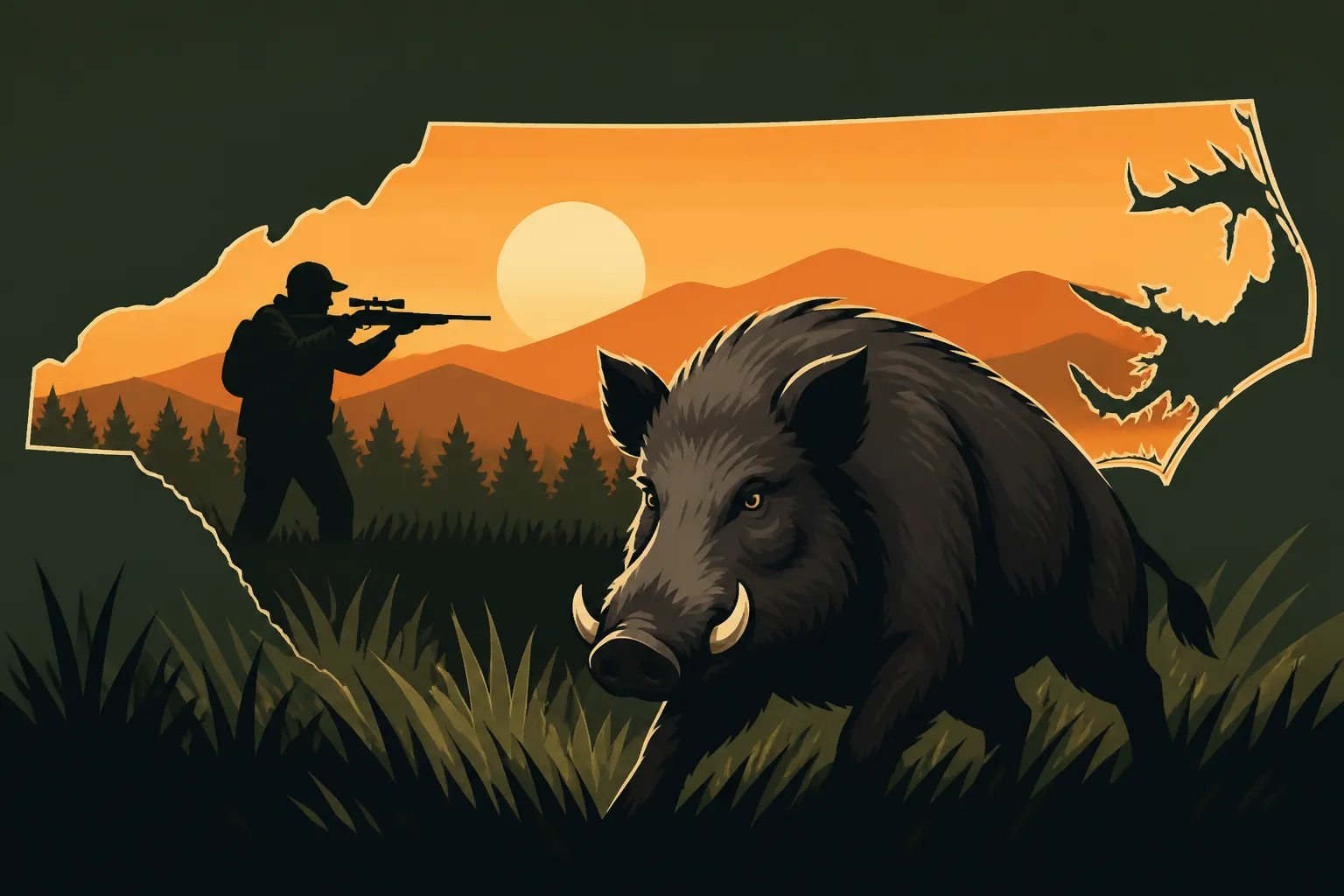
Hunting North Carolina’s Year-Round Feral Hogs
Few things are as disheartening to a North Carolina landowner or hunter as coming across a field utterly ravaged overnight, or finding a pristine hardwood bottom torn to shreds. Feral hogs are an undeniable and growing menace across our beautiful state, causing millions in agricultural damage, threatening native wildlife, and spreading diseases. If you're tired of seeing these destructive creatures take over, you're in the right place. This comprehensive guide will arm you with the knowledge and tactics needed to effectively pursue and manage North Carolina's year-round feral hog population.
Understanding the Feral Hog Problem in North Carolina
Feral hogs aren't just a nuisance; they're an ecological and economic disaster in waiting, and in many areas, already a full-blown crisis. Unlike our native deer or bear, they aren't considered game animals in the traditional sense. Instead, they're classified as a destructive, non-native invasive species that the North Carolina Wildlife Resources Commission (NCWRC) encourages hunters to remove at every legal opportunity.
Ecological Impacts on Native Wildlife and Habitat
Imagine a pristine stream bank, vital for native fish and amphibians, churned into a muddy mess. Or a critical nesting site for ground-nesting birds, like quail or turkeys, completely rooted up. This is the daily reality of feral hogs. Their rooting behavior, where they use their powerful snouts to dig for roots, tubers, and invertebrates, decimates plant communities, degrades soil quality, and causes severe erosion, especially near waterways. They compete directly with native wildlife, like deer, bear, and even squirrels, for vital food sources such as acorns, fungi, and insects. Furthermore, they are prolific breeders, with sows often having two litters a year, each containing 4-10 piglets, meaning their populations can explode in a short time, quickly overwhelming an ecosystem's carrying capacity. This unchecked growth puts immense pressure on our already delicate natural balance.
Agricultural Damage and Economic Losses
For farmers across North Carolina, feral hogs represent a direct threat to their livelihoods. These opportunistic omnivores will raid crops at all stages of growth, from newly planted fields to mature corn, soybeans, peanuts, and sweet potatoes. Their voracious appetites and destructive rooting habits can wipe out entire sections of a field in a single night. Beyond crop destruction, they damage irrigation systems, fences, and pasturelands, leading to costly repairs and reduced yields. The financial burden on farmers is substantial, often running into the tens of thousands of dollars for a single growing season. This economic pressure can be devastating for small family farms already operating on thin margins, forcing them to spend countless hours and resources on mitigation efforts, often with limited success. The continuous struggle against hog depredation becomes a significant stressor for those who depend on the land for their income.
Disease Transmission Risks
Beyond the physical damage, feral hogs are known carriers of numerous diseases that can affect livestock, wildlife, and even humans. Swine brucellosis, pseudorabies, leptospirosis, and toxoplasmosis are just a few examples. While many of these pose a greater risk to domestic animals, hunters handling infected carcasses without proper precautions can be exposed. The concern for livestock producers is immense; an outbreak of swine brucellosis or pseudorabies could decimate a hog farm and lead to strict quarantines and financial ruin. For deer and other wildlife, these diseases can weaken populations, making them more susceptible to other stressors. The NCWRC and the North Carolina Department of Agriculture and Consumer Services actively monitor these threats, and hunters play a critical role in disease surveillance by reporting unusual observations or sick animals, helping to keep our wild and domestic animal populations healthy.
North Carolina's Feral Hog Regulations and Legalities
Hunting feral hogs in North Carolina isn't like hunting deer or turkey; the rules reflect their status as an invasive pest. Understanding these regulations is crucial to staying legal and maximizing your effectiveness.
Year-Round Hunting and No Bag Limits
One of the most significant aspects of hunting feral hogs in North Carolina is that there is no closed season and no bag limit on private lands. This means if you have permission to hunt private property, you can pursue hogs 365 days a year, day or night, and take as many as you can. This incredibly liberal regulation underscores the state's urgent desire to reduce their numbers. On public lands, however, the rules are typically more restrictive. Feral hogs can usually only be hunted during the established open seasons for other game species (like deer or bear) in that specific game land or national forest. This is a crucial distinction to remember; always check the specific regulations for any public land you plan to hunt. The NCWRC wants these animals removed, and they give private landowners immense latitude to do so.
Private Land Versus Public Land Rules
The distinction between private and public land hunting for hogs is paramount. On private land, your flexibility is nearly limitless: no closed season, no bag limits, and often the ability to use methods like night hunting with lights, thermal imaging, and trapping, provided you have the landowner's explicit permission. This is where most effective hog control takes place. Many hunters find that focusing their efforts on getting private land permission in North Carolina is the most productive route for hog hunting. Conversely, hunting on North Carolina Game Lands and National Forests means you're generally restricted to the established hunting seasons for other game, and often traditional daylight hours. You must also adhere to specific rules regarding methods, such as the prohibition of baiting and certain types of trapping, as well as restrictions on night hunting. Always consult the specific game land regulations on the NCWRC website or map tool before heading out. Understanding these nuances can save you a lot of headache and potential legal trouble.
License Requirements and Reporting
Unlike traditional game animals, you generally don't need a separate "hog tag" or specific permit solely for feral hogs. However, if you are hunting them with a firearm or bow, you must possess a valid North Carolina Hunting Licenses and What They Cost. This includes a basic hunting license and, if hunting on game lands, a Game Lands License. If you're a non-resident, your North Carolina Nonresident Hunting License Options will also be necessary. For landowners hunting on their own property, specific exemptions might apply, but it's always best to verify with the NCWRC. Importantly, there are no mandatory reporting requirements for harvested feral hogs, further distinguishing them from species like deer or turkey where reporting is essential. While you don't have to report them, some hunters choose to participate in voluntary surveys if provided by the NCWRC, which helps biologists track population trends and impacts.
| Aspect | Private Land Feral Hog Hunting | Public Land Feral Hog Hunting |
|---|---|---|
| Season | Year-round, no closed season | Only during open seasons for other game (e.g., deer, bear) |
| Bag Limit | No bag limit | No bag limit (typically) |
| Hunting Hours | Day or night (with landowner permission and proper lighting) | Generally daylight hours only |
| Methods | Still-hunting, stalking, trapping, night hunting, dogs, baiting (with permission) | Still-hunting, stalking; baiting & trapping often prohibited |
| Required License | Valid NC Hunting License (unless landowner exemption applies) | Valid NC Hunting License & Game Lands License |
| Reporting Harvest | Not mandatory | Not mandatory |
| Permits | None specific to hogs (beyond general hunting license) | None specific to hogs (beyond general hunting license & game lands permit) |
Scouting for North Carolina Feral Hogs
Successful hog hunting, especially consistently successful hog hunting, starts long before you ever step foot in the woods with a weapon. It begins with diligent, strategic scouting. Hogs are masters of adapting and disappearing, so knowing how to read their sign is paramount.
Identifying Fresh Hog Sign and Travel Corridors
When you're out scouting for hogs, you're essentially looking for evidence of their destructive existence. Fresh sign is key. Rooting, where they've dug up the ground, is perhaps the most obvious. Look for fresh, overturned soil, indicating recent activity. Wallows are another major giveaway – muddy depressions where hogs cool off and coat themselves in mud to deter parasites. Tracks are often larger and rounder than deer tracks, with more splayed toes. Often, the dewclaws will be more prominent and leave deeper impressions than a deer's, especially in soft ground. Rubs on trees, fence posts, or even power poles, usually stained with mud or hair, indicate a hog's scratching post. Look for these signs along creek bottoms, field edges, thick cover, and dense swamps. Hogs are creatures of habit and will often use the same travel corridors repeatedly between bedding areas, feeding grounds, and water sources. These corridors will show compacted earth, scattered tracks, and often even some rooting along the edges. Using a mapping application like GoHunt can help you mark these signs and corridors, creating a detailed picture of hog movement over time.
Utilizing Trail Cameras and Thermal Imaging
Trail cameras are an invaluable tool for hog hunters, providing intelligence without direct human presence. Place cameras along suspected travel routes, near fresh rooting, active wallows, or at entry points to food sources. Hogs are often most active during low light or nighttime hours, so cameras with good infrared capabilities are a must. Pay close attention to the time stamps on your photos to establish patterns of movement. Are they showing up consistently at certain times? Are they solo boars or sounders (groups) of sows and piglets? This information helps you plan your ambush. For night hunting, thermal imaging is a game-changer. Hogs give off a significant heat signature, making them relatively easy to spot even in complete darkness or dense cover. A good thermal monocular can help you locate animals from a distance, assess their numbers, and plan a strategic stalk or ambush when conditions are right. While traditional night vision amplifies existing light, thermal imaging detects heat, providing a distinct advantage for after-dark hog control.
E-Scouting and Understanding Preferred Habitat
Before you even leave your couch, e-scouting can give you a massive head start. Using satellite imagery on platforms like GoHunt, you can identify potential hog hotspots from above. Look for areas with dense, impenetrable cover adjacent to food sources like agricultural fields or oak flats. Creek bottoms, swampy areas, and thickets of briars or regenerating clearcuts are prime bedding and travel areas. Hogs love water, so trace creeks, rivers, and drainage ditches. Swamps and pocosin areas, common in North Carolina's Coastal Plain, offer ideal refuge and forage. For instance, knowing how to interpret aerial photos for Piedmont deer can also reveal prime hog habitat in those areas. Once you've identified potential areas through e-scouting, ground-truthing those spots can either confirm your suspicions or lead you to new, unexpected opportunities. Remember, hogs adapt to pressure, so finding overlooked, thick cover is often key.
Hunting Methods for North Carolina Hogs
With hogs being such a persistent problem, a variety of hunting methods have proven effective. The best approach often depends on the terrain, time of day, and whether you're on private or public land.
Still-Hunting and Stalking in Thick Cover
Still-hunting involves moving slowly and deliberately through an area, stopping frequently to scan and listen. This method is highly effective in thick cover where hogs like to bed, such as pine plantations, dense pocosin swamps, or brushy creek bottoms. The key is extreme stealth. Hogs have an incredible sense of smell and good hearing, though their eyesight is relatively poor. Hunt into the wind, take small, quiet steps, and use natural cover to break up your outline. Stalking is similar but more targeted, often initiated once you've spotted or heard hogs from a distance. It requires precise movement and careful attention to scent and wind direction. In areas with significant hunting pressure on North Carolina public land, hogs become even more reclusive, making stealthy still-hunting crucial. You'll need durable clothing that can withstand briars and thorns, as hogs will often be found in the nastiest, most overgrown spots.
Ambushes Over Food and Water Sources
Hogs are driven by food and water, making these locations prime spots for an ambush. If you've identified a heavily rooted field edge, a frequently used wallow, or a reliable water source through your scouting, setting up an ambush can be highly productive. This often involves using a ground blind or a treestand, especially if you're targeting areas like a standing cornfield in farm country. Position yourself downwind, and ensure you have a clear shot lane to where you expect the hogs to appear. Early morning and late evening are often the best times, though hogs can be active at any time, particularly if pressured. In agricultural areas, securing permission from a farmer to hunt over their damaged fields can provide excellent opportunities. Consider placing your stand or blind where you have good visibility but also a quick entry and exit route without disturbing the area. When considering hunting a funnel between two pocosins, these can be natural ambush points for hogs moving between feeding and bedding areas.
Trapping North Carolina Feral Hogs
While not traditionally considered "hunting" in the common sense, trapping is arguably the most effective and efficient method for reducing feral hog populations, especially on private land. The goal of trapping is typically to catch multiple hogs from a sounder at once. This involves setting large, sturdy traps, often corral-style, with a "rooter" gate that allows hogs to enter but not exit. Baiting with fermented corn is extremely effective, as hogs are highly attracted to it. The key to successful trapping is patience and pre-baiting. Continuously bait the trap with the gate open for several days, allowing hogs to become comfortable entering and feeding freely. Once you're consistently getting hogs on your trail camera inside the trap, then you set the gate. Trapping requires significant investment in equipment and time, but the results can be remarkable, often removing entire sounders of 10 or more hogs in a single catch. Always check North Carolina Feral Hog Regulations for any specific rules regarding trap placement or type.
Night Hunting with Lights and Thermal
Given that hogs are largely nocturnal, night hunting can be incredibly effective, particularly on private lands where regulations allow it. This method typically involves using powerful spotlights, green or red hunting lights, or thermal imaging devices. The advantage is that hogs feel safer under the cover of darkness and may move more freely in open areas that they would avoid during the day. When night hunting with lights on private land, ensure you have explicit permission from the landowner and are aware of any local ordinances. Safety is paramount; always positively identify your target and know what's beyond it. Thermal imaging, as mentioned earlier, truly excels in night hunting scenarios, allowing hunters to spot hogs from hundreds of yards away, even in heavy brush, giving them a significant tactical advantage for a planned stalk or ambush.
Essential Gear and Equipment for Hog Hunting
Just like any other hunting pursuit, having the right gear can make or break your hog hunting experience. Hogs are tough animals, and the environments they inhabit are often equally challenging.
Firearms and Ammunition Choices
For North Carolina feral hogs, you need a firearm that delivers ample knockdown power. Hogs, especially large boars, can be incredibly tough and dangerous if merely wounded. Rifle calibers commonly used for deer, such as .270, .30-06, .308, or 6.5 Creedmoor, are excellent choices. Many hunters also favor AR-platform rifles in calibers like .223/5.56 (with appropriate bullet choice for hogs) or .300 Blackout, especially for their quick follow-up shot capability when facing a sounder. For close-quarters hunting in thick cover, shotguns loaded with slugs or buckshot can also be highly effective. The key is shot placement and using a bullet designed for penetration and energy transfer. If using a bow, ensure your bow draw weight for North Carolina whitetails is sufficient for deeper penetration, and opt for robust fixed-blade broadheads or strong mechanicals with a wide cutting diameter. Remember, ethical hunting demands a quick, clean kill, and hogs require a serious punch.
Optics for Day and Night
Good optics are critical for hog hunting. For daylight hunting, a reliable rifle scope with a magnification range suitable for both close-quarters and longer shots (e.g., 1.5-6x or 3-9x) will serve you well. Binoculars, 8×42 or 10×42, are essential for spotting hogs in dense cover or across fields. Rangefinders are also valuable, especially if you're hunting in varied terrain or open agricultural fields. For night hunting, the discussion shifts significantly. As discussed, thermal imaging devices are the gold standard, allowing you to detect hogs by their heat signature. Night vision optics, which amplify ambient light, are another option, though typically less effective than thermal in dense foliage or complete darkness. Whether you're using a scope for your rifle or a monocular for scanning, investing in quality optics will greatly increase your chances of success during the challenging conditions often encountered during hog hunts.
Calls, Traps, and Specialty Gear
While hog calling isn't as prevalent as deer or turkey calling, some hunters use distress calls or pig squealers to try and lure hogs into range, especially curious boars. More commonly, if you're serious about control, you'll be investing in traps. Large corral traps, panel traps, and drop traps are all effective, but they represent a significant upfront investment. Trapping North Carolina feral hogs requires a commitment to checking traps regularly and humanely dispatching captured animals. Beyond that, consider practical gear: durable rubber boots are indispensable for navigating wet, muddy creek bottoms and swamps, especially when Hunting Coastal Plain Pocosin Swamps. Good headlamps are crucial for navigating in low light or darkness, and a sturdy pack to carry your gear, water, and potentially game bags for meat, is a must. If you're going to use dogs, which is legal in many areas, you'll need specialized gear for them, including protective vests and GPS collars.
Field Care and Processing Your North Carolina Hog
Congratulations on taking down a hog! Now comes the critical part of turning your harvest into usable meat and ensuring proper sanitation, especially given the disease risks.
Quick Field Dressing and Cooling the Carcass
Hogs can carry diseases, and their meat can spoil quickly, especially in warmer North Carolina temperatures. Therefore, rapid field dressing and cooling are paramount. As soon as the hog is down, get to work. Gutting the animal quickly removes the internal organs, which are a major source of heat and bacteria. Be cautious during this process; wear gloves and avoid direct contact with blood and internal fluids, especially if you have cuts or open wounds. Once field dressed, if possible, get the hog to a cooler or even into a water source (like a creek) to begin cooling the carcass rapidly. If you're far from your vehicle, consider using the "gutless method" to debone the hog and pack out the meat in game bags, similar to how one might approach field dressing a deer in cold weather in the mountains. The goal is to reduce the body temperature as quickly as possible to prevent bacterial growth and ensure the meat is safe and delicious.
Butchering for Consumption and Safety Tips
Once you've cooled the carcass, whether whole or quartered, it's time for butchering. Feral hog meat is lean and flavorful, similar to domestic pork but often gamier. Process the meat into cuts like roasts, chops, and ground meat. Given the disease risks, it's always advisable to cook feral hog meat thoroughly to an internal temperature of at least 160°F (71°C) to kill any potential pathogens like trichinosis or brucellosis. Wearing gloves throughout the butchering process is a good habit. Clean all your tools and work surfaces thoroughly with hot, soapy water and a bleach solution afterward. Pay particular attention to lymph nodes, which appear as small, bean-shaped glands, usually embedded in fat in areas like the groin or armpits. If you notice any abnormalities, unusual lesions, or suspicious growths on the organs or in the meat, it's best to discard that portion or consult with local wildlife officials.
Utilizing All Parts and Ethical Disposal
Feral hogs are not native, and their removal is a service to the ecosystem. While you should absolutely utilize the meat if it's healthy, some hunters might find themselves with more hogs than they can reasonably consume, especially after a successful trapping operation. In such cases, ethical disposal is important. This means burying the carcass deep enough to prevent scavengers from digging it up, or taking it to a designated disposal site if one is available. Never simply dump carcasses where they can attract more hogs or create a public health nuisance. Some organizations accept donated venison in North Carolina, and while specifically for deer, they might have programs or advice for hog donations as well. Always check local guidelines. Taking the time to properly process and dispose of your harvest demonstrates respect for the animal and the environment, even when dealing with an invasive species.
Hog Hunting Across North Carolina's Diverse Terrain
North Carolina is a state of incredible topographical diversity, from the high mountains to the expansive coastal plains. Feral hogs have adapted to thrive in almost all of it, though their tactics will change based on the region.
Mountain and Foothill Hog Hunting
While the Piedmont and Coastal Plain have historically seen higher hog numbers, the mountains and foothills are increasingly grappling with feral hog populations. These areas present unique challenges and opportunities. Hogs here often favor steep, timbered slopes, dense rhododendron thickets, and remote creek bottoms where they can find acorns and seclusion. Scouting involves looking for sign along old logging roads, around mast-producing oak ridges, and near water sources. Hunting in the mountains often means covering significant ground on foot, similar to still-hunting Nantahala Forest ridges for deer. Hunters might focus on natural funnels, saddles, and benches. While some areas, especially around the Pisgah National Forest Hunting region, are remote, hogs are still expanding their range, making it crucial for hunters to be vigilant.
Piedmont Farmland and Woodlot Strategies
The Piedmont, with its mix of agricultural fields, hardwood forests, and suburban sprawl, is a complex environment for hog hunting. Here, hogs often thrive in fragmented habitats, using dense woodlots and creek bottoms as cover during the day and raiding adjacent corn or soybean fields at night. Securing permission to hunt small private tracts in North Carolina, especially those bordering larger tracts of timber or water, can be incredibly productive. Hunters will often employ ambush tactics from treestands or ground blinds set up along field edges or known travel corridors between feeding and bedding areas. The key to Hunting Piedmont Farmland Deer also applies to hogs: understand their movements between food, water, and cover. Trail cameras are particularly useful here to pinpoint when and where hogs are entering fields. Rattling and grunting in North Carolina, typically used for deer, can sometimes pique the curiosity of a boar, though it's less reliable for hogs.
Coastal Plain Swamps and Pocosins
Perhaps the most iconic—and challenging—hog hunting in North Carolina takes place in the vast, dense pocosins and swamps of the Coastal Plain. These impenetrable thickets, often characterized by standing water, dense cane, and thorny vegetation, provide ideal sanctuary for hogs. Animals here can grow to impressive sizes, with ample food and minimal pressure. Hunting Coastal Plain Pocosin Swamps demands specialized gear: chest waders, a good GPS unit or app (like GoHunt, for its detailed topo maps), and a willingness to work incredibly hard. Often, hunters will still-hunt the edges of these pocosins or try to intercept hogs moving along higher ground "islands" within the swamp. The use of hunting dogs is also more common and effective in these environments, as they can track and bay hogs in cover where human movement is severely restricted. When considering North Carolina's Black Bear Population, these same pocosin areas are often prime habitat for them too, demonstrating the richness and wildness of the landscape, but also the challenges it presents to hunters.
Sandhills Region and Longleaf Stands
The Sandhills region, with its unique longleaf pine savanna ecosystem, also presents opportunities for hog hunting. While less dense than the Coastal Plain swamps, the Sandhills still offer vast tracts of pine forests interspersed with thick underbrush and creek drainages. Hogs here will often utilize the dense cover for bedding and root around the base of the longleaf pines and in creek bottoms for food. Controlled burns, a common management tool in longleaf ecosystems, can temporarily displace hogs but also create new food sources in the regenerated vegetation, which hogs will quickly exploit. Hunters might focus on the edges of these burn areas or along the more fertile creek bottoms. The open nature of some longleaf stands can allow for longer shots, making a well-sighted rifle setup for North Carolina deer hunting just as effective for hogs.
Disclaimer
Hunting is an inherently dangerous activity. Always prioritize safety, understand and follow all North Carolina Wildlife Resources Commission regulations, and obtain proper landowner permission before hunting. The information provided in this guide is for informational purposes only and should not be considered legal advice. It is the individual hunter's responsibility to be fully aware of all applicable laws and regulations.