Bowhunting North Carolina’s Statewide Archery Season
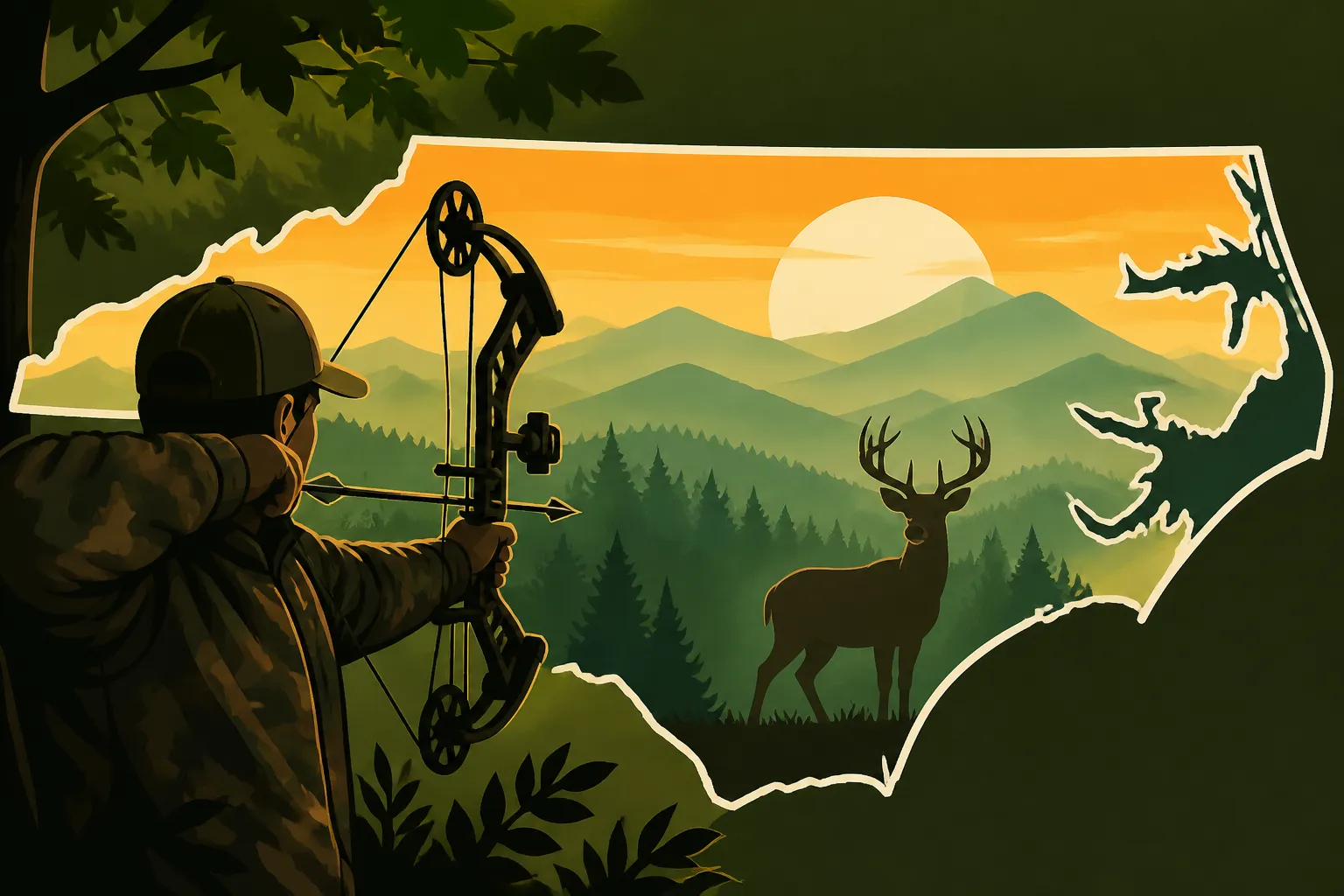
There's nothing quite like the feeling of having a deer nearly under your stand, the soft thud of the arrow leaving the string, and the quiet satisfaction of a clean shot. But let's be honest, bowhunting in North Carolina isn't always that serene, picture-perfect moment. Our diverse landscapes, from the thick coastal pocosins to the steep mountain coves and the dense Piedmont woods, present unique challenges. It takes planning, patience, and the right strategies to consistently find success. This comprehensive guide will walk you through everything you need to know to make the most of North Carolina's statewide archery season, from understanding the regulations to advanced tracking techniques.
Understanding North Carolina's Archery Season Structure
North Carolina's archery season is a fantastic opportunity for hunters to get out into the woods before the roar of gun season begins, offering a more intimate hunting experience. However, understanding the nuances of the season dates, zones, and equipment regulations is absolutely crucial for staying legal and maximizing your time afield. It's not as simple as just grabbing your bow and heading out; there are specific rules that vary depending on where you plan to hunt.
Statewide Season Dates and Zones
For most of North Carolina, the statewide archery season kicks off in early September, providing a generous window before the muzzleloader and gun seasons open up. This early start, often around the second Saturday of September, allows archers to capitalize on deer patterns that haven't yet been heavily influenced by hunting pressure. Deer are still largely in their summer patterns, focused on reliable food sources and comfortable bedding areas, which can be a real advantage if you've done your homework. However, the exact opening and closing dates can subtly shift each year, so always double-check the North Carolina Wildlife Resources Commission (NCWRC) regulations handbook or their website for the most current information.
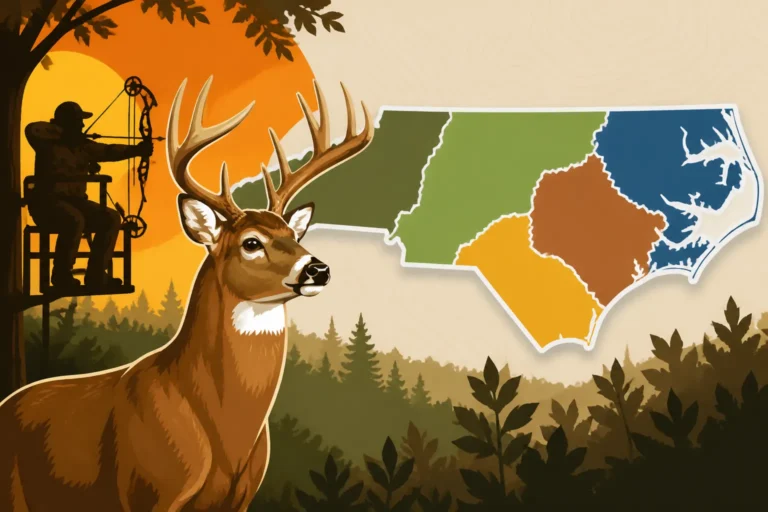
What's really important to grasp is that while it's a "statewide" season, deer season in North Carolina is segmented into four distinct zones: Eastern, Central, Western, and Northwestern. While the archery equipment itself is legal statewide during the archery season dates, the deer season structure for each zone dictates the overall timeframe you can hunt deer. For instance, the Eastern and Central Zones often have earlier gun openers, meaning your archery-only window might be shorter than in the Western Zone, which opens much later for firearms. This staggered approach is designed to manage deer populations effectively across varying habitats and population densities. Knowing which zone your hunting spot falls into is paramount, as it determines your entire season calendar. This early season also provides unique opportunities to scout specific areas like those outlined in Hunting the Rut in the Eastern Zones or Hunting the Rut in the Western Zone, giving you a head start on understanding deer behavior before the frenzy begins.
Crossbow Regulations and Opportunities
For many years, crossbows were a point of contention among traditional archers, but North Carolina has embraced them, allowing their use throughout the entire statewide archery season for all hunters. This is a huge benefit for those who might have physical limitations, struggle with traditional bow draw weights, or simply prefer the added stability and longer effective range a crossbow can offer. You no longer need a special permit or a doctor's note; if it's archery season, and you have a valid hunting license, you can hunt with a crossbow.
The integration of crossbows has opened up bowhunting to a broader demographic, which is fantastic for hunter recruitment and retention. For folks who previously thought bowhunting was out of reach due to shoulder injuries or just the sheer learning curve of a compound or recurve, a crossbow provides a viable and effective alternative. It offers rifle-like accuracy out to moderate distances, often around 40-60 yards, depending on the setup and shooter proficiency. This can be a game-changer when you're perched in a stand, and that big buck just hangs up a little further than you'd like. However, remember that while crossbows extend your range, they still require the same ethical considerations as any other archery equipment. Understand your effective range, practice diligently, and only take shots you're confident in. For more details on specific equipment, see Crossbow Rules During North Carolina Archery Season.
Special Archery-Only Zones and Rules
Beyond the general statewide regulations, North Carolina also features specific "archery-only" zones, often found in more suburban or urbanized areas. These zones are typically created in places where discharging a firearm would be unsafe or illegal due to population density, but deer populations still need to be managed. They provide fantastic opportunities for local hunters who might not have access to large tracts of rural land. Think of areas around cities like Raleigh, Charlotte, or Greensboro, where greenways, nature preserves, or larger privately owned parcels might be designated as archery-only.
Hunting in these special zones usually comes with additional, stricter rules that you absolutely must adhere to. These might include specific setback distances from buildings, limitations on baiting, or even mandatory hunter sign-in/sign-out procedures. Sometimes, these areas even have unique antlerless-only days or specific quota hunts to control local herd numbers more precisely. The beauty of these zones is that they often hold a surprising number of deer, as they experience less pressure overall than many general season areas. Before you even think about stepping foot in one of these areas, head straight to the NCWRC website or local government offices to get the precise rules, boundary maps, and any required permits. Missing a detail here could lead to hefty fines or loss of hunting privileges.
Essential Bowhunting Gear and Setup for North Carolina
Preparing for North Carolina's diverse terrain and varied weather conditions requires a thoughtful approach to your bowhunting gear. It's not just about having a bow; it's about having the right bow, properly accessorized, tuned, and paired with arrows and broadheads that are up to the task. Every piece of equipment plays a role in your success and, more importantly, in making a clean, ethical kill. Skimping on the details here can lead to frustrating misses or, worse, wounded game.
Choosing the Right Bow and Accessories
The heart of your bowhunting setup is, naturally, your bow. In North Carolina, you have several options: compound bows, recurves, and traditional longbows are all legal. Most bowhunters today opt for a compound bow due to its let-off feature, which allows you to hold at full draw for a longer period with less strain, and its generally higher arrow speeds and flatter trajectories. When choosing a compound, consider your draw length and draw weight. A comfortable draw length is crucial for accuracy, and a draw weight that you can consistently pull and hold without struggling will improve your shooting form and reduce fatigue. Many modern compounds offer a wide range of adjustability, making them versatile for different hunters and situations.
Beyond the bow itself, a suite of accessories completes your setup. A good sight, whether a fixed pin or a multi-pin slider, is essential for aiming precision. For low-light conditions, many sights now come with rheostats or small lights to illuminate the pins. A quality arrow rest, like a drop-away, ensures consistent arrow flight, minimizing fletching contact with the bow. A stabilizer helps balance the bow and absorb vibration, making it more comfortable to shoot and reducing noise. Lastly, a sturdy quiver, whether attached to the bow or worn separately, keeps your arrows readily accessible and protected. Don't forget a release aid for compound bows; a smooth, consistent release is vital for accuracy. For more on this, you might explore options like Bow Draw Weight for North Carolina Whitetails.
Arrow and Broadhead Selection
Selecting the right arrows and broadheads is just as critical as choosing your bow. Arrows need to be properly spined for your bow's draw weight and length, ensuring they fly straight and true. Carbon arrows are popular for their durability, consistency, and lighter weight, which translates to faster speeds. When it comes to arrow weight, there's a balance to strike: heavier arrows carry more kinetic energy and momentum, leading to better penetration, while lighter arrows fly faster and flatter. For North Carolina's whitetails and black bears, a mid-to-heavy arrow setup (around 400-500 grains total) is generally a good choice, especially when factoring in the potential for bone impacts.
Broadheads are where the real work of harvesting an animal happens. You have two main categories: fixed blade and mechanical (or expandable). Fixed-blade broadheads are known for their ruggedness and reliability, offering consistent performance regardless of impact angle. They're a favorite for their simplicity and robust construction. Mechanical broadheads, on the other hand, fly more like field points, offering superior accuracy for many archers, and then deploy upon impact to create a larger cutting diameter. This larger cutting diameter can lead to more profuse blood trails and quicker recoveries. However, mechanicals can be susceptible to failure on extreme angles or heavy bone, and some require more kinetic energy to properly deploy. For North Carolina's deer, both types are highly effective when chosen and used correctly. My advice? Practice with both, see which flies best from your bow, and ensure your fixed blades are shaving sharp, and your mechanicals deploy flawlessly. To delve deeper, check out Fixed Versus Mechanical Broadheads.
Scent Control and Camouflage for Close Encounters
Bowhunting is a game of inches, and often, a game of noses. Deer possess an incredible sense of smell, far superior to ours, and they use it constantly to detect danger. This makes scent control an absolutely paramount aspect of bowhunting, especially when you're trying to get a deer within 20-40 yards. Simply walking into the woods in your everyday clothes is a recipe for deer blowing at you from a hundred yards away. You need to actively work to minimize your human odor.
This starts long before you even leave the house. Washing your hunting clothes in scent-free detergent, storing them in airtight containers, and showering with scent-free soap are all crucial steps. When you get to your hunting area, try to minimize sweating and use a scent-eliminating spray on your clothing and gear. Paying attention to the wind direction is perhaps the most critical component; no amount of scent control can completely fool a deer if the wind is blowing your scent directly towards them. Always try to hunt with the wind in your favor. As for camouflage, while not as vital as scent control, it helps break up your human outline. North Carolina's varied forests mean you might need different patterns depending on whether you're in dark pine thickets or open hardwood bottoms. Choose patterns that blend with the prevailing colors and textures of your hunting environment, and make sure your face and hands are covered to eliminate shine. Remember, for those close bow shots, blending in visually and olfactorily is key. Consider using specific products for Scent Control Gear for Humid Coastal Hunts.
Scouting and Locating Deer Before Season
Success in bowhunting, particularly in the challenging and often thick cover of North Carolina, isn't just about shooting well. It's largely about knowing where the deer are and understanding their patterns before you even pick up your bow. "Scouting" isn't a one-time event; it's an ongoing process of observation, analysis, and adaptation. Those who consistently fill their tags are often those who've put in the most legwork and strategic thought during the off-season and leading up to the opener.
Interpreting Aerial Maps and Topography
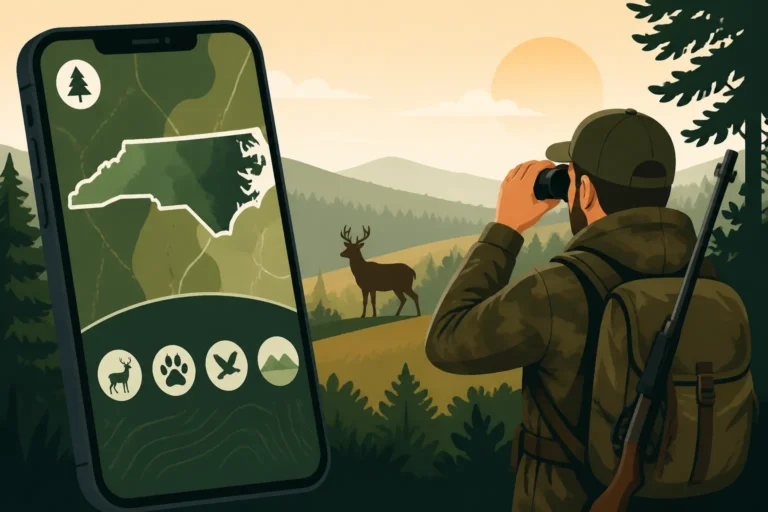
Before you ever set foot in the woods, the best scouting often begins from the comfort of your home, with a good aerial map and topographical overlay. Tools like GoHunt (and others such as onX Hunt or Gaia GPS) have revolutionized this process, giving hunters an incredible advantage. By looking at satellite imagery, you can identify potential bedding areas, often dense cover or thickets, and primary food sources like agricultural fields, oak stands, or clear-cuts. You can also spot natural funnels, pinch points, and travel corridors, such as creek bottoms, fence lines, or timber edges, that deer are likely to use when moving between food and bedding.
Topographical maps reveal elevation changes. Deer, especially in the mountains or rolling Piedmont, often prefer to travel along benches, saddles, or secondary ridges to conserve energy or gain a vantage point. Understanding these elevation features can help you predict where deer will move, especially when factoring in wind and thermals. For instance, a saddle between two ridges acts as a natural crossing point, while a bench on a steep hillside can be a major travel route. Identifying these features on a map allows you to prioritize areas for on-the-ground investigation, saving you countless hours of aimless wandering and putting you in high-probability spots right away. Reading a Ridge for Mountain Zone Deer is a great starting point for applying this knowledge.
On-the-Ground Reconnaissance
Once you've narrowed down potential hotspots on your map, it's time to hit the woods for some boots-on-the-ground reconnaissance. This is where you confirm your map-based theories and discover fresh sign that tells you deer are actively using an area. Look for rubs and scrapes, which are clear indicators of buck activity, especially as the pre-rut approaches. Scrapes, in particular, are essentially deer communication hubs where bucks check for estrous does and leave their scent. Fresh droppings and tracks are obvious signs of recent deer presence, and the size and frequency can give you an idea of the number and size of deer in the area.
Pay close attention to bedding areas. These are often in dense cover, thickets, or on the sunny side of a ridge in colder weather, or shaded, cooler spots in early season. Look for beds—flattened areas of leaves or grass. Once you've found bedding, try to identify the entry and exit trails. Then, find the primary food sources. This could be acorns dropping from oak trees, persimmons, honeysuckle, or agricultural crops like soybeans or corn. By connecting bedding, food, and the travel routes in between, you start to paint a clear picture of deer movement patterns. Remember, the goal isn't just to find deer, but to find predictable deer movement that you can intercept with your stand. Understanding Scrape Lines Along a Logging Road can be particularly helpful.
Trail Camera Strategies for Public and Private Land
Trail cameras are invaluable scouting tools that allow you to monitor deer activity 24/7 without being present. They provide objective data on deer numbers, buck quality, and movement patterns, especially nocturnal versus diurnal activity. When placing cameras, think about strategic locations. On public land, where cameras might be stolen or disturbed, focus on less obvious spots or those requiring a bit more effort to reach. Game trails leading to and from bedding or feeding areas, intersections of multiple trails, or isolated water sources are prime locations. Consider placing cameras over mock scrapes or mineral licks (if legal in your area) to attract deer and get inventory.
On private land, you have more flexibility. You can place cameras in obvious travel corridors, over food plots, or on known bedding edges. Pay attention to how the wind might carry your scent to the camera site when you're checking it. Always use a quality SD card and fresh batteries, and check cameras sparingly to minimize your disturbance. Reviewing the photos and videos will reveal patterns: when are the bucks moving? Are they diurnal or nocturnal? What does the buck-to-doe ratio look like? This information is gold, helping you determine optimal hunting times and stand locations. For more specific advice, check out Where to Hang a Camera on a Logging Road.
Effective Stand Placement and Setup Strategies
You've done your homework, scouted diligently, and know where the deer are moving. Now comes the critical step: putting yourself in a position to intercept them ethically and effectively. Stand placement is arguably the most crucial factor in bowhunting success, dictating your shot opportunities and your ability to remain undetected. A poorly placed stand, even in a high-traffic area, can quickly ruin your hunt.
Treestand Options and Safety
When it comes to elevating yourself for a better vantage point and to get above a deer's primary scent detection zone, you have several treestand options in North Carolina. Climbing stands are fantastic for mobile hunters, particularly on public land with straight, limbless trees, allowing you to move and adapt to changing deer patterns. Hang-on stands offer more versatility, as they can be used on a wider variety of trees, including crooked ones, but require separate climbing sticks or a ladder system for access. Then there are saddle hunting systems, which have gained immense popularity for their minimalist approach, lightweight portability, and 360-degree shooting angles around the tree. Each has its advantages and disadvantages depending on the terrain and your hunting style. For instance, in the thick hardwoods of the Piedmont, a hang-on with sticks might be ideal, while a saddle system could be perfect for a run-and-gun approach in the mountains.
Regardless of your chosen stand, safety is non-negotiable. Treestand accidents are a leading cause of hunting injuries. Always wear a full-body safety harness from the moment your feet leave the ground until they touch it again. Use a lifeline or a safety rope, especially when using hang-ons or saddles, to maintain constant contact with the tree. Inspect your stand and all straps/ropes before each season for wear and tear. Carrying a cell phone, a small first-aid kit, and letting someone know your exact location are also essential precautions. Your life is not worth a deer. More on Treestand Safety Gear for Steep Ground is available to ensure you stay safe out there.
Playing the Wind and Thermals
Deer rely heavily on their sense of smell, making wind direction the single most critical factor in bowhunting stand placement. You simply cannot consistently kill deer if your scent is blowing directly into their travel corridors or bedding areas. Always, always, always approach and hunt your stand with the wind in your favor, meaning your scent is blowing away from where you expect deer to approach. This often means having multiple stand locations for different wind directions, allowing you to hunt effectively regardless of the prevailing breeze.
Thermals, which are rising or falling air currents, come into play primarily in hilly or mountainous terrain, particularly during the early morning and late evening. As the sun rises, air warms and begins to rise (updrafts), carrying your scent uphill. In the evenings, as the air cools, it begins to fall (downdrafts), carrying your scent downhill. Understanding this dynamic is crucial for placing stands on ridges, saddles, or in draws. For example, an evening stand on a ridge might be best placed on the downwind side to avoid blowing scent into a draw below as thermals fall. Conversely, a morning stand might be higher up, anticipating rising thermals. Ignoring the wind and thermals is a guaranteed way to educate deer to your presence, especially on a Blue Ridge Slope.
Funnels, Pinch Points, and Transition Areas
Deer are creatures of habit and efficiency, and they will almost always take the path of least resistance or the safest route between two points. This is where identifying funnels, pinch points, and transition areas becomes incredibly effective for bowhunters. A funnel is any natural or man-made feature that concentrates deer movement into a narrow corridor. This could be a strip of woods between two large fields, a thin finger of timber extending into a clear-cut, or a creek bottom between two steep hillsides. These are high-traffic areas where your chances of intercepting a deer increase dramatically.
Pinch points are similar but often refer to specific, very narrow sections within a larger funnel. Imagine a thick briar patch that forces deer to walk a specific 10-yard wide opening, or a rock outcropping that narrows a game trail. Placing a stand right on these pinch points maximizes your shot opportunities, especially for those close bow shots. Transition areas, such as the edge between a mature timber stand and a clear-cut, or where an oak flat meets a pine thicket, are also prime spots. Deer often use these edges for travel, browsing, and even bedding. By understanding how deer navigate these landscape features, you can position your stand in the perfect spot to capitalize on their natural movements. Consider reading about Hunting a Funnel Between Two Pocosins for specific North Carolina examples.
Bowhunting Tactics During the North Carolina Rut
The rut is that magical, chaotic, and often frustrating time of year when deer behavior becomes more erratic and bucks, usually cautious, let their guard down in pursuit of does. For bowhunters in North Carolina, timing the rut and understanding its phases can be the difference between a challenging season and an unforgettable one. It's not a single event but a progression, and your tactics need to evolve with it.
Pre-Rut Movement and Scrape Lines
The pre-rut period, typically starting in late October and extending into early November in many parts of North Carolina, is a fantastic time for bowhunting. Bucks are beginning to feel the urge, rubbing their antlers on saplings and making scrapes, but they haven't yet locked down on does. This is a phase of increased exploration and searching. Bucks are expanding their home ranges, checking traditional scrape lines, and asserting dominance. Their movements become more widespread, and they are more likely to respond to calling.
During this phase, focus your efforts on active scrape lines, particularly those along field edges, old logging roads, or transition zones. These scrapes act as communication hubs, and bucks will regularly revisit them to check for signs of does. Setting up a stand overlooking a well-used scrape line, especially one with fresh rubs nearby, can be incredibly effective. Consider creating a mock scrape with a dripper that disperses doe estrus scent to peak a buck's curiosity. Bucks in the pre-rut are eager to establish their presence and often appear during daylight hours as they patrol their territory. Understanding Scrape Lines Along a Logging Road can give you an edge.
Peak Rut Aggression and Calling
The peak rut, usually in mid-November for much of North Carolina, is when does are in full estrus, and bucks are actively chasing. This is often when the biggest, most mature bucks become visible during daylight, throwing caution to the wind in their pursuit. Deer movement can be erratic and fast-paced, with bucks tirelessly dogging does. While it can be challenging to predict exact movements, this is the time to be in your stand as much as possible, from dawn till dusk.
During the peak rut, aggressive calling tactics can be incredibly effective. Rattling antlers can simulate two bucks fighting, often drawing in curious or territorial bucks looking for a challenge or an easy doe. Short, sharp grunts can stop a cruising buck or pique the interest of one tending a doe. Decoys, particularly a buck decoy or a doe decoy, can also be used to draw in bucks who are looking for competition or companionship. Positioning a decoy in an open field or clear-cut can bring a buck right into bow range. However, always be aware of other hunters when using decoys, especially on public land. Patience and persistence are key during the peak rut; the next big buck could be just around the corner, often responding to Rattling and Grunting in North Carolina.
Post-Rut Food Sources and Cover
As the peak rut winds down, typically in late November and early December, deer behavior shifts again. Bucks are exhausted, having expended significant energy during the chase. Their primary focus turns to recovering lost body weight and finding reliable food sources. Does, having been bred or still coming into estrus later in the season, are also prioritizing food. This post-rut period can still be highly productive for bowhunters, but it requires adjusting your tactics.
Your focus should now shift heavily to food sources. Acorn flats, persimmon trees, or standing agricultural crops like corn and soybeans become magnets for deer. Deer will also be seeking out dense thermal cover to rest and escape the increasing cold, especially in areas like those described in Hunting a Standing Cornfield in Farm Country. Look for thickets, pine plantations, or deep creek bottoms that offer both security and warmth. Deer movement might become more predictable again, as they establish patterns between these new food sources and thick bedding cover. Hunting funnel points between these areas can still be very effective. This period can also be excellent for targeting does, helping you fill your freezer with venison and meet your antlerless tags if you're still carrying them. Late-Season Food Sources for North Carolina Whitetails become paramount during this phase.
Public Land Bowhunting Challenges and Rewards
North Carolina offers an impressive amount of public hunting land, from vast National Forests to numerous State Game Lands. This access is a tremendous resource for bowhunters, providing opportunities that might not be available on private ground. However, public land hunting comes with its own set of challenges, particularly increased hunting pressure. Understanding how to navigate these factors is key to unlocking the rewards that public land bowhunting can offer.
Navigating Hunting Pressure
The reality of public land in North Carolina is that it sees more hunting pressure, especially during the early archery season. Opening day, in particular, can feel like a crowded parking lot. This pressure can push deer into more secluded, thicker areas, often making them more nocturnal or changing their travel patterns. The frustration of setting up on a prime spot only to have another hunter walk through it can be disheartening, but it's part of the public land experience.
To combat this, you need a strategy. First, Scouting North Carolina Public Land Before Season is non-negotiable. Go deep. Most hunters won't walk more than a half-mile from a road or parking area. If you're willing to put in the effort to hike a mile or two, you'll often find less pressured deer. Look for areas with difficult access – steep terrain, thick swamps, or dense briar patches – these are natural deterrents to other hunters and often hold mature deer. Using topographical maps to identify unappealing, brushy areas or hard-to-reach pockets that other hunters overlook can lead to success. Secondly, hunt during the week if possible. Weekends are always busier. Finally, be flexible and willing to move. If your spot is pressured, have a backup plan or be ready to shift to a different area. Remember, the deer are there; you just need to find where they feel safe.
Utilizing Game Lands and National Forests
North Carolina boasts a diverse array of public hunting opportunities, primarily through its extensive Game Lands system managed by the NCWRC, and the vast tracts of National Forests (Pisgah, Nantahala, Croatan, and Uwharrie) managed by the U.S. Forest Service. Each type of land has its own character and rules. Game Lands are often specifically managed for wildlife habitat and public recreation, sometimes featuring designated parking, marked trails, or even habitat improvements. National Forests, while offering massive acreage, can be more rugged and wild, requiring a greater degree of self-reliance.
When planning to hunt these areas, always check the specific regulations for the Game Land or National Forest district you intend to visit. The NCWRC website is your best friend here, providing detailed maps, access points, and special rules that might apply, such as requirements for a Game Lands Permit or restrictions on Treestand Rules on North Carolina Public Land. For example, some Game Lands might have specific sign-in/sign-out procedures or restrict certain activities like baiting. National Forests, due to their size, often have different challenges, like navigating vast timber blocks or understanding their road systems. Learning about Uwharrie National Forest Hunting can provide insight into one such area. The rewards, however, are immense: the chance to hunt truly wild deer in spectacular settings, often far from the disturbances of private land.
Respecting Other Users and Ethical Hunting
Hunting on public land means sharing the resource with a variety of other users: hikers, birdwatchers, mountain bikers, and even other hunters. Maintaining a respectful attitude and adhering to ethical hunting practices is crucial for ensuring continued access and a positive public image for hunters. Always be aware of your surroundings, especially during early morning and late evening, and avoid setting up stands near heavily used trails or campgrounds.
This also extends to how you interact with other hunters. Courtesy goes a long way. If you arrive at a spot and see another hunter's vehicle or stand, it's generally best practice to find another area. Communication, when appropriate, can prevent conflicts. Ethical hunting also means making every effort to recover any game you shoot, even if it leads you onto private land (with proper permission, of course). It means understanding and following all game laws, reporting your harvest, and leaving no trace behind. Pack out everything you pack in, including spent broadheads or trash. By being a good steward of the land and a respectful ambassador for hunting, you contribute to the longevity of our public hunting opportunities. Consider understanding North Carolina Public Land Hunting Hours to plan your hunts around peak public use times.
Tracking, Recovery, and Meat Care
The moment of truth for a bowhunter isn't when the arrow leaves the string, but when the animal is recovered and processed. A successful shot is only part of the equation; ethical hunting demands a commitment to finding your game and caring for the meat properly. North Carolina's varied terrain, from dense swamps to steep mountains, can make tracking and recovery a significant challenge, especially after dark. Being prepared for this vital phase is just as important as shot placement.
Ethical Shot Placement and Tracking Best Practices
With a bow, shot placement is paramount. Unlike a rifle, which delivers massive shock, an arrow kills by hemorrhage. This means you need to aim for the "boiler room" – the heart and lungs – to ensure a quick, ethical kill. A double-lung shot is ideal, as it typically results in a quick bleed-out and a good blood trail. Avoid shoulder shots or gut shots, which often lead to difficult recoveries and prolonged suffering for the animal. Practice diligently at various ranges, ensuring you can consistently hit a small target area.
After the shot, resist the immediate urge to track. Unless you saw the deer drop, give it time. For a good lung or heart shot, waiting 30-60 minutes is usually sufficient. For a suspected liver shot, wait 4-6 hours. For a gut shot, a minimum of 8-12 hours, or even until the next morning, is advisable to allow the deer to bed down and expire. Mark the spot of the shot, the last place you saw the deer, and where you find the first blood. Track slowly and meticulously, looking for blood, broken branches, disturbed leaves, or tracks. If the blood trail peters out, grid search the area, expanding your search pattern. Don't be afraid to call in experienced friends or a tracking dog (where legal) to help. Knowing Blood Trailing After Dark in North Carolina techniques can also prove invaluable.
Recovering Deer in Challenging North Carolina Terrain
North Carolina's landscape offers a rich diversity, but it also presents formidable challenges for deer recovery. Imagine shooting a deer in the dense pocosin swamps of the Coastal Plain or on a steep, rocky slope in the Blue Ridge Mountains. These environments demand different strategies and often require specialized gear. In the swamps, you might be wading through knee-deep water, battling mosquitoes, and navigating thick undergrowth. A good headlamp, waterproof boots or waders, and even a small boat or sled can be indispensable. Knowing how to use a compass or GPS unit to mark your entry points and the direction of travel is critical, as it's easy to get disoriented in the thick stuff. For specific coastal challenges, see Recovering a Deer From a Coastal Swamp.
In the mountains, steep inclines, loose rocks, and dense rhododendron thickets can make dragging a deer nearly impossible. Consider boning out the animal in the field and packing the meat out in game bags, especially if you're a long way from a vehicle. A sturdy frame pack can make this process much more manageable. Carrying plenty of water, extra layers, and a reliable knife are also crucial. No matter the terrain, patience, persistence, and a realistic assessment of your abilities are key. Don't be ashamed to ask for help; a recovered deer is always better than a lost one.
Field Dressing and Preserving Your Harvest
Once you've successfully recovered your deer, the clock starts ticking on proper meat care. Field dressing, which involves removing the internal organs, is the first and most critical step in cooling the carcass and preventing spoilage. Do this as quickly and cleanly as possible. Make a careful incision from the sternum to the pelvis, being careful not to puncture the stomach or intestines. Roll the deer onto its side to help organs spill out. Remove the heart and liver if you plan to keep them, and then work to remove all remaining organs.
After field dressing, the goal is to cool the meat down as rapidly as possible. If temperatures are warm, prop the cavity open with a stick or hang the deer to allow air circulation. If you're far from your vehicle, consider skinning the deer in the field to accelerate cooling. Once back at camp or your vehicle, get the deer to a cooler environment. If possible, hang the deer in a cool, dry place. If not, fill the body cavity with ice bags. For early season hunts when temperatures are high, having large coolers and plenty of ice ready is non-negotiable. Game bags, especially those designed to breathe, are excellent for protecting the meat from insects and dirt while allowing it to cool. Prompt and thorough meat care ensures that your hard-earned venison is delicious and safe to eat. For warm weather, see Coolers and Game Bags for Early Archery.
North Carolina Archery Season Quick Reference Table
| Feature | Description |
|---|---|
| General Season Dates | Typically opens the second Saturday in September statewide, offering a significant period before muzzleloader and gun seasons. Always confirm exact dates with the current NCWRC regulations. |
| Deer Zones | North Carolina has four distinct deer zones: Eastern, Central, Western, and Northwestern. While archery is legal statewide during the archery season, the overall deer season (including gun seasons) varies by zone, affecting your total archery opportunity. Consult the NCWRC for specific zone boundaries and season length. |
| Legal Equipment | Compound bows, recurve bows, traditional longbows, and crossbows are all legal for deer hunting during the statewide archery season. No special permits are required for crossbows. Minimum draw weight and arrow/bolt specifications apply (check NCWRC regulations for specifics). |
| Broadhead Rules | Broadheads must have at least two cutting edges. Expanding broadheads are legal but must have a minimum cutting diameter of 7/8 inch when open. Fixed-blade broadheads must have a minimum cutting width of 7/8 inch. |
| Scent Control | Critical for close-range bowhunting. Use scent-free detergents, soaps, and sprays. Always hunt with the wind in your favor. |
| Key Scouting Areas | Funnels, pinch points, transition zones (e.g., forest edges, creek bottoms, saddles), active scrape lines, rub lines, fresh tracks, droppings, and concentrated food sources (acorns, persimmons, agricultural fields). Utilize aerial maps (e.g., GoHunt) and trail cameras. |
| Public Land Access | North Carolina offers extensive public hunting opportunities through Game Lands and National Forests (Pisgah, Nantahala, Croatan, Uwharrie). Always check specific regulations for each area, including requirements for a Game Lands permit or special use rules. |
| Treestand Safety | Absolutely paramount. Always use a full-body safety harness from the moment your feet leave the ground until they return. Inspect all equipment regularly. |
| Tracking/Recovery | After a shot, wait 30-60 minutes for good lung/heart shots, longer for suspected liver (4-6 hrs) or gut shots (8-12+ hrs). Mark the hit spot and last visual. Track slowly and meticulously. Be prepared for challenging terrain, including dense swamps and steep mountains. |
| Meat Care | Field dress immediately and thoroughly to cool the carcass. Cool meat as rapidly as possible by propping open the cavity, hanging, or using ice, especially in warm weather. Protect meat from insects and dirt with game bags. |
Disclaimer
The information provided in this guide is intended for general informational purposes only and does not constitute legal advice. Hunting regulations in North Carolina are subject to change, and it is the hunter's sole responsibility to consult the most current North Carolina Wildlife Resources Commission (NCWRC) regulations handbook or website before engaging in any hunting activity. Always prioritize safety, ethical hunting practices, and respect for wildlife and other outdoor enthusiasts.