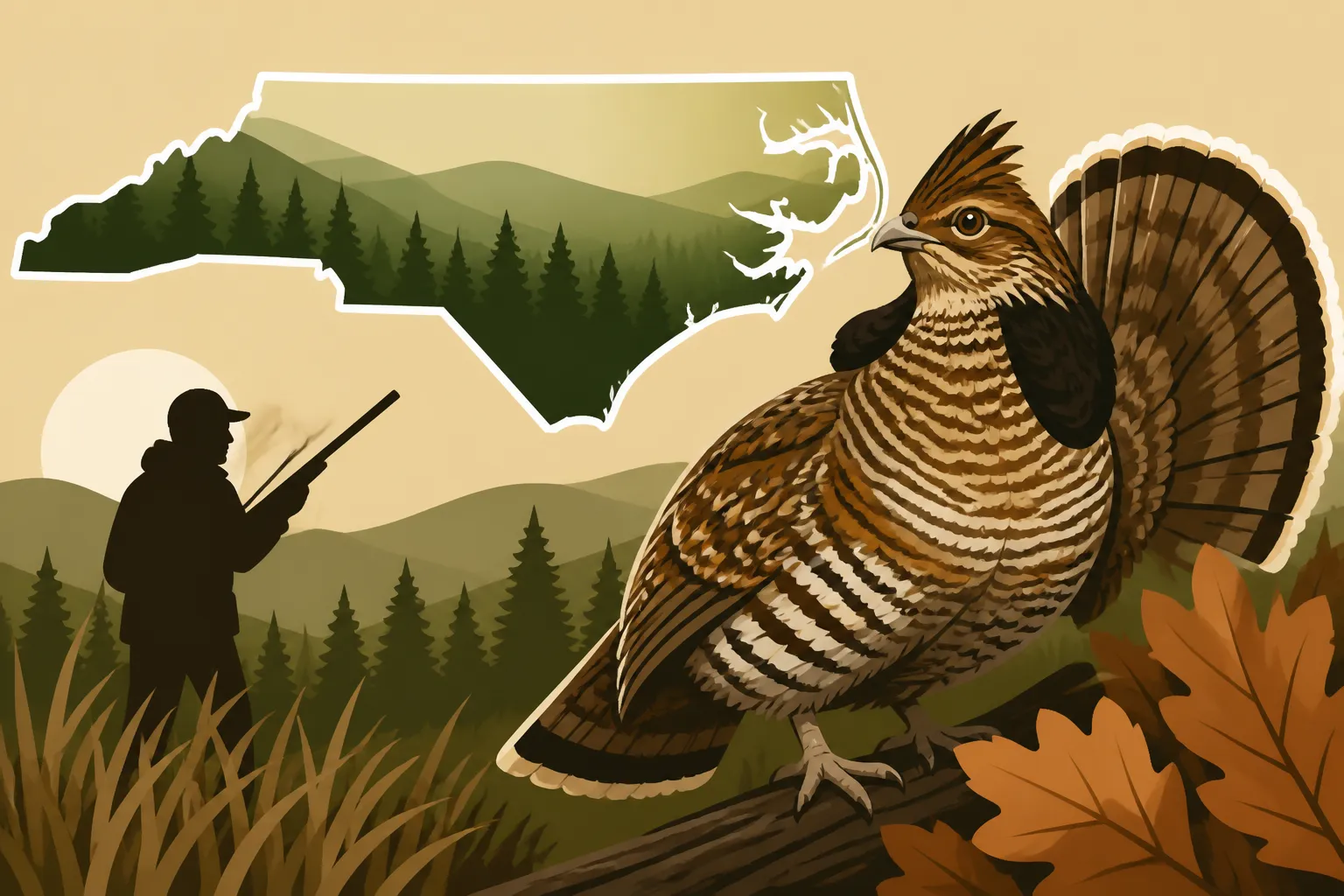
North Carolina Ruffed Grouse Numbers Today
For many of us who cherish the crisp air and challenging hunts of the North Carolina mountains, the sound of a drumming grouse or the explosive flush from thick cover is a memory we hold dear. But let's be honest, those moments feel harder and harder to come by these days. It’s a real frustration when you walk miles of prime habitat only to find empty woods. This guide is dedicated to shedding light on the current state of ruffed grouse numbers in our beautiful state, exploring why they've changed, and where you might still find a ghost of a chance.
The Shrinking Realm of the Ruffed Grouse in North Carolina
Once a more common sight in our higher elevation forests, the ruffed grouse has faced a tough uphill battle in North Carolina. It's not just a feeling among hunters; the data confirms a significant decline over decades. This isn't unique to our state, but here, at the southern edge of their range, the impacts are often more pronounced. We’re talking about a species that thrives in specific conditions, and when those conditions shift, even subtly, it can have a dramatic effect.
A Look Back: Historical Abundance and Range
If you talk to any old-timer who hunted the Blue Ridge, they'll tell you stories of grouse flushes that would make your jaw drop. Back in the mid-20th century, and even into the 70s and 80s, ruffed grouse were relatively widespread throughout the western mountain counties. They weren't everywhere, mind you, but pockets of good numbers could be found in the younger, regenerating forests that followed timber harvests or natural disturbances. They were a challenging but achievable quarry, adding a unique thrill to a walk through the woods.
The landscapes of western North Carolina, particularly the higher elevations of the Blue Ridge and Great Smoky Mountains, provided an ideal mosaic of mature timber, brushy clearings, and moist stream bottoms. This habitat offered everything a grouse needed: drumming logs, nesting cover, escape routes from predators, and a diverse diet of buds, berries, and insects. It was a golden era for these magnificent birds, a time when a dedicated hunter could expect to encounter birds with some regularity.
The Current Reality: A Scarce Resource
Today, the picture is starkly different. While ruffed grouse are still present in North Carolina, their populations are severely fragmented and significantly reduced. The days of consistent flushes across wide swaths of the mountains are largely behind us. Many hunters, myself included, will spend entire seasons pursuing them without seeing a single bird, let alone getting a shot. It's a testament to their elusiveness, but more so, it's a reflection of their dwindling numbers.
The North Carolina Wildlife Resources Commission (NCWRC) conducts surveys and studies to monitor game populations, and the trends for ruffed grouse have been on a downward slope for quite some time. While exact annual figures can fluctuate, the long-term trend of North Carolina Ruffed Grouse Decline is undeniable. It's reached a point where encountering a grouse is often considered a rare and special event, rather than a common expectation during a hunt. This scarcity makes pursuing them an exercise in patience and often, disappointment, but the challenge also draws a dedicated few.
Unpacking the Reasons for the Decline
Understanding why grouse numbers have fallen so dramatically isn't a simple answer, but rather a combination of factors working in concert. It's a complex ecological puzzle, and as hunters and conservationists, it’s vital we grasp these dynamics to advocate for change. The grouse population is intricately linked to the health and character of our mountain forests.
Habitat Loss and Maturation
This is, without a doubt, the single biggest culprit in the ruffed grouse's decline in North Carolina. Grouse are often referred to as "early successional" species, meaning they thrive in young, disturbed forests. They need thick, brushy cover – often dense saplings, brambles, and regenerating clear-cuts – for nesting, brood-rearing, and escape from predators like hawks and coyotes. Think about a dense thicket of blackberry bushes, or a stand of young pines so tight you can barely walk through it. That's grouse heaven.
However, over the last several decades, much of North Carolina's mountain forest has matured. With reduced timber harvesting, less wildfire (natural or prescribed), and fewer large-scale disturbances, vast expanses of the mountains have transitioned into mature, open canopy forests. While these old-growth stands are beautiful and provide habitat for other species, they lack the dense understory crucial for grouse survival. Imagine trying to hide a small bird from a hawk in an open oak forest – it’s just not going to happen. This maturation means less suitable cover across their traditional range.
The Impact of Predation
With a fragmented and reduced population, predation becomes an even more significant factor. Grouse chicks and adults face a gauntlet of predators, from avian hunters like goshawks and great horned owls to mammalian threats such as bobcats, foxes, and the ever-present coyote. While predation is a natural part of any ecosystem, when grouse populations are already stressed by lack of habitat, even normal predation levels can hit harder.
A healthy grouse population can often withstand a certain level of predation, but a struggling one has little resilience. Add to this the fact that predators like coyotes have expanded their range across North Carolina, including into mountain areas, and the pressure intensifies. This isn't to say predators are "bad," but rather that the balance has shifted in a way that disproportionately impacts grouse when their protective cover is sparse. North Carolina Coyote Range and Density has certainly changed over the years, adding another layer of challenge for ground-nesting birds.
Climate Change and Other Environmental Pressures
Being at the southern edge of their range, North Carolina grouse are particularly sensitive to shifts in climate. Warmer average temperatures, altered precipitation patterns, and more extreme weather events can all impact grouse reproduction and survival. For instance, unusually wet and cold springs can reduce chick survival, as young grouse are vulnerable to hypothermia and a lack of insect forage.
Disease can also play a role, though it's often harder to quantify. Parasites, like the West Nile Virus which has been linked to grouse declines in other parts of the country, can weaken birds and make them more susceptible to other stressors. While specific widespread disease outbreaks haven't been widely reported as a primary cause in North Carolina, these environmental pressures, when combined with habitat loss and predation, create a compounding effect that makes recovery incredibly difficult.
Where to Still Pursue These Elusive Birds
Despite the challenges, ruffed grouse aren't entirely gone from North Carolina. For the truly dedicated upland hunter, there are still pockets, albeit smaller and harder to find, where you might experience that heart-stopping flush. It requires deep scouting, perseverance, and a willingness to explore rugged terrain.
Identifying Key Habitat and Elevational Niches
Your best bet for finding grouse today is to focus on specific habitat types and elevations within the mountain region. Look for areas with a mix of:
- Young, regenerating timber: Think about recent clear-cuts (5-15 years old) or areas recovering from severe storm damage. These spots will be dense with saplings, briars, and low-growing vegetation.
- Mountain laurel and rhododendron thickets: These dense evergreen shrubs provide excellent year-round cover, particularly important during winter. Grouse will dive into these nearly impenetrable tangles for safety.
- Abandoned homesteads or old logging roads: These areas often feature overgrown clearings and edges that provide a varied food source and structure.
- Steep, north-facing slopes: These slopes often retain moisture longer and can harbor different vegetation that provides both food and cover, especially during drier periods.
You'll generally want to focus on higher elevations, typically above 3,000 feet, especially in areas like the Pisgah and Nantahala National Forests. These higher, cooler zones sometimes retain more of the crucial habitat features grouse require. Using tools like GoHunt can help you overlay public land maps with topo data to pinpoint these high-elevation thickets and potential cover types, making your scouting more efficient before you ever step foot in the woods.
Best Counties and Public Land Opportunities
While no county boasts a "strong" grouse population anymore, some still hold more potential than others. Counties like Ashe, Watauga, Avery, Burke, McDowell, and parts of Swain, Graham, and Macon might offer the most potential due to their rugged terrain and the presence of significant public land holdings. The vastness of the Pisgah National Forest Hunting and Nantahala National Forest Hunting still offer the most accessible opportunities, though finding birds is like searching for a needle in a haystack.
| Region/County | Primary Habitat Focus | Characteristics |
|---|---|---|
| Northern Mountains | Ashe, Watauga, Avery | Higher elevations, mixed hardwoods, old clear-cuts, mountain laurel thickets. Can be extremely steep and rugged. |
| Central Mountains | Burke, McDowell, Yancey | Steep slopes, rhododendron choked drainages, some younger growth near timber operations or storm damage areas. |
| Southern Mountains | Swain, Graham, Macon | Remote, rugged terrain, deep coves, extensive public land, but often very mature timber. Look for specific disturbance. |
Always remember to check the specific regulations and access points for North Carolina Game Lands and National Forests before heading out. Sometimes, specific units might have ongoing habitat projects that could temporarily improve conditions, but these are often localized and require diligent research. The challenge of Grouse Hunting Blue Ridge Cover is a deeply rewarding one, even if the bag limit remains untouched.
Looking Ahead: Conservation Efforts and the Hunter's Role
The future of ruffed grouse in North Carolina is uncertain, but it's not entirely without hope. There are ongoing conversations and efforts that could potentially help stabilize, or even improve, their numbers in localized areas. As hunters, we have a crucial role to play in advocating for these efforts and understanding the bigger conservation picture.
The Importance of Habitat Management
The consensus among wildlife biologists is clear: active forest management is the key to bringing back early successional habitat. This means a return to practices like selective timber harvesting, prescribed burns, and other forest thinning techniques that create the dense, young growth grouse need. It's often a hard sell to the general public, who may prefer to see forests remain untouched, but for species like grouse, "doing nothing" is often the most harmful approach.
Organizations like the Ruffed Grouse Society and various state wildlife agencies are tirelessly working to educate landowners and public land managers on the benefits of these practices. It’s about creating a patchwork of different forest ages, providing both the mature trees for nesting and roosting, and the younger, thicker cover for survival. Supporting these groups and understanding their mission is vital for any grouse enthusiast.
How Hunters Can Contribute to Conservation
As hunters, we are often the first line of defense for wildlife conservation. Our license fees directly fund wildlife management, and our voices are critical in advocating for sound policies. If you care about ruffed grouse, consider:
- Supporting Conservation Organizations: Join groups like the Ruffed Grouse Society, which actively funds and implements habitat projects.
- Advocating for Active Forest Management: Speak up to your elected officials and local land management agencies about the need for early successional habitat creation on public lands.
- Ethical Hunting Practices: Be mindful of North Carolina Grouse Season Status and daily bag limits. Given their rarity, many hunters choose to limit their take even further, or simply enjoy the experience of finding and flushing a bird without taking a shot.
- Reporting Sightings: Share your grouse sightings (even flushes without a shot) with the NCWRC. This data, even anecdotal, can help biologists better understand their distribution and population trends. Every bit of information helps paint a clearer picture of North Carolina Ruffed Grouse Numbers Today.
It’s a long road ahead for the ruffed grouse in North Carolina, but with continued dedication to habitat, research, and responsible hunting, we can hope to preserve the opportunity to pursue these magnificent birds for future generations. The thrill of a grouse flush is a truly wild and unforgettable experience, and one worth fighting for in our beautiful Appalachian mountains.
Disclaimer
This article is for general informational purposes only and does not constitute professional advice. Laws, prices and regulations vary by location and change over time. Consult a qualified professional for guidance on your specific situation.