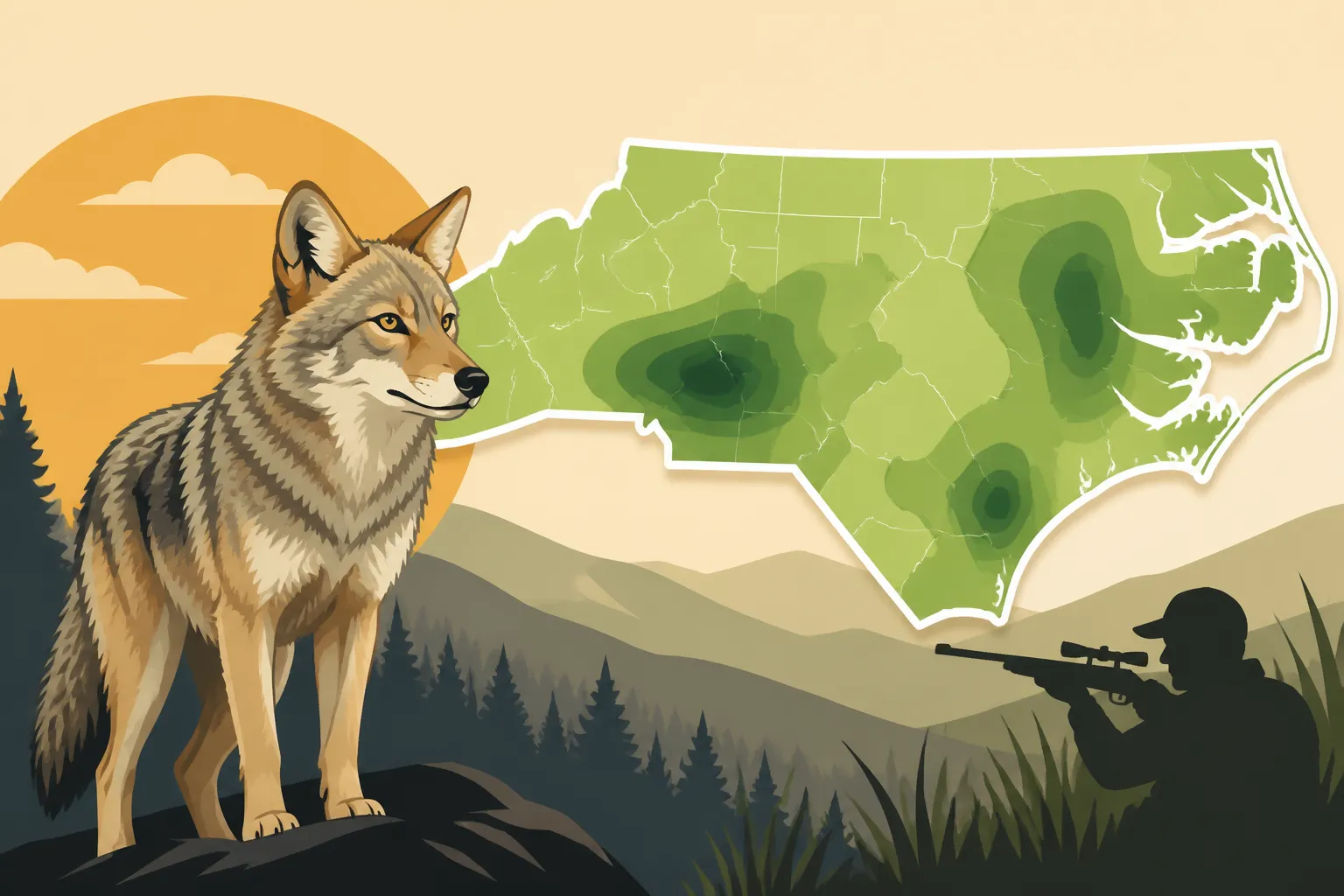
North Carolina Coyote Range and Density
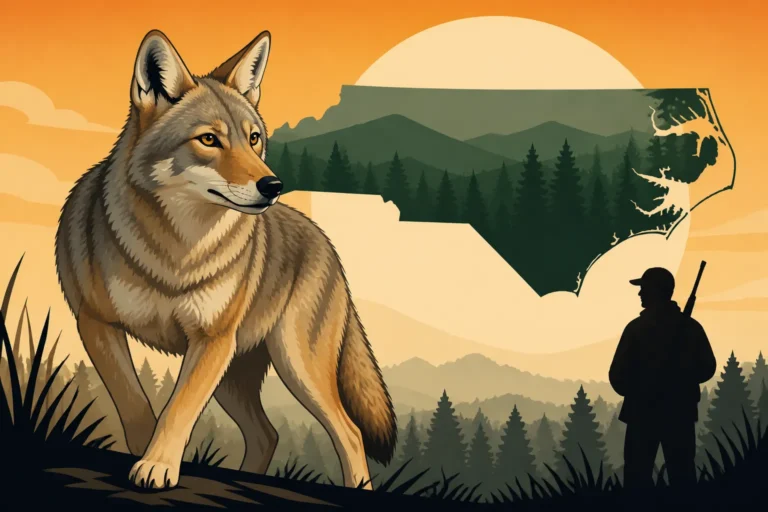
It can be incredibly frustrating to spend hours scouting for deer or small game, only to find fresh coyote sign everywhere. You might wonder if these adaptable predators have completely taken over, and if so, where they're most prevalent across the state. This guide aims to demystify the North Carolina coyote, breaking down their statewide range and density so you can better understand their presence and how it impacts your hunting strategies.
The Surprising Spread of North Carolina Coyotes
For many generations of North Carolina hunters, the coyote wasn't even a blip on the radar. Our grandfathers hunted deer and small game without ever seeing or hearing one. But in what seems like a blink of an eye, these highly adaptable canids have become an undeniable part of our state's wild landscape. Their expansion has been nothing short of remarkable, and understanding this historical spread is key to grasping their current omnipresence.
Early Arrivals and West-to-East Expansion
The story of the coyote in North Carolina isn't one of native reintroduction, but rather a gradual, relentless migration from the west. Unlike many of our state's other wildlife, coyotes weren't originally found in the southeastern United States. They began pushing eastward from their traditional ranges in the Great Plains, steadily expanding their territory as forests were cleared and human populations altered the landscape. This migration wasn't a sudden flood but a slow seep, with individual animals and small groups exploring new areas.
Many folks recall the initial reports of coyotes appearing in the western mountains, trickling in from states like Tennessee and Virginia. It wasn't long before they had established a foothold in the rugged terrain of the Blue Ridge, and from there, they continued their march. As they moved, they encountered less competition from other large predators that might have once kept their numbers in check, allowing them to truly flourish. The journey from the mountains to the coast seemed to happen at an almost alarming pace for hunters accustomed to a different ecosystem.
Adapting to Diverse North Carolina Landscapes
One of the most astonishing aspects of the coyote's colonization of North Carolina is their incredible ability to adapt to virtually any environment. You'd think a species primarily known for open plains would struggle in our dense forests, vast swamps, and bustling suburban fringes, but you'd be wrong. From the highest peaks of the Pisgah National Forest to the sprawling agricultural fields of the Piedmont, and even deep into the pocosin swamps of the Coastal Plain, coyotes have found a way to thrive.
In the mountains, they learned to navigate steep slopes and dense cover, utilizing game trails and logging roads with ease. As they moved into the Piedmont, they quickly became accustomed to hunting fragmented woodlots, creek bottoms, and the edges of vast farmlands. Then, when they hit the Coastal Plain, they proved their mettle once again, mastering the art of living in thick, wet cover where a lot of other animals would struggle. This versatility is precisely why you can now hear their tell-tale yips and howls in almost any corner of the state, making them a true statewide resident and a constant consideration for anyone pursuing game.
Understanding Coyote Density Across North Carolina's Regions
While coyotes are found pretty much everywhere in North Carolina, their populations aren't uniformly distributed. Just like deer or turkey, their numbers tend to ebb and flow depending on habitat, food availability, and human interactions. It's a nuanced picture, and understanding these regional differences can help you anticipate what you might encounter in your hunting grounds.
Mountain Foothills and Piedmont Population Hotspots
If you spend much time hunting the rolling hills of the Piedmont or the lower reaches of the mountains, you've likely noticed a significant coyote presence. These regions often represent some of the highest densities for coyotes in the state. Why? It's a combination of factors that create almost ideal conditions for them. The Piedmont, in particular, offers a patchwork of agriculture, fragmented timber stands, and suburban development. This creates an abundance of edge habitat, which coyotes absolutely love. They can easily move between cover and open areas, finding ample prey like rabbits, voles, and even deer fawns.
Farm country often provides a consistent food source, whether it's rodents in fields or opportunistic scavenging. The scattered timber blocks give them secure denning sites and travel corridors. In these areas, it's not uncommon to see multiple coyotes during a single hunt or to find frequent tracks and scat. The mountain foothills, similarly, offer a diverse landscape with plenty of cover and a good mix of prey species, supporting robust populations. If you're hunting deer in the Piedmont, for instance, you're almost certainly sharing the woods with a healthy population of coyotes, a factor to consider in your hunting strategy, especially when thinking about fawn recruitment or general deer movement.
Coastal Plain and Swamp Dwelling Coyotes
Moving eastward to the Coastal Plain and its unique mix of pine forests, agricultural fields, and expansive pocosins and swamps, you'll still find coyotes, but their density can sometimes feel a bit different than in the Piedmont. While they are fully established, the sheer vastness and often impenetrable nature of some coastal habitats can make their presence feel less concentrated in certain spots. However, don't let that fool you – they're there, and they're thriving.
In these coastal zones, coyotes have adapted to living in extremely dense cover, utilizing the intricate network of canals, logging roads, and dry ridges within vast swamps. They've learned to hunt in areas that would seem impossible for other predators. Agricultural fields still provide open country hunting for rodents and other small game, but the reliance on the thick cover for bedding and travel is pronounced. Hunters often report seeing them on the edges of large pocosin swamps like those found in the Croatan National Forest, or moving through clear-cuts and pine plantations. While the dense vegetation might make them harder to spot, their numbers are certainly significant and they exert a consistent pressure on local game species, much like they do further west. You can learn more about Hunting Coastal Plain Pocosin Swamps to better understand the habitat they share with deer and bears in these regions.
Factors Influencing Coyote Distribution and Numbers
Coyote populations aren't static; they're constantly influenced by a complex interplay of environmental factors. Understanding what drives their distribution and how their numbers fluctuate can give hunters valuable insight into what to expect in their hunting areas. It's a testament to their resilience that they've adapted to so many different pressures and opportunities across North Carolina.
Food Availability and Prey Abundance
Just like any predator, coyotes go where the food is. Their diets are incredibly varied, making them highly adaptable to whatever prey is most abundant in a given area. This dietary flexibility is a huge reason for their success. In areas with high populations of rabbits, voles, mice, and other small mammals, coyotes can sustain themselves quite well. If a particular year sees a boom in rodent populations, you might notice an increase in coyote activity in those areas.
Deer fawns are also a significant food source, especially in the spring and early summer. High deer densities, particularly in the Piedmont, can inadvertently support higher coyote numbers because there's a reliable source of vulnerable young deer. Conversely, if a deer population suffers a downturn due to disease like EHD, or a particularly harsh winter, coyote numbers might experience a slight dip or they might shift their focus more heavily onto other prey. They're opportunistic to their core, and this is why their presence is often strongly tied to the health of other game species. For those interested in how prey animals are faring, our post on North Carolina Small Game and Furbearers provides a broader context.
Habitat Versatility and Cover Preferences
Coyotes don't need pristine wilderness to survive; in fact, they often thrive in landscapes altered by humans. They're masters of using whatever cover is available, from dense pine thickets to brushy fencerows and even suburban green spaces. This versatility means that almost any patch of woods, no matter how small or fragmented, can potentially harbor a coyote.
In areas with expansive timber tracts, they'll utilize the interior for denning and travel, often sticking to thicker regenerating clear-cuts or swamps. In more open agricultural regions, they'll patrol the edges of fields, use drainage ditches, and rely on hedgerows and creek bottoms for concealment and movement. Even in surprisingly urbanized environments, they'll find refuge in parks, golf courses, and undeveloped tracts. This adaptability to various cover types allows them to establish territories in places where other, less flexible predators simply couldn't, reinforcing their widespread distribution. When scouting new areas, using a robust mapping tool like GoHunt can help you identify these varied cover types, from dense swamps to field edges, that might be holding coyotes.
Human Activity and Landscape Modification
Human activity has been an inadvertent catalyst for the coyote's success and spread in North Carolina. Deforestation for agriculture and development, while reducing habitat for some species, created the fragmented, edge-heavy landscapes that coyotes excel in. The construction of highways and other infrastructure has also sometimes provided corridors for their expansion. Furthermore, the extirpation of larger native predators like wolves and mountain lions across the eastern United States removed natural competitors and allowed coyotes to move into new niches.
Even our presence in the woods influences their behavior and distribution. Areas with heavy hunting pressure or frequent human disturbance might see coyotes become more nocturnal or wary, but they rarely abandon an area entirely. They learn to coexist, adapting their routines to avoid direct human confrontation. This ongoing dance between humans and coyotes is a key factor in their established presence and continued prevalence throughout the state, from remote wilderness to the very edges of our towns.
How Coyotes Impact North Carolina's Ecosystem and Hunters
The arrival and subsequent spread of coyotes have undeniably altered North Carolina's ecosystems. While they play a natural role as predators, their presence often sparks concern among hunters about their impact on more desired game species. It's a complex issue with both direct and indirect effects that shape the hunting experience for many of us.
Pressure on Deer and Small Game Populations
One of the most talked-about impacts of coyotes among hunters is their effect on deer populations. While adult, healthy deer are generally capable of fending off a coyote, fawns are incredibly vulnerable. Coyote predation on fawns, especially in the first few weeks of their lives, can be a significant factor in local deer herd recruitment. In areas with high coyote densities, fawn survival rates can drop, which over time, can impact the overall health and size of a deer population. It's not always a dramatic crash, but it's a persistent pressure. If you're wondering how our deer herd is faring, our piece on North Carolina Deer Population Estimate delves into the numbers.
Beyond deer, coyotes are generalist predators, meaning they'll readily consume a wide variety of prey, including rabbits, squirrels, and turkeys. While their impact on small game populations might be less noticeable than on fawns, it's still a factor. For example, a nest full of turkey eggs or a clutch of young poults can be an easy meal for a hungry coyote. This predatory pressure can make it tougher for these smaller game species to thrive, especially in fragmented habitats where cover is limited. Hunters who pursue Squirrel and Small Game Hunting in North Carolina or Spring Turkey Hunting in North Carolina will certainly be aware of coyotes in their hunting plans.
Competition with Other Predators
Coyotes aren't alone at the top of the food chain in North Carolina. They exist alongside bobcats, black bears, and various raptors. Their presence introduces an element of competition for food resources, and sometimes, even for territory. While larger black bears might occasionally predate on coyotes, they typically occupy different niches. Bobcats, being more solitary and specialized hunters of smaller prey, can find themselves in direct competition with coyotes for rodents and rabbits. This competition can sometimes lead to localized shifts in other predator populations, although coyotes often have the upper hand due to their adaptability and pack dynamics.
In some instances, coyotes have been known to displace or reduce populations of red foxes due to competitive exclusion. The larger, more aggressive coyotes can dominate prime territories, pushing foxes into less desirable habitats or outcompeting them for food. This dynamic showcases how the introduction of a highly successful generalist predator like the coyote can ripple through an entire ecosystem, affecting everything from prey species to other meso-predators.
Managing Coyote Populations for a Balanced Ecosystem
Given their widespread presence and impact on game species, many hunters and wildlife managers are interested in strategies for managing coyote populations. It's not about eradication, which is largely impossible and undesirable, but about maintaining a healthy balance within the ecosystem. The goal is to mitigate their impact on other wildlife while acknowledging their permanent place in our landscape.
Hunting and Trapping as Management Tools
For individual hunters, pursuing coyotes is often seen as both a challenging and rewarding endeavor, and a way to help reduce localized predation pressure. North Carolina allows year-round hunting and trapping of coyotes on private land, often with generous methods. Whether it's calling them in, stalking, or trapping, there are numerous ways to target these intelligent animals. Effective coyote hunting often requires understanding their behavior, travel patterns, and vocalizations. For those looking to get started, learning about Coyote Calling in North Carolina Farm Country can be a great first step.
The key to successful population management through hunting and trapping often lies in consistency and targeting specific problem areas. While a single coyote taken won't change statewide dynamics, persistent efforts in smaller areas, especially before fawning season or during peak small game nesting, can make a measurable difference on a local level. It's an ongoing effort, and one that many hunters embrace as part of their contribution to wildlife management. Using tools like GoHunt's property line feature can be invaluable for identifying private land where these year-round management activities are permitted, helping hunters effectively plan their efforts.
Understanding Coyote Behavior for Effective Control
Coyotes are incredibly intelligent and resilient creatures. Effective management, whether through hunting, trapping, or other deterrents, relies heavily on understanding their habits. They learn quickly, becoming wary of repeated tactics. This means hunters need to be adaptable, changing their calls, setups, and locations frequently. Knowing when and where coyotes are most active, such as during dawn and dusk, or how they utilize different wind directions, is crucial.
Furthermore, reducing attractants around homes and farms can also play a role in discouraging their presence. Securing trash, pet food, and protecting livestock are all important non-hunting management techniques. For hunters, scouting extensively to identify travel corridors, den sites, and preferred feeding areas is just as important for coyotes as it is for deer. Understanding their cunning nature is the first step towards outsmarting them and contributing to a healthier, more balanced ecosystem for all of North Carolina's wildlife. Our broader guide on Coyotes and Predators in North Carolina offers more context on their overall role.
Coyote Presence by North Carolina Region
| Region | Typical Habitat | Perceived Density | Primary Prey Influence |
|---|---|---|---|
| Mountain Foothills | Mixed forests, agricultural fringes, steep terrain | High | Deer fawns, rodents, rabbits |
| Piedmont | Fragmented woodlots, extensive farmland, suburban edge | High | Rodents, rabbits, deer fawns, turkeys |
| Sandhills | Longleaf pine forests, open areas, some agriculture | Moderate to High | Rabbits, rodents, deer fawns, quail |
| Coastal Plain | Pine plantations, pocosin swamps, vast farmland | Moderate to High | Deer fawns, rabbits, rodents, small birds |
| Outer Banks | Coastal marsh, maritime forests, dune systems | Low to Moderate | Small mammals, birds, crabs, opportunistic carrion |
Disclaimer
This article is for general informational purposes only and does not constitute professional advice. Laws, prices and regulations vary by location and change over time. Consult a qualified professional for guidance on your specific situation.