Ruffed Grouse in the North Carolina Mountains
The crisp, autumn air in the Blue Ridge can invigorate the soul, but for those of us with a passion for upland hunting, it also brings a unique challenge: the ruffed grouse. These elusive woodland rockets, often called thunder chickens, are among the most difficult game birds to pursue in North Carolina's rugged mountain terrain. This comprehensive guide will arm you with the knowledge and tactics needed to increase your chances of finding and successfully hunting these incredible birds in the Old North State.
The Elusive Mountain Phantom: Understanding North Carolina's Ruffed Grouse
Few birds stir the soul of an upland hunter quite like the ruffed grouse. In North Carolina, these magnificent birds are synonymous with the Appalachian mountains, their explosive flush echoing through the timbered slopes. But make no mistake, hunting them here is an endeavor that demands dedication, patience, and a deep understanding of their unique behaviors and habitat preferences. They truly are the phantom of the forest, often heard but rarely seen until they explode from underfoot.
Historical Presence and Current Status in North Carolina
Ruffed grouse have long been an integral part of North Carolina's mountain ecosystems. Historically, their range extended more broadly, but today, their presence is almost exclusively confined to the westernmost counties, deep within the Appalachian and Blue Ridge Mountains. They thrive in forests that offer a mosaic of diverse age classes, from young, regenerating clear-cuts that provide dense escape cover and food, to mature timber with a healthy understory. This constant need for varied habitat makes their presence somewhat patchy, even in prime areas.
The population status of ruffed grouse in North Carolina, much like in many southern states, has been a topic of concern for wildlife biologists and hunters alike. Factors such as habitat fragmentation, changes in forest management practices over the decades, and increased predation have all played a role in what some refer to as the "ruffed grouse decline." While they aren't considered endangered, their numbers are certainly not what they once were, making every successful hunt feel like a hard-earned victory. This reality validates the frustration many hunters feel when they spend hours covering ground without a single flush.
Despite the challenges, the North Carolina Wildlife Resources Commission (NCWRC) monitors populations through various surveys, including drumming counts in the spring. These surveys help track population trends and inform management decisions. Hunters often contribute invaluable anecdotal information, reporting flushes and observations during the season, which helps paint a clearer picture of local populations.
Why the Mountains? Ideal Habitat and Challenges
So, why are the ruffed grouse primarily found in North Carolina's mountains? The answer lies in their specific habitat requirements. They need cool, moist conditions, dense overhead cover, and a rich understory of diverse plant species for food and protection from predators. The higher elevations of the Blue Ridge and Appalachian Mountains provide these conditions perfectly, with their extensive hardwood and mixed forests, steep slopes, and abundant water sources. Think about those damp, mossy hollows and thick rhododendron hells—that's grouse country.
The challenges of hunting grouse in these mountainous regions are as significant as the allure of the birds themselves. The terrain is often steep, requiring considerable physical exertion. Thick undergrowth, such as mountain laurel and rhododendron, forms nearly impenetrable tangles that test a hunter's endurance and patience. These "hells" are where grouse find sanctuary, and pushing through them is a true test of grit. Furthermore, the sheer vastness of the public lands, like the Nantahala National Forest Hunting and Pisgah National Forest Hunting, means that finding pockets of prime habitat can be like searching for a needle in a haystack without proper scouting and knowledge.
The weather in the mountains can also be unpredictable, shifting from mild autumn days to sudden cold snaps with rain or even snow. This adds another layer of complexity to the hunt, impacting bird behavior and hunter comfort. Despite these difficulties, the reward of a wild grouse flushed from its natural mountain home is a profound experience that keeps hunters coming back year after year.
Unique Characteristics and Behavior
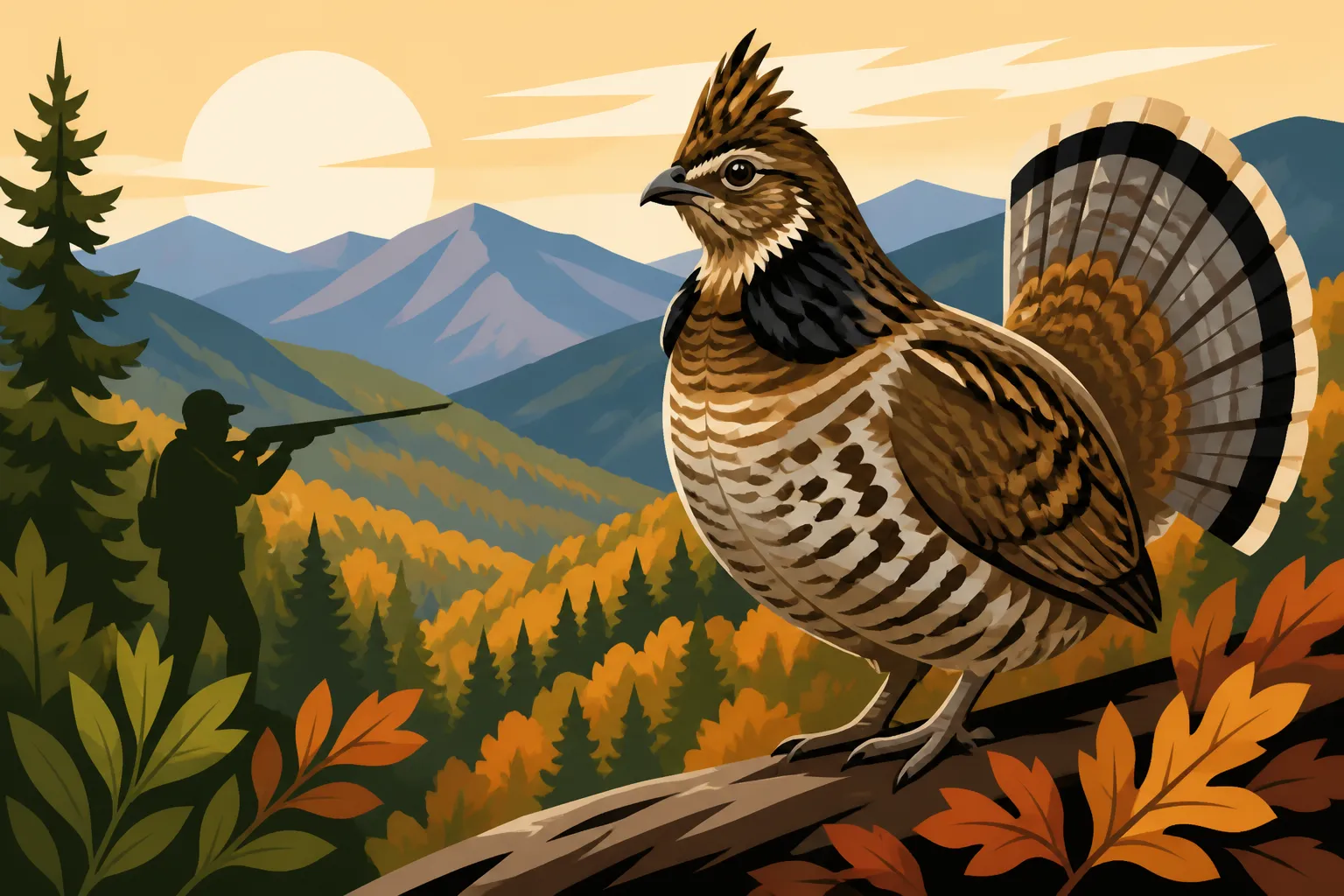
Ruffed grouse are fascinating birds with behaviors that make them incredibly well-suited to their woodland environment. Their mottled brown, black, and gray plumage provides exceptional camouflage, allowing them to disappear into the leaf litter or against a tree trunk with uncanny ease. This natural camouflage is one of the primary reasons they're so hard to spot until they explode into flight.
One of their most iconic behaviors is the "drumming" display performed by males in the spring. They stand on a log or rock and beat their wings rapidly, creating a low-frequency drumming sound that resonates through the forest to attract mates. This sound is a classic sign of grouse presence in an area, even outside of hunting season. During the hunting season, they're famous for their explosive, often startling flush. They burst from cover with incredible speed, usually flying horizontally through the densest timber, using trees as shields. This makes for incredibly challenging wing shooting, often described as trying to hit a blur weaving through vertical obstacles.
Their diet is varied, consisting of buds, catkins, leaves, berries, and insects, depending on the season. In the fall and winter, aspen and birch buds, along with various wild berries, become crucial food sources. Understanding their seasonal food preferences can be a key part of locating birds. For instance, after a poor acorn year, grouse might be concentrated in areas with specific berry bushes or other browse. Their preference for thick cover near these food sources means you often have to get right on top of them before they flush, making every step a potential moment of heart-stopping action.
Where to Find North Carolina Grouse: Prime Mountain Habitat
Finding ruffed grouse in North Carolina is less about covering vast distances randomly and more about understanding and identifying specific habitat types. These birds are particular, and once you learn to "read" the cover, you'll greatly improve your chances. It's not just about being in the mountains; it's about being in the right kind of mountains. Many hunters, myself included, have spent entire days walking beautiful but unproductive timber before realizing we were missing key habitat features.
The Blue Ridge Escarpment and High Elevations
The Blue Ridge Escarpment, where the mountains drop sharply to the Piedmont, and the higher elevation areas of the Appalachians, are the heart of North Carolina's grouse country. These regions offer the necessary elevation, cooler temperatures, and abundant rainfall that contribute to the dense, diverse forest types grouse prefer. Think of areas near Grandfather Mountain, Roan Mountain, or the peaks in counties like Ashe, Watauga, and Avery.
Within these high elevations, look for transitional zones between different forest types. Grouse often prefer the edges where old growth meets younger regeneration, or where mixed hardwoods transition into hemlock or rhododendron thickets. These areas provide both food and excellent escape cover. Streams and drainages winding through these high-elevation forests are also key, as they often create corridors of lush vegetation that grouse utilize. Hunting these areas often means tackling steep grades and navigating dense undergrowth, but the rewards can be significant. The sheer beauty of the landscape alone, even without a bird in hand, is often enough to make the effort worthwhile.
Specific National Forests and Game Lands
North Carolina is fortunate to have extensive public lands in the western part of the state, offering fantastic opportunities for grouse hunters. The Pisgah National Forest and Nantahala National Forest are the two primary destinations for ruffed grouse. These vast tracts of federal land are managed for multiple uses, including timber production, which, when done correctly, can create excellent grouse habitat. You can find detailed maps and specific regulations by referring to resources like Hunting the North Carolina Mountains, which outlines broader access.
Within these national forests, look for areas that have undergone timber harvest in the last 5-20 years. These regenerating clear-cuts or select cuts, often filled with dense saplings, briars, and new undergrowth, provide the perfect escape cover and browse for grouse. However, be aware that these areas can be incredibly difficult to penetrate, demanding tough brush pants and a "don't give up" attitude. Game lands such as the John's River Game Land or portions of the Daniel Boone Game Land also offer potential, but always check specific game land maps and regulations as access and rules can vary. The NCWRC's GoHunt application can be a powerful tool for scouting these areas from home, identifying potential habitat features like recent timber cuts, and understanding land boundaries before you ever set foot in the woods.
Reading the Cover: What to Look For
Becoming proficient at grouse hunting means learning to "read the cover." It's not just about where you hunt, but what specifically you're looking for within those larger areas. The ideal grouse cover offers a combination of food, water, and dense protection. Here's a table to help you identify prime grouse habitat features:
| Habitat Feature | Why It's Important for Grouse | Where to Find It |
|---|---|---|
| Young Regeneration | Dense cover from predators, abundant browse (buds, twigs). | Recent clear-cuts (5-20 years old), logging roadsides, old fields. |
| Rhododendron Thickets | Impenetrable overhead cover, protection from raptors and ground predators. | Steep slopes, stream banks, damp hollows, northern aspects. |
| Mountain Laurel "Hells" | Similar to rhododendron, offering extreme security cover. | Dry ridgetops, rocky outcrops, generally tough terrain. |
| Mixed Hardwoods | Diverse food sources (acorns, berries, buds), good drumming logs. | Rolling hills, creek bottoms, benches on mountainsides. |
| Conifer Stands | Thermal cover in winter, roosting spots, protection from snow. | Scattered among hardwoods, often near ridge tops or hollows. |
| Old Logging Roads | Edge habitat, food along the open margins, travel corridors. | Throughout national forests and game lands. |
| Spring Seeps/Streams | Water source, lush vegetation, insect activity. | Anywhere water naturally emerges or flows. |
When you're out there, look for these elements combined. A regenerating clear-cut with rhododendron thickets along a stream drainage, bordered by mature hardwoods, is textbook grouse habitat. Don't be afraid to push into the thick stuff; that's often where the birds will be holding. The frustration of walking through seemingly perfect woods only to find no birds is common, but knowing these key indicators will help you focus your efforts. As a veteran hunter, I've learned that if it looks too easy to walk through, it's probably not grouse cover.
Timing Your Hunt: North Carolina Grouse Seasons and Rules
Understanding the season dates, bag limits, and specific regulations is paramount for a safe, legal, and enjoyable grouse hunt in North Carolina. The rules are in place to ensure the sustainability of the population and the safety of all forest users. It’s always best to consult the current North Carolina Small Game Season Rules directly from the NCWRC for the most up-to-date information, as seasons can shift slightly year to year.
Season Dates and Bag Limits
North Carolina's ruffed grouse season typically runs for an extended period, generally opening in mid-October and extending through late February. This long season provides ample opportunity to get out, whether you prefer the mild conditions of early fall or the challenging, often snow-covered woods of late winter. The exact opening and closing dates can vary slightly each year, so always confirm with the latest NCWRC digest.
The daily bag limit for ruffed grouse in North Carolina is usually quite conservative, often set at two birds per day. This reflects the challenging nature of the hunt and the desire to protect a species that faces significant habitat pressures. The possession limit is typically four birds, meaning you can have no more than four grouse, fresh or frozen, in your possession at any given time. These limits encourage ethical harvesting and ensure enough birds remain for future breeding seasons. Many hunters consider a single grouse a trophy, so reaching the bag limit is often an exceptional day in the field!
License Requirements and Hunter Education
Before you even think about stepping into the woods with a shotgun, you need to ensure you have the proper North Carolina hunting licenses. For residents, this usually means a basic statewide hunting license, which covers small game. Non-residents will need to purchase a non-resident annual hunting license. Additionally, if you plan to hunt on any of North Carolina's extensive game lands, you'll need to purchase a Game Lands Use Permit. These permits help fund the management and maintenance of these crucial public hunting areas.
Hunter education is also a mandatory requirement for most hunters in North Carolina. Anyone born on or after July 1, 1957, must complete a hunter education course before they can purchase a hunting license (unless they have previously held a hunting license from North Carolina or another state). There are exceptions, such as the North Carolina Apprentice Hunter License Rules, which allow individuals to hunt for a specified period under the direct supervision of a licensed adult. It's a fantastic program for introducing new hunters to the sport safely and responsibly. You can find more information about these requirements by checking the North Carolina Hunter Education Requirements.
Important Regulations and Safety Considerations
Beyond licenses and bag limits, several other regulations and safety considerations are critical for grouse hunting in North Carolina. One of the most important for public land is being aware of other users. The mountains are popular for hikers, mountain bikers, and other outdoor enthusiasts, especially during the fall. Always identify your target clearly and be absolutely certain of what lies beyond it before taking a shot.
Blaze orange requirements apply to all hunters during daylight hours when hunting big game with a firearm, or when hunting small game during any open firearm big game season. While grouse are small game, given that their season often overlaps with deer season, it's wise to wear blaze orange regardless. This is not only a legal requirement in many situations but also a critical safety measure. How Much Blaze Orange North Carolina Requires can provide precise details, but generally, a visible outer garment like a vest or hat is sufficient.
Understanding property boundaries is also crucial. While the national forests offer vast public access, private land borders them in many areas. Use mapping apps like those from GoHunt or onX to clearly delineate public from private land. Never trespass, and if your dog crosses onto private land, retrieve it without a firearm if possible, after making reasonable contact with the landowner. Lastly, remember that target shooting is generally prohibited in national forests and game lands outside of designated shooting ranges, so save your patterning and practice for appropriate locations.
Gear Up for the Flush: Essential Equipment for NC Grouse Hunting
Ruffed grouse hunting in North Carolina's mountains is a physically demanding pursuit that often takes you deep into rugged, unforgiving terrain. Having the right gear isn't just about comfort; it's about safety, efficiency, and increasing your chances of success. Forget anything that isn't durable, reliable, and functional—you'll put it to the test out here.
Shotguns, Gauges, and Shot Choices
When it comes to shotguns for grouse hunting, lightweight and fast-swinging are the names of the game. You're rarely shooting long distances, and the shots are almost always on rapidly moving birds through dense cover. Many hunters favor 20-gauge shotguns for their lighter weight and adequate payload, but 12-gauge and even 28-gauge are also popular. The Upland Guns for Mountain Grouse Cover discussion further explores these choices. The key is a gun you can comfortably carry all day and bring to bear quickly when a bird flushes.
For chokes, open patterns are typically preferred. Most grouse flushes occur at very close range—often within 15-25 yards. Improved Cylinder or Skeet chokes are excellent choices for these close, fast shots, providing a wider, more forgiving pattern. Anything tighter, like a Modified or Full choke, will likely result in missed birds or excessively damaged meat at such close quarters. You want a pattern that opens up quickly, and Choke Choice for Fast Flushes details this further.
As for shot size, smaller shot is generally recommended for grouse to ensure a good pattern and minimize meat damage. Lead shot sizes 7 1/2 or 8 are excellent choices. For areas requiring non-toxic shot (e.g., some waterfowl management areas that might overlap with grouse habitat, though less common for grouse itself), bismuth or similar non-toxic alternatives in equivalent sizes (e.g., #6 or #7 non-toxic) would be suitable. Consult the Shot Size for Grouse and Woodcock guide for more specifics. Always carry enough shells for a day's hunt, as you never know when you'll get into a flurry of activity.
Clothing and Footwear for Mountain Terrain
The North Carolina mountains can dish out a wide range of weather conditions, often within the same day. Layering is absolutely critical. Start with a moisture-wicking base layer, add an insulating mid-layer (fleece or wool are great), and top it with a durable, briar-resistant outer layer. You'll be pushing through thorny thickets and dense brush, so tough canvas or synthetic "brush pants" are almost a necessity to protect your legs. A good upland vest with plenty of game bag capacity and shell loops is also invaluable.
Footwear must be chosen with the rugged terrain in mind. Waterproof, ankle-supporting boots with aggressive traction are non-negotiable. You'll be climbing steep slopes, navigating slippery leaves, crossing streams, and encountering rocky ground. Look for boots that are comfortable for miles of walking and can withstand wet conditions. Leather or synthetic boots with a sturdy rand and Vibram soles are excellent choices. Carry extra socks, preferably wool, to change into if your feet get wet. There's nothing worse than soggy feet miles from the truck.
Don't forget proper headwear. A blaze orange hat is often required or highly recommended for safety. Gloves, especially on colder days or for protecting hands when pushing through briars, are also a good idea. A quality rain jacket that packs down small is also a wise addition to your pack, as mountain weather can turn on a dime.
Navigational Tools and Safety Gear
Getting lost in the vastness of the national forests is a real concern, especially when you're focused on working cover. A reliable GPS unit or a smartphone with a robust hunting app (like GoHunt or onX) loaded with offline maps is essential. These tools allow you to track your movements, mark important locations (like your truck, flushes, or specific habitat features), and navigate safely back to your starting point. Always carry a physical compass and a detailed paper map as a backup, especially when hunting in areas with unreliable cell service. Learn how to use them before you need them.
Safety gear should always be a priority. A small but comprehensive first-aid kit, a whistle for signaling, a headlamp for unexpected walks out after dark, and fire-starting materials (waterproof matches or a lighter) are all crucial. If hunting alone, tell someone your exact hunting location and your expected return time. A personal locator beacon (PLB) or satellite messenger device can provide peace of mind in truly remote areas, allowing you to call for help even without cell service. Hydration is also key; carry plenty of water or a water filter. The physical exertion of grouse hunting in the mountains can lead to dehydration quickly.
Tactics for Success: Flushing Birds in North Carolina's Rugged Terrain
Grouse hunting in North Carolina is an exercise in patience, persistence, and adapting to the terrain. It’s rarely about sitting and waiting; it’s about actively seeking, pushing through cover, and being ready for a sudden, thunderous flush. The tactics here are tailored to the unique challenges presented by the Blue Ridge and Appalachian Mountains.
Walking the Cover: Classic Upland Strategies
The most common and often most effective way to hunt ruffed grouse in North Carolina is by walking the cover. This means systematically moving through areas of prime habitat, trying to kick birds into flight. Don't be afraid to zig-zag, pause, and even double back on promising cover. Grouse will often hold tight, relying on their camouflage, especially on windy days or when temperatures are cooler. A sudden stop can sometimes be just enough to make a nervous bird flush.
Focus your efforts on transition zones—the edges where different habitat types meet. This could be where a dense laurel thicket meets an open hardwood ridge, or where a clear-cut borders a stream bottom. Grouse love these "edge" habitats because they offer both dense cover for protection and access to diverse food sources. Also, pay close attention to old logging roads or trails, particularly those with good cover on either side. Birds will often use these as travel corridors or feed along their edges. Walk these slowly, keeping your gun ready, and be prepared for a flush from either side.
When you get a flush, try to mark where the bird went down. Grouse will often fly short distances, sometimes landing in another dense thicket nearby. If you didn't get a shot, or even if you did but think you might have missed, follow up carefully. A re-flush is common, and you might get a second opportunity. Remember, these birds are masters of concealment, so persistence is key.
Working with a Dog: The Grouse Dog Advantage
While many hunters successfully pursue grouse without a dog, a well-trained upland dog can significantly increase your chances of finding and flushing birds, and retrieving downed game. Breeds like English Setters, Brittanys, and German Shorthaired Pointers are popular choices for grouse due to their excellent noses and desire to work heavy cover. A good grouse dog works close, often within shotgun range, helping to locate birds that would otherwise go unnoticed.
The real advantage of a dog comes in their ability to pinpoint a bird's location and "point" it, allowing the hunter to move into position for a shot. Even if the bird flushes wild, the dog's reaction helps you narrow down its general location. Moreover, once a bird is downed in thick cover, a retriever can be invaluable, saving you countless minutes (or hours) of searching for a camouflaged bird in dense foliage. This is especially true when Grouse Hunting Blue Ridge Cover, where terrain can be extremely challenging.
Training a grouse dog for North Carolina's mountains presents its own set of challenges. Dogs need to be conditioned for the rugged terrain and learn to navigate the thick laurel and rhododendron. They also need to understand the nuances of wild grouse behavior, which differs significantly from pen-raised birds. Using a GPS collar for your bear hounds (or grouse dogs, in this case) is highly recommended, especially in vast public lands, to keep track of your dog and prevent it from getting lost or ranging too far.
Dealing with Tough Flushes and Mountain Challenges
North Carolina grouse hunting is rarely easy. You'll encounter plenty of "tough flushes" – birds that explode from an impossible angle, fly directly behind a tree, or disappear into an impenetrable thicket before you can even shoulder your gun. The key is to not get discouraged. Every hunter experiences these, and they are part of the grouse hunting experience. The North Carolina Ruffed Grouse Decline further emphasizes why every flush, let alone a successful shot, is a special moment.
The steep, rugged terrain itself is a challenge. Be mindful of your footing, especially on wet leaves or rocky slopes. Plan your routes carefully, using contour lines on your map or GPS to identify benches, saddles, and more manageable grades. Sometimes, walking around a particularly steep or dense patch of cover and approaching it from a different angle can be more effective than trying to bust straight through it.
Weather is another significant factor. Cold, windy, or rainy days often make birds hold tighter, which can be good for getting closer flushes but also means they're even harder to find. Conversely, on mild, still days, birds might be more apt to flush wild or be more spread out. Adapt your tactics to the conditions. And always, always prioritize safety. No grouse is worth a fall or an accidental shot.
Beyond the Hunt: Conservation and the Future of NC Grouse
For many of us who pursue ruffed grouse, the hunt is about more than just harvesting a bird. It's about connecting with the wild mountains, the challenge, and the ephemeral beauty of these woodland denizens. Because of this, conservation efforts are incredibly important to ensure that future generations can experience the thrill of a grouse flush in North Carolina. The current status of Where North Carolina Sits in the Grouse Cycle makes conservation efforts even more critical.
Population Trends and Decline Factors
The population of ruffed grouse in North Carolina has experienced a decline over several decades, a trend mirrored in many parts of their southern range. Historically, factors like unsustainable timber practices that removed too much young forest, and more recently, forest maturation and fragmentation, have reduced the amount of suitable habitat. Ruffed grouse thrive in early successional forests – areas that have been recently disturbed by fire or timber harvests and are regrowing into dense, brushy cover. Without these disturbances, forests mature into open, park-like stands that lack the dense understory grouse need for food and protection.
Predation is another significant factor. As coyote and bobcat populations have rebounded in North Carolina, coupled with an increase in avian predators like raptors, grouse face constant pressure. West Nile Virus has also been identified as a potential contributing factor to grouse declines in some regions, though its specific impact in North Carolina is still being studied. Understanding these complex, interacting factors is crucial for developing effective conservation strategies.
Climate change also poses a long-term threat. Ruffed grouse are a cold-adapted species, and rising temperatures could push their suitable habitat further north and to higher elevations, potentially reducing their range in North Carolina to even smaller, more isolated pockets. This is why groups dedicated to the species are so vital.
Habitat Management and Restoration Efforts
Recognizing the challenges, the NCWRC and partners like the Ruffed Grouse Society are actively engaged in habitat management and restoration efforts aimed at boosting grouse populations. The primary focus of these efforts is creating and maintaining early successional forest habitats. This involves strategic timber harvests, prescribed burning, and creating small clearings or patches of dense regrowth within mature forest stands. These practices mimic natural disturbances that historically created ideal grouse habitat.
For instance, timber management plans on Pisgah and Nantahala National Forests are increasingly incorporating techniques beneficial to grouse, such as creating small, irregularly shaped clear-cuts that allow for a patchwork of different forest ages. These efforts often involve a significant amount of planning and collaboration between state agencies, federal land managers, and private conservation groups. You might see signs of these efforts when scouting North Carolina public land before season. While sometimes aesthetically jarring to some, these habitat improvements are vital for the survival of many wildlife species, including grouse.
Hunters can also engage in private land habitat work, where feasible. This might include hinge-cutting trees to create dense cover, planting native shrub species that provide food and cover, or controlling invasive plants that outcompete native browse. Every little bit of suitable habitat helps.
How Hunters Can Contribute to Conservation
Hunters are often the first line of defense for wildlife conservation, and this holds true for ruffed grouse. Here’s how you can make a difference:
- Support Conservation Organizations: Join and contribute to organizations like the Ruffed Grouse Society and other local conservation groups. These organizations are at the forefront of habitat improvement and advocacy for upland birds.
- Report Observations: Share your hunting experiences and observations with the NCWRC. Details about where you flushed birds, how many you saw, and habitat conditions can provide valuable data for biologists. If you notice signs of disease or unusual wildlife activity, report it to the authorities.
- Ethical Hunting Practices: Adhere to all hunting regulations, including bag limits and season dates. Practice responsible shooting to ensure quick, clean kills and minimize wounded birds. Leave the habitat as good as or better than you found it.
- Educate Others: Share your knowledge about grouse conservation with fellow hunters and non-hunters alike. Help dispel myths and build understanding about the importance of active forest management for wildlife.
- Consider a Lifetime License: Purchasing a North Carolina Lifetime License provides continuous funding for wildlife conservation, regardless of whether you hunt every year. These licenses offer various benefits and are a great way to show long-term commitment.
By being active participants in conservation, hunters ensure that the wild flush of the ruffed grouse continues to be a cherished sound in North Carolina's mountains for generations to come.
Preparing Your Harvest: Field to Table with North Carolina Grouse
After all the hard work, miles hiked, and missed shots, finally putting a North Carolina ruffed grouse in your game bag is a moment of triumph. But the work isn't over. Proper field care and preparation are essential to ensure that your hard-earned bird tastes as good as the hunt felt. Grouse are known for their delicious, delicate white meat, and treating it right makes all the difference.
Field Dressing and Care in the Mountains
Once you've retrieved your grouse, the first step is to field dress it as quickly as possible, especially on warmer days. This means removing the entrails to allow the carcass to cool down rapidly, preventing spoilage. You can do this by making a small incision near the vent and carefully removing the organs. Some hunters prefer to pluck the breast feathers and remove only the breast meat immediately, especially if they are far from the truck or processing facilities, but taking the whole bird is also common.
If you're hiking a long way back to the truck, consider carrying game bags. These breathable cloth bags protect the bird from dirt, insects, and flies, while still allowing air circulation to aid in cooling. Avoid plastic bags, as they trap heat and moisture, which can lead to rapid spoilage. If temperatures are warm, carrying a small insulated bag with an ice pack in your pack can also be beneficial, particularly for that delicate grouse meat.
Once you're back at camp or home, immediately refrigerate the birds. If you plan to process them within a day or two, simply keep them chilled. If not, cleaning and freezing them promptly will be your next step. The goal is always to get the internal temperature down as quickly as possible to preserve the meat quality.
Simple Recipes for Delicious Grouse
Ruffed grouse meat is lean, mild, and has a delicate flavor that lends itself well to simple preparations. You don't need to mask the flavor with heavy sauces or spices; often, less is more.
One of the most classic and satisfying ways to enjoy grouse is pan-seared or pan-fried. Here's a basic approach:
- Prepare the Breasts: Remove the breast meat from the bone, trimming any fat or shot-damaged areas. Pat them dry thoroughly.
- Seasoning: Lightly season with salt, freshly ground black pepper, and perhaps a touch of garlic powder or dried thyme.
- Sear: Heat a cast-iron skillet over medium-high heat with a tablespoon of butter or olive oil. Once hot, place the grouse breasts in the pan.
- Cook: Sear for 2-3 minutes per side, or until golden brown and cooked through (the internal temperature should reach 160-165°F). Be careful not to overcook, as grouse can dry out quickly.
- Rest: Remove from heat and let rest for a few minutes before serving.
You can also wrap the breasts in bacon before searing to add moisture and flavor, or deglaze the pan with a splash of white wine or chicken broth to create a quick sauce. Grouse also makes excellent additions to wild game pies, stews, or even a simple bruschetta. The legs and thighs, while smaller, can be braised slowly for a tender, flavorful treat.
Preserving the Meat for Later Enjoyment
If you're fortunate enough to harvest multiple grouse, or simply want to enjoy the meat long after the season closes, proper preservation is key. Freezing is the most common and effective method.
After cleaning your grouse (either whole, quartered, or just the breasts), pat the meat dry. Place individual pieces in freezer bags, removing as much air as possible to prevent freezer burn. A vacuum sealer is an excellent investment for wild game, as it removes nearly all air and extends freezer life significantly, often for a year or more. Label each bag with the date and contents.
Another option for preserving grouse, particularly the breasts, is to make a simple marinade and then can or dehydrate them. However, for most hunters, freezing is the simplest and most practical method. Just remember to thaw the meat slowly in the refrigerator when you're ready to cook it, rather than at room temperature, to maintain its quality and safety. The effort you put into the hunt deserves to be honored with a delicious meal that recalls the beauty and challenge of North Carolina's mountain grouse country.
Disclaimer
Please note that hunting regulations, season dates, and license requirements are subject to change. Always consult the most current North Carolina Wildlife Resources Commission (NCWRC) regulations and local ordinances before engaging in any hunting activities. This guide is for informational purposes only and does not supersede official government regulations. Safety is paramount; ensure you adhere to all firearm safety rules and hunter education guidelines.