Grouse Hunting the Blue Ridge Escarpment
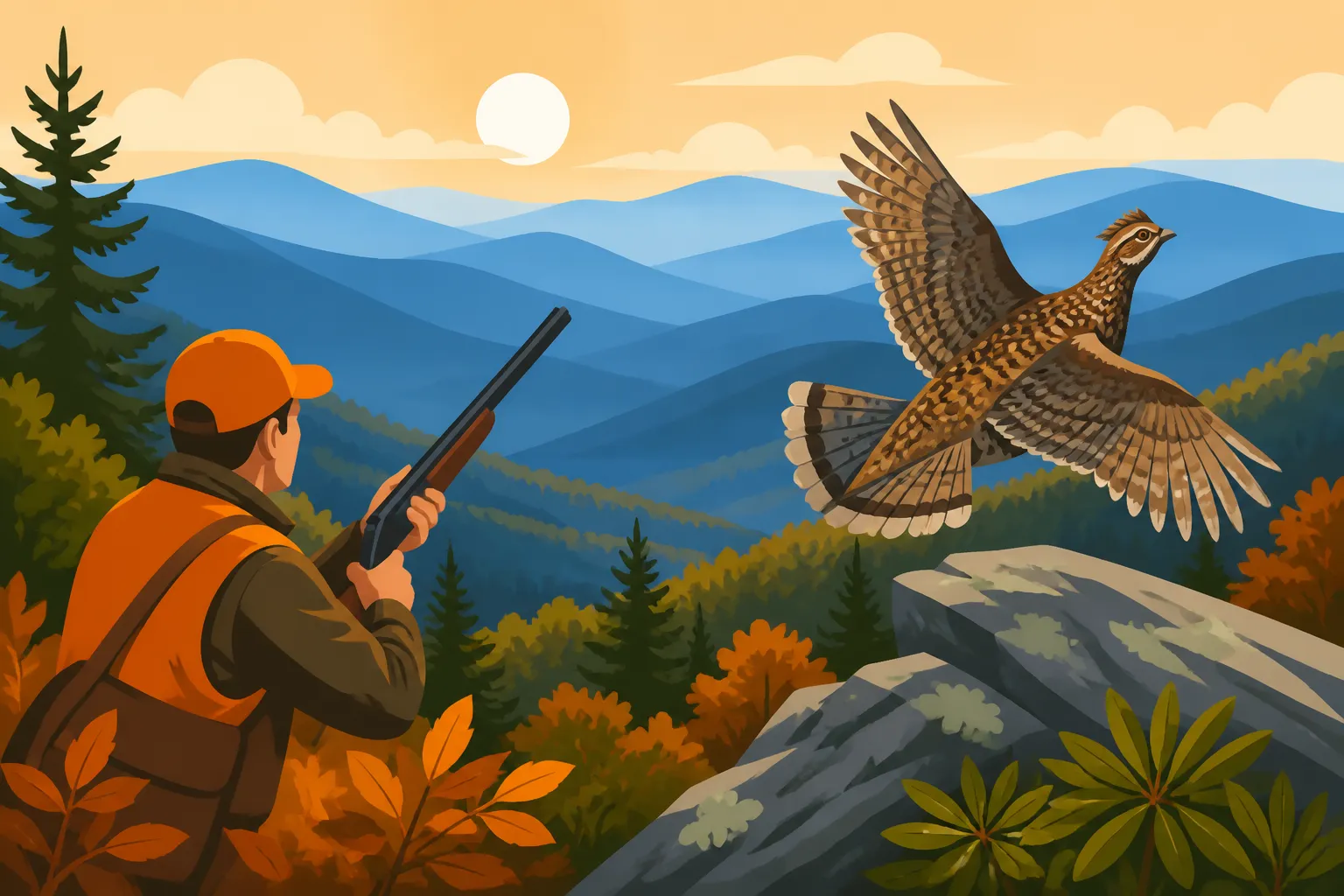
There's something uniquely challenging, and often downright frustrating, about pursuing ruffed grouse along North Carolina's unforgiving Blue Ridge Escarpment. This isn't your grandfather's flat-land bird hunt; here, every step is a climb, every flush is a heart-stopper, and finding these elusive birds demands a special blend of grit, knowledge, and physical endurance. This guide will dive deep into the specific strategies, essential gear, and crucial understanding you'll need to successfully hunt grouse in this truly wild and rugged corner of our state.
Understanding the Blue Ridge Escarpment Grouse Habitat
Hunting ruffed grouse on the Blue Ridge Escarpment isn't like chasing quail in a manicured field or doves over a cut corn patch. This is wild country, characterized by dramatic elevation changes, dense vegetation, and a climate that keeps you on your toes. To even stand a chance, you need to first become a student of the landscape and understand precisely what makes a piece of ground prime grouse habitat here.
The Unique Topography and Vegetation
The Blue Ridge Escarpment is the abrupt transition zone where the high, rolling Blue Ridge Mountains drop sharply to the lower Piedmont. This creates a fascinating and often brutal mix of terrain, from steep, rocky slopes and sheer cliffs to deep ravines and moist, shaded draws. It's a land of constant vertical challenge, and it shapes everything about how grouse live and how hunters pursue them. You'll find a dizzying array of tree species, from towering hardwoods like oak, hickory, and poplar on the upper slopes to various pines and hemlocks. But what truly defines grouse cover here is the understory. Dense thickets of rhododendron, mountain laurel, greenbrier, and grapevines form impenetrable walls in many areas. These thickets, often found clinging to steep hillsides or lining creek bottoms, offer grouse the security they crave, making them incredibly difficult to flush and even harder to shoot.
The elevation gradient also means microclimates. One side of a ridge might be relatively dry and open, while the opposite slope, especially one facing north or east, could be perpetually damp and choked with dense evergreens. Hunters quickly learn that grouse often favor these cooler, moister spots, particularly during warmer spells of the season. Navigating this dense, uneven terrain is physically demanding, so proper conditioning and careful route planning are paramount.
Identifying Prime Grouse Coverts
Grouse are creatures of edge and disturbance, but on the escarpment, those "edges" are often less defined by a field line and more by subtle changes in timber age, moisture, or underlying rock formations. Key areas to focus on include young timber stands resulting from past logging operations, particularly those between 10 to 30 years old, where dense saplings and brush provide ample overhead and lateral cover. These areas are often found on national forests like Pisgah National Forest Hunting, where timber management occurs. Look for old logging roads and skid trails, which, while offering easier walking, also create linear openings that grouse use for travel and escape. These linear features often have dense secondary growth along their edges, creating excellent ambush points for a bird bursting out.
Another critical habitat feature is dense evergreen cover adjacent to mixed hardwoods. Think stands of hemlock or white pine interspersed with oaks. The evergreens provide thermal protection in cold weather and visual security year-round, while the hardwoods drop leaves and acorns that can be important food sources. Don't overlook the moist, rocky draws and springheads. These spots often hold thicker, lusher vegetation and a higher insect population, which can be attractive to grouse, especially younger birds. When scouting, you’re looking for a mosaic—a blend of different cover types within a small area, offering food, water, and security within easy reach.
Food Sources and Seasonal Movements
Ruffed grouse diets shift throughout the year, and understanding these changes is crucial for locating birds. In the early season, from October through November, grouse are often found near soft mast sources like wild grapes, greenbrier berries, dogwood berries, and the occasional leftover apple from an old orchard. They'll also feed heavily on the buds and catkins of aspen, birch, and hazel, though these are less common on the lower escarpment. As winter sets in and hard frosts hit, they transition more to dormant buds and twigs of various hardwood species, particularly oaks, whose acorns provide critical energy.
While they don't migrate in the traditional sense, grouse do make localized movements based on food availability and weather. During heavy snows or extreme cold, they might burrow into soft snow for thermal insulation or retreat to dense evergreen cover. During milder periods, they might be more scattered, feeding in more open areas or along the edges of thicker cover. Keeping an eye on what's fruiting or budding in your hunting area is vital intel. The birds will go where the food is, so your job as a hunter is to find those areas, often with the aid of detailed topographic maps and aerial photography.
Essential Scouting and Planning for Escarpment Grouse
You can't just show up on the Blue Ridge Escarpment and expect to stumble into grouse. This type of hunting demands meticulous pre-season work and careful planning. The terrain is unforgiving, and the birds are few and far between. Every bit of preparation you put in beforehand will increase your chances of success and, more importantly, your safety.
Pre-Season Reconnaissance and Map Work
Successful grouse hunting on the escarpment starts long before opening day. Get out into the woods during the late summer and early fall, even if it's just for a hike. Look for areas with diverse vegetation, varying timber ages, and plenty of dense undergrowth. Pay close attention to north-facing slopes, moist draws, and areas around old logging decks or clearcuts. These are often the same places where you find grouse sign like droppings, dusting bowls, or tell-tale "cuttings" (small twig ends) left behind after they've been feeding.
Beyond boots-on-the-ground, spend serious time with maps. Topographic maps are your best friend here. Identify distinct elevation changes, potential benches, and saddles that could serve as travel corridors for birds. Look for areas with a mix of habitat types: dense conifer stands adjacent to young hardwoods, or thick rhododendron choking a creek bottom near an older oak stand. The North Carolina Wildlife Resources Commission's GoHunt application is an invaluable tool for this, offering detailed aerial imagery, topographic overlays, and boundary lines for public lands. You can also use other mapping services to visualize the terrain in 3D, which can highlight features you might miss on a flat map. When hunting these steep slopes, you need to plan your route, identifying potential escape routes for yourself in case of bad weather or an emergency, and making sure you know How Far to Walk From a Forest Road While remote hunting offers solitude, it also increases risks.
Using Technology for Terrain Analysis
Modern technology has revolutionized how hunters scout and navigate, and for the challenging terrain of the Blue Ridge Escarpment, it's absolutely indispensable. Tools like the GoHunt app or other dedicated GPS mapping apps are critical. They allow you to layer satellite imagery, topographic maps, and even private land boundaries, giving you an unparalleled view of the landscape from your armchair. Before you even set foot in the woods, you can identify potential grouse coverts, mark old logging roads, pinpoint dense thickets, and plan your approach and exit routes. This is especially useful for understanding elevation changes and identifying features like benches or saddles that grouse might use.
When you're out in the field, these same apps become your real-time navigation system. GPS capabilities ensure you always know exactly where you are, which is vital in thick, disorienting cover or if unexpected fog rolls in. You can track your movements, mark flushes, and identify areas you want to revisit. Many apps also allow you to download maps for offline use, which is a lifesaver in areas with no cell service – a common occurrence in the deeper parts of the escarpment. Utilizing these tools effectively can significantly cut down on wasted effort and help you focus on the most promising areas.
Reading Sign and Identifying Flush Points
Once you're in the woods, your eyes need to be trained to spot the subtle clues that indicate grouse presence. Fresh grouse droppings, often found near dusting bowls or feeding areas, are a sure sign that birds are in the vicinity. Look for small, dark, cylindrical droppings, sometimes found in small piles. Another key indicator is "cuttings"—small, cleanly snipped twigs or buds left by grouse after feeding. These are often found under aspen, birch, or other preferred food trees. Dusting bowls, shallow depressions in soft soil or dust, indicate where a grouse has been preening its feathers to remove parasites.
Beyond these direct signs, you need to anticipate where a grouse might flush. They typically prefer to have dense cover to fly into, often flying downhill or across a ravine. When approaching a thicket, try to anticipate the bird's escape route and position yourself for a shot. Look for areas where dense cover transitions to slightly more open timber, as these edges are often where birds will be feeding before retreating into the thick stuff. Old logging clearings or areas with abundant greenbrier and multiflora rose are also prime spots for a sudden explosion of feathers. Learning to read these environmental cues and predicting potential flush points is a skill that only comes with time and countless hours spent in the Grouse Hunting Blue Ridge Cover.
Proven Tactics for Hunting North Carolina Escarpment Grouse
Grouse hunting on the Blue Ridge Escarpment is a game of patience, stealth, and sometimes, sheer luck. Whether you're hunting with a loyal bird dog or relying solely on your own two feet, the tactics employed here must be adapted to the challenging environment and the elusive nature of the birds. This is not a sport for the faint of heart, but the rewards—a quick, explosive flush and the satisfying thud of a bird—are unparalleled.
Hunting Without a Dog: The "Boot Leather" Method
For many of us who don't have the luxury of a well-trained bird dog, or simply prefer the solitary challenge, the "boot leather" method is the way to go. This involves systematically covering ground, often at a slow, deliberate pace, designed to surprise and flush birds. The key here is to move slowly, pausing frequently, sometimes for 30 seconds to a full minute. Grouse are incredibly adept at holding tight, relying on their camouflage to remain undetected. These pauses can often make a nervous bird break cover, thinking you've moved on. You'd be amazed how many times a flush will occur just as you're about to take another step after a long pause.
Focus on moving through the thickest cover you can reasonably penetrate, as this is where the birds feel safest. Work along the edges of rhododendron and mountain laurel thickets, through young regeneration, and along stream bottoms where dense vegetation thrives. Pay close attention to any changes in elevation or cover type. When a bird flushes, your reaction time needs to be instantaneous. Shots are often quick, close, and through heavy cover. Wearing durable Brush Pants for North Carolina Mountain Laurel is a must, as you’ll be pushing through thorny undergrowth constantly.
Working With a Bird Dog on Steep Slopes
While challenging, hunting the escarpment with a bird dog can be incredibly rewarding, dramatically increasing your chances of finding and flushing birds. Dogs allow you to cover more ground efficiently and often pinpoint birds holding tight that you would undoubtedly walk past. However, this isn't flat-field hunting, and your dog needs to be conditioned for the steep, broken terrain. A dog that ranges too wide on a flat field will quickly get lost or out of control on a mountainside. Consider a dog that works closer, a "foot hunter," who understands the vertical game.
Communication and control are critical. Electronic collars can be invaluable for keeping a dog within range and on task, especially when working across draws or around blind corners. Your dog needs to understand how to handle scent on swirling mountain winds and how to hold a point on a steep, unstable slope. Proper training, including specific commands for "whoa" or "stay" even on inclines, is essential. The physical demands on a dog are immense, so bring plenty of water for them and be mindful of their pads and energy levels throughout the day. A good dog will pick up on subtle scent cones that you’d never detect, often allowing you to walk into a solid point for a better shot opportunity.
Safety Considerations in Rugged Terrain
Safety should always be your top priority when hunting the Blue Ridge Escarpment. This is truly wild country, and a simple mishap can quickly become a serious emergency. First and foremost, always let someone know exactly where you're going and when you expect to return. Carry a fully charged cell phone, but don't rely on it for navigation or emergency calls, as service is often nonexistent. A dedicated GPS unit or a mapping app with downloaded offline maps is essential. Remember to pack First Aid Kits for Remote Mountain Ground, because a twisted ankle miles from the nearest road can be disastrous.
Dress in layers, even on seemingly mild days, as mountain weather can change rapidly. Hypothermia is a real risk. Wear bright blaze orange, not just for legal requirements but for maximum visibility to other hunters—and even to your hunting partner—in thick cover. Be acutely aware of your footing; slippery rocks, loose leaves, and hidden roots are everywhere. Always be careful when climbing over downed timber or crossing streams. Hunting partners should stay in communication, whether visually or with a whistle or two-way radio, especially when separating to work different sides of a thicket. Finally, always be mindful of your muzzle direction, particularly when navigating steep slopes or dense brush.
Gear Up: What You Need for Escarpment Grouse Hunting
Hunting grouse on the Blue Ridge Escarpment isn't a casual affair; it demands specialized gear that can stand up to the rigorous demands of the terrain and the often-harsh weather. Having the right equipment not only makes your hunt more comfortable and enjoyable but can also be critical for your safety and success.
Shotgun and Ammunition Choices
When it comes to shotguns for ruffed grouse in this unforgiving environment, quick handling and reliability are key. Double barrels, whether side-by-side or over-and-under, are often favored for their compact length and the ability to have two different choke constrictions for varied shot distances. A lightweight 20-gauge or even a 28-gauge is an excellent choice, as you'll be carrying it for miles over steep ground. While a 12-gauge will certainly do the job, the extra weight can become burdensome by the end of the day. For more insights on this, check out Best Shotgun Gauge for Mountain Grouse.
As for ammunition, you'll want light, fast loads of small shot. Typically, 7.5 or 8 shot in a game load is perfect for grouse. These birds are not heavily armored, and the goal is a dense pattern at close range. Shots are often quick, reactive, and through some amount of cover. For detailed recommendations on Shot Size for Grouse and Woodcock, consider 1 oz. loads for 20 gauge. Choke selection is critical, and many hunters opt for an open choke like improved cylinder or skeet in their first barrel for close flushes, followed by a modified choke in the second barrel for longer shots. A good pattern at 20-30 yards is what you’re aiming for.
| Gauge | Shot Size | Load (oz) | Choke (1st Barrel) | Choke (2nd Barrel) | Typical Range (yards) |
|---|---|---|---|---|---|
| 12-ga | 7.5 or 8 | 1 – 1 1/8 | Improved Cylinder | Modified | 10-35 |
| 20-ga | 7.5 or 8 | 7/8 – 1 | Improved Cylinder | Modified | 10-30 |
| 28-ga | 7.5 or 8 | 3/4 | Skeet | Improved Cylinder | 8-25 |
Layering and Footwear for Mountain Hunting
The weather on the Blue Ridge Escarpment can be notoriously fickle, with temperatures swinging dramatically from morning to afternoon, and conditions varying from sun to driving rain or even snow. Layering is your best defense. Start with a moisture-wicking base layer to draw sweat away from your skin. Add an insulating middle layer, such as a fleece or lightweight wool, and top it off with a durable, windproof, and waterproof outer shell. Look for quiet fabrics that won't rustle when you're moving through dense brush, giving away your presence to a wary bird. Don't forget a warm hat and gloves, as a significant amount of body heat is lost through your head and hands.
Footwear is arguably the most critical piece of gear for escarpment grouse hunting. You need boots that provide exceptional ankle support to prevent twists and sprains on uneven ground. Look for sturdy, waterproof boots with aggressive traction to navigate slippery rocks, muddy slopes, and leaf litter. Insulated boots are often a good choice for late-season hunts when temperatures drop. Ensure your boots are well broken in before the season; blisters on a multi-mile mountain hunt are no fun at all. Many seasoned hunters prefer high-top leather boots for their durability and support. Make sure to consider Boots for Walking North Carolina Ridges when making your selection.
Navigation and Emergency Gear
Getting lost in the vast, dense wilderness of the Blue Ridge Escarpment is a serious concern, even for experienced hunters. A reliable navigation system is non-negotiable. While a smartphone app with GPS capabilities (like GoHunt's mapping features) is excellent, it's wise to carry a traditional compass and a paper map as a backup, especially since cell service is often unreliable in these remote areas. Learn how to use them proficiently before you ever hit the woods. A fully charged power bank for your phone is also a smart addition.
Beyond navigation, a comprehensive emergency kit is crucial. This should include a whistle (three short blasts is a universal distress signal), a fire starter, a small flashlight or headlamp (even if you plan to be out before dark), a multi-tool or knife, a length of cordage, and emergency rations like energy bars. Carry plenty of water—more than you think you'll need—and consider a water filter or purification tablets. Always have a basic first-aid kit ready for cuts, scrapes, and blisters. The goal is to be self-sufficient in case you get disoriented or injured, ensuring a minor incident doesn't escalate into a life-threatening situation. It's truly a different ballgame than hunting more manicured properties.
Navigating Seasons, Regulations, and Conservation
Successful and ethical grouse hunting involves more than just tactics and gear; it requires a deep understanding of North Carolina's specific hunting regulations, season dates, and the broader conservation efforts aimed at protecting these iconic birds. The future of ruffed grouse hunting depends on responsible practices and an awareness of the species' challenges.
North Carolina Grouse Season Rules and Bag Limits
Understanding the specific regulations for grouse hunting in North Carolina is paramount to staying legal and contributing to conservation. The ruffed grouse season typically runs from early October through late February, aligning with many other small game seasons. However, always double-check the current North Carolina Wildlife Resources Commission (NCWRC) regulations each year, as dates can shift slightly. You can find detailed information by searching for North Carolina Small Game Season Rules.
The daily bag limit for ruffed grouse in North Carolina is usually two birds per hunter. This is a conservative limit, reflecting the relatively low population density of grouse in the state compared to some northern states. There is no possession limit, meaning you can have more than two birds at home, but you cannot harvest more than two in a single day. All hunters must possess a valid North Carolina hunting license and appropriate big game or small game privileges. Blaze orange requirements also apply when small game hunting during gun seasons for deer, so always wear enough to be visible.
Conservation Challenges and the Future of Grouse Hunting
The truth is, ruffed grouse populations in North Carolina, like in many parts of their southern range, have faced significant declines over the past few decades. This isn't due to overhunting, but primarily to habitat loss and fragmentation. As forests mature, they lose the dense, young understory grouse rely on for food and cover. Forest management practices, particularly those that create early successional habitat through timber harvests or controlled burns, are critical for reversing this trend. You can learn more about this by reading up on North Carolina Ruffed Grouse Decline.
The NCWRC and various conservation groups, such as the Ruffed Grouse Society, are working on initiatives to improve grouse habitat across the Blue Ridge Escarpment and other mountain regions. Hunters play a vital role in these efforts, not just through license purchases that fund wildlife management, but also by advocating for sound forestry practices and participating in habitat improvement projects. Ethical hunting practices, such as accurate identification of game and respectful treatment of the land, are also crucial. By being informed and involved, we can all contribute to ensuring a future for grouse hunting in North Carolina.
Public Access and Game Lands Specifics
The vast majority of ruffed grouse hunting in North Carolina occurs on public lands, particularly within the state's national forests and designated Game Lands in the western part of the state. Pisgah National Forest and Nantahala National Forest offer extensive acreage across the Blue Ridge Escarpment, providing critical habitat for grouse. While these areas are publicly accessible, it's important to understand the specific rules and regulations that apply to hunting on them. Most require a North Carolina Game Lands License in addition to your regular hunting license.
Always consult the NCWRC's Game Lands rules and map resources before heading out. They can provide vital information on access points, parking, and any specific restrictions that might apply to certain areas, such as special permit hunts or temporary closures. Using the NC Wildlife Map Tool is a great way to orient yourself and find accessible areas. Some areas might have vehicle restrictions on certain forest roads, requiring you to hike in further. While this can mean more effort, it often leads to less pressured birds and a more solitary hunting experience. Remember that public lands are shared resources, so always practice courtesy towards other users, whether they are hikers, mountain bikers, or other hunters.
Disclaimer
Hunting is an inherently risky activity. This guide provides general information and recommendations. Always consult the official North Carolina Wildlife Resources Commission regulations for the most current and accurate season dates, bag limits, and legal requirements. Stay safe and hunt responsibly.