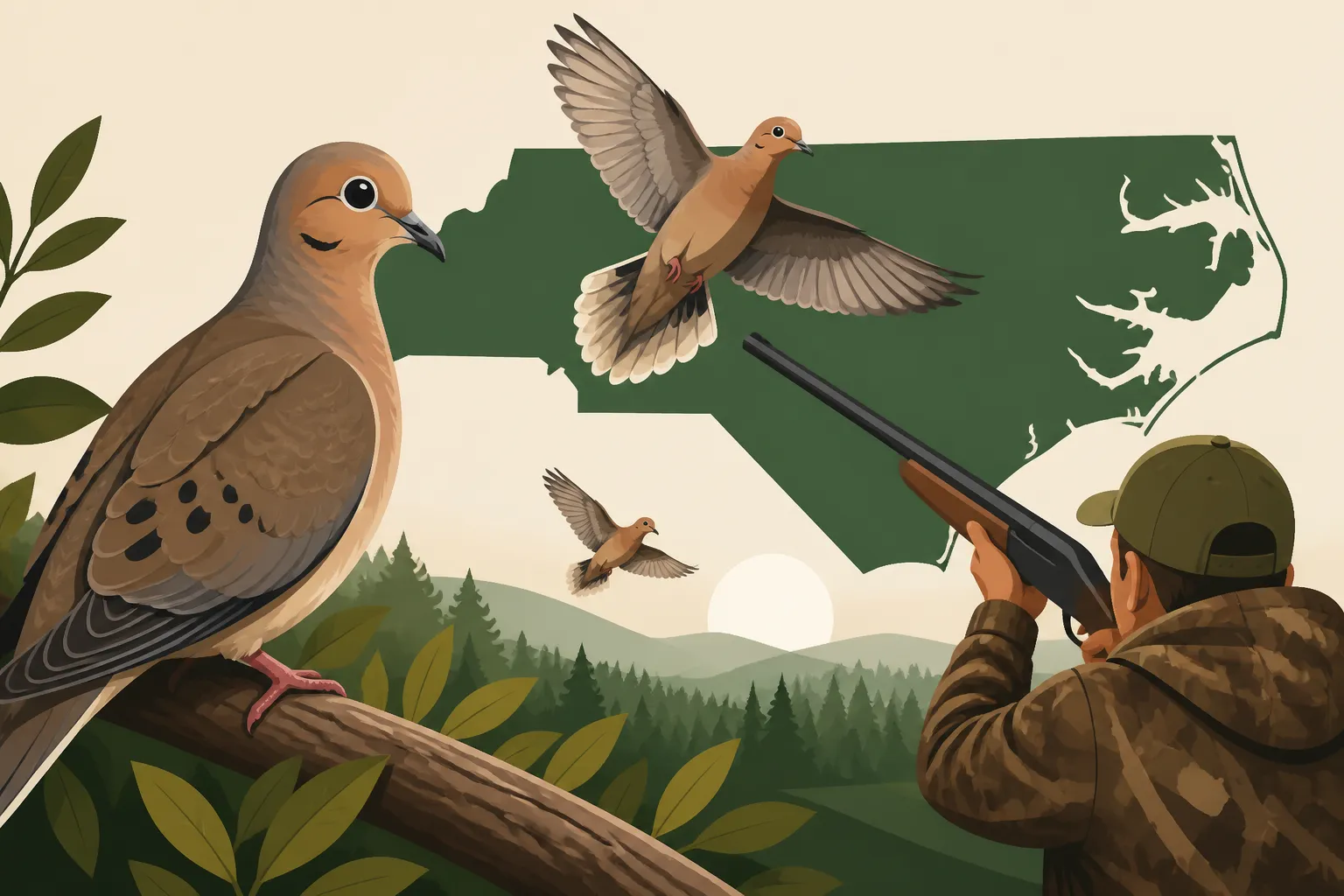
Mourning Doves in North Carolina
There's nothing quite like the sound of wings whistling overhead on a crisp September morning, or the frustrating, yet exhilarating, challenge of trying to connect with a fast-flying target. For many North Carolina hunters, dove season isn't just a hunt; it's a cherished social event, a tradition passed down through generations. But finding consistent action, understanding the intricate regulations, and mastering the art of dove hunting in our diverse landscapes can be a real head-scratcher. This comprehensive guide is here to walk you through everything you need to know to make your North Carolina dove hunting experience both successful and incredibly rewarding.
Understanding North Carolina's Mourning Dove Population
Mourning doves are one of North Carolina's most abundant and widely distributed game birds, and they hold a special place in the hearts of hunters across the state. They're a migratory species, but we also have a substantial resident population that breeds here throughout the spring and summer. This mix means we often get multiple waves of birds throughout the season, offering varied hunting opportunities from the early opener to the late splits.
Historical Context and Current Status
Back in the day, doves were often seen as a secondary target, something you might stumble upon while squirrel hunting. But over the years, as agricultural practices shifted and hunter interest grew, dove hunting evolved into its own distinct culture, particularly in areas rich with farmland. Today, the mourning dove population in North Carolina remains robust, a testament to effective wildlife management and the bird's adaptability. Surveys conducted by the U.S. Fish and Wildlife Service, in cooperation with state agencies like the North Carolina Wildlife Resources Commission (NCWRC), consistently show stable to increasing populations across the Southeast. This is good news for hunters, indicating healthy breeding success and strong recruitment of young birds into the population each year.
While localized fluctuations can occur due to weather, habitat changes, or disease outbreaks, the overall trend for doves in our state is positive. We're fortunate to be a major part of the Eastern Management Unit for doves, which spans across many states and helps ensure a broad, coordinated conservation effort. The sustained health of our dove population means that the tradition of dove hunting can continue for generations to come, providing countless hours of enjoyment afield.
Dove Biology and Behavior in the Tar Heel State
Mourning doves are fascinating creatures, perfectly adapted to their environment. They're primarily seed-eaters, which is why you'll find them frequenting agricultural fields, pastures, and disturbed ground where seeds are abundant. Their diet consists of small grains like wheat, millet, and sunflower seeds, but they also eat wild seeds from weeds like ragweed and pokeberry. They have a unique way of drinking water, sucking it up in a continuous draft rather than scooping it. This means they need reliable water sources, making ponds, creeks, and even puddles key areas to observe their movement, especially during dry spells.
In North Carolina, doves typically nest from early spring through late summer, often raising multiple broods. Their nests are flimsy affairs, usually a sparse collection of twigs in a tree or shrub. This extended breeding season contributes to their rapid population turnover, allowing them to quickly bounce back from hunting pressure. You'll often see them flying in small groups, or "flights," especially in the mornings and evenings as they move between roosting areas, feeding grounds, and water sources. Understanding these daily patterns – where they roost, where they feed, and where they water – is absolutely critical for successful scouting and setting up your hunt. These birds are creatures of habit, and if you can identify their daily flight lines, you're well on your way to a productive day in the field.
Where to Find Doves Across North Carolina
North Carolina's diverse geography offers a variety of prime dove hunting opportunities, from the rolling Piedmont hills to the vast coastal plains. Knowing where to look and what type of habitat doves prefer is the first step in planning a successful hunt.
Key Habitats and Preferred Landscapes
Doves are strongly tied to agricultural areas. If you're looking for prime hunting ground, start by thinking about crops. Cut grain fields, especially wheat, millet, or sunflower fields, are absolute magnets for doves. They'll flock to these areas to feed on the fallen seeds after harvest. You'll also find them in cornfields, particularly if the corn has been cut for silage or picked, leaving scattered kernels. Beyond active agriculture, doves love open areas with sparse vegetation, gravel roadsides for grit, and overhead power lines for loafing and staging before heading to feed.
In the Piedmont, areas around cities like Greensboro, Raleigh, and Charlotte still boast significant agricultural tracts, especially those with smaller, family-owned farms growing traditional crops. These areas often have a mix of cut fields, old pastures, and scattered woodlots, creating ideal dove habitat. You might even find good pockets near suburban areas, especially if you can gain permission on small private tracts in North Carolina. The Coastal Plain is arguably dove central in North Carolina. Vast expanses of farmland dominate this region, with huge fields of corn, soybeans, and wheat. Counties like Edgecombe, Martin, and Pitt are renowned for their incredible dove hunting, often drawing hunters from across the state. Farmers here frequently plant sunflower or millet fields specifically to attract doves for hunting opportunities, creating some of the best dove fields in North Carolina. Even the Sandhills Region, with its longleaf pine savannas, can offer good dove hunting where agricultural patches break up the pine forests.
Public Land Opportunities for Dove Hunters
While many of the best dove fields are on private land, North Carolina offers some fantastic public hunting opportunities. The NCWRC manages numerous public dove fields on various Game Lands specifically for hunter access. These fields are often planted with sunflowers, millet, or wheat and managed to attract doves. Some of the most popular areas include portions of the Jordan Lake Game Land near Apex, Butner-Falls of Neuse Game Land north of Raleigh, and fields within the Goose Creek Game Land in eastern NC. These public fields typically see heavy pressure, especially on opening day and the first few weekends of each split.
Before heading out, it's crucial to check the NCWRC website or use an app like GoHunt to confirm specific field locations, special regulations, and any sign-in procedures for these Game Lands. Sometimes, certain fields might require a daily permit or have designated shooting hours. It's always a good idea to scout these fields prior to the season if possible. Even if you can't scout, knowing the layout from a mapping app can give you a significant advantage. Remember, these are popular spots, so expect company, especially on opening day of the season. To avoid the biggest crowds, consider hunting the second dove split in October or focusing on weekdays if your schedule allows.
Gaining Private Land Access for Prime Dove Fields
Let's be honest, the holy grail of dove hunting is often a well-managed private field. These properties typically receive less pressure and are often specifically prepared for doves, leading to better hunting. The key, of course, is gaining permission. This can feel daunting, but a polite, respectful approach goes a long way. Start by identifying promising fields from the road or through mapping tools. Look for cut grain fields, especially those near power lines or water sources. Once you've identified a spot, try to find the landowner.
A simple, direct approach often works best: knock on the door, introduce yourself, state your intention clearly, and be prepared for a "no." If they say yes, be incredibly grateful and offer to share some of your harvest. Always respect their property, leave no trash, and follow any specific rules they might have. Building a good relationship with a landowner can secure hunting access for years to come. Remember, some farmers might even be open to a small lease agreement for the season. Services like GoHunt can sometimes help identify landowners, making that initial contact a bit easier, though a face-to-face conversation is always best. Don't overlook smaller farms or those slightly off the beaten path; these hidden gems often offer fantastic, low-pressure hunting.
North Carolina's Dove Season Structure and Regulations
Navigating the rules and regulations for dove hunting in North Carolina is critical for a legal and ethical hunt. The NCWRC works to balance hunting opportunities with conservation, resulting in a season structure designed to utilize migratory patterns and reproductive success.
Decoding the Splits and Bag Limits
North Carolina's dove season is structured in multiple "splits" throughout the fall and winter, allowing hunters to capitalize on different waves of migratory birds and resident populations. Typically, the season opens in early September, often on the first Saturday, for the first and most popular split. This initial period is usually the busiest, drawing large crowds to prime fields, as hunters eagerly await the chance to "work a dove field on opening day." After a short closure, there's usually a second split in October, coinciding with cooler weather and potentially new waves of birds. A third, shorter split often occurs in December or early January, providing a late-season opportunity.
The daily bag limit for mourning doves is generally 15 birds, with a possession limit of 45 birds. This means you can't have more than 45 doves in your possession at any given time, regardless of how many days you've hunted. It's crucial to confirm these dates and limits each year with the latest NCWRC regulations, as they can occasionally shift based on federal guidelines or population assessments. Missing a split can be a real bummer, so staying informed is key.
Here's a generalized table illustrating a typical North Carolina dove season structure, but always verify current dates with the NCWRC before hunting:
| Season Split | Approximate Dates (Annual Variation) | Daily Bag Limit | Possession Limit |
|---|---|---|---|
| First Split | Early September – Early October | 15 Birds | 45 Birds |
| Second Split | Mid-October – Early November | 15 Birds | 45 Birds |
| Third Split | Mid-December – Early January | 15 Birds | 45 Birds |
Licensing, Permits, and HIP Certification Requirements
To legally hunt mourning doves in North Carolina, you'll need a few key documents. First and foremost, a valid North Carolina hunting license is required. For residents, various options exist, but a basic annual hunting license covers doves. Non-residents will also need an appropriate non-resident hunting license. Beyond the base license, because doves are a migratory game bird, you are also required to possess a North Carolina Migratory Bird Certification. This certification is crucial and essentially registers you with the Harvest Information Program (HIP).
The HIP certification is a federal requirement for anyone hunting migratory game birds, including doves, waterfowl, woodcock, and snipe. It helps wildlife agencies collect data on hunter participation and harvest, which is vital for managing these populations. Without this certification, your migratory bird hunt is not legal. You can typically add the Migratory Bird Certification when you purchase your hunting license, either online through the NC Wildlife Portal, by phone, or at a local license agent. It's usually a small additional fee, but it's non-negotiable for dove hunting. Make sure all your paperwork is in order before you head to the field; a wildlife officer conducting a check will certainly ask for it.
Legal Shooting Hours and Blaze Orange Rules for Dove Fields
Understanding legal shooting hours is absolutely essential for safe and lawful dove hunting. In North Carolina, legal shooting hours for migratory game birds, including doves, are generally from one-half hour before sunrise until sunset. This means you can't be shooting doves the moment the sun peeks over the horizon, nor can you continue blasting away once it dips below. It's important to have a reliable watch or a phone app that tracks sunrise/sunset times for your specific location, as these times vary throughout the season and across the state. Setting up too early or staying too late can lead to legal trouble and is also considered poor sportsmanship.
When it comes to blaze orange, there's often some confusion. For hunting doves, which are migratory game birds, blaze orange is not required by North Carolina law. However, this rule applies specifically to dove hunting where doves are the only target species. If you are hunting on public lands during a period when other game species (like deer or bear) are also in season and require blaze orange, then you would need to wear it. Given that the early dove season often overlaps with early archery season for deer in some zones, it's always wise to check the specific regulations for the game land or area you're hunting. Many dove hunters choose to wear some form of blaze orange or bright color, especially when walking through dense cover or when hunting in crowded public fields, simply as a safety precaution. While not required, it can certainly help increase visibility among fellow hunters, especially if you're engaging in deer drives on North Carolina public land later in the season. Safety should always be your top priority.
Effective Tactics for Hunting Mourning Doves
Dove hunting, while often perceived as a simple "pass shoot," actually involves quite a bit of strategy. From scouting to setting up your spread, a thoughtful approach can make all the difference between a few birds and a limit.
Setting Up a Productive Dove Field
The secret to a great dove hunt starts long before opening day: scouting. You can’t just show up to any field and expect success. You need to find fields where doves are actively feeding, flying, and watering. Look for signs like doves perched on power lines, flying low over hedgerows, or congregating near specific patches of fallen seeds. Many hunters begin scouting weeks in advance, driving rural roads, and talking to farmers. Keep an eye out for cut wheat, millet, or sunflower fields – these are prime attractors. A mapping app, like GoHunt, can be incredibly useful for identifying potential fields and property lines, though a physical drive-by is irreplaceable for confirming bird activity.
Once you’ve identified a hot field, your setup is crucial. Doves are wary birds, and they have excellent eyesight. Think about where the doves are flying into the field and where they’re likely to fly out. Often, they'll follow natural funnels like treelines, hedgerows, or creek bottoms. Position yourself along these flight lines, or near a preferred feeding patch within the field. If possible, set up near a water source, especially in the afternoon. Early morning hunts are often best near roosting areas or feeding spots, while afternoon hunts can shine near water as birds take their last drink before roosting. Consider the wind direction too; doves, like most birds, prefer to land and take off into the wind.
Pass-Shooting and Decoying Strategies
Pass-shooting is the quintessential dove hunting tactic. It involves positioning yourself along a known flight path and shooting at birds as they fly by. This requires quick reflexes, good lead estimation, and a lot of ammunition! One of the biggest mistakes new dove hunters make is shooting too quickly or too slowly. Doves are notoriously fast and erratic flyers, often dipping, weaving, and changing direction without warning. Practice your swing and lead, aiming slightly ahead of the bird. If you're struggling, try aiming for the bird's beak or even a bit further out.
Decoys can significantly enhance your pass-shooting success. While not always necessary, especially in a hot field, they can draw birds closer and even get them to commit to a landing, giving you an easier shot. Motion decoys, like spinning-wing doves (such as Mojo decoys), are incredibly effective because they mimic the flapping wings of a landing bird, signaling "all clear" to passing doves. Place these on poles above the crop stubble or even on a fence post. Static decoys can also be used, arranged in small groups on the ground to simulate feeding birds. A common setup involves a few spinning-wing decoys positioned to catch the sun, with a scattering of static decoys below them, facing into the wind. This combination can be particularly deadly, making the difference when birds are a bit high or hesitant.
Incorporating Blinds and Cover for Success
Doves possess exceptional eyesight, so concealment is paramount, especially in open fields. Don't underestimate their ability to spot a hunter standing out like a sore thumb. While a traditional blind isn't always needed, breaking up your outline is critical. Natural cover is often the best option. Look for fencerows, standing corn or soybean rows if they haven't been fully harvested, or even small clumps of brush or saplings along a field edge. A big oak tree on the corner of a field can provide excellent natural cover, especially if you're able to set up against a big oak for a comfortable sit.
If natural cover is sparse, consider bringing a small, portable ground blind or simply a stool and some camo netting. You don't need an elaborate structure; just enough to break up your human shape. A dove stool and a bit of netting can go a long way. Position your blind or chosen cover so that you have a clear shooting lane, especially in the direction you expect birds to approach from. Make sure you can comfortably swing your shotgun without hitting any obstructions. Remember, even if you’re using a ground blind on North Carolina public land, the most important thing is to remain still and blend into your surroundings. Doves react quickly to sudden movements, so waiting until the bird is committed to your area before mounting your gun is a tactic that pays dividends.
Essential Gear and Equipment for Dove Hunting
Having the right gear won't guarantee a limit, but it will certainly make your dove hunting experience more comfortable, safe, and potentially more successful. From your shotgun to your seat, every item plays a role.
Shotguns, Ammunition, and Choke Selection
For dove hunting, versatility is key, but most hunters prefer a 12-gauge or 20-gauge shotgun. Both gauges offer sufficient power and pattern density for doves, which are relatively small birds. A 12-gauge is perhaps the most popular due to its wide availability of ammunition and its ability to deliver a consistent pattern, but a 20-gauge is lighter and often preferred by youth hunters or those sensitive to recoil. Semi-automatic or pump-action shotguns are common choices, allowing for quick follow-up shots on those elusive birds. An over/under or side-by-side can also be effective, especially for hunters who prefer the classic feel.
When it comes to ammunition, lead shot is generally permitted for doves, unlike waterfowl where nontoxic shot is required. The most common shot sizes are 7.5 or 8, as these small pellets provide a dense pattern, increasing the likelihood of hitting a fast-moving target. You'll want to choose a light load, often 1 to 1 1/8 ounces for a 12-gauge, as you'll likely be firing many rounds over the course of a hunt. As for chokes, an Improved Cylinder (IC) or Modified (Mod) choke is typically ideal for doves. An IC choke offers a wider pattern, great for close-range flushing birds or when they're coming in hot, while a Modified choke provides a slightly tighter pattern, giving you a bit more range. Many hunters start with an IC and switch to a Modified later in the day if birds are flying higher. It’s also wise to carry a few extra rounds than you think you’ll need – it's easy to go through a box or two on a busy day.
Decoys, Stools, and Comfort Items for the Field
Beyond your shotgun and shells, a few key accessories can drastically improve your dove hunting experience. As mentioned, decoys can be a game-changer. Spinning-wing decoys, like those from Mojo Outdoors, are incredibly effective at grabbing a dove's attention from a distance. You'll also want some static decoys to complement them, arranged on the ground as if feeding. Make sure your decoys are in good working order and have fresh batteries for motion decoys.
A comfortable dove stool is non-negotiable for a long day in the field. You'll likely be sitting for extended periods, waiting for flights, so a sturdy, comfortable stool that allows you to quickly stand and shoulder your gun is vital. Some stools come with integrated backrests or storage compartments, which can be a nice bonus. Don't forget a good cooler – not just for your drinks and snacks, but also for storing your harvested doves. Early season dove hunts in North Carolina can be warm, and keeping your birds cool is essential for preserving the meat. A game bag or vest with a large, accessible pouch is also invaluable for carrying your birds, shells, and other small items while keeping your hands free.
Safety Gear and Field Essentials
Safety should always be at the forefront of any hunting trip, and dove hunting is no exception. Because you're often hunting with multiple people in an open field, eye protection is crucial to guard against falling shot or errant pellets from other hunters. Quality shooting glasses are a must. Ear protection is equally important, as repeated shotgun blasts can cause permanent hearing damage. Earmuffs or earplugs are both effective; choose what's most comfortable for you.
Beyond safety gear, several other items are essential for a smooth hunt. Plenty of water is critical, especially during the warm early season splits. A small first-aid kit stocked with bandages, antiseptic wipes, and pain relievers is always a good idea, as scrapes and minor injuries can happen. Sunscreen and insect repellent can make a big difference in comfort. If you're hunting on public land or a large private tract, a good map (either paper or on your phone with an app that works without cell service) and a compass or GPS unit will help you navigate and avoid trespassing. Even if you're familiar with the area, it's wise to have a plan for walking out after dark, especially if you're tracking a deer through North Carolina leaf litter in a later season. A headlamp can be invaluable for packing up your gear once legal shooting hours have ended.
Post-Hunt Care and Enjoying Your Harvest
The hunt doesn't end when the shooting stops. Proper field care and preparation of your doves ensure that your hard-earned harvest makes it to the table in prime condition.
Field Dressing and Storage Techniques
After a successful hunt, especially during the warm early season, immediate field dressing is crucial for preserving the quality of your doves. Heat is the enemy of game meat. The quickest and easiest method for doves is usually breasting them out right in the field. To do this, simply lay the bird on its back, grasp the wings at the joint, and pull them away from the body. This will expose the breastbone. Using your thumbs, separate the skin and feathers around the breastbone, then pull the breast meat off the bone as a single fillet. Some hunters prefer to pluck the entire bird, but breasting is faster and results in less mess, leaving most of the feathers and carcass in the field (be sure to dispose of them properly and ethically).
Once breasted, place the meat immediately into a cooler filled with ice. Don't just toss them into a warm game bag and let them sit in the sun. The cooler should be easily accessible, and having a separate bag within the cooler for your doves can keep them from getting waterlogged. For long drives home, ensure you have enough ice to keep the meat chilled. If you're staying overnight at a camp, transfer the breasts to a ziploc bag and ensure they stay on ice or in a refrigerator. Proper cooling stops bacterial growth and ensures your dove meat is delicious and safe to eat.
Cleaning and Preparing Doves for the Table
Once you're home, it's time for the final cleaning before cooking. Remove the dove breasts from the cooler. You'll often find a bit of blood or small shot pellets. Rinse the breasts under cold water, carefully inspecting for any remaining feathers or debris. Use a small knife or your fingers to remove any shot or damaged meat. If you shot a bird that was particularly close, there might be some bruising; simply trim away any discolored areas.
Dove meat is lean, dark, and has a rich, slightly gamey flavor. It's incredibly versatile in the kitchen. Many people love to wrap dove breasts in bacon and grill them, which adds moisture and fat to prevent drying out. You can also pan-sear them, make dove poppers stuffed with cream cheese and jalapeños, or even use them in stews and gumbos. Because the meat is lean, it cooks quickly, so be careful not to overcook it, as it can become tough. Aim for medium-rare to medium for the best texture and flavor. Remember, this isn't chicken; it's a gourmet wild game experience!
Dealing with Hunting Pressure and Maintaining Ethics
Dove hunting is often a social affair, especially on public lands or well-known private fields. This can mean dealing with hunting pressure, which sometimes leads to ethical dilemmas or frustrations. On crowded public fields, it's common to have multiple groups of hunters, and sometimes people might unwittingly set up too close to one another or shoot at birds far outside their effective range, sending a shower of pellets downrange.
The key to a good experience, despite the crowds, is maintaining proper hunting etiquette and communication. Always maintain a safe distance from other hunters – ideally at least 100 yards, or more in open fields. Communicate with nearby groups about where you plan to set up. Don't "sky-bust" – shooting at doves that are too high or too far, risking safety and educating birds for everyone else. If a bird is obviously headed for another hunter, let them take the shot. Be mindful of your shooting lanes and always know what's beyond your target. Retrieving game from private land in North Carolina can be tricky, so make sure you have permission beforehand if there's a chance a bird might fall outside your hunting area. If you see unsafe behavior, politely and calmly address it, or if it's egregious, consider reporting it to the NCWRC. Ethical hunting ensures everyone has a safe and enjoyable time, and helps safeguard the future of the sport for North Carolina's youth.
Challenges and Conservation Concerns for North Carolina Doves
While North Carolina's mourning dove population is generally robust, these birds face various challenges, and their long-term health depends on ongoing conservation efforts and hunter awareness.
Habitat Loss and Agricultural Changes
One of the most significant long-term threats to mourning doves, and indeed many other ground-dwelling birds, is habitat loss and the changing face of agriculture. As North Carolina's population grows, wild areas are converted for development, leading to a reduction in crucial nesting and feeding habitat. Even within agricultural landscapes, shifts in farming practices can impact doves. The move towards larger, monoculture farms and away from smaller, diversified operations can reduce the mosaic of habitats that doves thrive in. For instance, the elimination of hedgerows, odd corners, and small fallow fields can reduce nesting sites and diverse food sources.
Furthermore, changes in crop types or harvest methods can affect the availability of food. If farmers switch from grains like wheat and millet, which leave abundant waste seed, to crops that are harvested more cleanly, doves might struggle to find sufficient forage. Even the timing of harvest can play a role; early harvests might leave fields bare for too long, while very late harvests might miss peak migration times. Hunters can play a role by advocating for wildlife-friendly farming practices and supporting land conservation efforts. Many of our game lands, like those that offer Dove Hunting North Carolina Opening Weekend opportunities, are specifically managed to provide this critical habitat.
Weather Patterns and Disease Impacts
Doves, like all wildlife, are susceptible to the vagaries of weather and the threat of disease. Severe weather events can have a direct impact on dove populations. Prolonged droughts can reduce water sources, making birds more vulnerable and impacting their breeding success. Conversely, excessively wet springs can lead to poor nesting success, as nests are washed out or young birds succumb to exposure. Harsh winters, though less common in much of North Carolina, can also affect dove survival if food sources are scarce.
Disease outbreaks are another concern. Avian Pox, a viral disease that causes wart-like lesions on doves, is common but usually not fatal to adult birds, though it can hinder feeding and make them more susceptible to predation. More recently, concerns about diseases like Avian Influenza in North Carolina Birds have prompted increased monitoring by wildlife agencies. While doves are not typically primary carriers, broad disease outbreaks could impact them. Wildlife agencies, including the NCWRC, constantly monitor populations for signs of disease and adverse weather impacts. Hunters can contribute to this monitoring by reporting a sick animal in North Carolina to the authorities, as unusual observations can provide valuable data for conservationists.
Hunter's Role in Dove Conservation
Hunters are often among the most passionate conservationists, and their involvement is vital for the continued health of North Carolina's mourning dove population. The purchase of hunting licenses, permits, and excise taxes on firearms and ammunition (through the Pittman-Robertson Act) directly funds wildlife research, habitat acquisition, and management programs that benefit doves and countless other species. When you buy your North Carolina Migratory Bird Stamp, that money goes directly to migratory bird conservation.
Beyond financial contributions, ethical hunting practices are fundamental to conservation. Adhering to bag limits, shooting hours, and other regulations ensures that harvest levels are sustainable. Avoiding "sky-busting" or wasteful shooting contributes to a positive public image of hunting and prevents unnecessary disturbance to the birds. Participating in hunter surveys or reporting your harvest, if required, provides critical data for biologists to assess population trends and set future seasons. Furthermore, supporting habitat initiatives, working with landowners to improve dove habitat on private lands, and simply being an educated and responsible ambassador for hunting all contribute to the long-term future of mourning doves in our state. By continuing these traditions responsibly, we ensure that the rhythmic coo of the mourning dove and the excitement of a fast-flying flight will remain a cherished part of North Carolina's outdoor heritage.
Disclaimer
This article is intended for informational purposes only and does not constitute legal advice. Hunting regulations, seasons, and licensing requirements can change annually. Always consult the official North Carolina Wildlife Resources Commission (NCWRC) regulations and local ordinances before engaging in any hunting activities. Safety should always be your top priority in the field.