North Carolina Turkey Brood Survey Results
Many of us eagerly await spring turkey season, full of anticipation for those thunderous gobblers and the thrill of the chase. But let's be honest, it can be incredibly frustrating to hunt an area that felt productive one year, only to find it eerily silent the next. You might wonder what happened, why the birds seem to have vanished, or why there aren't as many jakes running around. Understanding the health of North Carolina's wild turkey population, especially how many new poults (young turkeys) are successfully hitting the ground each summer, is crucial to making sense of these fluctuations. This guide will dive deep into North Carolina's turkey brood survey results and explain what they truly mean for hunters like us.
What Are Turkey Brood Surveys and Why Do They Matter?
When we talk about the future of turkey hunting, it all comes down to reproduction. Without successful hatches and surviving poults, our turkey populations simply can't sustain themselves, let alone grow. That's where turkey brood surveys come in, offering a vital snapshot of how well the birds are reproducing each year.
The Lifeblood of a Healthy Turkey Population
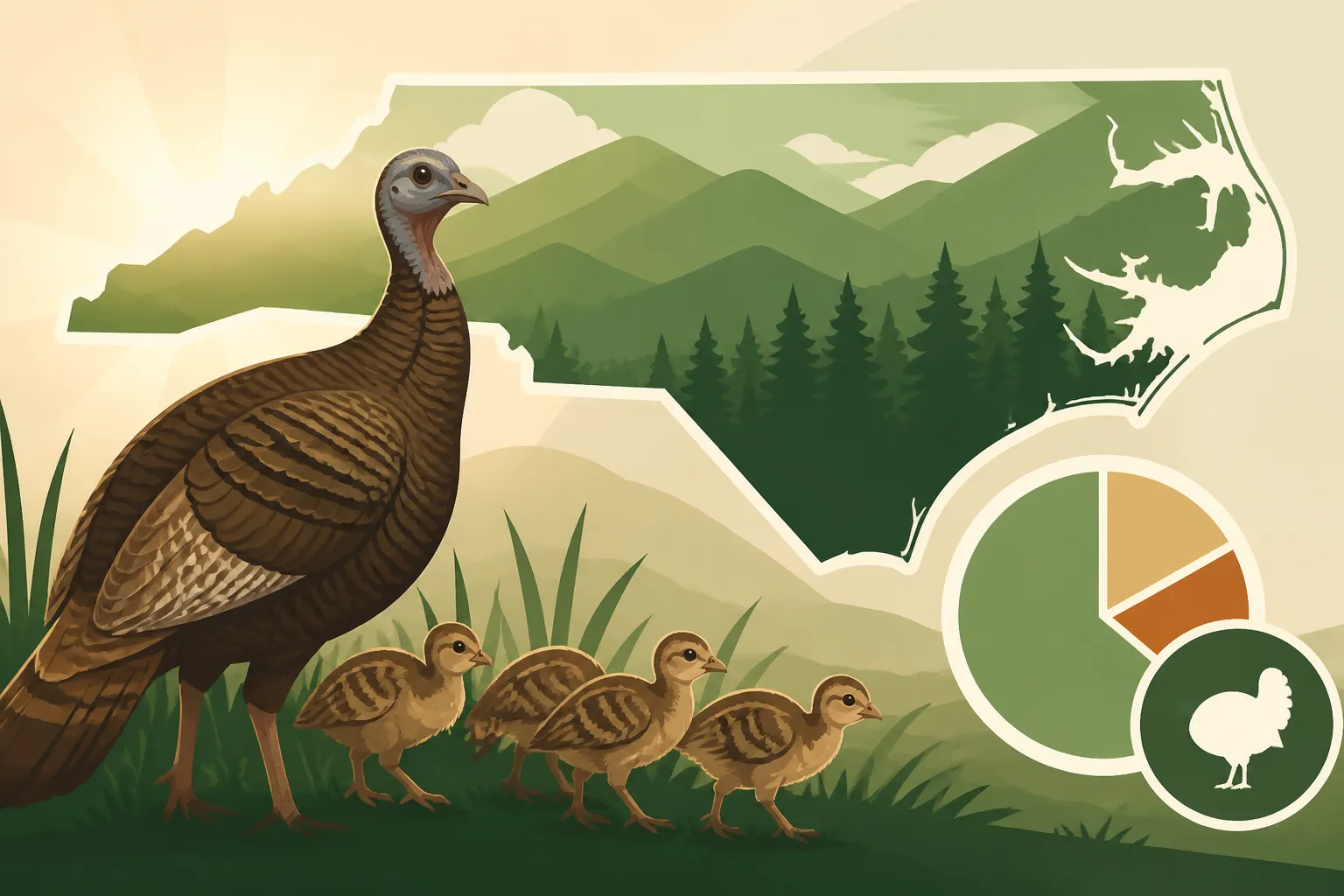
A turkey brood survey is essentially an organized effort to count wild turkey hens and the poults that accompany them during the summer months. Think of it as taking the pulse of the population's nursery. Biologists and volunteers are looking for family groups, trying to get a count of how many young birds each hen has managed to raise to a visible size. This data is absolutely critical because it provides a direct measure of reproductive success, which is the cornerstone of population stability and growth. If the reproduction isn't there, we'll see fewer birds in the woods in the coming years.
The reason this matters so much to hunters is simple: today's poults are tomorrow's jakes and adult gobblers. A strong hatch means a good cohort of young birds will be entering the population. These are the birds that will be most responsive to calls as jakes, and then as two-year-olds, they'll be prime targets in subsequent seasons. Conversely, a poor hatch can signal a leaner few years ahead, making hunting potentially more challenging as there are fewer new birds to fill the ranks. It helps us understand the "why" behind what we're seeing (or not seeing) in the woods.
Understanding Poults-per-Hen Ratios
The primary metric derived from these surveys is the "poult-to-hen ratio." This number represents the average count of poults observed per hen. It's a key indicator of productivity and survival for young turkeys. For example, a ratio of 3.5 poults per hen means, on average, each hen observed with a brood had 3.5 surviving young. It's a quick way to gauge how successful the nesting and early brood-rearing period was for the year.
What constitutes a "good" ratio versus a "poor" one can vary slightly by region and habitat, but generally, higher numbers are better. A consistently low poult-to-hen ratio over several years is a red flag for biologists, suggesting potential issues like high nest predation, poor weather during the hatch, or low poult survival rates due to disease or other factors. On the other hand, a consistently high ratio indicates a thriving, growing population with good recruitment. You can learn more about this specific metric in our article on Poult-to-Hen Ratios and What They Mean. These ratios help paint a picture of how many birds might make it to the next hunting season, allowing hunters to temper their expectations or plan their strategy accordingly.
How North Carolina Conducts its Turkey Brood Surveys
Gathering accurate data on wild turkeys across a state as diverse as North Carolina is no small feat. It requires a collaborative effort that taps into the eyes and ears of people who are already out in the woods, making it a true testament to community science.
Volunteer Spotters and Biological Data
North Carolina relies heavily on a network of dedicated volunteers, which often includes passionate hunters, curious landowners, and agency staff, to collect brood survey data. These individuals are asked to report any turkey sightings during the summer months, typically from June through August. When they spot turkeys, they record crucial details: whether it's a hen with poults, how many poults are in the brood, or if it's a lone hen or a lone gobbler. This decentralized approach is incredibly effective because these volunteers are already spending time in the diverse habitats where turkeys live, from the high peaks of the mountains to the dense coastal pocosins.
The timing of these surveys is strategic. By focusing on late summer, after the majority of nesting and initial brood-rearing has occurred, observers are counting poults that have survived past their most vulnerable early days. This provides a more accurate picture of successful recruitment into the fall population. The collective observations from thousands of hours spent in the field by these volunteers create a robust dataset that informs wildlife managers about regional population trends. It’s a classic example of citizen science helping to manage our precious natural resources.
Regional Differences in Survey Efforts
North Carolina is a vast state, encompassing three distinct geographic regions: the Mountains, the Piedmont, and the Coastal Plain. Each of these areas presents unique challenges and opportunities for turkey brood surveys. In the mountains, dense forest cover and rugged terrain can make spotting broods difficult, often requiring more effort or different observation points. The Piedmont, with its mix of agriculture and scattered woodlands, might offer more open field edges where broods are easily seen. The Coastal Plain, with its vast swamps and thick pocosin vegetation, presents another challenge, often requiring observations along road systems or forest edges.
Participation and observation patterns can vary significantly by region. Areas with more concentrated populations of hunters or landowners might naturally have more volunteers submitting data. Conversely, very remote or sparsely populated areas might see fewer reports. Understanding these regional nuances is important when interpreting the statewide data. For instance, a tool like GoHunt's mapping features can be incredibly helpful for individual hunters to visualize these different habitat types in their specific hunting grounds. By understanding where dense cover gives way to open fields or logging cuts, you can better anticipate where turkeys might be seen, and thus, where brood observations are more likely to occur and why they might differ from another region.
Interpreting North Carolina's Brood Survey Results
Looking at a single year's turkey brood survey results can be interesting, but the real power of this data comes from understanding trends over time. It's rarely about one good or bad year, but rather the bigger picture that emerges across several seasons.
Looking Beyond a Single Year's Numbers
One of the biggest mistakes hunters can make is to react strongly to a single year's survey numbers. Wildlife populations are dynamic; they naturally fluctuate due to a myriad of factors. A year with a slightly lower poult-to-hen ratio doesn't necessarily spell doom for the next season. What biologists and seasoned hunters look for are sustained trends. If ratios are consistently low for two or three years in a row, that's when concerns truly mount. Conversely, a fantastic hatch one year is great, but it needs to be followed by other decent years to truly build the population. The impact of factors like weather patterns cannot be overstated. A cold, wet spring during nesting and hatching can decimate poult survival, leading to a poor brood year even if the overall hen population is healthy. Conversely, a mild, dry spring can lead to a boom. It's a delicate balance. Our article on Nest Predation and North Carolina Turkey Hatches further illustrates how external factors can influence these numbers.
For example, if the statewide average poult-to-hen ratio dipped one year, it might be due to a particularly rainy May. However, if the adult hen population remains robust, they are likely to have more successful hatches in subsequent, more favorable years. This resilience is a hallmark of healthy wildlife. So, while it's good to be informed by the annual numbers, always seek out the longer-term trends to truly gauge the health of the turkey population in your area.
Translating Data into Hunting Expectations
So, you've seen the latest brood survey results. What does it actually mean for your time in the turkey woods? Generally speaking, a high poult-per-hen ratio in a given summer bodes well for the next one to two spring seasons. You can expect to see a higher number of jakes (first-year gobblers) the following spring, as well as a strong cohort of two-year-old gobblers (which often make up the bulk of the harvest) in the season after that. More young birds often translates to more vocal, less wary gobblers, potentially leading to more opportunities.
On the flip side, if the brood survey indicates a significantly below-average hatch, you might need to adjust your expectations. This could mean fewer jakes the following spring and potentially a noticeable dip in the two-year-old class a year later. In these scenarios, hunters might need to work harder, focusing on patterning older, more experienced birds that have survived multiple seasons. These birds are often warier and require more subtle tactics. You can usually find the official brood survey reports on the NC Wildlife Resources Commission's website, often broken down by region. When planning your hunts, applying this knowledge to specific areas can be done with advanced mapping tools like GoHunt, which helps you scout satellite imagery and identify prime turkey habitat that might be holding those older birds in a lean year.
Here’s a general guide on how to interpret those poult-per-hen ratios:
| Poults-per-Hen Ratio Trend | Interpretation | Expected Hunting Conditions (Next 1-2 Years) |
|---|---|---|
| Significantly Above Average | Excellent Hatch | High numbers of jakes, good 2-year-olds. More vocal birds, higher success potential. |
| Slightly Above Average | Good Hatch | Healthy population growth, good numbers of younger birds entering the population. |
| Average | Stable | Consistent hunting, dependent on carryover from previous years. Population holding steady. |
| Slightly Below Average | Fair Hatch | Fewer young birds, might see more wary, older gobblers. Increased scouting effort likely. |
| Significantly Below Average | Poor Hatch | Lower bird numbers, tougher hunting. Focus on mature birds, potentially more quiet woods. |
What the Brood Survey Means for Your Hunting Season
The data from North Carolina's turkey brood surveys isn't just for biologists; it's a powerful tool that can inform and even transform your hunting strategy. Understanding these results can help you adapt to current conditions and increase your chances of success in the field.
Adjusting Your Strategy Based on Brood Data
When you look at the brood survey results, you can start to anticipate how the birds might behave during the upcoming season. If the surveys show consistently good poult numbers, particularly in your chosen hunting area, you can expect a higher density of younger birds. Jakes are often more eager to respond to calls and decoys, making for exciting, fast-paced hunts. In such years, you might find success with aggressive calling or by setting up in more open areas where these young, less wary birds are prone to strut and be seen. This information can influence where you focus your efforts, perhaps prioritizing areas where North Carolina Turkey Population Estimate numbers are historically high.
Conversely, if the brood surveys reveal several years of poor hatches, the turkey population in your area might be dominated by older, more experienced gobblers. These birds have survived multiple hunting seasons and are often much warier. In these situations, you'll need to adjust your tactics. Patience becomes even more critical, as does subtle calling. You might opt for a quieter approach, setting up in thicker cover or focusing on known roosting or feeding areas, avoiding aggressive tactics that could spook a seasoned tom. You might even shift from traditional calling to more strategic movements, perhaps exploring Still-Hunting Nantahala Forest Ridges as a viable option. Always remember to check North Carolina Spring Turkey Season Rules to ensure your tactics align with regulations.
Local Conditions vs. Statewide Trends
It's crucial to remember that statewide brood survey results are averages. While they provide a general outlook, they don't always perfectly reflect the conditions in every local pocket of North Carolina. One county might have had ideal nesting conditions, while another, just a few miles away, could have experienced a torrential downpour during a critical hatch period. This is why personal scouting remains paramount. No amount of statewide data can replace boots on the ground.
You might see a report saying numbers are down, but after a few scouting trips, you find your specific woodlot or game land is loaded with birds. Or vice-versa. Use the survey data as a guide, a starting point for your research, but always verify with your own observations. Resources like the NC Wildlife app are invaluable for this, as is the detailed mapping provided by services like GoHunt, which allows you to dissect topography, timber cuts, and food sources, helping you to pinpoint potential turkey hotspots regardless of the broader trend. For serious planning, Scouting North Carolina Public Land Before Season is absolutely critical, as is understanding Where North Carolina Turkeys Are Densest. This knowledge empowers you to make more informed decisions, influencing whether you prioritize Calling a North Carolina Gobbler Off the Roost at dawn or if you need to be more patient in your setup, perhaps even considering Run-and-Gun Turkey Tactics on Public Land if birds are sparse or spread out. Even when the broader numbers suggest a tougher season, localized scouting and adaptable tactics can still lead to a successful hunt, and that's the beauty of chasing spring gobblers in North Carolina.
Disclaimer
This article is for general informational purposes only and does not constitute professional advice. Laws, prices and regulations vary by location and change over time. Consult a qualified professional for guidance on your specific situation.