North Carolina Deer Antler Growth Timeline
Every deer hunter in North Carolina has probably stared at a trail camera picture or a fresh set of tracks, wondering just how big that buck's antlers are going to get. It's a natural obsession, really, trying to piece together the life story of a whitetail simply by the bone it carries on its head. But antler growth isn't some static thing; it's a dynamic, year-round process driven by hormones, nutrition, and a little bit of mystery. This guide will take you through the incredible annual journey of a North Carolina buck's antlers, from shedding to hardening, and what it means for those of us who pursue them.
Understanding the Annual Cycle of Antler Growth
The growth and development of deer antlers is one of nature's most remarkable processes. It’s a fast-paced, cyclical event that restarts every single year, driven almost entirely by the changing photoperiod (the amount of daylight) and the resulting hormonal shifts within the buck's body. For North Carolina hunters, understanding this cycle is key to predicting buck behavior, assessing herd health, and ultimately, planning successful hunts throughout the various seasons, from the earliest archery dates to the North Carolina's Gun Deer Season by Zone.
The Spring Surge: Velvet Growth Begins
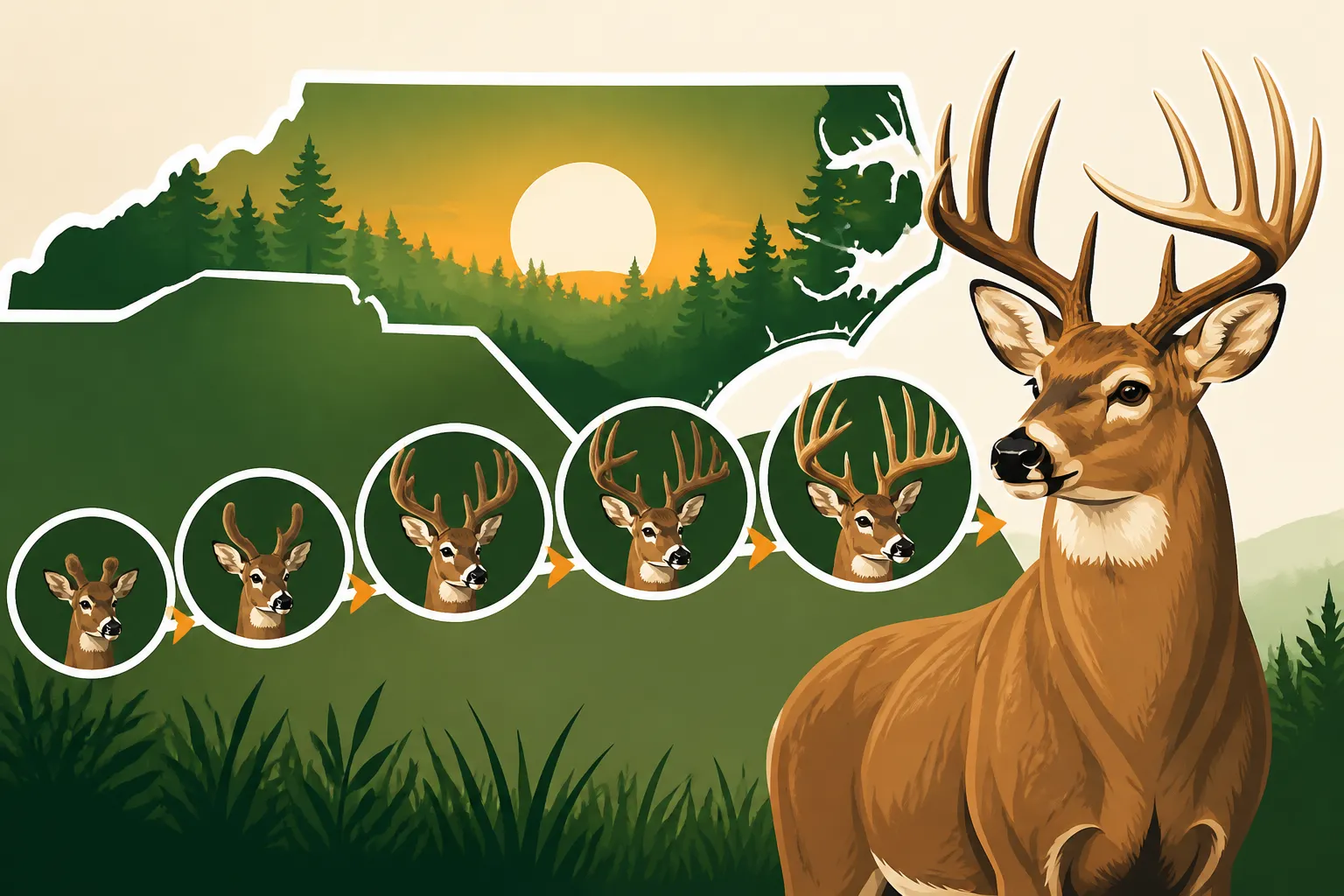
As the days begin to lengthen in late winter and early spring, typically around March or April here in North Carolina, a buck's testosterone levels hit their annual low point. This hormonal dip signals the old antlers to fall off, or "shed." Almost immediately after shedding, a new set of antlers begins to sprout from pedicels on the buck's skull. This initial growth is incredibly rapid, covered in a soft, fuzzy, highly vascularized skin known as velvet.
During this velvet stage, the antlers are essentially living tissue, full of blood vessels and nerves. They are soft and vulnerable to injury, which is why you'll rarely see bucks fighting or even sparring at this time of year. Think of it like a human fingernail growing at an accelerated rate, but instead of keratin, it's bone. The velvet provides the necessary nutrients and minerals for this astonishing growth, pushing out new bone daily. A buck might add an inch or more to his antlers in a single week during the peak of this spring surge, especially during the later phases of April and May.
Summer Development and Mineralization
By late spring and into the summer months, roughly May through August, the antlers continue their impressive growth, albeit at a slightly slower pace than the initial surge. This is when the distinctive points, beams, and mass really begin to take shape. While still covered in velvet, the internal structure of the antlers is undergoing a process called mineralization, where calcium, phosphorus, and other essential minerals are deposited, gradually hardening the spongy bone tissue.
The quality and quantity of forage available during this period are absolutely crucial. A buck with access to lush food sources – whether it's clover plots, soybean fields, or abundant native browse in a healthy forest – will have the nutritional building blocks to grow larger, denser antlers. Conversely, a buck struggling in a poor habitat will likely show it in his headgear, producing thinner beams and fewer or shorter points. Hunters often spend their summer days checking trail cameras, marveling at the weekly changes in velvet bucks, knowing that good nutrition now means better antlers later. North Carolina Deer Population Estimate numbers often reflect the overall health of the herd, which directly impacts antler potential.
Fall Hardening and the Rut
As summer wanes and the days noticeably shorten, typically in late August and early September across North Carolina, the buck's testosterone levels begin to rise dramatically. This increase in hormones triggers a fascinating biological response: the blood supply to the velvet cuts off. The velvet, now deprived of oxygen and nutrients, begins to dry, crack, and peel away. Bucks will actively help this process along, rubbing their antlers on saplings, bushes, and even larger trees, creating fresh "rubs" that signal their presence and dominance. This behavior, often starting around the North Carolina Archery Season Opening Day, is called "stripping velvet" or "rubbing out."
Once the velvet is completely shed, the antlers are fully hardened bone, ready for the rigors of the upcoming breeding season, or "rut." These clean, polished antlers are now the buck's primary tool for sparring with rival bucks, asserting dominance, and attracting does. The size and visual impressiveness of these hardened antlers play a significant role in a buck's social standing within the herd. This is the stage that hunters anxiously await, as these mature, hard-antlered bucks become much more active and visible. Knowing when the Hunting the Rut in the Eastern Zones or Hunting the Rut in the Western Zone peaks can help you understand when to expect the most intense antler-related activity.
Factors Influencing Antler Size and Quality
While the annual timeline of antler growth is largely dictated by daylight and hormones, the outcome – the actual size, mass, and number of points on a buck’s rack – is influenced by a complex interplay of several key factors. Understanding these elements can help you better assess the deer you see in the field and contribute to sound herd management strategies on your hunting grounds.
Age: The Most Critical Factor
Without a doubt, age is the single most significant factor in determining antler size and quality. A young buck, say a yearling (1.5 years old), is still dedicating most of his nutritional resources to growing his body. His antlers, while present, will typically be small, often spikes or small forked horns. As a buck matures, usually hitting his prime antler-producing years between 3.5 and 6.5 years old, his body has largely completed its growth, allowing a greater allocation of energy and minerals to antler development.
It's during these prime years that bucks typically achieve their largest and most impressive racks, displaying maximum mass, spread, and point count. After this peak, antler size may gradually decline as the buck enters his "old age" (7.5+ years), though he’ll still be a formidable animal. Many North Carolina hunters, especially those focused on quality deer management, aim to pass on younger bucks to allow them to reach their genetic and age potential. This is often Why the Piedmont Grows Big Bucks is linked to areas where bucks have a better chance of surviving to older age classes.
Nutrition and Habitat Quality
Even an old buck with superior genetics can’t grow a great rack without proper nutrition. The sheer volume of calcium, phosphorus, and other trace minerals required to produce a large set of antlers is immense. A buck must consume these nutrients throughout the year, but especially during the active antler growth phase in spring and summer.
North Carolina's diverse habitats offer varying levels of nutritional support. Areas with rich agricultural fields, abundant mast crops (like acorns), and diverse native browse will generally produce bucks with better antler development than areas of poorer soil or monoculture forests. Factors like drought, disease (such as EHD), or severe winters can also impact antler growth by reducing available food or stressing the deer's system. Hunters using tools like GoHunt can often analyze land features and vegetation types to identify areas with higher nutritional potential for deer. Late-Season Food Sources for North Carolina Whitetails are not just crucial for winter survival but also contribute to the buck's health going into the next antler growth cycle.
Genetics and Regional Differences
While age and nutrition are king, genetics certainly play a role in a buck's antler potential. Just like people, deer inherit certain traits from their parents, including the propensity for certain antler characteristics. Some bucks are simply predisposed to grow wider racks, more points, or greater mass, given optimal conditions. However, it's important to remember that genetics are often the "ceiling" of potential, while age and nutrition determine how close a buck gets to hitting that ceiling. A buck with great genetics in a poor habitat won't grow the same rack as one with the same genetics in a rich environment.
North Carolina, being a state with such varied terrain – from coastal plains to high mountains – naturally sees regional differences in antler characteristics. While some regions might be known for heavier-bodied deer, others might consistently produce bucks with unique antler configurations. These regional differences are often a reflection of habitat quality, population density, and hunter harvest strategies that allow bucks to mature.
Shed Hunting and Post-Rut Observations
The end of the rut doesn't mean the end of antler fascination for many North Carolina hunters. In fact, it kicks off another exciting phase: shed hunting. Finding shed antlers is like finding a hidden treasure, a tangible piece of a buck’s past, and it offers invaluable insights for the upcoming season.
The Dropping Phase: When and Why
After the exhausting breeding season, a buck's testosterone levels begin to drop significantly, usually from late December through February or even into early March in North Carolina. This decrease in testosterone is the primary trigger for antler shedding. The bone tissue at the base of the pedicle weakens, and eventually, the antlers simply detach and fall off. The timing can vary quite a bit from buck to buck, even within the same herd. Factors like a buck’s overall health, stress levels during the rut, and nutritional status can all influence when he drops his antlers.
A buck that went particularly hard during the rut or is in poor physical condition might shed earlier than a robust, healthy buck. Often, older bucks or those under more stress shed first. It's a true waiting game for shed hunters, who might tramp through the same woods for weeks before finding that prized piece of bone. Shed Hunting on North Carolina Public Land is a popular pastime for many, turning the quiet off-season into an active scouting mission.
What Sheds Can Tell You About Your Deer
Finding a shed antler is more than just a cool souvenir; it's a valuable scouting tool. Each shed tells a story:
- Identity: If you find sheds from the same buck year after year, you can track his growth and movement patterns.
- Age Class: While not an exact science, the mass and base circumference of a shed can give you clues about the buck's age class. Larger, heavier bases generally indicate an older, more mature animal.
- Health and Nutrition: A buck consistently dropping large, healthy sheds is likely in good physical condition and has access to ample food sources. Conversely, small, spindly sheds from an otherwise mature buck might indicate nutritional deficiencies or health issues in the previous year.
- Location and Habits: Where you find sheds can reveal critical wintering areas, travel corridors, and bedding locations. This information is gold for planning your next season's hunts. Using mapping apps like GoHunt can help you mark shed locations and analyze the surrounding habitat to identify patterns.
Implications for North Carolina Hunters
Understanding the North Carolina deer antler growth timeline isn't just academic; it directly impacts how we hunt and manage deer populations. By appreciating the intricacies of this annual cycle, we can become more effective hunters and more responsible stewards of the resource.
Scouting Year-Round for Antler Potential
Knowing when bucks are growing velvet, hardening their racks, and eventually shedding allows for more strategic year-round scouting. Early spring is fantastic for identifying new rubs from the previous fall, seeing what sheds are lying around, and pinpointing areas of heavy deer usage before vegetation fully greens up. Summer, with its velvet antlers, is ideal for running trail cameras to inventory your deer and get an early glimpse of their antler potential, as well as observing social dynamics. Platforms like GoHunt can provide satellite imagery to help identify potential food sources, bedding areas, and travel corridors that are crucial during these different phases.
This continuous observation allows you to build a comprehensive picture of the bucks on your property or public hunting grounds. You'll start to recognize individual deer, track their antler progression, and understand their seasonal movements long before opening day. For example, knowing when deer prefer certain browse or mast crops helps you focus your scouting efforts. Reading a Ridge for Mountain Zone Deer or Hunting a Green Field Planted for Deer all depend on understanding deer behavior and habitat use throughout the year, which is intrinsically linked to their antler cycle.
Ethical Harvest and Management Considerations
Understanding antler growth also plays a crucial role in ethical harvest decisions and broader deer management goals. If you're managing a private property for older, larger-antlered bucks, knowing the growth timeline helps you identify young bucks that need to be passed over. By allowing bucks to survive to their prime antler-producing years, you contribute to a healthier, more balanced herd.
Conversely, in areas where deer populations are high and habitat might be strained, harvesting younger bucks or does might be a necessary management tool to ensure the overall health of the herd and prevent overbrowsing. This understanding goes beyond just "meat hunting" versus "trophy hunting"; it's about making informed decisions that benefit the entire deer population and the habitat they rely on. Every hunting decision, from choosing your Rifle Calibers for North Carolina Deer to deciding whether to pass on a young buck, should ideally be made with a full understanding of the deer’s life cycle, including its antler development.
| Antler Growth Phase | Approximate North Carolina Timeline | Key Characteristics |
|---|---|---|
| Shedding | Late December – Early March | Old antlers fall off due to low testosterone. |
| Velvet Growth | March – August | Rapid growth of new antlers, covered in blood-rich velvet. Soft, vulnerable. |
| Mineralization | May – August | Internal hardening of antlers, deposit of calcium/phosphorus. |
| Velvet Stripping | Late August – Early September | Testosterone surge causes velvet to dry and peel. Bucks rub antlers clean. |
| Hard Antlers | September – December | Fully hardened bone, used for sparring and display during the rut. |
Disclaimer
This article is for general informational purposes only and does not constitute professional advice. Laws, prices and regulations vary by location and change over time. Consult a qualified professional for guidance on your specific situation.