North Carolina Red Wolf Recovery Program History
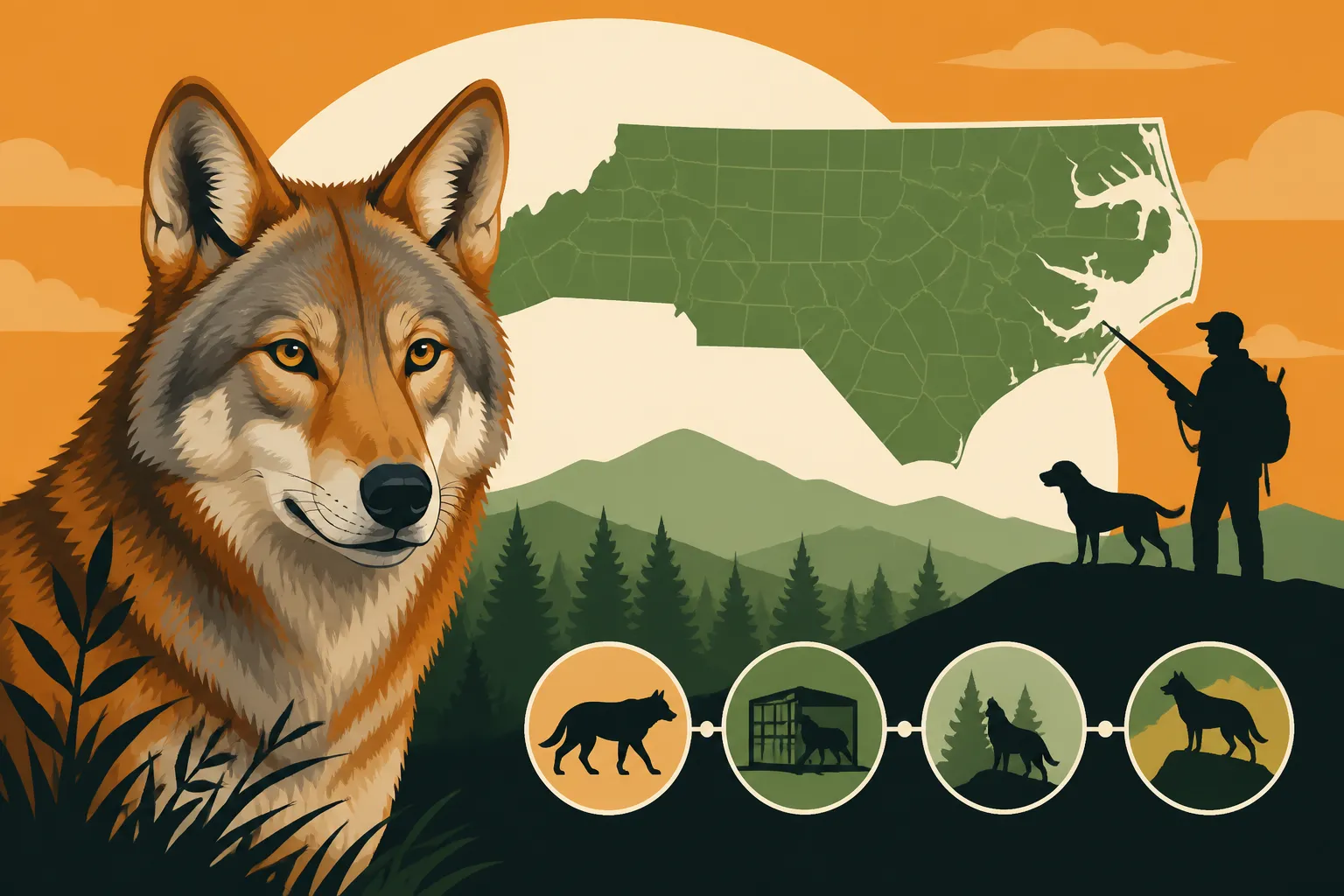
For many of us who cherish North Carolina's wild places, the story of the red wolf is a poignant one, filled with hope, struggle, and a deep longing for a truly wild landscape. It's frustrating to see such a unique part of our natural heritage on the brink, and understanding the journey of the North Carolina Red Wolf Recovery Program history is key to appreciating the immense effort involved and the challenges that remain. This guide aims to shed light on this complex and vital conservation story.
The Dire Situation: Why Red Wolves Needed Help in the First Place
Imagine a time when the howl of a red wolf was a common sound across the southeastern United States, from Pennsylvania down to Florida and west to Texas. These magnificent creatures, distinct from their larger gray wolf cousins, once roamed vast territories, playing a crucial role as apex predators in their ecosystems. They were an integral part of the natural balance, keeping deer and small game populations in check, ensuring the health and vitality of the forests and wetlands they inhabited.
Historical Decline and Near Extinction
However, with European settlement came a drastic change in the landscape and a fundamental shift in human-wildlife relations. As agricultural lands expanded, forests were cleared, and wild prey animals became scarce. Wolves, often viewed as threats to livestock and competitors for game, were relentlessly hunted, trapped, and poisoned. There was a pervasive misunderstanding and fear, leading to a systematic campaign to eradicate them. This unchecked persecution, combined with habitat loss and fragmentation, pushed the red wolf population to the brink of extinction. By the mid-20th century, their numbers had plummeted catastrophically, leaving only a tiny, isolated remnant population struggling to survive in the remote coastal plain regions of Louisiana and Texas.
Last Stand in the Gulf Coast Swamps
It was in these few, desperate pockets that a dedicated team of biologists made a last-ditch effort to save the species. The remaining red wolves were facing not only direct human persecution but also increasing hybridization with coyotes, a species that had expanded its range into former wolf territories. This genetic dilution further threatened the pure red wolf lineage. The situation was so dire that by 1973, when the Endangered Species Act was passed, the red wolf was among the very first animals listed as endangered. Scientists realized that without immediate and drastic intervention, the red wolf would vanish forever. This grim reality spurred the U.S. Fish and Wildlife Service (USFWS) to take unprecedented action: capturing the last remaining wild red wolves to establish a captive breeding program. It was a race against time, a desperate attempt to pull a species back from the very edge of oblivion.
The Bold Experiment: Launching the Recovery Program
The decision to establish a captive breeding program and eventually reintroduce red wolves into the wild was a monumental undertaking, fraught with biological, logistical, and social challenges. North Carolina, specifically the Alligator River National Wildlife Refuge, was chosen as the initial reintroduction site, marking a pivotal moment in conservation history.
Captive Breeding and Initial Release Efforts
Between 1973 and 1980, the USFWS managed to capture just 17 pure red wolves from their last strongholds in Louisiana and Texas. These animals became the founders of the entire red wolf population we know today. After careful genetic analysis, 14 of these individuals were deemed suitable for breeding. This small, precious group was taken to the Point Defiance Zoo & Aquarium in Tacoma, Washington, where the captive breeding program was established. The goal was simple yet incredibly ambitious: breed enough red wolves in captivity to establish a stable, genetically diverse population, and then release them back into suitable wild habitats. The first litter of red wolf pups born in captivity arrived in 1977, a glimmer of hope that the species could indeed be saved. This meticulous process was the critical first step to ever seeing a wild red wolf again in North Carolina's Black Bear Population country, let alone anywhere else.
North Carolina: The Chosen Ground for Reintroduction
After years of careful planning and successful breeding, the time came to select a reintroduction site. North Carolina's Alligator River National Wildlife Refuge, with its vast tracts of pocosin swamps, pine forests, and limited human population density, was identified as an ideal location. It offered the remoteness and habitat diversity necessary for a top predator to thrive. In 1987, four pairs of red wolves were released into the refuge, marking the very first time a species extinct in the wild had been reintroduced into its former habitat. This was an experimental, groundbreaking effort, and all eyes were on North Carolina to see if it would work. These wolves were collared and monitored intensively, every movement, every sign of successful hunting or denning, was meticulously recorded. The hope was that these wolves would disperse, establish territories, and begin to reproduce naturally, effectively restarting a wild population. For those who follow wildlife closely, knowing where species exist and thrive is key, and platforms like GoHunt provide valuable tools for understanding habitat and animal movements.
Expanding the Experimental Population Area
The initial success at Alligator River led to the expansion of the "experimental population area" (EPA) to include additional federal and private lands in northeastern North Carolina. This larger area encompassed five counties: Dare, Hyde, Tyrrell, Washington, and Beaufort. The designation as a "non-essential experimental population" under Section 10(j) of the Endangered Species Act was crucial. It provided more management flexibility for the USFWS and allowed for some exceptions to strict endangered species protections, aiming to foster cooperation with private landowners. This flexibility was intended to address concerns from local communities about the reintroduction, acknowledging that successful conservation requires community buy-in. It meant that while the wolves were still highly protected, certain management actions could be taken to mitigate conflicts, such as hazing wolves away from private property or, in extreme cases, relocating them. This careful balancing act was vital for the program's longevity in a landscape shared with people.
Challenges and Setbacks: The Hurdles of Reintroduction
Despite the initial successes and the innovative approach of the 10(j) rule, the North Carolina Red Wolf Recovery Program has faced numerous and persistent challenges, making its journey a tumultuous one. Reintroducing a top predator into a landscape shared with humans is rarely straightforward.
Human-Wildlife Conflict and Landowner Concerns
One of the most significant hurdles has been human-wildlife conflict, particularly involving private landowners. While the 10(j) rule aimed to address these concerns, issues like predation on livestock (though relatively rare and often compensated by the USFWS) and the perception of danger to pets or children created tensions. Landowners, often generational farmers or residents, hold deep-seated views on wildlife, and the reintroduction of a "wolf" species, even one smaller and more elusive than the gray wolf, brought anxieties. Misinformation about red wolf behavior and diet sometimes fueled these fears, overshadowing the scientific evidence of their ecological benefits. Building trust and communication with local communities has been a continuous, uphill battle, requiring constant outreach and education. The challenge of Getting Private Land Permission in North Carolina becomes even more pronounced when dealing with a reintroduced predator.
Hybridization with Coyotes
Perhaps the most insidious biological threat to the red wolf's recovery has been hybridization with coyotes. As red wolf numbers declined historically, coyotes expanded their range eastward, filling the ecological niche left vacant by wolves. When red wolves were reintroduced, they encountered a landscape already populated by coyotes. Red wolves and coyotes can interbreed, producing hybrids that dilute the pure red wolf gene pool. This genetic "swamping" is a major concern for the species' long-term survival. The USFWS has implemented various strategies to manage this, including sterilizing coyotes within the EPA and releasing them back into the wild as "placeholders." These sterile coyotes hold territories, preventing fertile coyotes from moving in, and can even mate with red wolves, producing no offspring and essentially wasting a breeding season for the red wolf without diluting the gene pool. It's a complex and ongoing management challenge.
Management Changes and Litigation
The program has also been plagued by shifts in management philosophy and continuous legal challenges. Over the years, policy decisions at the federal level have sometimes scaled back active management, such as the sterile coyote program or active releases from captivity. These shifts have led to declines in the wild red wolf population. Environmental groups and conservation organizations have frequently resorted to litigation to compel the USFWS to adhere more strictly to the mandates of the Endangered Species Act and to more actively manage the wild population. These legal battles consume resources and create uncertainty for the program's future, further complicating efforts to expand the population. The changing political landscape and differing views on conservation priorities continually impact the on-the-ground reality for these animals.
| Year | Key Event in Red Wolf Recovery Program | Significance |
|---|---|---|
| 1973 | Endangered Species Act passed; Red Wolf listed. | Legal foundation for protection. |
| 1973-1980 | Last wild red wolves captured. | Establishment of captive breeding stock. |
| 1977 | First captive-born red wolf pups. | Proof of concept for breeding program. |
| 1987 | First reintroduction at Alligator River NWR. | Historic first for an extinct-in-wild species. |
| Early 1990s | Experimental population area expanded. | Growth of wild population and range. |
| 2000s-2010s | Increasing coyote hybridization and management challenges. | Major threats to genetic purity and population. |
| 2015-Present | Legal challenges and policy shifts lead to population decline. | Reduced active management, calls for stronger protection. |
The Current State and Future Outlook: What Lies Ahead for Red Wolves
As of today, the North Carolina Red Wolf Recovery Program finds itself at a critical juncture. The wild population remains precariously low, and the future of America's most endangered canid is uncertain. Yet, there is also a renewed push from advocates and some agencies to redouble conservation efforts.
Precarious Population Numbers
The wild red wolf population in northeastern North Carolina has seen significant fluctuations over the decades. From a peak of over 100 animals, numbers have dwindled dramatically in recent years. This decline is largely attributed to reduced active management by the USFWS, increased vehicle collisions, and continued hybridization pressures. The sheer scarcity of these animals makes every loss a significant blow to the program. It's a stark reminder that even with dedicated efforts, maintaining a wild population of an endangered species is an incredibly delicate balance. Monitoring these small numbers requires intense effort, and tools that help track wildlife trends, like those available through GoHunt, become essential for understanding population dynamics, though the specific data for red wolves is tightly managed.
Renewed Calls for Active Management
Conservation groups, scientists, and even some local stakeholders are advocating fiercely for a return to more aggressive and active management strategies. This includes increasing releases of captive-bred wolves, reinstating robust coyote sterilization efforts, and enhancing law enforcement presence to curb illegal killings, which unfortunately still occur. There's a strong consensus among many experts that without these proactive measures, the wild population faces an existential threat. The potential loss of wild red wolves would not only be an ecological tragedy but also represent a significant failure of one of the nation's most ambitious recovery efforts. Protecting all native species is a priority, and for the red wolf, this often means tackling issues like Coyote Calling in North Carolina Farm Country and other human-impact factors directly.
The Role of Advocacy and Public Education
The future of the red wolf recovery effort hinges not only on scientific management but also on public support and understanding. Advocacy groups play a crucial role in raising awareness, educating the public about the red wolf's ecological importance, and dispelling myths. They champion the idea that coexisting with predators is possible and beneficial for healthy ecosystems. Continued education about wildlife, whether it's North Carolina's Black Bear Population or the elusive red wolf, is vital. Initiatives that involve local communities, provide educational resources, and offer opportunities to learn about these animals are essential for fostering a sense of stewardship. The success of any long-term recovery program ultimately depends on the willingness of people to share the landscape with its native inhabitants. Understanding the complex historical arc of the program, its successes, and its failures, is the first step towards ensuring a future where the red wolf's distinctive howl can once again echo across North Carolina's wild lands.
Disclaimer
This article is for general informational purposes only and does not constitute professional advice. Laws, prices and regulations vary by location and change over time. Consult a qualified professional for guidance on your specific situation.