Turkey Calls Worth Carrying in North Carolina
For many North Carolina turkey hunters, the spring woods can feel like a grand symphony where you’re constantly trying to hit the right note. With so many different calls on the market, it’s easy to feel overwhelmed, wondering if you're carrying the right tools to talk to that wary gobbler. This guide is all about cutting through the noise, helping you understand the most effective turkey calls for our diverse North Carolina terrain, and building an arsenal that truly works when you're out there chasing those longbeards.
Understanding the Core Turkey Vocalizations
Before we even dive into specific calls, it's crucial to grasp what sounds you're trying to emulate. Wild turkeys, especially our Eastern gobblers and hens here in North Carolina, have a pretty extensive vocabulary. Understanding these core vocalizations and when to use them is more important than having a dozen fancy calls you don't know how to run. It's about speaking their language, not just making noise.
The Hen Yelp – The Bread and Butter
The yelp is, without a doubt, the most fundamental and universally recognized turkey sound. It’s the sound of a hen looking for company, whether it’s other hens or, more importantly, a gobbler. There are variations, from the soft, contented cluck-and-yelp sequence of a hen just going about her day, to the excited, faster yelps of a hen that's ready to breed.
For North Carolina hunters, mastering the yelp is paramount. It’s often the first sound you’ll make when trying to locate a bird or draw one closer. A soft, subtle series of yelps in the early morning can often elicit a shock gobble from a roosted bird, helping you pinpoint his location. Later in the day, a more passionate yelp can convince a tom that a willing hen is nearby, especially if he's been unresponsive to more aggressive calling.
Clucks and Purrs – Close-Range Confidence
While yelps bring them in from a distance, clucks and purrs are your close-range confidence builders. A cluck is a single, sharp note, usually indicating contentment or a soft inquiry. It's a way for turkeys to communicate their presence without being overly aggressive or inviting. Think of it as a subtle "I'm here."
Purrs, on the other hand, are soft, rolling sounds that convey extreme contentment. You’ll hear hens purring while feeding, or when they’re gathered together. These sounds are critical when a gobbler is within sight, perhaps at 60 or 70 yards, but seems hesitant to commit further. A few soft purrs and clucks can often be the final nudge he needs to close the distance, assuring him that everything is safe and inviting. Never overdo these; a little goes a long way.
Cutting and Cackling – Aggressive Attention Grabbers
Cutting is a series of rapid, sharp, excited yelps, almost like a machine gun burst of sound. Cackling is a burst of short, sharp notes, often heard as a hen flies down from the roost. These are aggressive, high-energy calls designed to grab a gobbler's attention from afar or challenge another hen.
In North Carolina, these calls can be incredibly effective, especially on opening weekend when gobblers are hot and competitive. If you've located a bird and he's hung up or not responding to softer calls, a cutting sequence can sometimes infuriate him into coming closer to investigate the "new hen" in his territory. Be mindful, though: overusing aggressive calls, particularly on pressured birds or later in the season, can sometimes scare them off. Use them judiciously when a gobbler needs a wake-up call or a clear challenge.
Gobbles – When and How to Use Them
Ah, the gobble. The sound every turkey hunter lives for. While hens make the other sounds, only gobblers truly gobble. Using a gobble call as a hunter is a controversial topic for some, but it can be highly effective in certain situations. It’s primarily a locator call or a challenge.
Many North Carolina hunters use a gobble tube or shaker to shock a gobbler into responding, revealing his location, particularly if he's being tight-lipped. This is often done when scouting or when trying to locate a bird that's not responding to hen calls. Less commonly, it can be used as a challenge to an aggressive gobbler, making him think another tom is encroaching on his territory. However, a significant risk with gobble calls is that it can attract other hunters, or it can make a real gobbler hang up just out of range, expecting you to come to him. Use them with extreme caution, especially on public land.
Types of Turkey Calls and Their North Carolina Applications
Now that we understand the sounds, let's talk about the tools that make them. There's a call for every hunter and every situation, and North Carolina's varied landscapes mean you'll likely want a few different types in your vest.
Friction Calls – Slate, Glass, and Pot Calls
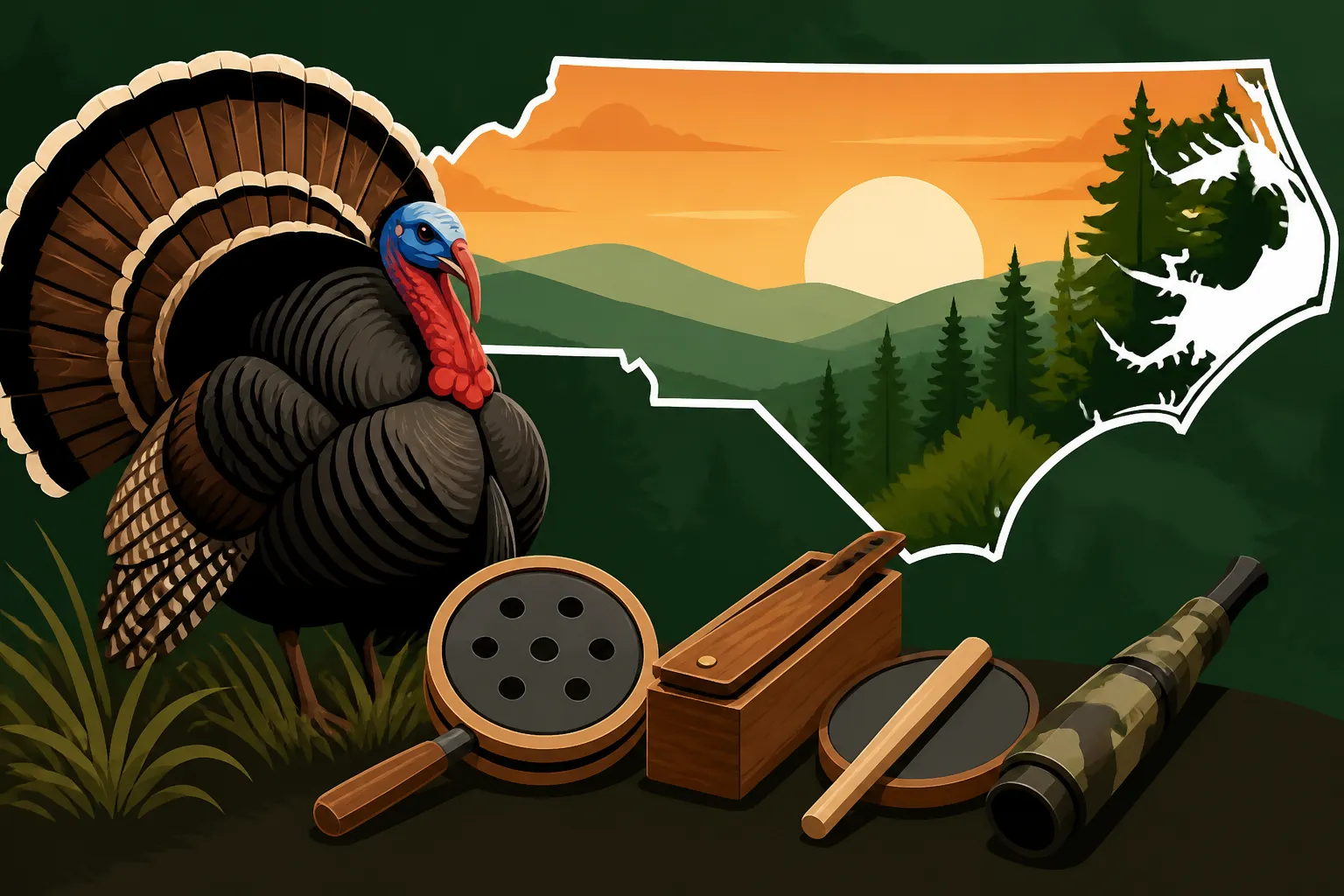
Friction calls, often called pot calls, are arguably the most versatile and easiest to learn for beginners. They consist of a pot with a striking surface (slate, glass, or aluminum being most common) and a striker. By dragging or tapping the striker across the surface, you can produce a wide range of turkey sounds.
- Slate Calls: These are renowned for their soft, realistic yelps and purrs. They excel at producing those subtle, close-range sounds that can coax a wary gobbler the last few yards. For hunting Piedmont Farmland Deer, where birds might be more accustomed to human activity, a soft slate call can be less alarming than a louder option. They are excellent for tree yelps and contented clucks early in the morning.
- Glass Calls: Glass surfaces tend to be louder and sharper than slate, making them ideal for cutting and cackling, or for reaching out to birds across a long field or deep hollow. Their higher pitch can carry further in windy conditions or across open areas like those found in the Coastal Plain. Many hunters appreciate their versatility, as they can also produce good yelps.
- Aluminum Calls: Similar to glass, aluminum calls are loud and sharp, often preferred for their aggressive cutting and cackling. They're fantastic for getting a reaction from a bird that's a long way off or one that's a bit stubborn. You'll find these useful when trying to locate a bird in thick pine plantations or river bottoms where sound can get absorbed quickly.
The beauty of friction calls is their reliability and ease of use. You can typically get a good sound out of them quickly, making them a cornerstone of many North Carolina turkey hunters' kits. The variety in surfaces allows you to tailor your sounds to the situation, from soft, enticing purrs to loud, attention-grabbing cuts.
Mouth Calls – Diaphragm Calls for Hands-Free Action
Mouth calls, or diaphragm calls, are small, U-shaped frames with latex reeds stretched across them, which you hold in the roof of your mouth. By forcing air across the reeds while applying tongue pressure, you can create a vast array of turkey sounds, all hands-free. This hands-free advantage is a huge benefit, especially when a gobbler is closing in and you need to keep your gun shouldered.
Mastering a mouth call takes practice, often more than any other call type. However, the payoff is immense. You can transition seamlessly from a soft tree yelp to an aggressive cut without any movement, which is critical when a gobbler is within bow range or just on the edge of the hardwoods. Many hunters use mouth calls for their ability to replicate the nuances of a hen's voice with incredible realism. They are fantastic for Calling a North Carolina Gobbler Off the Roost as you can call softly while remaining perfectly still.
The challenge with mouth calls is finding one that fits your mouth comfortably and produces the sounds you want. There are many variations in reed cuts (ghost cut, batwing, V-cut) and reed thicknesses, each offering a slightly different sound and ease of use. It’s worth experimenting to find a few that you can consistently operate well. Brands like GoHunt often feature articles or videos that demonstrate the nuances of different mouth calls, which can be a great resource when you're trying to decide what to try next.
Box Calls – The Classic and Versatile Choice
The box call is a classic for a reason: it’s incredibly effective and relatively easy to use. It consists of a hollow wooden box and a lid that pivots. By drawing the lid across the lip of the box, you create friction that produces a realistic yelp, cluck, or cut.
Box calls are known for their volume and the crisp, clear sounds they produce. They're excellent for locating birds over long distances, especially in areas where sound travels well, such as open hardwood forests or across large fields. They also excel at mimicking those excited, raspy yelps that can really get a gobbler fired up. Because they're louder, they're often a go-to for Run-and-Gun Turkey Tactics on Public Land when you're covering ground and trying to strike a bird.
While generally easy to learn, subtle variations in technique can produce different sounds. A shorter stroke often results in a cluck, while a longer stroke gives you a yelp. You can also vary the pressure to achieve different tones. One downside is that they require two hands to operate, which can be tricky if a gobbler suddenly appears. They can also get wet in the rain, which can dampen their sound. However, their sheer effectiveness makes them a staple in many North Carolina turkey vests.
Locator Calls – Shocking a Gobble Out
Locator calls aren't meant to sound like a turkey. Instead, they mimic other sounds that are known to make a gobbler "shock gobble" – a spontaneous gobble in response to a sudden loud noise. These calls are invaluable for pinpointing a bird's location, especially in thick cover or when he's not responding to hen calls.
- Owl Hooters: These are among the most popular locator calls. Hooting like an owl in the pre-dawn darkness, especially a barred owl, can often elicit a response from a roosted gobbler. The key is to make it sound natural and vary your cadence. They are particularly effective in the mountains or in heavily wooded areas where owls naturally reside.
- Crow Calls: Another highly effective locator, crow calls mimic the raucous caw of a crow. These can be used at any time of day, but they are particularly good once the woods start to wake up. A series of loud, excited caws can often get a gobbler to reveal himself, especially if he's already on the ground.
- Pileated Woodpecker Calls: Less common but often deadly, the loud, distinctive call of a pileated woodpecker can also trigger a gobble. These are great for adding variety to your locator arsenal, especially if birds in your area are call-shy to more common crow or owl sounds.
- Goose/Hawk Calls: While not as universally effective, some hunters find success with these, especially if they imitate a distress call. The idea is to create a loud, abrupt sound that startles the gobbler into giving away his position.
The main purpose of locator calls is to get a gobbler to gobble, not to attract him to you. Once you hear his response, you can then move into position and begin your hen calling strategy. Many North Carolina hunters wouldn't dream of heading into the woods without an owl hooter or a crow call in their vest, ready to strike a bird.
Matching Your Calls to North Carolina's Diverse Terrain
North Carolina is a state of incredible topographical diversity, from the high peaks of the Appalachians to the flat, swampy Coastal Plain. Each region presents its own unique challenges and opportunities for turkey hunting, and your call choices should reflect that.
Mountain Terrain – Reaching Across Hollows
Hunting the North Carolina mountains, particularly areas within Pisgah or Nantahala National Forests, means dealing with steep inclines, deep hollows, and dense hardwood forests. Sound can be tricky here – it can carry incredibly far, but it can also get "stuck" or muffled in ravines.
- Loud, penetrating calls are a must. For those times you're trying to strike a bird across a steep ridge or down in a hidden cove, you need calls that can project. A sharp-sounding glass or aluminum pot call, or a loud box call, will be your best friend. These can cut through the timber and reach birds that might be a quarter-mile away.
- Locator calls are essential for pinpointing. The mountains are vast, and turkeys can be anywhere. An owl hooter used in the pre-dawn hours can help you locate a roosted bird, but crow calls and even aggressive cutting on a loud pot call can help you narrow down his location once he's on the ground.
- Soft calls for the final approach. Once you've located a bird and closed the distance, you'll want to switch to more subtle calls. A soft slate call or a delicate mouth call for clucks and purrs will be key for those final few yards, especially if you're trying to call him up a steep slope or through thick rhododendron thickets. You might find resources like the GoHunt app useful for studying topographical maps to understand how sound might travel in different areas.
Piedmont Farmland and Woodlots – Versatility is Key
The Piedmont region of North Carolina is a mix of agricultural fields, rolling timber, and suburban encroachment. Turkeys here often encounter more human pressure, and their habitat is more fragmented. This means versatility in your calling approach is crucial.
- Adaptable friction calls shine. A good slate call for soft, inquisitive yelps, and a glass call for when you need more volume, will serve you well. You'll often be hunting smaller woodlots adjacent to fields, so you need calls that can work in varied ranges. One moment you might be calling across a freshly plowed field, the next you're trying to coax a bird out of a dense pine stand.
- Mouth calls for close-quarter ambush. Given the fragmented nature of the habitat, gobblers in the Piedmont can pop up unexpectedly. Having a mouth call you can run hands-free is invaluable when a bird suddenly appears from behind a fencerow or emerges from a creek bottom. This allows you to remain still and ready for the shot.
- Locator calls for quick strikes. In areas with smaller woodlots, birds might be more apt to gobble at a crow or owl call, revealing their presence quickly. This allows you to set up rapidly, which is often necessary when hunting the "edges" of their fragmented habitat. Understanding Turkey Tactics for Piedmont Field Edges will naturally lead you to appreciate this versatility in calling.
Coastal Plain Swamps and River Bottoms – Cutting Through the Thick Stuff
The Coastal Plain offers vast, dense pocosins, cypress swamps, and river bottom hardwoods. Here, vegetation can be incredibly thick, and sound gets absorbed quickly. This means you need calls with serious penetrating power.
- Loud and aggressive calls are paramount. Forget subtle; in these environments, you need to cut through the heavy cover. A loud aluminum pot call, a powerful box call, or a sharp-cutting mouth call will be your best bet. You need sounds that can travel through dense undergrowth and stand out over the ambient noise of a swamp.
- Short-range confidence with realistic sounds. When a gobbler does finally commit and gets into the thick stuff, you'll want to switch to those realistic, soft clucks and purrs to seal the deal. A good slate call or a versatile mouth call can give you that lifelike, "just beyond the next bush" sound that can be irresistible.
- Gobble calls as aggressive locators. In areas where thick cover makes visual scouting difficult, an occasional gobble call can serve as an aggressive locator, especially if you think a bird is nearby but won't respond to hen calls. Remember to use this tactic cautiously, especially on public land where other hunters might be operating. For Hunting Coastal Plain Pocosin Swamps, ensuring your calls can project is a critical factor in success.
Building Your Essential North Carolina Turkey Call Arsenal
No single call does it all, and any experienced North Carolina turkey hunter will tell you that a diverse array of calls is key to adapting to different birds, weather conditions, and terrains. Here’s a breakdown of how to build your calling kit, from beginner to advanced.
The Beginner's Core Kit
If you're just starting out or looking for the absolute essentials that will cover most North Carolina turkey hunting scenarios, here's where to begin:
- One Easy-to-Use Pot Call (Slate or Glass): A friction call is the most forgiving for learning the basic yelp, cluck, and purr. A slate call offers softer, more realistic sounds for close work, while a glass call provides more volume for reaching out. Pick one you can make consistent sounds with.
- One Locator Call (Owl Hooter or Crow Call): Essential for finding birds, especially those roosted in the pre-dawn. An owl hooter is great for early morning, and a crow call is versatile throughout the day.
- One Versatile Box Call: Box calls are loud and effective, easy to learn, and great for cutting and long-range yelping. They offer a different tone than a pot call, which can be useful if birds are call-shy to one type of sound.
With this simple setup, you can locate birds, make realistic hen yelps to draw them in, and vary your sounds enough to keep them interested. This core kit will get you through many situations during Spring Turkey Hunting in North Carolina.
Expanding for Intermediate Hunters
Once you've got the basics down and are comfortable with your core kit, it's time to add more tools to your belt. These additions will give you more flexibility and the ability to adapt to more nuanced situations.
- A Second Pot Call (Different Surface): If you started with slate, add a glass or aluminum call for more volume and aggressive cutting. If you started with glass, add a slate for softer, more realistic sounds. This gives you distinct tonal options.
- A Beginner-Friendly Mouth Call: Start with a simple two-reed or three-reed "ghost cut" or "combo cut" mouth call. These are often easier to get a basic yelp out of than a more complex batwing or V-cut. The goal here is to start practicing hands-free calling for when birds get close.
- A Whistle or Other Locator: Adding a pileated woodpecker call or even a simple hawk whistle to your locator arsenal gives you more options if birds are ignoring your owl or crow calls. Variety can be key on pressured public land, helping you find Finding Ground Others Walk Past.
Advanced Strategies and Special Situations
For the seasoned hunter looking to fine-tune their approach and be prepared for every contingency, consider these advanced additions.
- Multiple Mouth Calls (Varied Cuts and Reeds): Experienced callers often carry 3-5 different mouth calls. Each will have a slightly different tone, pitch, and feel, allowing you to perfectly mimic a range of hen vocalizations – from an old boss hen to a young, eager pullet. This can be crucial When North Carolina Gobblers Go Quiet in May.
- Purr Pot or Purr Stick: These specialized friction calls are designed to make incredibly realistic purrs and soft clucks. They are excellent for those super close-range situations when a gobbler is in sight but just needs that final bit of reassurance.
- Gobble Tube/Shaker: As discussed, use with extreme caution, but in very specific scenarios (e.g., trying to draw out a hung-up gobbler from a safe distance, or on private land with no other hunters), a gobble call can be effective.
- Strikers of Different Materials: For your pot calls, carrying strikers made of various materials (wood, carbon, plastic, etc.) can dramatically change the sound from the same pot. This allows for even more versatility without needing a dozen different pot calls. Many serious turkey hunters organize their calls and strikers efficiently, sometimes even using apps like GoHunt to log successful call combinations.
Here’s a quick overview of call types and their general use:
| Call Type | Primary Use | Pros | Cons | Best for NC Terrain |
|---|---|---|---|---|
| Slate Call | Soft yelps, purrs, clucks | Realistic, soft, easy for beginners | Low volume, can get wet, two-handed | Piedmont, close-range in any terrain |
| Glass Call | Yelp, cut, cackle, higher pitch | Good volume, sharp, clear sounds | Can be loud for close birds, two-handed | Mountains, Coastal Plain, windy conditions |
| Box Call | Loud yelps, cuts, cackles | High volume, very easy to learn, versatile | Two-handed, can be bulky, sensitive to moisture | All terrain, excellent for locating and aggressive calling |
| Mouth Call | All turkey sounds, hands-free | Hands-free, highly realistic, portable | Difficult to learn, fit varies by user, can dry out | All terrain, critical for close encounters |
| Owl Hooter | Locator call (pre-dawn) | Excellent for roosted birds, natural sound | Limited to specific times, can be ignored by birds | Mountains, heavily wooded areas |
| Crow Call | Locator call (daytime) | Versatile, good volume, natural shock gobble | Can be ignored, attracts real crows | All terrain, effective in open areas |
Practicing and Mastering Your Calls for Real-World Success
Having a vest full of calls is one thing; being able to use them effectively when a gobbler is gobbling his head off (or being frustratingly silent) is another entirely. Like any skill, turkey calling requires practice, patience, and a willingness to learn from the birds themselves.
Realistic Practice Sessions
Don't just randomly yelp in your living room. To truly master your calls, you need to practice realistically.
- Vary your volume and cadence: Turkeys don't always yelp at the same volume or speed. Practice soft tree yelps, excited cutting, and contented purrs. Think about the scenario: are you trying to wake a bird up on the roost, or are you trying to calm one down that's looking for the hen?
- Practice in different environments: If you hunt public land in the mountains and also private land in the Piedmont, practice calling outdoors in similar settings. Sound travels differently in open fields versus dense timber. This will give you a better feel for how far your calls carry and how they might sound to a real turkey.
- Mimic entire sequences: Hens don't just yelp once. They often go through a sequence of clucks, yelps, and purrs. Practice these full conversations. Start with a soft tree yelp, move to a fly-down cackle, then some excited yelps, and finish with some contented clucks and purrs. This tells a more complete story. You can even find tutorials on platforms like GoHunt that guide you through full calling sequences designed for various hunting scenarios.
- Record yourself: Use your phone to record your calling. Listen back objectively. Does it sound like a turkey? Where can you improve? It’s often surprising how different your calling sounds to you versus how it sounds on a recording.
Adapting to Bird Responses
The biggest mistake a turkey hunter can make is to call blindly. Turkeys will tell you what they want to hear, if you just listen.
- Listen to his gobble: Is he gobbling hard and often? He might be receptive to more aggressive calling. Is he soft-gobbling or only responding to your loudest calls? He might be a bit shy or pressured, suggesting a softer, more subtle approach.
- Change your calls: If a gobbler stops responding to your slate call, switch to a mouth call, or try a box call. Different sounds can sometimes trigger a response from a hung-up bird. Sometimes, a completely different pitch or tone is all it takes to break through.
- Vary your intensity: If a gobbler is coming in hot, you might back off your calling, or even go completely silent, letting his curiosity draw him the rest of the way. If he's hung up, you might try an aggressive series of cuts to pull him over the edge. Read the bird.
- Consider silence: Sometimes, the best call is no call at all. When a gobbler is very close, or has gone silent, sometimes laying off the calls completely and waiting can be the most effective strategy. This is especially true for those wise, old longbeards that have heard it all. Knowing When North Carolina Gobblers Go Quiet in May often means knowing when to shut up.
Troubleshooting Common Calling Mistakes
Even seasoned hunters make mistakes. Being aware of common pitfalls can help you avoid them.
- Calling too much: This is probably the most common error. If a gobbler is responding and closing the distance, resist the urge to keep calling him. Once he's committed, less is often more. Overcalling can make him think the hen is running away, or he might just get suspicious.
- Calling too loudly: Especially when a bird is close, calling too loudly can startle him or make him think the hen is further away than she is. Learn to master soft calling.
- Unrealistic sounds: Practice, practice, practice until your yelps and clucks sound natural. A gobbler will quickly discern an unnatural sound.
- Failing to adapt: As mentioned, if your current calling strategy isn't working, change it up. Don't be afraid to try a different call, a different cadence, or even a period of silence.
- Neglecting locator calls: Don't just rely on hen calls. Locator calls are crucial for pinpointing a bird's location, especially in vast areas or when you're Scouting North Carolina Public Land Before Season.
By investing time in practicing and understanding the nuances of turkey vocalizations and the calls that produce them, you’ll be far better equipped to succeed in North Carolina’s diverse turkey woods. Good luck out there, and happy hunting!
Disclaimer
This article is for general informational purposes only and does not constitute professional advice. Laws, prices and regulations vary by location and change over time. Consult a qualified professional for guidance on your specific situation.