Finding Ground Others Walk Past
Let's be honest, hunting public land in North Carolina can feel like a competition sometimes. You scout, you pour over maps, you wake up before dawn, only to find another truck already parked at your prime spot, or worse, you hear the distant voices of other hunters moving through the woods you thought was yours. It’s incredibly frustrating to put in all that effort only to feel like you’re constantly trailing behind someone else. But what if there was a way to find those hidden pockets, those forgotten corners where deer still act like deer, undisturbed by constant human intrusion? This guide is all about equipping you with the mindset and practical strategies to discover those overlooked hunting areas, transforming your approach to public land and significantly increasing your chances of finding success.
Understanding What Makes Ground Overlooked
The first step to finding ground others walk past is truly understanding why it gets walked past in the first place. It's rarely because the deer aren't there; more often, it's because the terrain, the access, or the perceived difficulty deters the majority of hunters. If you can learn to see these deterrents as invitations, you're already ahead of the game.
Distinguishing Between High and Low Pressure Zones
Think about the busiest trailheads, the most obvious logging roads, or the easily accessible field edges on public land. These are your high-pressure zones. They're convenient, they're easy to get to, and consequently, they're where most hunters naturally gravitate. Deer learn quickly in these areas. They become more nocturnal, they move through thick cover, and they're incredibly sensitive to human presence. You'll often find flattened trails from boots, discarded snack wrappers, or even evidence of old stands in these spots, all clear indicators of frequent human activity. It's a fundamental truth that deer simply won't act naturally if they're constantly encountering people. This constant disturbance leads to patterns of movement that are much harder to predict and exploit.
Conversely, low-pressure zones are those areas that require more effort to reach, have less obvious access points, or present some sort of natural obstacle that deters most people. These might be deep in a swamp, high on a steep ridge, or nestled within a dense thicket that's just too much work to navigate. In these areas, deer feel safer. They're more likely to move during daylight, less cautious about their routes, and generally exhibit more natural behavior. The key is to recognize that "low pressure" doesn't necessarily mean "no deer." It often means "less-pressured deer," which can make all the difference when you're trying to fill a tag. Understanding and identifying these pressure points is crucial. It’s not just about finding deer, but finding deer that haven't been relentlessly pushed and educated by a constant stream of hunters. This insight is foundational to effectively hunting these elusive areas, as discussed further in Hunting Pressure on North Carolina Public Land.
Interpreting Deer Behavior in Pressured Environments
Deer are masters of adaptation. When they're consistently bumped, shot at, or simply bothered by human presence, their habits shift dramatically. They'll often feed and move primarily under the cover of darkness, retreating to their bedding areas long before dawn and not emerging until well after dusk. Their bedding areas, too, become more secure – often in the thickest, nastiest cover they can find, places humans are less likely to penetrate. Instead of using well-worn, open trails, they'll favor barely discernible deer paths through dense undergrowth, briar patches, or along the edges of steep ravines. These routes offer concealment and allow them to move undetected.
They also become incredibly sensitive to scent and sound. A deer that's encountered a hunter every weekend will bolt at the slightest unfamiliar sound or whiff of human odor. This doesn't mean you can't kill a deer in a pressured area, but it significantly ups the ante on your stealth, scent control, and timing. When you're trying to find ground others walk past, you're essentially looking for places where deer don't behave this way, or at least, don't behave this way as much. You're looking for areas where they might still move at midday, where their trails are more open, and where they haven't been conditioned to flee at the first hint of danger. It's about finding deer that are living on their own terms, not constantly reacting to ours. This nuanced understanding of deer habits, especially when related to Deer Density by North Carolina Zone, can guide your search for those untouched pockets.
Leveraging Topography and Natural Features to Your Advantage
North Carolina's diverse landscape, from the coastal swamps to the mountain peaks, offers countless opportunities for hunters willing to look beyond the obvious. These varied terrains naturally create barriers that deter the average hunter, leaving pockets of undisturbed ground where deer can thrive.
The Hidden Value of Water Barriers and Steep Terrain
Water is a significant deterrent for many hunters. Creeks, rivers, and especially large swamps or pocosins, often create natural boundaries that most folks won't cross. While a short wade might seem like a minor inconvenience, it's enough to deter the majority, particularly if they're not equipped with waders or willing to get wet. In the Coastal Plain, areas like the expansive Hunting Coastal Plain Pocosin Swamps are perfect examples. These dense, often flooded environments are brutal to navigate, but they hold deer. You might find a small island of high ground, a subtle ridge within the swamp, or a dry finger of land that acts as a bedding sanctuary. These isolated spots, surrounded by water, are often ignored by hunters sticking to dry land.
Similarly, steep or broken terrain in the mountains and foothills can be a huge advantage. Most hunters will stick to gradual slopes or established trails. But those deep, rugged ravines, the incredibly steep ridge lines, or the rocky outcrops that look like a mountain goat's playground? Those are often ignored. Deer, however, are perfectly capable of navigating these areas. They'll bed on steep benches just below the crest of a ridge, where they can watch their backtrail and catch thermals, or they'll travel through deep, hidden hollows that are a pain for humans to traverse. Learning Reading a Ridge for Mountain Zone Deer isn't just about finding deer; it's about understanding how deer use these features to avoid pressure. A little extra effort to climb a steep incline or cross a cold stream can put you in a place where deer have rarely, if ever, seen a human hunter.
Exploiting Thick Cover and Undesirable Habitat
What looks like "bad" habitat to a human hunter — a dense, impenetrable thicket of briars, a recently clear-cut area choked with new growth, or a sprawling, overgrown pine plantation — often looks like paradise to a deer. These areas provide unparalleled security, bedding cover, and often, browse. Most hunters avoid these spots because they're noisy to move through, difficult to see in, and generally uncomfortable. They're often too "thick" for comfortable still-hunting or stand placement, so people just pass them by.
But this is precisely where the deer are. A deer wants to be where it feels safe, and safety often means being hidden and difficult to reach. Consider Hunting a Clear-Cut Regrowth Edge. While the middle of a clear-cut might be too dense, the edges, particularly where it borders mature timber or a food source, can be goldmines. The deer will bed deep in that thick stuff and only venture out a short distance. Your job is to find the subtle trails leading in and out of these sanctuaries, or to position yourself patiently on the downwind side, knowing they'll eventually emerge. These aren't comfortable hunts, but they're often highly effective. It requires a mental shift to embrace the discomfort and recognize that what's difficult for you to hunt is likely difficult for everyone else, too.
Advanced Scouting Techniques to Pinpoint Secluded Spots
Finding these overlooked gems isn't just about luck; it's about smart, systematic scouting. Combining modern digital tools with traditional boots-on-the-ground efforts will give you the best chance to uncover those hidden honey holes.
Digital Scouting: Beyond the Obvious Trails
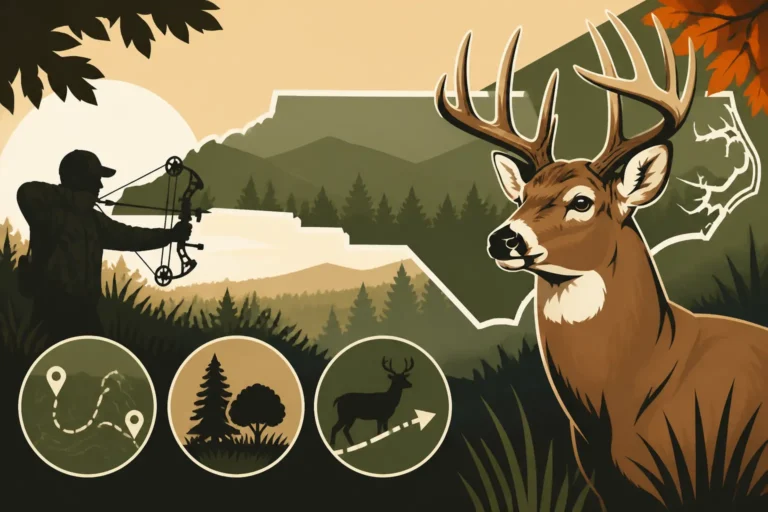
Gone are the days when a paper map was your only resource. Today's digital mapping applications are incredibly powerful tools for identifying overlooked ground from the comfort of your home. Platforms like GoHunt, OnX Hunt, or the NC Wildlife App are invaluable. Start by looking at topo lines: seek out areas with drastic changes in elevation that might create saddles, benches, or hidden draws that aren't obvious from a quick glance. Then, switch to satellite imagery. Look for dense stands of timber, impenetrable looking thickets, or areas with significant water features that would deter most hunters. What looks like a solid green blob on a satellite image might be exactly what you're looking for – a deer sanctuary.
Focus on identifying "pinch points" or "funnels" where deer movement might be concentrated due to terrain, even if the terrain itself is rugged. Also, scrutinize access roads and trails. The further away an area is from an easily walked path, the more likely it is to be overlooked. Look for obscure parking areas, old logging decks that are now overgrown, or forgotten gas line cuts that might offer a less obvious entry point. GoHunt, for example, allows you to drop waypoints and measure distances, helping you plan out potential entry and exit routes that avoid major trail systems and minimize your impact. The goal is to virtually "walk" the property, identifying areas that scream "too much trouble" to the casual observer, but whisper "sanctuary" to a keen eye. Leveraging tools like Scouting With the NC Wildlife App or Reading Aerial Photos for Piedmont Deer can give you an edge by revealing patterns and features invisible from the ground.
Boots-on-the-Ground Verification and Entry Planning
Once you've identified several promising areas through digital scouting, it's time to put boots on the ground. This isn't just about confirming what you saw on the map; it's about understanding the nuances of the terrain, verifying water levels, and finding the subtle signs of deer activity that digital tools can't show you. Walk the contours, not just the flat spots. Get into those thickets you marked as potential bedding areas. Look for rubs, scrapes, and subtle trails that lead into the nastiest cover, not just along its edges. Pay close attention to Finding Sign in Big Pisgah Timber, such as old tracks, droppings, and browsed vegetation, especially in areas that look untouched.
During this phase, mentally plan your approach and exit strategy for actual hunting days. How will you get in quietly, especially in the dark? Are there natural features, like creek beds or drainage ditches, that you can use to mask your movement? Where can you park your vehicle so it's not visible from major roads or other hunter's typical access points? Think about wind direction and thermals for your chosen stand locations. If you’re pushing into truly overlooked ground, your entry route might be just as important as the stand itself. You might need to make a longer, more circuitous route, even if it adds a half-mile to your walk. Sometimes, the best way in is not the easiest, but the one that ensures you remain undetected. Consider routes like Entry Routes Through Standing Soybeans which offer natural concealment.
The Mindset of Hunting Overlooked Ground
Hunting these less-pressured areas isn't just about physical effort or new techniques; it requires a specific mental approach. It means embracing challenges, cultivating patience, and being willing to adapt to conditions that might be outside your comfort zone.
Embracing the Challenge and Expanding Your Comfort Zone
Let's be real: hunting ground others walk past isn't easy. It often means longer walks, steeper climbs, crossing water, busting through thick briars, and generally being more uncomfortable than if you just stuck to the easily accessible spots. Your gear might get more wear and tear, and you'll definitely sweat more. You might even question your sanity when you're 45 minutes deep into a swamp, soaked to the bone. But this is precisely the point. The vast majority of hunters aren't willing to put in this extra effort, and that's exactly why these areas remain overlooked.
Embracing this challenge means accepting that discomfort is part of the process. It means investing in good quality, durable gear – waterproof boots, tough brush pants, and a comfortable pack that can handle long hauls. It also means building your physical endurance so that a two-mile hike with your stand and gear doesn't feel like an insurmountable obstacle. The reward for this expanded comfort zone is immense: solitude, less pressured deer, and the profound satisfaction of knowing you truly earned your harvest. When you find yourself deep in a secluded basin, you'll know you're likely the only one there, and that feeling of truly being in the wild, away from the crowds, is what many of us chase in hunting. This kind of effort is often rewarded, especially when anticipating key deer movements during Hunting the North Carolina Rut by Zone.
Patience, Persistence, and Adapting Your Tactics
Just because you've found an overlooked spot doesn't guarantee instant success. These areas still require patience and persistence. Deer in low-pressure zones might be more naturally curious, but they're not necessarily stupid. They're still wild animals, and they still demand respect and intelligent hunting tactics. You might not see as many deer as you would on a heavily trafficked food plot, but the deer you do see are likely to be older, wiser, and more predictable in their natural patterns.
Be prepared to sit longer, observe more, and move less. Your setup needs to be impeccable, your scent control paramount, and your shot execution flawless. These aren't areas where you can expect deer to simply walk by every hour on the hour. You might have long stretches of quiet. But when that deer does show up, it's often a truly unpressured animal, unaware of your presence, offering a better chance at a clean, ethical shot. Don't get discouraged if the first sit or two is slow. Learn from what you see (or don't see), adjust your approach, and keep coming back. The deer are there, they're just less accustomed to human intrusion and may not move in the same predictable ways you're used to near roads or obvious fields. Adapting your strategy, such as employing a Cold-Weather Sitting Strategy in the Mountains, will pay dividends in these less-traveled locales. Remember, the true secret to finding ground others walk past is being willing to walk a little further, work a little harder, and think a little differently than everyone else.
To summarize the differences between conventional hunting and hunting overlooked ground, consider this table:
| Feature/Tactic | Conventional Hunting Approach | Overlooked Ground Hunting Approach |
|---|---|---|
| Access | Easy, near roads, established trails. | Difficult, remote, often requires navigating obstacles. |
| Hunting Pressure | High, frequent human disturbance. | Low, minimal human disturbance. |
| Deer Behavior | Nocturnal, cautious, react quickly to humans. | More natural, daylight movement possible, less wary. |
| Scouting | Focus on obvious sign, food plots, clear trails. | Digital mapping, identifying barriers, deep penetration. |
| Gear | Standard hunting setup. | Durable, waterproof, comfortable for long hauls; navigation tools essential. |
| Effort Required | Moderate. | High, physical endurance crucial. |
| Competition | High, many other hunters. | Low, often solitary experience. |
| Success Rate | Often dependent on luck or timing in pressured areas. | Higher potential for unpressured animals, once found. |
Ultimately, the best hunting spots are often the hardest to reach, and that's a universal truth whether you're deep in the Blue Ridge Mountains or slogging through a swamp near the coast. Be the hunter who goes the extra mile, and you'll be consistently finding those hidden pockets where mature deer feel safe. Remember that sometimes the most overlooked spots are simply How Far to Walk From a Forest Road further than most people are willing to go.
Disclaimer
Hunting is an inherently dangerous activity. Always prioritize safety, understand and follow all North Carolina Wildlife Resources Commission regulations, and hunt ethically. The information provided in this guide is for informational purposes only and should not replace proper hunter education and personal responsibility. Always inform someone of your hunting plans and carry appropriate safety gear.