Portable Stands for Public Land Mobility
Hunting North Carolina's vast public lands offers incredible opportunities, but demands true mobility. If you've ever felt constrained by a single setup or struggled to stay on deer as they shift due to pressure or food changes, you know the frustration. This guide is all about equipping you with the knowledge of portable tree stands, helping you become a more dynamic and successful hunter on North Carolina's diverse public lands.
The Public Land Hunter's Mobility Challenge in North Carolina
There's nothing quite like the freedom and challenge of hunting North Carolina's public lands. From the sprawling national forests like Pisgah and Nantahala to the numerous Game Lands scattered across the state, we have access to millions of acres. But with that freedom comes a critical constraint: you typically can't leave permanent stands out. This rule forces us to think differently, to be adaptable, and to embrace mobility as a core hunting strategy. It means that the hunter who can move quickly and quietly to where the deer are is often the one who finds success.
Navigating Vast, Unfamiliar Terrain
Imagine staring at a map of a massive Game Land, maybe one like Holly Shelter or Uwharrie, knowing that deer could be anywhere across thousands of acres. Unlike a small private tract you've scouted for years, public land often feels like a giant puzzle. You might find incredible sign one day, only for the deer to seemingly vanish the next, pushed by other hunters or changing food sources. Relying on a single, static stand setup in such an environment is like trying to catch a river fish with a still pole in the ocean – you're just not covering enough ground.
This vastness demands a system that allows you to explore, locate fresh sign, and set up quickly and efficiently. We spend hours poring over aerial photos, using tools like GoHunt to identify potential bottlenecks, ridges, or food sources. But even the best digital scouting needs on-the-ground confirmation, and that's where a portable stand system shines. You can hike miles into a new area, find precisely the right tree along a fresh scrape line, and be hunting it within minutes. This ability to instantly react to what you're seeing in the woods is a game-changer.
Adapting to Hunting Pressure and Shifting Deer Movement
Public land, by its very nature, means other hunters. Especially during peak times like the gun opener or the rut, your favorite "secret" spot might have competition. Deer react to this pressure. They'll move to thicker cover, go nocturnal, or shift their bedding and feeding patterns dramatically. If your stand is bolted to one tree, you're stuck waiting for the deer to come to you, which they often won't do once they've been bumped. The successful public land hunter is a master of adaptation, always ready to pivot.
Consider a scenario where you've been hunting a prime oak flat in the Piedmont, only to find a truck parked near your intended entry point one morning. Instead of giving up or setting up in a less-than-ideal spot, a portable stand allows you to quickly adjust your plan. You can consult your mapping app, identify an alternative, overlooked ridge or thicket a mile away, and be setting up your portable stand while the other hunter is still climbing into theirs. This nimbleness lets you stay ahead of the game, following the deer as they seek refuge from the crowds. Understanding Hunting Pressure on North Carolina Public Land is vital for this strategy.
Rules and Regulations for Stands on North Carolina Public Land
Before we dive into the types of stands, it's crucial to understand the rules. North Carolina's public lands, particularly Game Lands and National Forests, have strict regulations regarding tree stands. Generally, permanent stands, those that damage trees, or those left unattended for extended periods are prohibited. The keyword here is portable. You need a stand that can be easily transported in and out of the woods, and in many cases, it must be removed at the end of each hunting day, or at least at the end of the season.
Always check the specific regulations for the Game Land or National Forest you plan to hunt. Some areas might have slightly different rules regarding the use of screw-in steps, stand ID tags, or how long a stand can remain in place. Ignorance of the rules is no excuse, and violations can lead to hefty fines or loss of hunting privileges. The beauty of truly portable stands, especially climbing stands, hang-ons that you pack in and out, or tree saddles, is that they inherently comply with most of these "pack it in, pack it out" rules, giving you peace of mind. For general information, check out North Carolina Game Lands rules.
Types of Portable Stands for North Carolina Public Land
When it comes to portable stands, hunters have a few excellent options, each with its own set of advantages and ideal use cases. Choosing the right one depends on your hunting style, the terrain you'll be covering, and the types of trees you expect to encounter.
Climbing Stands: Quick and Versatile for the Right Trees
Climbing stands are the quintessential choice for many public land hunters seeking mobility. They consist of two main sections – a seat section and a platform section – that you "walk" up the tree using your hands and feet. The great advantage is their self-contained nature; everything you need is right there in the stand, making for a relatively quick setup and takedown once you've mastered the technique. They're also often quite comfortable for longer sits, offering a full seat and backrest.
The major drawback, however, is their reliance on suitable trees. A climbing stand requires a relatively straight, limbless tree, ideally with consistent diameter, to work safely and effectively. This makes them fantastic for hunting mature pine plantations common in the Coastal Plain or Piedmont, or in areas with consistent, straight hardwoods. If you're hunting in the gnarly, crooked timber of the mountains or thick, brushy pocosins, a climber might leave you frustrated as you struggle to find a suitable tree. But when you find that perfect pine overlooking a cutover, a climber gets you up silently and efficiently.
Hang-On Stands and Climbing Sticks: Ultimate Flexibility
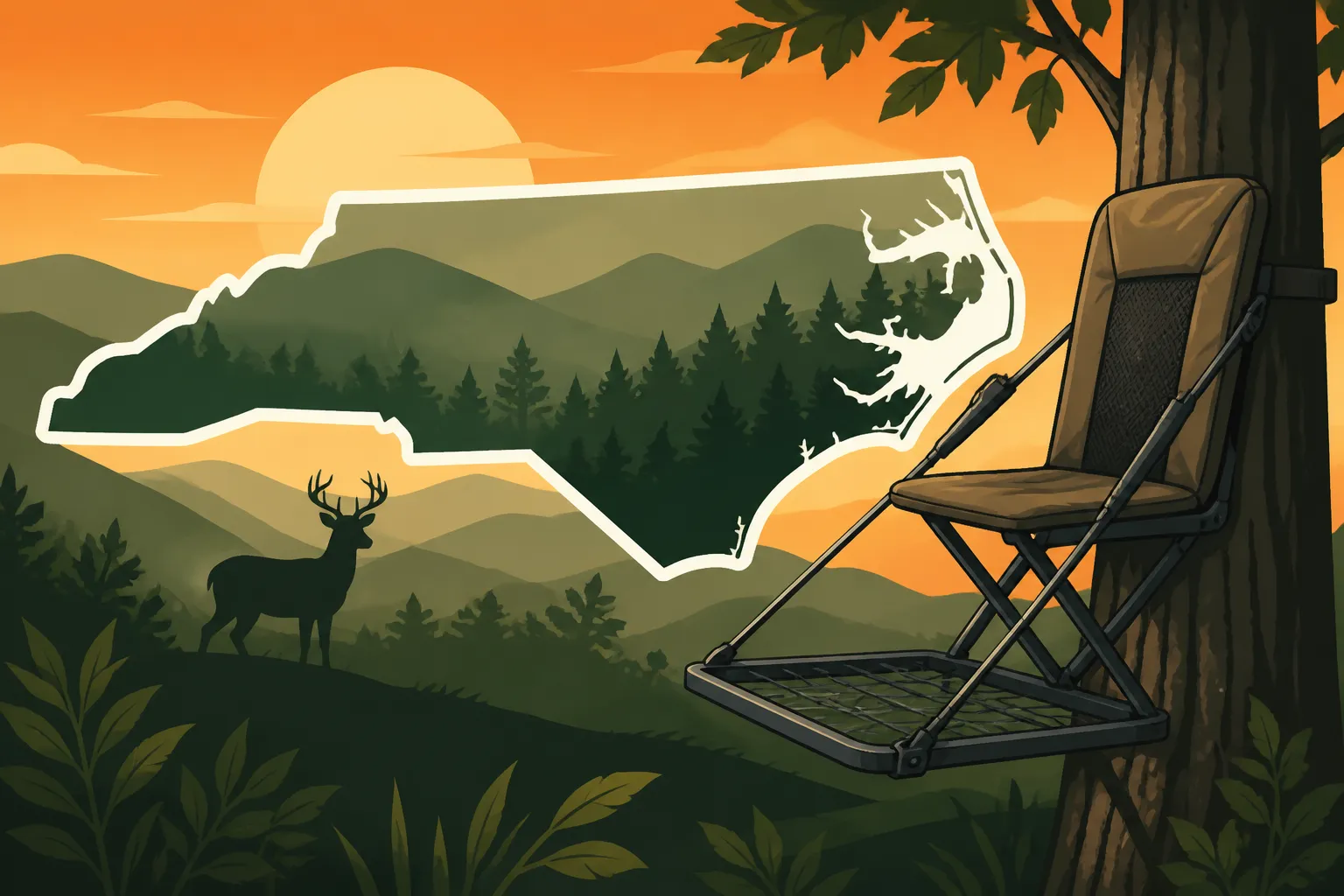
If climbers are the specialized tool, hang-on stands paired with climbing sticks are the versatile workhorse of public land hunting. This system involves carrying a lightweight hang-on stand (often just a small platform and seat) and a separate set of modular climbing sticks or rope-based climbing aids. The sticks attach to the tree in sections, allowing you to ascend, and then the hang-on stand is secured at your desired height. This system offers unparalleled flexibility because it can be used on almost any tree, regardless of its straightness or limb structure, as long as it's sturdy enough to support you.
The trade-off is often more setup time and a greater number of pieces to carry. However, for hunters who prioritize getting into the absolute best tree, even if it's a crooked old oak on a ridge line or a multi-trunked gum in a swamp, the hang-on system is superior. It allows for strategic stand placement in truly difficult terrain, such as finding a pinch point on a mountain bench in Treestand Setups in Pisgah National Forest or tucking into a specific piece of cover along Croatan Forest Pocosin Edges. Many hunters find that the ability to precisely choose their tree outweighs the extra effort.
Tree Saddles: The Lightweight, Agile Choice
For the ultimate minimalist and mobile hunter, the tree saddle has exploded in popularity. This system involves a padded harness that you wear, which then connects to a climbing rope and a small platform or set of steps on the tree. You literally "sit" in the saddle, leaning against the tree, which provides 360-degree shooting lanes and an incredibly compact, lightweight setup. A saddle system typically weighs far less than any traditional stand, making it ideal for long treks into remote public land.
The learning curve for saddle hunting can be steeper than with traditional stands, and comfort is highly personal. However, once mastered, it offers unmatched agility. You can quickly ascend even the most gnarled or odd-shaped trees, providing endless ambush opportunities. This makes saddles perfect for hunting extremely pressured areas where deer are using subtle terrain features, or for deep dives into big timber where every ounce matters. If you're serious about extreme mobility and adaptability, exploring Saddle Hunting in North Carolina Hardwoods might just revolutionize your public land strategy.
Strategic Deployment of Portable Stands for Success
Having the right gear is only half the battle; knowing how to use it strategically is what truly leads to success. Portable stands aren't just about getting off the ground; they're about an entire approach to public land hunting that prioritizes scouting, stealth, and adaptability.
Scouting and Setup on the Go
The beauty of a portable stand system is that your "scouting" doesn't stop when the season opens. In fact, it often intensifies. You can quickly move into an area, quietly observe from the ground, pinpoint fresh sign like rubs, scrapes, or heavy tracks, and then deploy your stand within minutes of finding that hot activity. This "hunt the sign" mentality is crucial on public land where deer patterns can change rapidly. Using a detailed mapping app like GoHunt can help identify potential spots remotely, but nothing beats boots on the ground.
When you're packing your stand in, always be thinking about your entry and exit routes. Can you get to your chosen tree silently and without disturbing deer? Will you be able to get out after dark just as quietly? The stand is only one part of the equation; the approach and departure are equally critical. Consider setting up along natural funnels, like a narrow strip of timber between two clearings, or along ridge-top saddles where deer are likely to travel. Knowing how to read the landscape for deer movement is paramount, especially in big areas like the Pisgah National Forest. Scouting North Carolina Public Land Before Season is invaluable, but in-season adjustments are key.
Minimizing Your Footprint and Scent
Every time you step into the woods, you leave a footprint – both literally and figuratively. When you're constantly moving and setting up stands, minimizing that footprint becomes even more critical. This means paying meticulous attention to scent control, ensuring your gear is clean, and choosing entry and exit paths that put the wind in your favor. Dragging a bulky stand through brush can leave a significant scent trail that savvy public land deer will detect.
Pack your stand and sticks efficiently, strapping them down to prevent rattling, and carry them in a way that minimizes contact with your scent. Consider using a good game bag for your clothing and gear, and dress in layers to avoid overheating on the walk in, which can generate excess sweat and odor. On public land, every little bit of stealth helps, especially when deer are already on high alert from pressure. Check out tips for Scent Control Gear for Humid Coastal Hunts for more ideas.
Safety First: Harnesses and Practice
I can't stress this enough: always use a full-body safety harness. Every single time you leave the ground, whether you're climbing 10 feet or 30, wear that harness and stay attached to the tree from the moment your feet leave the ground until they return. Portable stands, by their nature, involve more movement and setup at height, which means more potential for accidents. Invest in a good lifeline or a separate climbing rope that keeps you tethered as you ascend and descend.
Practice setting up your stand at home, at low heights, before you ever take it into the woods. Get comfortable with the sequence, the feel of the straps, and how to operate everything smoothly. This practice builds muscle memory and confidence, making your in-woods setup quicker, quieter, and most importantly, safer. Don't cut corners on safety; your life literally depends on it.
Choosing the Right Stand for Your North Carolina Hunt
With several excellent options available, deciding which portable stand is right for you can feel overwhelming. It really boils down to balancing your personal hunting style, the specific terrain you'll be hunting, and what you prioritize in terms of comfort, weight, and flexibility.
Matching Stand Type to Terrain and Timber
North Carolina offers an incredible variety of terrain, from the dense, steep mountains of the west to the flat, swampy Coastal Plain. The type of timber in these regions can drastically influence which stand works best.
- Mountains (Pisgah, Nantahala): Expect steep slopes, gnarled hardwoods, and irregular timber. Hang-on stands with climbing sticks or tree saddles excel here, allowing you to access trees climbers simply can't handle. Mobility is key for Reading a Ridge for Mountain Zone Deer.
- Piedmont (Uwharrie, Game Lands): Rolling hills, mixed hardwoods and pine. Climbers can be great in mature pine blocks, but hang-ons or saddles offer more versatility for mixed timber and finding the perfect ambush spot on a field edge or along a creek bottom.
- Coastal Plain/Sandhills (Croatan, Holly Shelter): Often flatter, with younger pines, thick pocosin, and swampy areas. Climbers can work well in straight pine stands. For denser, swampier areas, a hang-on allows you to pick specific, sturdy trees, and saddles offer great maneuverability in thick cover.
Here's a quick comparison to help you visualize:
| Stand Type | Ideal NC Terrain/Timber | Pros | Cons | Mobility/Weight Rating |
|---|---|---|---|---|
| Climbing Stand | Straight, limbless trees (Piedmont pines, some hardwoods) | Quick setup (right tree), comfortable for long sits | Tree-dependent, can be bulky, noisy if not secured | Medium |
| Hang-On Stand + Sticks | Varied timber (Mountain hardwoods, gnarly Piedmont oaks, thick swamps) | Versatile, works on most trees, quiet setup (if careful) | More pieces to carry, slower setup, can be less comfortable | Medium-High |
| Tree Saddle | All terrain, extreme flexibility (Deep woods, awkward trees) | Ultra-lightweight, 360-degree shooting, highly mobile | Steep learning curve, takes practice, less "comfortable" for some | High |
Balancing Weight, Comfort, and Features
The eternal struggle for the mobile hunter: weight versus comfort. A super-lightweight saddle might be a dream to pack in three miles, but if you're miserable after an hour, it might not be the right choice for an all-day sit during Hunting the Rut in the Eastern Zones. Conversely, a plush, heavy climber might be comfortable, but if you dread packing it more than a mile, it limits your effective hunting range.
Think about your typical hunt duration and how far you're willing to walk. If you're planning all-day sits, comfort might outweigh a few extra pounds. If you're doing quick, run-and-gun scouting missions, weight is king. Look for stands with features that enhance your experience: padded seats, adjustable platforms, quiet straps, and reliable attachment systems. Many hunters find a sweet spot with a medium-weight hang-on and lightweight climbing sticks, offering a good balance of features and packability.
Budget and Durability Considerations
Like any hunting gear, portable stands come in a wide range of price points. While it's tempting to go for the cheapest option, remember that your stand is a critical piece of safety equipment. Investing in a high-quality, durable stand from a reputable brand is always a wise decision. Look for robust construction, good welds, and reliable cam buckles or straps. Corrosion resistance is a plus, especially if you're hunting the humid North Carolina coast.
A good stand is an investment that will last for many seasons if properly cared for. Consider how well it will hold up to being repeatedly packed in and out, enduring various weather conditions, and supporting your weight safely. Sometimes, spending a little more upfront can save you headaches, discomfort, and potentially even prevent an accident down the line.
Ultimately, the best portable stand is the one that you'll actually use, comfortably and safely, to get into those hard-to-reach, deer-rich public land spots. Experiment, practice, and adapt, and you'll find mobility becomes your greatest asset on North Carolina's public hunting grounds.
Disclaimer
This article is for general informational purposes only and does not constitute professional advice. Laws, prices and regulations vary by location and change over time. Consult a qualified professional for guidance on your specific situation.