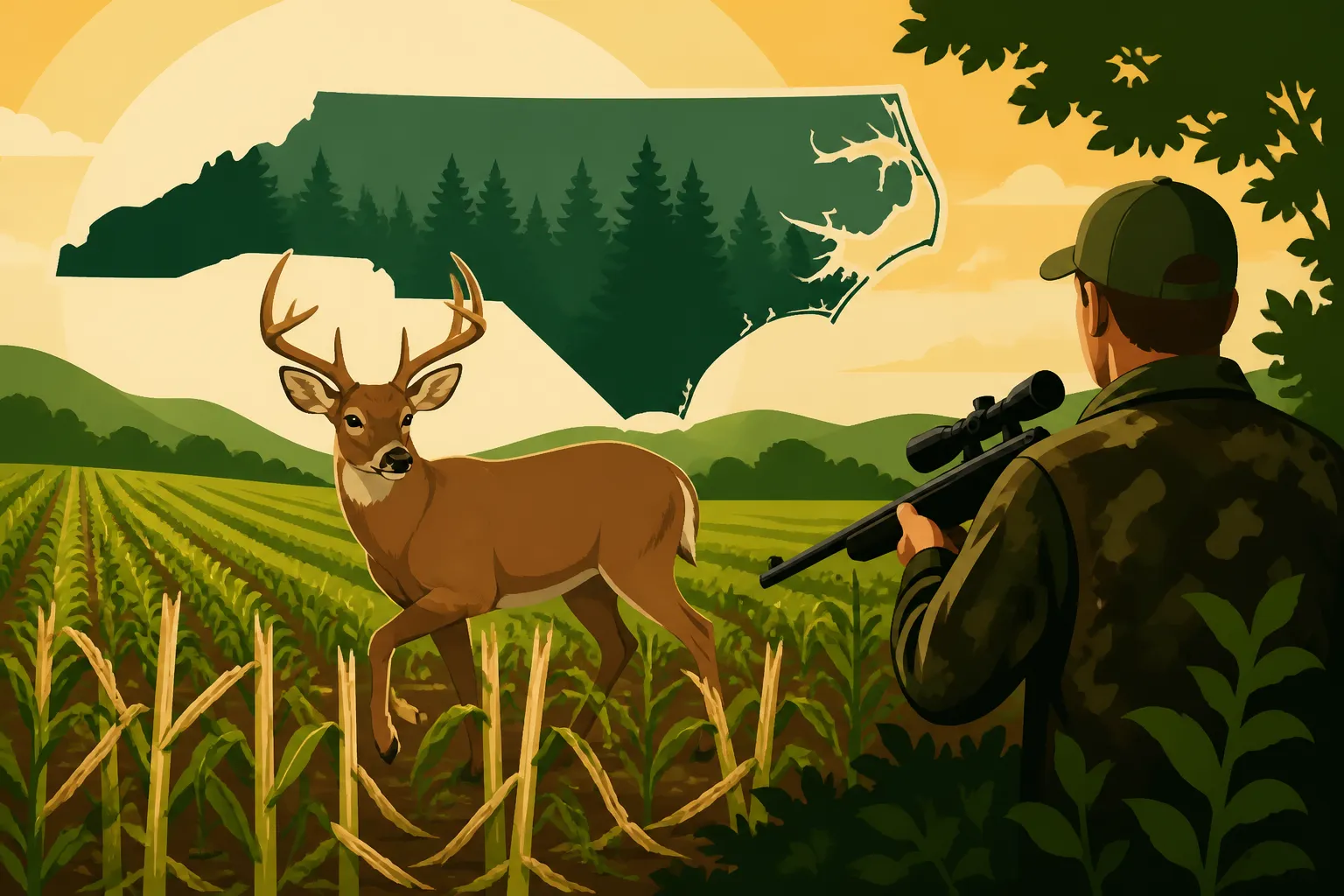
North Carolina Deer Damage Permit for Farmers
Farmers across North Carolina often face the heartbreaking reality of significant crop damage and economic loss due to burgeoning deer populations. It's incredibly frustrating to put countless hours and resources into cultivating a harvest, only to see it diminished or outright destroyed by hungry whitetails. This comprehensive guide is here to walk you through the specifics of obtaining and utilizing a North Carolina Deer Damage Permit, offering a vital tool for agricultural producers to protect their livelihoods from deer depredation.
Understanding Deer Damage in North Carolina Agriculture
The Growing Problem of Deer-Related Crop Loss
If you're a farmer in North Carolina, you've likely seen it firsthand: rows of young soybeans nipped back to stems, corn stalks stripped bare, or entire sections of a sweet potato field dug up. It's not just a minor annoyance; for many agricultural producers, deer damage represents a substantial financial hit, directly impacting their bottom line and threatening the viability of their operations. The state's deer population, while a boon for hunters, can be a serious detriment to crops, especially in areas bordering woodlands or with abundant deer habitat. From the fertile fields of the Piedmont to the coastal plains and even mountain valleys, white-tailed deer are highly adaptable and opportunistic feeders. They're not particular, either – corn, soybeans, peanuts, wheat, horticultural crops, and even nursery stock can all become prime targets, causing damage at various stages of growth. Imagine the investment in seed, fertilizer, fuel, and labor, only to watch a herd of deer wipe out an acre or more overnight. This kind of impact can truly make or break a season, leading to immense stress and financial hardship for farming families. It's a constant battle, and it's completely understandable why frustration runs high when your hard work is literally eaten away.
Beyond the immediate crop loss, there's the long-term impact on soil health and future yields, as deer can also damage infrastructure like irrigation lines or fencing while moving through fields. The sheer numbers of deer in some areas mean that even small, consistent browsing can add up to catastrophic losses over an entire growing season. We often talk about the statewide deer herd and its impressive numbers, but for a farmer, those numbers translate directly to lost income and additional management headaches. It's not an exaggeration to say that managing deer pressure is as critical as managing pests or diseases for many operations, and sometimes even more challenging due to the legal complexities of wildlife control. The financial strain can be immense, forcing tough decisions about future plantings or even the long-term sustainability of the farm itself.
Identifying When a Damage Permit Becomes Necessary
So, when does the problem transition from an acceptable level of wildlife interaction to one that necessitates more drastic action, like a deer damage permit? Generally, a permit becomes necessary when deer activity results in significant, recurring economic loss to agricultural crops, commercial nurseries, or other cultivated property. This isn't about a deer munching on a few tomatoes in your backyard garden; it's about commercial-scale damage that impacts your livelihood. The North Carolina Wildlife Resources Commission (NCWRC) evaluates permit requests based on the severity and documented history of the damage. They want to see that you've got a genuine problem, not just a casual sighting of a few deer.
Documentation is absolutely key here. Farmers should keep detailed records, including photographs of damaged fields, estimates of crop loss, and even notes on observed deer activity. Having a clear timeline and evidence of the problem's escalation can significantly strengthen your case when applying for a permit. It shows that you're not just reacting to a single incident, but rather addressing an ongoing and persistent threat to your agricultural production. Consider using tools like trail cameras, or even simply your phone's camera, to capture images of deer actively feeding in your fields or the damage they've left behind. This evidence helps the NCWRC understand the scope of the issue. A precise calculation of monetary loss, tied to specific acreage and crop types, will lend significant weight to your application, demonstrating the true economic hardship you're enduring.
The North Carolina Deer Damage Permit Process
Who Qualifies for a Deer Damage Permit
A North Carolina Deer Damage Permit is specifically designed for agricultural producers and landowners experiencing significant damage to their crops or property from white-tailed deer. This isn't a general hunting license or a way to extend hunting season for recreational purposes; it's a targeted tool for damage control. The primary qualifying factor is documented, substantial economic damage to agricultural crops, commercial nurseries, or even timber operations where deer browsing prevents regeneration. The applicant is typically the landowner or a tenant farmer who has a legitimate, vested interest in the agricultural production of the property. For instance, a farmer leasing a large tract of land for soybean cultivation would certainly qualify if deer are destroying their harvest, as would a nursery owner whose ornamental plants are being severely browsed.
The NCWRC needs to ensure that these permits are issued responsibly and only when truly necessary to mitigate agricultural damage. They look for direct evidence of deer depredation impacting a commercial operation. This means that if you're a homeowner with a small vegetable patch, while frustrating, you might not meet the criteria for a commercial damage permit. Instead, you'd likely be encouraged to explore other deterrent methods or participate in regular hunting seasons to manage local deer numbers. It’s about protecting livelihoods and the economic backbone of rural communities, not just personal gardens. Eligibility also often considers whether reasonable conventional efforts have been made to deter deer, showing that the permit is a last resort, not a first.
Step-by-Step Application for a Permit
Applying for a North Carolina Deer Damage Permit involves a clear process, and it's crucial to follow each step to ensure your application is processed efficiently. The first step is to contact the NCWRC directly. You can usually find the most current contact information on their official website, typically under their "Land and Water" or "Conservation" sections. Often, you'll be directed to a local District Biologist or Wildlife Enforcement Officer who handles permits in your area. They are the experts who can guide you through the specifics and answer any initial questions you might have about the process and eligibility.
When you make contact, be prepared to explain the extent of the damage, the specific crops affected, and the estimated financial loss. This is where your detailed documentation, photographs, and records of observations become invaluable. The NCWRC representative will likely schedule a site visit to your property to verify the damage firsthand. During this visit, they'll assess the situation, confirm deer presence and activity, and discuss potential mitigation strategies. They might also inquire about existing management efforts, such as regular hunting during legal seasons or the use of repellents. After their assessment, if they concur that a permit is warranted, they will guide you through completing the official application form. This form will require details about your property, the nature of the damage, and the proposed methods for deer removal. Once submitted and approved, the permit will specify the number of deer that can be removed, the methods allowed (e.g., specific firearms, archery equipment), and the timeframe for removal. It's a detailed process, but it's designed to ensure proper management while addressing your specific needs.
Key Regulations and Restrictions of the Permit
Once you have a North Carolina Deer Damage Permit in hand, it's absolutely critical to understand and adhere to all the regulations and restrictions outlined within it. These permits are not a free-for-all; they come with strict conditions designed to ensure ethical, lawful, and targeted wildlife management. Typically, a permit will specify the maximum number of deer that can be taken, which might be a fixed number or a "take until damage ceases" clause, depending on the severity and ongoing nature of the problem. It will also dictate the allowed methods of take. For example, it might specify that only certain firearms can be used, or it might permit archery equipment, or even allow for different methods outside of traditional hunting hours, particularly if depredation occurs predominantly at night. This specificity helps maintain public safety and ensures appropriate methods for the situation.
The timeframe for removal is another crucial element. Permits are usually issued for a specific, limited period, often tied to the growing season of the affected crop or the period of peak depredation. You can't just keep the permit indefinitely; it has a clear expiration. Furthermore, there are often strict reporting requirements. Every deer taken under the permit must be reported to the NCWRC, usually within 24 hours of harvest. This ensures proper tracking of removals and allows the agency to monitor the effectiveness of the permit and the overall health of White-Tailed Deer Across North Carolina. Carcass disposal rules might also apply, especially in areas where Chronic Wasting Disease (CWD) is a concern. For instance, if you're operating within one of North Carolina's Seven CWD Counties, there might be specific guidelines on moving a deer carcass out of that area or mandatory testing requirements. Always read your permit thoroughly and don't hesitate to ask your District Biologist for clarification on any point. Compliance is not just about avoiding penalties; it's about responsible wildlife management and contributing to the state's conservation efforts.
Practical Considerations and Alternatives for Managing Deer Damage
Beyond the Permit: Proactive Deer Management Strategies
While a deer damage permit offers a direct solution to immediate, severe problems, it's often most effective when integrated into a broader, long-term deer management strategy. Relying solely on permits can become a continuous cycle if underlying issues aren't addressed. Many farmers explore various proactive measures to reduce deer pressure even before damage reaches critical levels. One common strategy is fencing. While costly for large fields, robust deer fencing can be incredibly effective for smaller, high-value crops or nursery stock. Electric fences, particularly multi-strand designs or those incorporating peanut butter lures, can also deter deer by creating an unpleasant experience. Another approach involves repellents. Commercial deer repellents, often containing ingredients like putrescent egg solids, thiram, or capsaicin, can be applied to crops. Their effectiveness varies depending on deer pressure, rainfall, and application consistency. Some hunters, for instance, might even look into Scent Control Gear for Humid Coastal Hunts as a way to avoid detection, but for deterrence, you want something that smells or tastes bad to deer.
Scare tactics can also offer temporary relief. These include devices like propane cannons, flashing lights, or even guard dogs. However, deer are highly adaptable and often habituate to these methods over time, reducing their long-term effectiveness. Rotating these methods or combining them can sometimes extend their utility. Habitat modification is a more involved but potentially very impactful strategy. This could include creating buffer zones of less palatable vegetation around fields, planting decoy crops that deer prefer away from cash crops, or managing adjacent woodland edges to reduce cover directly next to vulnerable areas. By making your fields less attractive or harder to access, you can significantly reduce deer browsing. Many resources, including those from organizations like GoHunt, offer insights into effective habitat management, helping farmers understand deer behavior and movement patterns. Such platforms can provide invaluable mapping tools and data to inform your planning.
Combining Permits with Hunting Season Strategies
A deer damage permit shouldn't be seen as a replacement for traditional hunting seasons but rather as a complementary tool. In fact, robust hunting pressure during the regular seasons is often the most effective long-term strategy for managing deer populations and mitigating damage. Encouraging hunters to access your land, especially during North Carolina's Gun Deer Season by Zone and Bowhunting North Carolina's Statewide Archery Season, can significantly reduce local deer numbers and alter their patterns, making them less likely to congregate in your fields. You might even consider offering access to hunters who specifically target antlerless deer, as does are the primary drivers of population growth and, consequently, agricultural damage. Strategic placement of blinds, informed by reading aerial photos for Piedmont deer, can also make your property more attractive to hunters, thus increasing harvest rates.
For many farms, allowing controlled hunting on your property can be a win-win. Hunters get access to land, and you get assistance in managing deer numbers. If you're a farmer and also a hunter, understanding how to apply Late-Season Food Sources for North Carolina Whitetails can help draw deer to areas where they can be harvested more effectively, rather than leaving them to browse your cash crops. The goal is to funnel deer away from vulnerable areas and into positions where they can be legally and ethically taken during established hunting periods. A damage permit then serves as an emergency measure for times when traditional hunting pressure isn't enough, or when damage occurs outside of legal hunting hours and necessitates immediate action to save a crop. This integrated approach leverages both regulatory tools and community participation for effective wildlife management.
Reporting Harvests and Staying Compliant
Compliance with the terms of your North Carolina Deer Damage Permit is absolutely paramount. As mentioned, every deer harvested under the permit must be reported to the NCWRC. This isn't just a suggestion; it's a legal requirement and a critical part of the wildlife management framework. Typically, reporting needs to happen within 24 hours of the harvest, and you'll usually use the same online or app-based system that hunters use for Checking a North Carolina Deer Harvest Online. This system records the date, location, sex, and often the method of take, providing valuable data to the NCWRC on deer populations and management effectiveness.
Failure to report harvests can lead to serious consequences, including fines, revocation of your permit, and even legal action. It undermines the integrity of the program and could jeopardize future opportunities for you or other farmers to obtain such permits. Always double-check the specific reporting instructions provided with your permit, as they can sometimes vary slightly based on the permit's conditions or any special circumstances (like CWD zones). Maintaining clear, accurate records of all your permit-related activities not only ensures compliance but also provides a useful history should you need to renew your permit or discuss ongoing deer management issues with the NCWRC. GoHunt and similar platforms often highlight the importance of ethical reporting and compliance for all types of hunting and management activities, emphasizing the role hunters and landowners play in conservation. This meticulous record-keeping is beneficial for demonstrating consistent issues over time and advocating for continued assistance.
Here's a quick table to summarize key aspects of the permit process:
| Step | Description | Important Details |
|---|---|---|
| Identify Problem | Acknowledge significant and recurring economic damage from deer to agricultural crops or property. | Document damage with photos, crop loss estimates, and observation notes. |
| Contact NCWRC | Reach out to the North Carolina Wildlife Resources Commission, typically a District Biologist or Officer. | Find current contact info on the NCWRC website. Be ready to explain the situation. |
| Site Visit | NCWRC representative conducts an onsite inspection to verify damage and deer activity. | Be present, provide all documentation, discuss existing management efforts. |
| Application | Complete the official permit application form provided by the NCWRC representative. | Include property details, nature of damage, proposed removal methods, and estimated take. |
| Permit Issued | Receive the approved permit outlining specific rules for deer removal. | Carefully review the number of deer, allowed methods, timeframe, and reporting rules. |
| Harvest & Report | Remove deer according to permit conditions and report each harvest within 24 hours. | Use the NCWRC online/app system. Compliance is mandatory for future permits. |
When considering long-term solutions, don't forget that Scouting North Carolina Public Land Before Season can give you insights into local deer movements, which might help inform your strategies on private land, even if it's just understanding general population trends. And remember that the North Carolina Deer Bag Limit Rules apply to regular season hunting, but permits operate under different, specific allowances. For those considering hunting as part of their strategy, knowing the North Carolina Legal Firearms for Deer Hunting is essential, as is understanding North Carolina Minimum Rifle Caliber Rules. Additionally, for serious hog issues which sometimes overlap with deer, North Carolina Feral Hog Regulations could be a separate but related concern that requires its own management plan. If you're looking into public access for hunters to help with deer pressure, research Finding Ground Others Walk Past on nearby game lands. Finally, staying current on North Carolina's Chronic Wasting Disease Areas is vital, as it can impact carcass disposal requirements and other aspects of deer management, even with a damage permit.
Disclaimer
Please remember that this article provides general information and guidance. Hunting regulations, permit requirements, and wildlife management practices are subject to change. Always consult the most current North Carolina Wildlife Resources Commission (NCWRC) regulations and local authorities before engaging in any hunting or wildlife management activities.