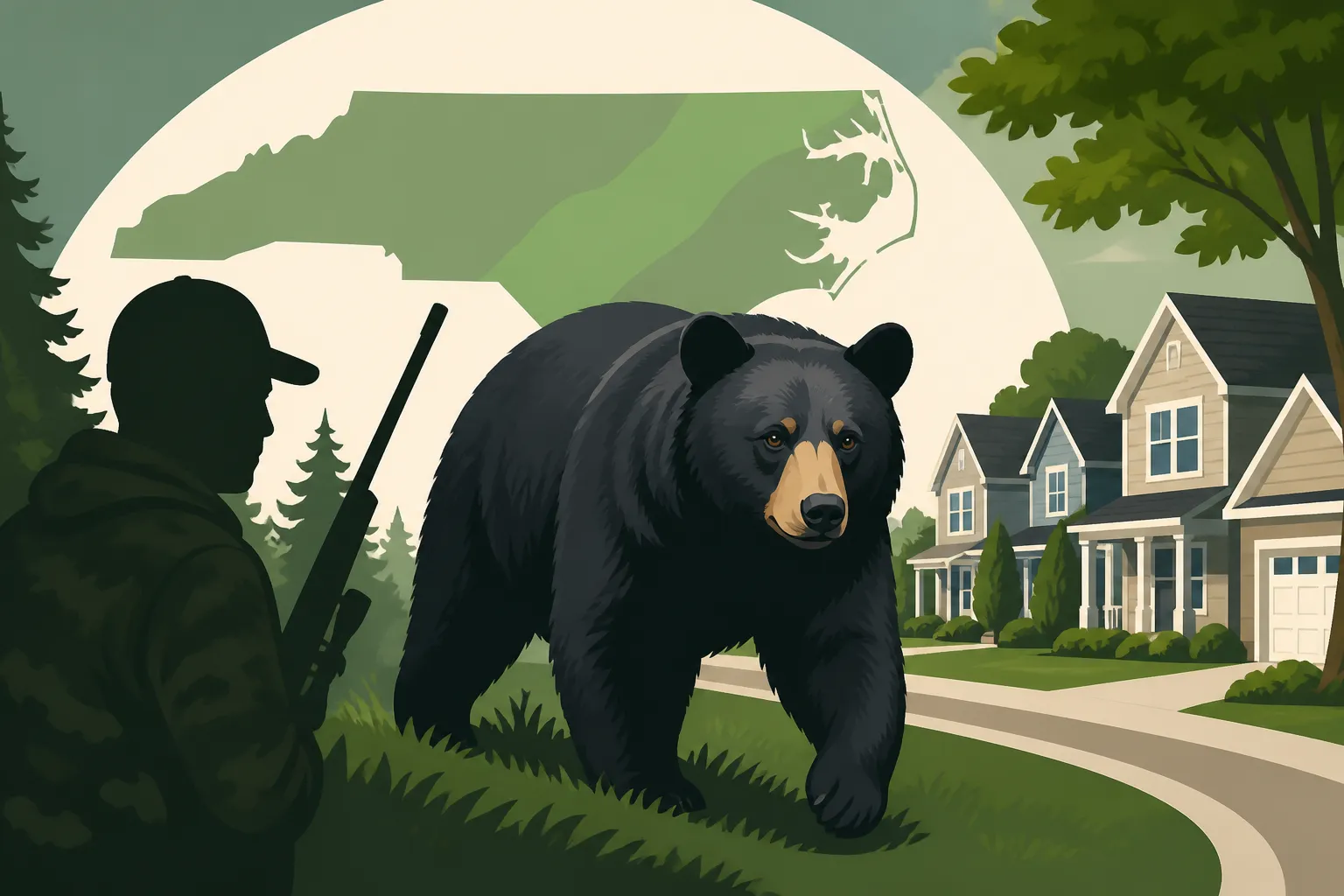
Bears Moving Into Piedmont Suburbs
It’s becoming an increasingly common and unsettling sight for folks living in the North Carolina Piedmont: glancing out your kitchen window or stepping onto your back deck only to come face-to-face with a black bear. What was once primarily a mountain or coastal concern is now a very real part of suburban life in communities stretching from Statesville to Sanford. This guide aims to help you understand why these magnificent creatures are making themselves at home in our backyards, what to do if you encounter one, and, most importantly, how to make your home a less attractive destination for our furry neighbors.
The Growing Presence: Why Bears Are Exploring Piedmont Neighborhoods
It can be a shock to see a bear ambling down your street, especially if you live in a bustling area far from what you'd consider "the wilderness." Many residents feel a mix of awe and anxiety, wondering how a large animal like that ended up so close to schools and playgrounds. The truth is, it’s not just a random occurrence; it's a symptom of several intertwined factors changing the landscape of North Carolina.
Habitat Fragmentation and Development Pressure
One of the biggest drivers of bears moving into our suburban spaces is quite simply, us. North Carolina is growing at an incredible pace, and that means new housing developments, shopping centers, and infrastructure are constantly expanding into areas that were once rural or natural woodlands. These developments often fragment forests and interrupt traditional travel corridors for wildlife. A once contiguous block of timber, perfect for a bear to live out its life, might now be bisected by a new highway or ringed by subdivisions. When a bear's home range shrinks or becomes cut off, they have to go somewhere, and unfortunately, "somewhere" often leads them directly into our communities. They aren't looking for a fight; they're just looking for a place to exist and find food, much like they always have. Understanding these pressures helps us grasp the bigger picture of North Carolina's Black Bear Population and why we're seeing them in unexpected places.
Imagine a young male bear, kicked out by his mother to find his own territory, only to find all the prime spots already occupied by older, stronger males. He's forced to the fringes, perhaps following a creek bottom or a utility line, until he eventually stumbles into an unfamiliar landscape of manicured lawns and vinyl siding. It's not ideal for him, and it's certainly unnerving for us.
Irresistible Food Sources: The Suburban Buffet
Let’s be honest, our homes, intentionally or not, offer an absolute smorgasbord for a bear. While a wild bear will forage for acorns, berries, and insects, a suburban bear quickly learns that human residences are like an all-you-can-eat buffet that never closes. Trash cans, especially those left out overnight before collection, are prime targets. The smell of decaying food, even in a sealed bag, is an incredibly powerful attractant to a bear with an olfactory sense far superior to a dog’s.
Beyond the trash, consider pet food bowls left on porches, bird feeders overflowing with sunflower seeds, and even outdoor grills with lingering grease residue. These easy calories require minimal effort for a bear to access, offering a much more efficient meal than rooting through a forest for hours. Once a bear discovers these readily available food sources, they’ll remember them and return. This isn't just a casual visit; it can become a routine, and that's when problems truly begin to escalate. For hunters, scouting tools like GoHunt can help visualize areas where natural food sources might be scarce, pushing animals towards other options, even if those "other options" are suburban trash cans. This kind of platform can help understand wildlife patterns across different terrains.
A Thriving Population Seeking New Territory
It's also important to acknowledge that North Carolina's black bear population is healthy and growing, which is fantastic news for wildlife conservation in the state. However, a thriving population means more bears, and more bears require more territory. Historically, black bears were largely confined to the mountains and coastal plain. But as their numbers have rebounded, particularly over the last few decades, they’ve naturally begun to expand their range. The Piedmont, with its mix of fragmented woodlands, river bottoms, and, yes, tempting suburban food sources, presents an increasingly viable, if not always safe, new frontier for them.
This expansion means that young bears or those displaced from established territories are pushing further into central North Carolina. What might seem like a novel occurrence in your particular town is part of a larger, statewide trend. You might recall stories about Where North Carolina Black Bears Live Today or How Many Black Bears North Carolina Has, and it's clear their presence is spreading. This success story for conservation now means we have to learn to coexist with these animals in closer proximity than ever before.
Navigating a Close Encounter: What to Do (and Not Do)
The moment you spot a bear in your yard or neighborhood, it's natural for your heart to pound. Your first instinct might be to panic or rush for your phone to snap a picture. But a calm, informed response is critical for both your safety and the bear's. Most bears are just as surprised to see you as you are to see them, and they typically want to avoid conflict.
If You See a Bear: Stay Calm, Make Noise
The golden rule for any bear encounter is to stay calm. Yelling, screaming, or running can trigger a chase response, which is exactly what you want to avoid. Instead, slowly back away while facing the bear. Give it plenty of space to escape. If you're inside, great, just observe it from a safe distance. If you're outside, make yourself look as large as possible by waving your arms. Talk in a firm, confident voice. Don't be shy about making noise – clap your hands, bang pots and pans together if you have them, or yell "Hey bear!" in a commanding tone. The goal is to let the bear know you're a human and you're not to be messed with, without acting aggressively or provocatively.
Never, ever approach a bear, especially a sow with cubs. Mama bears are fiercely protective, and while the cubs might look adorable, getting between them and their mother is an extremely dangerous proposition. Remember, these are wild animals, not oversized pets. Even though we hear about Bear Encounters Around Mountain Cabins, the same rules apply in a suburban setting. Respect their wildness.
Protecting Your Pets and Property
When a bear is in your neighborhood, securing your pets is paramount. Bring dogs and cats indoors immediately. Even a small dog barking at a bear can provoke a dangerous reaction. Bears don't distinguish between a squirrel and a toy poodle when it comes to potential threats or food competition. Keep dogs on a leash when outside, and if you see a bear, steer clear.
For your property, the immediate concern is making sure the bear doesn't find an easy meal. This means quickly securing any open trash cans, bringing in pet food, and cleaning up outdoor eating areas. If you have a shed or garage with food items, make sure doors are locked and secure. Bears are incredibly strong and can easily rip open flimsy doors or break into unsecured containers if they smell something tempting inside. You don't want to encourage them to associate your home with an easy meal, which could lead to repeat visits.
When to Report a Bear Sighting
Not every bear sighting warrants a call to wildlife officials. If a bear is simply passing through your yard, minding its own business and moving on, it’s generally best to let it go. However, there are specific situations where you absolutely should contact the North Carolina Wildlife Resources Commission (NCWRC) or your local law enforcement (who will then contact NCWRC).
Report a bear if:
- It's acting aggressively towards people or pets.
- It's attempting to enter a building or has already entered one.
- It's injured or appears to be sick.
- It's lingering in the area for an extended period, showing no fear of people.
- There are cubs present without a sow, or a sow has abandoned cubs.
- It's causing significant property damage.
For general wildlife concerns, you can find contact information for the NCWRC on their website. It's helpful to know which North Carolina's Twenty-Two Bear Management Zones you're in for context, though suburban encounters often fall under specific nuisance wildlife protocols regardless of formal zone boundaries. Remember, early reporting of problematic behavior can help wildlife officials intervene before a situation escalates and becomes more dangerous for both the bear and the community.
Making Your Home a No-Go Zone for Bears: Prevention is Key
The best way to handle bears in your neighborhood is to prevent them from coming there in the first place. Once a bear discovers easy food sources, it’s much harder to deter them. Taking proactive steps to remove attractants is the most effective strategy for peaceful coexistence.
Securing Food Attractants: The First Line of Defense
This is, hands down, the most important step. Bears have an incredible sense of smell and are opportunistic feeders. If it smells like food, they will investigate.
- Trash Cans: Invest in bear-resistant trash cans, or keep your regular cans securely stored in a garage, shed, or sturdy, locked enclosure until the morning of pickup. Never leave trash out overnight. If you have sensitive items, consider double-bagging them to reduce odors. Rinse out recyclables thoroughly.
- Pet Food: Feed pets indoors. If you must feed outside, remove all food bowls and leftover scraps immediately after feeding. Store pet food inside in airtight containers.
- Bird Feeders: While lovely for birds, bird feeders are like giant welcome signs for bears. Remove them, especially during spring, summer, and fall when bears are most active. If you absolutely insist on feeding birds, use a suet feeder in winter when bears are less active, and hang it high out of reach. Ensure no seed spills accumulate on the ground.
- Grills: Clean your grill thoroughly after every use. Burn off all food residue, and empty the grease trap. Store grills in a locked garage or shed if possible.
- Compost Piles: If you compost, ensure it’s an enclosed, bear-resistant system. Avoid composting meat, fish, or dairy products that are highly attractive to bears.
- Fruit Trees and Berry Bushes: Harvest ripe fruit and berries promptly. Don't let them accumulate on the ground, creating a fallen fruit buffet. If you have apple trees, for instance, make a point to pick up all the drops regularly.
Here’s a quick overview of key attractants and solutions:
| Attractant | Bear-Wise Solution |
|---|---|
| Trash Cans | Store in garage/shed; use bear-resistant cans; put out morning of pickup. |
| Pet Food | Feed indoors; remove outdoor bowls immediately; store food in airtight containers inside. |
| Bird Feeders | Remove feeders spring-fall; clean up spilled seed; consider winter-only suet feeders hung high. |
| BBQ Grills | Clean thoroughly after each use; burn off residue; empty grease trap; store in locked garage/shed. |
| Compost Piles | Use enclosed, bear-resistant composters; avoid meat/dairy. |
| Fruit/Berry Plants | Harvest ripe produce promptly; clear fallen fruit/berries from the ground. |
Landscaping with Wildlife in Mind
Your landscaping choices can also play a role in deterring bears. While you might not be doing a full Habitat Work on North Carolina Game Lands project in your backyard, simple adjustments can help. Avoid planting fruit-bearing trees or shrubs that could attract bears close to your home. If you have a garden, consider electric fencing for highly attractive crops like corn or pumpkins, especially if you know bears are active in your area. For hunters, platforms like GoHunt can provide insights into how specific vegetation types attract different game, which can indirectly inform landscaping choices to deter unwanted wildlife like bears.
Think about sightlines. Dense, brushy areas right up against your house can provide cover for a bear to approach undetected. Maintaining open spaces and clear sightlines around your home can make bears feel more exposed and less likely to linger. Also, avoid creating brush piles or woodpiles near your home that could offer shelter or denning opportunities.
Educating Your Community and Neighbors
This isn't a problem you can solve alone. If one household takes all the necessary precautions but a neighbor consistently leaves out trash or pet food, bears will still be drawn to the area. Effective bear management in suburban areas requires a community-wide effort. Talk to your neighbors, share information from the NCWRC, and encourage everyone to be "bear-wise." Community associations or local government might even consider initiatives like providing bear-resistant trash cans or organizing educational workshops.
The more people who understand the importance of securing attractants and knowing what to do during an encounter, the safer the entire community will be, and the better the chances of bears staying in more appropriate wild habitats. For those interested in understanding the broader context of wildlife management, resources like North Carolina Hunting Licenses and What They Cost often include information on how license fees contribute to wildlife agency efforts, including managing species like bears.
Understanding North Carolina's Black Bears: Population Trends and Coexistence
Living alongside a growing bear population requires more than just reactive measures; it demands an understanding of these animals and a commitment to long-term coexistence. North Carolina has a remarkable conservation success story with its black bears, and our role now is to manage this success responsibly.
North Carolina's Robust Bear Population
North Carolina boasts one of the healthiest and fastest-growing black bear populations in the entire southeastern United States. Their resilience is a testament to effective wildlife management and habitat protection efforts over decades. Where once bears were primarily found in the remote mountains and vast coastal pocosins, their numbers have rebounded so significantly that they are expanding into the Piedmont and even the edges of our most populated urban centers. North Carolina Bear Harvest Numbers demonstrate the healthy population dynamics that allow for sustainable hunting in designated zones, which is a key part of how the state manages its robust bear numbers.
This expansion is a double-edged sword: great for the species, but challenging for human communities unaccustomed to their presence. Young male bears, in particular, are notorious for wandering great distances to establish new territories, and these are often the individuals we see making headlines in Raleigh or Greensboro.
Bear Management in a Changing Landscape
The NCWRC actively monitors and manages the state's bear population. This includes research, habitat management, and, where appropriate, regulated hunting in specific zones. The goal is to maintain a healthy bear population while minimizing human-bear conflicts. However, when bears move into suburban environments, the tools for management shift significantly. Relocating bears is often a temporary solution, as they frequently return or cause issues elsewhere. Euthanasia is a last resort, typically only considered for bears that pose an imminent threat to human safety due to learned aggressive behavior or repeated property destruction.
The focus in suburban settings shifts heavily to public education and proactive prevention. Wildlife biologists spend significant time educating residents on North Carolina Feral Hog Regulations or North Carolina Waterfowl Zones and Seasons, but increasingly, the conversation is turning to how suburbanites can responsibly share their space with bears. The aim is to equip homeowners with the knowledge to make their properties unappealing to bears, thereby reducing conflicts and ensuring the long-term well-being of both humans and wildlife.
The Role of Responsible Human Behavior
Ultimately, the future of human-bear coexistence in North Carolina's Piedmont suburbs rests largely on our collective shoulders. Bears are simply being bears; they're driven by instinct and the search for food. It is our responsibility, as the dominant species in these shared landscapes, to adapt our behaviors to minimize conflict. By understanding their needs, respecting their wild nature, and diligently removing attractants, we can significantly reduce the likelihood of negative encounters.
Learning from the experiences of mountain communities and taking proactive steps now can prevent more serious problems down the road. Remember, a fed bear is a dead bear, meaning that bears that become too habituated to human food sources often meet an unfortunate end. By keeping our food to ourselves and encouraging our neighbors to do the same, we help ensure that North Carolina's black bears continue to thrive in the wild places they belong, and that our suburban communities remain safe and peaceful.
Disclaimer
This article is for general informational purposes only and does not constitute professional advice. Laws, prices and regulations vary by location and change over time. Consult a qualified professional for guidance on your specific situation.