Coolers for an Early Archery Kill
The early archery season in North Carolina brings with it the undeniable thrill of the hunt, but it also ushers in a significant challenge for successful hunters: keeping your hard-earned venison cool in often-unforgiving warm weather. Many of us have faced that gnawing anxiety after a successful shot on a warm September afternoon, wondering if we can get the meat cooled down quickly enough to prevent spoilage. This guide is here to walk you through the essential considerations for choosing and utilizing coolers effectively, ensuring your early-season venison makes it to your freezer in prime condition.
The Unique Challenges of Early Archery Season in North Carolina
There's nothing quite like the feeling of the woods waking up in late summer and early fall. Leaves are still mostly green, the air is thick with humidity, and the whitetails are starting to move. But that beautiful backdrop can quickly turn into a hunter's biggest headache when it comes to meat care.
The Unpredictable Warmth of September and October
While we long for those crisp, cool mornings that hint at autumn, early archery season in North Carolina, which typically kicks off in September in many zones, often surprises us with days that feel more like late summer. You might wake up to 50-degree weather, perfect for a stand sit, only for the thermometer to climb well into the 70s or even low 80s by midday. If you're hunting in the Eastern Zones, you know this all too well. This unpredictable swing in temperature is precisely why you can't rely on ambient air to cool your deer, especially if your recovery takes a few hours. That sudden spike in heat can make all the difference between perfect venison and spoiled meat.
Heat and Humidity's Impact on Game Meat
It's not just the temperature that's a killer; North Carolina's pervasive humidity is a major accomplice in the rapid breakdown of game meat. High humidity creates a moist environment on the surface of the meat, which is an ideal breeding ground for bacteria. When bacteria proliferate, spoilage accelerates dramatically. This is why simply hanging a deer in the shade on a warm, humid day, a tactic that might work in drier, colder climates, is a recipe for disaster here. Your goal isn't just to get the core temperature down; it's to get it down quickly and keep it dry. Many hunters have learned this lesson the hard way, opening a cooler to a sour smell after what they thought was a good effort. Proper field dressing is the first step, but without quick cooling, all that effort can be for naught. For more on the season, check out Bowhunting North Carolina's Statewide Archery Season.
The Race Against Time After the Shot
Once that arrow flies and you've made a good hit, the clock starts ticking. Every minute counts, especially if it's warm. A deer recovered quickly, especially within an hour or two, gives you a significant advantage. However, not every shot is perfect, and not every deer drops in sight. A tracking job, particularly in thick North Carolina cover or even Dragging a Deer Out of a Coastal Swamp, can add critical hours to the recovery. During this time, the deer's body heat remains trapped, accelerating bacterial growth. Imagine tracking a buck for three hours on a 75-degree afternoon. By the time you find it, the internal temperature of that deer is already dangerously high. This is where planning ahead with your cooling strategy becomes paramount.
Choosing the Right Cooler for Your Harvest
With the challenges laid bare, it's clear that your average picnic cooler probably won't cut it for an early archery kill. You need something designed for serious thermal retention.
High-Performance Rotomolded Coolers: The Gold Standard
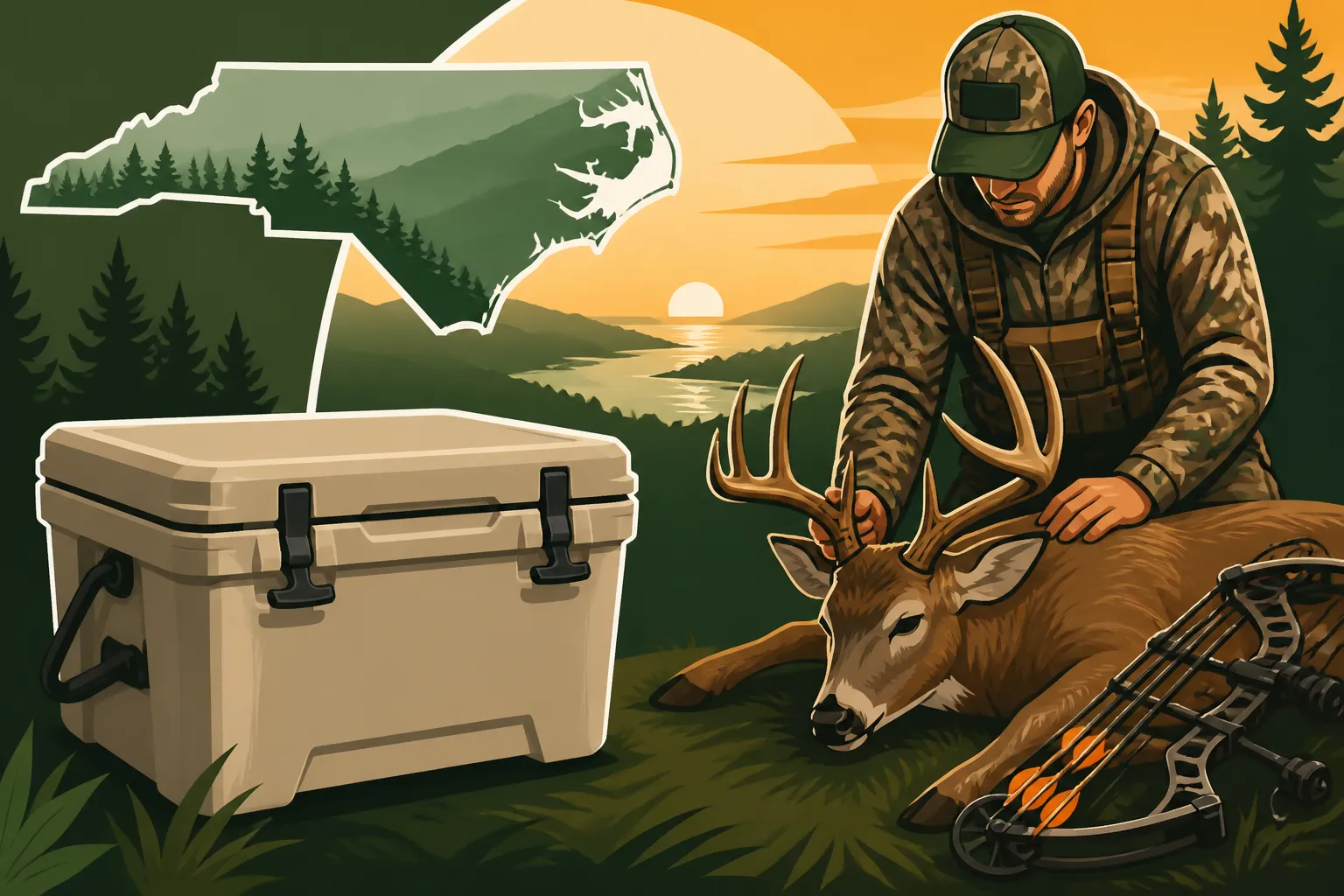
When it comes to keeping ice, and therefore your meat, cold for extended periods, rotomolded coolers are undeniably the champions. Brands like Yeti, RTIC, Orca, and Grizzly have become household names for a reason. Their construction, involving a single, seamless piece of plastic filled with dense insulation, offers unparalleled thermal efficiency. This means they can hold ice for days, even in warm conditions, giving you peace of mind whether you're processing immediately or need to transport meat a long distance.
The downside, of course, is the cost and the weight. These coolers are an investment, and they are heavy, especially when loaded with ice and meat. But when you consider the value of the venison they protect, many hunters find them worth every penny. You'll want one large enough to accommodate quartered deer meat – typically a 65-quart or larger for a single deer, depending on the size of the animal. If you're hunting on public land and have to hike out a quartered animal, consider how you'll get it from the field to this heavy cooler.
Insulated Soft-Sided Coolers for Quartered Meat
For hunters who quarter their deer in the field and pack out meat in game bags, insulated soft-sided coolers or heavy-duty cooler bags can be an excellent complement or even an alternative to rotomolded coolers. While they won't hold ice as long as their hard-sided counterparts, their flexibility, lighter weight, and ease of carrying make them incredibly practical for specific scenarios.
Imagine hiking deep into Pisgah National Forest. Carrying a rigid, heavy cooler isn't feasible. Instead, you might pack out your deer quarters in specialized game bags, then transfer them into a large, well-insulated soft cooler or even a backpack-style cooler once you reach your vehicle. These are often used for the initial transport from a remote kill site back to a larger, primary cooler at camp or home. They are great for ensuring the meat doesn't immediately warm up during the drive. Just remember, they are a temporary solution, not a long-term storage unit. You can also use good quality Game Bags for Warm September Days for field packing.
Traditional Hard-Sided Coolers: Still a Viable Option?
Let's be real, not everyone has the budget for a top-tier rotomolded cooler. So, can a traditional, standard hard-sided cooler still work? The answer is "maybe," but with significant caveats and a lot more effort on your part. These coolers lack the thick, dense insulation and robust seals of their premium cousins, meaning ice melts much faster.
If you opt for a traditional cooler, you'll need to double down on your pre-cooling and ice management strategies. This means pre-chilling the cooler for at least 24 hours with sacrificial ice before your hunt, packing it with a huge amount of ice (much more than you'd think), and ideally, having access to more ice to replenish it regularly. They can work for a quick trip home or if you plan to get your meat professionally processed immediately, but they demand constant attention. For a hunt that might involve a longer recovery or travel time, they carry a higher risk of meat spoilage.
Here's a quick comparison of cooler types:
| Feature | Rotomolded Cooler | Insulated Soft-Sided Cooler | Traditional Hard-Sided Cooler |
|---|---|---|---|
| Ice Retention | Excellent (Days) | Moderate (Hours to a day) | Fair (Hours) |
| Durability | Excellent | Good | Fair |
| Weight (Empty) | Heavy | Light to Moderate | Light |
| Cost | High | Moderate | Low |
| Portability | Low (heavy, rigid) | High (flexible, often shoulder strap) | Moderate (light, but bulky) |
| Best Use Case | Primary meat storage, long trips, camp | Field transport, secondary cooler | Short-term, immediate processing, budget |
Preparing and Packing Your Cooler for Success
Having the right cooler is only half the battle. How you prepare and pack it makes all the difference in keeping your venison safe and delicious.
Pre-Chilling is Paramount
This is one of the most overlooked, yet critical, steps in warm-weather meat care. Throwing meat into a warm cooler with ice is like putting hot food into a refrigerator – it has to work extra hard to bring the temperature down, and much of your ice will be used up just chilling the cooler itself.
Before you even head out to hunt, fill your cooler completely with sacrificial ice (the cheaper stuff will do). Let it sit overnight, or even for 24 hours, to bring the internal temperature of the cooler down as low as possible. Drain the melted water right before your hunt, and then immediately pack it with fresh, new ice. This pre-chilling step drastically extends the life of your fresh ice and ensures the cooling process begins instantly when your meat goes in. It’s a game-changer, especially on a warm North Carolina Archery Season Opening Day.
Ice Management: Block, Cubed, or Gel Packs?
The type of ice you use significantly impacts your cooler's performance.
- Block Ice: This is your best friend for long-term cooling. Block ice has less surface area than cubed ice, so it melts much slower, providing sustained cold for days. If you can get it, use block ice on the bottom of your cooler. You can often find large blocks at gas stations or even make your own by freezing water in old milk jugs or plastic containers.
- Cubed Ice: Great for filling voids and getting initial rapid cooling because of its large surface area. Use it to surround and fill any gaps around your meat and block ice. The quicker you can drop that core temperature, the better.
- Gel Packs: While convenient and reusable, gel packs typically don't provide the same level of sustained cold as a large volume of ice, nor do they cool as effectively. They can be good for supplemental cooling or small quantities of meat, but don't rely on them as your primary cooling agent for a whole deer.
A good strategy is to use a layer of block ice on the bottom, then place your wrapped meat, and then pack cubed ice around and over it. The key is to minimize air space and maximize contact with cold.
Field Dressing and Quartering: Maximizing Cooler Space
Once you have your deer down, immediate and thorough field dressing is non-negotiable. This removes the heat-generating internal organs, allowing the body cavity to cool. In warm weather, opening the cavity to air circulation is crucial. Some hunters even go a step further and rinse the cavity with water (if available and cold) and wipe it dry, though others prefer to avoid introducing water.
For larger deer, or if you have a smaller cooler, quartering the animal in the field is often necessary. This means breaking the deer down into its primal cuts: the two front shoulders, two hindquarters, and the backstraps/tenderloins. This not only makes the animal much easier to transport, especially if you're alone or hunting on challenging public land, but it also allows the meat to fit more efficiently into your cooler and cool faster. Wrap each quarter in a clean game bag or even a pillowcase to keep it clean and prevent it from soaking directly in melted ice water, which can leach flavor and promote bacterial growth. If you are quartering a deer to carry it out, you might rely on a mapping app like GoHunt to mark your location and plan the most efficient route back to your vehicle. For more on preparing your animal, read about Deer Meat Yield From a North Carolina Buck.
Transporting and Storing Meat for Optimal Quality
The journey from the field to your freezer is just as important as the initial cooling. Each step needs attention to detail to preserve the quality of your venison.
Keeping it Cool on the Drive Home
Once your deer is in the cooler, whether whole or quartered, it's vital to keep that cooler shaded and secure during transport. Don't leave it in the bed of your truck exposed to direct sunlight for a long drive, even if it's full of ice. Cover it with a tarp or blanket, or ideally, place it inside your truck's cab or covered bed if space allows. The goal is to minimize any external heat gain. If you have a long drive home from, say, the western mountains after a successful hunt, consider making a stop for more ice if necessary, particularly if you're using a traditional cooler. Every degree counts.
Interim Storage Before Processing
Ideally, you'd process your deer meat as soon as you get home. However, life happens. If you can't get to it immediately, a well-packed cooler with plenty of ice can keep your meat in excellent condition for a day or two, perhaps even longer with a top-tier rotomolded cooler and diligent ice management.
The key here is continued cooling and drainage. Check the ice levels periodically. If you notice a lot of melted water accumulating, drain it and add fresh ice. While some hunters let meat "wet age" in an ice bath, it's generally safer in warm conditions to keep the meat out of standing water, which can promote bacterial growth and dilute flavor. Keep meat in clean game bags. If you have access to a walk-in cooler or a spare refrigerator, even better. The colder you can keep the meat without freezing it solid, the better the quality will be when you finally process it. This interim storage can be crucial, especially after a hunt that spans several days or involves significant travel.
Monitoring Temperature and Meat Care Best Practices
Using a meat thermometer isn't just for cooking; it's invaluable for meat care after the kill. After field dressing, you want to get the internal temperature of the deepest muscle down to below 40 degrees Fahrenheit as quickly as possible. Ideally, you're aiming for closer to 34-37 degrees for optimal aging and safety. Regularly check the temperature of your quartered meat while it's in the cooler. If it starts to creep up, it's a clear signal you need more ice or a colder environment.
Beyond temperature, cleanliness is paramount. Use clean knives, game bags, and surfaces when field dressing and quartering. Bacteria are everywhere, and introducing them to warm meat is a recipe for disaster. Carry plenty of paper towels or wipes, and perhaps even some sanitizing spray for your hands and tools. Taking these extra steps ensures that the effort you put into the hunt translates into high-quality venison for your table. And once it's cooled and ready for further processing, you'll be glad you took the time to do it right. Thinking about your next steps for processing? You might be interested in Butchering a Deer at Camp or Tracking a Deer Through North Carolina Leaf Litter for future reference.
Remember, early archery season is a fantastic time to be in the North Carolina woods. Don't let the weather ruin your harvest. With the right cooler and smart meat care practices, you can enjoy delicious venison all year long.
Disclaimer
This article is for general informational purposes only and does not constitute professional advice. Laws, prices and regulations vary by location and change over time. Consult a qualified professional for guidance on your specific situation.