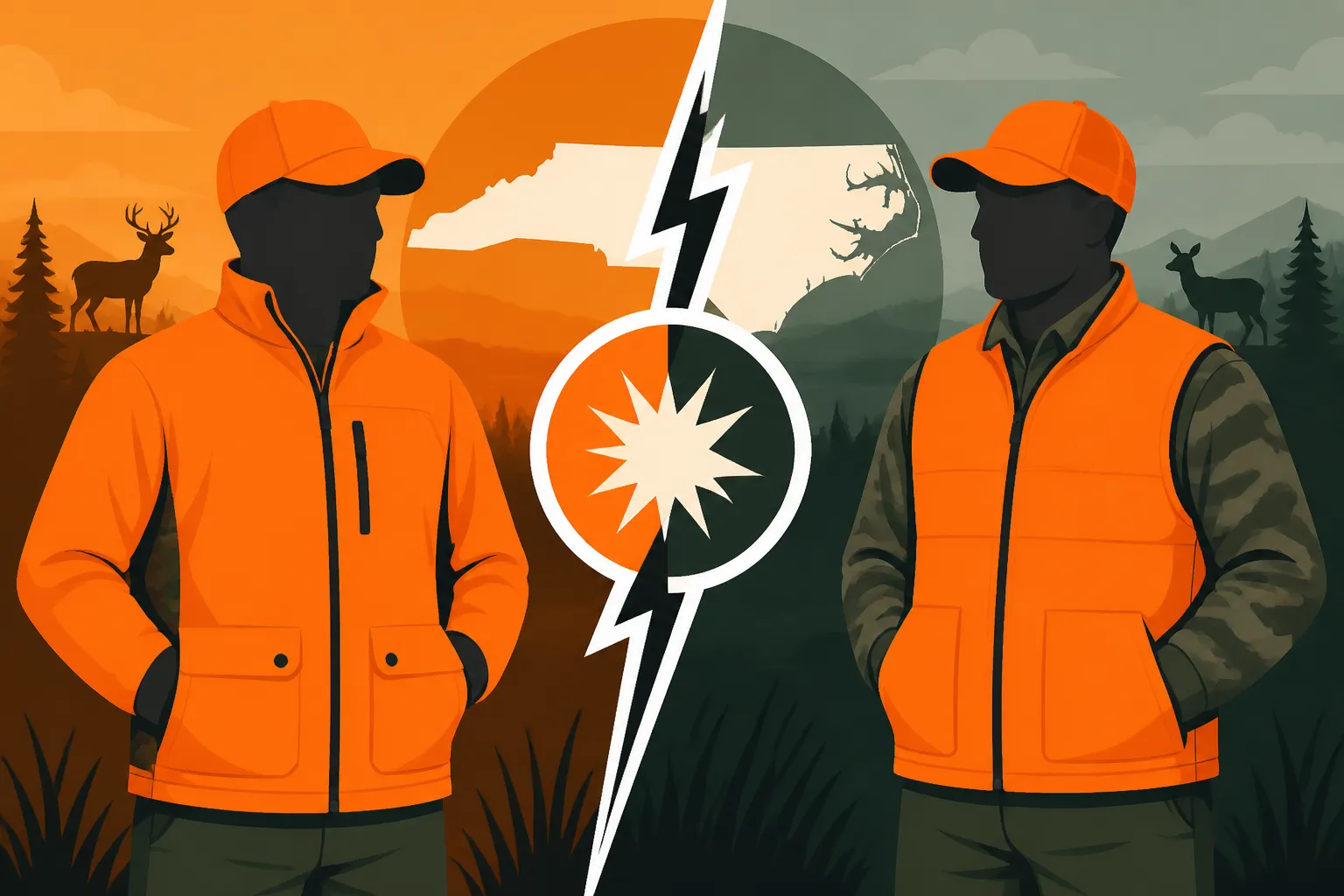
Blaze Orange Jackets Versus Vests
For hunters in North Carolina, deciding between a blaze orange jacket and a simple vest might seem like a small detail, but it can significantly impact your comfort, safety, and overall hunting experience. It's more than just meeting the legal requirement; it's about being prepared for changing weather, varied terrain, and different hunting styles across our diverse state. This guide will walk you through the nuances of each option, helping you confidently choose the best blaze orange gear for your next North Carolina adventure.
Understanding North Carolina's Blaze Orange Requirements
Before we dive into the jacket versus vest debate, it's crucial to understand what North Carolina law actually says about blaze orange. This isn't just a suggestion; it's a non-negotiable safety mandate designed to protect hunters in the field. Ignoring these rules can lead to fines and, more importantly, put yourself and others at unnecessary risk.
The Basic Mandate: What the Law Actually Says
North Carolina General Statute 113-291.1 specifies that during any open season for hunting deer with a firearm, every person hunting in an area where deer may be taken with a firearm must wear a cap, hat, or outer garment of hunter orange that is visible from all sides. This means no matter what kind of orange you choose, it needs to be clearly seen from a 360-degree perspective. It's not enough to have a tiny patch; the intent is maximum visibility to prevent accidents. This rule applies to both private and public lands, so don't think your buddy's back forty is exempt. It’s a foundational safety principle, especially when you consider the sheer number of hunters often out during firearm season. For a complete overview of these regulations, you can delve into North Carolina Blaze Orange Requirements.
Specific Scenarios and Exceptions: Archery-Only, Waterfowl, and More
While the general rule is clear, North Carolina's hunting regulations do have some specific scenarios and exceptions where blaze orange might not be required or might be handled differently. For instance, during the Bowhunting North Carolina's Statewide Archery Season before the firearm seasons open, blaze orange is typically not required for deer hunting. This allows archers to blend more effectively into the environment, which is often crucial for close-range bowhunting. Similarly, waterfowl hunters actively engaged in hunting migratory birds are generally exempt from blaze orange requirements, as bright colors would flare birds. However, if you're walking to or from your duck blind and crossing an area where deer firearm hunting is permitted, you might still need to don some orange for transit. Always double-check the specific regulations for the season and species you are pursuing, and even when not strictly required, common sense dictates wearing it if there's any chance of firearm hunters being in the vicinity. For those pursuing small game, like squirrels and rabbits, during a deer firearm season, blaze orange is still a must, making layering decisions even more important.
Blaze Orange Vests: Lightweight, Versatile, and Common
Blaze orange vests are perhaps the most common choice for hunters needing to meet the safety requirements. They're simple, often inexpensive, and offer a great deal of flexibility, which is a huge plus in North Carolina's varied climate.
Advantages of the Vest: Mobility, Layering, and Cost
One of the biggest upsides to a blaze orange vest is its incredible versatility. North Carolina weather can be notoriously unpredictable; a crisp morning can quickly turn into a warm afternoon, even in late fall. A vest allows you to easily layer it over whatever clothing is appropriate for the temperature — whether that's a light shirt during early season or a heavy insulated jacket during a cold December gun hunt. This adaptability is invaluable, preventing you from overheating or feeling restricted. Vests also typically offer excellent freedom of movement, which is essential when traversing thick brush in the Hunting Coastal Plain Pocosin Swamps or climbing into a stand. Because they're often lightweight and packable, they take up minimal space in your Packs for a Day on Public Land. Furthermore, vests are generally more affordable than full jackets, making them an accessible option for new hunters or those looking to outfit multiple people without breaking the bank. They get the job done without adding unnecessary bulk or cost.
Limitations of the Vest: Less Coverage, Storage, and Cold Weather
While vests offer great flexibility, they do come with limitations. The most obvious is the lack of coverage. A vest only covers your torso, leaving your arms and neck exposed to the elements. This isn't a big deal on a mild November day, but if you're facing a biting wind in the mountains or a chilly rain, you'll quickly wish you had more protection. Your base layers and outer shells will need to provide all the insulation and weatherproofing, which means you still need quality gear underneath. Vests also typically offer minimal storage, often just a few small pockets, if any. If you rely on your outer layer for carrying calls, licenses, or snacks, a vest might leave you wanting. This can force you to use a separate backpack or fanny pack, which some hunters find cumbersome. For those long, cold sits in a treestand during the North Carolina's Gun Deer Season by Zone, a vest alone just won't cut it for warmth, necessitating a very robust insulating layer underneath, which can sometimes become bulky.
Blaze Orange Jackets: Warmth, Protection, and Full Coverage
On the flip side, dedicated blaze orange jackets offer a more comprehensive solution, often integrating warmth, weather protection, and visibility all into one garment.
Benefits of a Dedicated Jacket: Warmth, Weather Protection, and Integrated Storage
A purpose-built blaze orange hunting jacket can be a game-changer, especially during colder hunts or in inclement weather. Many hunting jackets are designed with integrated insulation, providing crucial warmth during those frigid mornings that can stretch into an all-day sit. Imagine sitting still in a Treestand Setups in Pisgah National Forest in late December; a good insulated blaze orange jacket can make all the difference between a miserable hunt and an enjoyable one. Beyond warmth, these jackets often boast excellent weatherproofing, with waterproof or water-resistant membranes that shed rain and snow. This means you have a single garment doing double duty: keeping you dry and visible. Furthermore, hunting jackets are typically designed with hunter-specific features like ample pockets for gear, hand-warmer pockets, and even specific compartments for calls or rangefinders. This integrated storage can streamline your setup, making it easier to keep essentials close at hand without needing a separate pack. When using a detailed mapping application like GoHunt to scout and plan your hunt, a jacket can ensure you're ready for any conditions you might encounter, keeping your tools protected and accessible.
Drawbacks to Consider: Overheating, Bulk, and Cost
Despite their benefits, blaze orange jackets aren't without their downsides. The primary concern, especially in North Carolina's often-moderate climate, is overheating. If you're hiking into a remote area or the temperature rises unexpectedly, a heavy insulated jacket can quickly become uncomfortable, leaving you sweaty and exposed when you have to shed layers. Unlike a vest, you can't easily remove the "orange" part of your jacket without removing the warmth and protection it provides. They can also be bulkier and heavier than vests, which might be a consideration for hunters who prefer to move light and fast, like those practicing Run-and-Gun Turkey Tactics on Public Land. The additional features, insulation, and weatherproofing also typically translate to a higher price tag. A quality blaze orange hunting jacket represents a more significant investment than a basic vest, so it's important to consider how frequently you'll truly benefit from its full capabilities. For certain types of hunting, like Still-Hunting Nantahala Forest Ridges where mobility is key, a jacket might feel too restrictive or warm.
Making the Right Choice for Your North Carolina Hunt
The "best" choice between a blaze orange jacket and a vest isn't a universal answer. It depends heavily on the specific conditions you'll face, your personal hunting style, and even the time of year you're in the woods.
Matching Orange to the Season and Terrain
North Carolina offers such a wide range of hunting environments and seasons that a "one size fits all" approach rarely works for blaze orange.
- Early Archery Season (when firearm seasons are open elsewhere or you're crossing firearm zones): If you're bowhunting in September or October but need blaze orange because firearm season is open for other species or in adjacent zones, a lightweight vest is often ideal. It can be worn over light camo, provides minimal warmth, and maximizes breathability.
- Late Season Gun Hunts in the Mountains: When hunting deer in the Western Zone during late November or December, temperatures can drop significantly. This is where an insulated blaze orange jacket shines, providing essential warmth and protection against biting winds and potential snow. You'll appreciate the full coverage during those long, cold sits. Thinking about Cold-Weather Sitting Strategy in the Mountains demands the right outer layer.
- Piedmont or Coastal Plain Firearm Season: In the central and eastern parts of the state, temperatures during gun season are often milder, but rain can be a constant threat. Here, a waterproof or water-resistant blaze orange jacket might be perfect, or a vest worn over a good rain shell. You need to be prepared for both mild and wet conditions. Scouting with tools like GoHunt can help predict these variations and inform your gear choice.
Considering Your Hunting Style
Your preferred method of hunting also plays a significant role in which blaze orange option makes the most sense.
- Stand Hunting: If you plan on sitting stationary in a treestand or ground blind for extended periods, especially in colder weather, a warm, insulated blaze orange jacket offers superior comfort and reduces the need for multiple layers that can get bulky. For stand hunters, the extra weight and bulk are less of a concern than for mobile hunters.
- Still-Hunting or Stalking: For hunters who prefer to move slowly and deliberately through the woods, covering ground, a vest layered over appropriate clothing for the temperature often provides better mobility and prevents overheating. Excessive bulk or warmth from a jacket can hinder quiet movement and make you sweat, which is detrimental to scent control and comfort.
- Deer Drives: During Deer Drives With Three or Four Hunters on public or private land, participants are often moving vigorously. Here, a vest might be the better choice for the "drivers" to prevent overheating, while "standers" might prefer a jacket for warmth and stationary comfort. Communication and clear visibility are paramount in drives, making your orange choice critical.
The Role of Other Blaze Orange Gear
Remember, blaze orange isn't just about jackets and vests. North Carolina regulations typically state that it needs to be visible from all sides. Many hunters complement their vest or jacket with other blaze orange accessories to maximize visibility and meet the letter of the law.
- Hats or Caps: A blaze orange hat is an absolute must, even if you’re wearing a jacket or vest. It ensures visibility above your head and is often one of the easiest ways to meet the "visible from all sides" requirement.
- Backpacks: Some hunting backpacks come with integrated blaze orange panels or removable covers. This is a smart way to ensure your back is covered, especially if you're wearing a vest and your backpack obscures some of your torso.
- Dog Vests: If you're hunting with dogs, especially in contexts where it's allowed like Running Hounds Where North Carolina Allows It, ensure your canine companions also have highly visible blaze orange vests. Their safety is just as important.
Ultimately, whether you choose a jacket or a vest, make sure it’s comfortable, durable, and most importantly, meets all North Carolina's regulations for visibility. When planning your hunt, use all the resources at your disposal, like GoHunt's detailed maps, to anticipate conditions and make the most informed gear choices.
| Feature / Consideration | Blaze Orange Vest | Blaze Orange Jacket |
|---|---|---|
| Visibility | Excellent | Excellent |
| Layering Flexibility | High | Low (integrated) |
| Warmth | Minimal | High (often insulated) |
| Weather Protection | Minimal | High (often waterproof) |
| Mobility | High | Moderate (can be bulky) |
| Storage (Pockets) | Minimal | Ample (often many pockets) |
| Cost | Low | Moderate to High |
| Weight | Low | Moderate to High |
| Best For | Mild weather, active hunting, layering | Cold weather, stationary hunting, wet conditions |
Disclaimer
This article is for general informational purposes only and does not constitute professional advice. Laws, prices and regulations vary by location and change over time. Consult a qualified professional for guidance on your specific situation.