Using a Ground Blind on North Carolina Public Land
Hunting North Carolina's public lands can feel like a constant battle, especially when you're trying to find that perfect treestand setup only to discover every suitable tree is either too small, too limby, or already has someone else's stand hanging from it. This guide is all about giving you another powerful tool in your public land arsenal: the ground blind, and how to effectively use it to put you closer to success without the hassle of climbing.
Why Ground Blinds Shine on North Carolina Public Land
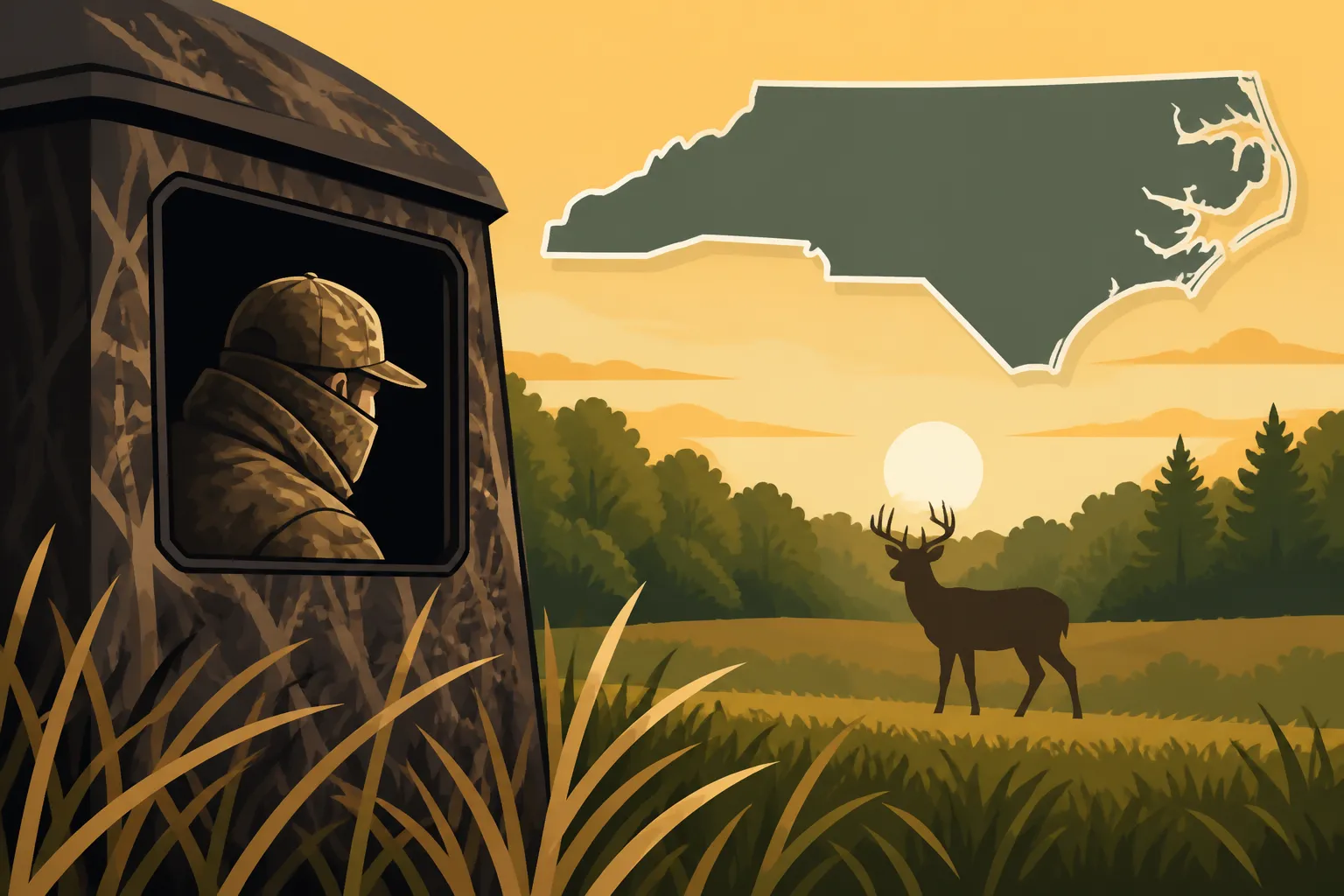
For years, many of us have been conditioned to believe that hunting from an elevated position is the only way to consistently fool a deer, especially on pressured public land. But that's just not always the case, particularly in North Carolina's incredibly diverse and often thick terrain. Ground blinds offer a flexibility and concealment that can be a real game-changer when treestands just aren't cutting it.
Overcoming Treestand Restrictions and Pressure
One of the most frustrating aspects of public land hunting, whether on a National Forest or a state Game Land, is navigating the rules and the sheer volume of other hunters. Some areas might have specific regulations against certain types of treestands, or you might find yourself in a spot where the trees simply aren't suitable for a safe and effective hang. Imagine finally finding that perfect pinch point or transition area, only to realize the only "stand-worthy" tree is a scrawny pine or a giant oak with no low limbs. That's where a ground blind steps in.
Beyond physical limitations, pressure from other hunters can make elevated stands less effective. When deer are constantly being pushed and harried, they become incredibly wary of anything out of place, including a hunter silhouetted against the sky. They learn to look up. A well-placed ground blind, however, allows you to become part of the landscape, blending into the natural contours and cover. This stealth can be particularly valuable during peak times, like the opening week of North Carolina Eastern Zone Gun Opener or later in the season when deer are exceptionally jumpy. You're not relying on finding a perfect tree; you're creating your own mobile hideaway, often right in the thickest cover where those big, smart bucks feel safest.
Versatility for Diverse North Carolina Habitats
North Carolina's landscape is a patchwork of distinct hunting environments, from the dense, mountainous forests of the west to the sprawling coastal plain swamps and the rolling farmlands of the Piedmont. A ground blind's adaptability means you're not confined to a single type of terrain; it can perform effectively in almost all of them.
Consider hunting the thick, often impenetrable pocosin swamps of eastern North Carolina. Finding a solid, elevated stand location here can be nearly impossible, and climbing can be dangerous in the soft, marshy ground. A ground blind, conversely, allows you to set up on a slightly higher piece of ground or along a subtle edge, disappearing into the dense vegetation. You can sit comfortably and motionlessly, waiting for deer to navigate the same thickets. Similarly, in the open fields and timber edges of the Piedmont, where deer might frequent Hunting Piedmont Farmland Deer, a ground blind brushed into a fencerow or a patch of saplings can be incredibly effective. Even in the rugged mountain regions, where Still-Hunting Nantahala Forest Ridges is common, a ground blind can provide critical concealment when you find a natural funnel or bedding area that lacks suitable trees for an elevated stand. It's truly a tool for all seasons and all regions in our state.
Choosing and Setting Up Your Ground Blind for Success
Picking the right blind and deploying it effectively is where many hunters make or break their ground blind experience. It's not just about throwing up a tent in the woods; it's about thoughtful selection and strategic integration with your hunting environment.
Selecting the Right Blind for North Carolina Conditions
When you're looking at ground blinds, you'll quickly see there's a huge variety out there. For North Carolina's often humid, rainy, and generally unpredictable weather, you'll want something durable and designed to withstand the elements. Look for blinds made from robust, water-resistant fabrics that can hold up to a good soaking. Brands like Primos, Barronett, and Ameristep offer solid options that many hunters rely on. Consider the type of camouflage pattern too; a woodland or natural pattern will blend better with the deciduous and pine forests of our state than, say, a wide-open prairie pattern.
Size and portability are also critical factors, especially for public land. You'll likely be hauling this blind in on your back, so a lightweight, compact model is usually preferable. Think about how easy it is to set up and take down – you don't want to wrestle with a complicated design in the pre-dawn dark. If you're primarily hunting solo, a smaller one or two-person blind might be perfect, offering enough room for you and your gear without being too cumbersome. For those long walks into remote public land, having a blind that packs down easily and isn't a burden to carry, perhaps alongside your Packs for a Pisgah Forest Day Hunt, is paramount. Many hunters also appreciate blinds with shoot-through mesh windows, which allow for quick, undetected shots while maintaining maximum concealment.
Strategic Placement and Brushing In
Simply plunking your blind down in an open area is a recipe for disaster. The art of ground blind hunting truly comes alive in its placement and the crucial step of "brushing in." Before you even unpack, spend time scouting the area. What are the natural deer travel corridors? Where are the food sources? Water? Bedding areas? Digital mapping tools, like those found on GoHunt, can be incredibly helpful for identifying potential pinch points, subtle ridges, or areas of thick cover that deer will naturally use.
Once you've identified a promising spot, consider the wind. Always set your blind up so that the prevailing wind carries your scent away from where you expect the deer to approach. Also, think about the sun's position. You don't want to be staring directly into the rising or setting sun, both for visibility and to avoid silhouetting yourself. After you've got your spot, the real work begins: brushing in your blind. This means gathering local vegetation – branches, fallen leaves, tall grass, pine boughs – and incorporating it into the blind's exterior. Break up the hard lines of the blind. Make it look like a natural clump of brush or a fallen tree. Don't be shy; the more it blends, the better. Many seasoned hunters even pre-set their blinds a week or two before the season opens, allowing deer to get accustomed to its presence, especially in high-pressure areas. This extra effort can make all the difference, transforming your blind from an obvious human intrusion into an invisible part of the forest.
Hunting Effectively From a Ground Blind on Public Land
Hunting from a ground blind requires a slightly different mindset and approach compared to a treestand. It's about maximizing the advantages of being at ground level while mitigating potential drawbacks.
Managing Your Scent and Movement Inside the Blind
When you're at ground level, your scent is a much bigger concern than when you're 20 feet up in a tree. Wind currents can swirl unexpectedly, and even a slight breeze can carry your human odor directly to a deer's sensitive nose. Scent control is absolutely paramount. This starts long before you ever step foot in the woods: showering with scent-free soaps, washing your hunting clothes in scent-eliminating detergents, and storing them in airtight containers. Once you're in the blind, continue to be vigilant.
Consider using additional scent-reducing strategies, like ozone generators inside the blind (if appropriate for the space and your safety) or employing various scent-absorbing sprays. However, the most effective "scent management" is simply smart blind placement based on wind direction. Beyond scent, movement is your other arch-nemesis. Inside a ground blind, especially one with open windows, even subtle movements can be detected. Dress in dark clothing, even if your blind is camouflaged, as it helps you disappear into the blind's shadows. Move slowly, deliberately, and only when deer aren't actively looking in your direction. Minimize gear noise – silence is golden. Keep your calls, rangefinder, and other essentials within easy, silent reach. A well-designed blind with strategically placed windows will allow you to scan your surroundings without unnecessary movement.
Shot Opportunities and Ethical Considerations
Shooting from a ground blind is a different experience than shooting from a treestand. Your angles will be lower, and you'll often be shooting through smaller windows or mesh. This requires practice and familiarity with your equipment from a seated position. If you're using a rifle, remember that the bullet's trajectory will be slightly different from a low angle compared to an elevated one. If you're bowhunting, practice drawing your bow while seated in the blind, ensuring your limbs don't hit the ceiling or window edges.
Always wait for a clear, ethical shot. The concealment of a ground blind often brings deer in closer, which can be thrilling but also means you need to be prepared for those close-range opportunities. Don't rush a shot just because the deer is near. Patience is key. Make sure you have a clear shooting lane through your blind's windows and confirm there are no twigs or mesh obscuring your bullet or arrow path. Use shooting sticks or a bipod to steady your shot, especially for rifle hunting. This steadiness, combined with ample practice, will ensure you make a clean, humane kill when the moment of truth arrives.
Legalities and Best Practices for Public Land Blinds
Hunting public land comes with a clear set of responsibilities and regulations. Ignorance of the law is never an excuse, and respecting both the rules and your fellow hunters is paramount.
North Carolina Game Lands and National Forest Rules
It's absolutely critical to understand the specific rules for ground blinds on North Carolina's public lands. The regulations can vary slightly between state Game Lands, National Forests (like Pisgah and Nantahala National Forests), and National Wildlife Refuges. Generally, on North Carolina Game Lands, any temporary hunting blind or stand that is left unattended must be conspicuously marked with your North Carolina hunting license number or Wildlife Resources Commission customer ID number. This isn't just a suggestion; it's a mandatory requirement to ensure accountability and to help wildlife officers manage public land resources.
Furthermore, temporary blinds are only allowed to be left on Game Lands during the open hunting season for which they are being used. They must be removed within 30 days of the close of that season. This prevents blinds from becoming permanent fixtures or abandoned trash. For National Forests, similar rules often apply, though it's always wise to check the specific ranger district for any unique local regulations. For example, some areas might have restrictions on damaging vegetation to build blinds, or leaving anything overnight. Always consult the current North Carolina Inland Fishing, Hunting & Trapping Regulations Digest, or visit the NC Wildlife App or website directly before heading out. Using resources like the GoHunt platform, which often integrates regulation data, can also help ensure you're compliant. Don't risk a fine or losing your hunting privileges by being uninformed.
Respecting Fellow Hunters and the Environment
Part of being a responsible public land hunter is showing respect for others who share the woods and leaving the environment better than you found it. When choosing a blind location, try to avoid setting up in areas that are obviously heavily trafficked by other hunters or too close to established stands. The last thing anyone wants is to unknowingly interfere with another hunter's setup. This ties back into knowing about Hunting Pressure on North Carolina Public Land and trying to find those quieter, out-of-the-way spots.
Always remember the "Leave No Trace" principles. Whatever you pack in, you must pack out. This includes your ground blind, any trash, spent shell casings, and even excessive flagging tape. If you brush in your blind heavily, make sure to disperse the material when you leave, allowing it to return to its natural state. Do not cut live trees or damage permanent vegetation to brush in your blind unless specifically allowed by regulations and with proper permits. Being a good steward of our public lands ensures that these precious resources remain available and enjoyable for everyone, for generations to come.
Ground Blind vs. Treestand: A North Carolina Public Land Comparison
| Feature | Ground Blind Advantages | Treestand Advantages |
|---|---|---|
| Concealment | Excellent 360-degree concealment; blends into natural cover. | Elevated position helps with scent and vision over cover. |
| Scent Control | Requires diligent management; wind is critical. | Elevation can carry scent higher, sometimes over deer. |
| Mobility | Highly mobile, quick setup/takedown; good for run-and-gun. | Can be mobile (climbers/saddles) or fixed (ladder/hang-on). |
| Comfort | Often more spacious, sheltered from elements; can use a chair. | Less comfortable, exposed to weather; requires standing/perching. |
| Visibility | Limited by windows; closer to ground obstacles. | Excellent vantage point; wider field of view. |
| Terrain Adapt. | Excellent for open fields, swamps, thickets, no suitable trees. | Needs suitable trees; limited by tree size, type, and location. |
| Safety | Very safe, no fall risk. | Risk of falls; requires safety harness and proper technique. |
| Stealth | Great for undetected movement inside the blind. | Harder to move silently without detection. |
| Regulation | Must be marked, removed after season (NC Game Lands). | Check specific rules for permanent/temporary placement. |
| Cost | Varies widely, generally affordable for basic models. | Varies, can be more expensive for advanced systems. |
Disclaimer
Always consult the current North Carolina Inland Fishing, Hunting & Trapping Regulations Digest published by the NC Wildlife Resources Commission for the most up-to-date and specific rules and regulations. This guide provides general information and should not be considered legal advice.