How Wild Hogs Spread Across North Carolina
Wild hogs are a serious problem for landowners, farmers, and wildlife enthusiasts across North Carolina. They tear up crops, destroy natural habitats, and are just plain tough to deal with. If you've been wondering how these incredibly destructive animals have managed to spread so effectively across our beautiful state, you're not alone. It's a question many hunters and conservationists ask as they witness the growing devastation. This guide is going to peel back the layers and explain exactly how wild hogs have become such a pervasive and challenging presence in North Carolina.
The Troubled History of Wild Hogs in North Carolina
Understanding the current predicament with wild hogs requires a look back at their origins within our state. It’s not a simple story of a single introduction, but rather a complex tapestry of historical events and human actions that have paved the way for their widespread establishment. What we see today is the result of centuries of interaction between humans and these incredibly adaptable animals.
Early Introductions and Domestic Escapes
The earliest pigs to roam North Carolina weren't "wild hogs" in the sense we think of them today. They were actually domestic pigs, brought over by Spanish explorers as early as the 1500s. Later, European settlers continued this practice, bringing their livestock with them to the New World. It wasn't long before some of these animals inevitably escaped their enclosures or were simply left to forage freely in the woods, giving rise to what we now call feral domestic pigs.
For generations, particularly in the southeastern United States, a common practice was free-range livestock management. Pigs were allowed to roam vast areas, feeding themselves until it was time to round them up for slaughter. These animals, while technically "domestic," were exposed to the rigors of the wild, learning to forage, evade predators, and reproduce without human intervention. Over time, these free-ranging populations developed many of the survival instincts and physical characteristics that make modern wild hogs so resilient.
The key distinction here is important: these early feral pigs were descendants of domestic stock. They might have been tough and resourceful, but they weren't the aggressive, rapidly reproducing Eurasian wild boar or their hybrids that constitute the majority of our current problem. Still, their presence laid a foundation for future genetic mixing and set the stage for a truly invasive species to take hold.
Recreational Stocking and Intentional Release
The real game-changer in North Carolina’s wild hog saga occurred in the early 1900s with the deliberate introduction of European wild boar. These animals were brought into the state, primarily for sport hunting, in mountainous regions. Prized for their challenging nature and impressive tusks, they were seen as an exciting addition to the state's game species, without a full appreciation of the long-term ecological consequences of introducing a truly foreign and highly invasive animal.
Even more problematic than the initial, albeit misguided, legal introductions has been the ongoing practice of intentional, and often illegal, releases by individuals. Driven by a desire to establish local hog hunting populations or simply to provide a challenge on private lands, people have trapped hogs in one area and released them in another. This human-assisted dispersal, frequently occurring under the cover of darkness, has been a significant and ongoing contributor to their spread, rapidly establishing new populations in areas where hogs were previously absent.
These clandestine releases are a major frustration for wildlife agencies like the North Carolina Wildlife Resources Commission (NCWRC) and conservation groups trying to manage and control these populations. They undermine carefully planned eradication efforts and often introduce hogs into pristine habitats, leading to unexpected new hotspots and further complicating the statewide challenge. Without addressing this fundamental human behavior, the spread will continue to accelerate.
The Mechanisms of Hog Dispersal Across the State
Wild hogs are not only incredibly resilient; they are also highly mobile and opportunistic. Their spread across North Carolina isn't just about reproduction; it's about their inherent ability to move and their unfortunate tendency to be moved by human hands.
Natural Range Expansion and Movement Corridors
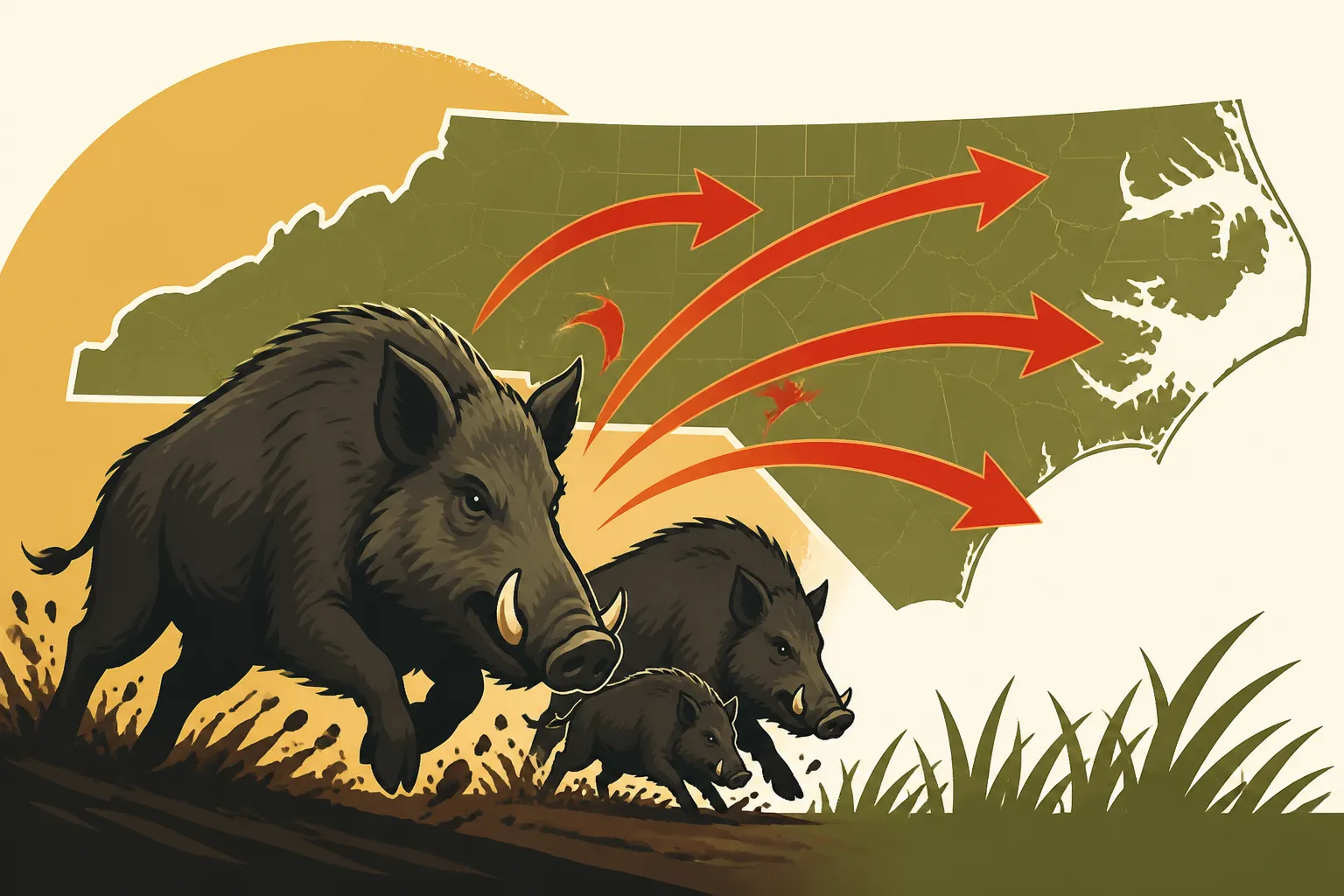
Left to their own devices, wild hogs are excellent at expanding their territory. They are incredibly mobile animals, capable of covering surprising distances when searching for food, water, or new bedding areas. They tend to follow natural corridors, such as river bottoms, creek systems, and areas of dense vegetation. These brushy, low-lying areas provide both cover and easy passage, acting as highways for hog movement. For instance, the floodplains of rivers like the Cape Fear or the Neuse serve as prime routes for natural dispersal, allowing populations to slowly but steadily push into adjacent territories.
This natural movement is how existing populations expand from established core areas into surrounding, previously uninfested lands. It’s a slow-motion invasion, driven by population pressure and the constant search for new resources. As their numbers grow in one region, individual hogs or small sounders (groups of hogs) will venture out, establishing new home ranges further afield. This is why you often see a gradual expansion from known hog strongholds into neighboring counties over time. Many hunters use tools like the GoHunt app to scout these river corridors, which can be prime movement paths. It’s why you see Feral Swine Sightings in Central North Carolina becoming more common, as hogs follow these natural routes.
The contiguous blocks of forest, large timber cuts, and even dense agricultural fields provide the necessary cover for hogs to travel unseen. They are adept at using these features to their advantage, slipping through the landscape without drawing much attention until their destructive presence becomes undeniable. This constant, incremental spread makes containment a monumental task.
Human-Assisted Dispersal and Illegal Transport
While natural range expansion is a significant factor, the most aggravating and perhaps the most effective method of their rapid spread across North Carolina is human-assisted dispersal. This refers to the illegal trapping of hogs in one location and their intentional release into another, often completely new, area. This practice is utterly irresponsible and counterproductive to conservation efforts, yet it persists.
Some individuals engage in this activity with the misguided belief that they are "stocking" areas for hunting, creating new opportunities for themselves or others. They might not understand, or choose to ignore, the severe ecological and economic consequences of introducing an invasive species. Others may be involved in commercial ventures, illegally establishing populations to offer guided hunts, completely bypassing regulations and contributing to the problem for profit. The temptation to have a "local" hog population for hunting often overrides any sense of environmental stewardship or respect for wildlife management laws.
The North Carolina Wildlife Resources Commission has clear regulations against the transportation and release of live wild hogs, precisely because it is such a potent vector for their spread. However, enforcement remains a challenge due to the clandestine nature of these activities. These illegal releases often introduce hogs to areas that would otherwise be naturally protected, leading to sudden, inexplicable population booms in unexpected places. Many hunters use apps like GoHunt to track their own hunts, but for population tracking, it's the large-scale, illegal movement that makes things so complicated. This human element of their spread is what makes the fight against wild hogs such an uphill battle.
Why Wild Hogs Thrive and Proliferate So Quickly
The explosion of wild hog populations in North Carolina isn't just about their ability to move; it's fundamentally tied to their incredible biology. These animals possess a suite of characteristics that make them exceptionally successful invaders, capable of multiplying at an alarming rate.
Rapid Reproduction and High Litter Sizes
The reproductive capacity of wild hogs is, frankly, astonishing. This is arguably the single most important factor contributing to their rapid spread and establishment. Sows can become sexually mature and begin breeding as early as six months of age, which is incredibly young for a large mammal. This means that a population can start adding new individuals very quickly after even a small initial introduction.
Furthermore, wild hog sows can have one to two litters per year, a frequency that far outpaces most native game animals. Each litter typically averages between four to eight piglets, though it's not uncommon to see litters of ten or even twelve. This means that in just a single year, one sow can potentially add over a dozen new hogs to the landscape. When you factor in multiple breeding-age sows in a sounder, the geometric progression of their population becomes terrifyingly clear. This is a primary reason Why Coastal Plain Hogs Reproduce So Fast is such a critical issue in certain parts of the state, where ample food and warm climates allow for year-round breeding.
Compounding this, the survival rate of piglets in favorable conditions is relatively high. With abundant food, dense cover for protection, and the attentive care of the sow and sometimes other members of the sounder, many piglets reach maturity. This constant influx of new individuals means that even if a significant number of hogs are removed, the population can quickly rebound if control efforts aren't sustained and intensive. It truly makes eradication a monumental, ongoing task.
Adaptability to Diverse Habitats and Food Sources
One of the wild hog's greatest strengths, and a major reason for its spread, is its incredible adaptability. North Carolina offers a vast array of environments, from the rugged mountain forests of the west to the rolling farmlands of the Piedmont and the dense, swampy pocosins of the Coastal Plain. Hogs have proven themselves masters of adapting to, and thriving in, all of them.
Their diet is a testament to this adaptability; they are true omnivores. This means they'll eat just about anything they can root out or find, from acorns, roots, and tubers to insects, worms, eggs, snakes, and even small mammals or fawns. Of course, they also readily consume agricultural crops like corn, soybeans, peanuts, and sweet potatoes, which provides them with a rich and readily available food source in farming communities. This varied and opportunistic diet ensures that no matter the season or the specific habitat, a wild hog can almost always find something to eat.
This ability to exploit whatever resources are available allows them to colonize virtually any landscape in North Carolina. Whether it's the high-elevation hardwood forests where they forage for mast, the mixed pine-hardwood stands of the Piedmont, or the thick, wet cover of a coastal swamp, hogs find a way to survive and multiply. There’s almost nowhere they can’t live and find sustenance, making them a pervasive threat across the entire state.
Lack of Natural Predators and Disease Resistance
In North Carolina's ecosystems, mature wild hogs have virtually no significant natural predators. While coyotes might occasionally take a very young piglet, they are no match for a full-grown sow, let alone a large, aggressive boar. Our native black bears, while large predators, generally avoid confrontations with adult hogs. This lack of top-down population control means that once established, hog numbers can increase unchecked by natural forces.
While wild hogs can carry a host of diseases, they are surprisingly resilient to many environmental challenges and illnesses themselves. This doesn't mean they're immune, but they often survive infections that might debilitate other species. More concerning, however, is their role as disease vectors. They can carry and transmit diseases like swine brucellosis, pseudorabies, and even E. coli, posing significant risks to commercial livestock, other wildlife, and, in some cases, human health. Their mobility means they can rapidly spread these pathogens over wide areas.
This combination of a lack of natural predators and a certain hardiness creates a perfect storm for unchecked population growth and expansion. Without significant external pressures, their already high reproductive rates can lead to exponential increases, making it incredibly difficult for wildlife agencies and hunters to keep their numbers in check. It's why hunters are so critical in controlling North Carolina's Black Bear Population and other species, but hogs are a different beast entirely, requiring constant, dedicated pressure.
The Devastating Impact of Feral Hogs on North Carolina's Landscape
The spread of wild hogs isn't just an academic issue; it has tangible, often devastating, consequences for North Carolina's economy, environment, and even public health. Their presence isn't benign; it's an active force of destruction that impacts multiple facets of life in the state.
Agricultural Damage and Economic Losses
For North Carolina's agricultural sector, wild hogs are nothing short of a plague. Farmers across the state bear the brunt of their destructive feeding habits. Hogs root up vast areas of cultivated fields, destroying cash crops like corn, soybeans, peanuts, and sweet potatoes before they can be harvested. Their rooting also damages irrigation systems, disrupts soil structure, and can contaminate feed with their feces, making it unfit for livestock.
The financial impact on individual farmers can be staggering. A single sounder of hogs can devastate acres of crops overnight, sometimes wiping out an entire planting season or significantly reducing yields, leading to immense economic losses. Crop Damage Hogs Cause in North Carolina is a very real, very costly issue that directly affects the livelihoods of countless farming families. It's not just a nuisance; it's a threat to the economic viability of agricultural operations in affected regions.
Beyond the direct loss of crops, farmers also face increased costs for repairs to damaged fences, equipment, and water lines. The constant need for mitigation efforts, such as trapping or increased hunting pressure, adds further to their operational expenses. It’s a relentless, costly battle that impacts the bottom line and food production for everyone. It's particularly acute in areas like Sampson County and other parts of the Coastal Plain, which often report Which North Carolina Counties Have the Most Hogs.
Environmental Degradation and Native Species Threats
Wild hogs are, in essence, ecological bulldozers. Their incessant rooting behavior, driven by their search for food, can completely churn up and alter forest floors, sensitive wetland areas, and crucial riparian zones along rivers and streams. This activity destroys native plant communities, increases soil erosion, and can severely impact water quality by stirring up sediment and introducing contaminants. The landscape is literally turned upside down, making it unrecognizable in heavily infested areas.
Furthermore, wild hogs directly compete with native wildlife for essential food resources. They consume vast quantities of acorns, other mast crops, and various plant materials that deer, turkeys, and bears rely on, especially during critical foraging periods. Even more alarming, they are opportunistic predators, preying directly on the nests of ground-nesting birds like quail and wild turkeys, and tragically, even on vulnerable young fawns. This predation directly impacts populations of White-Tailed Deer Across North Carolina and Wild Turkeys in North Carolina.
The destruction they wreak on native plant communities can also favor the establishment and spread of invasive plant species, further degrading habitat quality. This ripple effect touches everything from the smallest invertebrates in the soil to the largest mammals in the forest, disrupting the delicate ecological balance that makes North Carolina's diverse ecosystems so special.
Disease Vectors and Human Health Concerns
The destructive reach of wild hogs extends beyond property and environment; it also includes a significant risk to animal and human health. Wild hogs are known carriers of numerous diseases that can readily affect livestock, native wildlife, and, in certain circumstances, even humans. Diseases like swine brucellosis and pseudorabies, for example, pose a severe threat to commercial hog operations, potentially leading to costly herd culling and economic devastation for pig farmers. These diseases can also jump to other wildlife species, creating widespread health challenges.
Beyond specific diseases, hog feces can contaminate water sources with harmful bacteria, including E. coli. This means that streams, ponds, and even larger waterways in areas with high hog densities can become unsafe for recreational use or as drinking water sources for other animals. Hunters who field dress or process wild hogs must always exercise caution and proper hygiene to minimize their risk of exposure to any potential pathogens.
While direct transmission to humans is less common, the potential for zoonotic diseases (those transmitted from animals to humans) is a legitimate concern. This includes rare cases of direct infection from handling infected animals or consuming improperly cooked meat. It's another critical layer of concern that underscores why controlling the spread and population of wild hogs is not just an ecological and economic imperative, but a public health necessity for everyone in North Carolina.
The Uphill Battle of Managing North Carolina's Wild Hog Population
Managing wild hog populations in North Carolina is a relentless, complex, and often frustrating endeavor. Their inherent biology, combined with ongoing human factors, makes them incredibly difficult to control, let alone eradicate. It's an uphill battle that requires sustained effort, smart strategies, and broad cooperation.
Eradication Difficulties and Population Resurgence
Once wild hogs are firmly established in an area, complete eradication becomes incredibly difficult, and for many larger regions, practically impossible. Their intelligence, combined with their rapid reproductive rates and remarkable adaptability, means that even after significant control efforts, populations can quickly rebound. It's often likened to trying to empty a bathtub with the faucet running at full blast – you might remove a lot of water, but more is constantly pouring in.
Conventional hunting alone, while absolutely vital and encouraged, rarely keeps pace with their prolific breeding potential. Hunters can take out individual hogs, but it's challenging to remove enough animals to truly reduce the overall population growth rate. This is why Hunting North Carolina's Year-Round Feral Hogs is crucial, but it's not a silver bullet for total eradication; it's a critical component of ongoing management.
The resilience of wild hog populations also means that even small, fragmented groups of individuals can quickly re-establish themselves if a few hogs are left behind. This is particularly true if illegal releases continue to occur, introducing new animals into previously cleared or low-density areas. This ability to bounce back quickly highlights the hydra-headed nature of the problem: cut off one head, and two more seem to grow in its place.
Regulatory Frameworks and Hunter Cooperation
Recognizing the severity of the wild hog problem, the North Carolina Wildlife Resources Commission (NCWRC) has designated wild hogs as a nuisance species. This designation comes with very specific regulatory implications: there is no closed season and no bag limit for taking wild hogs on private lands in North Carolina. This policy is specifically designed to encourage year-round removal and gives landowners and hunters maximum flexibility to combat the issue. This framework is clearly outlined in North Carolina Feral Hog Regulations.
On public lands, such as Game Lands, specific regulations still apply, often coinciding with other hunting seasons for clarity and safety. However, the overarching goal remains the same: removal of wild hogs. Hunter participation is absolutely vital in these efforts. Resources like GoHunt or other mapping apps can help hunters identify suitable areas, understand property boundaries, and plan their hunts effectively. It's essential that hunters understand and adhere to all rules, particularly avoiding practices like baiting or transporting live hogs, which can inadvertently contribute to their spread. For public lands, while North Carolina Hog Hunting Permit Requirements might apply for specific game lands, the general emphasis remains on removal.
Effective wild hog management truly relies on strong cooperation between landowners, hunters, and state agencies. Reporting sightings, actively participating in legal control efforts, and educating others about the dangers and illegality of intentional hog release are all critical pieces of this complex puzzle. Without a unified, informed front, the battle against their pervasive spread will continue to be a struggle.
Integrated Management Strategies
Given the formidable challenges posed by wild hogs, effective management requires a multi-faceted, integrated approach. Relying on a single method simply won't suffice against such a cunning and prolific adversary. One of the most effective strategies for reducing hog numbers is intensive trapping programs. Trapping, especially with large corral traps, has proven highly successful in removing entire sounders (family groups) of hogs, which is essential for making a significant dent in the population. Trapping North Carolina Feral Hogs is a specialized skill that requires patience and knowledge of hog behavior.
While not a standalone solution, controlled hunting plays a crucial role. This includes methods like traditional hunting, still-hunting, and for private landowners, Night Hunting Hogs With Lights on Private Land where permissible. The goal here isn't just to harvest individual animals but to exert constant pressure, disrupt sounder structures, and prevent hogs from establishing permanent strongholds in an area. Maintaining consistent pressure, especially during crucial agricultural periods, can mitigate their impact.
Crucially, education and outreach are as important as any hunting or trapping method. Preventing human-assisted spread, which we discussed earlier, is foundational to long-term control. Without addressing the root causes of intentional releases and fostering a collective understanding of the ecological and economic threats posed by wild hogs, any gains made through physical removal efforts will be quickly undone. The fight against Feral Hogs Across North Carolina is a shared responsibility that demands persistent, smart, and coordinated action from all stakeholders.
| Factor | Impact on Hog Spread | Details |
|---|---|---|
| Reproduction Rate | Extremely High | Sows breed as early as 6 months, 1-2 litters/year, 4-8+ piglets/litter. Leads to rapid population growth. |
| Adaptability | Allows for colonization of diverse areas | Thrive in mountains, Piedmont, coastal swamps. Omnivorous diet means they find food almost anywhere. |
| Mobility | Enables natural range expansion | Can travel significant distances, especially along river systems and dense cover, seeking food and new territory. |
| Human-Assisted Release | Rapid, localized spread into new areas | Illegal trapping and transport is a major driver of new populations, often bypassing natural barriers. |
| Lack of Predators | Unchecked population growth | Few natural predators in North Carolina means adult hogs face minimal mortality pressure from wildlife. |
| Habitat Destruction | Alters ecosystems, impacting native species | Rooting causes erosion, damages plant communities, competes with and preys on native wildlife. |
Disclaimer
The information provided in this guide is for general informational purposes only and does not constitute professional advice. Hunting regulations and wildlife management practices can change. Always consult the latest regulations from the North Carolina Wildlife Resources Commission or other relevant authorities before engaging in any hunting or wildlife management activities.