Which North Carolina Counties Have the Most Hogs
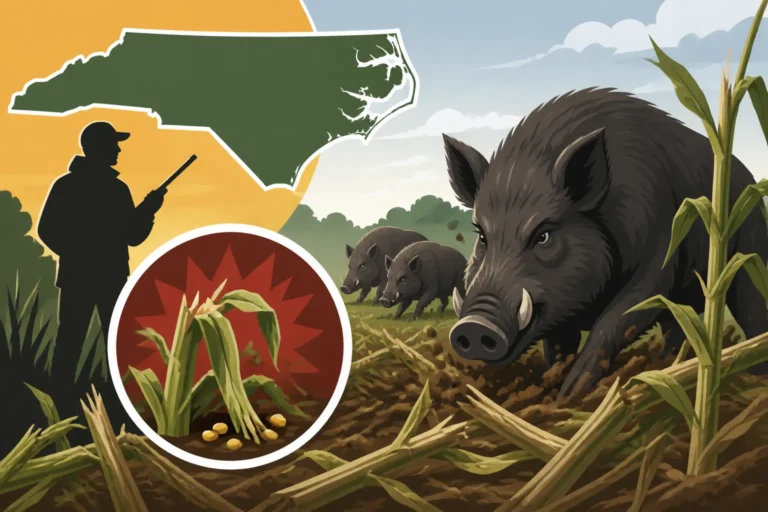
If you've ever dealt with the frustration of rooting damage in your fields, or spotted an elusive sounder disappear into a thicket, you know that feral hogs are a serious challenge for North Carolina landowners and hunters alike. These adaptable animals can be incredibly destructive, and understanding where they congregate is half the battle in managing their impact. This guide is dedicated to shedding light on which North Carolina counties tend to have the most significant wild hog populations, helping you narrow down your search or prepare for encounters.
Understanding Feral Hogs in North Carolina
Feral hogs are not native to North Carolina, but they've certainly made themselves at home. Their presence impacts everything from agriculture to native wildlife, and their numbers seem to be constantly on the rise in certain areas. Understanding their behavior and why they thrive in particular landscapes is key to grasping their distribution across the state.
The Rapid Proliferation of Wild Hogs
These aren't your grandpa's barnyard pigs, though they descended from them. Feral hogs are wild, cunning, and incredibly prolific breeders. A sow can have multiple litters in a year, with each litter potentially containing a dozen piglets. This rapid reproductive cycle means that even if a population is significantly culled, it can rebound quickly if conditions are favorable. They are masters of adapting to different environments, from dense swamps to suburban fringes, making their control a continuous effort.
Their spread across North Carolina has often followed river drainages and agricultural corridors. Hogs can travel surprising distances, and with their intelligence, they quickly learn to avoid pressure while exploiting new food sources. This constant expansion means that what might have been a hog-free area a decade ago could now be seeing significant activity, making it crucial for hunters and landowners to stay informed about current trends.
Why Certain Areas Become Hog Hotbeds
Several factors contribute to an area becoming a "hog hotbed." Foremost among these are habitat and food availability. Hogs are omnivores, meaning they'll eat just about anything – acorns, roots, crops, insects, and even small animals. Areas with a consistent food supply, whether it's dense oak forests providing mast or expansive agricultural fields offering corn and soybeans, are prime attractions. Access to water is also critical, not just for drinking but for wallowing in muddy areas to cool down and deter parasites.
Beyond sustenance, cover is equally important. Hogs need thick places to hide, raise their young, and escape human and predator pressure. Dense pocosin swamps, river bottomlands, and overgrown clear-cuts provide the ideal sanctuary. When these elements – food, water, and cover – are abundant and in close proximity, you create an almost perfect environment for feral hogs to flourish, leading to higher concentrations in specific counties.
Identifying North Carolina's Top Hog Counties
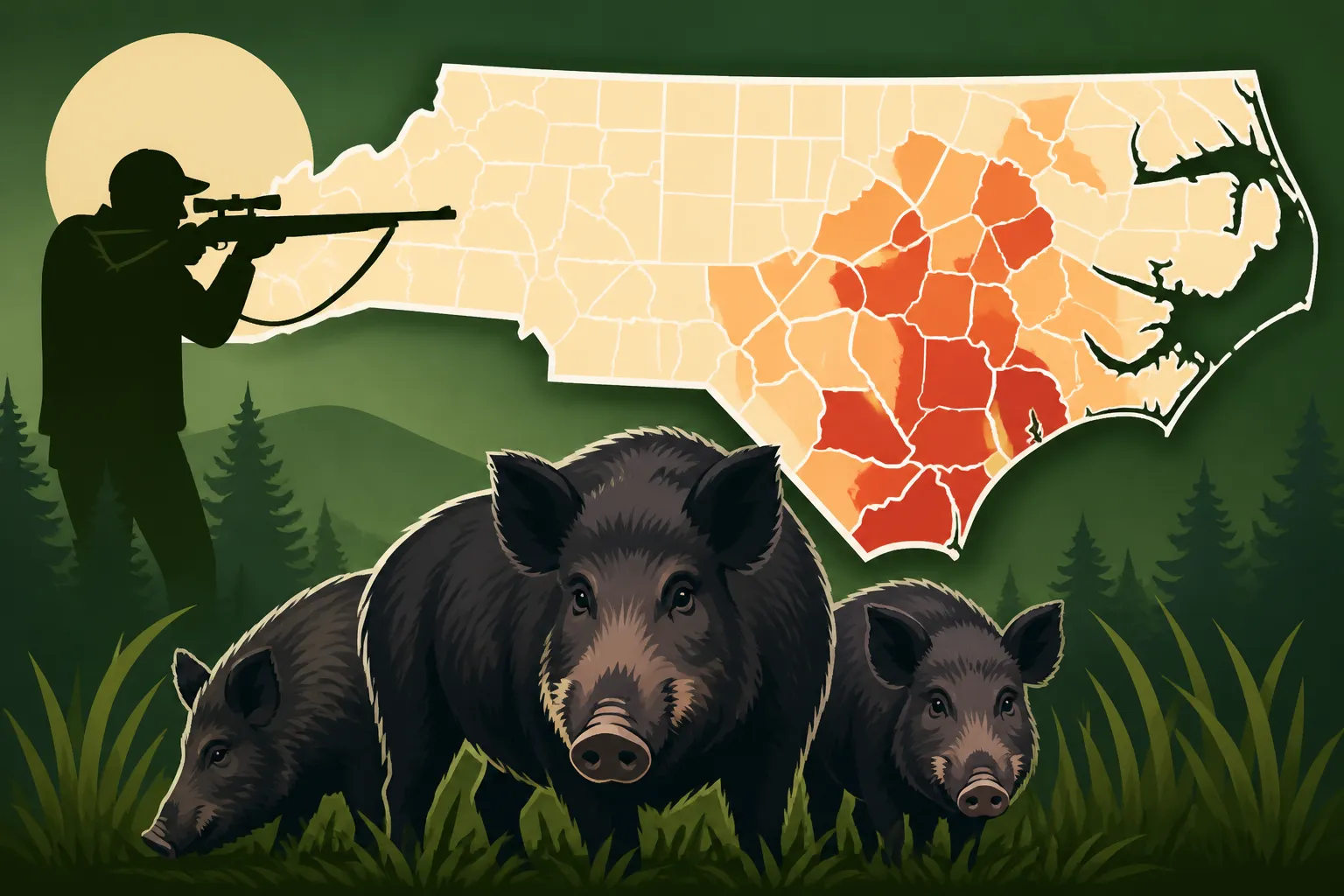
When you talk about feral hogs in North Carolina, the conversation almost always starts in the eastern part of the state. While they are certainly expanding, the Coastal Plain remains their undisputed stronghold.
Coastal Plain: The Primary Stronghold
The Coastal Plain counties are, without a doubt, where you'll find the highest concentrations of feral hogs in North Carolina. This region offers a perfect storm of conditions that allow hogs to thrive: vast expanses of low-lying swamps, dense pocosins, and an abundance of agricultural land. Counties like Bladen, Sampson, Duplin, Columbus, Pender, Martin, and Onslow are frequently cited as having some of the most significant hog populations. These areas feature extensive river systems, such as the Cape Fear, Black, and Neuse Rivers, whose floodplains provide incredible cover and forage.
Imagine endless miles of cypress-tupelo swamps, mixed with vast fields of corn, peanuts, and soybeans. This landscape is a hog paradise. They can disappear into the thickest cover during the day, emerging under the cover of darkness to feast on crops or root through forest floors. The mild winters in the Coastal Plain also contribute to their survival and reproductive success, allowing sows to farrow year-round. If you're looking to target areas with the highest likelihood of finding hogs, the swampy, agricultural counties of the Coastal Plain should be at the top of your list. The challenge here often isn't finding hogs, but rather finding hogs in a position where you can effectively hunt them within the incredibly dense cover. Hunters often find themselves Hunting Coastal Plain Pocosin Swamps for deer, only to discover significant hog sign.
Piedmont's Growing Hog Problem
While the Coastal Plain may have the highest densities, the Piedmont region is experiencing a noticeable increase in feral hog activity. As populations expand and hogs disperse, they follow river corridors like the Yadkin, Pee Dee, and Neuse Rivers inland, finding fragmented pockets of suitable habitat. Counties along these river systems, particularly those with a mix of woodlands and agricultural fields, are seeing more frequent hog sightings and associated damage. Moore, Richmond, Montgomery, and even counties further west like Surry are examples where hogs are establishing themselves, often in localized hotspots.
The Piedmont's landscape of rolling hills, mixed hardwood forests, and farmland provides plenty of food and cover. Hogs utilize creek bottoms and overgrown fencerows as travel corridors, moving between woodlots and agricultural fields. They can be incredibly elusive in these areas, often sticking to dense cover during daylight hours. Hunters in the Piedmont might need to adapt their strategies, as the terrain is less swampy and more defined by smaller woodlots and open fields. Utilizing tools like GoHunt can be invaluable for pinpointing these fragmented habitats and identifying potential travel routes between properties where hogs might be moving. Understanding local land use patterns and scouting thoroughly becomes even more critical when pursuing hogs in these increasingly populated areas.
Mountain Region: Less Common, Still Present
Feral hogs are less prevalent in the rugged, higher elevations of North Carolina's Mountain region compared to the Coastal Plain and even parts of the Piedmont. The colder winters and steeper, less agricultural terrain generally make it less hospitable for large, widespread populations. However, they are by no means absent. Localized populations can be found in certain mountain counties, often in areas with accessible food sources like oak flats providing mast or near valleys with some agricultural activity.
These mountain hogs are often more transient, moving across ridges and through valleys in search of food. They might not form the massive sounders seen in the east, but their presence can still cause significant damage to sensitive mountain ecosystems. Hunters in areas like parts of Cherokee, Macon, or Graham counties might encounter them, particularly in lower elevations or along major river bottoms. Their survival in the mountains speaks to their incredible adaptability, but generally, if you're looking for the highest odds of encountering feral hogs, the mountains would be your last choice compared to other regions of the state.
Factors Influencing Hog Distribution and Density
Understanding the distribution of feral hogs isn't just about drawing lines on a map; it's about recognizing the ecological and human factors that shape where these animals thrive. Their numbers ebb and flow with these influences.
Habitat and Food Availability
The availability of suitable habitat and a consistent food supply are the most critical determinants of where hogs will congregate. In North Carolina, this primarily translates to a few key landscapes. Dense, inaccessible swamps and pocosins, particularly in the Coastal Plain, provide perfect refuge. These areas offer constant water, ample cover from predators and humans, and a diverse range of natural forage like tubers, roots, and insects. When combined with adjacent agricultural lands, such as cornfields, soybean fields, or peanut crops, these areas become incredibly attractive. The hogs can bed down in the thick cover during the day and emerge at night to feed.
In the Piedmont, river bottoms with dense cane thickets, overgrown timber stands, and creek systems act as similar magnets, albeit on a smaller scale. These linear features connect various food sources, allowing hogs to travel and exploit multiple resources. Even in the mountains, localized populations will gravitate towards oak ridges for mast crops or the relatively flatter, more fertile river valleys where some farming might occur. A year with a strong mast crop, for instance, can lead to healthier, more numerous hogs, as food scarcity directly impacts their reproductive success and survival rates. Hunting After a Poor Acorn Year can highlight how food availability changes deer, and similarly, hog behavior.
Land Use and Human Impact
Human activity and land use patterns play a huge role in hog distribution. Large tracts of undeveloped private land, especially those with limited hunting pressure, can become havens for hogs. Conversely, intense hunting pressure, particularly through methods like trapping and night hunting where permitted, can locally reduce populations or push hogs into adjacent, less disturbed areas. The challenge is often that hogs exist on properties where hunting might not be allowed or actively pursued, allowing their numbers to grow unchecked.
The legal framework for North Carolina's Year-Round Hog Rule on Private Land reflects the state's recognition of the severity of the hog problem. This year-round, no-bag-limit policy on private land aims to empower landowners to manage these destructive animals. On public lands, hunting seasons and regulations apply, but the sheer size and remoteness of some game lands can make comprehensive hog control difficult. When planning a hunt, tools like GoHunt can provide crucial insights into land ownership and boundaries, helping hunters identify areas where permission might be granted or where public land borders private sanctuaries, potentially creating travel corridors for hogs.
Reproduction Rates and Survival
Feral hogs are renowned for their incredible reproductive capacity. Sows can become reproductively active as young as six months old and can produce two litters, sometimes even three, within a year. Each litter can range from 4 to 12 piglets, meaning a single sow can contribute dozens of offspring to the population annually. This rapid breeding cycle is the primary reason why controlling hog populations is such an uphill battle.
Furthermore, feral hogs are incredibly resilient. They have few natural predators in North Carolina beyond coyotes preying on piglets, and their thick hides and aggressive nature make them formidable opponents. They adapt quickly to human pressure, becoming nocturnal in areas with heavy daytime hunting. Their ability to survive and thrive in diverse conditions, coupled with their prolific breeding, means that once hogs establish a foothold in a county, their numbers can quickly escalate unless consistent and concerted management efforts are in place.
Strategies for Locating Hogs in High-Density Areas
Even in counties known for high hog populations, finding the hogs themselves can be a challenge. They are intelligent and often nocturnal, requiring specific scouting and hunting strategies.
Scouting for Hog Sign
Successful hog hunting, especially in high-density areas, starts with diligent scouting. Forget walking through the woods hoping to stumble upon them; you need to look for specific signs. Rooting is perhaps the most obvious indicator – areas where the ground has been torn up as hogs search for roots, tubers, and insects. Look for fresh rooting, indicating recent activity. Wallows, muddy depressions where hogs roll to cool off and remove parasites, are another clear sign, especially near water sources.
Beyond rooting and wallows, keep an eye out for tracks. Hog tracks are typically rounder and wider than deer tracks, with dewclaws often visible even in soft ground. Rubs on trees or fence posts, where hogs scratch themselves, can also indicate their presence. Finally, look for fresh scat. Pay attention to transition areas – where swamps meet agricultural fields, or where dense cover meets more open feeding grounds. These funnels and edges are natural travel routes for hogs. Reading North Carolina Mud for Fresh Deer Movement can provide similar insights for hog tracking.
Leveraging Technology and Local Knowledge
In today's hunting world, technology can be a game-changer for locating feral hogs. Aerial maps, often available through apps like GoHunt, allow you to study terrain features, identify dense cover, pinpoint water sources, and locate agricultural fields without ever stepping foot in the woods. You can mark potential bedding areas, travel corridors, and feeding sites from your couch. This is particularly useful in large, unfamiliar public land tracts or when trying to understand how hogs might move between different private land parcels.
Trail cameras are another invaluable tool. Placed on active hog trails, near wallows, or on the edges of food sources, they can provide critical intelligence about hog numbers, sizes, and most importantly, their patterns of movement, helping you determine if they are nocturnal or moving during daylight. Don't underestimate local knowledge, either. Talking to farmers, foresters, or other hunters in a specific county can often provide real-time information about recent hog activity and damage, helping you focus your efforts where they're most needed. This combination of boots-on-the-ground scouting, advanced mapping, and community intel will significantly increase your odds of finding hogs in those high-density counties.
North Carolina Feral Hog Hotspots by Region
| Region | Key Characteristics | Typical Counties with High Activity | Hunting Strategy Notes |
|---|---|---|---|
| Coastal Plain | Vast swamps, river bottomlands, dense pocosins, extensive agriculture (corn, soybeans, peanuts, sweet potatoes) | Bladen, Sampson, Duplin, Columbus, Pender, Martin, Onslow, Jones, Craven, Hyde, Greene, Wayne | Focus on ambush points between dense cover and agricultural fields. Night hunting (with landowner permission) is effective. Trapping is very common. |
| Piedmont | Rolling hills, mixed hardwoods, smaller woodlots, river drainages, fragmented agricultural fields | Moore, Richmond, Montgomery, Harnett, Johnston, Wilson, Edgecombe, Halifax, Franklin, Wake, Nash, Chatham | Scout river bottoms, creek drainages, and fencerows connecting cover and food. Spot and stalk in fields. Ground blinds on travel routes. Night hunting on private land. |
| Mountains | Steep terrain, dense forests, colder winters, limited agriculture in valleys | Cherokee, Macon, Graham, Clay, Swain, Haywood, Transylvania, McDowell, Burke, Rutherford | Localized populations near mast crops (oaks) or limited agricultural plots in valleys. Often more transient. Focus on remote, less pressured areas. Spot and stalk can be productive. |
North Carolina's feral hog challenge is a dynamic one, with populations continually expanding and adapting. While the Coastal Plain remains the epicenter of hog activity due to its ideal habitat, the Piedmont is seeing increasing pressure, and even the mountains host localized populations. Understanding these distribution patterns, coupled with effective scouting techniques and strategic use of resources like mapping tools, is essential for anyone looking to hunt or manage these intelligent and destructive animals.
Disclaimer
This article is for general informational purposes only and does not constitute professional advice. Laws, prices and regulations vary by location and change over time. Consult a qualified professional for guidance on your specific situation.