Crossbows Under North Carolina Rules
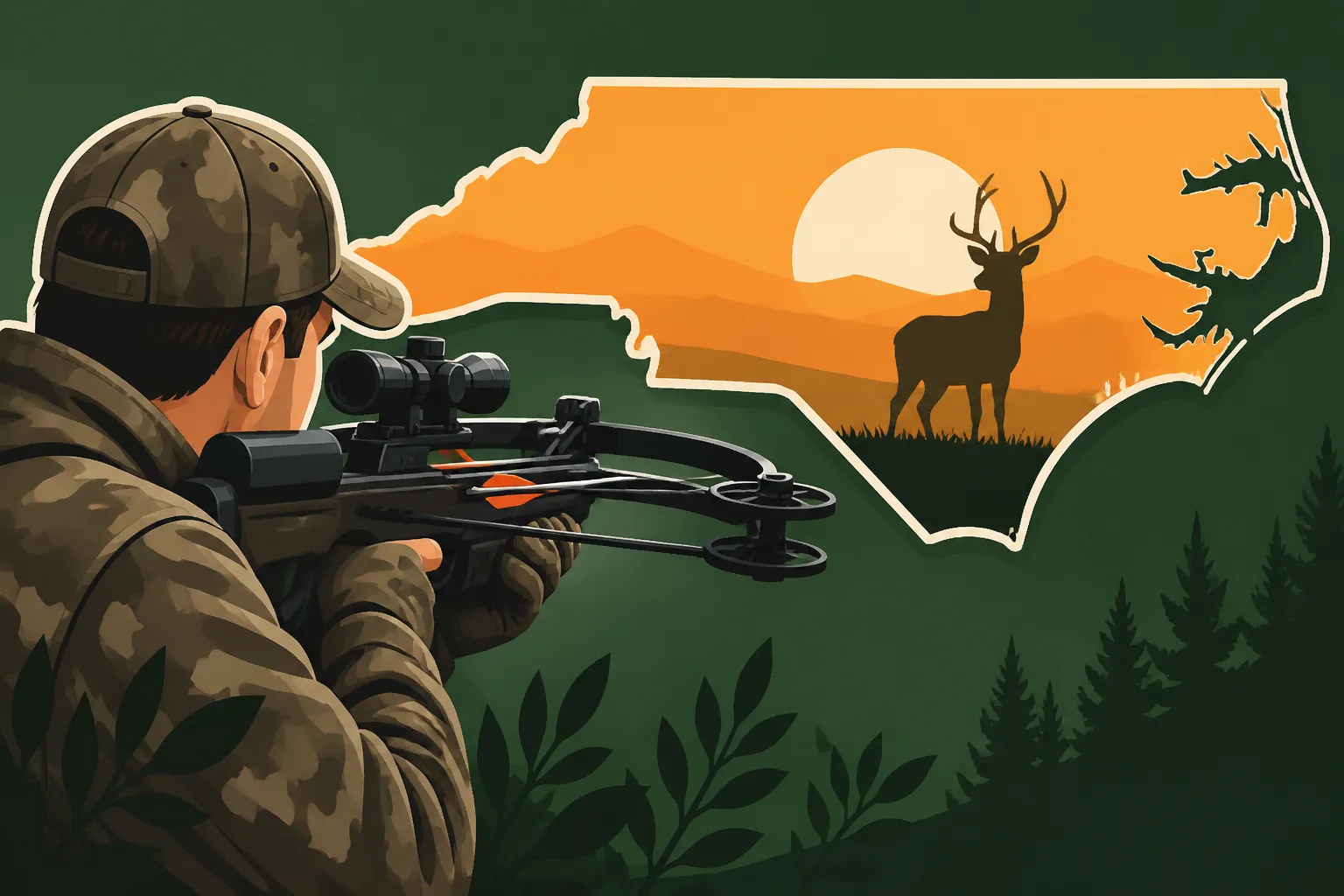
Many hunters across North Carolina feel the call of archery season but might be intimidated by traditional bowhunting, or perhaps physical limitations have sidelined them from the sport they love. Crossbows offer a fantastic bridge, allowing more folks to enjoy the challenge and satisfaction of hunting with archery equipment. This comprehensive guide will walk you through everything you need to know about legally and effectively using crossbows for hunting in North Carolina, from understanding the regulations to choosing the right gear and tactics.
Understanding North Carolina's Crossbow Regulations
Crossbows have a bit of a nuanced history in North Carolina, and it's completely understandable why hunters might find themselves scratching their heads over the rules. For a long time, they were seen as specialized equipment, but thankfully, the regulations have evolved to be much more inclusive, opening up exciting opportunities for many.
General Legality and Season Structure
The most important thing to grasp right off the bat is that crossbows are indeed legal for hunting in North Carolina. They are generally considered legal archery equipment. This means that if you're planning to hunt deer or other game that can be taken with archery equipment, a crossbow typically falls under those same seasons. This opens up a lot of opportunities, especially during the early archery periods when many other weapons are still off-limits. You won't find yourself restricted to special "crossbow-only" seasons, which simplifies planning immensely. It means you can participate in Bowhunting North Carolina's Statewide Archery Season right alongside vertical bowhunters.
However, it's crucial to always double-check the latest regulations from the North Carolina Wildlife Resources Commission (NCWRC), as rules can occasionally be updated. For instance, while generally allowed, specific Game Lands or managed hunts might have unique restrictions. It's rare, but it happens. The general rule of thumb is: if it's archery season, and you meet the hunter requirements, a crossbow is usually good to go. This broad acceptance has made archery season much more accessible to a wider range of hunters, which is a fantastic development for hunter recruitment and retention.
Evolution of Crossbow Acceptance in NC
It wasn't always this straightforward. Historically, crossbows faced some resistance, often viewed as having an unfair advantage over traditional bows due to perceived ease of use or longer effective range. This led to them being restricted to certain user groups, like those with disabilities, or relegated to specific, shorter seasons. These rules created a lot of confusion and a feeling of exclusion for many hunters who simply wanted another way to enjoy the woods.
Thankfully, state wildlife agencies, including the NCWRC, have done a great job of re-evaluating these perceptions based on real-world data and hunter feedback. They recognized that crossbows don't necessarily provide an insurmountable advantage and, more importantly, they offer a vital pathway for new hunters, youth, and those with physical limitations to enjoy the outdoors. The shift to classifying them simply as archery equipment, with few distinctions from vertical bows, has been a game-changer, fostering a more inclusive hunting community. Now, more people can participate in the thrill of North Carolina Archery Season Opening Day.
Hunter Eligibility and Specific Scenarios
Just because crossbows are broadly legal doesn't mean every single hunter automatically qualifies without meeting general hunting requirements. North Carolina has specific rules about who can hunt and what training they need, and these apply directly to crossbow users as well. Understanding these nuances ensures you're hunting legally and safely.
Who Can Use Crossbows for Hunting
Essentially, anyone who holds a valid North Carolina hunting license and appropriate big game privileges can use a crossbow during the open archery seasons. There aren't special age restrictions for crossbows beyond the general requirements for hunting itself. This is fantastic news because it means a whole family can potentially participate, from seasoned veterans to excited newcomers. For example, a parent could be using a compound bow while their child, perhaps not yet strong enough to draw a vertical bow consistently, could confidently use a crossbow to pursue game. This parity ensures that the equipment isn't the limiting factor, but rather the hunter's skill and adherence to regulations.
It's always a good idea to confirm your license requirements, especially if you're new to the state or haven't hunted in a while. Make sure you have the correct combination of a base license and big game privileges for whatever species you're pursuing. Checking the NCWRC website for current North Carolina Resident Hunting License Options and North Carolina Nonresident Hunting License Options will lay out these details clearly. Just like with other hunting gear, ensure your permits are in order before heading out.
Youth and Crossbows in North Carolina
The accessibility of crossbows is a huge benefit for youth hunters. Drawing and holding a traditional vertical bow accurately for an extended period requires significant strength and practice, which can be a real barrier for younger or smaller individuals. Crossbows eliminate this physical challenge, allowing youth to focus on accuracy, shot placement, and ethical hunting practices from the start. They can be pre-cocked and fired with a trigger, much like a rifle, which can make the transition to hunting much smoother for many kids.
Under North Carolina's Mentored Youth Hunting Program, even young hunters who haven't completed their hunter education yet can participate under the direct supervision of a licensed adult. This means a youth hunter, with an adult mentor by their side, could use a crossbow from day one. This opportunity is invaluable for fostering the next generation of hunters and making those precious outdoor memories together. Just remember, the mentor must be close enough to take immediate control of the weapon if needed, ensuring safety at all times. The adult mentor still needs to meet North Carolina Hunter Education Requirements themselves.
Apprentice Hunter Opportunities
Beyond youth hunters, the apprentice hunter license program in North Carolina is another fantastic avenue that integrates well with crossbow use. This program allows individuals 16 years or older, who have not yet completed hunter education, to purchase a hunting license and hunt under the supervision of a licensed adult. This is often perfect for adults who are new to hunting, perhaps getting into it later in life, or those who are transitioning from other forms of hunting.
Imagine someone who has always rifle hunted but wants to try archery season. They might find the learning curve for a compound or recurve bow steep. A crossbow, with its similar mechanics to a firearm, can offer a more comfortable entry point into archery hunting. It allows them to gain experience in the woods during archery season, learn deer movement patterns, and practice shot placement without the added complexity of mastering a vertical bow draw cycle. It's an excellent stepping stone for anyone looking to expand their hunting horizons, and a great way to ensure that you meet all North Carolina Hunter Education Requirements in a practical, hands-on way before hunting solo.
Practical Considerations for Hunting with a Crossbow
While the legal aspect of crossbows is relatively straightforward in North Carolina, effectively hunting with one requires just as much skill, preparation, and ethical consideration as any other method. Don't be fooled into thinking it's a "set it and forget it" piece of gear; success still hinges on understanding your equipment and the game you pursue, along with thorough planning.
Effective Range and Accuracy
One of the common misconceptions about crossbows is that they allow for extremely long-range shots. While modern crossbows are incredibly accurate and powerful, pushing the ethical boundaries of distance is still irresponsible. For most hunting situations, especially in North Carolina's varied terrain – from the thick Hunting Coastal Plain Pocosin Swamps to dense Piedmont woodlots – shots will likely be within 40 yards, often much closer. This is where most hunters can consistently place a lethal shot with a broadhead.
The key is knowing your effective range and practicing extensively within it. A crossbow might group arrows tightly at 50 or 60 yards on a target range, but add in factors like wind, deer movement, adrenaline, and the inherent drag of a broadhead, and that ethical range shrinks considerably. Always err on the side of caution. Your goal is a quick, humane kill, not to see how far you can stretch a shot. Using a rangefinder is absolutely essential to confirm distances before taking a shot, especially when aiming at a deer that might be a bit further than it appears. This discipline is just as critical as Choosing a Rifle Caliber for North Carolina Deer based on your hunting environment.
Setup and Shot Placement Considerations
Setting up for a crossbow hunt involves many of the same principles as vertical bowhunting. You still need to consider wind direction, cover, deer travel routes, and shot angles. However, the physical mechanics of shooting a crossbow are different. Because you typically hold a crossbow more like a rifle, you need enough clearance in your treestand or ground blind to bring the crossbow up and aim it without hitting branches or the blind's framework. This often means slightly wider shooting lanes or a blind with larger windows. Always ensure your setup allows for safe and clear shots.
Shot placement is paramount. Crossbow bolts, like arrows from vertical bows, kill by hemorrhage. This means a precise shot to the vitals – the lungs and heart – is critical. Understanding deer anatomy and where to aim for the "boiler room" is non-negotiable. Don't let the "rifle-like" feel of a crossbow trick you into thinking a shoulder shot is acceptable; you still need to bypass heavy bone for a quick, clean pass-through. Practice shooting from elevated positions if you plan to hunt from a stand, and from a seated position if you'll be in a ground blind, to simulate real hunting scenarios. This practice, combined with quality broadheads, ensures you're prepared for the moment of truth. More specific details on setup can be found in Crossbow Equipment Requirements.
Ethical Considerations and Recovery
The ethical considerations with a crossbow are identical to those for any other hunting method. Your responsibility to the animal, and to the sport, means ensuring a humane kill and making every reasonable effort to recover your game. This starts with knowing your limits, taking only high-percentage shots, and using sharp, effective broadheads. Even with a powerful crossbow, a poor shot can lead to a wounded animal and a difficult, if not impossible, recovery.
After the shot, patience is a virtue. Resist the urge to immediately jump down and track the animal, especially if the hit wasn't perfectly clear. Give the deer time to bed down. How long depends on the shot placement – a definite heart/lung shot might allow for a shorter wait, while a liver or gut shot requires a much longer waiting period, often several hours or even overnight in cooler weather. Having a good tracking light, knowing how to read blood trails, and being familiar with techniques like Blood Trailing After Dark in North Carolina are crucial skills for any crossbow hunter. Even using a hunting app like GoHunt for marking the shot location and the last seen point can be incredibly helpful for starting your recovery process accurately.
Licensing, Permits, and Harvest Reporting
Hunting with a crossbow in North Carolina involves more than just pulling the trigger; you need to navigate the administrative side of things, including proper licensing and responsible harvest reporting. This isn't just bureaucratic red tape; it's how wildlife populations are managed and how future hunting opportunities are sustained for everyone.
North Carolina License Requirements
Before you even think about cocking a crossbow, you absolutely must have the proper hunting licenses. For deer hunting, this typically means a valid North Carolina hunting license (either resident or nonresident) and a Big Game Harvest Report Card or the equivalent privileges. These are not optional. You can purchase these through the NCWRC website, via their mobile app, or at authorized license agents across the state. It’s easy enough to find a nearby store or simply complete it all online through the NCWRC portal.
The type of license you need will depend on your residency status and the species you intend to hunt. For instance, if you're a North Carolina resident looking to hunt deer, you'll need a different set of licenses than a nonresident coming in for a bear hunt. Always confirm you have the right licenses for the species and time of year you plan to hunt. If you're hunting on Game Lands, you'll also need a North Carolina Game Lands License Requirements in addition to your other permits. This is a common oversight that can lead to an unexpected citation, so always verify your permits for your specific hunting location.
Mandatory Deer Harvest Reporting
North Carolina takes deer harvest reporting seriously, and it’s a requirement for all deer taken, regardless of the weapon used. This is crucial data for wildlife biologists to monitor herd health, population trends, and overall management effectiveness. Whether you take a deer with a rifle, a vertical bow, or a crossbow, the process is the same. You must report your harvest through the NCWRC website, their mobile app, or by phone.
This reporting needs to happen quickly, typically before the animal is moved from the field and definitely before it's processed. You'll need to provide details like the county of harvest, sex of the deer, and the method of take. This system ensures accurate data collection, which ultimately benefits all hunters by informing future season regulations. Failing to report a deer is a violation, so always make it a priority. The North Carolina Deer Reporting Requirements page on the NCWRC website provides all the necessary steps and deadlines. Using a hunting app like GoHunt can help you remember details for your report.
CWD Zone Implications for Crossbow Hunters
Chronic Wasting Disease (CWD) is a serious concern for deer populations, and North Carolina is actively working to monitor and manage its spread. If you plan to hunt in a designated CWD Surveillance Area or Management Area, there will be additional regulations you need to be aware of, especially regarding carcass movement and mandatory testing. North Carolina's Chronic Wasting Disease Areas are clearly defined, and it's your responsibility to know if you're hunting within one.
For crossbow hunters, this means the same rules apply as for any other hunter in these areas. You might be required to present your harvested deer at a CWD sampling station, and there may be restrictions on moving certain parts of the carcass (like the brain and spinal column) out of the zone. These measures are designed to prevent the further spread of the disease. Always check the NCWRC website for the most current CWD information, as these zones and associated rules can change based on new findings. Being a responsible hunter means doing your part to protect the deer herd, and that includes adhering to CWD protocols.
Choosing the Right Crossbow and Essential Gear
The world of crossbows has expanded dramatically, offering a vast array of choices that can be overwhelming for a new or transitioning hunter. Selecting the right equipment isn't just about power; it's about finding a setup that fits you, your hunting style, and the terrain you'll be navigating in North Carolina.
Types of Crossbows and Key Features
When you start looking at crossbows, you'll generally find two main types: recurve and compound. Each has its own benefits and drawbacks, so consider what's most important to you.
- Recurve Crossbows: These are simpler in design, much like a traditional recurve vertical bow, with limbs that curve away from the riser at the ends. They are often lighter, more compact, and easier to maintain in the field because they have fewer moving parts. If a string breaks, you can often replace it yourself. However, they typically require more physical effort to cock, and they may be a bit slower in terms of bolt speed compared to compounds. Their simplicity makes them very reliable, which is a huge plus if you're hunting in remote areas where a complex repair isn't an option.
- Compound Crossbows: These are more mechanically complex, utilizing cams and cables, similar to compound vertical bows. This design allows for higher draw weights to be stored, resulting in faster bolt speeds and greater kinetic energy. They are often more compact from axle-to-axle when cocked, which can be an advantage in tight treestands or ground blinds. However, they are generally heavier, more expensive, and more difficult to repair in the field if something goes wrong with the string or cables.
Beyond these two main types, consider features like weight, overall length, trigger pull, and noise level. A heavier crossbow might be steadier for shooting but a burden on a long walk into Finding Ground Others Walk Past. A crisp, light trigger pull can greatly improve accuracy. And a quiet crossbow is always an advantage when hunting wary North Carolina deer.
Essential Crossbow Accessories
Just buying the crossbow itself is only half the battle; you need a few key accessories to make your setup complete and safe, and to maximize your chances of success in the field.
- Optics: Most crossbows come with a scope, and it's critical that it's properly sighted in. Many crossbow scopes have multiple reticles or "dots" for different yardages, which is incredibly useful. Make sure it's clear, holds zero, and is suitable for low-light conditions often encountered at dawn and dusk.
- Quiver: A quiver that attaches directly to the crossbow or can be easily carried on your person is essential for holding your bolts securely and quietly.
- Broadheads and Field Points: You'll need both. Field points are for practice, matching the weight of your broadheads. For hunting, choose quality broadheads that are sharp, durable, and fly true from your specific crossbow. Fixed-blade broadheads are known for their reliability, while mechanical broadheads can offer a larger cutting diameter upon impact.
- Cocking Device: This is almost universally necessary for safely and easily cocking your crossbow. Most modern crossbows include a rope cocking device or a crank-style device, significantly reducing the effort required and ensuring a consistent, even draw.
- Lubricant and Wax: Regular maintenance of your crossbow string and rail is crucial for longevity and performance. Use specific crossbow rail lubricant and string wax as recommended by the manufacturer.
- Hard Case: Protecting your investment, especially during transport to and from hunting areas, is vital. A good hard case will shield your crossbow from bumps, dirt, and moisture.
When researching gear, it's worth checking out resources like GoHunt. While they often focus on Western hunting, the principles of reliable gear and detailed planning are universal, and you can often find reviews or discussions about general hunting equipment that translates to North Carolina.
Maintenance and Safe Handling Practices
Proper maintenance extends the life of your crossbow and ensures it performs reliably when you need it most. After each hunt, wipe down your crossbow, especially if it's been exposed to moisture. Regularly inspect the string and cables for fraying or wear. Apply rail lubricant and string wax as directed by the manufacturer. Neglecting these simple steps can lead to decreased performance, damage, or even a dangerous malfunction.
Safe handling is non-negotiable. Always treat your crossbow as if it were loaded. Keep your fingers clear of the string path, especially the flight groove, as a dry fire or shot could result in serious injury. Always ensure your arrow is fully seated against the string and the nock is correctly oriented before firing. Transport your crossbow uncocked and uncased (or in a soft case) when not actively hunting, and keep it pointed in a safe direction at all times. Remember, even though it's "archery," the power and precision of a crossbow demand the same respect as a firearm.
Here's a quick comparison of common crossbow types to help you decide:
| Feature | Recurve Crossbows | Compound Crossbows |
|---|---|---|
| Design | Simple, curved limbs, few moving parts | Cams and cables, complex limb system |
| Cocking Effort | Higher initial pull, often needs rope cocker | Less physical effort with cams, often crank-assist |
| Size | Wider from axle-to-axle (uncocked or cocked) | More compact, narrower axle-to-axle when cocked |
| Speed | Generally slower bolt speeds | Generally faster bolt speeds and kinetic energy |
| Maintenance | Easier to maintain, simple string replacement | More complex, typically needs bow press for repairs |
| Weight | Often lighter, but varies | Generally heavier due to mechanical complexity |
| Cost | Often more affordable | Generally higher price point |
| Noise | Can be louder, but varies with dampeners | Often quieter with cam system, but varies |
Strategies for Successful Crossbow Hunting in North Carolina
Now that you've got your legal bases covered and your gear in order, let's talk about putting it all into action. Hunting with a crossbow in North Carolina involves specific strategies that blend the best of both firearm and traditional bowhunting approaches. It's about maximizing your chances while respecting the limitations of your equipment and the behavior of the game.
Scouting and Stand Selection
Effective scouting is the foundation of any successful hunting trip, and it's especially critical for crossbow hunting where shot distances are relatively short. Before the season, spend time in your hunting area, whether it's Scouting North Carolina Public Land Before Season or a private tract. Look for fresh deer sign: tracks, droppings, rubs, scrapes, and feeding areas. Identify natural funnels, pinch points, and cover transitions where deer are likely to travel. Consider food sources – acorns in the fall, or green fields in late season. Using a mapping platform like the GoHunt app can be an invaluable tool here, helping you identify bedding areas, travel corridors, and potential stand sites based on topography and cover. You can even use it for Reading Aerial Photos for Piedmont Deer.
When selecting a stand site, think about shot opportunities within your effective crossbow range (typically 20-40 yards). A good stand location isn't just about seeing deer; it's about getting an ethical shot. This means considering prevailing wind directions, sun angle (to avoid silhouetting yourself), and escape routes for deer. If you're using a treestand, make sure the tree offers sufficient cover and a clear shooting lane, keeping in mind the crossbow's width. For ground blinds, ensure it's brushed in well and positioned downwind of expected deer movement. Whether you're trying Treestand Setups in Pisgah National Forest or Setting Up on a Piedmont Field Edge, the principles of concealment and shot angle remain constant.
Adapting Tactics for North Carolina Terrain
North Carolina offers a vast diversity of hunting landscapes, and your crossbow tactics should adapt to the specific environment you're in. What works in the mountains might not be ideal for the coast.
- Mountains: In the rugged terrain of the Blue Ridge, deer often use benches, saddles, and ridge lines for travel. Focus on these elevation changes. Wind and thermals are constantly shifting in the mountains, so understanding Wind and Thermals on a Blue Ridge Slope is absolutely critical for scent control. You'll often be dealing with thicker cover than you might expect, even on open slopes, so shot distance discipline is key. You might also encounter more Hunting Pressure on North Carolina Public Land in certain areas, requiring you to go deeper or find overlooked spots.
- Piedmont: This region is characterized by rolling hills, mixed hardwoods, and extensive agricultural fields. Deer here often travel between woodlots and food sources like corn or soybean fields. Hunting Piedmont Farmland Deer often involves setting up on field edges or in timbered funnels connecting different cover types. Ground blinds can be very effective here, offering concealment in open areas.
- Coastal Plain: The low-lying coastal plain presents unique challenges with dense pocosin swamps, pine plantations, and expansive river bottoms. Deer often stick to the edges of thick cover or use subtle elevation changes. Hunting Coastal Plain Pocosin Swamps can be particularly challenging due to the dense vegetation, requiring very close shots. You might also find yourself Hunting a Funnel Between Two Pocosins where deer movement is concentrated.
No matter the terrain, patience and stealth are your best allies. Crossbow hunting, like all archery, is about getting close, making minimal noise, and moving slowly and deliberately to capitalize on short-range opportunities.
Maximizing Success with Patience and Scent Control
Ultimately, successful crossbow hunting boils down to discipline, patience, and meticulous attention to detail, especially when it comes to scent control. Deer have an incredible sense of smell, and any lingering human odor can quickly alert them to your presence, ruining a hunt before it even begins.
Scent control starts long before you get to your stand. Wash your hunting clothes in scent-free detergent, store them in airtight containers, and dress in the field to minimize contamination. Use scent-eliminating sprays on your boots and outer layers. Pay close attention to wind direction, always trying to position yourself downwind of where you expect deer to approach. Even on those frustrating days when you sit for hours and see nothing, remember that patience is a virtue in hunting. The longer you can remain still and quiet, the greater your chances of a close encounter. And when that moment finally comes, knowing you've done everything to minimize your impact and maximize your ethical shot opportunity is the most rewarding part of the experience. The GoHunt app's wind and weather overlays can be particularly useful here, allowing you to plan your approach and stand entry/exit routes effectively.
Disclaimer
This article is for general informational purposes only and does not constitute professional advice. Laws, prices and regulations vary by location and change over time. Consult a qualified professional for guidance on your specific situation.