20 Gauge Doubles for Grouse Cover
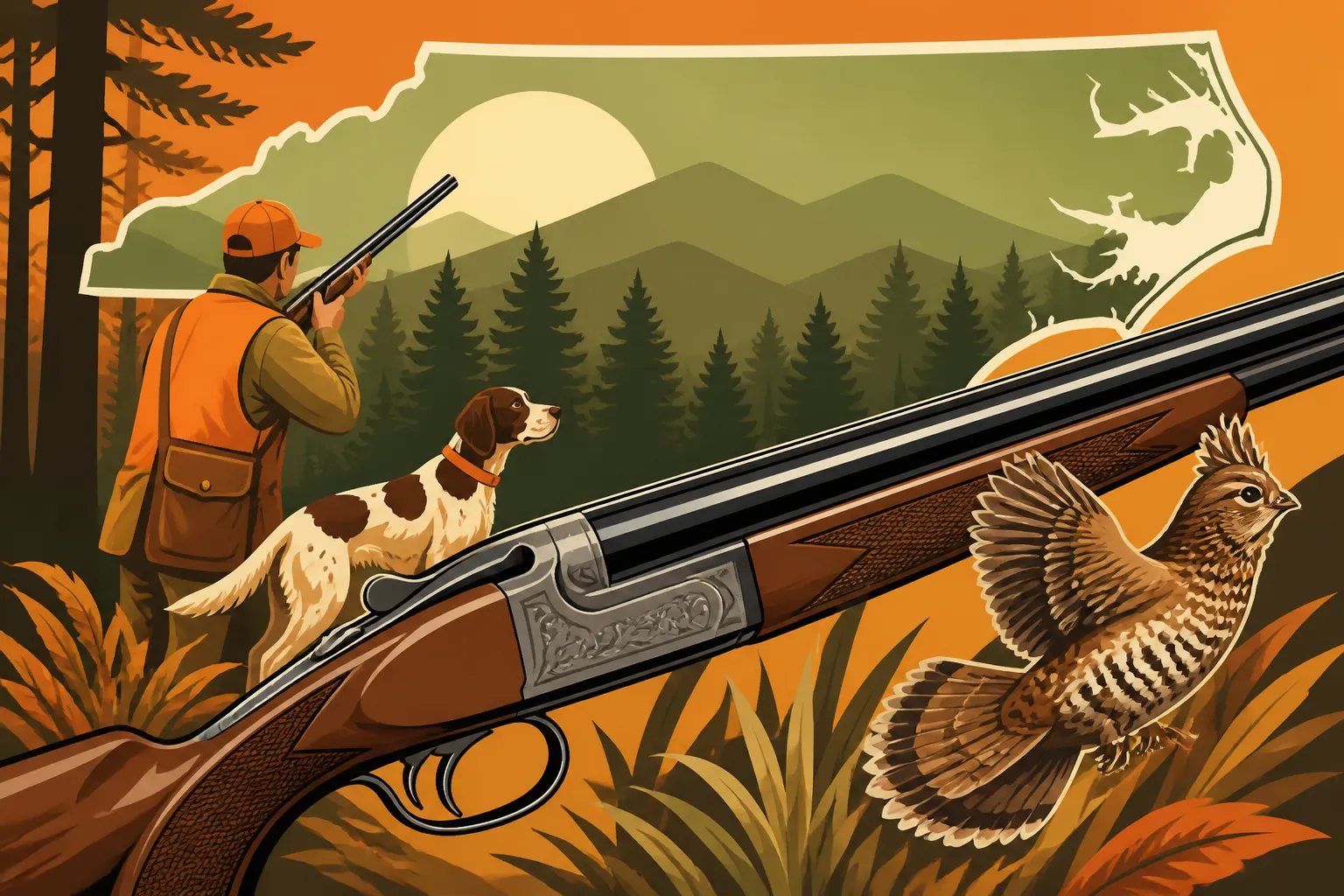
If you've spent any time chasing ruffed grouse in the thick, unforgiving cover of North Carolina's mountains, you know the frustration of a bird flushing fast and disappearing into a rhododendron thicket before you can even shoulder your gun. It’s a challenge that demands a specialized tool, and for many seasoned upland hunters, the quick-swinging 20 gauge double barrel shotgun is often the answer. This guide will dive into why this classic setup is so effective and how to make the most of it in our demanding local grouse habitat.
Why the 20 Gauge Double Makes Sense for North Carolina Grouse
Grouse hunting in North Carolina isn't like walking open pheasant fields out west. Here, you're navigating steep slopes, dense mountain laurel, and stands of timber where visibility is measured in feet, not yards. A bird might flush at your boots and be gone in a flash, requiring an instant reaction and a gun that can keep up. This is precisely where the 20 gauge double shines, offering a combination of speed, versatility, and maneuverability that single-barrel guns often struggle to match.
Quick Handling in Tight Spaces
When you're busting through thickets and scrambling over downed logs on a steep mountainside, the last thing you want is a long, heavy shotgun snagging on every branch. A 20 gauge double, particularly one with shorter barrels, feels incredibly nimble in your hands. Its balance point is often closer to the receiver, making it quick to bring to the shoulder and swing through a fleeting target. This light, compact nature reduces fatigue over a long day of walking, too, which is a huge bonus when you're covering miles of rugged terrain in search of those elusive mountain birds. It really does make a difference when you need to react to a sudden flush from a bird hidden in the undergrowth. This nimble quality is essential for success in places where the shooting window might be no more than a second or two.
The typical North Carolina grouse cover demands a gun that can be brought to bear almost instinctively. Imagine a bird erupting from a patch of mountain laurel directly in front of you. A longer, heavier gun might get tangled in your clothing or caught on a branch as you try to swing. With a well-fitted 20 gauge double, the gun comes up smoothly, points naturally, and allows for that critical first shot without hesitation. This ability to make quick, precise movements is paramount when every second counts. It's about minimizing the friction between you, your gun, and the environment, ensuring you're ready when the moment of truth arrives.
Two Shots, Two Chokes: A Versatile Combo
One of the most significant advantages of a double barrel shotgun is the ability to have two different chokes ready at a moment's notice. For North Carolina grouse hunting, this versatility is a game-changer. You might encounter a bird that flushes at close range, demanding a wide-open pattern, and then minutes later, have one flush a bit further out, requiring a tighter pattern to ensure a clean kill. With a double, you can typically set one barrel with an open choke (like Improved Cylinder) for those close, surprise flushes, and the second barrel with a slightly tighter choke (like Modified) for follow-up shots or slightly longer presentations.
This choke combination effectively extends your effective range while still optimizing for those close-quarters encounters that are so common when hunting Ruffed Grouse in the North Carolina Mountains. It’s a psychological advantage as well; knowing you have the right pattern for various scenarios helps build confidence, which is vital when hunting such a challenging bird. You're not stuck with a single choke trying to cover all bases, potentially blowing out a close bird or missing a further one. The ability to instantly switch between chokes with a quick pull of a second trigger (or a single selective trigger if your gun has one) is an invaluable asset in the unpredictable world of grouse hunting.
Reduced Recoil for Fast Follow-Ups
While a 20 gauge might not seem like a significant step down from a 12 gauge, the difference in felt recoil can be substantial, especially when shooting lighter upland loads. When a grouse explodes from cover, you often need to get off a second shot very quickly if the first one misses or if another bird flushes. Excessive recoil can slow down your recovery, causing you to lose precious fractions of a second and potentially miss that follow-up opportunity. The lighter recoil of a 20 gauge allows for faster target reacquisition and more comfortable shooting throughout a demanding day.
Hunting grouse isn't about high-volume shooting, but the shots you do take are often under pressure and require quick reflexes. Minimizing recoil helps you stay on target, maintain your shooting form, and focus on the bird rather than anticipating the kick. This comfort also means you'll be less fatigued at the end of a long day, which is a huge plus when traversing challenging terrain. It allows for more consistent shooting and a better overall experience in the field, making those second-shot chances more viable.
Understanding Double Barrel Shotgun Types for Grouse
When we talk about double barrel shotguns, we're generally referring to two distinct designs: side-by-side (SxS) and over-and-under (O/U). Both have their advocates and their unique characteristics, and understanding these differences can help you choose the best fit for your North Carolina grouse hunting adventures. Each offers a different feel and pointing characteristic, and personal preference often plays a huge role in which one a hunter chooses to carry through the thick stuff.
Side-by-Side SxS versus Over-and-Under O/U
The classic side-by-side shotgun, with its barrels running parallel, has long been revered as the quintessential upland bird gun. Its wide, flat receiver often contributes to a very open field of view, and many hunters find its balance and quick-pointing characteristics ideal for grouse. The traditional aesthetics and historical connection also appeal to many upland enthusiasts. However, some argue that the wider profile can be less intuitive for precise pointing compared to the single plane of sight offered by an O/U.
Over-and-under shotguns, on the other hand, stack the barrels vertically. This design provides a single sighting plane, which many shooters find more natural and precise for aiming. O/Us often have a slightly different balance point than SxSs, and their slimmer profile can feel more modern to some. Both types can be incredibly effective in the grouse woods, and the choice often comes down to personal preference, how the gun feels when you mount it, and which style you find yourself pointing most intuitively. There's no single "best" answer, as it's a very personal decision. I've known plenty of successful grouse hunters who swear by one over the other, and it truly comes down to what feels right in your hands.
The Appeal of a Classic Grouse Gun
There's an undeniable romance and tradition associated with hunting grouse with a classic double barrel. The aesthetics, the feel of fine wood and blued steel, and the connection to generations of upland hunters are all part of the allure. Many of these guns are true works of art, handcrafted with precision and designed for a lifetime of use. Beyond the nostalgia, these guns are often built to be lightweight and well-balanced, inherently suiting them for the demanding physical nature of grouse hunting. They are tools designed with a specific purpose in mind: fast, instinctive shooting at quick-flushing birds.
This appeal isn't just about looks; it's about functionality married with heritage. A well-made double often has a crisp trigger pull, excellent balance, and a natural pointability that can make a difference in the field. For some, owning and hunting with such a gun is part of the overall experience of pursuing these magnificent birds in wild places. It's about respecting the tradition and appreciating the craftsmanship that goes into a truly fine upland shotgun. When you're carrying a gun that feels like an extension of yourself, you're more likely to make those difficult shots count.
Gauge and Barrel Length Considerations
While we're focusing on the 20 gauge, it’s worth noting that within that gauge, barrel length is a critical factor for grouse hunting. Shorter barrels, typically in the 24-26 inch range, are highly favored for their quick-swinging characteristics and ease of maneuvering through dense cover. A longer barrel might provide a slightly longer sighting plane and theoretically less muzzle jump, but in the close confines of North Carolina's grouse habitat, the benefits of quick handling almost always outweigh these. You're not taking 40-yard shots in this type of hunting.
The goal is to have a gun that you can point almost like you're pointing your finger. When a bird flushes close, you need to get on target instantly, and a shorter barrel facilitates this. While a 20 gauge is excellent, some hunters even go to a 28 gauge for even lighter recoil and gun weight, but the 20 gauge offers a good balance of pellet count and shootability. Ultimately, the best barrel length will be one that feels perfectly balanced to you, allowing for fast, fluid movements through the undergrowth, without sacrificing the ability to consistently hit those fleeting targets. When you're slogging through thick cover for hours, every ounce and every inch of barrel length matters for comfort and effectiveness.
Essential Features for a North Carolina Grouse Double
Beyond the basic configuration, certain features in a 20 gauge double can greatly enhance your success and comfort while hunting grouse in North Carolina. These aren't just luxuries; they're practical considerations that make a real difference when you're facing challenging conditions and fleeting opportunities. Pay attention to these details as you consider your next upland companion.
Weight and Balance for Upland Trekking
Grouse hunting is physically demanding. You're climbing hills, navigating thick brush, and often covering significant distances. A heavy, poorly balanced shotgun will quickly become a burden, leading to fatigue and potentially missed shots as your arms tire. An ideal grouse gun, regardless of whether it's an SxS or O/U, should be lightweight and possess a superb balance point, typically right around the hinge pin. This balance makes the gun feel lighter than it is and allows it to pivot smoothly and quickly.
Look for models that weigh in the 5.5 to 6.5-pound range for a 20 gauge. Anything much heavier will start to feel cumbersome by midday. The way the weight is distributed is just as important as the total weight. A gun that's "whippy" or front-heavy will not point as naturally. When you shoulder the gun, it should feel like it comes up effortlessly, with the muzzle instinctively finding its target. This harmonious relationship between weight and balance is crucial for fast, accurate shooting when a grouse suddenly explodes from cover. It's a key factor that can truly improve your performance and endurance in the field, helping you get to those prime areas like those identified when Scouting North Carolina Public Land Before Season.
Ejectors or Extractors: What to Look For
Double barrel shotguns typically come with either ejectors or extractors, and understanding the difference can impact your hunting experience. Extractors simply lift the spent shell casings out of the chamber a short distance, allowing you to manually remove them. Ejectors, on the other hand, forcibly kick the spent shells clear of the gun when the action is opened.
For grouse hunting in thick cover, many hunters prefer extractors. While ejectors can be faster for reloading, they also fling spent shells into the woods, often making them harder to retrieve. In rough terrain, stopping to search for a lost shell can be a nuisance and even interrupt the flow of the hunt, especially if you're trying to keep up with a flushing covey or your bird dog. With extractors, the shells are presented for easy retrieval and pocketing, which is not only polite to the environment but also keeps your hunting area clean. It's a small detail, but one that can greatly enhance your day in the field, especially if you're conscious about leaving no trace.
Stock Fit and Shotgun Mount
Perhaps the most critical, yet often overlooked, aspect of any shotgun for wingshooting is proper stock fit. A shotgun that fits you correctly will point naturally, allowing your eye to align perfectly with the rib and front bead as you shoulder the gun. If the stock is too long, too short, has too much or too little drop, or an incorrect cast, you'll be fighting the gun, leading to missed birds. For snap shooting at grouse, an ill-fitting stock is a severe handicap.
When evaluating a gun, close your eyes, shoulder it quickly, and then open your eyes. Your dominant eye should be looking straight down the rib. If you're consistently looking over or under the rib, or if your head feels crunched or stretched, the fit is off. While professional gun fitting can be an investment, it's often the single best thing you can do to improve your wingshooting. Without a proper fit, even the finest 20 gauge double will struggle to perform to its potential in the grouse woods. This is where a resource like GoHunt can be invaluable, helping you research different models and their stock dimensions to find one that aligns with your build, or identifying reputable gunsmiths who can custom-fit a stock for you.
Integrating Your 20 Gauge Double into Your North Carolina Grouse Strategy
Owning the right gun is only part of the equation; knowing how to optimize it for North Carolina's unique grouse hunting conditions is what truly leads to success. From choke selection to understanding the nuances of the quick shot, every element plays a role in connecting with these fast-flying birds.
Choke Selection for North Carolina Cover
As mentioned, the beauty of a double barrel is the ability to use two different chokes. For North Carolina grouse, where shots are typically close and fast, a common and effective setup is an Improved Cylinder (IC) choke in the first barrel and a Modified (MOD) choke in the second.
- Improved Cylinder (IC): This choke provides a relatively open pattern, perfect for those explosive, close-range flushes where a bird might be less than 20 yards away. It gives you a wider margin of error, increasing the chances of hitting a bird that appears and disappears in a blink.
- Modified (MOD): The Modified choke offers a slightly tighter pattern, extending your effective range a bit further, perhaps out to 25-30 yards. This is ideal for a follow-up shot if you miss with the first, or for a bird that flushes a little further out from the start.
Some hunters even opt for Skeet or Cylinder choke in the first barrel for extremely dense cover, paired with an IC in the second. The key is to pattern your shotgun with your chosen loads to see how they perform at typical grouse shooting distances. This will give you confidence in your setup when the moment arrives. Having the right choke for the situation is just as important as your Choke Choice for Fast Flushes when you're hunting other upland birds.
| Choke Type | Typical Range (Yards) | North Carolina Grouse Scenario |
|---|---|---|
| Cylinder / Skeet | 10-20 | Very thick cover, close flushing bird at your feet. |
| Improved Cylinder | 15-25 | Most common first shot, good spread for fast-flushing bird. |
| Modified | 20-30 | Second shot, slightly longer flush, or open timber. |
| Full / Improved Mod | 30+ (Less Common) | Generally too tight for NC grouse; risk of blown patterns. |
Shot Size and Shell Choice
For 20 gauge grouse hunting, shotshells loaded with #7.5 or #8 lead shot are the most popular choices. These smaller shot sizes provide a dense pattern with a high pellet count, which is crucial for increasing the probability of hitting a small, fast-moving target like a grouse. The relatively short shooting distances involved mean you don't need larger, harder-hitting shot that would be more appropriate for larger birds or longer ranges.
When selecting shells, also consider the shot material. While lead is standard, some areas or game lands might require non-toxic shot. Always check the regulations for your specific hunting area beforehand. Regardless of material, choose a quality upland load that patterns consistently in your shotgun. Testing a few different brands and loads on paper targets at 20-25 yards will help you determine what performs best in your specific gun and choke combination. This pre-season preparation is crucial for maximizing your chances in the field. Remember, specific regulations like those covered in North Carolina Game Lands License Requirements might dictate certain shell types.
Mastering the Quick Shot
Grouse hunting often boils down to "snap shooting." These birds rarely offer leisurely crossing shots in open fields. More often, they erupt from heavy cover, fly low and fast, and disappear behind the next obstacle in a fraction of a second. Mastering the quick shot involves a combination of instinct, proper gun mount, and practice.
- Be Ready: Always hunt with your gun in a ready position, typically carried across your body or cradled, allowing for a swift, natural mount. Your finger should be near the trigger guard, but only move to the trigger when you've identified the target and are ready to shoot.
- Mount and Swing: As the bird flushes, your gun mount needs to be fluid and fast. Don't stop your swing when you pull the trigger; continue through the shot. This "swing-through" or "sustained lead" method is essential for hitting fast-moving targets.
- Focus on the Bird: Keep your eyes locked on the bird, not the front bead of your shotgun. Trust your instincts and let the gun point where your eyes are looking. This is often the hardest skill to develop but the most rewarding.
Practice is key. Clay target shooting, particularly on a skeet or five-stand course, can help simulate the quick-flushing nature of grouse. Even dry-mounting your shotgun at home, practicing bringing it to your shoulder smoothly and quickly, can build muscle memory. Remember that grouse hunting isn't about perfectly aimed shots, but about instinctive, fluid movements. The 20 gauge double, with its fast-handling nature, is built for this style of shooting, and with practice, you can significantly improve your odds of success in North Carolina's demanding grouse cover. GoHunt often provides valuable tips for improving your shooting, which can be beneficial to review before heading out. For more on preparing for your hunts, check out North Carolina Hunter Education Requirements.
Disclaimer
This article is for general informational purposes only and does not constitute professional advice. Laws, prices and regulations vary by location and change over time. Consult a qualified professional for guidance on your specific situation.