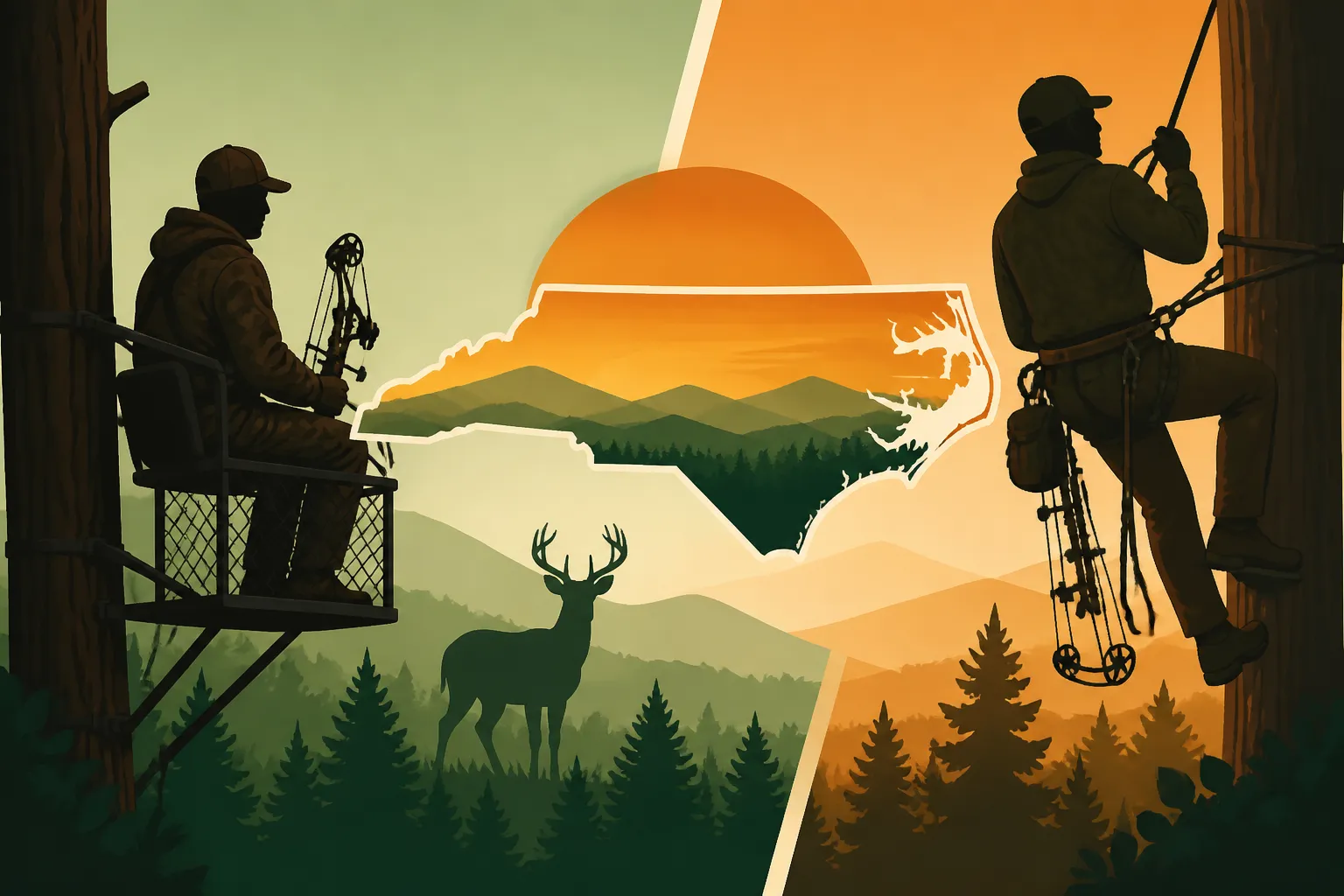
Treestands and Saddles on Public Land
Hunting North Carolina's public lands is an incredible experience, but finding that perfect, undisturbed spot to set up a stand can feel like cracking a secret code. Between navigating regulations, battling hunter pressure, and simply figuring out the best way to get elevated safely and efficiently, it's enough to make anyone feel overwhelmed. This guide is here to walk you through the ins and outs of using treestands and the increasingly popular saddle hunting systems on our state's public grounds, helping you hunt smarter and more effectively.
The Public Land Challenge for Elevated Hunting
Public land hunting in North Carolina offers amazing opportunities, from the vast national forests in the mountains to the sprawling game lands scattered across the Piedmont and Coastal Plain. However, unlike private land where you might have exclusive access to a handful of well-known trees, public ground demands a different strategy, especially when it comes to getting off the ground. You're sharing the space with many other hunters, and every decision, from your choice of stand to its placement, is magnified.
Regulations and Restrictions on Game Lands
One of the first hurdles you'll encounter on North Carolina public land is understanding the myriad of rules surrounding treestand use. It’s not a free-for-all; there are specific guidelines about what types of stands are allowed, how long they can be left up, and how they must be marked. These rules are in place for safety, fairness, and to protect the natural resources we all share. Ignoring them can lead to fines, loss of hunting privileges, or even the confiscation of your gear, which is the last thing any of us wants after a long trek into the woods. Always check the specific rules for the particular game land or National Forest you plan to hunt; a quick check with the NC Wildlife App can save you a lot of headache.
Often, game lands have strict prohibitions against damaging trees, which means certain types of stands that require lag bolts or permanent modifications are a no-go. You'll also find regulations on how long a stand can remain in the woods—some areas might allow stands to be left seasonally, while others require them to be removed daily. This distinction is critical and directly impacts whether a hang-on stand with climbing sticks or a highly mobile climbing stand is your best bet. Knowing these rules upfront is just as important as knowing where the deer are. You can learn more about these specific requirements by looking into Treestand Rules on North Carolina Public Land.
Navigating Hunter Pressure and Finding Solitude
Public land, by its very nature, means shared access. This often translates to hunter pressure, especially during opening weeks or prime rut times. You might scout a promising area, only to arrive on opening day and find another hunter in your carefully selected tree, or worse, find a permanent stand already placed there. This is a common frustration, and it's why mobility and adaptability are key. You can't always rely on a static setup, and you need to be prepared to move.
Finding solitude on public land often means walking further, getting deeper into less accessible terrain, or hunting areas that others overlook. This is where tools like GoHunt's mapping features really shine, allowing you to identify likely pinch points, unpressured corners, or overlooked cover. These deeper pushes often mean you'll be carrying your stand or saddle further, making weight a significant consideration. The lighter and more packable your system, the more ground you can cover, increasing your chances of finding an unmolested honey hole. The ability to quickly and quietly set up and take down your elevated position is paramount when you're trying to stay ahead of, or away from, other hunters. Hunting Pressure on North Carolina Public Land goes into more detail on how to mitigate this challenge.
Understanding Treestands: Types and Public Land Suitability
When most folks think about elevated hunting, they picture a treestand. These platforms have been a staple for decades, offering hunters a vantage point above the deer's line of sight and often above their primary scent cone. However, not all treestands are created equal, and their suitability for North Carolina public land varies greatly depending on their design and the specific regulations of your hunting area.
Climbing Stands for Mobile Hunters
Climbing stands are the quintessential mobile option. They consist of two sections—a seat section and a platform section—that work together to "walk" up a tree. The beauty of a climbing stand is its all-in-one nature: you don't need additional steps or ladders. This makes them ideal for public land hunters who need to move frequently or venture deep into the woods, especially in areas with relatively straight, limbless trees like the tall pines found in some parts of the Coastal Plain or straighter oaks in the Piedmont.
However, climbing stands have their limitations. They require a tree of suitable diameter and straightness, free of low limbs, which can be a challenge in diverse North Carolina forests. Think about those gnarly, ancient oaks with branches starting at ten feet—a climbing stand simply won't work there. While they offer excellent mobility once you find the right tree, the time it takes to climb can be noisy and somewhat cumbersome. But for hunters who frequently move their setups or want to quickly adapt to changing deer patterns, a lightweight, easy-to-pack climbing stand can be an invaluable tool. For example, in pine plantations or areas with mature, straight timber, they allow you to pick a new tree on a whim, adapting to fresh sign.
Hang-On Stands and Climbing Sticks
Hang-on stands, also known as fixed-position stands, offer more versatility in tree selection compared to climbers. Since they attach to the tree and require separate climbing aids (like sticks or screw-in steps, though screw-in steps are almost universally prohibited on public land due to tree damage), you're not limited to perfectly straight, limbless trees. This makes them a popular choice for public land hunters targeting areas with more diverse timber, such as the rolling hardwoods of the Piedmont or the mixed forests of the mountains. Many public lands allow hang-ons as long as they don't damage the tree and are removed daily or seasonally as per regulations.
The combination of a hang-on stand and climbing sticks allows for a quiet, efficient setup. You can pre-scout a tree, then quickly ascend on hunt day. The downside is the extra gear: you're carrying the stand and multiple climbing sticks, which adds weight and bulk. However, the flexibility to choose a less-than-perfect tree, perhaps one with good cover or overlooking a specific trail, often outweighs this disadvantage for many hunters. When considering a hang-on, look for lightweight aluminum models and compact climbing sticks that are easy to carry deep into a Pisgah National Forest Hunting area or through the thickets of a game land.
Ladder Stands (and why they're often not for public land)
Ladder stands are the most comfortable and stable option, typically featuring a seat, platform, and an attached ladder system. They are incredibly popular on private land where they can be left up for the entire season, offering easy and safe access. However, ladder stands are generally unsuitable, and often outright prohibited, for public land hunting in North Carolina.
The primary reasons are their size, weight, and semi-permanent nature. They are cumbersome to transport, making it impractical to move them regularly. More importantly, leaving a large, conspicuous ladder stand on public land violates most game land regulations, which often specify that stands must be temporary and removed after each hunt or within a specific short season. Their bulk also makes them an obvious target for theft or damage. While comfortable, the logistical and regulatory hurdles make ladder stands a rare sight on public hunting grounds, and for good reason. Most serious public land hunters stick to more mobile, less impactful setups.
The Rise of Saddle Hunting: Agility for Public Land Hunters
In recent years, saddle hunting has surged in popularity, especially among public land bowhunters. It represents a significant shift from traditional treestand hunting, prioritizing mobility, concealment, and an almost unparalleled level of adaptability. For those tired of hauling heavy stands or restricted by tree selection, saddle hunting offers an exciting alternative that aligns perfectly with the demands of public land.
What is Saddle Hunting and Why It's Gaining Traction
Saddle hunting involves wearing a specialized harness, or "saddle," that you clip into a tree via a tether. Instead of sitting on a platform, you lean back into the saddle, using either small climbing sticks, steps, or a single platform for your feet. This method keeps you tucked tight to the tree, often giving you a 360-degree shooting radius by simply rotating around the trunk. The key benefits are immediately apparent: extreme portability, enhanced concealment, and incredible flexibility in tree selection.
For North Carolina's public land hunters, this means you can get into trees that would be impossible with a traditional stand—crooked trees, multi-trunk trees, or even smaller diameter trees. The entire setup, including the saddle, ropes, and climbing sticks, is usually much lighter and more compact than even the lightest treestand, making those deep pushes into unpressured areas far more feasible. Many hunters, myself included, have found that the ability to quickly adapt to fresh sign and hunt exactly where the deer are, rather than where a suitable treestand tree exists, is a game-changer. This agility is why it's becoming a go-to for many navigating the dense woods and varied terrain of our state. Saddle Hunting in North Carolina Hardwoods provides more specific insights.
Essential Gear for a Saddle Setup
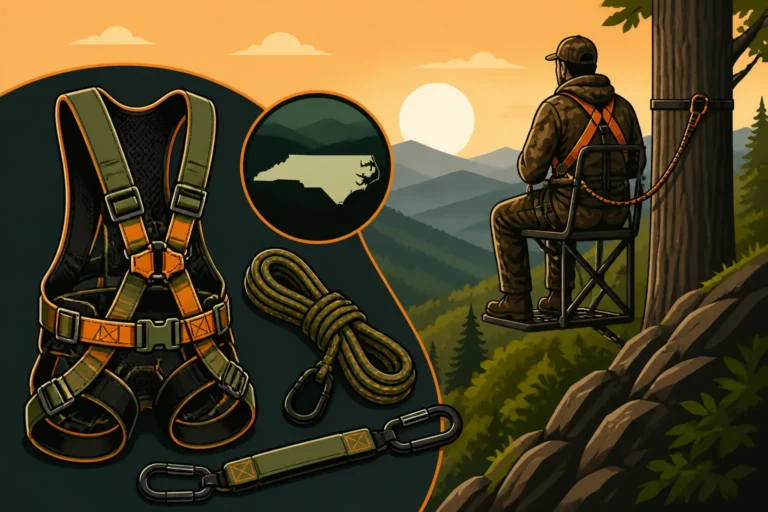
A basic saddle hunting setup involves a few core components, each designed for lightweight efficiency:
- The Saddle: This is the main harness you wear, built for comfort and safety while suspended. Look for models that distribute weight well and are easy to put on and adjust.
- Tether and Lineman's Belt: The tether is your primary connection to the tree when suspended, while the lineman's belt allows you to remain safely attached to the tree while ascending or descending and setting your sticks. Safety is paramount, and these elements are non-negotiable.
- Climbing Method: Most saddle hunters use lightweight climbing sticks, similar to those used with hang-on stands, but often optimized for saddle hunting with fewer, more widely spaced steps or a single platform. Other options include compact "tree steps" or even rope-based systems like aider ladders to gain height quickly. The goal is minimal weight and bulk. Climbing Sticks for North Carolina Hardwoods are a popular choice.
- Platform: While not strictly necessary, many saddle hunters use a small, lightweight platform at their desired hunting height. This provides a stable base for your feet, allowing you to stand, shift, and draw your bow with greater comfort and stability than just relying on climbing stick steps.
As you build your saddle system, focus on high-quality, lightweight components. Your pack will thank you after a long walk into an isolated block of public ground. GoHunt's gear reviews often feature excellent insights into the latest lightweight saddle gear.
Advantages and Disadvantages on North Carolina Public Land
Saddle hunting truly shines on North Carolina public lands due to its inherent advantages. The most significant is mobility. You can carry a full setup into the most remote corners of a game land without feeling burdened. This mobility allows you to adapt to fresh sign, move with deer patterns, and escape pressure. Concealment is another huge plus; by staying tight to the tree, your silhouette is broken up, and you become part of the tree itself, making you incredibly difficult for deer to spot. Finally, tree selection is vastly expanded; nearly any tree that can support your weight and offers some cover becomes a potential setup. This means you can often find a perfect ambush tree that no one else can hunt with traditional methods.
However, saddle hunting isn't without its challenges. The primary disadvantage for newcomers is the learning curve. It feels different from sitting in a stand, and it takes practice to get comfortable with the system, learn how to ascend and descend efficiently, and master shooting from various positions. It's not something you want to try for the first time on opening day. Comfort can also be a factor for some; while modern saddles are designed for comfort, prolonged sits can take some getting used to, especially if you're accustomed to a wide treestand seat. Lastly, gear investment can be comparable to or even slightly higher than a basic treestand setup, but many find the benefits well worth the initial outlay.
| Feature | Traditional Treestand (Hang-on/Climber) | Saddle Hunting System |
|---|---|---|
| Mobility | Moderate to High (climber best) | Very High |
| Weight/Bulk | Moderate to High | Low |
| Tree Selection | Moderate (limited by straightness/limbs) | Very High (more versatile) |
| Concealment | Moderate (silhouette often visible) | Very High (tucked to tree) |
| Shooting Angles | Limited (often front/side) | 360-degree rotation |
| Comfort | Generally high (seated) | Takes getting used to (leaning) |
| Learning Curve | Low | Moderate |
| Public Land Rules | Varies by type and location | Generally compliant (minimal tree impact) |
Safety First: Crucial Considerations for Elevated Hunting
No matter if you choose a treestand or a saddle, hunting from an elevated position inherently carries risks. Accidents, while rare with proper precautions, can be severe. It is absolutely paramount that safety is your number one priority every single time you leave the ground. Complacency is the enemy of safety, and even experienced hunters can make mistakes.
Harnesses, Lifelines, and Redundancy
The single most important piece of safety equipment for any elevated hunter is a full-body safety harness. This is non-negotiable. Always wear it, and always stay connected to the tree from the moment your feet leave the ground until they are safely back on terra firma. For treestand users, this typically means using a lifeline (or safety rope) that extends from the ground to your stand. You attach your harness tether to this rope at the base of the tree and slide it up as you climb, ensuring you're connected at all times. Once in the stand, you connect directly to the tree with your harness tether. Safety Harnesses and Lifelines are crucial for every hunt.
For saddle hunters, the tether and lineman's belt serve this purpose, keeping you connected throughout the entire process. The key concept here is redundancy. Never rely on just one point of failure. Always double-check your connections, inspect your ropes and straps for wear, and ensure everything is properly secured. Think of it this way: if one component fails, another should prevent a fall. Always practice your system at ground level or just a few feet up before committing to hunting height.
Pre-Season Inspections and Maintenance
Your elevated hunting gear needs regular attention. Before the season starts, and periodically throughout, give all your equipment a thorough inspection. Check all straps, buckles, ropes, and webbing on your harness and treestand/saddle system for any signs of wear, fraying, cuts, or sun damage. Plastic and metal components should be free of cracks, rust, or deformation. Any equipment that shows significant wear or damage should be replaced immediately, not just "patched up."
Pay close attention to your climbing sticks or steps as well. Ensure all connections are tight and secure, and there are no loose bolts or welds. For climbing stands, check all cables, pivots, and pins. Lubricate moving parts where appropriate according to manufacturer instructions. Remember, UV exposure, moisture, and extreme temperatures can degrade materials over time, even when the gear isn't being used. Storing your gear properly in a dry, cool place away from direct sunlight will prolong its lifespan, but nothing beats a diligent pre-season check to ensure everything is in top working order when you hit the woods.
Strategic Deployment: Placement and Access Tactics
Putting up a stand or saddle is more than just finding a comfortable tree; it's about positioning yourself for success while minimizing your impact and remaining undetected. Especially on public land, where deer are often more pressured, your setup strategy can make or break your hunt.
Scouting for the Perfect Public Land Tree
Before you even think about hanging a stand, you need to scout, and I mean really scout. On public land, this often means covering a lot of ground. Look for pinch points, funnels, bedding areas, and feeding zones. Pay attention to fresh sign—tracks, rubs, scrapes, and droppings. Once you've identified a promising area, start looking for the perfect tree. What makes a tree "perfect" for public land? It's not always the biggest or the most comfortable.
Often, it's a tree that offers natural concealment (limbs, vines, background foliage), is relatively easy to climb, and, crucially, is positioned on the downwind side of where you expect deer to travel. The ability to climb quietly and into a tree that breaks up your silhouette can make all the difference. With tools like GoHunt's satellite imagery and topographical maps, you can identify potential travel corridors and ambush points from home, then verify them on foot. This often includes looking for ridges, saddles, and creek bottoms where deer naturally funnel. Scouting North Carolina Public Land Before Season is invaluable for this.
Minimizing Your Footprint and Scent
Deer on public land are often wise to human intrusion. Every step you take, every branch you break, every bit of human odor you leave behind, tells them you're there. When setting up your stand or saddle, your goal should be to be as stealthy as possible. Choose an entry route that minimizes disturbance, avoiding bedding areas or known travel corridors on your way in. Try to walk into the wind or crosswind, especially on the morning of a hunt.
When climbing, avoid excessive noise. This is where a well-practiced climbing method, whether it's a quiet climbing stand or silent climbing sticks, pays dividends. Once you're up, get settled quickly and quietly. Scent control is also critical. Wear clean hunting clothes, use scent-eliminating sprays, and keep your gear as scent-free as possible. Even with a good wind, strong human odor can alert deer well before they come into range. The more you can minimize your presence, the higher your chances of an encounter.
Entry and Exit Routes on Pressured Land
Your approach and departure routes are just as important as your stand placement, especially on pressured public land. Deer often pattern hunters just as much as hunters pattern deer. If you're busting deer on your way to or from your stand, you're educating them and ruining your spot. Plan your routes to avoid spooking deer, particularly during low light conditions when they are most active.
This often means taking a longer, more circuitous route that utilizes natural cover, ditches, or terrain features to shield your movement. Whenever possible, approach and exit with the wind in your favor relative to where you expect deer to be. Sometimes, it's better to accept a slightly less ideal wind direction in your stand if it allows for a completely undetected entry and exit. On heavily pressured land, early morning entries and late evening exits demand extreme stealth. Sometimes, a "dead" exit – waiting until full daylight or after dark and making minimal noise – is the best strategy, even if it means sitting longer in the stand.
Legalities and Ethics: Staying Compliant and Respectful
Hunting public land is a privilege, and with that comes a responsibility to understand and abide by all regulations and ethical guidelines. These rules are in place to ensure fair chase, protect natural resources, and maintain a positive image for all hunters. Ignorance of the law is never an excuse, and disrespecting the rules can jeopardize public land hunting for everyone.
State and Game Land Specific Regulations
North Carolina has overarching statewide hunting regulations, but specific game lands or national forests often have additional, localized rules regarding treestands and saddles. It’s absolutely vital to consult the North Carolina Wildlife Resources Commission (NCWRC) regulations Digest or website for the most up-to-date information on the specific game land you intend to hunt. For example, some game lands might allow stands to be left for a full season, provided they are marked with your Wildlife Customer Number, while others require daily removal. National Forests, like Nantahala National Forest Hunting or Croatan National Forest Hunting, often have their own specific rules on how stands can be attached, emphasizing non-damaging methods.
Always confirm:
- Permitted Stand Types: Are climbing, hang-on, or saddle systems explicitly allowed? (Ladder stands are almost always prohibited for long-term placement).
- Attachment Methods: Are screw-in steps or lag bolts forbidden? (Usually, yes, to prevent tree damage).
- Duration of Placement: Can stands be left overnight, for the season, or must they be removed daily?
- Marking Requirements: Do you need to label your stand with your ID number?
- Tree Damage: Is anything that damages the tree (like cutting limbs for shooting lanes) prohibited?
Failing to adhere to these rules can result in fines, forfeiture of equipment, and even loss of hunting privileges. Always be proactive in understanding the regulations.
Ethical Considerations for Public Land Use
Beyond the letter of the law, there are ethical considerations that every public land hunter should embrace. These foster a respectful hunting community and ensure the continued availability of public access.
Respecting Other Hunters: Public land is shared. If you encounter another hunter's stand or saddle setup, even if it's illegally left there, avoid tampering with it. It's frustrating to find someone in your spot or to discover an illegally placed stand, but acting aggressively or damaging property doesn't help anyone. Report violations to game wardens, but don't take matters into your own hands. Always have backup spots in mind, because another hunter might get to your primary location first.
Leave No Trace: When you leave the woods, your presence should be barely discernible. This means packing out everything you pack in—including spent broadheads, food wrappers, and any trash. If you're removing a stand or saddle, ensure all your climbing sticks, ropes, and platforms come with you. Don't leave flagging tape or other markers behind. The goal is to leave the woods cleaner than you found them, preserving the natural experience for the next person, and the next generation.
Tree Health and Impact: Even if a method is legal, consider its impact on the tree. Avoid excessive limb cutting for shooting lanes; instead, try to find a tree that naturally offers good visibility. Choose climbing methods that cause minimal bark damage. We are stewards of the land, and our actions reflect on all hunters. These ethical practices, alongside strict adherence to regulations, ensure that North Carolina's rich hunting heritage on public lands can continue to thrive for years to come.
Disclaimer
This article is for general informational purposes only and does not constitute professional advice. Laws, prices and regulations vary by location and change over time. Consult a qualified professional for guidance on your specific situation.