Blood Trailing After Dark in North Carolina
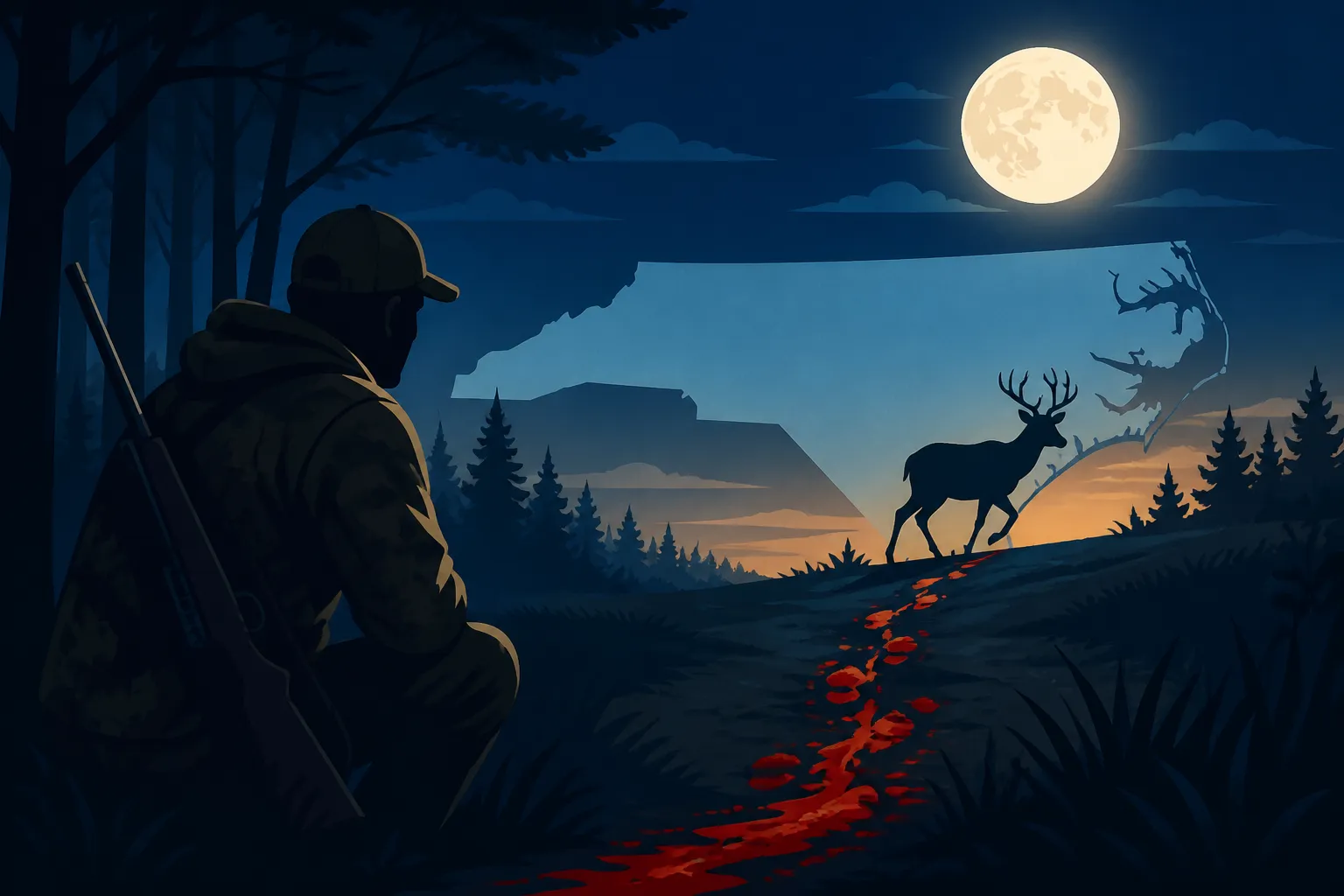
There's nothing quite like the heart-sinking feeling of making a shot on a deer, knowing it's hit, only for darkness to descend faster than you can follow the blood trail. Many of us have been there, scrambling against the fading light, trying to piece together a story from sparse drops and scuffed leaves. This guide is here to walk you through the precise steps and best practices for successfully blood trailing after dark in North Carolina, giving you the confidence and tools to recover your game ethically.
The Inevitable Challenge of Losing a Trail After Sunset
When you make a shot, the initial excitement can quickly turn into anxiety, especially if the deer doesn't drop immediately and the daylight starts to fade. North Carolina's diverse landscapes, from the dense undergrowth of the coastal plain to the steep, rocky terrain of the mountains, present unique challenges that can make even a strong blood trail disappear like a ghost in the dim light. Throw in the added pressure of an approaching night, and suddenly, what might seem like a simple track-and-retrieve turns into a high-stakes puzzle.
North Carolina's Diverse Terrain: A Blood Trailing Gauntlet
Our state is a beautiful tapestry of different environments, and each one offers its own set of obstacles when it comes to blood trailing. In the mountains, like those found within Reading a Ridge for Mountain Zone Deer, you're often dealing with steep slopes, thick rhododendron thickets, and a forest floor covered in years of leaf litter that can swallow up even bright red blood. A deer might tumble down a ravine, making access treacherous, or navigate through dense laurel patches where visibility is almost zero. The uneven ground and abundant rocks can also make distinguishing a deer's track from a random scuff incredibly difficult once the light dims.
Moving eastward, the Piedmont region presents a mix of hardwood forests, pine plantations, and agricultural fields. Here, deer might head for dense honeysuckle thickets along creek bottoms or disappear into the edge of a standing cornfield. Hunting Piedmont Farmland Deer can be rewarding, but blood trails often get wiped out quickly on exposed dirt or absorbed into the rich, dark soil. The ever-present kudzu and briar patches are not only frustrating to push through but also make finding subtle blood signs a nightmare. On the Coastal Plain, especially in areas like the pocosin swamps you might encounter when Hunting Coastal Plain Pocosin Swamps, you're battling water, dense cane, and thick, mucky ground. Blood can quickly wash away, soak into saturated earth, or become indistinguishable in the dark, damp environment. The sheer density of vegetation means you might be crawling on your hands and knees, shining a light into an impenetrable green wall.
The Ethical Dilemma: Pushing Versus Waiting
One of the most agonizing decisions after a shot is whether to push on immediately or back out and return in the morning. This isn't just a matter of convenience; it's a critical ethical consideration for every hunter. If you've made a questionable shot – say, a gut shot or a rear-quarter hit – pushing the deer can often make things worse. A deer with a gut wound, if pushed, will often run further and harder, bedding down much later and making recovery exponentially more difficult. In such cases, giving the animal several hours (or even overnight) to stiffen up and expire in a nearby bed is often the most humane course of action. This strategy increases your chances of finding it deceased in the morning rather than jumping it again and risking a full-blown chase across miles of unfamiliar terrain.
However, if you're confident of a good lung or heart shot, the calculus changes. A well-hit deer often doesn't travel far, but blood flow can slow or stop quickly if the wound clots. If you have a clear, strong blood trail and daylight is fading, continuing the search with proper tools might be the best option. The goal is always a swift and clean recovery. The decision ultimately hinges on the quality of your shot, the amount and type of blood, and the specific conditions of the hunt. There's no shame in backing out if it's the right call for the animal and your chances of recovery.
Essential Tools and Tactics for a Successful Night Search
Embarking on a night blood trailing mission without the right gear is like trying to navigate a coastal marsh without a map. You're setting yourself up for frustration, a lost deer, and potentially a dangerous situation. Having a well-stocked pack, designed for the unique demands of tracking in the dark, can dramatically improve your odds of success. Think beyond just a basic flashlight; consider every tool as an extension of your eyes and your determination. If you're carrying a solid Packs for a Day on Public Land, you'll have room for these essentials.
Lighting Up the Night: Beyond Your Headlamp
Your primary tool for night trailing will be light, and you'll need more than just the small beam from your everyday headlamp. While a hands-free headlamp is crucial for visibility and safety as you move, a powerful handheld flashlight is your main blood-finding instrument. Look for flashlights with high lumens (at least 500-1000 for a dedicated trailing light) and a good balance between a focused beam and a wide spill. The focused beam helps penetrate dense cover and highlight distant blood, while the wider spill illuminates the immediate ground for subtle signs. The angle of the light is critical: shining your beam almost parallel to the ground can make dried blood drops or even matted hair stand out against the leaves or dirt.
Another excellent option, if you can find one, is a UV or "blood tracking" light. These lights are designed to make hemoglobin (the component of blood that contains iron and carries oxygen) fluoresce, appearing almost black or purple against other surfaces. They can be incredibly effective when blood is sparse or hard to distinguish from shadows or damp leaves. However, it's essential to understand that not all blood will react the same way, and they might pick up other biological fluids, so always use them in conjunction with a powerful white light to confirm the sign. Always carry spare batteries or a portable power bank, especially for high-drain devices. Losing your light in the middle of a deep forest is a nightmare scenario you want to avoid at all costs.
Marking Your Progress and Navigating with Tech
When you’re blood trailing at night, every sign, no matter how small, needs to be marked. Fluorescent orange or pink marking tape is your best friend. Tie it to branches above every confirmed speck of blood, every disturbed patch of leaves, or every track. This creates a visible breadcrumb trail, preventing you from getting disoriented and allowing you to easily pick up the trail if you lose it temporarily. It also serves as a crucial guide for any additional searchers, or for yourself if you have to back out and return at dawn.
Beyond physical markers, digital navigation tools are indispensable. A good GPS unit or a reliable hunting app on your smartphone, like GoHunt, can be a game-changer. These tools allow you to drop waypoints at the shot site, the last confirmed blood, and any significant signs along the way. GoHunt, for instance, often integrates with property lines, allowing you to quickly identify if your deer has crossed onto private land, which is vital for respecting North Carolina Trespass and Permission Law and preventing potential issues. The ability to see your path laid out on a topographical map, marking specific locations, is far superior to trying to remember every turn and twist in the dark. It can guide you through dense woods and even help you understand the lay of the land if you need to circle back or try a different approach. Remember that GPS Units Versus Phone Apps each have their pros and cons; ensure whatever you use has downloaded maps for offline use, as cell service can be spotty in many North Carolina hunting areas.
Deciphering Subtle Signs Beyond Visible Blood
Sometimes, the blood trail just disappears, or it was never strong to begin with. This is where your skills of observation really come into play. You need to become a detective, looking for every minute detail that indicates deer travel. Fresh tracks in soft dirt or mud are obvious, but also look for scuff marks on roots, rocks, or fallen logs. If the deer was running hard, it might have dug its hooves in, leaving deeper impressions. Broken twigs or disturbed leaves, particularly on the underside of branches, can indicate the deer's path.
Hair can be an incredibly informative sign. Look for small clumps of hair caught on briars or rough bark. The color and length of the hair can tell you where the deer was hit. Darker, coarser hair typically comes from the back or neck, while lighter, finer hair is usually from the belly or legs. Short, coarse white hair often indicates a leg hit. Tufts of gray-brown hair, common on a whitetail, combined with a particular blood color, can help you narrow down the wound location. A watery, pinkish blood often signifies a lung shot, sometimes with air bubbles. Dark red, thick blood could indicate a liver hit, while green or brown matter often points to a gut shot. These subtle cues, even without a strong blood trail, can help you piece together the puzzle and inform your next steps. For more advanced scouting and understanding deer movement, resources like Scouting With the NC Wildlife App can provide invaluable pre-hunt knowledge about potential bedding and travel corridors.
Advanced Strategies and Knowing When to Call for Help
Even with the best gear and a keen eye, there will be times when a blood trail goes cold, and the night feels vast and overwhelming. This is when knowing advanced strategies, and understanding the power of collaboration, becomes paramount. It's about combining intelligent search patterns with the wise decision of knowing when to bring in reinforcements, or when to simply wait for the dawn.
The Indispensable Aid of a Trained Tracking Dog
When all else fails, a well-trained blood tracking dog can be your ultimate ace in the hole. These dogs possess an olfactory sense far superior to humans, capable of following scent molecules that we could never detect. In North Carolina, the use of leashed tracking dogs for the recovery of wounded game is legal, and many dedicated individuals and organizations offer these services. If you've exhausted your own efforts, don't hesitate to reach out to a professional tracker. A good tracking dog can pick up a trail hours, or even a full day, after the shot, navigating dense cover, water, and varied terrain with incredible precision. They can often differentiate between the scent of the wounded animal and other deer, leading you directly to your game.
Finding a reputable tracking dog service usually involves connecting with local hunting clubs, taxidermists, or checking online forums dedicated to North Carolina hunting. Many trackers don't charge exorbitant fees, operating out of a shared passion for ethical recovery. Having a tracker on standby, or at least knowing who to call, is a smart part of your pre-hunt preparation, especially if you're hunting challenging areas or during times when quick recovery is difficult. Remember, they are a resource to be used when you truly need them, and often their success rate is astonishing.
Teamwork, Technology, and the Decision to Wait
A solo night search can be incredibly difficult, both physically and mentally. If possible, call in a friend or two to help. More eyes on the ground can pick up signs that one person might miss. When working as a team, establish a systematic search pattern. One effective method is a staggered line search, where each person walks a few yards apart, meticulously scanning their designated lane. Another is a concentric circle search, spiraling outwards from the last known blood sign. Communication is key; use quiet signals or two-way radios to indicate findings without spooking the deer if it's still alive.
Technology continues to evolve in ways that can assist in recovery. While not always legal or practical for hunting, thermal imagers and night vision devices, if permitted for recovery in your specific hunting zone and situation, can sometimes spot a bedded animal. However, for most hunters, the combination of powerful flashlights, marking tape, and GPS-enabled apps like GoHunt will be the most accessible and effective tools. GoHunt can allow you to share your exact location with your search party, mark waypoints visible to everyone, and ensure no ground is left uncovered.
Despite all efforts, there will be times when the trail simply vanishes into the night, or the signs indicate a wound that needs time. Knowing when to make the tough call to back out is a mark of a responsible hunter. If you lose the trail completely and the deer isn't found within a reasonable time, mark your last known spot meticulously with multiple pieces of flagging tape and GPS waypoints. Then, retreat quietly. Returning at first light, with fresh eyes and the benefit of natural illumination, often reveals a trail that was invisible in the dark. It's frustrating, yes, but often the best decision for a successful and ethical recovery. Taking the time to properly field dress the deer once recovered, perhaps considering Field Dressing a Deer in Cold Weather tips, will ensure the meat is handled well.
Expanding Your Search Beyond the Last Sign
When the blood trail has truly evaporated, you can't just give up. Deer, especially when wounded, often follow predictable patterns. They'll seek the path of least resistance, thick cover for security, or water. Start by expanding your search from the last known blood using a wider grid pattern. Look for natural funnels like saddles between ridges, creek bottoms, or fence lines that a deer might follow. Consider where a wounded deer would naturally bed down – thickets, brush piles, or dense pine stands are prime candidates.
Think about the direction the deer was heading when last seen. Was it moving towards a known bedding area, a water source, or away from pressure? If you're in mountain country, deer will often go downhill to water or to thicker benches to bed. In the coastal plain, they might head for a dense pocosin or a drainage ditch. Utilize the topographic maps on your GoHunt app or GPS unit to identify these features and focus your expanded search. Mark your progress systematically, even if you’re just marking the edges of your search grid, so you know what areas you’ve covered. And when it comes to getting that deer out, especially if it's found in challenging terrain, having the right gear like those discussed for Sleds and Drags for Mountain Country can make all the difference.
Disclaimer
Please remember that hunting regulations and best practices can change. Always consult the latest North Carolina Wildlife Resources Commission regulations before heading afield. This guide is for informational purposes only and does not supersede official hunting laws or safety guidelines. Prioritize safety and ethical hunting practices at all times.