Shotguns for North Carolina Grouse and Dove
Choosing the right shotgun for North Carolina's diverse upland hunting can feel like a real head-scratcher. You're trying to figure out if that sleek over/under is good for fast-flushing mountain grouse or if your trusty pump-action will cut it on a busy dove field, and frankly, the options can be overwhelming. This guide is here to untangle that confusion, helping you understand the nuances of shotgun selection so you can confidently hit the fields and forests, armed with the perfect scattergun for North Carolina's unique challenges.
Understanding North Carolina Upland Bird Hunting
North Carolina offers some truly fantastic upland bird hunting, but the terrain and the birds themselves present vastly different challenges. What works like a charm for a lightning-fast grouse in a rhododendron thicket might be completely out of place for a high-flying dove over a cut cornfield. Understanding these distinctions is the first step to choosing a shotgun that truly performs for you. It's not just about pulling the trigger; it's about matching your tool to the task at hand and the environment you're in.
The Distinct Challenge of Grouse in the Mountains
Hunting ruffed grouse in North Carolina's western mountains is an experience unlike any other. You're typically navigating steep slopes, pushing through dense mountain laurel and rhododendron thickets, and picking your way along old logging roads. The birds themselves are notorious for their explosive flushes, often bursting from cover just yards from your feet. They vanish into the timber almost as quickly as they appear, leaving you with a fraction of a second to shoulder your gun, acquire the target, and get a shot off. It's a game of reaction, precision, and quick handling.
The dense cover means that most grouse shots are relatively close-range, often within 10 to 25 yards. You're rarely going to get a long, open shot, so a wide, forgiving shot pattern is usually preferred. The demanding physical nature of this hunt also means that a lighter, well-balanced shotgun can make a world of difference by the end of a long day of climbing and bushwhacking. A heavy, unwieldy gun will feel like a lead pipe after a few hours, hindering your ability to snap shoot when that bird finally flushes. This kind of hunting tests both your physical endurance and your shotgun's responsiveness. Grouse Hunting the Blue Ridge Escarpment is a classic example of these conditions.
Another factor is the often-wet and rugged environment. Your shotgun needs to be able to handle being bumped, scraped, and exposed to damp conditions without failing. Reliability is paramount when you're miles from the truck, deep in the mountains. The sound of a misfire or a gun jamming can be absolutely heartbreaking when a bird you've worked so hard for finally gets up. You want a gun that you can trust to perform every single time, regardless of the mud, rain, or thickets you've just pushed through.
The Fast-Paced World of North Carolina Dove Fields
Switching gears to dove hunting brings a completely different set of requirements. North Carolina's dove season opener, particularly, is often a social event, with multiple hunters spread out around cut agricultural fields—corn, sunflowers, wheat, or millet. The birds fly fast and erratically, often changing direction mid-air, making them a challenging target. Unlike grouse, dove hunting often involves long stretches of waiting, punctuated by intense, high-volume shooting spurts. You might shoot a box or more of shells in a single afternoon, so recoil management becomes a real consideration.
Doves can be shot at a variety of ranges, from close-in birds buzzing the tree line to high-fliers challenging your effective range. This variability means you need a shotgun that can deliver consistent patterns at different distances. The rapid flight and potential for multiple birds in a flock also make quick follow-up shots incredibly valuable. Hunters often find themselves needing to reload quickly and get back on target to capitalize on opportunities. Working a Dove Field on Opening Day can be an absolute blast, but it requires a different approach than chasing grouse.
Comfort during long periods of sitting or standing is also important. While a heavy gun might be a burden in the mountains, a slightly heavier shotgun can help absorb recoil during a high-volume dove shoot. Ease of loading, particularly if you're using a semi-automatic or pump, is also a factor. And because you're often among other hunters, safety and maintaining awareness of your surroundings are paramount. You'll want a shotgun that you are very familiar and comfortable with, allowing you to focus on the birds and your shooting lane.
Balancing Versatility and Specialization
Many hunters face the common dilemma: should I invest in a specialized shotgun for each type of hunting, or can one versatile gun handle both grouse and doves? There's no single right answer, as it really boils down to your budget, how often you hunt each species, and your personal priorities. A shotgun that's a "jack-of-all-trades" might perform adequately for both, but it likely won't excel at either. You'll make compromises.
For instance, a lightweight, short-barreled 20 gauge with open chokes is often hailed as the ideal grouse gun due to its quick handling and broad pattern for those close, fast shots. But that same gun might feel a bit light on a dove field, offering more perceived recoil and a less dense pattern for those longer shots. Conversely, a heavier 12 gauge semi-automatic with a longer barrel is fantastic for smoothing out a dove swing and mitigating recoil during a high-volume shoot, but it could be cumbersome and slow to shoulder when a grouse flushes directly under your nose in dense cover.
Some hunters choose a mid-range solution, perhaps a 12 or 20 gauge pump-action or semi-automatic with interchangeable choke tubes, allowing them to adapt the pattern for either scenario. This offers a good balance of economy and adaptability. However, if you're passionate about both kinds of hunting and have the means, owning a dedicated shotgun for each can significantly enhance your experience and effectiveness. Ultimately, the decision depends on whether you value maximum performance in each scenario or prefer the convenience and cost savings of a single, versatile firearm.
Shotgun Action Types: What Suits Your Style?
The "action" of a shotgun refers to how it loads, fires, and ejects spent shells. Each type has its own feel, advantages, and disadvantages, making some better suited for specific hunting scenarios than others. Understanding these differences is key to finding a shotgun that truly resonates with your hunting style and the fast-paced nature of upland bird shooting.
Over/Under and Side-by-Side: The Classic Choices
For many upland bird hunters, especially those chasing grouse, the classic appeal of a break-action shotgun—either an over/under (O/U) or a side-by-side (SxS)—is undeniable. These guns offer a traditional aesthetic, a balance that feels natural in the hands, and a simplicity that harkens back to earlier eras of hunting. They are typically lighter than other action types, making them a joy to carry through rugged terrain. The immediate availability of two distinct shots, often with different chokes, is a significant advantage for fast-flushing birds like grouse. For example, you might have an Improved Cylinder choke in the first barrel for a close shot and a Modified choke in the second for a bird that flushes further out or flies away quickly.
The primary drawback for some, especially new hunters or those focused on high-volume shooting like doves, is the limited two-shot capacity. While plenty for grouse where you're lucky to get two shots off, it means more frequent reloading on a busy dove field. Reloading break-action shotguns can also be slower than cycling a pump or semi-auto. Additionally, finely crafted O/U and SxS shotguns can be considerably more expensive than their pump or semi-automatic counterparts, though more affordable utility models are certainly available. Cleaning is generally straightforward, as the gun breaks open, exposing the breech and barrels. For grouse hunting, the sleek profile of these guns makes them less prone to snagging on thick brush, a real plus in North Carolina's dense mountain cover. 20 Gauge Doubles for Grouse Cover highlights the particular suitability of these lighter, nimbler guns for that type of hunting.
Despite the two-shot limit, many seasoned dove hunters still prefer O/Us for their balance, quick swing, and the ability to choose a choke for the first and second shot. It forces discipline in shooting, making each shot count rather than relying on a volley of lead. The perceived recoil can be a bit sharper than a gas-operated semi-auto, but the satisfaction of hunting with a classic, well-made shotgun is a reward in itself.
Pump-Action: Reliable and Rugged
The pump-action shotgun is often the workhorse of the hunting world – dependable, rugged, and typically more affordable than other options. Its mechanical simplicity means fewer parts to break or malfunction, making it an excellent choice for hunting in demanding conditions, like the often-wet and unforgiving North Carolina mountains where a grouse hunt might take you. You don't have to worry as much about mud or grit causing a jam, as the action is manually operated. The ability to carry three or more rounds (depending on magazine capacity and plug rules) means you have more shots on tap than with a break-action, which can be useful on a busy dove field.
However, the manual cycling of a pump-action means that follow-up shots are inherently slower than with a semi-automatic. It requires practice to develop a smooth, fast pump stroke, and an unpracticed hunter might struggle to get that crucial second or third shot off quickly. The distinct "clunk-clack" sound of the action being cycled can also be louder than other types, potentially alerting nearby game or simply being more noticeable in the quiet woods. While often heavier than break-actions, many modern pump guns are relatively light, making them manageable for upland hunting. The recoil can be more pronounced than a gas-operated semi-auto due to the direct interaction with the shooter's shoulder.
For grouse, where quick, close shots are the norm and often only one shot presents itself, a pump-action is perfectly adequate and incredibly reliable. For dove hunting, a pump-action can certainly get the job done, but it demands more skill and practice for quick follow-up shots. It's an excellent choice for a hunter looking for a versatile, cost-effective, and extremely durable shotgun that can withstand the rigors of any hunting environment North Carolina can throw at it.
Semi-Automatic: Speed and Soft Recoil
Semi-automatic shotguns, often affectionately called "auto-loaders," are increasingly popular for upland hunting, particularly for doves, due to their ability to deliver multiple shots quickly with reduced felt recoil. Gas-operated semi-autos harness a portion of the propellant gas from the fired shell to cycle the action, automatically ejecting the spent hull and loading a fresh round. This means faster follow-up shots – as fast as you can pull the trigger – and a noticeable reduction in recoil compared to pumps or break-actions of the same gauge. When you're shooting hundreds of shells on a Working a Dove Field on Opening Day, that softer recoil is a real shoulder-saver.
The downsides of semi-automatics typically include a higher price point than most pump guns, though often less than high-end O/Us. They also tend to be more complex mechanically, meaning more parts to clean and potentially more susceptibility to fouling if not maintained properly. Some semi-autos can be finicky with very light loads or very heavy loads, depending on their specific gas system, though modern designs are increasingly reliable across a wider range of ammunition. Cleaning a semi-auto can also be a more involved process due to the gas system components.
For dove hunting, the speed of follow-up shots and the reduced recoil make semi-autos a top choice. You can often get two or even three shots off at a crossing flock before the birds are out of range. For grouse, a semi-auto offers the advantage of extra rounds, which can be beneficial if you get multiple flushes from a covey. However, they can sometimes be slightly heavier and longer than comparable break-actions, which might feel a bit cumbersome in the densest grouse cover. Still, for sheer shot volume and comfort during extended shooting sessions, the semi-automatic is tough to beat.
Gauge and Chambering: Power and Capacity
When you're trying to decide on a shotgun for North Carolina grouse or dove, one of the biggest questions is always "what gauge should I get?" The gauge of a shotgun refers to the diameter of its bore, and it's inextricably linked to the power of the load, the amount of shot it carries, and ultimately, the effective range and recoil you'll experience. Making the right choice here is fundamental to your success and enjoyment in the field.
The Enduring 12 Gauge: Power and Popularity
The 12 gauge is, without a doubt, the most popular and versatile shotgun gauge in North America, and for good reason. It offers the widest array of ammunition choices, from light target loads to heavy magnum waterfowl shells, giving you immense flexibility. For upland birds in North Carolina, the 12 gauge provides a substantial shot payload, meaning more pellets in your pattern, which can be more forgiving for marginal shots on fast-moving doves or thick-feathered grouse. This greater pellet count translates to denser patterns, increasing your chances of a clean kill within its effective range.
However, the 12 gauge also typically comes with more recoil than smaller gauges, especially with heavier loads. While a gas-operated semi-auto can mitigate this significantly, a lightweight 12 gauge pump or break-action can deliver a stout kick. For a long day of high-volume dove shooting, this can lead to fatigue or flinching. In the dense cover of a mountain grouse hunt, a 12 gauge can feel a bit bulkier or heavier than a more nimble 20 gauge, potentially slowing down your swing or making it harder to snap shoot.
Despite these considerations, a 12 gauge shotgun with interchangeable chokes is an excellent all-around choice for North Carolina upland hunting. With the right choke and shot size (e.g., #7.5 or #8 shot with a Modified or Improved Cylinder choke), it's highly effective for both grouse and doves. Its sheer popularity means ammunition is readily available and often more affordable. If you're looking for one gun to do it all, and you can handle the recoil, the 12 gauge is a very capable contender.
The Nimble 20 Gauge: Quick and Light
For many upland enthusiasts, especially those who spend significant time chasing grouse, the 20 gauge is often considered the perfect compromise. It strikes an excellent balance between reduced recoil, lighter gun weight, and sufficient killing power for medium-sized birds. A 20 gauge shotgun is typically lighter and more slender than its 12 gauge counterpart, making it much quicker to shoulder and swing, which is a huge advantage when a grouse explodes from heavy cover or a dove streaks past unexpectedly. The reduced recoil also makes it more comfortable for extended shooting sessions, minimizing fatigue and flinching.
While the 20 gauge carries a smaller shot payload than a 12 gauge, modern ammunition designs, particularly with higher-quality loads, ensure that it's incredibly effective within reasonable upland hunting ranges. It's often said that a 20 gauge, properly choked and with the right shot, will kill a bird just as dead as a 12 gauge, but the shooter has to be a bit more precise. This isn't a significant disadvantage for grouse, where shots are typically close, but it might mean being more mindful of longer shots on doves.
For grouse hunting in North Carolina's rugged mountains, a lightweight 20 gauge is arguably the ideal choice. Its quick handling and light weight are invaluable when navigating steep terrain and thick brush. It's also very capable for dove hunting, especially with modern, high-velocity loads and a Modified choke. Many hunters find that they shoot a 20 gauge more effectively because they are more comfortable with the lighter gun and reduced recoil. If you're looking for a dedicated upland gun that won't beat you up and handles like a dream, the 20 gauge is definitely worth a close look. There's a reason why so many experienced upland hunters swear by their 20 Gauge Doubles for Grouse Cover.
Considering Smaller Gauges (28 Gauge, .410)
Venturing into the smaller gauges like the 28 gauge and the .410 bore introduces a different level of challenge and elegance to upland hunting. These gauges are significantly lighter and have minimal recoil, making them a joy to carry and shoot. They are often favored by experienced hunters seeking a greater challenge, youth hunters, or those with a smaller stature who benefit from the reduced weight and kick. The sleek, petite frames of these guns feel incredibly nimble in the hands.
The primary trade-off, however, is a much smaller shot payload and a correspondingly tighter, less forgiving pattern. The .410, in particular, carries very few pellets, making it notoriously difficult to hit fast-moving targets unless you're an exceptionally skilled shot. Its effective range is also quite limited. The 28 gauge is a bit more capable, often surprising hunters with its effectiveness, but it still requires precise shooting. Ammunition for both the 28 gauge and .410 can also be harder to find and more expensive than 12 or 20 gauge shells, which is a practical consideration, especially for high-volume dove shooting.
For grouse, a 28 gauge can be a fantastic choice for the discerning hunter. Its light weight and quick handling are superb in dense cover, and with careful shot placement, it's very effective at typical grouse distances. The .410 is generally considered a highly specialized tool for grouse, often reserved for "walk-up" or close-range flushes, demanding absolute precision. For dove hunting, these smaller gauges are definitely for the experts. Missing often with a .410 can lead to frustration and potentially a lot of lost birds, which is something we always want to avoid. While they offer a unique and satisfying hunting experience, they demand a higher level of shooting proficiency and are generally not recommended for beginners.
| Gauge | Pros | Cons | Ideal Use: Grouse | Ideal Use: Dove |
|---|---|---|---|---|
| 12 Gauge | Most popular, wide ammo choice, powerful, dense patterns | Heavier recoil, can be bulky | Versatile, good power, but can be heavy | Excellent, high shot volume, good range |
| 20 Gauge | Lighter, less recoil, nimble handling, sufficient power | Less shot than 12 ga, slightly less forgiving patterns | Often ideal, quick to shoulder, light to carry | Very capable, comfortable for volume, good range |
| 28 Gauge | Very light, minimal recoil, elegant, challenging | Limited shot, tighter patterns, less common ammo | Excellent for experienced hunters, superb handling | Challenging, requires precision, not for beginners |
| 410 Bore | Extremely light, almost no recoil, very elegant | Very limited shot, unforgiving patterns, shortest range | Highly challenging, for experts only, very close range | Extremely challenging, not practical for most |
Barrel Length and Choke Selection: Tailoring Your Shot
Beyond the action type and gauge, the barrel length and choke constriction of your shotgun are perhaps the most critical factors in tailoring its performance to specific hunting situations. These elements directly influence how the gun handles, how the shot pattern performs, and ultimately, how effective you are in the field. Ignoring them is like trying to drive a nail with a screwdriver – you might get lucky, but it's not the right tool for the job.
Barrel Length for Maneuverability and Swing
The length of your shotgun barrel plays a significant role in both the gun's maneuverability and how smoothly it swings. Shorter barrels, typically ranging from 24 to 26 inches, are highly favored for hunting in dense cover, like the thick mountain laurel and rhododendron patches where North Carolina grouse often hide. A shorter barrel is quicker to point, easier to navigate through brush without snagging, and allows for rapid target acquisition on those lightning-fast, close-range flushes. The trade-off is often a slightly less smooth swing, which can be a disadvantage on longer, passing shots.
Conversely, longer barrels, often 28 to 30 inches, are traditionally preferred for open-field shooting, particularly for birds like doves that fly at speed and often require a smooth, sustained swing. The extra length adds momentum to the swing, making it easier to follow a flying bird and maintain consistent lead, resulting in a more fluid and accurate shot. While a longer barrel might feel unwieldy in thick brush, its benefits for target acquisition and follow-through in open spaces are undeniable. For many shotgunners, the barrel length also influences perceived balance – some prefer a gun that feels "muzzle heavy" for a smoother swing, while others like a more neutral balance for quick snaps. Modern ammunition means that velocity differences between barrel lengths are negligible for hunting purposes; it's all about handling and swing dynamics.
Ultimately, the best barrel length often comes down to a compromise or a specialization. If you're primarily a grouse hunter, a shorter barrel will likely serve you better. If you spend most of your time in a dove field, a longer barrel will give you an edge. For a versatile, do-it-all gun, a 26-inch or 28-inch barrel is often a good middle ground, offering a decent blend of maneuverability and swing characteristics.
Fixed Chokes Versus Interchangeable Chokes
A choke is a constriction at the muzzle end of a shotgun barrel that controls the spread of the shot pattern. This seemingly small feature has a profound impact on the gun's effective range and density of the pellet spread. Traditionally, shotguns came with "fixed chokes," meaning the constriction was permanently machined into the barrel. While simpler and often providing excellent patterns, fixed chokes offer no versatility; you're stuck with whatever choke came with the gun. This can be problematic if you hunt different species or in varying conditions that call for different pattern densities.
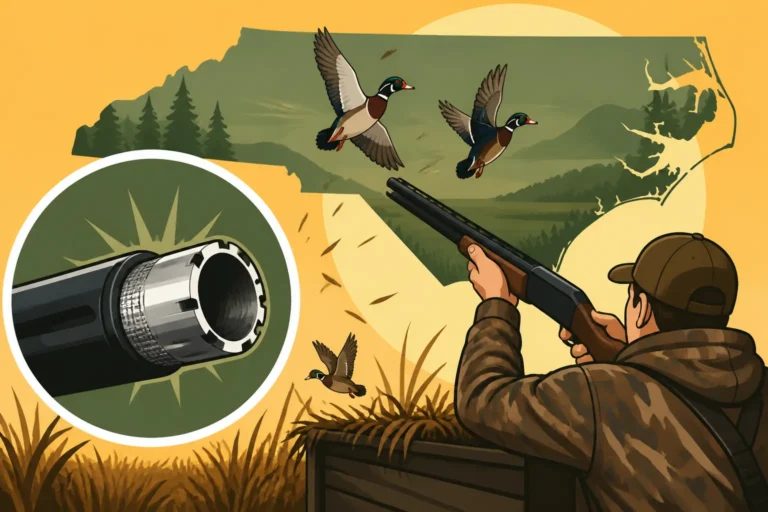
Today, most modern shotguns, especially pumps and semi-automatics, come with "interchangeable choke tubes." These screw into the end of the barrel, allowing the hunter to easily change the choke constriction to match the hunting scenario. This versatility is incredibly valuable. For example, you might screw in an Improved Cylinder choke for close-range grouse in thick woods, then switch to a Modified choke for open-field dove hunting, and even a Full choke for those late-season, high-flying doves or decoyed ducks. The ability to tailor your pattern to the situation dramatically increases your effectiveness and ensures you're putting the right amount of pellets on target at the desired range.
Interchangeable chokes offer the ultimate flexibility for the North Carolina upland hunter. They allow a single shotgun to be adapted for a wide range of conditions and species without compromising performance. It's truly a game-changer for anyone who hunts both grouse and doves, as you can optimize your pattern for the distinct demands of each.
Optimal Chokes for Grouse and Dove
Choosing the right choke for each species is crucial for ethical and effective hunting. The goal is to deliver a dense enough pattern to ensure a clean kill without excessive pellet spread at close range, or too tight a pattern at longer ranges that makes hitting a challenge. Choke Choice for Fast Flushes is particularly important when considering grouse.
For grouse, where shots are typically close and through dense cover, you generally want a wide, forgiving pattern. This increases your chances of hitting the bird before it disappears into the foliage. Therefore, open chokes are usually preferred:
- Skeet (SK): This is the most open choke, providing the widest pattern at close range. Excellent for very close flushes, often under 20 yards.
- Cylinder (Cyl): A true cylinder bore has no constriction, offering a very wide pattern. Similar to Skeet, it's great for close, fast shots.
- Improved Cylinder (IC): Slightly tighter than Skeet or Cylinder, IC still provides a broad pattern but with a bit more density out to 25-30 yards. This is a very popular choice for grouse, offering a good balance of spread and density.
For dove, the situation is different. Doves are fast and often shot at varying ranges, from medium to longer distances. You need a pattern that holds together well at these distances.
- Improved Cylinder (IC): For early season doves, especially over a busy field where many birds are coming in close, IC can be effective. It provides a good balance of spread for fast-moving targets.
- Modified (Mod): This is arguably the most versatile choke for dove hunting. It offers a denser pattern than IC, making it effective for shots out to 35-40 yards, covering most typical dove hunting scenarios. Many hunters start with a Modified choke and adjust as needed.
- Light Modified (LM): A good intermediate between IC and Mod, offering slightly more reach than IC without being as tight as a full Modified.
- Full (F) or Improved Modified (IM): For very high-flying doves, or late-season birds that are warier and offering longer shots, a Full or IM choke can be effective. However, these chokes are very tight and demand precise shooting; they can be too restrictive for closer birds, resulting in missed shots or excessive damage to the bird if hit too close.
It's always a good idea to pattern your shotgun with your chosen ammunition at various distances. This involves shooting at large sheets of paper to see exactly how your choke and load combo spreads the pellets. What one manufacturer calls "Modified" might pattern slightly differently than another, so patterning gives you confidence in your setup.
Ammunition Choices for North Carolina Upland Birds
Choosing the right ammunition is just as critical as selecting the right shotgun and choke. The type of shot, its size, and the shell's power all combine to create the effective pattern and killing power needed for grouse and doves. Using the wrong load can lead to missed opportunities, wounded birds, or excessive meat damage, none of which we want.
Shot Size and Material for Grouse
When hunting grouse in North Carolina, the goal is to put a dense pattern of small pellets on a relatively small, quick-moving target at close range. Therefore, smaller shot sizes are generally preferred. These smaller pellets create a much denser pattern, increasing the likelihood of hitting the bird with multiple pellets for a clean kill.
- #7.5 Shot: This is a very popular and effective size for grouse. It provides a good number of pellets per shell and delivers sufficient energy for a clean kill at typical grouse distances.
- #8 Shot: Slightly smaller than #7.5, #8 shot offers an even denser pattern. Many dedicated grouse hunters swear by #8s for their ability to fill a pattern and take down birds cleanly.
- #9 Shot: The smallest common shot size, #9 shot delivers the densest pattern possible. It's excellent for very close-range grouse, often preferred in open chokes like Skeet or Cylinder. It offers less kinetic energy per pellet, so it's best reserved for the closest shots.
Most grouse hunting is done with traditional lead shot. Lead offers excellent density and affordability. Unlike waterfowl hunting, there are typically no requirements for non-toxic shot for upland birds on most lands. Always check specific regulations for the area you plan to hunt, especially if it's a specific game land or refuge, but generally, lead shot is permissible. Focus on standard upland game loads rather than heavy magnum waterfowl loads; the latter create unnecessary recoil and typically aren't needed for grouse. You want loads that pattern well and are comfortable to shoot rapidly. Shot Size for Grouse and Woodcock can provide further insights.
Shot Size and Material for Dove
Dove hunting typically involves higher volume shooting and often longer shots than grouse hunting. The birds are fast, erratic, and sometimes require a sustained lead. Like grouse, doves are not large birds, so smaller shot sizes are effective, but you need enough energy to ensure penetration at longer ranges.
- #7.5 Shot: An excellent all-around choice for dove hunting. It offers a good balance of pellet count and energy, making it effective for a wide range of shot distances encountered in a dove field.
- #8 Shot: Also a very popular choice for doves, especially for early season birds that might be decoying closer or when you're using a more open choke. It creates a very dense pattern, increasing the odds of connecting with a fast-flying target.
- #6 Shot: Some hunters opt for #6 shot, particularly for later season, warier doves that might be flying higher or when using tighter chokes. While it has fewer pellets, each pellet carries more energy, which can be beneficial for longer shots. However, for most dove hunting, #7.5 or #8 will be more forgiving.
For dove hunting, standard game loads are the most common. You'll likely be shooting many shells, so affordability and recoil management are important. Lead shot is typically permissible for doves, but as with grouse, it's always wise to check local regulations. If you're hunting near water (e.g., a pond within a dove field) or on certain federal lands, non-toxic shot might be required. While steel shot is commonly used for waterfowl, it's less dense than lead, so you might need to go up a shot size (e.g., #6 steel instead of #7.5 lead) to achieve similar energy and pattern density. For most North Carolina dove hunting, though, traditional lead upland loads will serve you well.
Understanding Dram Equivalence and Velocity
When you look at a box of shotgun shells, you'll often see terms like "dram equivalence" and "velocity" (feet per second, or fps). These numbers give you an idea of the shell's power and speed, and understanding them can help you fine-tune your ammunition choice.
Dram Equivalence is a historical measurement that refers to the amount of black powder (measured in drams) that would generate a similar pressure and velocity to the modern smokeless powder load in the shell. While we no longer use black powder, "dram equivalent" is still used as a general indicator of the shell's power and recoil.
- Lighter Loads (e.g., 2 3/4 or 3 dram equiv.): These loads have less powder and typically lighter shot payloads. They produce less recoil and are often preferred for high-volume shooting like dove hunting to reduce fatigue. They are also excellent for grouse where extreme power isn't needed.
- Heavier Loads (e.g., 3 1/4 or 3 3/4 dram equiv. and up): These loads contain more powder and often heavier shot payloads, resulting in more power and higher velocities. They generate more recoil and are typically used for larger game or longer-range shots where maximum energy is required, such as waterfowl or pheasants. They are generally overkill for grouse and doves and will contribute to unnecessary recoil.
Velocity (fps) directly indicates how fast the shot leaves the barrel. Higher velocity means the pellets reach the target quicker, reducing the amount of lead you need to apply to a moving bird.
- Standard Velocities (e.g., 1150-1250 fps): These are common for most upland game loads and offer a good balance of speed and manageable recoil.
- High Velocity Loads (e.g., 1300 fps and up): These loads are faster, which can be advantageous for fast-flying birds like doves, potentially giving you a slight edge in hitting them. However, higher velocity often comes with increased recoil and sometimes compromises pattern quality at longer ranges.
For both grouse and doves, focusing on standard velocity, light-to-mid dram equivalent loads is usually the best approach. These provide sufficient power for a clean kill without excessive recoil, allowing you to shoot more comfortably and accurately, especially during high-volume dove shoots. Always remember that pattern quality is generally more important than sheer velocity or power for these smaller birds.
Essential Accessories and Considerations
Having the right shotgun is only part of the equation for a successful and enjoyable upland hunt in North Carolina. A few key accessories, coupled with diligent maintenance and an unwavering commitment to safety, will elevate your experience and ensure you're prepared for whatever the field throws at you.
Vests, Bags, and Shell Holders
Being able to carry and access your ammunition and gear efficiently is crucial, especially in the varied terrains of North Carolina. The choice of carrying system often depends on whether you're chasing grouse or waiting for doves.
For grouse hunting, an upland vest is almost indispensable. These vests are specifically designed for walking hunters, offering multiple pockets for shells, a large game pouch on the back for carrying harvested birds, and often features like hydration sleeves. A good upland vest distributes weight evenly, allowing you to carry essentials comfortably over rough terrain for hours. Some even come with built-in shooting pads or water bottle holders. A durable vest that can withstand briars and snags is a must in the thick cover of the Blue Ridge. Upland Vests With Water Capacity are excellent for long days in the woods.
For dove hunting, where you might be sitting for long periods, a dove stool or bucket with a padded seat is a luxury many hunters appreciate. Coupled with this, a simple shell bag that clips to your belt or a small shoulder bag will keep your ammunition close at hand. Since you might be shooting multiple boxes of shells, easy access and a way to manage spent hulls are important. Some hunters even use a five-gallon bucket with a snap-on lid, which serves as both a stool and a convenient way to carry shells, water, and collected birds. The key is comfort and efficiency in accessing your shells for those rapid shooting opportunities.
Regardless of the species, having a dedicated way to carry your shells ensures you're not fumbling when a bird flushes or a flock flies in. Speed and preparedness are key in upland hunting.
Cleaning and Maintenance for Longevity
North Carolina's climate can be brutal on firearms, particularly during hunting seasons. From damp mountain fog to coastal humidity, moisture is a constant threat. Therefore, diligent cleaning and maintenance of your shotgun are not just about aesthetics; they are critical for ensuring reliability, safety, and the longevity of your investment. A well-maintained shotgun is a dependable shotgun.
After every hunting trip, especially if the gun has been exposed to moisture, dirt, or dust, a thorough cleaning is in order. This typically involves:
- Safety First: Always ensure the gun is unloaded and pointed in a safe direction.
- Bore Cleaning: Run a bore snake or cleaning rod with a patch soaked in bore cleaner through the barrel to remove powder residue and lead/plastic fouling. Follow with dry patches until clean.
- Action Cleaning: For pumps and semi-automatics, pay special attention to the action components. Remove any built-up carbon, old grease, and grime. A stiff brush and gun cleaner are essential here. For semi-autos, the gas system components are particularly important to keep clean for reliable cycling. Break-actions are generally simpler, requiring less intricate action cleaning.
- Lubrication: Apply a thin layer of quality gun oil to all moving parts and friction points. Don't over-lubricate, as this can attract dirt.
- Rust Prevention: Wipe down all external metal surfaces with an oiled cloth, paying close attention to the barrel, receiver, and any exposed parts. This forms a protective barrier against rust.
Neglecting cleaning, particularly in North Carolina's humid environment, can lead to rust, pitting in the bore, and malfunctions. A rusty spring or a fouled gas system can cause a misfire or a jam at the worst possible moment. For grouse hunting, where you might be walking through rain or dew, paying extra attention to wiping down the gun is vital. For dove hunting, where you're shooting a lot of rounds, carbon buildup can quickly affect semi-auto reliability. Regular, thorough cleaning will keep your shotgun performing flawlessly for years to come.
Eye and Ear Protection: Non-Negotiable Safety
While often overlooked, eye and ear protection are perhaps the most crucial accessories for any shotgun hunter. The loud report of a shotgun, especially in an enclosed space like a shooting range or a busy dove field with multiple hunters, can cause permanent hearing damage over time. Similarly, protecting your eyes from stray pellets, ejected shells, twigs, or even unexpected ricochets is paramount.
For ear protection, options range from simple foam earplugs (effective and affordable) to passive earmuffs, and active electronic earmuffs. Electronic earmuffs are a fantastic investment for hunters because they amplify ambient sounds (like bird flushes, dog commands, or conversation) while instantly suppressing harmful gunshot noises. This allows you to communicate and stay aware of your surroundings without sacrificing hearing protection. This is particularly valuable on a busy dove field where you need to hear other hunters' calls or incoming birds, or when hunting with a dog.
For eye protection, shooting glasses are essential. They should be impact-resistant (polycarbonate lenses are standard) and offer good coverage. Clear lenses are good for low-light conditions, while amber or yellow lenses can enhance contrast on cloudy days or in shaded timber, making birds easier to spot. Gray or polarized lenses are excellent for bright, sunny conditions. Many hunters opt for interchangeable lens systems to adapt to varying light. Never compromise on eye and ear protection; your senses are too valuable to risk. These aren't optional extras; they're vital pieces of safety equipment that should be part of every hunter's kit, every single time they go afield.
Public Land Realities and Ethical Considerations
Hunting on public lands in North Carolina offers incredible opportunities, but it also comes with unique challenges and responsibilities. Understanding these dynamics and upholding ethical hunting practices are just as important as knowing your shotgun inside and out. It’s about being a good steward of the resource and a respectful member of the hunting community.
Hunting Pressure and Etiquette on Game Lands
North Carolina's public game lands and national forests are treasured resources, but their accessibility means they can experience significant hunting pressure, especially on opening weekends or during peak seasons. You might encounter other hunters, dog walkers, hikers, or even mountain bikers, particularly in certain areas. This reality necessitates a heightened sense of awareness and adherence to proper hunting etiquette. Hunting Pressure on North Carolina Public Land is a common concern.
When hunting grouse in the mountains, this means being mindful of where other hunters might be. Spreading out, choosing less accessible areas, and being aware of other vehicles or signs of presence can help avoid conflicts. For dove hunting, especially on managed public dove fields, it's crucial to stick to designated hunting spots or maintain a respectful distance from other hunters. Never shoot into another hunter's zone or line of fire. Communication and common courtesy go a long way in ensuring a safe and enjoyable experience for everyone.
Your shotgun choice itself can even play a small role. While a loud pump-action might be thrilling, knowing its sound carries can influence where and when you decide to cycle it. Respect for other users of public land, even non-hunters, is paramount. We represent the hunting community, and our actions directly impact public perception of our sport. Always leave an area cleaner than you found it, minimize your impact, and be courteous to everyone you encounter.
Blaze Orange and Safety Requirements
North Carolina has clear regulations regarding blaze orange (or blaze pink) requirements for hunters, and these apply to small game hunting as well as big game. These regulations are designed to enhance safety by making hunters visible to each other, especially in dense cover. It's not just a good idea; it's the law, and vital for your safety. How Much Blaze Orange North Carolina Requires can vary by the type of hunting and location, so always check the most current regulations before heading out.
Typically, when hunting small game like grouse and doves during open big game seasons, or on game lands where hunter visibility is paramount, you'll need to wear a minimum amount of blaze orange (or pink). This usually involves an outer garment visible from all sides, such as a vest or hat. Even when big game seasons are closed, many upland hunters choose to wear some blaze orange, especially when walking through dense woods or when hunting with a dog, simply for added safety.
For grouse hunting in thick mountain cover, blaze orange is absolutely critical. A grouse hunter is often moving through heavy brush, making them inherently less visible. A flash of orange can prevent a tragic accident. For dove hunting in an open field, while the cover might be less dense, the presence of multiple shooters and the need for clear shooting lanes make visibility equally important. Never skimp on blaze orange; it's your most important piece of safety gear after knowing how to handle your firearm.
Responsible Shooting and Retriever Use
Ethical hunting dictates that we strive for clean, humane kills and minimize the loss of wounded game. This means taking responsible shots within your effective range and utilizing every tool at your disposal to recover downed birds. For both grouse and doves, responsible shooting is paramount.
Responsible Shooting:
- Know Your Range: Understand the effective range of your chosen shotgun, choke, and ammunition combination. Don't take Hail Mary shots at birds that are too far away. A wounded bird that flies off to die is a wasted resource and an ethical failure.
- Clear Shot: Ensure you have a clear, safe shot. Don't shoot at birds in line with other hunters, structures, or beyond the safe zone. For grouse, make sure you're not shooting into thick brush that would make recovery impossible. For doves, confirm your background is clear.
- Lead Properly: Practice your lead on flying targets. Doves require significant lead due to their speed. Grouse, though closer, still require a quick, accurate lead. Practice clay shooting to hone these skills.
Retriever Use:
A well-trained retriever is an invaluable asset for any upland hunter, especially for doves. Doves can fall in dense grass, crops, or even water, and their small size makes them incredibly difficult to find without a dog. A good retriever not only minimizes lost birds (which is an ethical imperative) but also speeds up the recovery process, allowing you to get back to hunting faster. For grouse, a flushing dog can help you locate birds, and a retriever can recover them from thickets that a human might struggle to penetrate. Investing in training a Bird Dog Gear for North Carolina Cover or hunting with someone who has one is highly recommended. It’s an investment in conservation and your own success. Even if you don't own a dog, make every effort to mark where your bird falls and search diligently to recover it.
Finding Your Perfect North Carolina Upland Shotgun
After diving deep into action types, gauges, barrel lengths, chokes, and ammo, you might still feel like there's a lot to consider. And you're right! But ultimately, the "perfect" shotgun isn't just about specifications; it's about what feels right in your hands, what you shoot well, and what you enjoy carrying afield.
Trying Before You Buy: Test Drives and Gun Fits
This is perhaps the single most important piece of advice when choosing any firearm, especially a shotgun for fast-paced upland hunting: try before you buy. Shotguns, more than rifles, are incredibly dependent on "fit." A gun that fits you properly will shoulder naturally, point instinctively, and allow your eye to align perfectly with the rib, without conscious effort. A poorly fitting gun will feel awkward, force you to crane your neck, or consistently shoot high or low, no matter how much you practice.
If possible, visit a local gun store that allows you to shoulder different models (unloaded, of course!). Better yet, find a shooting range that rents shotguns or connect with friends who have various models. This allows you to actually shoot different gauges, action types, and barrel lengths. Pay attention to:
- Balance: Does it feel front-heavy, back-heavy, or balanced in your hands?
- Weight: Can you comfortably carry it all day?
- Shouldering: Does it come to your shoulder smoothly and quickly, with your eye naturally aligned down the rib?
- Recoil: How does the recoil feel with typical hunting loads? Can you manage it comfortably for multiple shots?
Don't be swayed solely by brand names or what someone else shoots. What works for your hunting buddy, who might be six inches taller or twenty pounds heavier, might not work for you. A shotgun that fits you well will immediately make you a more confident and effective shooter, and that's an investment worth making.
Budgeting for Your Upland Investment
Shotguns span a vast price range, from entry-level pumps that are highly effective to custom-fitted, exquisitely engraved break-actions that cost more than a new car. It's easy to get caught up in the allure of high-end firearms, but remember that a high price tag doesn't automatically make a gun better for you or more effective in the field.
When budgeting, consider:
- Your Primary Use: Are you a casual hunter who goes out a few times a year, or a dedicated upland fanatic who spends every available weekend chasing birds?
- Prioritize Function: For a working upland gun, prioritize reliability, fit, and durability over cosmetic flourishes. A dependable, well-fitting pump or semi-auto in the mid-price range will bring you far more success and satisfaction than an expensive gun that doesn't fit you or that you're afraid to scratch.
- New vs. Used: Don't shy away from the used market! Many excellent shotguns are available at a fraction of their new price. Just be sure to inspect any used gun thoroughly for wear, rust, or damage, and ideally, have a trusted gunsmith check it over.
- Consider Ammunition Costs: Remember that the cost of shells, especially for high-volume dove shooting, will quickly add up. Factor this into your overall hunting budget.
An effective upland shotgun doesn't have to break the bank. Many manufacturers offer excellent, reliable options across all action types that are perfectly suited for North Carolina grouse and doves without requiring a second mortgage.
Personal Preference Trumps All
Ultimately, the best shotgun for North Carolina grouse and doves is the one that you shoot the best, the one that you carry comfortably, and the one that brings you the most joy in the field. All the technical specifications, expert recommendations, and historical preferences in the world fade into the background if a particular gun just doesn't feel right for you.
Perhaps you love the satisfying "shuck-shuck" of a pump-action and find its rugged reliability comforting in the deep woods. Or maybe the elegant lines of an over/under, with its two distinct chokes, perfectly suits your precise shooting style on grouse. You might prefer the soft recoil and rapid fire of a semi-automatic for those intense dove shoots. There's no wrong answer here.
What truly makes a hunter effective is confidence and practice. Once you've found a shotgun that fits you well and feels good, spend time with it. Pattern it with different loads. Practice shouldering it quickly. Take it to the skeet or trap range. The more familiar you are with your firearm, the more instinctive your movements will become, and the more successful and enjoyable your hunts for North Carolina's challenging upland birds will be. Happy hunting!
Disclaimer
This article is for general informational purposes only and does not constitute professional advice. Laws, prices and regulations vary by location and change over time. Consult a qualified professional for guidance on your specific situation.