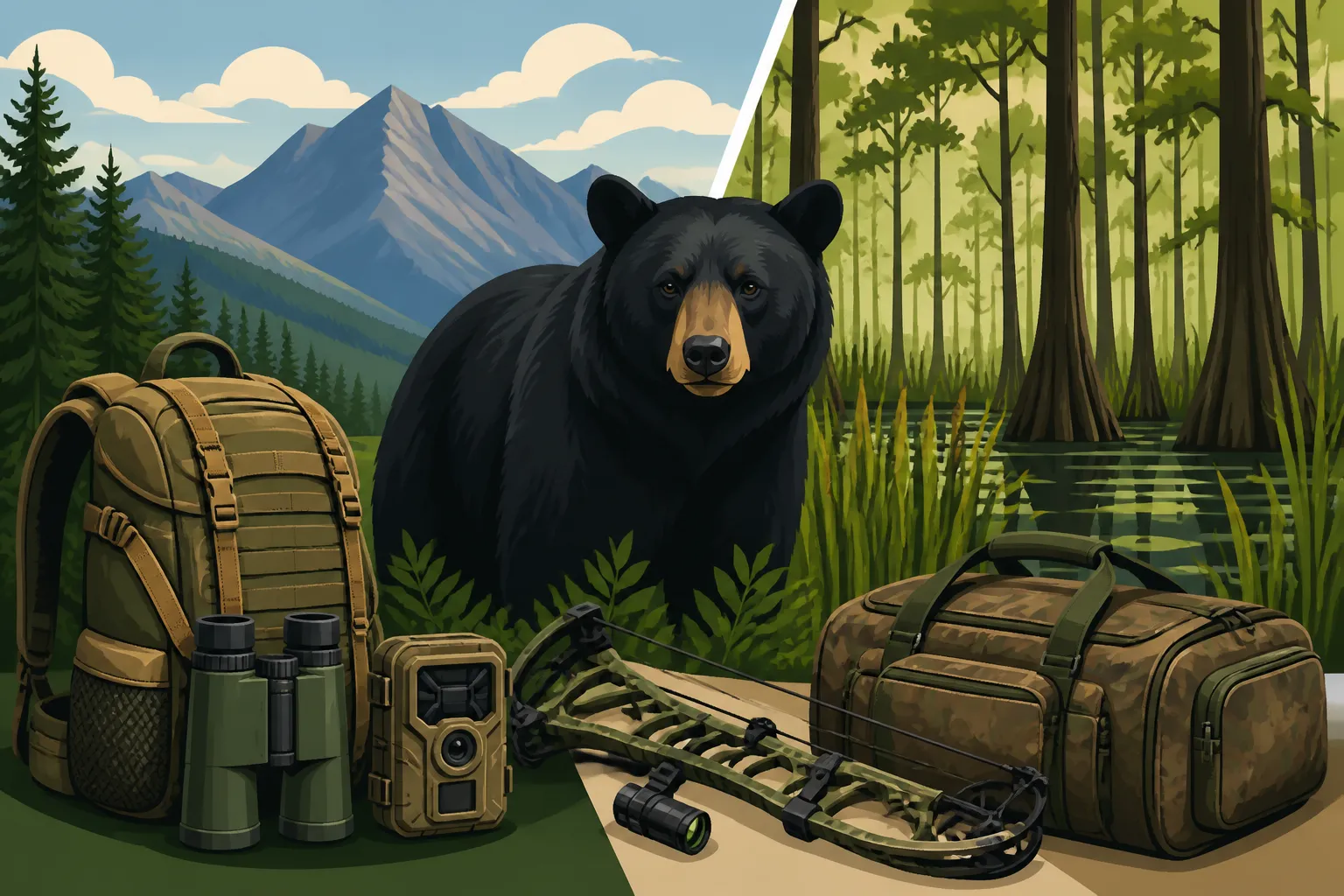
Bear Hunting Gear in the Mountains and Pocosins
Hunting North Carolina's black bears presents some truly unique challenges, whether you're climbing a steep Blue Ridge slope or slogging through a dense coastal pocosin. The sheer size and power of these animals, combined with the often-gnarly terrain they call home, demand a very specific set of gear to ensure both success and safety. This guide will walk you through everything you need to consider, from the rifle in your hand to the boots on your feet, so you can be prepared for whatever the North Carolina bear woods throw at you.
Understanding North Carolina's Bear Habitats and Their Gear Demands
North Carolina is a hunter's paradise for black bears, but it's not a monolithic landscape. Our bears thrive in two wildly different environments: the rugged, unforgiving Appalachian Mountains and the vast, wet, and often impenetrable pocosins of the Coastal Plain. Each of these distinct habitats demands a different approach to gear, and what works well in one might leave you feeling miserably unprepared in the other. Understanding these differences is the first step to building your ideal bear hunting kit.
Mountain Terrain Challenges and Gear Needs
When you think of bear hunting in North Carolina's mountains, you're picturing steep climbs, rocky terrain, dense rhododendron thickets, and deep, dark coves. The air can be crisp in the fall, turning bitterly cold with an early winter snow. You might be hiking for miles, gaining and losing hundreds of feet of elevation in a single day. This isn't flatland hunting; it's a true physical and mental test. Your gear needs to reflect this reality.
For starters, quietness is paramount. The leaves underfoot can be crunchy, but your clothing needs to be silent as you stalk through brush. Durability is also key. You'll be brushing against briars, scrambling over downed timber, and rubbing up against rocks. Flimsy gear won't last a single season. Protection from the elements is also a major concern, as mountain weather can shift dramatically from sunshine to sleet in a matter of hours. Think about insulation that works even when damp, and outerwear that sheds rain like a duck's back. Carrying your gear efficiently is also important; every ounce counts when you're climbing, so a well-designed pack is crucial. When you're scouting Finding Sign in Big Pisgah Timber, you'll quickly realize how tough this environment can be on your equipment.
Pocosin Swamp Navigation and Gear Considerations
Now, imagine the exact opposite: the Coastal Plain's pocosins and vast swamps. Here, the challenge isn't elevation, but rather the sheer density of vegetation, the constant moisture, and the almost soup-like ground conditions. These areas, like those found in Croatan National Forest, are often a tangled mess of stunted trees, thick briars, and standing water, sometimes chest-deep. The humidity can be oppressive, even in the cooler months, and mosquitoes or other biting insects can be a persistent nuisance.
In a pocosin, your gear priorities shift dramatically. Waterproofing becomes the absolute king. Not just water-resistant, but truly waterproof from head to toe. Your boots need to be tall and capable of handling deep mud and standing water, or you might even opt for chest waders. Breathability is also important to prevent overheating and sweating out, which can become dangerous if temperatures drop. Durability against thorns and snags is just as critical as in the mountains, if not more so, as you'll be pushing through incredibly dense cover. Think about lightweight, quick-drying materials. Navigation gear is also paramount in these disorienting environments; it's incredibly easy to get turned around when every direction looks the same. Hunters who spend time Hunting Coastal Plain Pocosin Swamps know the value of specialized gear for staying dry and oriented.
Essential Firearms and Ammunition for North Carolina Bears
Choosing the right firearm and ammunition for North Carolina bear hunting is a critical decision. Bears are tough, powerful animals, and you want a setup that delivers ethical, decisive results. While some folks might debate specific calibers, the general consensus centers on reliable stopping power and the ability to punch through thick hides and bone.
Rifle Caliber Selection for Black Bears
For black bears, you're generally looking for a rifle chambered in a cartridge known for its energy and penetration. Popular choices often include cartridges like the .30-06 Springfield, .308 Winchester, .270 Winchester, and the 6.5 Creedmoor. Stepping up, magnum cartridges like the .300 Winchester Magnum or .338 Winchester Magnum are certainly effective, though often more than what's strictly needed for North Carolina's black bears and might bring more recoil than some hunters are comfortable with. The key is to choose a caliber you can shoot accurately under pressure.
A .30-06, for example, has been a workhorse for North Carolina hunters for generations. It delivers excellent energy and bullet weight, making it a fantastic all-around choice for deer and bear. The .308 Winchester offers similar performance in a more compact package, often favored in shorter, handier rifles, which can be a real plus when navigating thick timber or getting into a treestand. Even a well-placed shot from a .270 can be lethal on a bear, especially with modern bullet designs. For those looking for more detail, a deep dive into Best Rifle Caliber for North Carolina Deer often covers many of the same considerations relevant for bear, albeit with a focus on heavier bullets for bear.
Ammunition and Shot Placement
Beyond the caliber, the specific ammunition you load into your rifle is arguably even more important for bear hunting. You don't want a fragile, rapidly expanding bullet designed for smaller game. Instead, opt for a premium, heavy-for-caliber bullet that's engineered for deep penetration and controlled expansion. Look for terms like "bonded," "partitioned," or "solid copper" when selecting your bear loads. These bullets retain a high percentage of their weight, driving deep through muscle, fat, and bone to reach vital organs.
Shot placement is, of course, absolutely paramount. A bear's vitals are generally lower and further forward than a deer's. Aim for the "crease" behind the shoulder, slightly lower than you might for a whitetail, to hit the heart and lungs. If the bear is quartering away, aim to exit through the opposite shoulder. Avoid shoulder shots on a broadside bear if possible, as their heavy shoulder bones can absorb a lot of energy. A head-on shot is incredibly risky and generally discouraged unless it's an absolute last resort at very close range. Practice shooting from various positions, including standing and kneeling, to prepare for real-world hunting scenarios.
Handguns and Muzzleloaders for Bear
Some North Carolina hunters also pursue bears with handguns or muzzleloaders, adding an extra layer of challenge and skill. For handguns, you'll need a powerful cartridge like a .44 Magnum, .454 Casull, or a 10mm Auto, loaded with heavy, hard-cast or controlled-expansion bullets. Handgun hunting for bear is typically a close-range affair, demanding exceptional marksmanship and nerve. Ensure your chosen handgun and load are legal under North Carolina regulations and that you've practiced extensively to place your shots accurately.
Muzzleloaders, often used during specific seasons, also require careful consideration. Many modern in-line muzzleloaders can achieve impressive accuracy and energy with saboted bullets. Again, choose heavy-for-caliber, hard-hitting projectiles designed for large game. Keeping your powder dry in North Carolina's often damp conditions is crucial for muzzleloader success. This might mean using weatherproof primers, sealing the bore, or carrying a compact, dry kit for reloading. The challenge of hunting bears with these traditional tools is immense, but the satisfaction of a successful hunt with a muzzleloader or handgun is equally great. Make sure you understand Muzzleloaders Under North Carolina Rules before heading out.
Optics for Spotting and Tracking Bears
Effective optics are just as crucial as your firearm, especially when targeting a savvy black bear that often stays hidden in dense cover. From locating distant movement to confirming your shot, binoculars, rifle scopes, and rangefinders each play a vital role in a successful and ethical bear hunt.
Binoculars for Scouting and Glassing
A good pair of binoculars is your primary scouting tool, whether you're sitting on a mountain overlook or peeking into the edge of a vast pocosin. For bear hunting, you'll want a balance of magnification, light-gathering ability, and a wide field of view. An 8x or 10x magnification is usually ideal. Higher magnifications can be harder to hold steady without a tripod, and can narrow your field of view too much in thick woods. Quality glass, even in dim light, can make the difference between spotting a bear's dark outline against a shadowed hillside and walking right past it. Brands like Vortex, Leupold, and Maven offer excellent options that strike this balance.
When hunting in the mountains, you'll use your binoculars extensively to scan distant clear-cuts, acorn flats, or open timber for any sign of bear activity. In the coastal swamps, they become invaluable for picking apart dense thickets, spotting subtle movements, or identifying a bear's silhouette in the low light of a morning or evening hunt. Some hunters even mount their binoculars on a tripod for extended glassing sessions, especially when hunting from a fixed position with a wide view. This greatly reduces arm fatigue and minimizes shake, allowing for longer, more effective scanning. Consider a good harness system to keep your binoculars secure, accessible, and comfortable during long hikes.
Rifle Scopes for Accurate Shot Placement
Your rifle scope needs to be robust, reliable, and clear enough to provide a precise aiming point in varying light conditions. For North Carolina bear hunting, a variable power scope with a lower magnification range (e.g., 2-7x, 3-9x, or even 1-6x) is often perfectly suitable, especially if most of your shots are within 150-200 yards in relatively thick cover. High magnification scopes aren't typically necessary and can actually hinder quick target acquisition at closer ranges. The ability to dial down the magnification provides a wider field of view, which is crucial for finding a bear quickly as it moves through brush.
Look for a scope with good light transmission, especially for those crucial dawn and dusk hours when bears are most active. A larger objective lens (e.g., 40mm or 42mm) can help gather more light. A simple, uncluttered reticle is often best for quick, confident aiming. Durability is also a huge factor; your scope will take a beating in the North Carolina woods, so choose one known for its shock resistance and fog-proof performance. An illuminated reticle can be a game-changer in low-light situations, providing a clear aiming point without obscuring your target. Always ensure your scope is properly mounted and zeroed before the season begins.
Rangefinders in Varied Cover
A rangefinder is an indispensable tool for ethical shot placement on bears. While ranges in North Carolina's thick cover might not often exceed a couple of hundred yards, knowing the exact distance is still critical. A small error in range estimation on a large animal can lead to a wounded bear and a long, difficult tracking job. A laser rangefinder gives you instant, accurate distances to your target, allowing you to make precise holdover or hold-under adjustments.
Modern rangefinders are compact and easy to use. Look for one that offers good performance in varied lighting and through light obstructions like brush or rain. Some models even feature incline/decline compensation, which is incredibly useful when shooting up or down steep mountain slopes. Before your hunt, practice ranging objects at various distances and angles to become proficient with your device. Many hunters, especially those using platforms like GoHunt to plan their expeditions, find that combining detailed mapping with a reliable rangefinder gives them an unparalleled advantage in unfamiliar territory. Even in dense coastal thickets where shots are close, knowing that a bear is exactly 50 yards away versus an estimated 70 can make all the difference in where your bullet impacts.
Clothing and Layering for Diverse North Carolina Weather
North Carolina's weather can be notoriously fickle, especially during hunting season. A single bear hunt might start with a crisp, cool morning, warm up to a humid afternoon, and end with a sudden downpour or a chilling evening breeze. Dressing appropriately, with a focus on effective layering, is paramount for comfort, safety, and success in the bear woods.
Outerwear for Rain and Cold
Your outermost layer is your shield against the elements. For North Carolina, this means serious rain protection. A high-quality waterproof and windproof jacket and pants are non-negotiable, particularly when hunting in the coastal swamps or during late-season mountain hunts. Look for Gore-Tex or similar proprietary waterproof-breathable membranes. These fabrics allow perspiration to escape while preventing rain from getting in, which is crucial for staying dry and comfortable. A jacket with a hood is also a big plus for keeping rain off your neck and head.
Beyond waterproofing, consider insulation. For colder mountain hunts, an insulated waterproof jacket is ideal, perhaps with a synthetic fill that retains warmth even when wet. In the coastal plain, a lighter, shell-style waterproof layer might be all you need over your base and mid-layers, as physical exertion often keeps you warm enough. The goal is to avoid getting soaked and chilled, which can quickly turn a hunt miserable or even dangerous. Many seasoned hunters swear by durable, quiet fabrics that won't snag on briars or create excess noise when moving through brush.
Layering Systems for Temperature Fluctuations
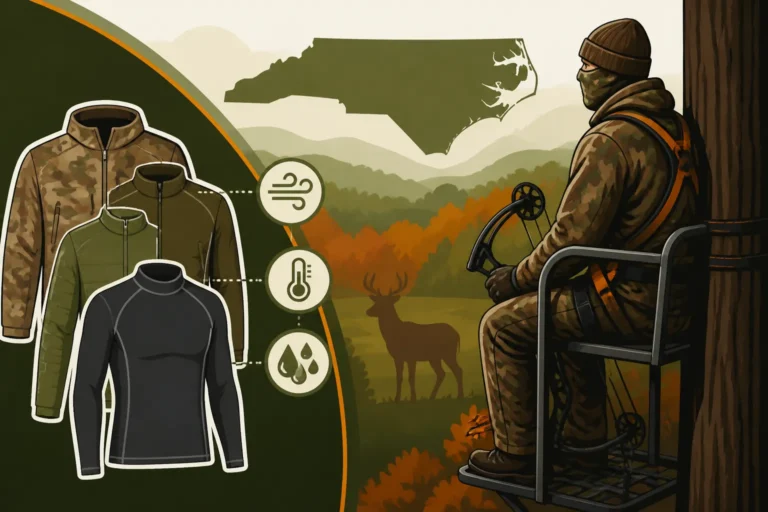
The key to adapting to North Carolina's variable weather is a versatile layering system. Start with a moisture-wicking base layer next to your skin. This could be merino wool or a synthetic fabric, both excellent at pulling sweat away from your body to keep you dry. Avoid cotton at all costs; once wet, cotton loses its insulating properties and takes forever to dry, leading to a chilling effect.
Next, add a mid-layer for insulation. This might be a fleece jacket, a puffy synthetic vest, or a thicker merino wool top. You can add or remove this layer as temperatures rise or fall, or as your activity level changes. For example, you might wear a heavier mid-layer during a cold morning sit, then shed it for a lighter option once you start a strenuous hike up a ridge. Finally, your outer shell goes over everything, providing protection from wind and rain. This system allows you to adjust your insulation on the fly, ensuring you stay comfortable and focused on the hunt. Think about quiet fabrics for each layer; nothing spooks a bear faster than noisy clothing.
Blaze Orange Requirements and Visibility
Safety is always a top priority, and that includes being visible to other hunters, especially during North Carolina's peak bear seasons which often overlap with deer seasons. North Carolina has specific regulations regarding blaze orange (or blaze pink) requirements for hunters. Generally, a certain amount of visible blaze orange is required during firearms seasons, particularly on game lands. Always check the current regulations before you head afield.
This blaze orange isn't just about meeting the legal requirement; it's about protecting yourself. A blaze orange vest, hat, or full outerwear helps you stand out from the natural landscape, making you easily identifiable to fellow hunters. While a bear's color vision isn't like ours, they likely perceive it differently than other colors, but the main purpose is for human safety. Ensure your blaze orange is highly visible from all directions. Even if you're hunting in an archery-only zone during bear season, if other firearms seasons are open in the same area, it's wise to wear some orange, particularly when moving. For detailed information on specific requirements, consult North Carolina Blaze Orange Requirements.
Footwear for Rugged Mountain Terrain and Swampy Lowlands
Your feet are your foundation, especially when hunting North Carolina's challenging bear habitats. The right footwear isn't just about comfort; it's about safety, endurance, and ensuring you can get to where the bears are and get back out again. Poor footwear can quickly ruin a hunt, leading to blisters, soaked feet, or even injuries.
Mountain Boots for Steep Climbs
When you're tackling the vertical world of the North Carolina mountains, your boots need to be robust, offer excellent ankle support, and have aggressive outsoles for superior traction. Imagine scrambling up a slick, leaf-covered slope or traversing a rocky stream bed – you need confidence in every step. Look for boots that are designed for rugged terrain, often referred to as "backpacking" or "mountain hunting" boots. They typically feature stiff soles that prevent foot fatigue on uneven ground, rigid ankle support to protect against twists and sprains, and durable, waterproof leather or synthetic uppers.
Waterproofing is still important here, as mountain streams, morning dew, and sudden rain showers are common. Gore-Tex or similar membranes are excellent choices. While warmth is a factor, avoid overly insulated boots unless you're specifically hunting in deep winter snow, as you'll often be generating a lot of heat through exertion. Breathability is a good compromise. Fit is absolutely crucial: try on boots with the kind of socks you'll wear, and walk around extensively. Pay attention to heel lift and pressure points. A well-fitting, broken-in pair of mountain boots can be the difference between a successful, comfortable hunt and a miserable trek back to the truck.
Swamp Boots and Waders for Wet Environments
Now, shift your focus to the coastal plain's swamps, pocosins, and creek bottoms. Here, the primary enemy is water, and often deep, sticky mud. Your typical mountain boots simply won't cut it. You'll need tall, waterproof rubber boots, or even chest waders, to stay dry and keep moving. Rubber boots are generally a favorite for their complete waterproofing and ease of cleaning after slogging through mud. Look for models with good traction on wet, slick surfaces and thick enough rubber to resist punctures from briars or submerged sticks. Neoprene-lined rubber boots offer extra warmth for colder, wet conditions, while unlined versions are better for warmer, humid swamp hunts.
For extremely wet areas, like some parts of the Croatan National Forest or when you're Recovering a Deer From a Coastal Swamp (which applies just as much to bears!), chest waders might be the only option. Breathable waders are far more comfortable than traditional neoprene if you're doing a lot of walking, as they help prevent overheating. If you're using waders, ensure they have sturdy boots attached, or wear appropriate wading boots over stockingfoot waders. Whichever you choose, test them for leaks before the season, and always carry a change of clothes in your vehicle, just in case.
Socks and Foot Care
Often overlooked, the right socks are just as important as your boots. High-quality wool or synthetic blend socks are essential. They wick moisture away from your feet, provide cushioning, and help prevent blisters. Avoid cotton socks at all costs, as they hold moisture and lead to cold, blistered feet. Many hunters prefer a two-sock system: a thin liner sock made of synthetic material directly against the skin to wick moisture, and a thicker wool or synthetic outer sock for cushioning and insulation.
Proper foot care extends beyond socks. Keep your toenails trimmed, and consider applying anti-chafing balm to areas prone to rubbing before a long hike. If you feel a hot spot developing, stop immediately and address it. A small piece of moleskin applied early can prevent a debilitating blister. When you get back to camp, air out your boots and let your feet breathe. Dry, well-cared-for feet are happy feet, and happy feet mean you can hunt harder and longer in the North Carolina bear woods.
Packs and Carries for the Backcountry Hunter
A well-chosen pack is more than just a place to stash your gear; it's an extension of your body, allowing you to comfortably and efficiently carry everything you need for a day (or even several days) in the bear woods. From your lunch and water to your essential safety items, and especially for hauling out meat, your pack needs to be up to the task.
Day Packs for Short Hunts
For most single-day bear hunts in North Carolina, especially if you're not planning to pack out an entire bear, a quality day pack is sufficient. This type of pack should be robust enough to handle the abuse of the backcountry, yet streamlined enough not to snag on every branch. Look for a capacity of 1,500 to 3,000 cubic inches, depending on how much gear you typically carry. It should have comfortable shoulder straps and a hip belt to distribute weight, especially if you're carrying a rifle or substantial water.
Essential items for a day pack include water, snacks, a first-aid kit, a headlamp, navigation tools (GPS or map and compass), a knife, fire-starting materials, extra layers of clothing, and any permits or licenses. A well-organized pack with multiple compartments helps keep everything accessible. External compression straps are useful for securing a jacket or even lashing a small treestand if you're hunting from a fixed position. The key is to pack smart, carrying only what you truly need to minimize weight while ensuring you're prepared for unexpected situations. Many successful hunters use apps like GoHunt to scout access points and then carry a day pack for the final approach into prime habitat.
Frame Packs for Meat Hauls
This is where bear hunting gets serious. If you're fortunate enough to harvest a bear in North Carolina's backcountry, particularly in the mountains or deep within a coastal swamp, you'll face the monumental task of packing it out. A bear can weigh anywhere from 150 to over 500 pounds, and you simply cannot drag an entire animal out of some of these remote locations. This is where an external or internal frame pack designed for heavy loads comes into its own.
A dedicated frame pack (or a hunting pack with a robust internal frame and meat shelf) allows you to bone out the bear in the field and pack the meat, hide, and skull out in manageable loads. These packs are designed to transfer weight efficiently to your hips, protecting your shoulders and back. Look for capacities upwards of 4,000-5,000 cubic inches, and a sturdy frame that can handle 100+ pounds. Features like robust compression straps, durable fabrics, and easy access to meat compartments are essential. Practicing with a weighted pack before the season can significantly improve your endurance and reduce the risk of injury when it comes time for the real thing. This is a piece of gear you hope to use, but absolutely must have if you're hunting in remote areas.
Essential Survival and Safety Gear
Beyond your hunting-specific items, every bear hunter's pack should contain essential survival and safety gear. The North Carolina backcountry, particularly in the vast national forests like Pisgah and Nantahala, can be unforgiving if you get lost or injured. Always carry a reliable navigation system. This could be a dedicated GPS unit, a smartphone with robust hunting apps (like GoHunt, which can save maps for offline use), and always, always a physical map and compass, and know how to use them.
Other critical items include a high-quality first-aid kit with items for cuts, blisters, and sprains. A fire-starting kit (waterproof matches, lighter, fire steel) is vital for warmth and signaling. A whistle can signal for help if you're lost or injured. Carry enough water for the day, and consider a water filter or purification tablets. A small multi-tool or a fixed-blade knife is invaluable. Finally, always tell someone where you're going and when you expect to return, especially if you're hunting alone. Being prepared for an unexpected night out or an injury can literally save your life.
Hunting Methods and Associated Gear
North Carolina bear hunting isn't a one-size-fits-all endeavor. The tactics you employ often dictate the specific gear you'll need. Whether you're patiently waiting in a stand, meticulously still-hunting through the timber, or participating in a traditional hound hunt, your equipment choices will reflect your approach.
Still-Hunting and Stand Hunting Gear
Still-hunting involves moving slowly and deliberately through the woods, stopping frequently to scan and listen. This method demands lightweight, silent gear. Your clothing needs to be quiet, allowing you to brush past branches without making noise. Footwear should be quiet and offer good ground feel to detect twigs and leaves before stepping on them. A compact day pack with essential items is perfect, minimizing bulk. Binoculars are critical for picking apart cover ahead of you. A sturdy sling on your rifle can also be helpful for carrying it comfortably for long periods, ready for a quick shot. Still-hunting requires immense patience and an intimate knowledge of bear behavior and habitat, as well as gear that won't give you away. Still-Hunting Nantahala Forest Ridges is a prime example of where this method shines, and where silent gear is key.
Stand hunting, whether from a ground blind or a treestand, involves waiting for the bear to come to you. This approach often requires more comfort-oriented gear for long sits. A comfortable, quiet treestand or ground blind is paramount. For treestands, safety harnesses and lifelines are absolutely essential. Consider insulated clothing layers, as sitting still in cold weather can quickly lead to a chill. Hand warmers, a thermos of hot coffee, and comfortable seating are all welcome additions. For ground blinds, bringing a small, comfortable chair or stool can make a huge difference. You'll also want to bring quiet snacks and drinks to avoid making noise. A good rangefinder is invaluable for pre-ranging distances from your stand to potential shooting lanes.
Hound Hunting Specifics
Hound hunting for bears is a deeply ingrained tradition in many parts of North Carolina, particularly in the mountain and coastal regions where it's legally permitted. This method involves using trained dogs to track and bay a bear, allowing hunters to close the distance. The gear requirements for hound hunting are quite distinct. Hunters often follow the dogs on foot, so durable, briar-resistant clothing and sturdy boots are essential. Many hound hunters use cut vests for their dogs, which protect them from thorns and tusks.
Communication devices are also critical. GPS collars on the dogs allow handlers to track their location and movement in real-time, often displayed on a handheld unit or smartphone. Two-way radios are common for communication among the hunting party. A sidearm (like a powerful handgun) is sometimes carried as a backup, particularly in close-quarters situations. The pace can be fast and physically demanding, so a lightweight pack with water, first-aid, and basic tools is advisable. Understanding Running Hounds Where North Carolina Allows It is vital, as regulations vary and specific permits might be required.
Bear Baiting Gear
While baiting bears is illegal on public lands in North Carolina, it is permitted on private land in some areas. If you're hunting over bait, your gear needs will shift again. The most obvious item is the bait itself, and a secure way to hold it, such as a bear-resistant barrel or feeder. Trail cameras are invaluable for monitoring bait sites, identifying specific bears, and understanding their visiting patterns. You'll need reliable trail cameras with good battery life, suitable for capturing images and video in varied lighting.
Beyond the bait setup, you'll still need your primary hunting gear—rifle, optics, appropriate clothing for sitting—as baiting often involves long waits in a stand or blind. Consider a comfortable ground blind or treestand positioned strategically downwind from the bait. You'll also need a way to transport the bait to your site, which might involve a sturdy ATV or a heavy-duty cart, depending on accessibility. Always be meticulous about scent control when approaching and leaving a bait site, as bears have an incredible sense of smell.
Post-Harvest Gear and Meat Care
Harvesting a North Carolina black bear is an incredible accomplishment, but the work is far from over once the shot is fired. The sheer size of a bear, combined with often warm temperatures, means efficient and proper post-harvest care is crucial for preserving the meat and hide. This is where a whole new set of gear becomes indispensable.
Field Dressing Tools and Techniques
The moment a bear is down, time becomes a factor, especially if it's not a cold winter day. You need to begin field dressing immediately to cool the carcass. Essential tools include several sharp, sturdy knives. A gut hook can be useful for opening the body cavity cleanly. A small bone saw or a hatchet might be needed for splitting the sternum or pelvis, though many skilled hunters can do it with just a knife. Always carry a sharpening stone or a portable sharpener, as field dressing a large animal will dull your blades quickly.
Gloves are also highly recommended. Bears, like all wild animals, can carry diseases, and gloves provide a barrier against blood and other fluids. Latex or nitrile gloves are compact and effective. Once the bear is opened, remove the entrails as quickly as possible. Prop the cavity open with sticks or logs to allow air circulation and facilitate cooling. If you're in a very remote area, learning the "gutless method" (boning out the meat without opening the body cavity) can save a lot of effort and mess, but still requires good knives and knowledge. This process is similar to Field Dressing a Deer in Cold Weather, but with more mass to manage.
Transporting a Bear Out of the Woods
This is arguably the most physically demanding part of bear hunting, particularly if you're deep in mountain or pocosin terrain. A whole bear is incredibly heavy and unwieldy. As mentioned earlier, boning out the bear and using a frame pack is often the most practical, if not the only, option for remote harvests. You'll need strong game bags, preferably breathable and lightweight, to protect the meat from dirt, flies, and debris. Separate bags for the prime cuts, the hide, and the skull (if you plan to keep it) are ideal.
If you're closer to a road or trail, a heavy-duty game cart can be a lifesaver. These carts have large wheels and sturdy frames, designed to transport substantial loads over rough ground. However, they are often impractical in very steep, rocky, or heavily vegetated areas. For flat, wet environments, a durable plastic sled can be surprisingly effective for dragging, especially if you have multiple people to help. Always scout your extraction route beforehand, if possible, and assess the feasibility of different transport methods. Having a plan for Dragging a Deer Out of a Coastal Swamp can be directly applied to a bear, just scaled up in terms of effort and equipment.
Cooling and Preserving the Harvest
Once the bear is out of the woods, the next critical step is rapid cooling and preservation. This means getting the meat into coolers as quickly as possible. Bring plenty of large, sturdy coolers and an abundance of ice. If you've boned out the bear, pack the meat loosely with ice, allowing for air circulation. Drain melted ice frequently and replenish it. The goal is to get the internal temperature of the meat down as quickly as possible to prevent spoilage.
For the hide, if you plan to get it tanned, it needs special attention. Salt the hide thoroughly with non-iodized salt, rubbing it into all surfaces, particularly the edges. Roll it up and keep it cool. Many hunters will freeze the hide if they can't get it to a taxidermist immediately. A large cooler is essential for both meat and hide. If you're staying at a hunting camp, having a dedicated space with access to ice or even a walk-in cooler is a huge advantage. Regardless of your setup, efficient cooling and proper sanitation are vital to ensure your hard-earned bear meat is delicious and safe to eat.
Disclaimer
This article is for general informational purposes only and does not constitute professional advice. Laws, prices and regulations vary by location and change over time. Consult a qualified professional for guidance on your specific situation.