Upland Vests With Water Capacity
Upland hunting in North Carolina, especially when you're covering mile after mile of rough terrain with a bird dog at your heels, can be incredibly demanding. Staying hydrated, not just for yourself but for your canine companion, often becomes a major logistical challenge, particularly as the day wears on or the weather turns unexpectedly warm. That's where a good upland vest with integrated water capacity truly shines, making sure you both have access to vital fluids when you need them most without breaking your stride.
Why Hydration is Crucial for North Carolina Upland Hunters and Their Dogs
When you’re out in the field, whether chasing quail in the Sandhills or grouse in the mountains, the physical exertion is real. You're not just walking; you're often slogging through thick cover, climbing hills, and constantly scanning the environment. This constant activity, coupled with North Carolina's often humid and sometimes surprisingly warm climate, makes proper hydration non-negotiable for your safety and performance, and even more so for your four-legged partner.
Battling North Carolina's Varied Terrain and Temperatures
North Carolina is a state of incredible diversity, and that goes for its upland hunting grounds, too. You might be trekking through the rolling hills and hardwood bottoms of the Piedmont, where the humidity can feel stifling even on a cool October morning. Or perhaps you're navigating the steep, brushy slopes of the Blue Ridge Mountains, where strenuous climbs can leave you winded and thirsty in short order. Then there's the Coastal Plain, with its dense pocosin cover and wide-open pine plantations, where the sun can beat down relentlessly. Each of these environments presents its own set of challenges, but one constant is the need for steady hydration. Without it, fatigue sets in quickly, concentration wanes, and you put yourself at risk of more serious issues. It’s not just about feeling thirsty; it’s about maintaining peak physical and mental performance to stay safe and make good decisions in the field.
Think about a long afternoon spent working a clear-cut edge in the Uwharrie National Forest. Even if the air temperature seems mild, the direct sun exposure and the sheer effort of pushing through briars and thick regrowth can quickly elevate your core temperature. You might be focused on Uwharrie Piedmont Turkey Hunting and forget to take a sip, but your body is still sweating profusely. Or consider a late-season rabbit hunt in the eastern part of the state. While it might be cold in the morning, by midday, with the sun out and you moving through dense fencerows, you'll be surprised how quickly you can work up a sweat. Having water readily available in your vest means you don't have to stop, dig through a backpack, or worry about leaving it behind. It's simply there, an extension of your essential gear.
The Needs of a Working Bird Dog
For anyone who hunts with a dog, this point cannot be overstated. A working bird dog, whether a hard-charging setter or a relentless beagle, expends an incredible amount of energy. They're covering far more ground than you are, often at a dead sprint, using their keen sense of smell, and battling brush that would deter a human. Their body temperature rises much faster than ours, and they have fewer ways to cool down efficiently, primarily through panting. Dehydration in dogs can escalate rapidly from mild discomfort to a life-threatening emergency.
Imagine your pointer ranging ahead in a sunny field on a November morning. He’s running hard, nose to the ground, maybe covering three miles for every one of yours. By mid-morning, he's probably starting to lag, his tongue might be hanging out further than usual, and his panting becomes shallower. If he doesn't get water, his performance will plummet, and he could be at risk of overheating. As responsible handlers, we owe it to our dogs to keep them hydrated. Many experienced hunters will offer their dog a drink every 15-30 minutes of hard work, especially in warmer conditions. An upland vest with a water bladder and a convenient dish or bottle allows you to stop, offer a quick drink, and get back to the hunt without losing precious time. Neglecting your dog's hydration isn't just poor etiquette; it's a serious health risk that can ruin a hunt and potentially cost you your best friend. This is particularly true when you’re out on a full day of Rabbit Hunting North Carolina Fencerows or tackling a Roost Hunting North Carolina Gobblers scenario that turns into a lengthy pursuit.
Key Features to Look For in Upland Vests with Water Capacity
When you're investing in an upland vest, you're looking for more than just something to carry shells. You need a piece of gear that integrates seamlessly into your hunting style, offers comfort, durability, and, crucially, keeps you and your dog hydrated. The market offers a wide range of options, and knowing what features to prioritize can make all the difference on a long day in the field.
Integrated Hydration Systems
The heart of any good water-carrying upland vest is its hydration system. You'll generally find two main approaches: integrated bladders or dedicated bottle pockets. Each has its own set of advantages and drawbacks.
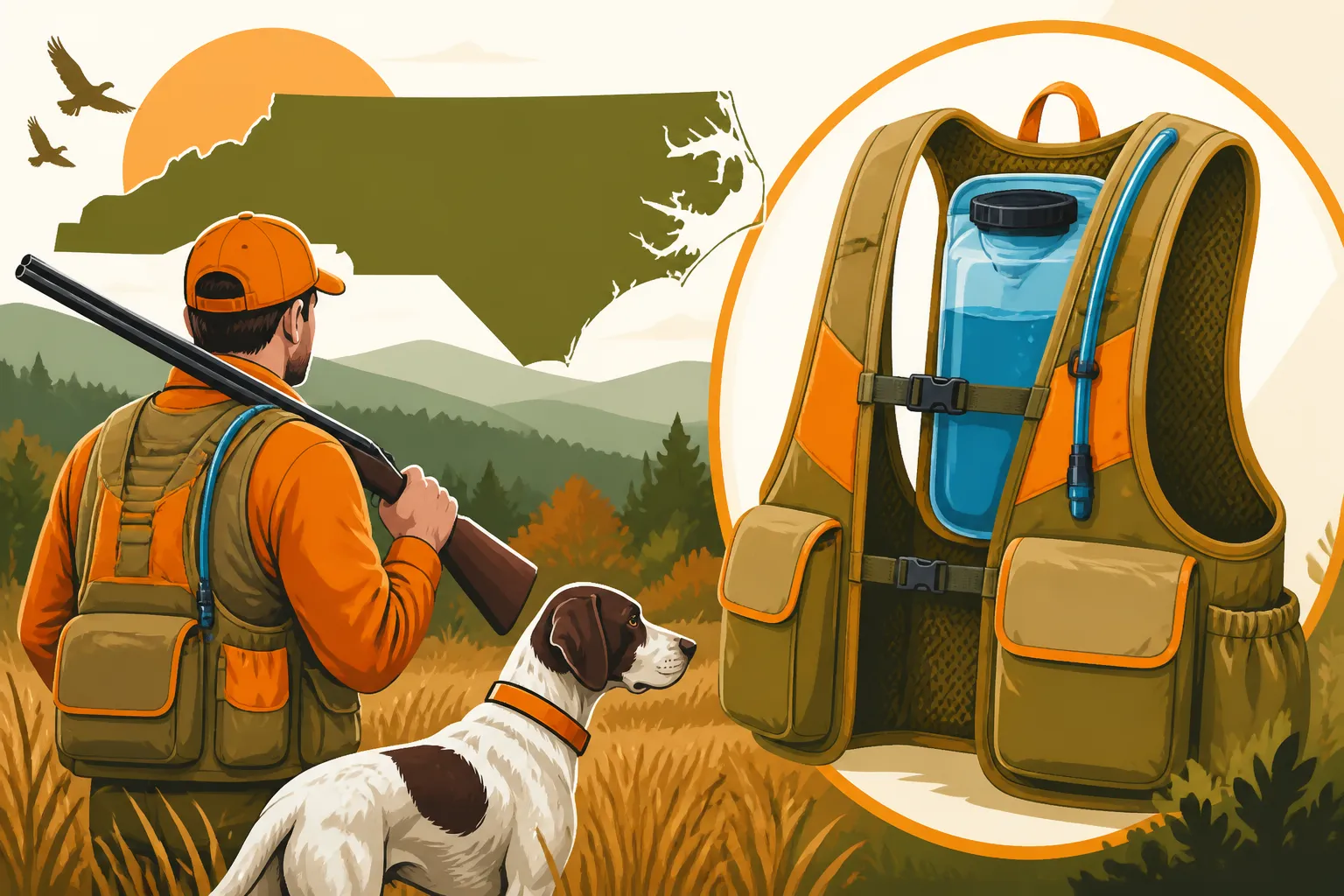
- Hydration Bladders: These are often soft, flexible reservoirs that fit into a dedicated pocket in the vest's back panel. They typically come with a hose that snakes over your shoulder and attaches to your sternum strap or a clip on the shoulder strap, allowing for hands-free sipping. Capacities range, but 1.5 to 3 liters are common. The main pros are that they distribute weight evenly across your back, keep water relatively cool against your body, and offer continuous access without breaking stride. However, cleaning can be a bit more involved, and refilling in the field might require taking the vest off, which isn't always convenient. When you're using a hydration bladder, consider looking for one with a wide opening for easier cleaning and ice insertion. Brands like CamelBak, Platypus, and Osprey make excellent bladders that are often compatible with various vest designs.
- Dedicated Bottle Pockets: Some vests feature secure, easily accessible pockets designed specifically for water bottles. These might be on the sides, or perhaps in the back. The advantage here is simplicity: grab a bottle, take a drink, put it back. Refilling is easy, and cleaning is as simple as washing a bottle. You can also carry different types of liquids if needed. The downside is that bottles can feel heavier in specific spots, and accessing them might require a bit more effort than a sip from a hose, especially if you're actively moving through thick brush. Some vests even include smaller, dog-specific bottle pockets with a fold-out bowl, making it super convenient to water your canine companion.
Here’s a quick comparison:
| Feature | Hydration Bladder | Dedicated Bottle Pockets |
|---|---|---|
| Capacity | Often 1.5-3+ Liters, single reservoir | Varies; typically two 1-liter bottles or several smaller |
| Access | Hands-free sip tube; continuous hydration | Requires reaching for and uncapping a bottle; stop-and-go |
| Weight Dist. | Evenly spread across back; low profile | Concentrated in specific pockets; can feel bulkier |
| Refilling | Can be cumbersome; often requires removing vest | Easy to swap or refill bottles individually |
| Cleaning | Requires special brushes/tablets; drying can be tricky | Easy to wash individual bottles |
| Dog Hydration | Requires separate bowl/bottle or specific vest features | Often easier with dedicated dog bottle/bowl pockets |
| Comfort | Smooth against back; less bounce | Can shift slightly with movement if not secured well |
Comfort, Fit, and Durability for Long Hunts
An upland vest is going to be your constant companion for hours, sometimes days, in the field. If it's not comfortable, you simply won't wear it, or it'll detract from your enjoyment. Fit is paramount. Look for vests with highly adjustable shoulder, waist, and sternum straps that allow you to customize the fit to your body type and layering system. Padded shoulder straps are a godsend, especially when the vest is fully loaded with water, shells, and game. Weight distribution is key; a good vest will carry the load on your hips, taking pressure off your shoulders and back, which is crucial for those extended treks across rough North Carolina terrain.
Durability is another non-negotiable. Upland hunting means brushing past thorny briars, pushing through dense thickets, and potentially scrambling over fallen timber. Your vest needs to withstand this abuse year after year. Materials like 500D or 1000D Cordura nylon are excellent choices, known for their abrasion resistance and strength. Waxed cotton offers a more traditional look and good water resistance. Reinforced stitching at stress points, heavy-duty zippers, and robust buckles are all indicators of a quality, long-lasting vest. Think about how often you'll be working through dense mountain laurel while Grouse Hunting the Blue Ridge Escarpment or pushing through thorny growth on a Rabbit Hunting North Carolina Fencerows excursion – a flimsy vest simply won’t cut it. Brands often specify the material weight and type; a quick search on platforms like GoHunt can help you compare these details across different models.
Storage and Organization Beyond Just Water
While water capacity is the focus, a truly effective upland vest needs to offer ample and smart storage for all your other essentials. Think about what you carry on a typical hunt:
- Shells: Dedicated shell loops or pockets are standard. Make sure they're easy to access but also secure enough that shells won't fall out when you're bending over or busting through cover. Some vests offer specific shell pockets for different gauges if you carry multiple firearms or for quick reloading.
- Game Bag: A large, expandable, blood-proof game bag is essential. It should be easy to clean and ideally accessible without removing the vest. Look for designs that allow for good airflow if you're hunting in warmer weather. Whether you're carrying a brace of quail or a couple of squirrels, you want that game secure and off your back.
- First-Aid Kit: A small, personal first-aid kit is crucial for both yourself and your dog. Look for a dedicated, easily accessible pocket.
- Electronics: Pockets for your GPS unit, smartphone (with a map app like GoHunt), and maybe a two-way radio are important. Ensure they offer some weather protection.
- Dog Training Supplies: Whistle, extra leash, dog treats, or even a small E-collar remote might need a home.
- Miscellaneous: Keys, snacks, knife, compass, headlamp for walking out after dark, and perhaps a small camera.
Good organization means pockets that are intuitively placed, easy to open with one hand, and secure. Some vests feature specialized pockets, like a blaze orange flag pocket for increased visibility or a separate pouch for a tracking collar receiver. Pockets with drainage holes are a thoughtful touch, especially if you expect to be in wet conditions or if you put a wet game bird in your vest.
Choosing the Right Water Capacity and Vest Style for Your Hunt
Selecting the perfect upland vest isn't just about grabbing the first one you see with a water bladder. It’s about matching the vest's capabilities to your specific hunting needs, the conditions you typically face in North Carolina, and the game you pursue. There’s a balance to strike between carrying enough water and not overpacking, leading to unnecessary fatigue.
Matching Capacity to Hunt Length and Conditions
The ideal water capacity depends heavily on how long you plan to be in the field and the prevailing weather. On a cool, drizzly morning in the mountains, a 1.5-liter bladder might be plenty for you and your dog for a couple of hours. However, if you're planning an all-day quail hunt in the sun-drenched Piedmont or Coastal Plain, where temperatures can still reach into the 70s during early seasons, you'll likely want at least a 2 or 3-liter bladder, perhaps supplemented with an extra bottle or two for your dog.
Think about the duration of your hunt:
- Short Jaunts (2-3 hours): A 1.5-liter bladder is often sufficient for one hunter and one dog, especially if temperatures are moderate.
- Half-Day Hunts (3-5 hours): Aim for 2 liters minimum. If it’s warm or your dog is working exceptionally hard, 2.5-3 liters would be safer.
- All-Day Expeditions (5+ hours): A 3-liter bladder is a good starting point, possibly with additional bottles for the dog or for refilling if you know of water sources along your route.
Remember to consider the dog's workload. A hard-running pointer or setter will need significantly more water than a close-working springer spaniel or a beagle on a cooler day. When you're Scouting North Carolina Public Land Before Season, also be scouting for potential water sources to plan your hydration strategy. Always err on the side of carrying more water than you think you'll need; it's better to have it and not need it than to need it and not have it, especially when miles from the truck.
Vest Versus Pack-Style Options
The term "upland vest" can encompass a pretty wide array of designs, from minimalist vests to full-blown pack-style systems. Your choice here often comes down to how much gear you typically carry and how you prefer to distribute that weight.
- Traditional Vests: These are usually lighter, with a mesh or open-backed design, and focus primarily on shell pockets and a rear game bag. Many traditional vests have added water bottle pockets or can accommodate a small hydration bladder in a dedicated rear pouch. They excel at keeping you cool and offering unhindered arm movement. They’re great for lighter loads and warmer weather or shorter hunts, but may lack the expansive storage or advanced hydration systems of larger packs.
- Pack-Style Vests (Vest-Packs): These combine the features of an upland vest with a small backpack. They typically have a larger rear compartment capable of holding a substantial hydration bladder (3+ liters), extra layers, lunch, and more extensive first-aid or dog gear. The game bag is usually larger, and there might be additional pockets on the waist belt. These are ideal for all-day hunts, colder weather when you need to carry extra clothing, or when you’re hunting in more remote areas like Pisgah National Forest where you might be Hunting a High Elevation Mountain Bench and need to be fully self-sufficient. The trade-off is often increased weight and potentially less ventilation compared to a true vest. However, many modern designs do an excellent job of distributing weight effectively and providing good airflow.
When making this decision, honestly assess your typical hunting habits. Are you a minimalist who likes to travel light, or do you prefer to be prepared for every eventuality?
Considerations for Specific North Carolina Upland Game
The type of upland game you pursue can also influence your vest choice, as different species often dictate different habitats and hunting styles.
- Quail and Rabbit: These hunts often occur in open fields, fencerows, or dense brush in the Piedmont and Coastal Plain. Mobility is key, and you're likely covering many miles. A lighter, more traditional vest with good water capacity and easily accessible shell pockets is often preferred. The emphasis is on staying cool and agile. If you're Hunting the Sandhills Region Longleaf Stands for quail, you'll appreciate a vest that doesn't snag easily and keeps you from overheating.
- Grouse: Ruffed grouse hunting in North Carolina is primarily a mountain pursuit, often involving steep climbs and thick cover like mountain laurel and rhododendron. You'll be working hard, and temperatures can be cooler but also highly variable. A more robust pack-style vest might be beneficial here, allowing you to carry extra layers for changing weather, more water for strenuous climbs, and a larger first-aid kit for more remote excursions. Durability against snags and tears is paramount. Consider a vest that can accommodate a larger water bladder if you're Grouse Hunting Blue Ridge Cover all day.
- Woodcock: Often found in moist, swampy bottomlands and creek edges, woodcock hunting means you might be crossing small streams or navigating damp areas. Your vest should ideally have quick-drying materials and pockets that can drain water. Hydration is still important, especially when pushing through thick, damp cover that can be physically taxing. For example, if you're jump-shooting Jump-Shooting North Carolina Creeks for Wood Ducks, a vest that handles a bit of water and mud will be a great asset.
Ultimately, the best vest is the one that you find most comfortable and functional for your specific hunting scenarios.
Practical Tips for Using and Maintaining Your Hydration Upland Vest
Once you've chosen your ideal upland vest with water capacity, the journey isn't over. Proper use and diligent maintenance are crucial to ensuring it serves you well for many seasons and, most importantly, keeps you and your dog safely hydrated. These seemingly small steps can make a big difference in the field and extend the life of your gear.
Pre-Hunt Preparation and Hydration Strategies
The success of your hydration vest starts long before you step out of the truck. A little planning can save you a lot of hassle and discomfort.
- Clean and Fill: Always start with a clean hydration bladder or bottles. There’s nothing worse than that stale, plastic-y taste of old water on a hot day. Fill your bladder or bottles with fresh, cool water. On warmer days, I often freeze half a bladder's worth of water overnight, then fill the rest with cold water in the morning. This acts like an ice pack, keeping your water refreshingly cool for much longer.
- Test for Leaks: Before leaving the house, give your bladder a quick squeeze to check for any leaks, especially around the cap or hose connection. A slow drip can quickly lead to a soaked back and an empty reservoir.
- Plan Your Route (and Water Stops): While your vest offers mobile hydration, it's smart to have a backup plan or identify potential natural water sources if you're going deep into public lands like Nantahala National Forest. Familiarize yourself with your hunting area using maps (some available through GoHunt) or apps, noting any creeks or springs. While it's generally best to avoid drinking directly from unpurified natural sources, knowing where they are can be useful for cooling off a dog or in an emergency.
- Pre-Hydrate: Start drinking water before you even leave the house. Being well-hydrated before you begin hunting means your body is starting from a good baseline, making it easier to maintain hydration throughout the day.
Field Use and Accessibility
In the heat of the moment, or when you’re simply focused on the hunt, taking a drink should be effortless.
- Positioning the Bite Valve: If using a bladder, make sure the bite valve is positioned where you can easily reach it without fumbling. Many hunters clip it to their sternum strap or a dedicated magnetic clip on the shoulder strap. This ensures quick sips without breaking your stride, which is particularly useful when Still-Hunting Nantahala Forest Ridges and needing to stay quiet and focused.
- Dog Water Breaks: Be proactive with your dog. Don't wait until they're panting excessively. Every 15-30 minutes, especially during strenuous activity or warm weather, call your dog in and offer water. Many vests come with fold-out bowls or you can carry a collapsible bowl. Make it a habit. A short break to hydrate can rejuvenate both of you.
- Layering: North Carolina weather can be fickle. If you’ve chosen a pack-style vest, utilize its capacity to carry extra layers. Starting cool in the morning and shedding a jacket as the day warms up, or adding a vest if a cold front rolls in while Hunting Deer After a Cold Front, is much easier when you have a place to stow your gear.
Post-Hunt Care and Longevity
The work isn't done when the hunt is over. Proper cleaning and storage are vital for hygiene and extending the life of your investment.
- Empty and Clean: As soon as possible after your hunt, empty any remaining water from your bladder or bottles. For bladders, rinse thoroughly with warm water. Using a cleaning kit with a brush for the hose and bladder is highly recommended to prevent mold and mildew growth. Specialized cleaning tablets can also help.
- Thorough Drying: This is perhaps the most critical step for bladders. They must be completely dry before storage. Many bladders come with drying hangers, or you can prop them open with paper towels or a drying rack to ensure air circulation. For bottles, simply wash and air dry.
- Clean the Vest: If your vest gets muddy, bloody, or sweaty, spot clean it as needed. For a deeper clean, check the manufacturer's instructions, but often a gentle hand wash with mild soap and air drying is sufficient. Avoid harsh detergents or machine washing unless specifically instructed, as it can degrade technical fabrics and coatings.
- Inspect and Repair: After each season, or even periodically throughout, inspect your vest for any wear and tear. Check seams, zippers, and buckles. Addressing small issues like a loose stitch or a fraying strap early can prevent bigger problems down the line. Good gear is an investment, and taking care of it ensures it will be ready for your next adventure. Many hunters rely on trusted platforms like GoHunt for reviews and maintenance tips for their gear.
Taking these steps not only ensures your vest is ready for action when the next season rolls around but also keeps you, and your loyal hunting companion, safe and hydrated in North Carolina's beautiful, but sometimes challenging, upland habitats.
Disclaimer
This article is for general informational purposes only and does not constitute professional advice. Laws, prices and regulations vary by location and change over time. Consult a qualified professional for guidance on your specific situation.