North Carolina Coastal Bear Zone Rules
Many hunters across North Carolina often find themselves scratching their heads when trying to understand the complex web of regulations surrounding black bear hunting, especially when it comes to the vast and diverse coastal zones. With different opening and closing dates, unique methods, and specific geographical carve-outs, it's incredibly easy to feel lost in the details and worry about making a mistake. This comprehensive guide is here to untangle the intricacies of North Carolina's Coastal Bear Zone Rules, empowering you with the knowledge to confidently plan and execute a successful and legal bear hunt in our beautiful eastern landscapes.
Understanding North Carolina's Bear Management Zones
Before we dive deep into the specific rules of the coastal region, it's crucial to understand why North Carolina manages its bear population through a system of zones in the first place. This isn't just bureaucratic red tape; it's a carefully designed strategy to ensure healthy bear populations while balancing human interests.
Why Zones Matter for Bear Hunting
North Carolina boasts one of the most robust and thriving black bear populations in the Southeast, a testament to decades of sound wildlife management. However, these bears aren't distributed evenly across the state, nor do they face the same challenges or thrive in identical habitats. The North Carolina Wildlife Resources Commission (NCWRC) uses a zonal approach to address these regional differences effectively. Imagine trying to manage traffic for an entire city with one set of rules – it wouldn't work, right? The same applies to wildlife.
Each bear zone is essentially treated as its own management unit, with regulations tailored to the specific bear density, habitat quality, and human-bear interactions unique to that area. In some places, bear populations might be booming, leading to more liberal hunting opportunities. In others, perhaps habitat is more fragmented, or human development is encroaching, necessitating stricter harvest limits. Understanding which zone you're hunting in is the first and most critical step to a legal and ethical hunt. Ignoring these zones can lead to fines, lost hunting privileges, and, more importantly, can undermine the conservation efforts that make North Carolina such a fantastic place to hunt.
The Split Between Mountains and Coast
When it comes to North Carolina's black bears, the state is primarily divided into two overarching management regions: the Mountain Zone and the Coastal Zone. While this might seem like a simple geographical split, these two regions represent fundamentally different environments for bears and, consequently, for bear hunters. The mountains, with their vast national forests and rugged terrain, offer one type of challenge and experience. The coastal plain, on the other hand, presents a world of dense pocosins, extensive swamps, and agricultural fields that support bears in a vastly different way.
Within these two primary zones, there are further sub-zones or units, especially on the coast, each with its own specific tweaks to season dates and regulations. This article will focus entirely on the nuances of the Coastal Zone, but it's helpful to remember that the state as a whole is working within this larger framework. If you're looking for broader context, our guide on North Carolina's Twenty-Two Bear Management Zones can give you a more complete picture of the statewide strategy. It’s a classic North Carolina conundrum: a unified goal achieved through diverse, localized rules.
Defining the Coastal Bear Zones
The Coastal Zone for bear hunting isn't just the sandy beaches and barrier islands; it's a massive, complex region stretching far inland, characterized by unique habitats that support some of the largest black bears on the continent.
Geographical Boundaries and Key Counties
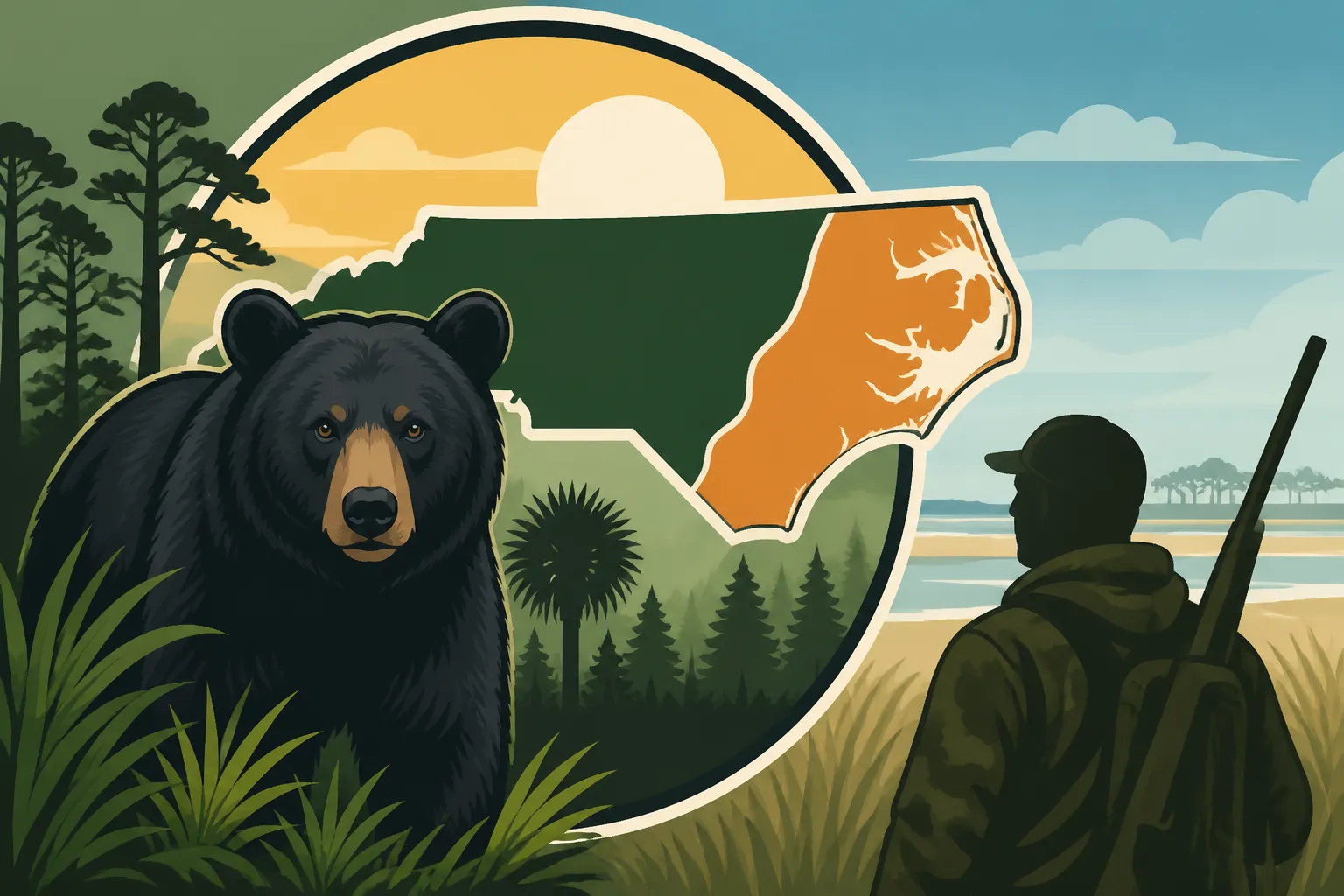
When we talk about North Carolina's Coastal Bear Zone, we're encompassing a huge swath of eastern North Carolina. Generally speaking, this zone covers the eastern half of the state, roughly east of I-95, although some areas can extend a bit further west into what might traditionally be considered the eastern Piedmont. It's a vast landscape where dense forests meet expansive farmlands, all crisscrossed by an intricate network of rivers, creeks, and swamps.
Some of the key counties where bear populations are particularly dense and hunting opportunities are significant include Beaufort, Bladen, Bertie, Craven, Dare, Hyde, Onslow, Pender, Sampson, Tyrell, and Washington, to name a few. These areas are renowned for their incredible bear numbers and the sheer size these bears can attain. However, it's not a uniform line on a map; the boundaries can be intricate, often following specific roads, rivers, or even property lines. This is why relying solely on a general understanding can lead you astray. Always use the most current NCWRC regulations digest or a reliable hunting app like GoHunt to pinpoint the exact boundaries for your intended hunting area. These resources provide incredibly detailed maps that can save you a lot of headaches and keep you on the right side of the law.
Unique Habitat of Coastal Bears
What truly sets the Coastal Bear Zones apart is their distinct habitat. Forget the towering hardwoods and rocky outcroppings of the mountains; here, we're talking about a landscape dominated by vast, impenetrable pocosin swamps, dense river bottomlands, sprawling pine plantations, and extensive agricultural fields. These diverse environments create an almost ideal scenario for black bears, offering both abundant food sources and incredible cover. If you've never hunted bears in this type of environment, be prepared for some serious thickets! You can learn more about the challenges and rewards in our article on Hunting Coastal Bears in Thick Pocosin Cover.
The rich agricultural lands, especially fields of corn, soybeans, and peanuts, provide an endless buffet for bears, allowing them to pack on significant weight. Combine that with the natural mast crops found in the productive bottomland forests, and you have a recipe for truly massive animals. It's no wonder that some of the heaviest black bears ever recorded in the Southeast have come from these coastal counties. Their access to high-calorie food sources is a major reason Why Coastal Bears Grow So Heavy is a common topic among hunters. This dense, food-rich environment means bears can spend their entire lives without encountering much human disturbance if they choose, making them elusive despite their numbers. Hunting here demands patience, local knowledge, and an understanding of how bears utilize such a unique landscape for feeding, bedding, and escaping pressure.
Coastal Bear Season Dates and Bag Limits
Navigating the bear season dates in North Carolina's Coastal Zone can feel like trying to solve a puzzle. Unlike the relatively uniform deer seasons, bear seasons, particularly gun seasons, are often broken down into distinct units, each with its own schedule.
Archery and Muzzleloader Opportunities
For those who enjoy a more traditional or early-season challenge, archery and muzzleloader hunting for bears in the Coastal Zones offer unique opportunities. These seasons are generally shorter windows that precede the main gun season, allowing hunters a chance to pursue bears with less competition and often in milder weather.
Typically, archery season for bears in many coastal units might open in mid-to-late September, running for just a few days or a week. Muzzleloader season often follows in mid-to-late October. These shorter periods demand careful planning and excellent scouting, as your window of opportunity is tight. It's also a fantastic way to experience the coastal woods before the heavy pressure of rifle season arrives. These early seasons are often less about high-volume hunting and more about the solitary pursuit, making them appealing to those seeking a specific type of challenge. While the general state regulations provide a framework, always consult the current year's NCWRC digest for the precise dates for your specific coastal bear unit.
Gun Season Windows by Zone
This is where the North Carolina Coastal Bear Zone rules become truly specific and where attention to detail is paramount. The Coastal Zone is not a monolithic entity when it comes to gun seasons. Instead, it's divided into multiple sub-units, each with its own distinct opening and closing dates. This staggered approach helps distribute hunting pressure, manage localized populations more effectively, and takes into account varying agricultural harvest times or bear behavior patterns across the vast region.
For instance, you might find that "Coastal Unit 1," covering counties like Beaufort and Hyde, opens for a two-week period in early November. Meanwhile, "Coastal Unit 2," perhaps encompassing areas like Bladen and Sampson, might not open until late November or even early December, often running for a shorter duration of just one week. These precise season structures are laid out meticulously by the NCWRC. It cannot be stressed enough: you absolutely must consult the current year's NCWRC regulations digest or a detailed, up-to-date hunting app like GoHunt to confirm the exact season dates for the specific area you plan to hunt. Mistaking a boundary line or opening date is a common, and easily avoidable, error. Our dedicated guide on North Carolina Bear Season Dates on the Coast provides further details, but always cross-reference with the official digest. These short, intense gun seasons can lead to significant hunting pressure, especially on public lands, so being prepared for crowds in certain areas is also wise.
Statewide and Local Bag Limits
When it comes to bear harvest, North Carolina has a straightforward, yet critical, statewide bag limit: one bear per hunter per year. This rule applies uniformly across both the Mountain and Coastal Zones, regardless of how many sub-units you might hunt in or what methods you use. It's a fundamental tenet of black bear conservation in the state, designed to maintain healthy breeding populations.
While the statewide limit is consistent, there might be very rare instances of local bag limits or special conditions that apply to specific, highly managed areas, such as certain National Wildlife Refuges or Game Lands operating under special quota hunts. However, for the vast majority of hunters in the Coastal Zone, the "one bear per year" rule is the primary limit to remember. Beyond simply harvesting a bear, there are also specific requirements for recording your take; understanding North Carolina Bear Management Stamp Rules is also vital before you head afield. Always verify any nuances with the most current NCWRC regulations, but consider that single bear your prize for the entire season. Ethical hunting also means making every effort to ensure a clean kill and recover your animal, as a wounded bear can't be replaced by a second tag.
| Coastal Bear Zone Unit (Example) | Typical Archery Season (Approx.) | Typical Muzzleloader Season (Approx.) | Typical Gun Season (Approx.) | Bag Limit (Annual) | Common Hunting Methods |
|---|---|---|---|---|---|
| Coastal Unit 1 (e.g., Eastern) | Mid-September (Few Days) | Mid-October (Few Days) | Early-Mid November (1-2 Weeks) | 1 | Hounds, Baiting, Still |
| Coastal Unit 2 (e.g., Central) | Late September (Few Days) | Late October (Few Days) | Late November-Early December (1-2 Weeks) | 1 | Hounds, Baiting, Still |
| Coastal Unit 3 (e.g., Southern) | Early October (Few Days) | Early November (Few Days) | Mid-December (1 Week) | 1 | Hounds, Baiting, Still |
| Always verify current NCWRC regulations for exact dates for your specific hunting location. |
Specific Regulations for Coastal Bear Hunting
North Carolina offers a broader range of legal hunting methods for black bears than many other states, particularly in the Coastal Zone. This often includes methods that are deeply rooted in the state's hunting heritage, like using hounds and bait.
Legal Hunting Methods (Baiting, Dogs)
One of the most defining characteristics of bear hunting in North Carolina, especially in the Coastal Zone, is the legality of baiting and hunting with dogs in many areas. This is a significant distinction from states where these methods are prohibited, and it shapes the hunting culture and strategies in the eastern part of the state.
Baiting is a popular and effective method, especially in areas with dense cover where spotting bears can be challenging. However, it comes with strict regulations. Hunters must adhere to specific rules regarding the distance bait can be placed from roads, property lines, and dwellings. The type of bait allowed is also regulated, typically non-toxic, biodegradable food products. All bait sites must be clearly marked with signs, visible from all directions, stating "Hunting Bait" and the hunter's identification. It's crucial to understand these nuances to avoid legal issues. While baiting can increase success rates, it also requires diligent monitoring and careful placement to avoid attracting unwanted attention or creating nuisance situations.
Hunting with Hounds is another deeply embedded tradition in North Carolina's Coastal Plain. This method involves using trained dogs to track and tree or bay a bear, allowing hunters to approach for a shot. It's an active, high-energy style of hunting that requires well-trained dogs, often equipped with GPS collars for tracking in the vast swamps and thickets. Hunters must be prepared for long walks and navigating challenging terrain to follow their dogs. Understanding the rules for Running Hounds Where North Carolina Allows It is vital, including proper dog identification, preventing dogs from crossing private property without permission, and ensuring the safety of both dogs and bears. These methods require a significant investment in time, training, and equipment, but they offer an incredibly exciting and effective way to pursue coastal black bears.
Of course, traditional still-hunting or stand hunting are also perfectly legal and often effective methods, especially around natural food sources like oak flats or agricultural field edges. Many hunters choose to combine strategies, using scouting and trail cameras to identify active areas before setting up a stand or ground blind.
Firearms and Ammunition Considerations
When preparing for a bear hunt in the North Carolina Coastal Zones, choosing the right firearm and ammunition is paramount. Bears are tough, resilient animals, and ethical hunting demands a powerful, well-placed shot to ensure a quick and humane kill.
North Carolina permits the use of various firearms for bear hunting, including rifles, shotguns (when using slugs or in specific scenarios, buckshot), and handguns. The general rule for legal calibers for big game, which applies to bears, is a minimum of .24 caliber or larger. While a .243 might be legal, most experienced bear hunters opt for something with a bit more punch. Popular choices often include the .270, .30-06, .308, or even larger calibers like the .300 Winchester Magnum. These calibers deliver the energy and bullet weight necessary for adequate penetration through a bear's thick hide, dense muscle, and strong bone structure. Our article on Rifle Calibers for North Carolina Bear offers a deeper dive into this topic.
Ammunition choice is equally critical. In the often-dense coastal cover, a bullet needs to hold together and penetrate deeply. Premium, controlled-expansion bullets are highly recommended over rapidly expanding varmint-style projectiles. Look for bullets designed for large, tough game, as they will perform much better when impacting heavy bone or muscle. While shot distances in the thick coastal woods are often relatively short, perhaps 50-100 yards, you need to be prepared for the possibility of a longer shot if a bear steps out into an open field. Always practice with your chosen hunting ammunition to confirm accuracy and develop confidence in your setup.
Blaze Orange Requirements in Coastal Areas
Safety is always the top priority in the woods, and North Carolina's blaze orange requirements play a crucial role in preventing accidents, especially during bear gun seasons. If you're hunting in a coastal bear zone during any open gun season, regardless of whether you're actively pursuing bears or another game animal like deer, you are generally required to wear blaze orange.
The regulations typically mandate that hunters wear at least 500 square inches of solid blaze orange on their outer clothing, visible from all directions (360 degrees). This usually means a blaze orange hat and a vest or jacket. The purpose of this bright coloration is to make hunters highly visible to one another, particularly in the thick cover and low light conditions often found in coastal swamps and pine forests. Even if you're still-hunting or sitting quietly in a stand, wearing your blaze orange is not just a legal requirement but a common-sense safety measure. With the prevalence of hound hunting for bears, which involves active movement and multiple hunters, visibility becomes even more critical. You can learn more about the specifics in our guide on How Much Blaze Orange North Carolina Requires. Always double-check the current regulations for any specific exemptions or changes, but when in doubt, wear the orange. Your safety, and the safety of others, depends on it.
Navigating Public Versus Private Land
North Carolina offers a mix of public and private land opportunities for bear hunting in the Coastal Zones, each presenting its own set of advantages and challenges. Understanding how to access and hunt these different land types is key to a successful coastal bear season.
Key Game Lands and National Wildlife Refuges
For hunters without access to private land, North Carolina's public lands offer significant opportunities in the Coastal Bear Zones. These areas include large state Game Lands and several expansive National Wildlife Refuges (NWRs). However, hunting on these lands often comes with its own specific rules and access procedures.
Croatan National Forest is a prime example of a large public land offering in the coastal plain. Its vast tracts of pocosins, longleaf pine forests, and swamps are classic coastal bear habitat. Hunters can explore these areas, but should be prepared for challenging terrain and potentially higher hunting pressure, especially on opening weekends. Our guide to Croatan National Forest Hunting can provide more specific insights into this particular area.
Several National Wildlife Refuges also offer bear hunting, often through highly regulated permit systems. Refuges like Pocosin Lakes NWR, Alligator River NWR, and Great Dismal Swamp NWR are renowned for their incredible bear populations, but accessing them typically requires applying for a quota hunt draw well in advance. These hunts often have very specific season dates, bag limits, and method restrictions that differ from statewide regulations. For example, getting an Alligator River National Wildlife Refuge Deer Permit is a similar process to what you might expect for bear hunting draws on NWRs. Success in these draws is never guaranteed, but they offer some of the most unique and productive bear hunting experiences in the state. Always check each refuge's specific regulations and application deadlines far in advance of the season. Using a mapping application like GoHunt can help you identify these public land boundaries and specific access points, which is invaluable for planning.
Seeking Private Land Permission
While public lands provide opportunities, a substantial portion of successful coastal bear hunting in North Carolina occurs on private land. The vast agricultural operations and large timber company holdings in the eastern part of the state often provide ideal habitat and less hunting pressure than public areas.
Gaining access to private land requires a respectful, proactive approach. Begin by researching landowners in bear-dense areas. A polite, face-to-face request is always more effective than a phone call or letter. Be prepared to explain your intentions, demonstrate your respect for their property, and potentially offer benefits in return, such as helping with other wildlife management needs like feral hog control. Our advice on Asking a North Carolina Farmer for Permission can guide you through this process. Many farmers are dealing with significant crop damage from bears, and a responsible hunter can be part of their solution.
Hunting on private land often means less competition, the ability to establish bait sites without public scrutiny (following all legal requirements, of course), and more flexibility in hunting dates within the season framework. Large private timber tracts, often leased by hunting clubs, also offer excellent opportunities. Joining a reputable hunting club that manages for bears can provide consistent access and a supportive community. Whether you're seeking individual permission or joining a club, building strong, trusting relationships with landowners is the bedrock of private land hunting in North Carolina.
Mandatory Harvest Reporting and Carcass Movement
Responsible hunting doesn't end when you pull the trigger; it extends to the critical step of reporting your harvest and adhering to guidelines for carcass movement, which are essential for wildlife management and disease prevention.
Mandatory Harvest Reporting
In North Carolina, mandatory harvest reporting for all black bears is an absolute requirement. This isn't just a suggestion; it's a critical component of the state's wildlife management strategy. Every bear taken, whether by rifle, bow, or muzzleloader, on public or private land, must be reported to the NCWRC. The data collected from these reports allows wildlife biologists to accurately monitor bear populations, track harvest trends, and make informed decisions about future season structures and management goals. Without accurate reporting, the NCWRC can't effectively manage the resource, potentially leading to less optimal hunting seasons for everyone.
The reporting process is designed to be convenient for hunters. You can typically report your bear harvest through the NCWRC's official website, using their dedicated mobile app, or by calling a designated phone number. This usually needs to be completed within a short timeframe, often within 24 hours of harvest. Be prepared to provide details such as your license number, the date and county of the kill, and the sex of the bear. Making sure you have all this information readily available before you report will streamline the process. Failure to report a harvested bear is a violation of state law and can result in significant penalties, including fines and the loss of hunting privileges. Consult our guide on North Carolina Bear Checking Requirements for more detailed information on this vital step.
Carcass Movement and Disease Prevention
While Chronic Wasting Disease (CWD) is primarily a concern for deer and other cervids, the general principles of responsible carcass movement apply to all large game animals, including black bears. Although North Carolina does not currently have specific CWD-related restrictions for bear carcasses, being mindful of disease prevention is a crucial aspect of ethical hunting.
The best practice for any harvested animal, bear included, is to process the carcass as close to the kill site as practically possible. This means boning out the meat and leaving the spinal column, skull (if not retained for taxidermy), and other non-essential parts at the site of harvest. This practice minimizes the transport of potential pathogens, even those not yet identified. If you are traveling across state lines with a bear carcass, you should always check the regulations of both North Carolina and your destination state, as rules regarding carcass importation can vary widely.
The NCWRC is constantly monitoring the health of all wildlife populations, including bears. While specific diseases in bears may not be as widely publicized as CWD in deer, staying informed about any new advisories or recommendations is important for the health of the entire ecosystem. Reliable hunting information platforms, like the GoHunt app, often provide timely updates on regulation changes or wildlife health alerts. By taking responsible steps with carcass handling, hunters contribute to the overall health of North Carolina's cherished wildlife resources.
Disclaimer
Please remember that hunting regulations are subject to change. While this guide aims to provide accurate and up-to-date information, it is your responsibility as a hunter to consult the most current North Carolina Wildlife Resources Commission (NCWRC) regulations digest or visit their official website before participating in any hunting activity. Local rules on specific Game Lands or National Wildlife Refuges may also apply and supersede general state regulations. Stay safe, hunt ethically, and enjoy North Carolina's incredible bear hunting opportunities.