North Carolina Deer Population Estimate
It's no secret that North Carolina is a deer hunter's paradise, but sometimes it feels like the deer numbers ebb and flow with the seasons, making us wonder just how many whitetails are truly out there. Hunters often face the frustration of inconsistent sightings or declining harvest numbers in certain areas, leaving them to question the health and size of the statewide herd. This comprehensive guide will pull back the curtain on how North Carolina's deer population is estimated, what factors influence those numbers, and how that information directly impacts our hunting opportunities across the Old North State.
Understanding North Carolina's Deer Population Estimates
For anyone who spends time in the woods, the idea of counting every single deer in North Carolina seems like an impossible task. And frankly, it is! Wildlife agencies don't literally count every deer. Instead, they rely on a combination of scientific methods and hunter input to develop robust population estimates. These numbers aren't just fascinating trivia; they're the backbone of sound wildlife management decisions, helping to ensure healthy deer herds for generations to come.
Methods Used for Population Assessment
The North Carolina Wildlife Resources Commission (NCWRC) employs a multi-faceted approach to estimate deer populations. It's not a single, magic formula, but rather a combination of data points that, when put together, paint a reasonably accurate picture. One of the primary methods involves using harvest data. Every deer reported by a hunter, whether through the online portal, the mobile app, or a phone call, provides a crucial piece of information. This data includes the deer's sex, county of harvest, and the date. Over time, these harvest numbers, coupled with hunter effort data (like how many days hunters spent in the field), can be used in sophisticated population models.
Beyond hunter harvest, biologists also look at other indicators. For instance, observations by wildlife professionals and even surveys of road-killed deer can offer insights into local deer densities. In certain research contexts, more intensive methods like spotlight surveys, thermal imaging from aircraft, or even camera trap surveys might be used in smaller, localized areas to get a more precise count and validate broader estimates. These methods, while costly and time-consuming, help fine-tune the overall understanding of deer distribution and abundance.
The Challenge of Counting Wild Deer
Anyone who has tried to get a good read on deer activity knows how elusive these animals can be. Their nocturnal habits, tendency to seek thick cover, and vast range make direct counting extremely difficult. Imagine trying to count deer in the dense pocosin swamps of the Coastal Plain or the steep, rugged terrain of the Blue Ridge Mountains. It's a logistical nightmare. This inherent challenge means that all population figures are, by their very nature, estimates. They come with a margin of error, but with years of collected data and refined models, these estimates become incredibly reliable tools for management.
Furthermore, factors like weather, acorn crop failures, or disease outbreaks can cause sudden, localized fluctuations that are hard to immediately quantify. A severe winter or a widespread EHD (Epizootic Hemorrhagic Disease) outbreak can decimate local populations, and it takes time for those impacts to be reflected in statewide estimates. The NCWRC is constantly monitoring these variables, adjusting their models and management strategies to adapt to the ever-changing dynamics of North Carolina's deer.
Why Estimates Matter for Hunters
For us hunters, these population estimates are more than just numbers on a page; they directly influence our hunting experience and the regulations we follow. When populations are healthy and thriving, the NCWRC might maintain generous bag limits or even expand opportunities, like increasing antlerless days. Conversely, if estimates suggest a decline in a specific region, they might implement more conservative measures, such as reducing antlerless opportunities or adjusting season lengths, to allow the herd to rebound.
Knowing the deer population estimate helps you, as a hunter, understand the "why" behind certain rules. It helps set realistic expectations for your season. If the overall deer density in your hunting area is lower than the statewide average, you might adjust your tactics, focus more on scouting, or spend more time studying aerial photos using tools like GoHunt to find those pockets of higher deer activity. It also reinforces the importance of your role in reporting harvests – every deer reported contributes to a more accurate picture for future management.
Factors Influencing Deer Numbers Across the State
Deer populations are not static; they are constantly shifting, driven by a complex interplay of environmental factors, human influence, and biological pressures. Understanding these factors helps us appreciate the delicate balance of nature and the significant effort required to manage a robust deer herd across such a diverse state as North Carolina.
Habitat Quality and Availability
Perhaps the single most critical factor influencing deer numbers is the quality and availability of suitable habitat. Deer need food, water, and cover to thrive, and the abundance of these resources directly impacts how many deer an area can support. North Carolina offers a vast array of habitats, from agricultural fields and young pine plantations in the Piedmont and Coastal Plain to mature hardwood forests and dense mountain laurel thickets in the west. Where food sources are plentiful – think lush agricultural fields like corn, soybeans, and peanuts, or abundant mast crops like acorns and persimmons – deer populations tend to be higher.
Conversely, areas with degraded habitat, such as extensive clear-cuts without proper reforestation or urban sprawl that fragments natural areas, will naturally support fewer deer. Habitat management, including timber thinning, prescribed burns, and the planting of food plots, can significantly enhance deer populations. For example, areas with diverse habitat, offering a mix of early successional growth (young plants for browse) and mature timber (mast crops and bedding cover), typically hold more deer than monoculture forests. This is particularly noticeable in regions like the Piedmont, where a blend of agriculture and mixed woodlands often leads to strong deer numbers and even the growth of Why the Piedmont Grows Big Bucks.
Predation and Disease Pressures
While often overlooked by casual observers, predation and disease play significant roles in shaping deer populations. In North Carolina, coyotes are the primary natural predators of deer, especially fawns. While coyotes rarely wipe out entire deer populations, consistent fawn predation can certainly put a dent in recruitment rates, particularly in areas where deer numbers are already stressed or habitat is poor. You can learn more about Coyotes and Predators in North Carolina to understand their impact.
Diseases, particularly EHD and Chronic Wasting Disease (CWD), also pose substantial threats. EHD outbreaks are common during late summer and early fall, particularly in drought years, and can cause significant localized deer die-offs. The emergence of CWD in North Carolina's Yadkin Valley, particularly in counties like Surry, has introduced a long-term management challenge. CWD is a fatal neurological disease that can decimate deer herds over time, and efforts to monitor and manage North Carolina's Chronic Wasting Disease Areas are crucial to preventing its widespread impact. The NCWRC works diligently to track these threats and implement strategies to minimize their impact on the overall deer population, relying heavily on hunter reporting and CWD testing efforts.
Impact of Hunting Pressure and Regulations
Regulated hunting is not just a recreational activity; it's a vital tool for wildlife management, directly impacting deer populations. Without hunting, deer herds can quickly outgrow their habitat, leading to overbrowsing, poor deer health, and increased disease transmission. The NCWRC uses hunting regulations – like varying deer bag limits, season lengths, and antlerless deer days – to manage populations at sustainable levels. For instance, in areas where deer numbers are too high, liberal antlerless harvest opportunities are implemented to reduce the doe population and bring the herd into balance with its habitat.
On the flip side, in areas where deer populations are lower, more conservative regulations might be in place to allow the herd to grow. Hunting pressure itself can also influence deer behavior and distribution. High pressure on North Carolina Public Land might cause deer to become more nocturnal or seek out thicker, less accessible cover, making them harder for hunters to find, even if the overall population remains healthy. This dynamic interplay between management goals, hunter activity, and natural factors is what makes deer population management such a complex, ongoing process.
Regional Deer Density Differences
North Carolina is a state of incredible topographical and ecological diversity, stretching from the highest peaks of the Appalachian Mountains to the barrier islands of the Atlantic Ocean. This variety directly translates into significant differences in deer habitat, and consequently, in regional deer densities. Understanding these regional variations is key to a successful hunting strategy, as what works in one part of the state might be completely ineffective in another.
Mountain Zone Deer Populations
The Mountain Zone, encompassing the rugged western portion of North Carolina, presents a unique challenge for deer and hunters alike. Here, deer densities are generally the lowest in the state. The habitat primarily consists of vast tracts of mature hardwood forests, often characterized by steep slopes, dense undergrowth like rhododendron and mountain laurel, and limited agricultural land. While acorns can provide a feast in good mast years, the overall carrying capacity of these forests is lower compared to other regions due to the lack of diverse forage and browse plants.
Hunting here often means traversing challenging terrain, and deer tend to be more spread out. However, the deer that do thrive in the mountains often grow large and healthy, adapting to their environment. You'll find these deer frequenting high elevation mountain benches and seeking out pockets of younger growth after timber harvests, as well as creek bottoms for late-season deer. Despite lower densities, the thrill of tracking a mature buck through the vastness of Pisgah National Forest or Nantahala National Forest is an experience unlike any other.
Piedmont Zone Deer Dynamics
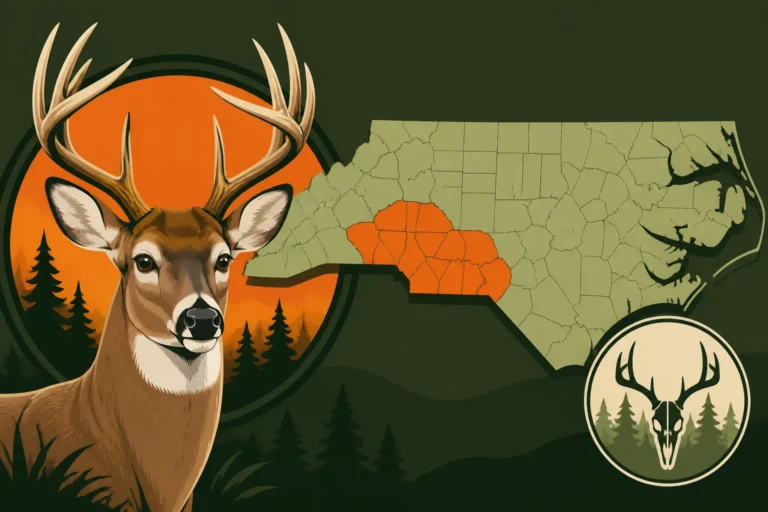
The Piedmont Zone, stretching across the central part of North Carolina, is often considered the sweet spot for deer hunting in the state. This region is a mosaic of rolling hills, mixed hardwood and pine forests, and extensive agricultural lands. The combination of abundant food sources from farming operations (corn, soybeans, wheat) and excellent cover in the surrounding woodlots creates ideal conditions for deer. As a result, the Piedmont generally boasts the highest deer densities and some of the healthiest deer in North Carolina.
The diverse habitat, coupled with a generally milder climate, allows deer populations to flourish. Hunters in the Piedmont often find deer regularly using field edges, woodlot transitions, and creek bottoms. The presence of varied food sources throughout the year helps bucks grow impressive antlers, which contributes to the region's reputation for producing big deer. Understanding Deer Density by North Carolina Zone reveals that many of the top counties for deer harvest are found right here in the Piedmont, a testament to its prime deer habitat.
Coastal Plain Deer Abundance
The Coastal Plain and Sandhills regions, covering the eastern half of North Carolina, offer yet another distinct deer hunting experience. While often characterized by vast, flat landscapes, these areas are ecologically diverse, ranging from dense pocosin swamps and pine plantations to open agricultural fields and maritime forests. Deer densities here are robust, often rivaling or even surpassing the Piedmont in localized areas, particularly where agriculture meets extensive timberlands.
Deer in the Coastal Plain adapt to the often wet and swampy conditions, frequently using dense thickets of bay, titi, and gallberry for cover. These areas can be incredibly challenging to hunt, but they hold significant numbers of deer, including some of the largest-bodied animals in the state. Hunters often focus on Hunting Coastal Plain Pocosin Swamps or the edges of agricultural fields, understanding that deer movements can be heavily influenced by water levels and available dry ground. The abundance of natural forage and agricultural resources, coupled with extensive areas of dense cover, supports a thriving deer population, making the Coastal Plain a productive hunting ground, albeit one that requires specific tactics.
Here's a quick comparison of average deer densities across the zones:
| Deer Zone | Primary Habitat | Typical Deer Density (per sq. mile) | Key Food Sources | Hunting Challenge |
|---|---|---|---|---|
| Mountains | Mature hardwoods, steep slopes, thick laurel | Low (10-20) | Acorns, native browse, some clear-cuts | Rugged terrain, sparse deer |
| Piedmont | Mixed hardwoods/pine, agricultural fields | High (30-50+) | Ag crops, acorns, diverse browse | Pressure, fragmented land |
| Coastal Plain | Pocosin swamps, pine plantations, agriculture | High (25-45+) | Ag crops, diverse natural browse | Thick cover, wet conditions |
Note: These are general estimates and can vary significantly within regions based on specific habitat quality and local management efforts.
How Deer Population Trends Impact Hunting Seasons
The fluctuating nature of deer populations, influenced by everything from habitat to disease, directly dictates the hunting regulations that shape our seasons. The NCWRC constantly monitors these trends, using data to make informed decisions that ensure both hunter opportunity and the long-term health of the deer herd. It's a delicate balance, and understanding how population trends drive these decisions helps us appreciate the science behind our hunting laws.
Adjustments to Bag Limits and Season Lengths
When deer population estimates indicate a healthy or growing herd, especially in regions like the Piedmont or Coastal Plain, the NCWRC is more likely to maintain or even increase liberal bag limits for antlerless deer. This is a crucial tool for population control, as harvesting does has the most significant impact on overall herd numbers. For example, if harvest data shows a consistent trend of under-harvested does in a particular zone, the Commission might expand the number of antlerless days or the overall deer bag limit rules to encourage hunters to take more does. This helps prevent overpopulation, which can lead to habitat degradation and increased disease risk.
Conversely, if population models suggest a decline in deer numbers in a specific zone, perhaps due to a severe EHD outbreak or a series of poor fawn recruitment years, the NCWRC might implement more conservative measures. This could mean reducing antlerless days, shortening the season, or even imposing specific restrictions on antlered bucks to allow the population to recover. These adjustments are not arbitrary; they are data-driven responses designed to protect the resource and ensure sustainable hunting for future seasons. The North Carolina Deer Season Structure Explained provides excellent insight into how these decisions are made.
Special Management Seasons and Zones
Sometimes, general season adjustments aren't enough to address localized population issues, or new challenges arise that require targeted responses. This is where special management seasons and zones come into play. The most significant recent example is the creation of special early CWD-zone season in response to the detection of Chronic Wasting Disease. In counties like Surry, Yadkin, and Forsyth, where CWD has been detected, additional hunting opportunities are often implemented, sometimes with specific antlerless harvest goals, to help manage deer density and minimize disease spread. These special seasons are critical for localized management efforts.
Another example can be seen in urban or suburban areas where deer populations, lacking natural predators and facing limited hunting pressure, can explode and cause significant conflicts with humans (e.g., deer-vehicle collisions, landscape damage). In these situations, special archery-only seasons or managed hunts might be authorized to control deer numbers safely and effectively within populated areas. These targeted approaches ensure that management efforts are tailored to specific needs, rather than a one-size-fits-all statewide approach.
The Future of Deer Hunting Regulations
Looking ahead, the future of deer hunting regulations in North Carolina will continue to be guided by population trends and emerging challenges. As CWD continues to be a concern, we can expect ongoing and potentially evolving regulations within affected areas, including mandatory testing inside a CWD surveillance area. Climate change could also play a role, influencing habitat availability, agricultural patterns, and the prevalence of diseases like EHD, all of which would necessitate adaptive management strategies.
Furthermore, hunter participation rates also factor into the equation. If hunting participation declines, the NCWRC may need to explore alternative or enhanced methods to manage deer populations effectively. The goal will always be to maintain healthy, robust deer herds that provide ample recreational opportunities while balancing ecological needs. As hunters, staying informed through resources like the NCWRC website and understanding the reasons behind these regulations is vital for us to be effective partners in conservation.
The Role of Hunters in Deer Management
As hunters, we're not just consumers of a resource; we are integral participants in its management. Our actions, from the ethics we practice afield to the data we provide, directly contribute to the health and sustainability of North Carolina's deer herd. This partnership with wildlife agencies is what makes conservation through hunting so effective and ensures that future generations can enjoy the same opportunities we cherish today.
The Importance of Harvest Reporting
Perhaps the most direct and crucial contribution hunters make to deer management is through harvest reporting. Every single deer that is legally harvested in North Carolina must be reported to the NCWRC, typically through their convenient mobile app or online portal. This isn't just a bureaucratic hurdle; it's how biologists gather the essential data points they need to monitor deer populations. When you're out there, whether you're Hunting Piedmont Farmland Deer or navigating the challenging terrain for a Mountain Zone Deer, that simple act of Reporting a Deer Through North Carolina's App provides invaluable information.
The collected data—county of kill, sex of the deer, and date of harvest—is fed into sophisticated population models. This allows the NCWRC to track trends in harvest numbers, gauge hunter effort, and identify areas where deer populations might be increasing, decreasing, or remaining stable. Without this accurate, real-time information from hunters, the population estimates would be far less reliable, and management decisions would be based on guesswork rather than sound science. So, when you punch that tag and take a moment to report your harvest, know that you're directly contributing to the future of hunting in North Carolina.
Chronic Wasting Disease Surveillance
The emergence of CWD in North Carolina has introduced a new, critical responsibility for hunters: participation in disease surveillance. CWD is a serious threat, and early detection and containment are paramount to protecting the state's deer herd. Hunters play a frontline role in this effort. In CWD-affected areas, such as the counties identified as North Carolina's Seven CWD Counties, hunters are often encouraged or even required to submit their harvested deer for CWD testing. Finding a North Carolina CWD Sampling Location is easier than ever, with drop-off sites available during hunting season.
By participating in CWD testing, hunters provide the NCWRC with the necessary samples to track the prevalence and spread of the disease. This data helps biologists understand where CWD is present, how common it is, and whether their management strategies are effective. It also informs decisions about carcass movement restrictions, which are designed to prevent the human-assisted spread of the disease to new areas. Companies like GoHunt can also assist hunters in staying informed about these critical updates, often incorporating CWD zone boundaries into their mapping tools, making it easier for hunters to comply with regulations and contribute to surveillance efforts. Our vigilance and cooperation in CWD surveillance are vital to safeguarding the long-term health of our deer.
Habitat Improvement Efforts by Hunters
Beyond direct data contribution, many hunters actively engage in habitat improvement projects, both on private and public lands. This can range from planting food plots to improve forage availability, to performing timber stand improvement work, or participating in prescribed burns to enhance early successional habitat. These efforts directly benefit deer populations by increasing carrying capacity and improving the overall health of the environment.
Whether it's a small group of friends working on a private lease or volunteers participating in a game lands improvement day, these hands-on contributions create better conditions for deer and other wildlife. Understanding the importance of healthy habitat for a thriving deer population empowers hunters to become active stewards of the land, ensuring that our hunting heritage continues to flourish.
Disclaimer
The information provided in this guide is for general informational purposes only and is not intended as legal advice or a substitute for official regulations. Hunting laws and regulations in North Carolina are subject to change. Always consult the most current North Carolina Inland Fishing, Hunting & Trapping Regulations Digest published by the North Carolina Wildlife Resources Commission (NCWRC) or visit their official website before engaging in any hunting activities. Ensure you have the proper licenses and permits for your intended activities.