Turkey Shotgun Gauge Choice
Choosing the right shotgun for North Carolina turkey hunting can feel like walking through a minefield of opinions, especially with all the new ammunition technologies out there. Many of us have grown up with a trusty 12 gauge, and it’s hard to imagine heading into the woods with anything else. But then you hear about folks dropping gobblers with a .410, and suddenly, the old assumptions get rattled. This guide is here to help you navigate those choices, from classic gauges to modern marvels, so you can confidently pick the best turkey gun for your hunting style in the Tar Heel State.
The Classic Contenders: 12 Gauge and 20 Gauge for North Carolina Gobblers
When you picture a turkey hunter, chances are you imagine them cradling either a 12 gauge or a 20 gauge shotgun. For generations, these two have been the workhorses of the turkey woods, and for good reason. They offer a fantastic balance of power, versatility, and ammunition availability. But while they might look similar, their performance and best applications can differ quite a bit, especially when you factor in the diverse terrain of North Carolina.
The Enduring Power of the 12 Gauge
The 12 gauge has long been the king of the turkey woods, and its reign isn't ending anytime soon. There's a certain comfort in carrying a scattergun that you know, without a doubt, can put a gobbler down at impressive ranges. This confidence comes from the simple physics of the 12 gauge's larger shell capacity, which allows it to carry a heavier payload of shot. More pellets in the air generally mean a denser pattern and a larger margin for error, particularly at longer distances or when a big tom decides to hang up just out of what feels like chip-shot range.
With a 12 gauge, you have a vast array of ammunition options, from traditional lead loads to specialized high-density shots. This versatility means you can truly tailor your setup. For hunters who find themselves sitting on the edge of a wide Piedmont field, hoping that strutting tom will close the distance, the 12 gauge offers that peace of mind that if he stops at 50 yards, you still have a very real chance. Similarly, if you're Hunting the Shortened Youth Turkey Weekend with a young hunter using a 12 gauge, they can use lighter loads for patterning, or even a different shot size, before stepping up to a full turkey load. However, all that power comes with some trade-offs. The recoil can be significant, especially with magnum turkey loads, and a 12-gauge shotgun is typically heavier and longer, making it a bit more cumbersome to maneuver in thick laurel slicks in the mountains or dense coastal pocosins.
The Nimble and Growing Popularity of the 20 Gauge
The 20 gauge, once considered a "kid's gun" or a light upland bird choice, has exploded in popularity for turkey hunting over the last decade. And honestly, it’s not hard to see why. The biggest advantage is its lighter weight and reduced recoil compared to a 12 gauge. For those long days when you're hiking up and down steep ridges in the Blue Ridge Mountains or running-and-gunning through rolling Piedmont timber, a few pounds less can make a world of difference. The decreased recoil is also a huge plus, not just for younger hunters or those sensitive to recoil, but for anyone who wants to stay comfortable and focused on the shot, rather than bracing for the thump.
What truly elevated the 20 gauge to turkey hunting stardom is the advent of Tungsten Super Shot (TSS) ammunition. Before TSS, the smaller payload of the 20 gauge limited its effective range compared to the 12 gauge. But TSS, with its incredibly high density, allows smaller pellets to carry more energy and maintain tighter patterns, effectively making a 20 gauge with TSS perform like, or even better than, a traditional 12 gauge lead load. This means you get 12-gauge performance in a lighter, more maneuverable package. For hunters who favor a Run-and-Gun Turkey Tactics on Public Land approach, constantly repositioning to get closer to a hung-up gobbler, a nimble 20 gauge is an absolute dream. It’s easier to shoulder quickly, swing through brush, and carry for miles.
Beyond the Big Two: Smaller and Larger Gauges
While the 12 and 20 gauge dominate the conversation, the world of turkey shotguns extends beyond these two. Thanks to modern ammunition, even smaller gauges are now formidable turkey takers, while one larger gauge holds a niche for those seeking ultimate power. Understanding these options can help you fine-tune your setup even further.
The Ultra-Light 28 Gauge and .410 Bore Revolution
Prepare to have your mind blown if you haven't kept up with the advancements in shotgun ammunition. The 28 gauge and the .410 bore, once relegated to squirrel hunting or teaching new shooters, are now legitimate turkey guns. This "micro-gauge" revolution is almost entirely due to Tungsten Super Shot (TSS) technology. Without TSS, these gauges simply don't have the pellet count or energy to consistently dispatch a tough gobbler. But with TSS, things change dramatically.
The advantages of these ultra-light gauges are obvious: unbelievably light shotguns that are a joy to carry, and recoil that feels like a gentle push rather than a sharp jab. This makes them absolute champions for youth hunters, hunters who are recoil-sensitive, or anyone who prizes the lightest possible setup for deep woods trekking. Imagine navigating tight laurel thickets in the North Carolina mountains with a shotgun that barely feels like it's there. However, there are significant considerations. TSS ammunition is considerably more expensive than traditional lead loads, and the margin for error on your shot placement is much, much smaller. You must be precise, aiming directly for the head and neck. For someone using a .410, finding a tight pattern and getting the gobbler to commit to a close shot is paramount. This makes the North Carolina Youth Turkey Weekend Rules even more appealing for introducing young hunters with these light-recoiling, yet potent, options.
The Niche of the 10 Gauge
On the other end of the spectrum sits the 10 gauge. In years past, the 10 gauge was the undisputed king of long-range turkey hunting, especially before the widespread adoption of high-density loads in 12 gauges. Its massive shell could hold an incredible amount of lead shot, producing pattern densities that simply couldn't be matched by smaller gauges of the era. If you wanted to reach out and touch a bird at what felt like extreme distances, the 10 gauge was your answer.
Today, however, the 10 gauge largely occupies a niche role. Modern 12 gauge shotguns, especially when paired with specialized chokes and TSS or other high-density loads, can often achieve comparable or even superior pattern densities and effective ranges without the considerable drawbacks of a 10 gauge. Those drawbacks include significant weight, brutal recoil, and often limited ammunition availability, making it difficult to find different loads to pattern. While a 10 gauge will absolutely flatten a turkey, for most North Carolina hunters today, the advantages of the 12 gauge or even a 20 gauge with modern ammunition simply outweigh the bulk and recoil of the 10 gauge. It's a powerful tool, but often an unnecessary one in the modern turkey woods.
Choke Tubes, Shot Types, and Patterning: Maximizing Your Choice
Choosing the right gauge is just the first step on your journey to a deadly turkey setup. The true magic happens when you pair that gauge with the correct choke tube and the perfect ammunition, then verify it all on paper. This trinity is what truly turns your shotgun into a precision turkey-killing machine.
The Critical Role of Choke Tubes
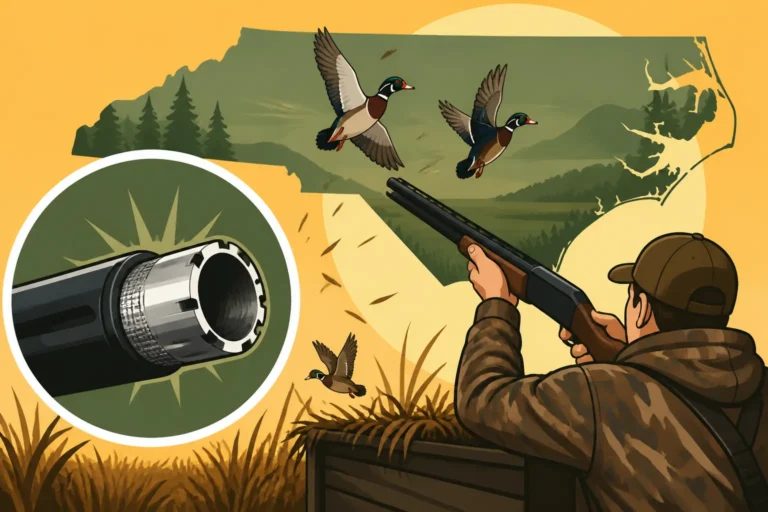
Think of your choke tube as the conductor of an orchestra, directing all those tiny pellets precisely where they need to go. Without the right choke, even the most powerful shotgun and advanced ammunition can throw a pattern that's too wide, too sparse, or simply inconsistent. Chokes work by constricting the barrel at the muzzle, tightening the shot cloud as it exits. For turkey hunting, you generally want the tightest, densest pattern possible to deliver maximum energy to the head and neck of a gobbler.
While you might see terms like "Full" or "Extra Full," many turkey hunters opt for specialized turkey chokes. These chokes are designed with even tighter constrictions and often feature unique internal geometries to strip the wad away cleanly and deliver an incredibly dense pattern. It's not uncommon to find turkey chokes labeled "Super Full," "Turkey Extra Full," or even specifically branded for certain shot types. Your choice of choke needs to be a careful dance with your chosen ammunition. A choke that patterns beautifully with lead shot might blow out with denser TSS, or vice-versa. This is why thorough Turkey Chokes and Patterning is absolutely non-negotiable.
Understanding Shot Types: Lead vs. Tungsten Super Shot (TSS)
The type of shot you put into your shell makes a monumental difference in performance. For decades, lead shot was the standard, and it's still effective, particularly with larger pellet sizes and in a 12 gauge. Lead is affordable and gets the job done at typical turkey ranges. However, it has its limitations, primarily its density.
Enter the game-changer: Tungsten Super Shot (TSS). TSS is incredibly dense – significantly denser than lead. This means that a much smaller TSS pellet retains more energy and penetrates deeper than a larger lead pellet. Because the pellets are smaller, you can fit more of them into a shell, resulting in a drastically higher pellet count in your pattern, even with smaller gauges. This is what truly revolutionized the 20 gauge, 28 gauge, and .410 bore for turkey hunting, allowing them to deliver lethal patterns at ranges once reserved for magnum 12 gauges. Of course, this performance comes at a cost; TSS is considerably more expensive. Other materials like Hevi-Shot and Bismuth also exist, offering performance improvements over lead, often at a mid-range price point between lead and TSS.
Here's a quick comparison of common turkey shot types:
| Shot Type | Density (Relative) | Cost (Relative) | Key Advantages | Key Disadvantages | Best For |
|---|---|---|---|---|---|
| Lead | Standard | Low | Affordable, widely available, good for traditional ranges | Lower density, less range, larger pellet size needed | Budget-conscious hunters, shorter ranges, traditional 12/20 gauge setups |
| Bismuth | Medium-High | Medium | Non-toxic, better density than lead, good substitute | Less dense than TSS, can be brittle | Non-toxic requirements, hunters wanting a step up from lead without TSS expense |
| Hevi-Shot (Original) | High | Medium-High | Very dense, good energy retention, increased range | Can be hard on older barrels, variable pellet size | Hunters wanting increased range and density in 12/20 gauge |
| Tungsten Super Shot (TSS) | Extremely High | High | Max density, extreme range, incredible penetration, small pellet size | Very expensive, often limited availability, requires careful patterning | Maximizing performance in any gauge, especially 20ga, 28ga, .410 bore, extending range |
As you can see, Tungsten Turkey Loads Worth the Price can definitely make a difference if you are looking to maximize the range and pattern density of any shotgun.
The Non-Negotiable Step: Patterning Your Turkey Gun
You can have the most expensive shotgun, the latest specialized choke, and the highest-tech ammunition, but if you don't pattern it, you're just guessing. Patterning your turkey gun is the single most important thing you can do to ensure a clean, ethical kill on a gobbler. Every shotgun is unique, every choke performs differently in every barrel, and every ammunition load will throw a slightly different pattern. What works for your buddy's identical setup might not work for yours.
The process is straightforward but requires patience and some expense. You need to shoot your specific shotgun, with your specific choke, and your chosen turkey load at paper targets at various ranges – typically 20, 30, and 40 yards, and even 50 or 60 yards if you anticipate those longer shots and your setup is capable. You're looking for a dense, even pattern with enough pellets in the head and neck region to guarantee a kill. A good rule of thumb is to aim for at least 100-150 pellets in a 10-inch circle centered on the head and neck vitals at your maximum intended range.
Common mistakes include only shooting at 40 yards, assuming if it looks good there, it's good. Often, a pattern might be too tight at 20 yards (missing entirely if the bird is closer than anticipated) or fall apart at 50 yards. You need to know your gun's limitations. Don't wait until opening morning to figure this out. Dedicate time before Spring Turkey Hunting in North Carolina begins to test various loads and chokes until you find the perfect combination that gives you confidence. It’s an investment, but it’s invaluable for success and ethical hunting.
Making the Right Choice for Your North Carolina Hunt
Ultimately, the "best" turkey shotgun gauge isn't a universal truth; it's a personal decision based on your hunting style, the terrain you frequent, and your individual preferences. North Carolina offers such diverse landscapes, from the dense mountain forests to the wide-open coastal plains, that what works well in one area might be less ideal in another.
Matching Gauge to Hunting Style and Terrain
Consider how you hunt in North Carolina. If you're like many hunters who gravitate toward public lands in the Piedmont, you might find yourself doing a lot of walking, setting up in thick pines, or trying to work birds that hang up just inside a field edge. A versatile 12 gauge might be a solid choice here, giving you reach across clearings. But for those who embrace the "run-and-gun" approach, constantly moving and trying to get into tight striking distance of a vocal bird, the lighter weight and maneuverability of a 20 gauge or even a 28 gauge with TSS can be a tremendous asset. It's much easier to quickly shoulder a lighter gun when that gobbler suddenly appears in a small opening.
For hunters tackling the rugged mountain terrain, where steep climbs, thick rhododendron, and dense timber are the norm, carrying a heavy 12 gauge for miles can be exhausting. Here, the lighter weight of a 20 gauge or .410 can make your hunt significantly more enjoyable, especially when you factor in the often closer shot distances in the dense woods. If you're Hunting the North Carolina Rut by Zone for deer and thinking about turkey season overlap, you'll appreciate the reduced bulk. Conversely, if you plan on Hunting Coastal Plain Pocosin Swamps, where visibility can be limited and you might need to punch through some brush, the sheer pellet count of a 12 gauge might offer a bit more confidence.
Considering the Hunter: Experience, Recoil, and Budget
Your personal factors are just as important as the gun itself. For beginner hunters, especially youth, managing recoil is a huge factor in building confidence and developing good shooting habits. A .410 or 20 gauge with modern TSS loads can be a fantastic starting point, offering minimal recoil without sacrificing terminal performance on the bird. This allows them to focus on target acquisition and trigger control, rather than anticipating a jarring kick. Calling a North Carolina Gobbler Off the Roost is exciting enough without worrying about a painful shoulder.
Recoil sensitivity isn't just for beginners; many experienced hunters appreciate the reduced punishment of a lighter gauge. Why beat yourself up if you don't have to? The trade-off often comes down to budget. While the initial cost of a 12 gauge shotgun might be similar to a 20 gauge, the cost of specialized TSS ammunition for smaller gauges can add up quickly, especially during patterning sessions. Factor in the long-term cost of ammunition when making your choice. If you're on a tight budget, sticking with a 12 gauge and good quality lead or Bismuth loads might be the most economical path.
Don't Forget the Rules: North Carolina Legalities
No matter which gauge you choose, always ensure you are familiar with North Carolina's hunting regulations. This includes rules regarding plugs in shotguns (limiting capacity), legal shooting hours, and any specific requirements for identifying your harvest. These rules can change, so it's always best to check the latest North Carolina Wildlife Resources Commission (NCWRC) regulations before heading afield. While gauge choice is mostly personal preference, knowing the laws, such as those regarding North Carolina Spring Turkey Season Rules and North Carolina Turkey Daily Bag Limit, is a mandatory part of responsible hunting.
Your turkey shotgun is a personal tool. Take the time to understand your options, try different setups if possible, and most importantly, pattern your gun. With the right combination of gauge, choke, and ammunition, you'll be well-prepared to answer the call of a North Carolina gobbler, whether you're Setting Up Against a Big Oak or chasing a bird through a mountain hollow.
Disclaimer
This article is for general informational purposes only and does not constitute professional advice. Laws, prices and regulations vary by location and change over time. Consult a qualified professional for guidance on your specific situation.